
Our readers keep the lights on and the weekend projects moving. As an Amazon Associate, I earn from qualifying purchases.
A headset that slips mid-stride or drowns out a cyclist’s bell isn’t just annoying — it’s dangerous. Running demands a Bluetooth headset that stays locked in place, survives the sweat, and keeps one ear on the road. This guide cuts through the noise to find the models that actually deliver on those three promises.
I’m Rikta — the founder and writer behind FitlyFast. I’ve spent months cross-referencing battery claims, IP ratings, ear-hook geometries, and real-runner feedback to isolate the seven headsets that earn a spot on race day.
Whether you prioritize situational awareness, noise cancellation for the gym, or a featherlight frame that disappears on long runs, this breakdown of the bluetooth headset for running covers the secure-fit, sweat-ready options that match your stride.
How To Choose The Best Bluetooth Headset For Running
Picking a running headset is a balance of three non-negotiables: a mechanical lock that won’t fail mid-sprint, an environmental seal that matches your sweat output, and an acoustic profile that doesn’t force you to max out volume on a busy road. Here’s what to inspect before you buy.
Fit Architecture: Over-Ear Hooks vs. Wingtips vs. Open-Ear
The single biggest cause of runner frustration is a headset that loosens with each footstrike. Over-ear hooks, like those on the Soundcore Sport X20 and JBL Endurance Peak 4, physically wrap around the pinna — they won’t budge unless you remove them. Wingtip designs, such as the Beats Powerbeats Fit, tuck under the ear’s anti-helix and are less intrusive but can cause pressure after 90+ minutes. Open-ear models like the SHOKZ OpenRun Pro and LEVN bypass the ear canal entirely, using a wraparound titanium band, which is ideal for runners who wear glasses or hate the plugged sensation.
Environmental Protection: IP Ratings Decoded for Runners
A headset rated IPX4 can handle light rain and sweat, but if you run in downpours, salt-soak your gear on coastal trails, or plan to rinse the buds under a faucet, IP68 (JBL Endurance Peak 4, Soundcore Sport X20) is the only serious choice. The difference is dust ingress protection too — IP68 stops sand and grit, a hidden advantage for trail runners. If your run is strictly on pavement under a visor, IPX7 (occiam T19) is sufficient and usually comes at a lower price point.
Ambient Awareness vs. Noise Cancellation
Road runners should prioritize headsets with a Transparency or Ambient mode (JBL Endurance Peak 4) or a permanent open-ear design (SHOKZ, LEVN) that lets traffic noise filter through naturally. Gym runners who lift or use treadmills indoors can flip a switch to Active Noise Cancellation (ANC) to block clanking weights. The Soundcore Sport X20 and Beats Powerbeats Fit offer adaptive ANC that reads your environment, but note that ANC always adds a battery drain — roughly 2 hours less per charge with ANC enabled.
Battery Life That Outlasts Your Longest Run
Even ultra-marathoners rarely exceed 6 hours. The real battery number to look at is the single-charge earbud life, not the case total. The bmani offers 8 hours per bud, the LEVN claims 14 hours, and the occiam runs 8 hours with ANC on. The case total (48H to 90H) matters only if you forget to charge for a week. A headset with a 10-minute quick-charge that delivers an extra hour (JBL, SHOKZ, Beats) is far more useful than a theoretical 90-hour case that takes 2 hours to refill.
Quick Comparison
On smaller screens, swipe sideways to see the full table.
| Model | Category | Best For | Key Spec | Amazon |
|---|---|---|---|---|
| JBL Endurance Peak 4 | Premium Sport | All-weather durability & app EQ | IP68 + 10mm driver | Amazon |
| Soundcore Sport X20 | Mid-Range Gym | Customizable ANC & BassUp | IP68 + 11mm driver | Amazon |
| Shokz OpenRun Pro | Bone Conduction | Road safety & all-day comfort | Bone conduction + 10H battery | Amazon |
| Beats Powerbeats Fit | Premium Lifestyle | Apple ecosystem & secure wingtip | H1 chip + Spatial Audio | Amazon |
| occiam T19 | Budget ANC | Noise cancellation on a budget | ANC -45dB + 90H case | Amazon |
| LEVN Open Ear | Value Open-Ear | Long battery & 2-device multipoint | Bluetooth 5.3 + 14H play | Amazon |
| bmani Ear Buds | Budget Entry | Extended case life & ease of use | 80H case + physical buttons | Amazon |
In‑Depth Reviews
1. JBL Endurance Peak 4
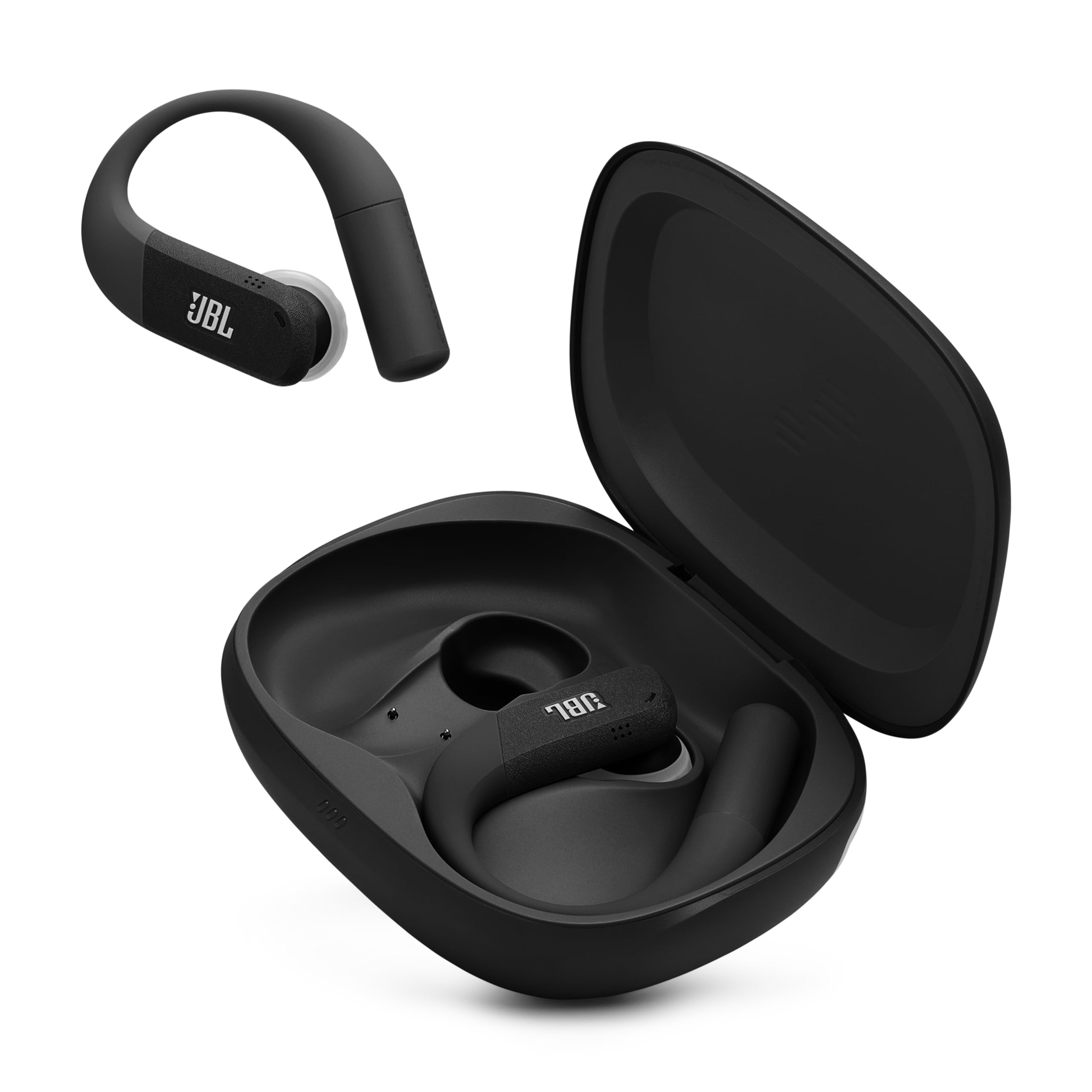
The Endurance Peak 4 is the rare running headset that doesn’t force you to compromise between environmental durability and acoustic refinement. Its IP68 rating — the highest on this list — means you can rinse the buds under a tap after a muddy trail run, and the TwistLock ear hooks with memory-wire silicone keep the 10mm drivers locked regardless of head movement. The Smart Ambient mode uses four noise-sensing mics to let traffic through when you need it, and the Personi-fi 3.0 in-app hearing test tailors the EQ to your ear’s anatomy — a feature no other runner-focused headset here matches.
Battery life lives up to the sticker: 12 hours per charge with ANC off, and three full case top-ups push total playback past the marathon weekend mark. The 10-minute speed charge that yields an extra four hours is the most generous quick-charge spec on this list. Call quality benefits from six microphones and a beamforming algorithm that handles wind distortion on breezy out-and-backs — reviews specifically note that outdoor call clarity is leagues better than other JBL sport models. Google Fast Pair and multipoint connection let you hop between a watch and phone mid-stride without unpairing.
The trade-offs are mostly ergonomic. The charging case is noticeably bulky — it won’t disappear into a running belt — and there’s no wireless charging pad support. The touch sensor on the buds can be unresponsive to quick taps, and some reviewers report that default ear tips cause discomfort until swapped for the included alternatives. The JBL Headphones app is required for full EQ control, which adds one extra layer between you and a quick volume adjustment on the road. Still, for the runner who wants adaptive ANC, an ambient safety mode, and the toughest water/dust seal available, this is the most complete package.
Why it’s great
- Industry-leading IP68 dust/water rating
- Memory-wire ear hooks stay secure on rough terrain
- Six-mic array with wind rejection for calls
- Personi-fi 3.0 hearing test customizes EQ to your ear
Good to know
- Bulky case is not pocket-friendly for running belts
- Touch sensors can miss fast taps mid-run
- No wireless charging on the case
2. Soundcore Sport X20 by Anker

The Sport X20 distinguishes itself from the pack with a mechanical flexibility no other headset here offers: its ear hooks can be rotated 30 degrees and extended by 4mm. That adjustability is a genuine asset for runners with non-standard ear shapes or those who wear a beanie over the hooks in winter. The IP68 SweatGuard seal uses a submarine-inspired cavity — not just a nano-coating — meaning the internals are physically isolated from perspiration. BassUp technology driven by the 11mm dynamic driver delivers a thump that gym runners particularly love for EDM and hip-hop pacing tracks.
Battery life is the real headline veteran: 12 hours per charge with the case extending to 48 hours total. Reviewers consistently note that they go weeks without plugging the case in, even with daily hour-long runs. The adaptive ANC does a solid job filtering out gym clatter, and the Soundcore app unlocks a 3D surround sound mode and wind noise reduction that works well for outdoor strides. The physical side button prevents the accidental skips that plague touch-sensitive models during sweat-drenched intervals.
What holds the X20 back from the top spot is the lack of a digital battery gauge on the charging case — you have to check the app or wait for the LED color to change. The ANC, while effective, is not as refined as the JBL’s four-mic adaptive system, and multipoint connection requires the app to manage rather than being baked directly into Bluetooth 5.3. For runners who prioritize a dialed-in fit over everything else and train mostly indoors, however, the Sport X20 offers the most customizable mechanical lock in this segment.
Why it’s great
- Rotatable and extendable ear hooks for custom fit
- IP68 submarine-style seal prevents sweat ingress
- BassUp technology with 11mm driver for powerful low-end
- Charge case lasts weeks with daily use
Good to know
- No battery percentage display on case
- Multipoint requires app, not native
- ANC less refined than premium competitors
3. Shokz OpenRun Pro

The OpenRun Pro is the only headset on this list that keeps your ear canals entirely open — no eartip, no seal, no pressure. Shokz’s ninth-generation bone conduction transducer vibrates against your cheekbone to deliver audio, leaving your eardrums free to hear traffic, conversation, or a bike bell. The titanium wraparound frame weighs just 26 grams, making it the lightest option for long-distance runners, and it’s compatible with glasses — a detail that disqualifies many over-ear hook designs. TurboPitch technology adds a noticeable low-end presence that previous Shokz models lacked, though it still can’t match the bass of a traditional dynamic driver.
Battery life is rated at 10 hours of continuous playback, and the 5-minute quick charge yields 1.5 hours — ideal for an unexpected long run. Reviewers consistently highlight the all-day comfort factor, with many noting zero hotspots even after wearing the headset for eight hours straight. The multipoint pairing lets you stay connected to both a phone and a running watch simultaneously, and Bluetooth 5.1 provides a stable 33-foot range. The included sport headband helps absorb sweat and adds a layer of grip on windy days.
The OpenRun Pro has trade-offs inherent to bone conduction technology. At higher volumes, audio leaks enough that someone next to you on the subway can hear your podcast. The proprietary magnetic charging cable — not USB-C — is a frequent complaint among runners who want one cable for all their gear. Bass response weakens at low volumes, so you may need to push the level higher in quiet environments. And in very loud settings, like a busy city intersection, the audio can be hard to discern. For runners who rank situational awareness above all else, this is the safest and most comfortable choice available.
Why it’s great
- Open ear canals preserve 100% situational awareness
- Ultra-light titanium frame at 26g
- Works seamlessly with glasses
- 5-minute charge gives 1.5 hours of use
Good to know
- Sound leaks at higher volumes
- Proprietary magnetic charger, not USB-C
- Bass drops off at low volumes
4. Beats Powerbeats Fit
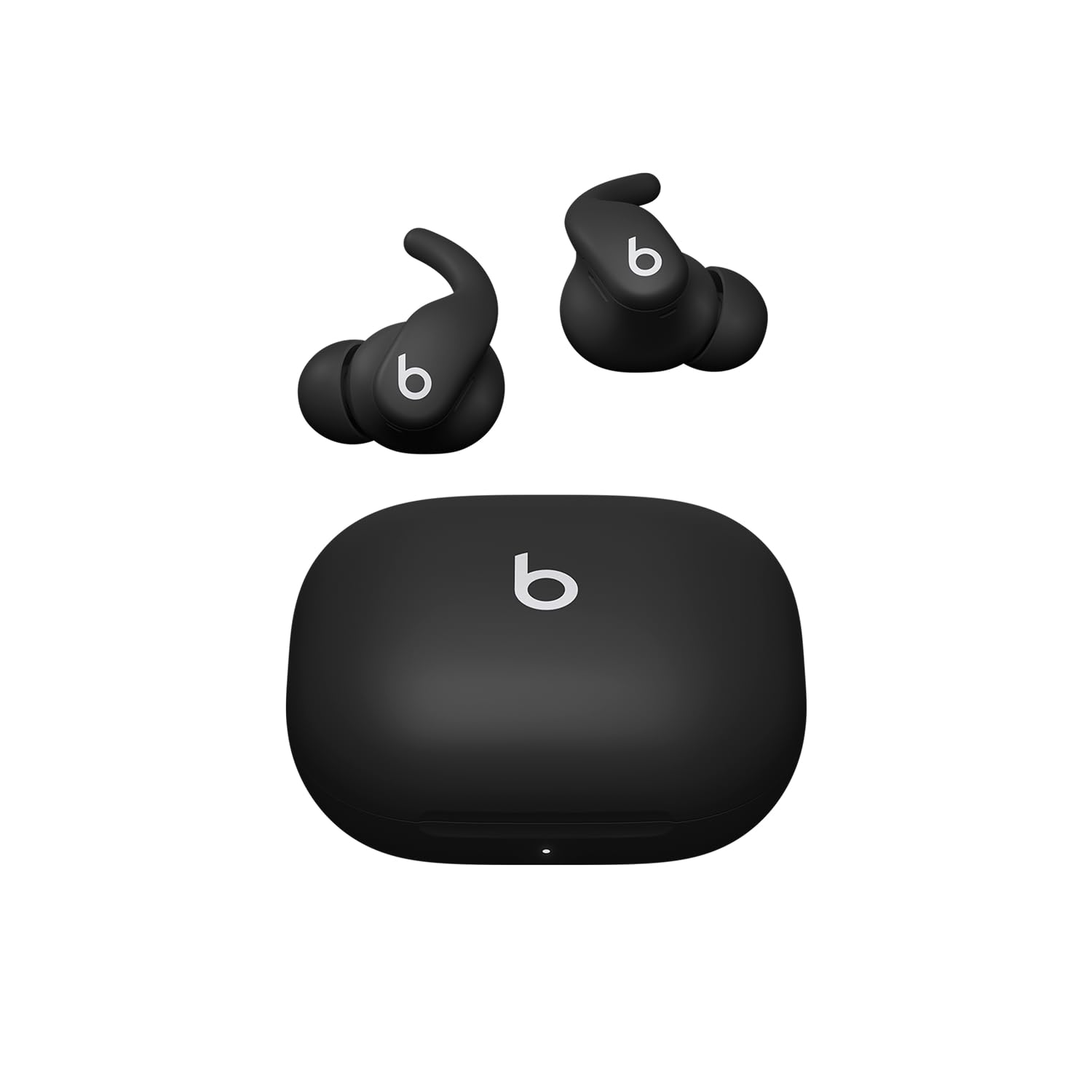
The Powerbeats Fit marries the hook stability Beats is known for with the Apple H1 chip’s seamless ecosystem features: one-touch pairing, Automatic Switching between iPhone and Apple Watch, Audio Sharing, and hands-free “Hey Siri” — a convenience that Android users can partially replicate through the Beats app. The wingtips (now softer and more comfortable than the earlier Fit Pro) lock into the ear’s anti-helix without the bulk of a full over-ear hook, making the buds compact enough to lie flat under a winter headband. The custom acoustic platform delivers a punchy, balanced signature that reviewers describe as more spacious and dynamic than the original Powerbeats Pro.
Battery life hits 7 hours per charge (30 hours total with the case), and Fast Fuel gives 1 hour from a 5-minute charge. The IPX4 rating covers sweat and light rain but won’t survive a submersion, so trail runners in wet conditions should look to the IP68-rated JBL or Soundcore instead. Personalized Spatial Audio with dynamic head tracking works for both music and calls, and Adaptive EQ adjusts the sound profile based on the earbud’s fit and seal in your ear — a clever trick that compensates for imperfect positioning during a run.
The wingtip design, while comfortable for most, can cause ear fatigue after multi-hour sessions — several reviewers with smaller ears reported soreness around the 90-minute mark. The charging case is now 17% smaller than its predecessor and carries the same IPX4 rating as the buds, but it lacks wireless charging and still uses a USB-C-to-USB-C cable (not included in the box). Sound quality, while excellent for a workout headset, is criticized by audiophiles for slightly hollow vocals and overly boosted bass compared to the AirPods Pro 2. For Apple users who want one-touch pairing and Find My integration, this is the most friction-free running headset available.
Why it’s great
- Seamless Apple H1 ecosystem pairing and switching
- Compact wingtip design fits under headwear
- Adaptive EQ adjusts to fit in real time
- Spatial Audio with dynamic head tracking
Good to know
- Wingtips can fatigue small ears on long runs
- IPX4 only — not for submersion or trail mud
- Case lacks wireless charging; no USB-C cable included
5. occiam T19 Active Noise Cancelling Earbuds

The occiam T19 brings active noise cancellation to the budget tier without cutting the ear hook stability that running demands. It claims a -45dB noise reduction, which in practice filters out consistent gym drone and traffic hum but lets sharper sounds (car horns, announcements) punch through — a useful safety compromise for road runners. The flexible over-ear hooks come with three sizes of silicone tips, and the IPX7 rating means the buds can survive being dropped in a puddle or rinsed under a faucet. The physical button controls are a deliberate choice that avoids the accidental-skip problem that plagues touch-sensitive budget earbuds.
Battery math is where the T19 gets creative. A single bud delivers 8 hours of playback, but because each bud works independently in mono mode, the case can recharge a single bud many more times, pushing total theoretical playback to 90 hours. The dual LED display on the charging case shows remaining case power and bud charging status, a feature usually reserved for higher price brackets. Bluetooth 5.4 ensures a strong 30-foot range, and the Hall switch auto-pairs when the case opens — a speed that rivals premium models. Reviewers consistently praise the clear vocals, deep bass, and the fact that the buds stay locked during high-intensity interval training.
The compromises are in the acoustic refinement and material feel. The ANC lacks the adaptive nuance of the Soundcore or JBL systems — it’s either on or off, with no ambient pass-through mode for traffic awareness. The charging case is made of glossy plastic that shows fingerprints quickly, and the microphones, while adequate for calls, don’t match the wind rejection of the six-mic JBL array. The claimed 90-hour figure assumes alternating single-bud use, which isn’t how most runners use a stereo headset. For the runner who wants ANC on a budget and values a mechanical hook lock, however, the T19 punches well above its price tag.
Why it’s great
- Effective ANC for the price point
- Physical buttons prevent accidental taps during sweat
- IPX7 water resistance for puddle drops
- Dual LED display shows case and bud charge level
Good to know
- No ambient/passthrough mode for road safety
- 90H battery claim requires single-bud alternating use
- Glossy case shows fingerprints
6. LEVN Open Ear Headphones

The LEVN is an open-ear alternative that lowers the price barrier for runners who want situational awareness without paying Shokz money. It uses a wraparound silicone frame with 15mm speaker drivers that sit just outside the ear canal, delivering audio without blocking ambient sound. The open design keeps ears cool during long runs in hot weather, a distinct advantage over sealed in-ear or over-ear hooks. At 90 grams, it’s heavier than the Shokz OpenRun Pro but still light enough that most testers reported zero fatigue during runs exceeding two hours.
Battery life is a standout spec: 14 hours on a single charge blows past the 8-10 hour claims of most competitors. Bluetooth 5.3 multipoint connection lets you pair with a phone and a laptop simultaneously, switching seamlessly between a music playlist and a work call. The included magnetic charging cable (USB-A, not USB-C) is a minor annoyance, but the 2-hour full charge is fast enough for daily top-ups. Reviewers consistently note that the silicone frame offers a stable, pressure-free fit that works well for cyclists and runners alike, and the microphone quality is good enough for outdoor calls without shouting.
The sonic trade-offs are similar to all open-ear designs. Bass response is weak, and the sound profile is noticeably tinnier than sealed or bone conduction alternatives — audiobooks and podcasts sound fine, but bass-heavy genres lose their punch. In noisy urban environments, you’ll need to push volume higher to hear dialogue, which increases sound leakage. The one-size-fits-all design may not lock securely on very small or very large heads. For the budget-conscious runner who prioritizes all-day battery and ambient hearing, the LEVN offers the best value in the open-ear category.
Why it’s great
- 14-hour single-charge battery beats most competitors
- Open-ear design keeps ears cool and aware
- Bluetooth 5.3 with multipoint for dual-device pairing
- Lightweight silicone frame stays secure on long runs
Good to know
- Weak bass — not ideal for music-focused runners
- Magnetic charging uses USB-A, not USB-C
- One-size frame may not fit all head shapes
7. bmani Ear Buds (80H Playtime)

The bmani earbuds are the entry point for runners who want a reliable, no-frills headset that simply won’t die. The 80-hour total playback figure (8 hours per bud, multiplied by the charging case’s capacity) means you can run daily for two weeks without plugging the case into a wall. The LED display on the front of the case shows the remaining case battery on a digital readout — a rare luxury at this price point. The over-ear hooks are made of a soft, flexible rubber that sits comfortably for most ear shapes, and the physical button controls (separate volume and multifunction buttons) eliminate the accidental-touch problem that plagues cheaper touch-capacitive buds.
Sound quality is surprisingly respectable for the price bracket. The 10mm dynamic drivers deliver clean mids and highs with decent clarity, though bass lacks the punch of the larger 11mm driver in the Soundcore X20. One reviewer noted the audio is “better than AirPods” for spoken-word content, and three-year follow-up reports indicate the battery holds up well (87% retention after years of use). The microphones handle quiet indoor calls adequately, but wind noise during outdoor runs requires you to speak louder. The automatic reconnection when removing a bud from the case works reliably, and Bluetooth 5.0 provides a stable 33-foot range that’s sufficient for a phone in a running belt.
The compromises are mostly about build and isolation. The IP rating is not explicitly stated in the specs, though the sweat-resistant build has held up for reviewers over years of use — but you won’t want to test it in a downpour. The charging case is noticeably bulky for a running belt or small shorts pocket. Bass response is “mild” per most reviews, and the soundstage is narrow compared to mid-range options. But for the runner on a tight budget who wants a headset that stays in place, charges infrequently, and uses simple buttons rather than finicky touch controls, the bmani is the most reliable bargain on this list.
Why it’s great
- Exceptional 80-hour total case battery life
- Physical buttons prevent accidental control changes
- Digital LED display shows exact case charge level
- Proven long-term durability (87% battery retention after 3 years)
Good to know
- Bulky case is not pocket-friendly
- No official IP rating — avoid heavy rain
- Mild bass and narrow soundstage
FAQ
Can I use only one earbud while running and still have stereo sound?
How do ear hooks compare to wingtips for long distance running?
What does IP68 actually mean for a running headset?
Is open ear design safe for running on busy roads?
How many hours of battery do I really need for running?
Final Thoughts: The Verdict
For most runners, the bluetooth headset for running winner is the JBL Endurance Peak 4 because it combines the industry’s toughest IP68 seal with adaptive ANC, a secure TwistLock fit, and call quality that handles wind. If you want customizable ear hooks and BassUp for the gym, grab the Soundcore Sport X20. And for road safety above all else, nothing beats the Shokz OpenRun Pro.