
Our readers keep the lights on and the weekend projects moving. As an Amazon Associate, I earn from qualifying purchases.
Most so-called “portable” Bluetooth speakers are engineered for the outdoors—bright treble, thin midrange, and a battery that dies after a single day at the park. That tuning is wrong for indoor listening, where walls reflect sound and you crave something closer to a real stereo image. A purpose-picked Bluetooth speaker for your room needs controlled bass that doesn’t overwhelm the space, a wide enough soundstage to fill a bedroom or office, and connectivity that doesn’t force you to stay glued to your phone.
I’m Rikta — the co-founder and writer behind FitlyFast. I spent dozens of hours combing through frequency response curves, driver topology, and real-user listening tests to separate the true room performers from the loud-but-lifeless portable options. This is not a generic roundup; this is a spec-level audit of what actually works inside four walls.
Whether you need a compact desktop companion or a premium piece that anchors your living space, I’ve filtered the market down to the seven models that genuinely deliver. Read on for my data-driven guide to the best bluetooth speaker for room performance.
How To Choose The Best Bluetooth Speaker For Room
Indoor listening has different physics than outdoor or on-the-go use. You aren’t fighting wind or open air; you are working with reflective surfaces, corners, and furniture that all color the sound. Here are the three specs that matter most for interior placement.
Driver Topology and Room Size
A single full-range driver with a passive radiator can produce surprising volume for a desk, but a two-way system—dedicated tweeter and woofer—delivers the separation needed to fill a 12×12 foot room without sounding congested. Look for at least a 3.5-inch woofer in a mid-room setup, or a 4.5-inch-plus driver if you want to anchor a living area. Bookshelf-style powered speakers (like the Edifier MR3 or Audio-Technica AT-SP3X) use separated left and right channels, creating a true stereo soundstage that a mono portable puck cannot replicate.
Enclosure Materials and Cabinet Resonance
Plastic enclosures are lightweight and weather-resistant but often produce a hollow “boxy” resonance when the bass hits. For a permanent room speaker, MDF (medium-density fiberboard) cabinetry or real wood veneer dramatically reduces unwanted vibration. The Klipsch The One Plus uses real wood veneer over an internal MDF structure; the Audio-Technica and Edifier models use dense plastic and MDF respectively. If you hear buzzing or rattling at moderate volume, the cabinet is the culprit.
Connectivity Beyond Bluetooth 5.x
For a room speaker, Bluetooth alone is limiting. A wired auxiliary input (3.5mm or RCA) eliminates latency for television or gaming, and a USB-C port allows you to connect a laptop directly for high-bitrate playback. Multi-point Bluetooth—connecting two devices simultaneously, as the Marshall Stanmore III and Audio-Technica AT-SP3X offer—is a huge quality-of-life upgrade if you switch between a phone and a tablet or PC. Do not overlook a model with a physical volume knob: room speakers get adjusted frequently, and fumbling with a phone app is slower than twisting a dial.
Quick Comparison
On smaller screens, swipe sideways to see the full table.
| Model | Category | Best For | Key Spec | Amazon |
|---|---|---|---|---|
| Sonos Era 100 SL | Wi‑Fi + BT | Multi‑room smart ecosystem | Dual angled tweeters + mid‑woofer | Amazon |
| Marshall Stanmore III | Home Stereo | Band‑style rock sound at home | 2x 0.75” tweeters + 5” woofer | Amazon |
| Klipsch The One Plus | Tabletop Hi‑Fi | Wood‑veneer aesthetic + wide stage | 2.25” full‑range + 4.5” woofer | Amazon |
| Harman Kardon Onyx Studio 9 | Portable Home | Bass‑heavy room with portability | 13 cm woofer, 8‑hour battery | Amazon |
| Audio‑Technica AT‑SP3X | Bookshelf | Turntable + desktop stereo pair | 3” full‑range driver per speaker | Amazon |
| Anker Soundcore Upgraded | Budget Portable | Casual bed‑side or travel backup | 24‑hour battery, IPX5 housing | Amazon |
| Edifier MR3 | Studio Monitor | Neutral reference for editing | 3.5” woofer + 1” tweeter per side | Amazon |
In‑Depth Reviews
1. Sonos Era 100 SL
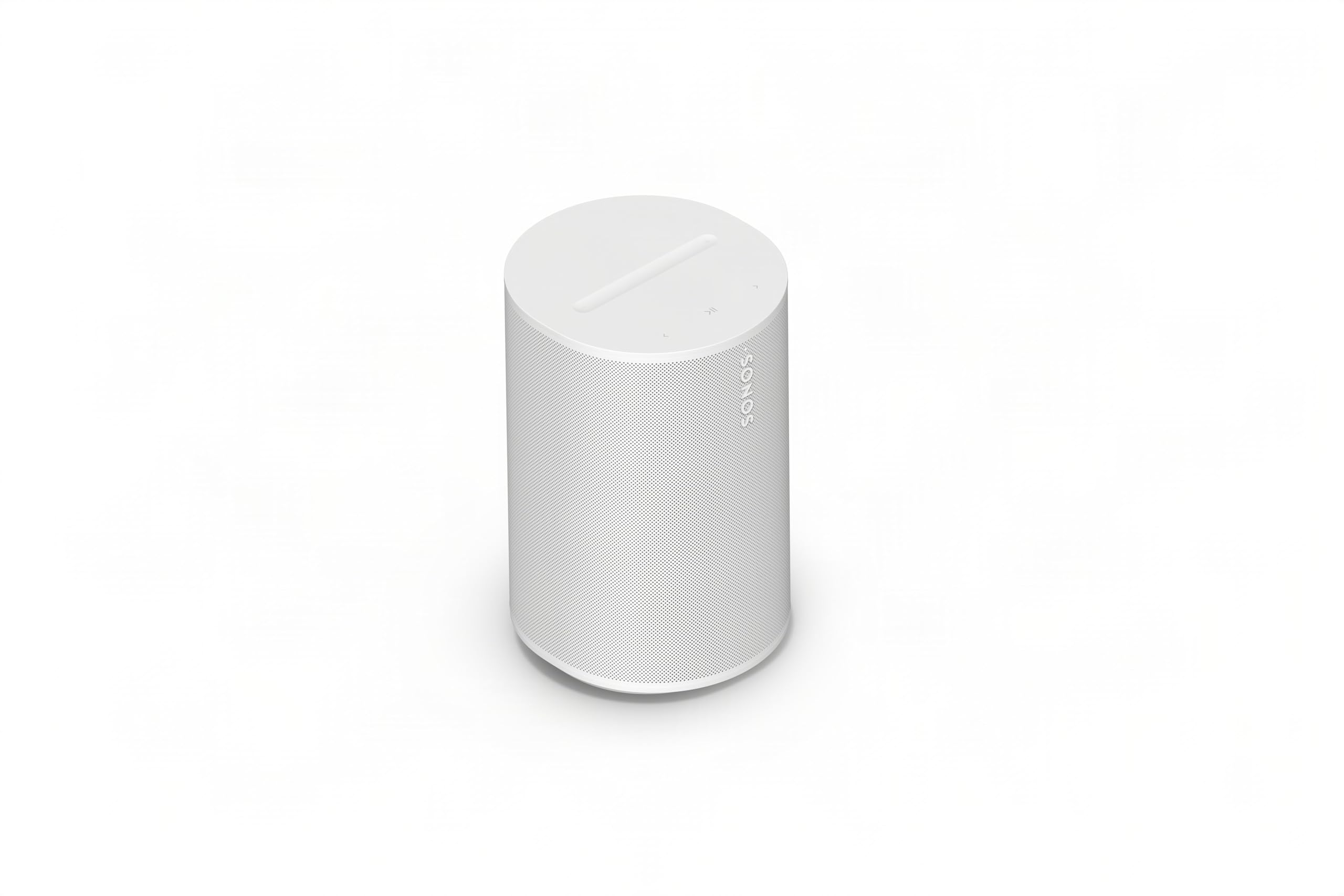
The Sonos Era 100 SL is the microphone‑free variant of the Era 100, retaining the dual angled tweeters and custom mid‑woofer that deliver genuinely balanced stereo separation from a single cabinet. The angled tweeters fire left and right, creating a wide soundstage that feels much larger than the speaker’s 5‑inch footprint. Trueplay automatic room calibration uses your phone’s microphone to tweak the EQ for your exact room layout—a feature every indoor speaker should copy.
Connectivity is the real advantage: it streams over both WiFi and Bluetooth 5.x, with line‑in capability via an optional adapter for turntables. The Sonos app manages multi‑room sync seamlessly, so you can start in the bedroom and move to the living room without re‑pairing. The compact enclosure is made of polycarbonate but the internal damping keeps cabinet resonance low—acceptable at this price bracket for a plug‑and‑play system.
The only trade‑off is the lack of a physical volume knob; you rely on the app, touch controls on top, or your phone’s volume rocker. If you want a single smart speaker that integrates with a larger home ecosystem, this is the standard. For a standalone room speaker without smart assistants, the Era 100 SL delivers reference‑grade sound that fills a 15×15 foot space effortlessly.
Why it’s great
- Trueplay room calibration optimizes sound for your specific wall and furniture layout
- WiFi + Bluetooth dual streaming for zero‑buffer playback
- Dual angled tweeters create genuine stereo separation from a single unit
Good to know
- No built‑in microphone (the SL model) — voice control requires a separate compatible device
- Physical volume knob absent; touch and app control only
2. Marshall Stanmore III

The Marshall Stanmore III is a plugged‑in home speaker that trades battery portability for raw driver power: two 0.75‑inch tweeters flank a five‑inch woofer, delivering the brand’s signature rock‑tuned sound. It is not neutral; it is intentionally forward in the upper mids with a punchy low end that makes electric guitars and kick drums feel present. The retro control panel—physical bass, treble, and volume knobs—is refreshingly direct after a decade of smartphone sliders.
Bluetooth 5.2 provides stable connections at standard room distances (roughly 30 feet), and the RCA input lets you hardwire a turntable or CD player without dongles. The PVC‑free build uses 70‑percent recycled plastic and vegan materials, which is notable for a speaker focused on aesthetic. In a 12×14 foot room, the Stanmore III fills the space without breaking a sweat; users report clear detail at low volumes and authoritative punch when you crank it.
It is not truly portable—there is no battery and the AC cable is fixed—so placement is permanent. The lack of an app‑free multi‑room feature is fine if you want a single statement piece. For users who value tactile EQ control and a classic rock‑and‑roll voicing, this is the most character‑driven room speaker on the list.
Why it’s great
- Physical bass, treble, and volume knobs for immediate tone shaping
- 5″ woofer delivers authoritative low‑end for a plug‑in home speaker
- RCA and 3.5mm inputs for turntable or CD player connection
Good to know
- No battery; corded operation only
- Sound signature is heavily rock‑tuned (forward mids) — not neutral for critical listening
3. Edifier MR3 Powered Studio Monitors

The Edifier MR3 is a powered bookshelf monitor system that prioritizes flat frequency response over consumer‑friendly bass boost. Each cabinet houses a 3.5‑inch mid‑low driver and a one‑inch silk dome tweeter, achieving Hi‑Res Audio certification up to 40kHz. The result is a neutral, analytical sound that reveals recording details most Bluetooth speakers smear—vocal breath, cymbal texture, and studio reverb tails are clearly articulated.
Connectivity is unusually flexible for the price: Bluetooth 5.4 with multi‑point pairing, plus balanced TRS, RCA, and AUX inputs. The EDIFIER ConneX app offers Music, Monitor, and Custom EQ modes, letting you switch from editorial to warm listening. The MDF cabinet minimizes resonance, and the 18W×2 RMS output (92.5dB peak SPL) is comfortable for a small to mid‑sized room without distortion at moderate levels.
The active speaker design means you need a power outlet for each cabinet, and the included interconnect cable is six feet—plan the placement accordingly. There is no subwoofer output, so deep sub‑35Hz extension is absent. For desktop audio production or any listening where accuracy matters more than thump, the MR3 is the budget‑friendly studio choice.
Why it’s great
- Flat frequency response suited for audio editing and critical listening
- Balanced TRS input connects directly to pro audio interfaces
- App‑based EQ with three distinct voicing modes
Good to know
- No subwoofer output — limited below 52Hz
- Bluetooth volume not fully controllable from the source device
4. Harman Kardon Onyx Studio 9

The Onyx Studio 9 is a single‑cabinet portable that behaves like a permanent room speaker thanks to its 13‑centimeter woofer and self‑tuning DSP. Each time you power it on, the embedded microphone measures the speaker’s environment and adjusts the EQ to prevent muddiness from corner placement or wall reflections. The resulting sound is bass‑forward but controlled—kick drums have tangible weight without overwhelming the mids.
Despite being portable (eight‑hour battery, built‑in USB‑C charging for phones), the Onyx Studio 9 sounds most at home sitting on a shelf or counter. It connects to two Bluetooth devices simultaneously and can pair with a second Onyx over Auracast for wider stereo imaging. The metal grille and fabric wrap give it a premium feel that resists fingerprints better than glossy plastic competitors.
The eight‑hour battery is modest compared to portable‑first models, but for indoor use it means you can unplug it and carry it to the backyard without hunting for an outlet. The app lets you adjust EQ to flatten or emphasize the boosted lows. If you want one speaker that anchors a room but occasionally travels, the Onyx Studio 9 is a strong hybrid pick.
Why it’s great
- Self‑tuning DSP automatically corrects for room placement and wall reflections
- 13cm woofer delivers deep, controlled bass without distortion
- USB‑C charging port for phone top‑ups during listening sessions
Good to know
- Battery life at 8 hours is short compared to dedicated portable speakers
- Single‑unit stereo imaging is limited; benefits from pairing a second unit
5. Klipsch The One Plus

Klipsch’s The One Plus is a tabletop 2.1 system dressed in real wood veneer and tactile metal switches, borrowing design DNA from the brand’s Heritage horn‑loaded speakers. Two 2.25‑inch full‑range drivers handle the mids and highs, while a dedicated 4.5‑inch high‑excursion woofer provides the lower octaves. The bi‑amplified architecture (separate amps for woofer vs. full‑range) keeps crossover distortion low.
The sound is not as bass‑heavy as the Onyx Studio 9; instead, it leans into clarity and openness. Vocals are present and articulate, cymbals have air, and the bass is tight rather than booming. The Klipsch Connect app provides a basic three‑band EQ (bass, mid, treble) that is enough to dial in a slight low‑end lift if you want more weight. Bluetooth 5.3 reaches 40 feet, and the USB‑C port supports playback and reverse charging.
The wood veneer is genuine, not a printed wrap, so each unit has unique grain patterns—a detail that justifies the mid‑range price for buyers who treat the speaker as furniture. It is also compact enough (12 inches wide) to fit on a nightstand or narrow shelf. The lack of Wi‑Fi multi‑room limits expandability, but as a single high‑fidelity room speaker, The One Plus is a beautifully finished performer.
Why it’s great
- Real wood veneer cabinet with premium tactile controls
- Bi‑amplified 2.1 design for clean driver separation
- App‑controllable EQ with bass, mid, and treble adjustment
Good to know
- No Wi‑Fi or multi‑room connectivity (Bluetooth + wired only)
- Initial sound may be tight; requires a ~10‑hour break‑in period for full driver compliance
6. Audio‑Technica AT‑SP3X Bookshelf Speakers

The Audio‑Technica AT‑SP3X is a pair of compact bookshelf speakers designed to work seamlessly with the brand’s turntables but equally happy connected to any Bluetooth source. Each speaker houses a 3‑inch full‑range driver in a ported plastic enclosure, tuned to deliver surprising low‑end extension for the size. The sound is warm and accessible—bass is slightly elevated without being sloppy, and vocal clarity remains intact across genres.
Multi‑point Bluetooth lets you connect a phone and a turntable (or a phone and a laptop) simultaneously, switching sources without re‑pairing. The included international plug adapters and a six‑foot speaker cable make setup flexible for any desk layout. The front‑firing bass port means you can place them close to a wall without the muddy coupling that rear‑ported designs suffer from.
The plastic enclosure is lighter and less acoustically inert than MDF, but at this price point it is a reasonable trade‑off for the weight and compact footprint. Volume control is handled by a single knob on the active speaker. If you want a stereo pair that pairs elegantly with a vinyl setup or desktop computer, the AT‑SP3X delivers a cohesive, room‑friendly soundstage.
Why it’s great
- Multi‑point Bluetooth for seamless switching between turntable and phone
- Front‑firing bass port allows near‑wall placement without boominess
- Includes international plug adapters for worldwide use
Good to know
- Plastic enclosure lacks the resonance‑killing properties of MDF cabinets
- 3‑inch drivers limit deep bass extension; no dedicated subwoofer output
7. Anker Soundcore Upgraded Bluetooth Speaker

The Anker Soundcore Upgraded is an ultra‑portable budget‑friendly speaker that prioritizes battery runtime and durability over acoustic refinement. Two high‑sensitivity drivers with a patented bass port produce sound that is loud for its size, with clear highs and enough low‑end presence for casual playlists. It does not fill a room like the larger options on this list, but it works well as a bedside or kitchen‑counter companion where absolute fidelity is not the priority.
The 24‑hour battery life is exceptional for the form factor, and the IPX5 water resistance means it can survive a bathroom splash or kitchen spill. Bluetooth 4.0 is dated compared to the 5.x chips in the other models, but pairing is quick and the connection remains stable up to 66 feet in open air. The rubberized exterior absorbs minor drops, making it a reliable travel or secondary speaker.
Critical listeners will notice the lack of deep bass and the single‑driver mono soundstage; this is a portable mono speaker, not a stereo system. The charging indicator and battery performance can degrade after a couple of years of heavy use. For a rock‑bottom entry point into Bluetooth audio for a small room, the Soundcore delivers respectable volume and stamina at a negligible commitment.
Why it’s great
- 24‑hour battery life sets the standard for portable indoor/outdoor use
- IPX5 water resistance for worry‑free placement in kitchens or bathrooms
- Rubberized, drop‑proof build for budget‑friendly longevity
Good to know
- Mono, single‑driver design cannot produce stereo separation
- Bluetooth 4.0 lacks modern codec support and lower power consumption
FAQ
Do I need a portable battery for a room speaker?
Will a bookshelf pair sound better than a single Bluetooth speaker?
What is Trueplay room tuning and do I need it?
Can I leave a Bluetooth speaker plugged in all the time?
Final Thoughts: The Verdict
For most users, the best bluetooth speaker for room winner is the Sonos Era 100 SL because its Trueplay calibration, dual angled tweeters, and WiFi/Bluetooth versatility solve the biggest indoor audio problem—room‑dependent sound quality—better than any single competitor. If you want a rock‑and‑roll voicing with tactile knobs and a 5‑inch woofer, grab the Marshall Stanmore III. And for a budget‑friendly neutral reference pair that doubles as studio monitors, nothing beats the Edifier MR3.