
Our readers keep the lights on and the weekend projects moving. As an Amazon Associate, I earn from qualifying purchases.
Ten-year-olds sit at a tricky gaming crossroad—they’ve outgrown Candy Land but lack the patience for heavy war games. The sweet spot lives in board games that layer genuine strategy, resource planning, or competitive speed without drowning the table in rules. A great game at this age builds spatial reasoning, negotiation skills, or simple economic thinking while keeping everyone laughing through the final round.
I’m Rikta — the co-founder and writer behind FitlyFast. I’ve spent countless hours analyzing gameplay mechanics, age-specific design choices, and component quality across dozens of family strategy games to pinpoint which titles actually hold a ten-year-old’s attention without boring the adults at the table.
This guide breaks down the strongest contenders across several play styles so you can confidently choose the best board games for 10 year olds that will survive multiple game nights and keep the whole family engaged.
How To Choose The Best Board Games For 10 Year Olds
The right game balances teachable rules with decisions that feel meaningful rather than random. At age ten, kids can handle multi-step planning, deduction, and basic economic loops—they just don’t want the rulebook to feel like homework. Prioritize games where the core loop clicks after one demonstration round and where player interaction happens naturally through trading, blocking, or racing, not elimination.
Playtime and Attention Span
Thirty to forty-five minutes is the sweet spot for family sessions. Games running over ninety minutes risk losing steam unless the theme is deeply engaging (Catan works because the island changes every game). Short rounds under twenty minutes are great for parties but rarely satisfy the strategic cravings a ten-year-old develops after a few sessions with something meatier.
Replay Value vs. Novelty
Games that rely on modular boards, randomized card decks, or variable player powers hold up across dozens of plays. Fixed-path games where every session plays out identically get shelved after two or three game nights. Check for variable setup instructions, expansion compatibility, or scoring systems that change the winning strategy each round.
Component Quality Under Pressure
Board edges get bent, cards get bent worse, and tokens disappear into couch cushions. Look for thick card stock, wooden or chunky plastic pieces, and boards that lie flat on the table. Games with flimsy punch-out tokens or thin paper money frustrate both kids and the adult who has to tape them back together.
Quick Comparison
On smaller screens, swipe sideways to see the full table.
| Model | Category | Best For | Key Spec | Amazon |
|---|---|---|---|---|
| Catan (6th Edition) | Strategy | Deep replayability & trade | 60-90 min playtime | Amazon |
| Harmonies | Tile Placement | Calm strategic building | 30 min playtime | Amazon |
| Planted | Resource Mgmt | Botany & card drafting | 20-30 min playtime | Amazon |
| Tetris: The Board Game | Puzzle Action | Fast-paced competitive Tetris | 20 min playtime | Amazon |
| Game of the States | Educational | US geography & economics | 2-4 players, ages 8+ | Amazon |
| Girl Talk Truth or Dare | Party | Tween sleepovers & laughs | 2-10 players, ages 10+ | Amazon |
| Baseball Board Game | Sports Sim | Baseball fans & dice strategy | Basic & advanced play modes | Amazon |
In‑Depth Reviews
1. CATAN Board Game (6th Edition)

This is the benchmark family strategy game for a reason. The 6th Edition refines the classic experience with built-in card trays, chunkier wooden pieces, and simplified language in the rulebook (Lumber is now Wood, Grain is now Wheat). The modular hexagonal board means no two games play the same, and the core loop—roll dice, gather resources, trade with opponents, build roads and settlements—teaches negotiation and risk assessment without feeling like a lecture.
At a sixty- to ninety-minute playtime, Catan demands commitment, but the reward is a deeply satisfying arc where every player stays engaged through trades even on other people’s turns. The “robber” mechanic adds a tactical pinch that keeps ten-year-olds thinking about where to block rather than just hoarding cards.
Component quality shines here: the hex tiles are thick, the numbers are easy to read, and the new card trays keep the table organized during heated trade negotiations. Families with younger siblings should note that the recommended age is 10+, and the reading requirement on development cards is moderate, but most fourth graders handle it fine after one demonstration round.
Why it’s great
- Endless replay value thanks to the modular board
- Teaches negotiation, trading, and resource planning naturally
- 6th Edition upgrades are meaningful (card trays, chunkier pieces)
Good to know
- Playtime runs 60-90 minutes, longer than some family nights allow
- Requires 3-4 players; the 5-6 player expansion is sold separately
2. Asmodee Harmonies Board Game

Harmonies takes the tile-laying genre and adds a poetic twist: you build a three-dimensional landscape from wooden tokens while animal cubes inhabit the biomes you create. The rules are remarkably simple—draw a card, place landscape tokens to match the pattern, score points—but the tactical depth emerges as you juggle terrain height requirements and competing animal goals. It plays in about thirty minutes, perfect for a weeknight round before dinner.
The production value is stunning. The 120 wooden tokens have a satisfying weight, the illustrated cards from Libellud Studios feel premium, and the three-dimensional board you build is genuinely beautiful to watch grow. Player interaction is minimal—everyone works on their own landscape—which makes it an excellent choice for kids who find direct competition stressful but still want to exercise strategic thinking.
Three difficulty levels on the included cards give real legs to replayability, and the solo variant means a ten-year-old can keep playing alone between family game nights. This sits comfortably alongside Cascadia in the serene strategy category, and several reviewers noted it quickly became a top-three game in collections of over 200 titles.
Why it’s great
- Beautiful 3D landscape builds with satisfying wooden tokens
- Simple rules with meaningful strategic depth
- Included solo mode adds independent replay value
Good to know
- Minimal direct player interaction—more of a parallel puzzle
- Games can end abruptly when the card draw runs dry
3. Buffalo Games Planted Strategy Board Game

Planted asks players to collect water, plant food, and sunlight tokens to cultivate a greenhouse of 42 unique houseplants from fiddle leaf figs to monsteras. Designed by acclaimed creator Phil Walker-Harding, the engine runs on card-drafting and resource optimization—each plant card has specific care requirements, and you score points by fulfilling them before your opponents grab the tokens you need. The game runs a brisk 20 to 30 minutes, making it a strong opener or closer for a longer game night.
The components are a tactile highlight: chunky wooden resource tokens, thick card stock, and lush botanical illustrations that look good enough to frame. The “token shortage” mechanic—where one token represents four units—is a minor friction point, but it forces kids to plan ahead rather than hoard. The theme genuinely appeals to nature-loving kids and teaches resource allocation without feeling like a school lesson.
Play feels similar to 7 Wonders but lighter and faster, and multiple reviewers noted that kids as young as seven could grasp the core loop. The inclusion of a solo variant expands its utility, and the distinct plant cards with varying scoring conditions keep the strategy fresh across repeated plays.
Why it’s great
- Unique houseplant theme with gorgeous artwork
- Quick 20-30 minute rounds with real strategic decisions
- Wooden resource tokens feel premium and durable
Good to know
- Token shortage means one token must represent four units
- Requires a decent amount of table space for card and token layout
4. Spin Master Games Tetris: The Board Game
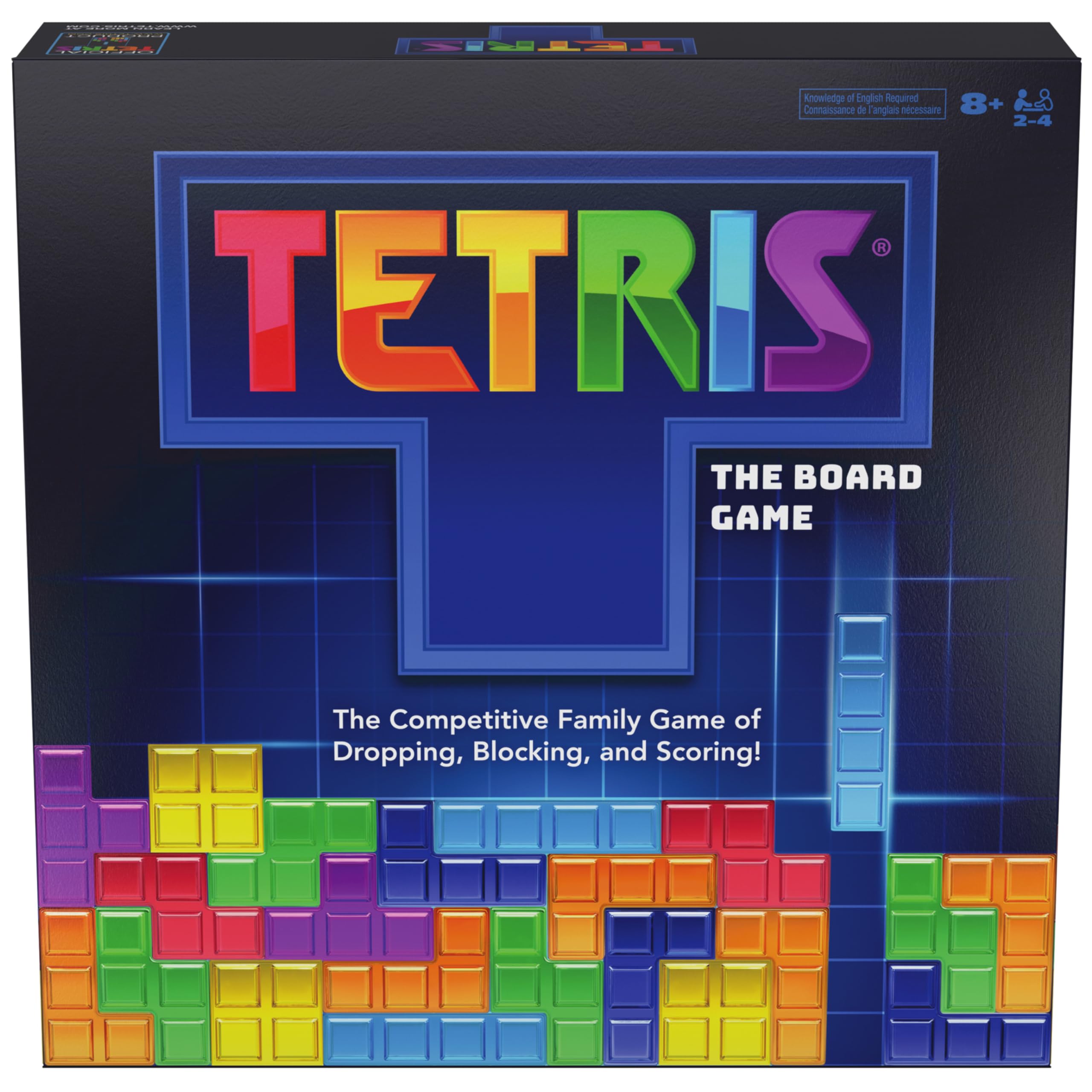
This tabletop translation of the legendary video game swaps the ticking timer for a turn-based structure where players draw Tetrimino cards, drop semi-translucent plastic pieces onto their personal grid, and race to complete lines. The catch: landing a Tetrimino on a black “Garbage Drop” icon lets you add a piece to an opponent’s grid, blocking their progress. The result is a competitive puzzle that forces spatial planning under the pressure of knowing the next player might sabotage your work.
Component quality is solid—the translucent Tetriminos are instantly recognizable to anyone who played the original, and the individual grid boards keep the chaos contained. The playing time sits at a brisk twenty minutes, which is ideal for quick filler rounds or tournaments across multiple sessions. Reviewers consistently note that the game is easy to learn in one round and that it sparks the same addictive “just one more game” feeling as the digital version.
The age rating of 8+ is accurate, but ten-year-olds grasp the strategic layer—deciding when to aim for a line versus when to sabotage an opponent—faster than younger kids. A few customers reported bent puzzle pieces on arrival, so inspect the box promptly, but the gameplay itself has drawn near-universal praise for its faithful recreation of the Tetris experience in physical form.
Why it’s great
- Brilliant physical recreation of the classic video game
- Competitive blocking mechanic adds real strategic tension
- Quick 20-minute rounds work for tournament-style play
Good to know
- Some reports of bent puzzle pieces in the box
- Requires 2-4 players, no solo mode
5. Game of the States

Game of the States revives the 1970s classic with original artwork and teaches U.S. geography through a pick-up-and-deliver economy. Players drive plastic pickup trucks across a folded map of the USA, buy goods from one state, sell them to another, and answer state-card questions about capitals, state flowers, and major products. The STEM Approved badge confirms its educational credentials, but the core loop—spinning, moving, buying, selling, collecting money—keeps the experience feeling like a game, not a quiz.
The components include four chunky plastic trucks, 16 wooden packages that physically sit in the truck beds, a deck of 50 state cards, and play money printed in realistic denominations. The tactile joy of loading packages into your truck matters at this age and reinforces the pick-up-and-deliver mechanic. The geography questions are genuinely informative without being punishing—wrong answers cost nothing, but correct ones earn bonus cash.
One quality caveat: a customer reported “Wisconsin” misspelled as “Wisconson” on a state card, which suggests some proofreading issues in the current print run. The remake removed tobacco-related references from the original and lowered the money amounts to match today’s sensibilities, making it appropriate for upper-elementary classrooms and family game nights alike. It plays best with 2-4 players and hits a sweet spot for homeschooling families.
Why it’s great
- Educational without feeling like homework—geography and economics in one loop
- Plastic trucks and wooden packages add satisfying physical interaction
- STEM Approved with clear learning objectives
Good to know
- One spelling error reported on a state card
- Best suited for kids already interested in U.S. geography
6. Hasbro Gaming Girl Talk Truth or Dare

This updated edition of the 1980s classic brings the truth-or-dare format to a new generation with 200 cards covering silly secrets, outrageous dares, and the occasional “choose a friend” twist. The large central spinner determines whether you answer a truth question (“How many selfies do you take a day?”) or attempt a dare, and the included score trackers let groups play competitively or go round-robin without keeping close count. It accommodates 2-10 players, making it one of the few games on this list that works for larger sleepover parties.
Reviewers consistently note that even reluctant players—including ten-year-old boys—get pulled into the fun once the dares start flying. The questions skew toward tween humor: light-hearted, slightly embarrassing, but never mean-spirited or inappropriate for the 10+ rating. The portable plastic case keeps the cards organized between parties, and the spinner is large enough to survive enthusiastic spins.
The downside is finite replay value. Once a group has worked through most of the 200 cards, the surprise factor diminishes. Rotating the deck or making up custom dares extends the life, but this is fundamentally a party fuel, not a repeatable strategy game. For its price point, especially on sale, it delivers concentrated giggles for the specific occasions when 8-10 kids crash at your house.
Why it’s great
- Large player count (2-10) perfect for sleepovers and parties
- 200 cards provide hours of tween-appropriate humor
- Portable case keeps everything tidy between uses
Good to know
- Replay value drops after the cards are exhausted
- Not a strategy game—pure party entertainment
7. Grandma Smiley’s Baseball Board Game
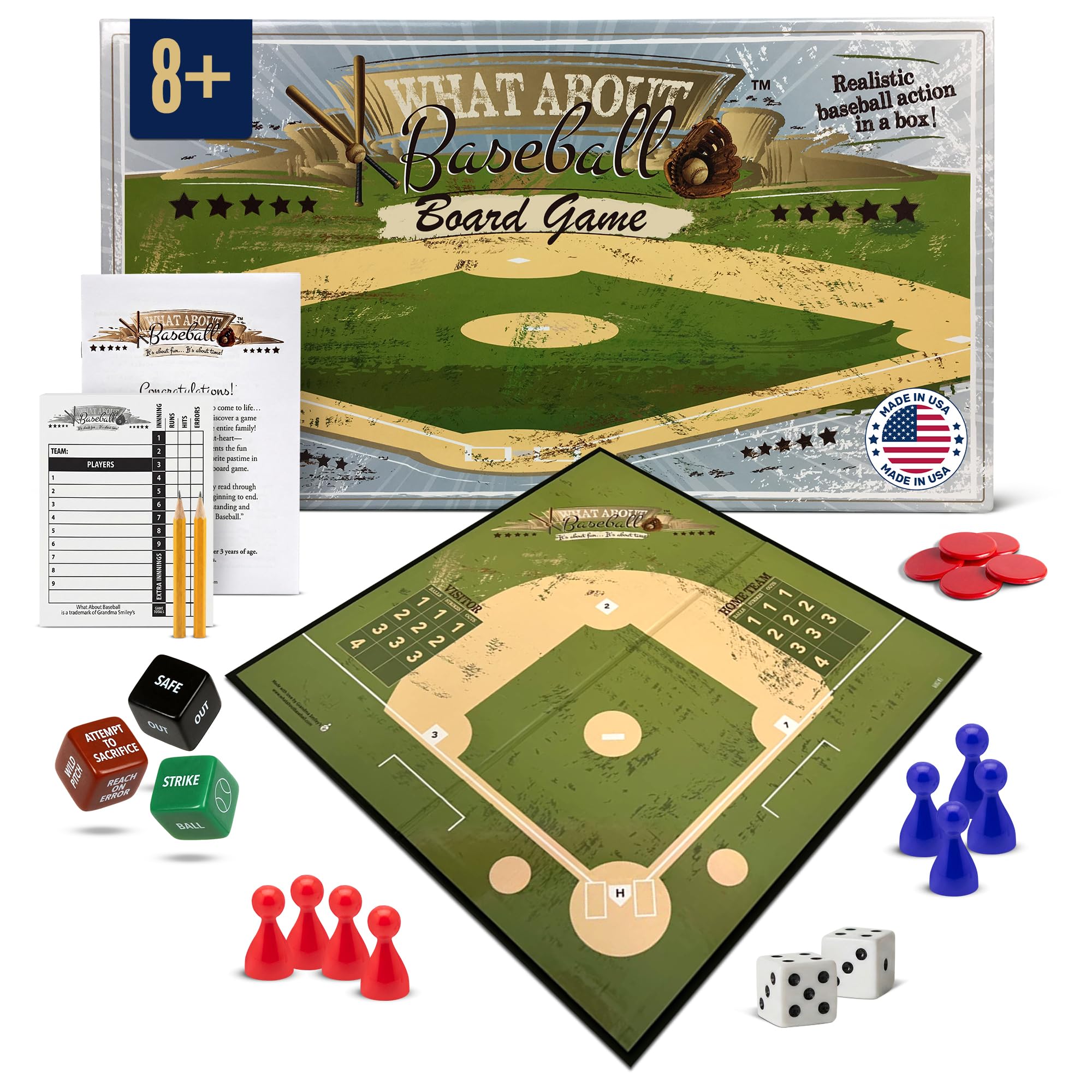
This dice-driven baseball simulation covers everything from pitching outcomes to base running with two standard dice and three special dice. The basic mode is simple enough for a ten-year-old to learn in five minutes: roll the pitcher die, roll the batter die, consult the outcome chart, advance runners. The advanced mode adds strategic wrinkles like hit-and-run, sacrifice bunts, and intentional walks, giving older kids and adults a deeper simulation without needing a rulebook the size of a phone book.
The components are straightforward: a game board with a diamond layout, four red and four blue tokens, dice, pencils, and a score pad. The American-made quality from a family-owned company is evident in the sturdy board and legible charts, but the lack of laminated cheat sheets for quick die-reference is a missed opportunity—younger players need to look up outcomes each time, which slows the pace. Some reviewers created their own reference cards to speed things up.
The simulation leans toward realism, meaning hits and home runs are relatively rare—true to real baseball, but potentially frustrating for kids expecting big action every roll. A simple house rule (swap triple and home run odds, for example) can fix the pace issue. For baseball-loving families who want to play year-round regardless of weather, this delivers a solid dice-and-paper experience that teaches probability, statistics, and sports strategy.
Why it’s great
- Teaches baseball fundamentals and statistical thinking in a fun format
- Basic and advanced modes grow with the player’s age
- Made in the USA with durable board and tokens
Good to know
- No laminated cheat sheets for quick die-outcome reference
- Realistic odds can make low-scoring games feel slow
FAQ
What is the recommended playtime for board games aimed at ten-year-olds?
How does a modular board improve replay value for kids this age?
Should I trust the recommended age range on the box?
Final Thoughts: The Verdict
For most users, the board games for 10 year olds winner is the CATAN 6th Edition because its modular board and trading mechanics deliver unmatched replay value while teaching negotiation and resource management. If you want a calmer, thirty-minute session with gorgeous components, grab the Harmonies. And for families who prefer fast-paced puzzle competition, nothing beats the Tetris Board Game at twenty minutes of pure spatial strategy.