
Our readers keep the lights on and the weekend projects moving. As an Amazon Associate, I earn from qualifying purchases.
Twelve-year-olds live at a tricky intersection — they crave strategy and competition but still want to laugh and feel clever, not buried under an overly complex rulebook. The right board game acts as a social anchor, replacing screen scrolling with real-time bluffing, resource trading, and cooperative problem-solving that actually keeps their attention.
I’m Rikta — the co-founder and writer behind FitlyFast. After logging hundreds of hours researching modern tabletop design, analyzing rulebook complexity for this exact age group, and cross-referencing family-test feedback, I’ve isolated the games that hit the sweet spot between accessible and genuinely challenging.
Whether you need a 20-minute filler or a 90-minute saga, this guide cuts through the clutter to deliver the absolute board games for 12 year olds that earn their place at the table night after night.
How To Choose The Best Board Games For 12 Year Olds
At age 12, kids are ready to move past pure luck-based roll-and-move games and engage with mechanics that involve resource management, set collection, and tactical planning. The key is finding a game that feels sophisticated without demanding the reading level or patience of an adult strategy gamer.
Playtime and Attention Span
Games that clock in at 20 to 60 minutes are the sweet spot for this age bracket. A 90-minute game like CATAN works well for a dedicated game night, but a 15-minute card game like Exploding Kittens is perfect for a quick pre-dinner round. Match game length to your available time slot.
Mechanics That Matter
Deck-building, tile placement, and set collection are the three mechanics that consistently engage 12-year-olds. These systems reward planning and adaptation without requiring memorization of dozens of rules. Avoid games that rely heavily on reading long card text — visual clarity and icon-driven instructions are a big plus.
Player Count and Interaction
Consider whether the game supports the number of players you typically have. Some titles like Ticket to Ride shine with 3-4 players, while Exploding Kittens scales up to 10 for larger groups. Cooperative games like Sky Team (2 players only) work best for sibling pairs or parent-child duos but won’t work for a full family gathering.
Quick Comparison
On smaller screens, swipe sideways to see the full table.
| Model | Category | Best For | Key Spec | Amazon |
|---|---|---|---|---|
| Ticket to Ride (2025 Refresh) | Premium | Family strategy nights | 30-60 min playtime | Amazon |
| CATAN 6th Edition | Premium | Deep resource trading | 60-90 min playtime | Amazon |
| Ravensburger Mycelia | Mid-Range | Intro to deck-building | 20-45 min playtime | Amazon |
| Asmodee Harmonies | Mid-Range | Tactile tile placement | 30 min playtime | Amazon |
| Scorpion Masqué Sky Team | Mid-Range | 2-player cooperative play | 20 min playtime | Amazon |
| Exploding Kittens Party Pack | Mid-Range | Large group chaos | 15 min playtime | Amazon |
| Gwent Official Licensed Version | Mid-Range | Deck-building duelists | 20 min playtime | Amazon |
In‑Depth Reviews
1. Asmodee Ticket to Ride Board Game (2025 Refresh)
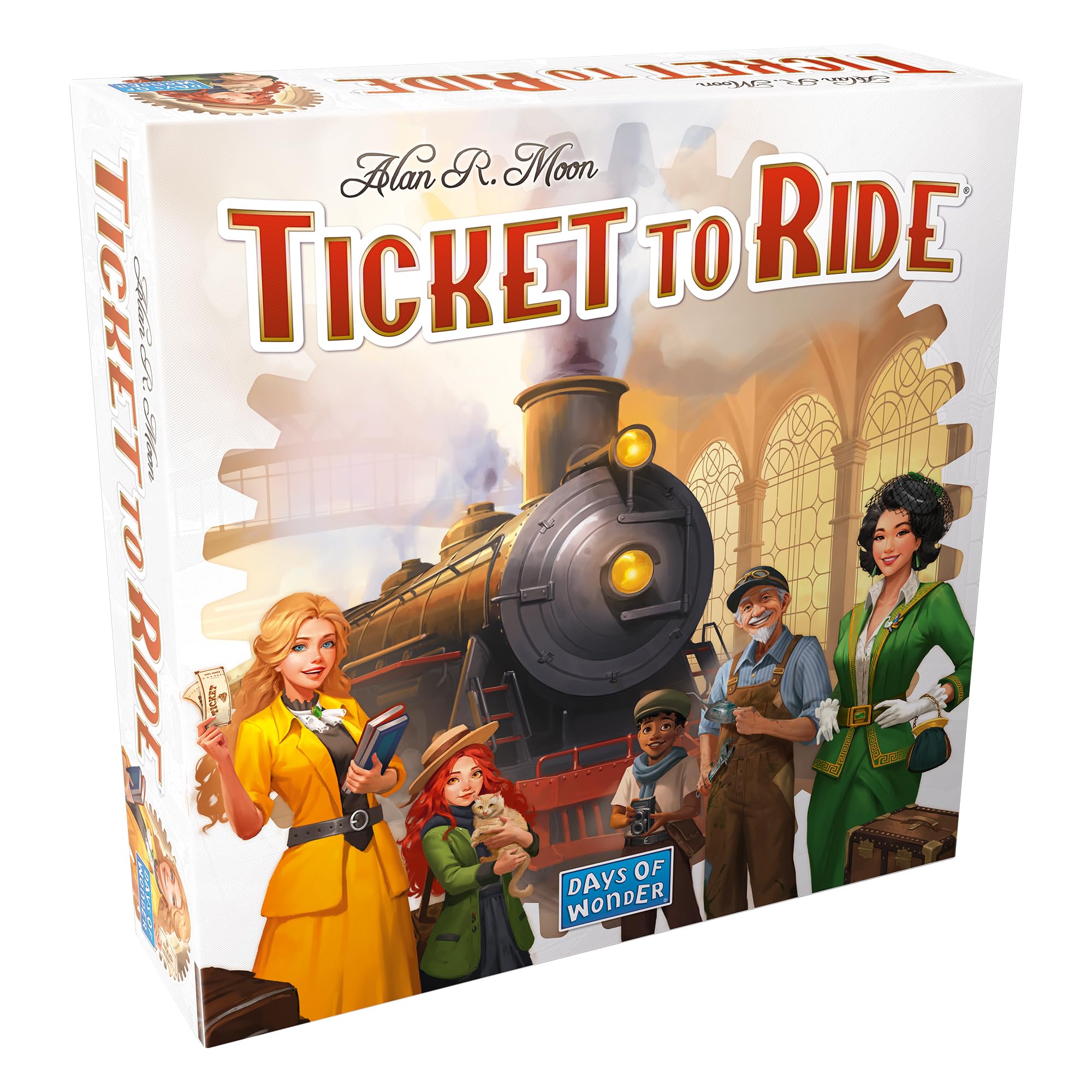
Ticket to Ride remains the gold standard for introducing 12-year-olds to route-building strategy. Players collect colored train cards and claim railway routes across a map of North America, competing to complete destination tickets while blocking opponents from their own connections. The 2025 refresh delivers updated artwork and the same smooth, accessible ruleset that has made this a family staple for two decades.
At 30 to 60 minutes per game, Ticket to Ride fits neatly into a weeknight slot without feeling rushed. The game scales gracefully from 2 to 5 players, and the lack of direct conflict — you’re racing for routes, not attacking each other — keeps the mood friendly while still forcing tough decisions. The geography angle is a bonus that quietly teaches map familiarity.
Component quality is excellent, with molded plastic trains in five colors, a sturdy board, and thick card stock that holds up to repeated shuffling. The rules can be taught in under five minutes, and the strategic depth (when to draw cards versus claim routes, which tickets to prioritize) unfolds naturally over repeated plays.
Why it’s great
- Easy to learn in under five minutes
- Strategic depth that rewards repeated plays
- Excellent component quality with plastic trains
Good to know
- Can be less exciting for players who prefer direct competition
- 8-year-olds may struggle; best at ages 10+
2. CATAN Board Game (6th Edition)

CATAN needs little introduction — it is the game that popularized modern euro-style strategy in North America. The premise is elegant: roll dice to collect resources from the hexagonal tiles surrounding your settlements, then trade those resources with other players to build roads, settlements, and cities. The first player to reach 10 victory points wins.
For a 12-year-old, CATAN teaches negotiation, probabilistic thinking, and adaptive strategy in a format that feels more like a contest of wits than a math lesson. The modular board ensures no two games play the same way, and the 6th Edition adds built-in card trays and chunkier wooden pieces that improve the tactile experience. Playtime runs 60 to 90 minutes, making it best suited for a dedicated family game night.
The robber mechanic — where a player can block one hex from producing resources — adds tension without being mean-spirited, and younger players quickly learn to manage their resource diversity to avoid being crippled by a well-placed robber. The rulebook is clear enough for a 12-year-old to read independently after one guided playthrough.
Why it’s great
- Teaches resource management and negotiation skills
- Highly replayable with a modular board
- Improved components in the 6th Edition
Good to know
- Playtime can stretch to 90 minutes
- Requires 3-4 players; no 2-player mode without expansions
3. Ravensburger Mycelia Deck-Building Game

Mycelia wraps classic deck-building mechanics in a charming mushroom forest theme that feels fresh and inviting. Players start with a modest hand of cards and gradually purchase more powerful cards to remove dewdrops from their board faster than opponents. The game includes 94 cards, 82 dewdrop tokens, coins, and a 3D Shrine of Life that serves as the visual centerpiece.
The learning curve is deliberately gentle — younger players can grasp the rules in a single round, but strategic depth emerges as they learn which card combinations chain most efficiently. Games last 20 to 45 minutes, and the solo mode against a ghost mushroom adds replay value for kids who want to practice without waiting for an opponent.
Ravensburger’s component quality is consistently high, with thick card stock and vibrant, detailed illustrations of the “mushfolk” that populate the forest. The game has earned MESH accreditation for supporting mental, emotional, and social health through intentional play, making it a smart choice for parents who value educational impact alongside entertainment.
Why it’s great
- Accessible introduction to deck-building mechanics
- Solo mode adds excellent replay value
- Beautiful, detailed artwork and quality components
Good to know
- Minimal direct player interaction; mostly focused on your own board
- May feel too light for experienced strategy gamers
4. Asmodee Harmonies Board Game

Harmonies offers a meditative tile-placement experience where players build three-dimensional landscapes out of wooden tokens, then place animal cubes on matching terrain patterns to score points. The result is a game that feels like a puzzle you solve with your hands — you physically stack and arrange pieces on your personal board, creating a satisfying tactile experience.
The rules are simple enough for a 12-year-old to internalize after one explanation, but the scoring system rewards careful planning around terrain adjacency and animal card requirements. With 120 wooden tokens, 79 animal cubes, and 42 beautifully illustrated cards, the production value is outstanding. Games last about 30 minutes, and the solo mode against a Nature’s Spirit variant provides a solid challenge for independent play.
This is a multiplayer solitaire game — each player builds their own landscape with minimal interference from others. That makes it an excellent choice for neurodivergent kids or anyone who finds direct competition stressful. The visual payoff of a completed landscape is genuinely rewarding, and the three difficulty levels keep it fresh after dozens of plays.
Why it’s great
- Relaxing, tactile gameplay with high-quality wooden pieces
- Three difficulty levels for long-term replayability
- Solo mode included for independent play
Good to know
- Limited player interaction; works best for focused individual play
- Game can end somewhat abruptly when card draw finishes
5. Scorpion Masqué Sky Team

Sky Team is a two-player cooperative game where one player acts as pilot and the other as co-pilot, working together to land a commercial airplane safely. Communication is deliberately restricted — players roll their dice simultaneously and must place them on the cockpit board without discussing exact placements. This creates a unique tension where trust and pattern recognition matter more than talk.
The game won the 2024 Spiel des Jahres (Germany’s top board game award), and for good reason. The 20 different airport scenarios introduce escalating challenges like kerosene leaks, icy runways, and a new intern who messes up the controls. Each scenario changes the dice limitations and available actions, so the game stays fresh for dozens of plays. A single round takes about 20 minutes.
Sky Team solves the “alpha player” problem that plagues many cooperative games — because you can’t discuss your exact dice placement, neither player can dominate the decision-making. This makes it ideal for siblings or parent-child pairs who want a collaborative challenge without one person bossing the other around. The compact box also makes it easy to bring along on trips.
Why it’s great
- Eliminates the alpha-player problem in co-op games
- High replayability with 20 different airport scenarios
- Compact, portable box design
Good to know
- Only plays 2 players; not suitable for larger groups
- Silent placement mechanic may frustrate some younger players
6. Exploding Kittens Party Pack

Exploding Kittens is the card game that turned a ridiculous Kickstarter into a global phenomenon, and the Party Pack version expands the chaos to support up to 10 players. The premise is simple: players take turns drawing cards until someone draws an Exploding Kitten and is eliminated — unless they have a defuse card to cancel it. The absurd Oatmeal illustrations and silly card effects keep the mood light and hilarious.
With 120 cards including the original deck, the Imploding Kittens expansion, and 10 new exclusive cards, the Party Pack offers significantly more variety than the base version. Games are fast — around 15 minutes — which means eliminated players don’t wait long before the next round starts. The rules can be taught in under two minutes, making it the ideal choice for mixed-age gatherings where grandparents and younger siblings might join in.
For 12-year-olds, the appeal lies in the strategic layer beneath the randomness: knowing when to use skip cards, how to read opponents’ reactions, and when to hold a defuse versus playing aggressive cards. The humor is irreverent without being inappropriate, and the high player count makes it easy to fill a party or sleepover without splitting into smaller groups.
Why it’s great
- Supports up to 10 players for large groups
- Extremely fast to teach and play (15 minutes per round)
- Hilarious artwork and party-friendly tone
Good to know
- Elimination mechanic means players sit out once they lose
- Text on cards can be small for some readers
7. Gwent Official Licensed Version
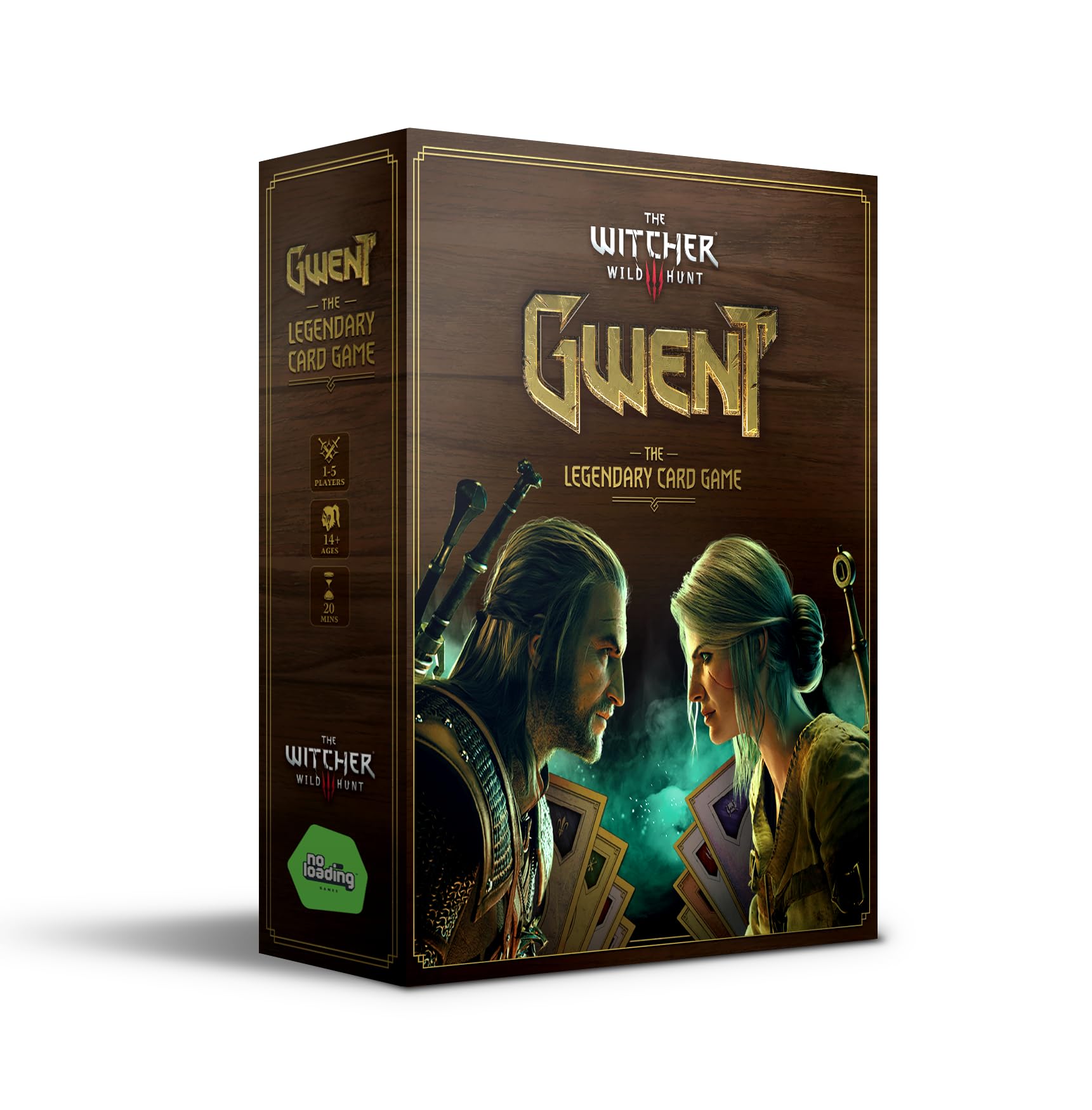
Gwent brings the beloved card-minigame from The Witcher video game series to your tabletop with over 400 cards spread across five distinct factions. Players build a deck from their faction’s pool, then compete in best-of-three rounds where the goal is to have the highest total points on the board when each round ends. Bluffing is central — you can pass a round early to force your opponent into wasting high-value cards, then crush them in the next round.
The physical card quality is excellent, with thick cardstock and artwork faithfully reproduced from the video game. The set includes all five faction decks plus a paper playmat, though veteran players recommend upgrading to a hard cardboard mat for durability. Games are quick (about 20 minutes) and the head-to-head format encourages rematches while the loser fine-tunes their deck list.
For a 12-year-old who enjoys strategy and already knows the Witcher universe, Gwent offers a deep deck-building experience that rewards experimentation and careful resource management. The faction system provides clear identity — the Nilfgaardian Empire excels at spy mechanics, while the Northern Realms focus on boosting units. It is a more complex game than Exploding Kittens, but the rules can be learned in a single playthrough and the strategic depth unfolds over dozens of matches.
Why it’s great
- Over 400 high-quality cards with beautiful artwork
- Quick 20-minute matches encourage repeat play
- Deep bluffing and resource management mechanics
Good to know
- Paper playmat may wear out; a hard mat is recommended
- Best for players already familiar with The Witcher universe
FAQ
How long should a board game take for a 12-year-old to learn?
What game mechanics work best for 12-year-olds?
Is cooperative play or competitive play better for 12-year-olds?
Can 12-year-olds play games rated for ages 14+?
Final Thoughts: The Verdict
For most users, the board games for 12 year olds winner is the Ticket to Ride (2025 Refresh) because it strikes the perfect balance between easy-to-learn rules and genuine strategic depth, scales well from 2 to 5 players, and delivers consistent replay value through its route-building system. If you want a deep resource-trading epic that anchors a dedicated game night, grab the CATAN 6th Edition. And for a cooperative 2-player experience that builds teamwork without one person taking over, nothing beats the Scorpion Masqué Sky Team.