
Our readers keep the lights on and the weekend projects moving. As an Amazon Associate, I earn from qualifying purchases.
Finding a board game that challenges an eight-year-old without overwhelming them—and keeps everyone else at the table engaged—can feel like threading a needle. Too simple and they get bored; too complex and the box stays shut. The sweet spot sits at the intersection of clear rules, meaningful decisions, and a playtime that respects short attention spans.
I’m Rikta — the co-founder and writer behind FitlyFast. I’ve spent dozens of hours researching and analyzing game mechanics, age recommendations, and real user feedback across dozens of family game titles to identify which ones deliver genuine replay value for this exact age group.
Whether you want a cooperative space mission, a physical marble maze, or a classic train adventure, the best board games for 8 year olds strike a balance between learning and laughter without dragging past bedtime.
How To Choose The Best Board Games For 8 Year Olds
Not every game with an age suggestion of “8+” actually works for an eight-year-old. The best picks for this group balance tactical thinking with quick turns so no one sits idle long enough to lose focus. Three factors separate the hits from the shelf dust collectors.
Playtime and Pacing
A game that runs past 60 minutes tests the patience of most eight-year-olds, especially if elimination mechanics leave early losers watching. Look for titles with a 20–45 minute playtime. Cooperative games keep everyone engaged until the final outcome, while round-based competitive games like Ticket to Ride let players plan their next move during others’ turns, reducing downtime.
Reading and Math Independence
Games that rely on pictures, symbols, or simple number recognition let kids play without constantly asking an adult to read cards. Exploding Kittens and CATAN use icon-driven cards, while Gravity Maze uses visual challenge cards that require zero reading. If a game requires advanced reading comprehension, plan to act as a game master for the first few rounds.
Replayability vs. Novelty
A game that offers a solved strategy after two rounds loses its appeal fast. Modular boards (CATAN), progressive challenge levels (Gravity Maze), and variable card decks (Ticket to Ride) create fresh scenarios every session. Games built around a single gimmick, like a collapsing tower, can still deliver variety if the building phase changes meaningfully each time, as seen in Monkey Palace.
Quick Comparison
On smaller screens, swipe sideways to see the full table.
| Model | Category | Best For | Key Spec | Amazon |
|---|---|---|---|---|
| Ticket to Ride (2025 Refresh) | Strategy | Route planning | 30–60 minute playtime | Amazon |
| CATAN (6th Edition) | Strategy | Resource management | Modular hexagonal board | Amazon |
| ThinkFun Gravity Maze | STEM Logic | Spatial reasoning | 60 challenge cards | Amazon |
| Monkey Palace (LEGO Board Game) | Creative Strategy | Building + planning | 231 LEGO elements | Amazon |
| Exploding Kittens Board Game | Party | Fast-paced fun | Flip-board mechanic | Amazon |
| Spin Master Tetris Board Game | Puzzle | Head-to-head blocking | 128 Tetrimino pieces | Amazon |
| Peaceable Kingdom Space Escape | Cooperative | Team play | No reading required | Amazon |
In‑Depth Reviews
1. Ticket to Ride Board Game (2025 Refresh)
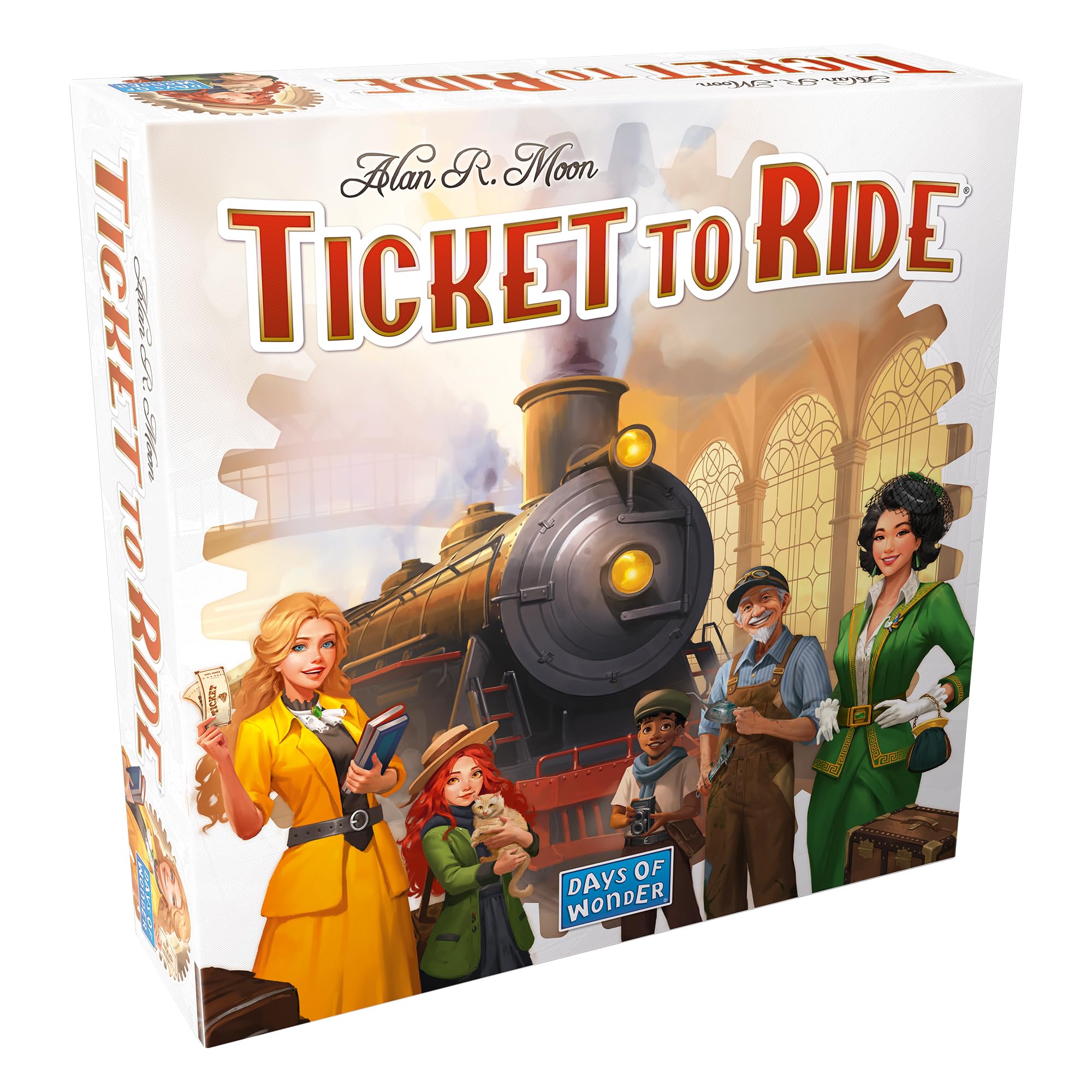
Ticket to Ride sets the gold standard for gateway strategy games because its core loop—collect colored train cards, claim routes, connect cities—takes about two minutes to explain yet rewards multi-turn planning. The 2025 refresh brings a cleaner board and updated components, but the same elegant set-collection mechanic that has made it a family staple for years remains intact.
Eight-year-olds grasp the “collect and claim” rhythm quickly. The geographic map offers a subtle geography lesson, and because players take turns simultaneously building their networks, downtime stays minimal. The hidden destination tickets add a light push-your-luck element that keeps adults engaged without creating a gap the child can’t close.
The game supports up to five players, making it one of the few premium titles that scales well for larger families. Expect a typical session to land around 45 minutes once everyone knows the flow. If you want one game that bridges generational skill gaps and stays fun for years, this is it.
Why it’s great
- Clear icon-based cards require minimal reading
- Scalable strategy that works for ages 8 through adult
- High replayability due to variable ticket combinations
Good to know
- Map is US-focused; some kids may need help identifying cities
- Plastic train pieces are small and easy to lose
2. CATAN Board Game (6th Edition)

CATAN’s modular hex board ensures no two games play the same, and the 6th Edition includes quality-of-life upgrades like built-in card trays and a beginner-friendly rulebook that simplifies teaching. The core loop—roll dice, collect resources, trade with neighbors, build roads and settlements—introduces economic thinking in a way that feels like a game, not a lesson.
Eight-year-olds can handle the resource math once they internalize the five resources (wood, brick, wheat, ore, sheep). Trading adds a social negotiation layer that kids love; they learn to advocate for trades and read opponents’ needs. The robber mechanic prevents runaway leaders by allowing players to target whoever is ahead, keeping games competitive.
Sessions run 60–90 minutes, which may be long for some kids at this age. Playing with three players tightens the strategy and cuts playtime closer to 60 minutes. The recommended age of 10+ is conservative—most eight-year-olds with prior game experience pick it up within two rounds with a patient adult guiding resource trades.
Why it’s great
- Modular board creates near-infinite replayability
- Trading mechanic teaches negotiation and resource management
- 6th Edition card trays keep the table organized
Good to know
- Playtime may exceed an hour for younger players
- Requires 3–4 players; no 2-player variant included
3. ThinkFun Gravity Maze

Gravity Maze occupies a rare space where a single-player logic puzzle doubles as a group activity. Players build a tower using colored towers and a target piece, then drop a marble from the top and watch it navigate the path they designed. The instant visual feedback—did the marble reach the target?—makes abstract spatial reasoning concrete and satisfying.
The 60 challenge cards ramp from beginner to expert, so an eight-year-old can start at the easy tier and build confidence before tackling harder configurations. No reading is required; the cards show a 2D picture of the required towers and the target, and the player figures out placement and height. Adult reviewers note that some intermediate challenges stump experienced players, giving this game real legs for family time.
The physical act of placing towers and releasing the marble holds attention better than screen-based puzzles. If your child gravitates toward building toys and solving mazes, this bridges both worlds. The five-star consistency across hundreds of reviews confirms its reputation as one of the most reliable STEM toys for this age bracket.
Why it’s great
- Zero reading required; purely visual and tactile
- 60 progressive challenges provide months of replay
- Develops planning, spatial reasoning, and patience
Good to know
- Designed primarily as a single-player experience
- Beginner puzzles may feel too easy for advanced 8-year-olds
4. Monkey Palace (LEGO Board Game)

Monkey Palace fuses LEGO brick construction with a competitive board game where players build towers and place monkeys to score points. The catch: unstable towers can collapse mid-turn, dumping pieces and changing the board state. That unpredictability generates the kind of laugh-out-loud moments that eight-year-olds remember and ask to repeat.
The game includes 231 LEGO elements and a 32×32 stud plate, so the building feels substantial. Each turn involves drawing a card, placing bricks according to color requirements, and deciding whether to place a monkey on a high or low position—balancing immediate points against the risk of toppling. The mild pressure of a wobbling tower keeps even less strategic kids engaged.
Setup and cleanup take longer than traditional board games because bricks get scattered during play. The recommended age of 10+ is conservative; reviewers report success with ages 7–8, especially children who already enjoy LEGO. The game shines brightest with three players, and the bricks are compatible with existing LEGO collections, adding building value beyond the game itself.
Why it’s great
- Combines creative building with turn-based strategy
- Tower collapse mechanic keeps games exciting and unpredictable
- LEGO bricks add play value beyond the game
Good to know
- Setup and cleanup take longer than average board games
- Color-blind players may struggle distinguishing green brick shades
5. Exploding Kittens Board Game
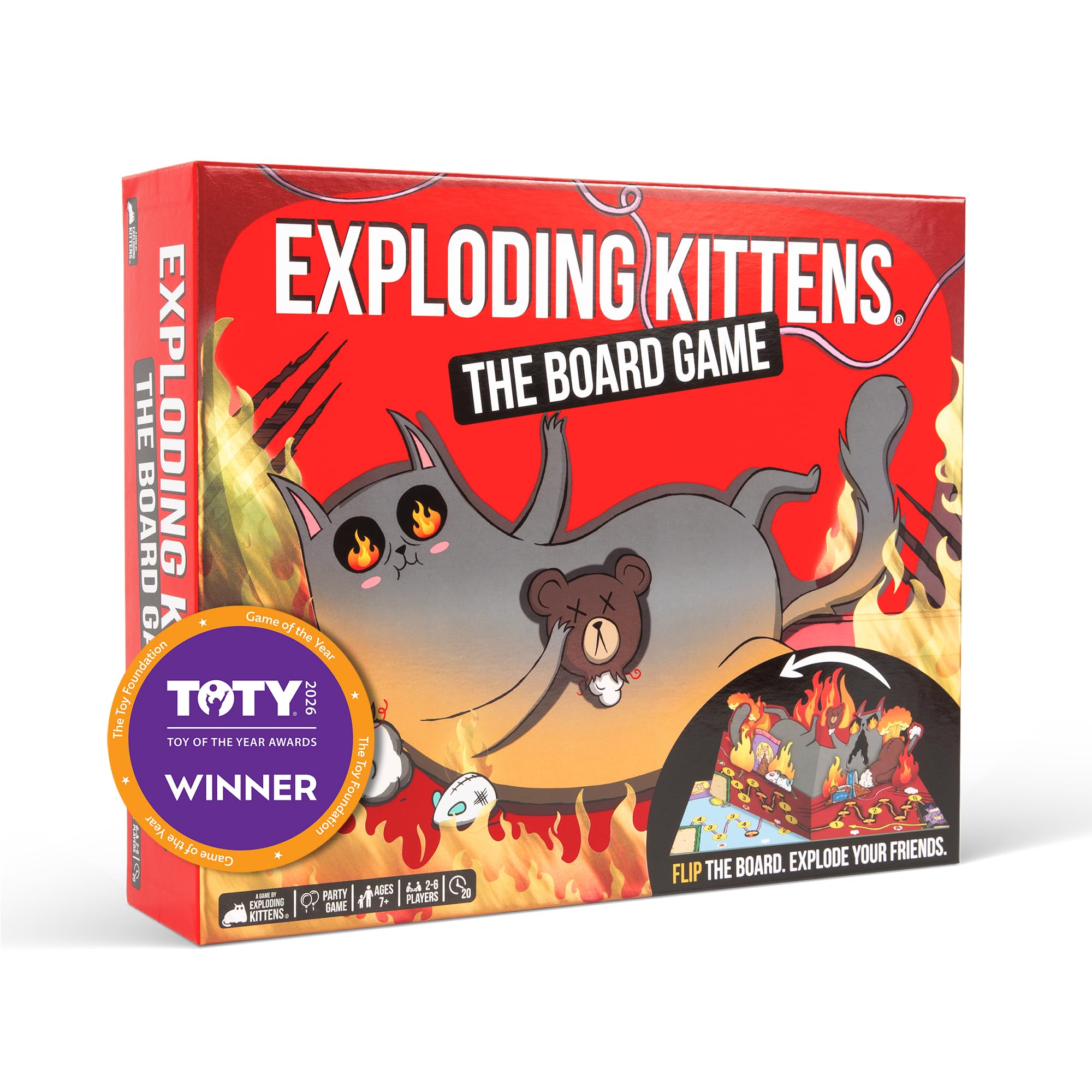
The Exploding Kittens Board Game expands the wildly popular card game with a physical board that flips mid-game, revealing new paths and hazards. The premise is simple: move your character across the board without drawing an exploding kitten card. The flippable board mechanic means the safe path can become deadly in an instant, forcing players to adapt on the fly.
Action cards like Meatpants and Butterfly Punch inject the same absurd humor that made the original card game a phenomenon. Eight-year-olds love the silly artwork and the tension of the draw pile. The game supports up to six players, and the pop-up board assembles in seconds. Playtime varies from 30 to 60 minutes depending on the group’s luck and strategy.
Some reviewers note that the board game feels less action-packed than the original card game, especially for players who already own the card version. The recommended age of 7+ is accurate, but the humor skews slightly older and may require an adult to explain some card interactions during the first game. The hologram flame effect on the board artwork is a nice tactile touch that kids notice immediately.
Why it’s great
- Flip-board mechanic creates dynamic, unpredictable gameplay
- Supports up to 6 players for larger gatherings
- Icon-driven cards require minimal reading
Good to know
- Board folds stiffly at first; needs breaking in
- Card interactions may confuse first-time players without an adult
6. Spin Master Games Tetris Board Game
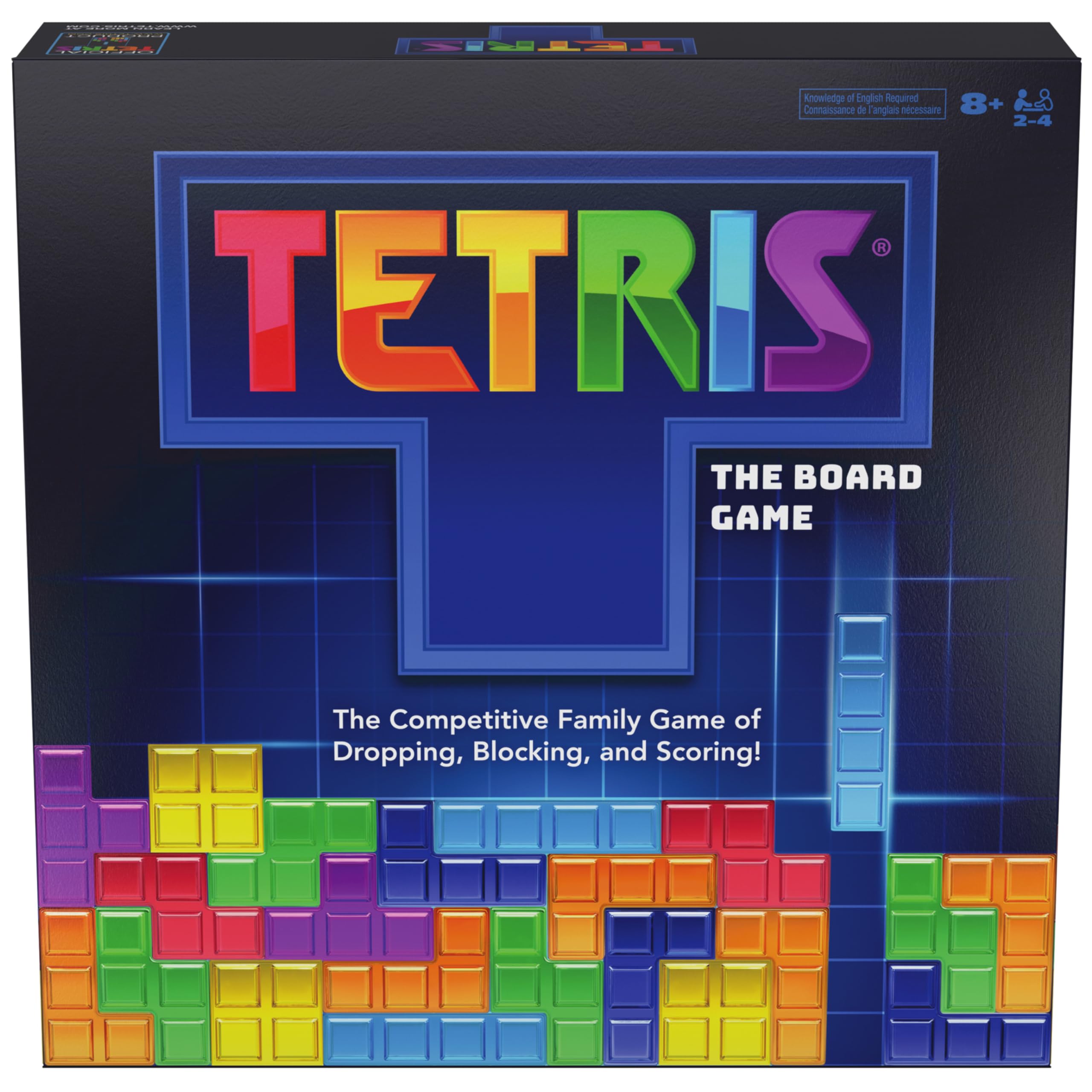
The Tetris Board Game translates the iconic video game into a tactile experience where players drop semi-translucent Tetriminos into their personal grid, trying to complete lines before their opponents. The head-to-head element comes from “garbage drop” spaces—land a Tetrimino on one and you force a blocker piece into an opponent’s grid, mimicking the classic game’s competitive mode.
Eight-year-olds familiar with digital Tetris will recognize the shapes immediately, but the physical piece placement adds a new spatial challenge. The game comes with 128 Tetriminos and 8 Minos (single-block pieces), providing enough material for multiple rounds. Each session runs about 20 minutes, making this one of the quickest options in this list—ideal for after-school play or between activities.
The components are colorful and durable, though some early shipments reported bent puzzle pieces that required manual flattening. The competitive garbage-drop mechanic can frustrate kids who struggle with spatial rotation, but it also motivates them to improve their placement speed. The cognitive skill development angle—pattern recognition, planning ahead, adapting to new pieces—makes this a stealth learning tool.
Why it’s great
- Fast 20-minute rounds suit short attention spans
- Direct head-to-head blocking adds strategic depth
- Familiar theme lowers the learning curve
Good to know
- Spatial rotation can be challenging for less experienced players
- Some pieces may arrive bent and need manual straightening
7. Peaceable Kingdom Space Escape

Space Escape puts everyone on the same side: players guide Mole Rat astronauts through a snake-infested space station to reach the escape pod. The cooperative design means no one gets eliminated and no one feels left out. Each turn, a player draws a card that dictates two actions—one for the Mole Rats and one for the snakes—forcing the group to discuss and agree on the best moves together.
The game requires zero reading, making it accessible to younger siblings and children who struggle with text-heavy rules. The challenge level is adjustable: the included “challenge game” variant adds tougher conditions once the base game feels too easy. Reviewers report that even 9- and 10-year-olds enjoy the cooperative tension, and the thrill of escaping together creates genuine shared celebration.
Components are thick and durable, designed to survive repeated family sessions. The game board is colorful and clear, with distinct icons that prevent confusion. Downsides are minor: the recommended age of 7+ is accurate, but the cooperative format means aggressive competitive players may find it less satisfying. For families who want to emphasize teamwork over competition, this is an excellent choice.
Why it’s great
- Zero reading required; purely visual gameplay
- Forces communication and shared decision-making
- Adjustable challenge level extends replay life
Good to know
- Cooperative style may not appeal to highly competitive kids
- Snake action cards can feel punishing if drawn repeatedly
FAQ
Are board games with a recommended age of 10+ suitable for an eight-year-old?
How many cooperative games should I own versus competitive games for an eight-year-old?
Final Thoughts: The Verdict
For most users, the best board games for 8 year olds winner is the Ticket to Ride (2025 Refresh) because its simple set-collection mechanic scales beautifully from casual to competitive play, works across a wide age range, and offers high replayability through variable ticket combinations. If you want a cooperative game that builds teamwork and requires zero reading, grab the Peaceable Kingdom Space Escape. And for a solo-friendly STEM puzzle that challenges spatial reasoning through physical building, nothing beats the ThinkFun Gravity Maze.