
Our readers keep the lights on and the weekend projects moving. As an Amazon Associate, I earn from qualifying purchases.
Finding a board game that holds a nine-year-old’s attention can feel like a diplomatic mission. Too simple and they roll their eyes; too complex and you lose them before the first turn. The right pick balances clear rules, a dash of luck, and a real payoff in fun for everyone at the table.
I’m Rikta — the co-founder and writer behind FitlyFast. I’ve spent years analyzing family strategy games, comparing component quality, learning curves, and replay value across dozens of titles for the 8-12 age bracket.
Whether you need a fast card game for a big group or a sprawling strategy classic, this guide cuts through the clutter to find the best board games for 9 year olds that your family will actually want to play again.
How To Choose The Best Board Game For 9 Year Olds
At nine, kids have developed stronger logic and social skills, but still need games that move quickly and don’t drag between turns. The best picks use clear goals, offer meaningful choices, and keep all players engaged even when it’s not their turn.
Game Length and Pace
A 9-year-old’s focus peaks around 30 to 60 minutes. Games that run over 90 minutes, like some strategy titans, can lose momentum unless the child is already hooked on the genre. Shorter rounds (15-30 minutes) let you replay and adjust strategies, which builds confidence.
Reading and Rule Complexity
Look for games with icon-based instructions or minimal text on cards. Nine-year-olds read independently, but games that rely on constant card reading can slow down play. A ruleset you can explain in under three minutes usually scores a win.
Competitive vs. Cooperative
Cooperative games (where everyone wins or loses together) reduce anxiety for sensitive players and encourage verbal teamwork. Competitive games teach graceful winning and losing, and often have higher replay value. The best family collections include one of each.
Quick Comparison
On smaller screens, swipe sideways to see the full table.
| Model | Category | Best For | Key Spec | Amazon |
|---|---|---|---|---|
| Ticket to Ride | Strategy | Classic family strategy | 30-60 min playtime | Amazon |
| CATAN 6th Edition | Strategy | Resource management gaming | 60-90 min playtime | Amazon |
| Monkey Palace | Creative Building | LEGO fans who love strategy | 45 min playtime | Amazon |
| The World Game | Educational | Learning geography through play | 194 countries included | Amazon |
| Exploding Kittens Party Pack | Party Card | Quick, chaotic fun with up to 10 players | 15 min playtime | Amazon |
| Space Escape | Cooperative | Teamwork without a loser | Cooperative gameplay | Amazon |
| Tetris: The Board Game | Puzzle/Strategy | Real-life puzzle competition | 20 min playtime | Amazon |
In‑Depth Reviews
1. Ticket to Ride Board Game (2025 Refresh)
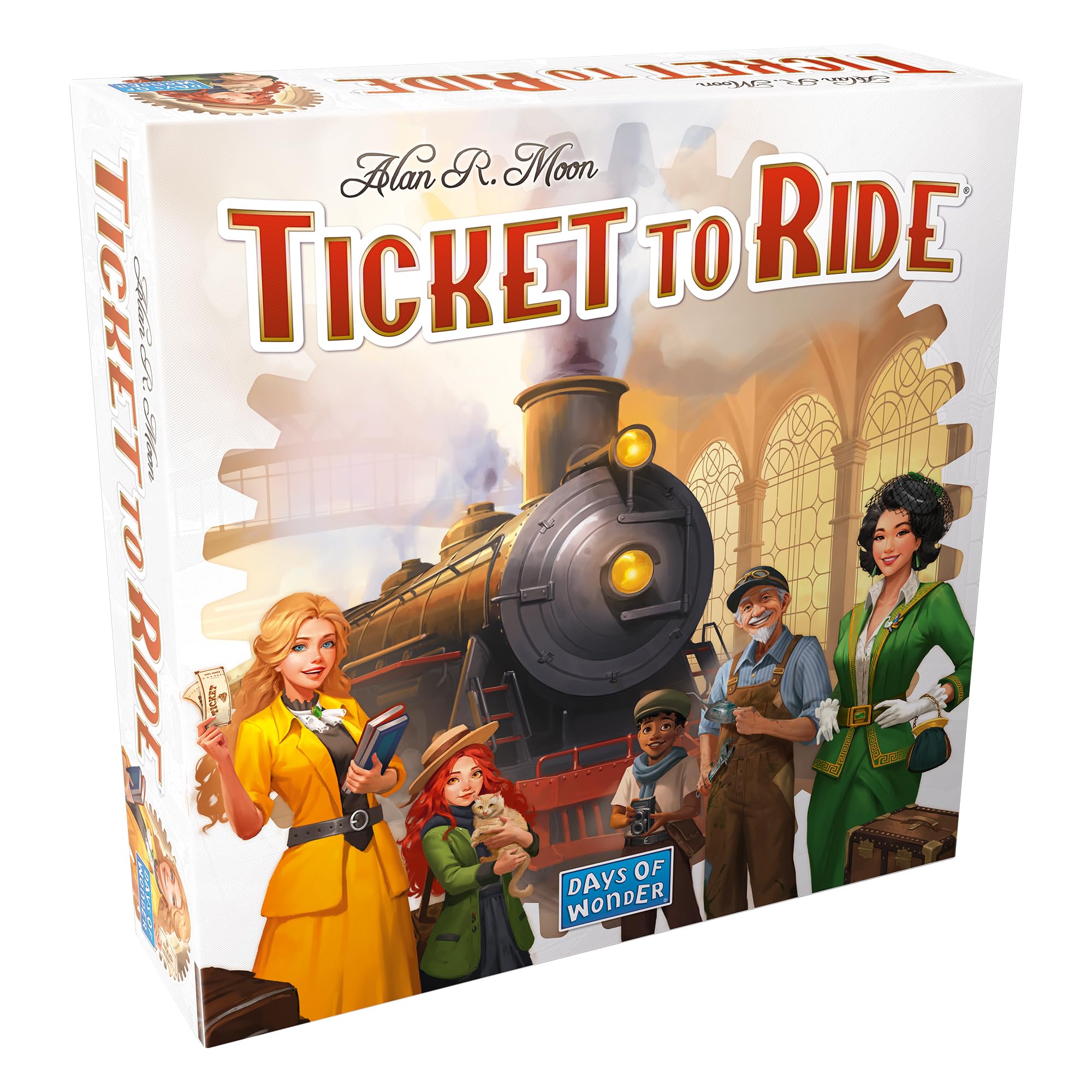
Ticket to Ride remains the gold standard for introducing 9-year-olds to modern strategy gaming. The rulebook is picture-based, which means zero reading-heavy moments during play — a huge advantage for keeping the pace up. Each player collects colored train cards to claim railway routes across a North American map, aiming to connect far-apart cities for bonus points. The 2025 refresh uses a larger, more vibrant board and chunkier plastic trains that survive excited table slaps.
The core loop is deceptively simple on the surface but rewards forward-thinking planning. Kids learn to block opponents, manage hand size, and weigh short-term points against long destination tickets. Games consistently finish in 45 minutes with four players, and there is no player elimination. Every struggling player stays in until the final scoring, which keeps morale even for competitive families.
Setup takes under five minutes and the box fits standard shelves. The only watchpoint is the ticket cards contain small text, but the icon on the map makes destinations identifiable without reading. For a single purchase that will see consistent weekend play for years, this is the safest bet on this list.
Why it’s great
- Easy to learn from picture-based rules
- High replay value with variable ticket draws
- All players stay in until the end
Good to know
- Ticket card text is small
- No official 2-player variant with base game
2. CATAN Board Game (6th Edition)

CATAN has been the entry-level strategy game for decades, and the 6th Edition makes it significantly friendlier for younger players. The biggest improvement is the modular hexagonal board, which means you can adjust the layout to reduce competition density for a first game. Nine-year-olds grasp the resource cycle (roll dice, collect bricks and wood, build roads and settlements) after just two rounds — no reading required beyond the icon reference card.
The trading element is where the real social growth happens. Kids must negotiate trades with other players, learning to evaluate fair exchanges and form temporary alliances. The 6th Edition also renamed “Lumber” to “Wood” and “Grain” to “Wheat,” which eliminates the small vocabulary hurdle that used to trip up younger players. The new card trays keep resource cards organized and visible, reducing the fiddly feeling that slowed down earlier editions.
Game length pushes 75 minutes with new players, so it demands more stamina than Ticket to Ride. But the modular board ensures no two games feel the same, and the 5-6 player expansion is readily available. For a family that wants to graduate from gateway games to deeper strategy, CATAN is the natural next step.
Why it’s great
- Modular board for near-limitless replay
- Teaches negotiation and resource planning
- Improved component quality in 6th Edition
Good to know
- Longer playtime may test young attention spans
- Best with exactly 4 players
3. Monkey Palace – LEGO Board Game

Monkey Palace is the rare game that bridges the gap between pure building and board game strategy. Players construct towers from real LEGO bricks to place their monkey minions, scoring bananas when structures collapse. The physicality of stacking bricks as part of the gameplay loop keeps kinetic learners fully engaged, and the unpredictable wobble factor injects genuine tension that static board games lack.
Each turn presents a spatial puzzle: build upward to earn more points but risk collapse, or build wide for stability with fewer bananas. The game includes 231 genuine LEGO elements and a 32×32 stud plate, all fully compatible with existing collections. There is no reading required — all instructions are icon-based, and the scoring is simply count your bananas at the end. A nine-year-old can explain the rules to their friends in under a minute.
Setup and cleanup take longer than a standard card game due to the brick sorting, and experienced reviewers note that the included bricks may run thin with three or more players after several rounds. However, you can supplement with your own LEGO bricks without any compatibility issues. For LEGO-loving families, this is an instant hit that feels less like homework and more like an extension of play.
Why it’s great
- Physical brick stacking is naturally engaging
- Icon-based rules, zero text reading
- Compatible with existing LEGO sets
Good to know
- Brick sorting adds setup and cleanup time
- May need extra bricks for larger groups
4. The World Game – Geography Board Game
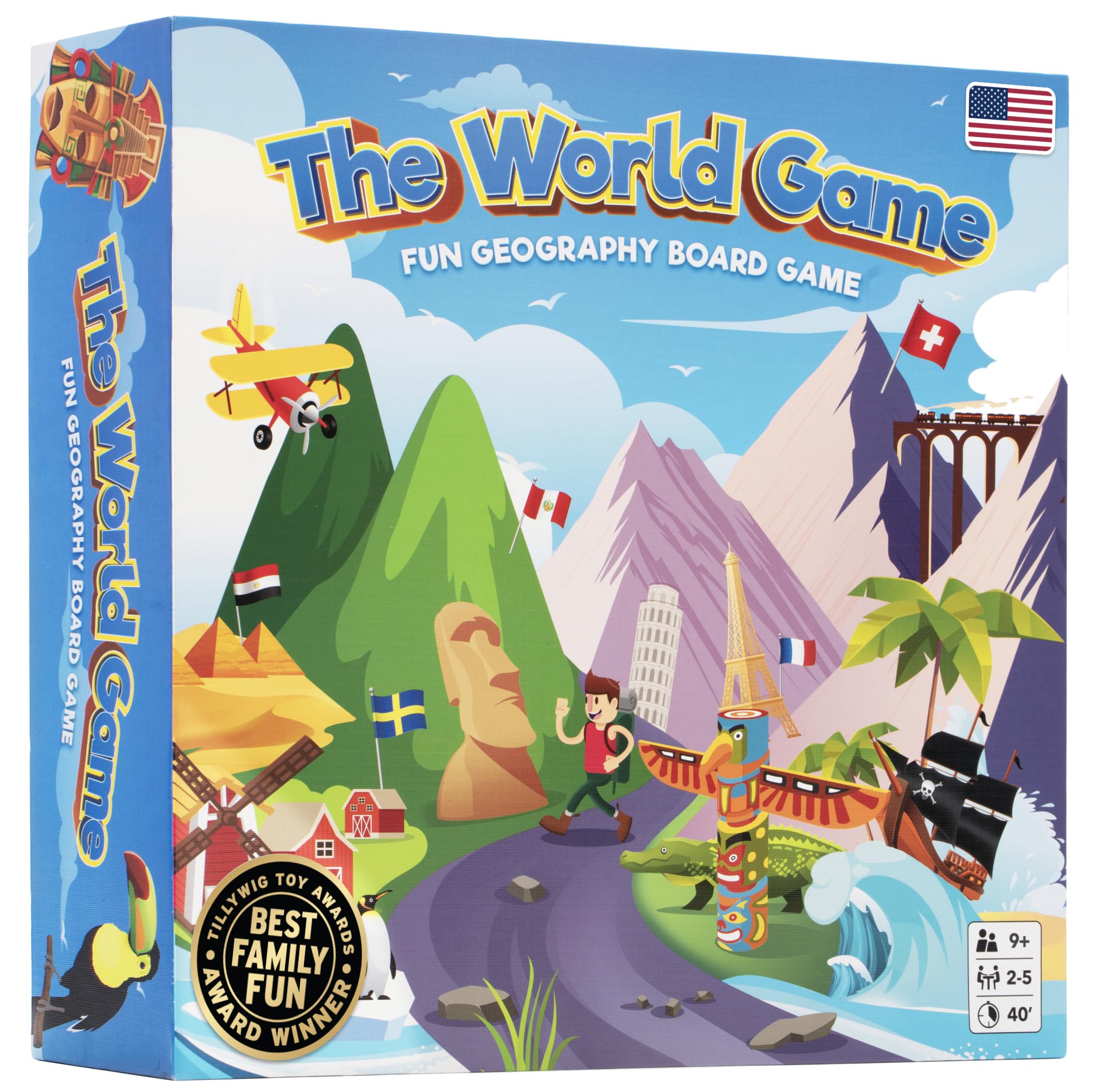
The World Game turns passive geography knowledge into an active racing contest. Each card contains data on one of the 194 countries — flag, capital, area, population, and GDP — and players compete to name the country on the map fastest. The game includes multiple variants: a flag-recognition mode, a capital-name mode, and a location trivia race, which keeps it fresh across dozens of plays.
For a 9-year-old, the game acts as a built-in study tool that does not feel like schoolwork. The competitive timer element encourages speed memorization, and the sheer number of facts means even parents learn new things. The cards are high-quality linen-finish stock that survives regular shuffling, and the board itself is a detailed world map that serves as a visual reference during play. There is no player elimination, so everyone stays engaged until the final round.
The primary downside is that players who struggle with geography may feel overwhelmed if matched against older siblings. The included rules let you handicap stronger players by limiting their challenges, which evens the playing field. For home-school families or for supplementing classroom learning, this is the best educational pick available at this price tier.
Why it’s great
- Covers all 194 world countries
- Multiple game modes for variety
- High-quality card stock and board
Good to know
- Knowledge gap may frustrate new learners
- Map text is small for reading
5. Exploding Kittens Party Pack

Exploding Kittens is the ideal icebreaker for large groups. The Party Pack supports up to 10 players, and each round lasts only 15 minutes, meaning everyone gets multiple turns to draw their fate. The premise is simple: draw a card; if it is an Exploding Kitten, you are out unless you have a defuse card. This creates a tense, silly atmosphere where players bluff, deflect, and target each other using attack cards and skip tokens.
The humor is the main draw — the illustrations from The Oatmeal are absurd and kid-friendly without being inappropriate. Nine-year-olds love the art style and the dramatic reveal when someone draws the kitten. There is zero reading required to play (all actions are icon-based), and setup is simply shuffling the deck. The Party Pack combines the original deck with the Imploding Kittens expansion and ten new exclusive cards, making it the most complete single-box version available.
The only real limitation is that it is pure luck-based with minimal strategy. Experienced gamers may find the decision space shallow, but for the target age group, that is a feature, not a bug. It also cannot be played with fewer than two players. For birthday parties, sleepovers, or large family gatherings, this deck is essential.
Why it’s great
- Supports up to 10 players out of the box
- 15-minute rounds fit any schedule
- Icon-based, no reading required
Good to know
- Heavy luck factor, low strategic depth
- Not playable with only 1-2 players
6. Peaceable Kingdom Space Escape

Space Escape is a cooperative board game designed by the inventor of Pandemic, but built specifically for families with younger children. Players work as mole rats on a space station overrun by snakes, gathering equipment to reach the escape pod. Every player draws a card each turn that gives two actions: one for your team and one for the snakes. The team must discuss who moves which mole rat and where to position the snakes to block them.
The cooperative format eliminates the sting of losing. Either everyone escapes together or the snakes win as a group. This makes it the perfect choice for sensitive 9-year-olds who tend to lose composure during competitive play. The game explicitly encourages verbal planning — kids must articulate why they think a certain move is safer, which builds communication skills naturally. There is no reading involved; all actions are color-coded and symbol-based.
The challenge level is high enough that families report losing more often than winning, which paradoxically keeps kids coming back for retries. The included unlockable challenge cards add difficulty scaling after you master the base game. The only downside is the 2-4 player limit, which rules out larger parties. For families who want a screen-free team activity that teaches shared decision-making, this is the standout pick.
Why it’s great
- Zero reading required
- Encourages verbal teamwork and strategy
- High replay value with unlockable cards
Good to know
- Limited to 4 players
- Cooperative format may bore competitive types
7. Spin Master Games Tetris: The Board Game
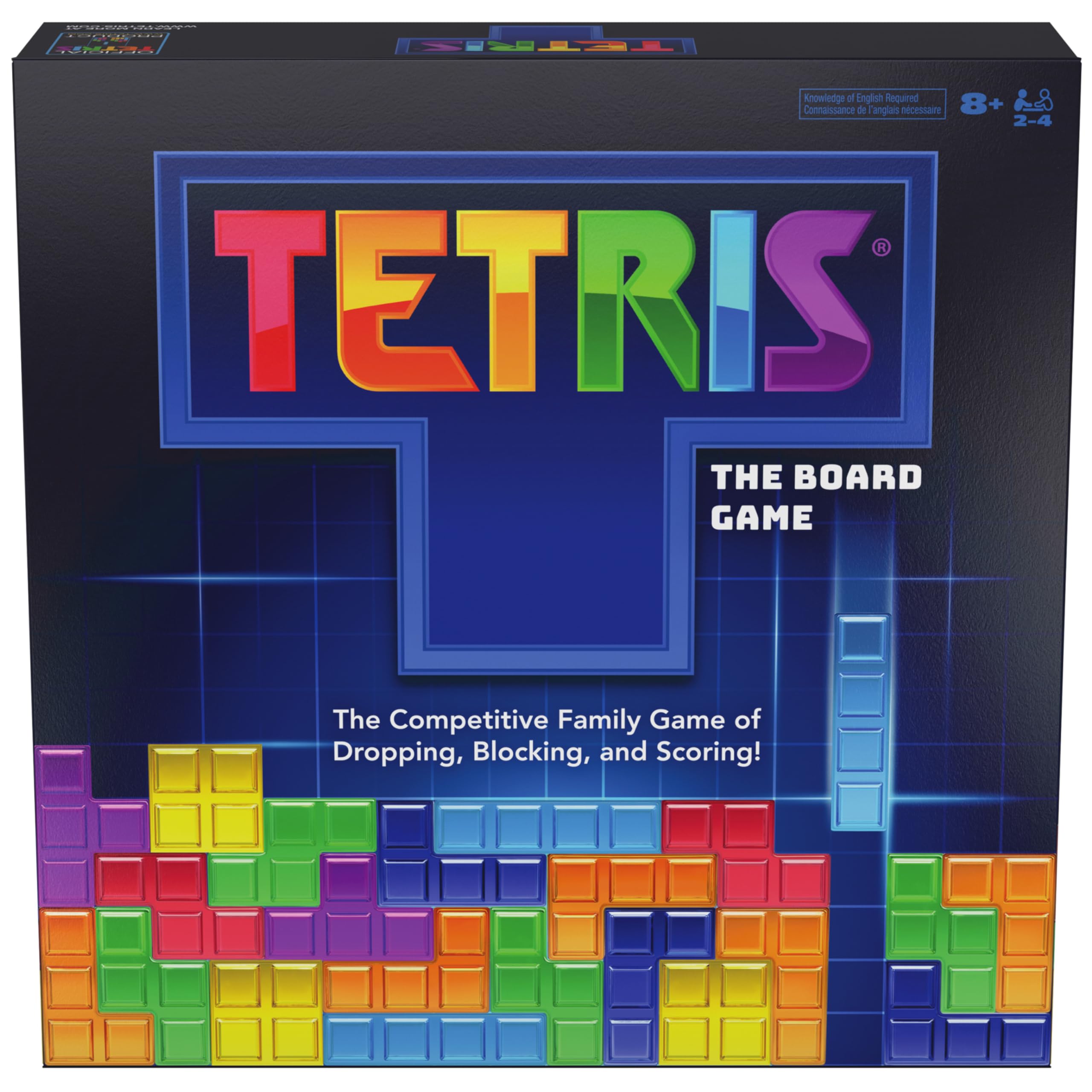
Tetris: The Board Game translates the iconic video game into a physical, multiplayer race. Each player has their own grid where they place semi-translucent tetromino pieces, trying to complete lines to clear them. The competitive twist comes from “garbage” tokens — when you complete a line, you place a black piece on an opponent’s grid, blocking their space and forcing them to adjust their strategy. This head-to-head element keeps the pressure high even during the early game.
The physical pieces are satisfying to handle, and the semi-transparent plastic mimics the look of the original game. There is no reading, dice rolling, or turn-order complexity — each player simply draws a tetromino card and places the corresponding piece on their grid. The estimated playtime of 20 minutes is accurate even with four players, and games can be extended with the included 28 Tetris cards and 152 tetrominos for multi-round tournaments.
The downside is that the puzzle quality of the pieces has occasionally been inconsistent, with a small number of units arriving with slightly bent tetrominos that require manual straightening. Additionally, spatial reasoning is crucial here — kids who struggle with visual puzzle solving may find the game less rewarding. For families who love the original game, however, this is a clever adaptation that fits perfectly in the 20-minute pocket of a school night.
Why it’s great
- Authentic Tetris experience in physical form
- Fast 20-minute rounds
- Competitive blocking mechanics add depth
Good to know
- Piece quality may vary between units
- Spatial puzzle skill required for enjoyment
FAQ
What is the best board game for a 9 year old who hates losing?
How long should a board game session be for a 9 year old?
Are educational board games actually fun for 9 year olds?
Final Thoughts: The Verdict
For most users, the board games for 9 year olds winner is the Ticket to Ride Board Game because it balances simple rules with real strategic depth and fits the perfect 45-minute family window. If you want cooperative teamwork that builds communication skills, grab the Peaceable Kingdom Space Escape. And for LEGO-loving builders who crave creative strategy, nothing beats the Monkey Palace.