
Our readers keep the lights on and the weekend projects moving. As an Amazon Associate, I earn from qualifying purchases.
Finding a game that satisfies both a teenager’s craving for strategic depth and a parent’s need for accessible rules can feel like a negotiation stalemate. The wrong pick leads to eye-rolls or disengaged phone-scrolling, while the right choice transforms a Friday evening into genuine shared fun. The sweet spot lies in titles that offer real tactical decisions without requiring a graduate degree to learn, and that respect the competitive spirit of teens while keeping the whole family at the same table.
I’m Rikta — the co-founder and writer behind FitlyFast. For this guide, I invested countless hours analyzing player counts, playtimes, complexity ratings, and component quality to identify the six titles that genuinely bridge the gap between younger and older players without boring either group.
After sorting through dozens of contenders, I focused on the entries that consistently deliver tense, memorable sessions for groups mixing skill levels. Read on for my hand-picked selection of the absolute best board games for families with teenagers.
How To Choose The Best Board Games For Families With Teenagers
The wrong board game for a group with teenagers can end a game night before the first round finishes. The key is matching the game’s depth to the group’s attention span while ensuring the rules don’t require a dedicated referee. Here are the three factors that matter most when shopping for this specific audience.
Player Count and Flexibility
Family gatherings rarely fit a perfect four-player mold. Games that accommodate between two and six or eight players are far more practical than those locked into a rigid count. Titles with traitor mechanics or scalable rule-sets keep the dynamic fresh whether you have a quiet night with a teen and a parent or a full house with cousins and friends.
Strategic Depth Without Overwhelming Rules
Teenagers are capable of complex strategy, but they have little patience for fiddly rulebooks. The best family games offer real tactical decisions — tile placement, hand management, resource trading — that can be taught in under ten minutes. Look for games that reward planning and adaptability rather than luck, so the teenager who invests brainpower feels a genuine payoff.
Replayability via Modular Components
A game that looks identical every time you open the box will collect dust after two sessions. Modular boards, randomized tile draws, and variable player powers force different strategies each session. This is especially critical for families who play weekly — the hex-based landscape of Catan or the shifting maze of No Escape keep the experience unpredictable and worth revisiting.
Quick Comparison
On smaller screens, swipe sideways to see the full table.
| Model | Category | Best For | Key Spec | Amazon |
|---|---|---|---|---|
| CATAN 6th Edition | Strategy | Trading & negotiation | Modular hex board | Amazon |
| Azul | Abstract Strategy | Head-to-head duels | 30-45 min playtime | Amazon |
| Ticket to Ride (2025 Refresh) | Route Building | Casual competition | 225 plastic trains | Amazon |
| HEAT: Pedal to the Metal | Racing | Hand management racing | 4 double-sided track boards | Amazon |
| Castle Panic 2nd Edition | Cooperative | Team tower defense | 3D towers & monster tokens | Amazon |
| No Escape | Traitor Strategy | Large groups | 2 to 8 players | Amazon |
In‑Depth Reviews
1. CATAN 6th Edition

CATAN remains the gold standard for family strategy gaming because it teaches complex negotiation within the first two rounds. The 6th Edition’s built-in card trays and chunkier wooden pieces make setup smoother for households that play weekly. The modular hex board ensures no two games unfold the same way — a critical feature for teenagers who quickly spot repetitive patterns.
The trading mechanic is where the real social dynamics emerge. Teenagers learn to bargain, bluff, and assess risk as they haggle over brick, wood, wheat, ore, and sheep. The robber token adds a layer of calculated sabotage that keeps the game tense without devolving into outright conflict, making it ideal for families who enjoy friendly rivalry.
At sixty to ninety minutes per session, CATAN hits the sweet spot for a weeknight activity that feels substantial without dragging. The 6th Edition also includes updated art and clearer iconography that helps new players orient faster. For families ready to invest in a title that will generate years of replay value, this is the anchor pick.
Why it’s great
- Hex board creates unique layouts each game
- Teaches negotiation and strategic resource management
- Updated components improve tactile experience
Good to know
- Requires exactly 3-4 players for best balance
- Trading can stall if players are too passive
2. Azul

Azul is the rare game that appeals equally to an analytical teenager and a parent who just wants a visually satisfying experience. The premise is deceptively simple — draft colored tiles from factory displays and arrange them on your personal board to complete pattern rows. The execution, however, demands careful forward planning and a keen eye for what opponents are building.
The resin tiles are weighty and satisfying to handle, which adds a tactile dimension that draws in players who might otherwise be skeptical of abstract strategy games. Rounds run about thirty to forty-five minutes, making it easy to squeeze in a game after dinner or to chain multiple rounds for a longer session. The scoring system rewards efficiency without punishing beginners too harshly.
What makes Azul especially strong for families with teenagers is the lack of direct confrontation. There is no take-that mechanic or player elimination — the competition is entirely about who can draft and place most intelligently. This means younger players can focus on optimizing their own board without feeling attacked, while teens can explore deeper denial strategies.
Why it’s great
- Beautiful, heavy resin tiles that feel premium
- Quick to learn with genuine strategic depth
- Excellent for 2-player head-to-head duels
Good to know
- Tiles are plastic, not wood
- Some color variants lack distinguishing patterns
3. Ticket to Ride (2025 Refresh)
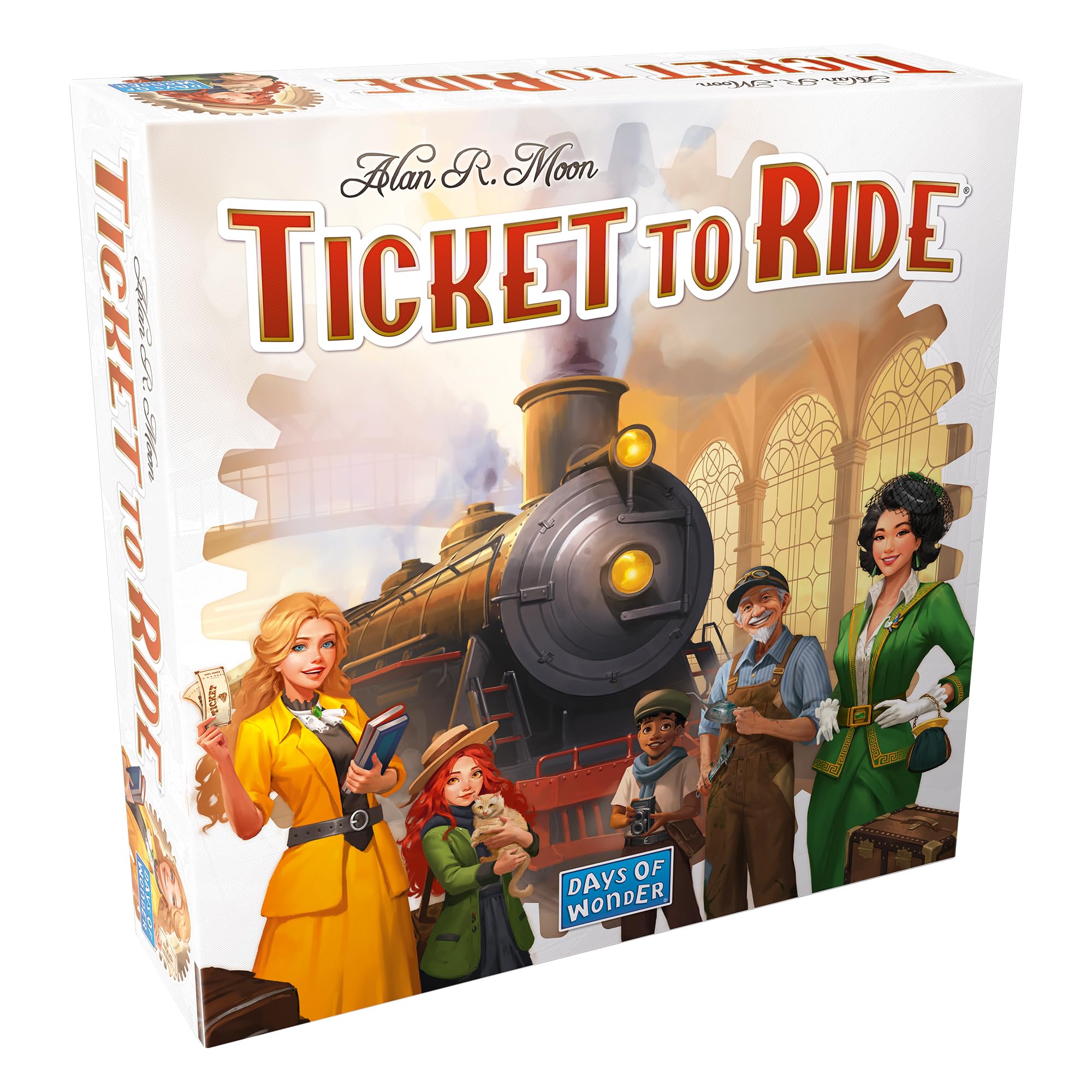
Ticket to Ride has been a family-game-night staple for years, and the 2025 Refresh brings updated components and clearer iconography that make the onboarding even smoother. The core loop — collect colored train cards, claim routes between cities, complete destination tickets — is intuitive enough that a teenager can grasp it within a single turn.
The strategic depth emerges in the route planning. Players must decide whether to focus on long cross-country connections for big points or claim shorter routes to block opponents. The tension between hoarding cards and risking the draw pile forces teens to think multiple turns ahead. The beautiful North American map and 225 miniature trains make the board visually engaging.
With a playtime of thirty to sixty minutes, Ticket to Ride fits neatly into a family evening where you want substance without an all-night commitment. It accommodates up to five players, which is ideal for a family with multiple teens. The lack of aggressive player elimination keeps the mood cooperative even during heated route disputes.
Why it’s great
- Exceptionally easy to teach and learn
- North American map offers educational geography value
- High replayability through different ticket combinations
Good to know
- Lacks direct competitive interaction
- Card draws can sometimes determine the winner
4. HEAT: Pedal to the Metal

HEAT: Pedal to the Metal is the most immersive racing board game on the market, and it is a phenomenal fit for families with teenagers who love motorsports or just enjoy high-stakes card management. The core mechanic revolves around a hand of Speed, Heat, and Stress cards — push your engine too hard and you overheat, stall out, or get stuck in a lower gear.
The box includes four double-sided track boards, a legends module for solo play, and a championship system that lets you run an entire season in one game night. The visual design evokes vintage Grand Prix posters, and the car miniatures, while simple, convey the sense of speed well. The gear-shifting mechanic and slipstream drafting create tense moments as players jockey for position.
What makes this stand out for families is the modular depth. Beginners can jump in with basic rules and still have a blast, while experienced players can tack on weather tokens, road conditions, sponsorship cards, and garage upgrades. The solo AI opponents are robust enough that a teen can practice strategies alone before the next family race night.
Why it’s great
- Fast-paced hand management with real tension
- Four tracks and numerous modules ensure high replayability
- Excellent solo mode for practice sessions
Good to know
- Larger box takes up significant shelf space
- Player dashboards are thin cardboard
5. Castle Panic 2nd Edition

Castle Panic flips the competitive dynamic on its head by forcing the entire family to work together against a common enemy. This is a godsend for households where one teenager is a sore loser — when everyone wins or loses together, the sting of defeat is shared. The goal is simple: defend Castle Bravehold from waves of monsters using card-based attacks and tower repairs.
The 2nd Edition includes 3D towers that add visual punch to the game board, along with vibrant monster tokens that make the escalating threat feel tangible. The cooperative nature encourages conversation and planning — teenagers naturally start coordinating card trades and positioning strategies without being forced into it. The adjustable difficulty means you can scale the challenge up as the family gets better.
With support for one to six players, Castle Panic works for small families and large gatherings alike. The four game modes — Co-op, Solo, Master Slayer, and Overlord — add variety once the base game feels familiar. The forty-five-minute playtime is short enough to keep attention locked in, yet long enough to feel like a proper adventure.
Why it’s great
- Fully cooperative prevents hurt feelings from elimination
- 3D towers and colorful monster tokens enhance immersion
- Multiple game modes extend replay life
Good to know
- Basic visuals may feel dated to experienced gamers
- Core strategy can feel repetitive after many sessions
6. No Escape

No Escape is built for the chaos of large family gatherings. It supports up to eight players, which is ideal when cousins, aunts, and uncles join the table. The setup is quick — tiles are laid dynamically to create a shifting space station maze, and players roll dice and draw cards to navigate, sabotage, or escape.
The traitor mechanic is the standout feature here. One or more players may be secretly working against the group, creating paranoia and deduction that teenagers absolutely love. The sabotage elements force players to weigh whether to help the group or quietly advance their own hidden agenda. This social layer adds a freshness that pure roll-and-move games lack.
Game length varies wildly depending on player count and strategy — anywhere from fifteen minutes in a quick two-player contest to ninety minutes with a full eight-player table. The components are high quality, with a sturdy board, thick tiles, and detailed meeples. It is not the deepest strategy game on this list, but for sheer group energy and repeatability, No Escape delivers.
Why it’s great
- Accommodates up to 8 players seamlessly
- Traitor mechanics create memorable social moments
- Quick setup and easy-to-learn rules
Good to know
- Heavier reliance on luck than other picks
- Two-player mode feels too short
FAQ
What is the minimum age for the board games on this list?
Which game works best for a family with a wide age gap?
How many players do I need for a fun session of No Escape?
Are there any expansions available for these games?
Final Thoughts: The Verdict
For most users, the board games for families with teenagers winner is the CATAN 6th Edition because it combines negotiation, resource management, and modular replayability in a package that stays fresh for years. If you want a quiet, visually beautiful two-player duel, grab the Azul. And for chaotic large-group gatherings with hidden agendas, nothing beats the No Escape.