
Our readers keep the lights on and the weekend projects moving. As an Amazon Associate, I earn from qualifying purchases.
Family game night is about that rare moment when screens are down and everyone is genuinely engaged—trading resources, solving word puzzles, or stacking colorful Tetriminos under a shared roof of competitive laughter. The right board game bridges generations, turning a quiet evening into a memory.
I’m Rikta — the co-founder and writer behind FitlyFast. I’ve spent hundreds of hours analyzing the mechanics, component quality, and replay value of family board games to help you find the perfect match for your table.
This guide breaks down seven top-rated options, from quick-thinking word games to sprawling strategy classics, so you can confidently pick the best board games for families that will keep everyone coming back for more.
How To Choose The Best Board Games For Families
Not every popular game works for every family dynamic. The key is balancing rule complexity, playtime, and player count against your group’s age range and patience level. A game that shines with adults may frustrate younger kids, while a pure luck-based game might bore older teens. Think about who plays most often—and how long they’ll stay engaged.
Match the player count and age range
Check the box for minimum and maximum players. Games like Codenames thrive with larger groups (4–8 players), while Ticket to Ride and CATAN are best with 3–5. Age ratings are also a reliable guide: a 10+ game usually involves more complex strategy, whereas 7+ games keep rules lighter. Buying a game outside your family’s age range leads to either confusion or boredom.
Evaluate replayability and game length
A game you play once and shelve isn’t good value. Look for modular boards (CATAN), multiple scenario cards (Exploding Kittens), or high randomness in setup (Codenames) that ensure no two sessions feel identical. Playtime matters too: a 20-minute round (Shut The Box, Planted) fits busy weeknights, while 60–90 minutes (CATAN) demands a dedicated evening. Honest self-assessment of your family’s attention span prevents games from collecting dust.
Consider component quality and storage
Wooden pieces, thick card stock, and well-designed inserts survive spills, drops, and repeated shuffling better than flimsy cardboard. Parents know that a game with durable pieces—like the chunky trains in Ticket to Ride or the solid wood in Shut The Box—will last through years of family use. Also check if the box has interior organization; loose components scattered inside create setup frustration.
Quick Comparison
On smaller screens, swipe sideways to see the full table.
| Model | Category | Best For | Key Spec | Amazon |
|---|---|---|---|---|
| Ticket to Ride | Strategy | Route-building & geography | 2–5 players, 30–60 min | Amazon |
| CATAN 6th Edition | Strategy | Resource trading & negotiation | 3–4 players, 60–90 min | Amazon |
| Codenames 2nd Edition | Word Party | Creative word association | 4+ players, 15 min per round | Amazon |
| Exploding Kittens Board Game | Party | High-energy chaos & betrayal | 2–6 players, 7+ age | Amazon |
| Planted | Strategy | Resource management & gardening | 2–5 players, 20–30 min | Amazon |
| Spin Master Tetris Board Game | Puzzle | Real-life Tetris puzzle challenge | 2–4 players, ages 8+ | Amazon |
| MNYUN Shut The Box | Classic Dice | Quick math & dice rolling fun | 2–6 players, solid wood | Amazon |
In‑Depth Reviews
1. Ticket to Ride Board Game (2025 Refresh)
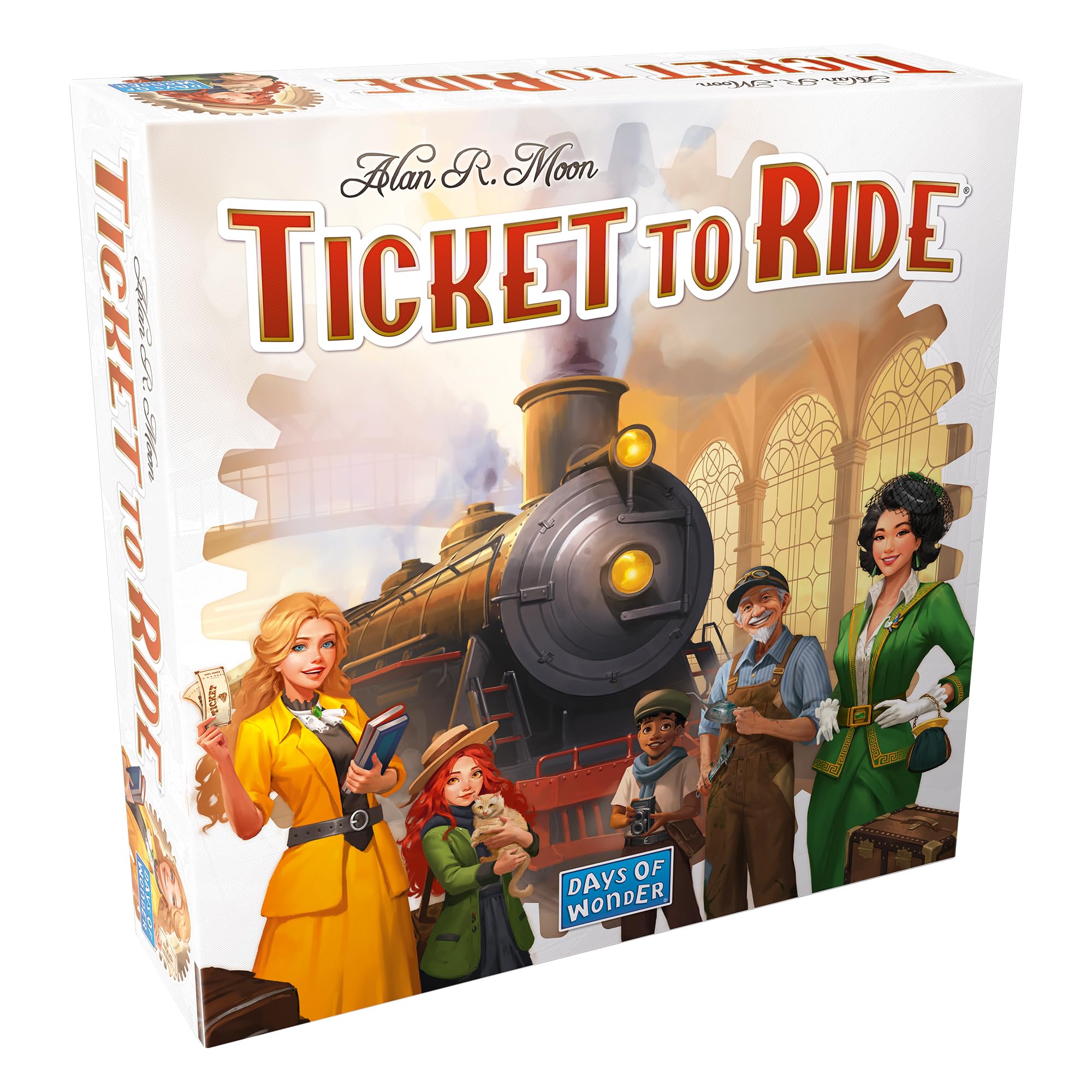
Ticket to Ride is the gold standard for family strategy gaming. The 2025 refresh keeps the beloved cross-country train adventure intact: players collect colored train cards to claim railway routes across a beautiful North American map. The rules take under five minutes to teach, yet the decision-making deepens as you compete for critical connections and chase secret destination tickets. It’s accessible for 8-year-olds but offers enough route-blocking tension to satisfy adult gamers.
The component quality is exceptional—225 sturdy plastic trains in 5 player colors, a large fold-out board, and thick card stock that holds up well to repeated shuffling. Setup is fast, and games run 30–60 minutes, making it long enough to feel meaningful but short enough to replay after dinner. The geography element adds sneaky educational value: kids naturally learn city locations as they plan their routes.
Every session feels different because the card draws and ticket combinations change the optimal strategy. There’s no direct conflict or “take-that” violence—just friendly competition for shared resources. For families seeking a modern classic that balances learning, strategy, and pure fun, this is the definitive pick.
Why it’s great
- Exceptionally easy to teach with deep strategic layers
- High-quality trains and board components
- Geographic learning woven naturally into gameplay
- 30–60 minute playtime fits most evenings
Good to know
- Best with exactly 4 players; 2-player variant is less dynamic
- Larger box requires dedicated shelf space
2. CATAN Board Game (6th Edition)

CATAN remains the defining resource-management game for families ready to move beyond pure luck. Players collect brick, wood, wheat, ore, and sheep to build roads, settlements, and cities on a modular hexagonal island. The 6th Edition introduces chunky components, built-in card trays, and a beginner-friendly rulebook that renames resources to “Wood” and “Wheat” for clarity. The result is a smoother teaching experience with the same rich negotiation mechanics.
The modular board ensures that no two games look the same—hex tiles and number discs shuffle into a new layout every time. The trading dynamic is where family drama shines: negotiating wool for ore or blocking the robber creates real interaction and laughter. Games run 60–90 minutes, demanding a bit more attention than lighter party games but rewarding commitment with tight, memorable finishes.
At age 10+, CATAN is best for families with older kids and teens who can handle slight resource scarcity and the robber mechanic. The expansion ecosystem (Seafarers, Cities & Knights) extends longevity significantly. For a classic strategy experience that teaches negotiation, planning, and resilience, CATAN is a cornerstone purchase.
Why it’s great
- Modular hex board offers near-infinite replayability
- Teaches resource trading and strategic negotiation
- 6th Edition components are chunkier and more durable
- Expansions available for long-term growth
Good to know
- 60–90 minute playtime can be long for younger kids
- Dice randomness can frustrate unlucky players
- Requires 3 players minimum; best with 4
3. CGE Codenames Board Game (2nd Edition)
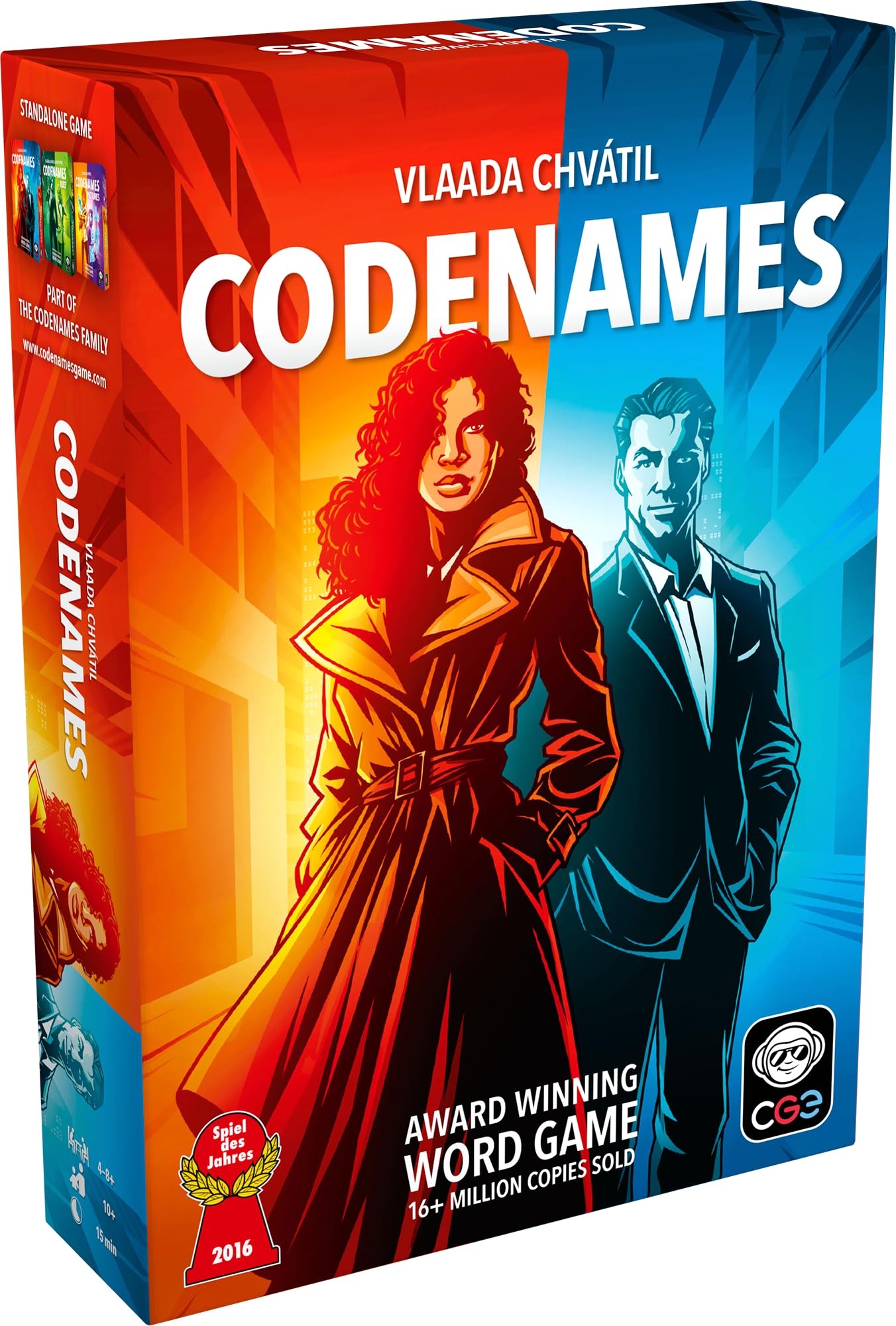
Codenames is the ultimate party game for families who love words, clever connections, and team-based thinking. Two teams compete as spymasters give one-word clues to link multiple agents hidden on a 5×5 grid of codenames. The tension comes from avoiding the opposing team’s agents, innocent bystanders, and the dreaded assassin—one wrong guess ends the game instantly. The 2nd Edition brings refined word lists, updated art, a better box insert, and a streamlined rulebook.
The beauty of Codenames lies in its flexibility. It plays in 15-minute rounds, fits anywhere from 4 to 8+ players, and requires almost no physical setup beyond laying out cards. The spymaster role creates a leadership challenge for older kids, while guessers collaborate on interpretations of the clue. It’s a game that works equally well at a quiet family dinner table or a loud holiday gathering.
Replay value is extraordinary because the 200 cards provide 400 unique codenames, and the key card overlay randomizes the agent positions each round. The only downside is downtime while spymasters think, but that’s easily mitigated with a timer or playing in teams. For a small-box game that delivers big laughs and strategic depth, Codenames is unbeatable.
Why it’s great
- Quick setup and 15-minute rounds
- Supports large groups (4–8+ players)
- Encourages creative thinking and teamwork
- High replay value with 400 codenames
Good to know
- Spymaster downtime can slow momentum
- Younger kids may struggle with abstract word links
- Best with groups who enjoy language-based play
4. Exploding Kittens Board Game (10th Birthday Edition)
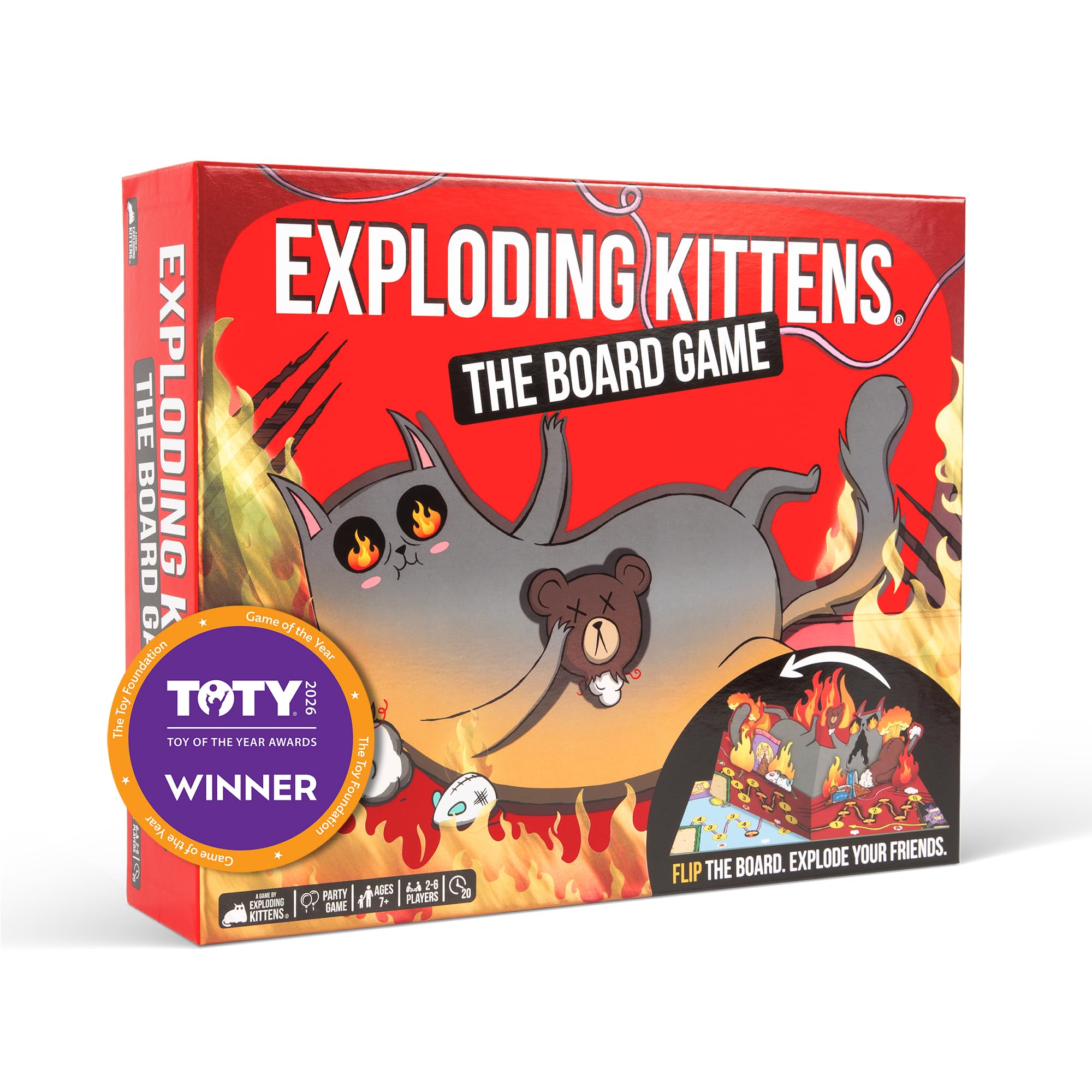
Exploding Kittens transitions from card game to full board game with a clever flip-board mechanic that completely changes the path mid-game. Players race to the end of the board without exploding, using action cards and move cards to sabotage opponents and protect themselves. The pop-up board, six character standees (including TacoCat and GnomeCat), and 91 cards create a chaotic, laugh-filled experience that matches the brand’s signature tone.
The design is intentionally light-hearted, but there’s real strategy in deciding when to use cards and when to take risks on the flip board. The 10th Birthday Edition feels polished: the board fold loosens up after a few plays, the card stock is thin but durable, and the hologram flames on the box catch the eye. Games run approximately 30–45 minutes, making it a solid middle ground between quick filler and heavy strategy.
It’s best for families with kids aged 7 and up who enjoy take-that mechanics and silly humor. The social deduction elements (“who will betray whom?”) keep everyone engaged, and the variable player powers add nice asymmetry. If your family thrives on unpredictable fun and doesn’t mind playful sabotage, this is a must-have.
Why it’s great
- Unique flip-board mechanic changes gameplay mid-round
- Easy to learn with simple action/move card system
- Great for families with kids ages 7 and up
- High replay value with varied card combinations
Good to know
- Take-that style may upset very sensitive players
- Board fold requires a few sessions to break in
- Cardboard standees could be more durable
5. Buffalo Games Planted Strategy Board Game

Planted brings a calming, nature-inspired strategy experience to family game night by turning players into plant parents. Designed by acclaimed game designer Phil Walker-Harding (Sushi Go, Wingspan), this game tasks you with collecting water and plant food tokens to cultivate 42 unique houseplant varieties—from fiddle leaf figs to monstera. The goal is earn the most points by strategically growing your nursery and matching plant needs to available resources.
The tactile components are a standout: thick plant tokens, durable wooden resource pieces, and vibrant botanical artwork on every card. Setup takes only a couple of minutes, and games wrap up in 20–30 minutes—perfect for younger players ages 10+ who may not handle hour-long commitments. The mechanics draw comparisons to 7 Wonders but with a gentler, low-stakes feel that encourages multiple plays back-to-back.
Families with plant lovers will especially appreciate the theming, but the gameplay itself is strong enough to stand alone. The only minor complaint is that the 1-token-as-4 representation can be confusing until players get used to it. For a refreshing alternative to traditional conflict-based strategy games, Planted delivers a relaxing yet engaging experience.
Why it’s great
- Beautiful botanical artwork and high-quality wooden pieces
- Quick 20–30 minute play sessions
- Relaxing, low-stress strategy with no direct conflict
- Great replay value with 42 unique plant cards
Good to know
- Token-to-value representation can confuse new players
- Mildly competitive; best for non-aggressive groups
- Requires moderate table space for cards and tokens
6. Spin Master Games Tetris: The Board Game
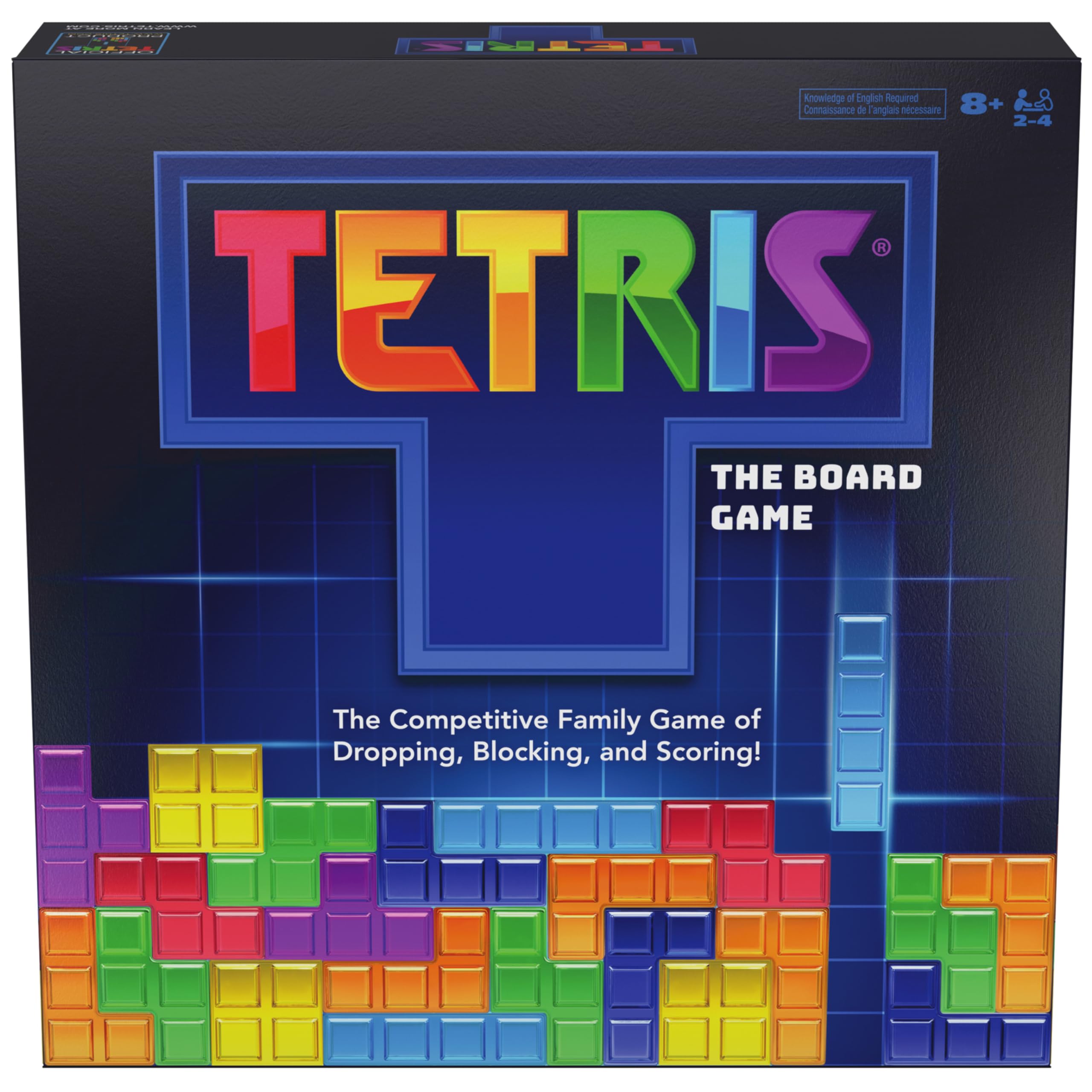
Bringing the iconic digital puzzle into the physical world, Tetris: The Board Game challenges 2–4 players to rotate, drop, and clear lines using colorful semi-translucent Tetrimino pieces. Each player manages their own grid, racing to complete lines while sending garbage pieces to opponents’ boards for a competitive twist. The gameplay blends spatial reasoning with fast-paced decision-making, making it a hit with puzzle lovers aged 8 and up.
The components feel faithful to the source material: the tetromino shapes are clear and satisfying to handle, and the four player boards plus gameboard create a visually striking table presence. Setup is quick, and rounds finish in about 20 minutes—ideal for families who want several games in one session. The instruction booklet includes multiple game variants, extending replayability beyond the base rules.
Customer feedback highlights that the game gets kids thinking without them realizing it, and the competitive element keeps adults engaged. The only quality concern is that some pieces may arrive slightly bent, though this doesn’t affect gameplay after a quick adjustment. For a fresh, screen-free way to enjoy a classic puzzle, this is an excellent addition.
Why it’s great
- Faithful physical adaptation of the classic Tetris game
- Fast-paced 20-minute rounds for multiple plays
- Competitive garbage mechanic adds strategic depth
- Great for developing spatial reasoning skills
Good to know
- Some tetromino pieces may arrive slightly bent
- Best for families who enjoy puzzle-based competition
- Limited to 2–4 players
7. MNYUN Shut The Box Premium Wooden Dice Game
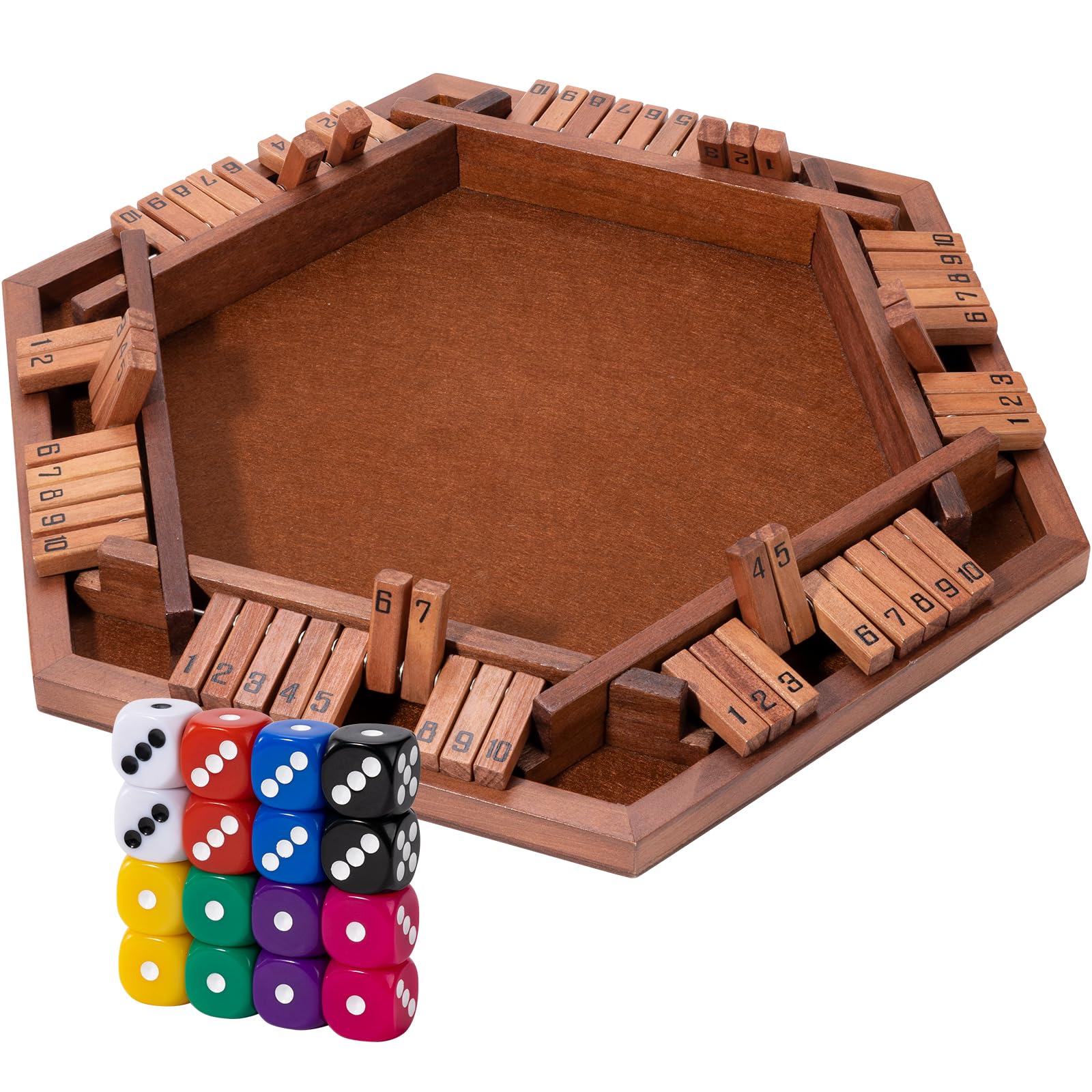
Shut The Box is a timeless dice game that proves the simplest concepts often deliver the most fun. The MNYUN premium version features a handcrafted solid wood board with durable finish, 12 dice for up to 6 players, and a compact design that stores easily. Players roll two dice, then flip down numbered tiles matching the sum—the goal is to “shut” all tiles before your turn ends. It’s pure, addictive math practice disguised as competition.
The educational value is excellent for kids ages 6 and up: they naturally practice addition, probability, and strategic risk assessment without feeling like they’re in a classroom. The included instructions are clear, and games last about 10–15 minutes per round, making it easy to play multiple rounds in one sitting. The wood construction feels substantial at 1.5 pounds, and the hinged box doubles as the playing surface.
Customer reviews consistently praise how it engages multi-generational groups—grandparents, parents, and kids all enjoy the quick-paced dice rolling. The only minor mention is that the box is slightly smaller than some expect, but the compact size actually makes it more portable for travel, camping, or classroom use. For an affordable classic that builds math skills and brings everyone to the table, this is a wonderful choice.
Why it’s great
- Solid wood construction for long-lasting durability
- Excellent math learning tool for addition and probability
- Quick 10–15 minute rounds perfect for all ages
- Portable compact design for travel and camping
Good to know
- Box is slightly smaller than some photos suggest
- Simple gameplay may not satisfy strategy-heavy families
- Dice can be loud on hard surfaces
FAQ
What is the best board game for families with a wide age gap?
How do I know if a board game has good replay value for my family?
Are strategy board games too complicated for younger kids?
What should I do if my family gets bored with a game after a few plays?
Final Thoughts: The Verdict
For most families, the best board games for families winner is the Ticket to Ride Board Game because it balances easy-to-learn rules with genuine strategic depth, works for ages 8 and up, and delivers consistently engaging 30–60 minute sessions. If you want a word-based party game that scales to larger groups, grab the CGE Codenames 2nd Edition. And for a classic resource-trading experience that older kids and adults will request week after week, nothing beats the CATAN 6th Edition.