
The gap between a memorable game night and a flat one usually comes down to the box on the table. A game that takes too long to learn kills momentum, one that relies on pure luck feels hollow, and one that drags past an hour loses the room. The right pick balances fast instructions, player engagement, and a satisfying dose of strategy or hilarity.
I’m Rikta — the co-founder and writer behind FitlyFast. I analyze board game mechanics, player counts, average playtimes, and component quality to match the right game to the right crowd.
Whether you need a two-player duel, a chaotic party card game, or a strategic family board game, this guide sorts through the noise to find the best board games for game night across different use cases and budgets.
How To Choose The Best Board Games For Game Night
Not every game fits every group. A seven-player party game will flop at a couples-only dinner, and a heavy two-hour strategy game will lose the attention of a mixed-age family. Matching the game to the group size, attention span, and preferred style of interaction is the first test.
Player Count and Playtime
The best game night pick runs between 20 and 60 minutes and supports the exact number of people at the table. A game listed for 2–10 players usually works best in the middle of that range. If the group is strictly two people, look for a game designed for two players specifically — the mechanics feel tighter and more balanced.
Game Style: Co-op vs Competitive vs Party
Cooperative games like Sky Team force players to work together against the game itself, which removes the sting of losing to a friend. Competitive strategy games like Splendor Duel reward individual planning and head-to-head tension. Party games like Cards Against Humanity rely on shared humor and zero strategy — pure social voltage. The right style matches the group’s mood.
Component Quality and Replayability
Card thickness, token weight, and board durability affect how a game holds up after repeated plays. Games with random setups, multiple scenarios, or variable player powers offer higher replay value — a game that feels different every time earns its spot on the shelf.
Quick Comparison
On smaller screens, swipe sideways to see the full table.
| Model | Category | Best For | Key Spec | Amazon |
|---|---|---|---|---|
| Ticket to Ride | Strategy | Family game night | 30–60 min play | Amazon |
| Sky Team | Co-op | Two-player teamwork | 20 min play | Amazon |
| Splendor Duel | Tactical | Two-player strategy | 30 min play | Amazon |
| Harmonies | Strategy | Chill puzzle gamers | 3D tile stacking | Amazon |
| Planted | Strategy | Plant lovers | 42 plant cards | Amazon |
| Exploding Kittens Party Pack | Party | Large groups | 120 cards | Amazon |
| Cards Against Humanity | Party | Adult-only groups | 600 cards | Amazon |
In‑Depth Reviews
1. Ticket to Ride
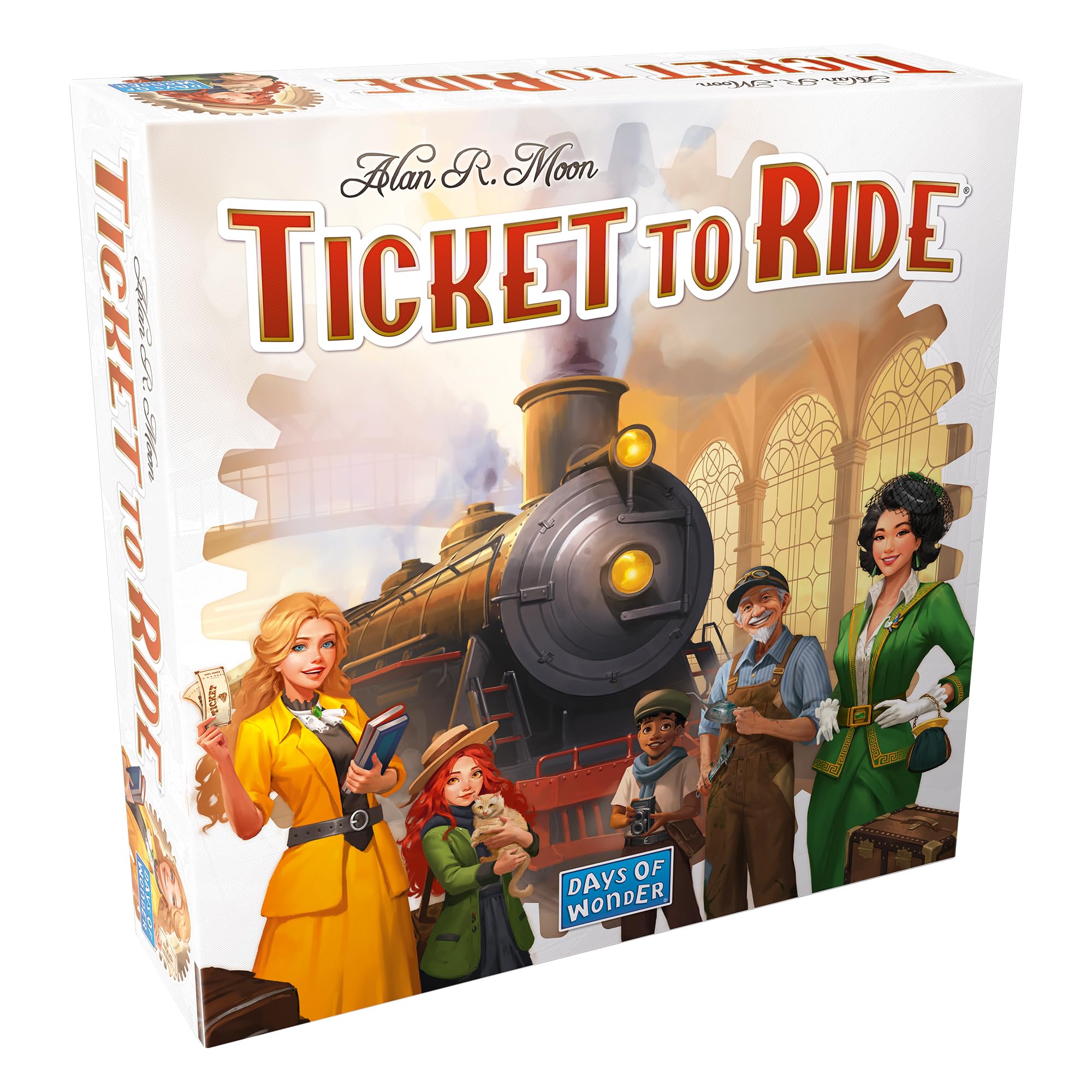
Ticket to Ride remains the gold standard for family strategy games because it nails the easy-to-learn, hard-to-master balance better than almost anything else. Players collect colored train cards and claim railway routes across a map of North America, scoring points for completed tickets and the longest continuous path. Setup takes under two minutes, and the rulebook fits on a single page — no table-flipping confusion after round one.
The 2025 refresh keeps all the core mechanics intact while tightening component quality. The 225 plastic trains in five colors feel sturdy, the board is large but legible, and the card stock handles repeated shuffling without edge wear. Games run between 30 and 60 minutes depending on player count, which means it fits comfortably into a weeknight without dragging into second-hour fatigue.
What makes Ticket to Ride a perennial game night winner is how it scales. Two players get a tight tactical duel, while four or five players introduce enough blocking and route competition to keep everyone engaged. The geography element adds a subtle educational hook — kids learn city locations without it feeling like homework.
Why it’s great
- Extremely easy to teach to new players
- High replayability through random card draws and ticket combinations
- Works well at 2, 3, 4, or 5 players with balanced scoring
Good to know
- Player elimination is minimal but bad ticket draws can feel punishing
- Map expansion packs sold separately
2. Sky Team

Sky Team won the Spiel des Jahres (Game of the Year) award in 2024 for good reason — it redefines what a two-player cooperative game can feel like. Players act as pilot and co-pilot, placing dice on a shared cockpit board to control altitude, speed, and heading while landing the plane. The catch: except for brief planning phases, you cannot talk about your dice placement. Communication is done entirely through action, which creates a tension that few games replicate.
The core deck of eight dice and the cockpit board fit in a compact box, but the depth comes from the twenty scenarios. Each airport introduces new constraints — shifting wind, ice on the runway, a fuel leak — that force you to adapt your strategy. Coffee tokens let you reroll bad dice, but resources are tight, and one misplacement can send the plane into a stall. Sessions run about 20 minutes, making it perfect for quick replays after a failed landing.
Component quality is slick: the control panel has a satisfying pivot axis disc for the plane’s angle, and the player aid screens are functional without feeling flimsy. The rulebook gets you from unboxing to first landing in under ten minutes. For couples or game partners who want a shared challenge rather than direct competition, Sky Team delivers the most innovative co-op experience on this list.
Why it’s great
- Brilliant silent communication mechanic builds real teamwork tension
- High replayability with 20 distinct scenarios
- Quick setup and fast 20-minute rounds
Good to know
- Strictly two-player only; no solo mode for one person
- Some scenarios feel significantly harder than others
3. Splendor Duel
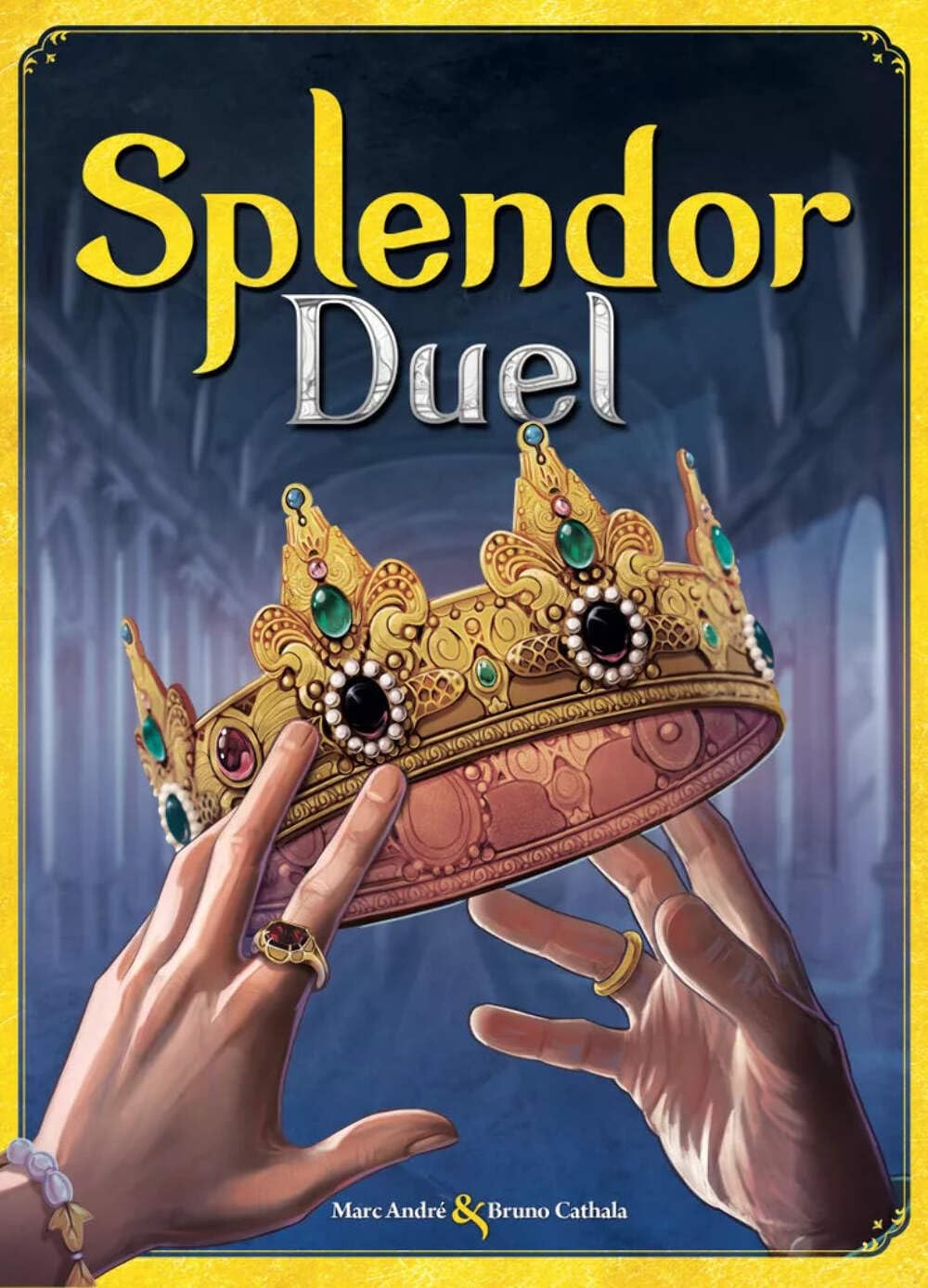
Splendor Duel takes the original Splendor formula and retools it exclusively for two players, adding the depth that the multiplayer version lacked in head-to-head mode. Players collect gem tokens to purchase development cards that grant permanent gem discounts, prestige points, and special powers. The shared board of available gems shrinks as players take tokens, creating a zero-sum tension that forces aggressive drafting.
The 67 jewel cards and 25 plastic gem tokens feel premium — the coins have a satisfying weight, and the card stock holds up to frequent shuffling. Games average 30 minutes, and the alternate win conditions (accumulating 10 prestige points, collecting 6 of the same gem type, or claiming a certain noble tile) mean you can pivot strategies mid-game. The pearl mechanic adds a layer of exclusivity: only one player can claim the pearl token each round, which disrupts standard gem-gathering plans.
For couples or two-player households, Splendor Duel earns its spot on the shelf through sheer tightness. Every decision carries weight because the pool is small and your opponent benefits from everything you leave behind. It’s competitive without being cruel, strategic without requiring a calculator, and quick enough to play back-to-back without burnout.
Why it’s great
- Multiple winning conditions create varied strategies
- Premium component quality with sturdy tokens and cards
- Plays in exactly 30 minutes with zero downtime
Good to know
- Strictly two-player only; no solo mode
- Does not replace the original Splendor for groups of 3 or 4
4. Harmonies

Harmonies is the most visually and tactilely satisfying game in this lineup. Players draw cards showing animal and landscape combinations, then place 3D wooden tokens on a personal board to create layered habitats. The goal is to match terrain patterns that attract specific animals — birds need trees near water, wolves need forest density, and so on. The 3D stacking element (tokens can be placed on top of lower tokens) adds a vertical puzzle dimension that flat tile-layers can’t match.
The 120 wooden tokens and 42 illustrated cards from Libellud feature an art style that’s warm, nature-focused, and easy to read at a glance. The rulebook is clean and the four personal boards have clearly marked spaces. Games run about 30 minutes, and the solo variant uses the same rules with a scoring target — no need to learn a separate AI system.
Player interaction is minimal — everyone builds their own landscape without interfering with opponents — which makes Harmonies best for groups who enjoy parallel puzzle-solving rather than direct competition. The depth comes from balancing short-term animal scoring against long-term landscape structure. For players who want a relaxing, visually rewarding strategy game that still requires planning, Harmonies delivers a unique experience that stands out from traditional point-salad games.
Why it’s great
- Beautiful 3D wooden token stacking creates a satisfying table presence
- High quality cards and components for the price point
- Full solo mode included with no rule modifications
Good to know
- Minimal player interaction — essentially multiplayer solitaire
- Scoring can feel abrupt at the end of the final round
5. Planted

Planted taps into the houseplant craze with a resource-management strategy game that feels like Sushi Go meets Wingspan. Players collect water and plant food tokens to draw and cultivate 42 unique plant cards, each with a specific point value and resource requirement. The fiddle leaf fig, monstera, and snake plant all appear with their real care needs translated into game mechanics — watering frequency and sunlight level become gameplay constraints.
Designed by Phil Walker-Harding (creator of Sushi Go), the game keeps turns fast with a simultaneous card-drafting phase and a quick resolution phase. The components include a score pad, drawstring bags, and wood-effect tokens that look and feel better than the price suggests. Artwork features inclusive, botanically accurate illustrations that make the game appealing to non-gamers who just like plants.
Games last 20 to 30 minutes once the group understands the rhythm. The strategic depth comes from balancing resource collection against plant card availability — don’t save too many water tokens if the best card requires sun. The one downside is the rule that limits multiple tokens of the same type to a single use per round, which can feel artificially restrictive. But for a family game that teaches resource planning through plant parenthood, Planted hits a fresh niche that standard fantasy themes can’t touch.
Why it’s great
- Unique houseplant theme with accurate botanical information
- Quick to teach with simultaneous play phases
- High-quality tactile tokens and beautiful art
Good to know
- Token shortage with a restrictive single-use-per-round rule
- Can be difficult to find at retail
6. Exploding Kittens Party Pack

The Exploding Kittens Party Pack takes the original game’s Russian-roulette-with-cats premise and stretches it to support up to 10 players. The deck contains 120 cards including the original Exploding Kittens set, the Imploding Kittens expansion, and 10 exclusive new cards. Players take turns drawing from a communal deck — draw an Exploding Kitten and you’re out unless you have a Defuse card. The Oatmeal’s absurdist illustrations amplify every catastrophic moment.
Games run about 15 minutes, which makes it the fastest option on this list. The Party Pack is essentially a drop-in party icebreaker — no strategy required, no long-term planning, just pure social chaos. The rulebook is written in the same unhinged tone as the cards, and the deck’s durability (standard card stock with a glossy finish) holds up to repeated shuffling at high-traffic parties.
The biggest difference from the original version is the card count — almost double the number of cards keeps the game fresh for multiple rounds without repeating the same combos. It works for kids as young as 7, but adults will appreciate the darker humor that emerges when player elimination creates dramatic tension. For large gatherings where you need a game that anyone can learn in one round, Exploding Kittens Party Pack delivers maximum chaos per minute.
Why it’s great
- Supports up to 10 players out of the box
- Extremely fast 15-minute rounds keep the energy high
- Hilarious artwork and card text from The Oatmeal
Good to know
- Player elimination means some people sit out early
- Requires some explanation for first-time players to understand card interactions
7. Cards Against Humanity

Cards Against Humanity is the definitive adult party game — a fill-in-the-blank game where players submit the funniest (and most offensive) white card to complete a black card prompt. Version 2.0 includes 500 white cards and 100 black cards, with over 150 new cards added since the previous release. The game requires exactly zero skill, zero setup, and zero strategy — it exists purely to make people laugh at terrible things.
The cardboard box is functional rather than fancy, and the card stock is standard weight without foil or linen finish. That’s fine for a game that lives in rotation at parties rather than on a collector’s shelf. The booklet includes sensible rules and preposterous alternate rules, including a “Pick 3” variant that forces longer combos. The game scales to any group size by simply dealing more white cards per person.
This is not a game for conservative crowds, family reunions with children, or anyone who takes offense quickly. The humor is equal-opportunity offensive — race, religion, disability, and body parts are all fair game. For the right group (late-night college parties, friend groups with dark humor, holiday gatherings of adults who have already had three drinks), Cards Against Humanity remains unmatched in laugh density. The replay value drops with the same group, but for a single explosive round at a party, nothing beats it.
Why it’s great
- Instant hilarity for the right adult group with zero learning curve
- Massive card count provides hundreds of unique rounds
- Scalable to any group size with simple rules
Good to know
- Not suitable for children, conservative adults, or easily offended players
- Replay value decreases significantly with the same friend group over time
FAQ
What is the best board game for a group of 6 adults?
Which board game is best for couples who play together often?
Final Thoughts: The Verdict
For most users, the board games for game night winner is the Ticket to Ride because it balances easy rules with deep strategy across 2–5 players and fits comfortably into a 45-minute session. If you want cooperative tension for two players, grab the Sky Team. And for pure adult party chaos, nothing beats the Cards Against Humanity.