
Our readers keep the lights on and the weekend projects moving. As an Amazon Associate, I earn from qualifying purchases.
A boiler that struggles on the coldest morning or guzzles fuel through a leaky jacket isn’t a convenience — it’s a liability. The difference between a smart heat source and a money pit comes down to combustion efficiency, heat-exchanger metallurgy, and the control board’s ability to modulate output. This guide sorts the serious hardware from the underperforming packages.
I’m Rikta — the founder and writer behind FitlyFast. I’ve spent years drilling into HVAC spec sheets, analyzing burner technologies from atmospheric to condensing, and tracking real-world reliability data across combi boilers, tankless heaters, and steam generators.
Whether you’re replacing a failing unit or outfitting a new build, finding the best boiler for your home means matching British thermal units to square footage without overpaying for features you won’t use.
How To Choose The Best Boiler
Boilers differ vastly in construction, fuel path, and intended loop. A propane tankless unit meant for domestic hot water lacks the mass needed for a whole-home hydronic system. A steam generator designed for a shower enclosure can’t supply baseboard radiators. Start by defining your application, then evaluate the three specs that separate efficient performers from fuel-wasting boxes.
Heat Exchanger Material and Design
The heat exchanger is the heart. Stainless steel resists corrosion from condensing flue gases far better than copper or aluminized steel. Condensing units — those above 90 percent AFUE — produce acidic condensate that eats standard heat exchangers. Look for 316L stainless in a condensing boiler; it signals the manufacturer built for the acidity. Non-condensing units can use aluminized steel, but expect a shorter lifespan in hard-water regions.
Combustion Efficiency and the AFUE Number
Annual Fuel Utilization Efficiency (AFUE) tells you how much fuel converts to usable heat versus going up the flue. An 80 percent AFUE furnace loses one-fifth of its fuel out the vent. A 96 percent condensing unit recaptures flue-gas heat before it escapes. The trade-off: condensing boilers require stainless venting and a condensate drain line. If your existing vent is galvanized steel, you’ll need to re-pipe for the upgrade.
Modulation and Zoning Capability
A single-stage burner fires at full tilt every cycle — fine for old drafty homes but wasteful in a well-insulated space. Modulating burners adjust the flame between, say, 30 and 100 percent, matching output to real-time demand. This reduces short-cycling, extends component life, and keeps room temperatures steady. Zoning controllers add another layer: they let the boiler serve different loops (radiant floor, baseboard, DHW tank) at different temperatures without overshooting any of them.
Quick Comparison
On smaller screens, swipe sideways to see the full table.
| Model | Category | Best For | Key Spec | Amazon |
|---|---|---|---|---|
| Rinnai i150SN | Condensing Boiler | Whole-home hydronic heat | 150K BTU, stainless steel exchanger | Amazon |
| Rinnai CX199iN | Tankless Commercial | High-demand DHW | 11.1 GPM, 96% thermal efficiency | Amazon |
| Rinnai RX199iN | Condensing Tankless | Large-family endless hot water | 11.1 GPM, UEF 0.98 | Amazon |
| Goodman GR9T961004CN | Gas Furnace | Whole-home forced air | 96% AFUE, 100K BTU | Amazon |
| Kohler K-5535-NA | Steam Generator | Luxury steam shower | 15 kW, 500 cu ft max volume | Amazon |
| Takagi T-H3S-DV-N | Condensing Tankless | Reliable endless hot water | 8 GPM, high efficiency | Amazon |
| Noritz NRC66DVNG | Condensing Tankless | Moderate-demand homes | 6.6 GPM, PVC-ventable | Amazon |
| Rheem RTG-95DVLP-3 | Non-Condensing Tankless | Propane-fueled DHW | 9.5 GPM, 199.9K BTU | Amazon |
| Rheem RRTGH84DVLN | Non-Condensing Tankless | Natural gas whole-house | 8.4 GPM, 157K BTU | Amazon |
| ThermoMate RTC68iN | Condensing Tankless | Efficient whole-house DHW | 9.38 GPM, UEF 0.91 | Amazon |
| Goodman GR9S800803BN | Gas Furnace | Entry-level forced air | 80% AFUE, 80K BTU | Amazon |
| GAS SHARK 12 Gal Boiler | Propane Cooker | Outdoor frying/seafood boils | 12 gal, 300K BTU dual burner | Amazon |
| Sootmaster 641M | Soot Vacuum | Boiler/furnace maintenance | 1 HP motor, steel tank | Amazon |
In‑Depth Reviews
1. Rinnai i150SN Condensing Gas Boiler

The Rinnai i150SN is a true condensing boiler built for whole-home hydronic heat. Its 150,000 BTU modulating burner and stainless steel heat exchanger deliver up to 95 percent thermal efficiency, capturing latent heat from flue gas that atmospheric units simply waste. The wall-mount design saves floor space, and the integrated outdoor reset sensor adjusts supply temperature based on outdoor conditions — a feature that smooths out cycling and cuts fuel consumption in spring and fall.
Multizone control capability is the standout here. The boiler connects directly to zone pumps and thermostats without an external relay panel, simplifying installation for retrofit projects. The digital interface shows temperature and pressure at a glance, and the child-lock safety shuts down the central heating loop automatically. Owners report a significant drop in gas bills, with one estimating a 2.5-year payback period after replacing an older atmospheric unit.
Professional installation is non-negotiable — this unit requires a licensed technician to handle the condensate drain, gas line sizing, and stainless venting. Some buyers noted extra costs for fittings and tubing, but the build quality and quiet operation justify the upfront investment. For a home needing reliable, zoned hydronic heat, this is the ceiling.
Why it’s great
- Condensing efficiency captures waste heat
- Outdoor reset sensor reduces cycling
- Quiet modulating burner
Good to know
- Requires professional installation
- Extra parts cost for fittings/tubing
- Some users report error codes needing reset
2. Rinnai CX199iN Condensing Tankless

The CX199iN is Rinnai’s commercial-grade answer to homes that push a residential unit past its limits. With a 199,000 BTU burner and 11.1 GPM flow at a 97 percent thermal efficiency rating, it handles simultaneous showers, dishwashers, and laundry without a noticeable temperature drop. The Smart Sense gas control lets it run on either natural gas or propane, and the Versa Vent system supports both indoor and outdoor installations with the same chassis.
Smart Connect via Bluetooth allows setup and troubleshooting through the Rinnai Central App — a genuine time-saver during commissioning. The quick-flush system simplifies descaling, and the optional recirculation conversion kit reduces the cold-water sandwich effect on long pipe runs. An 8-person household reported saving 360 kWh of electricity in the first month by switching from heat-pump hybrids, which had failed twice in 18 months.
The unit is taller than standard residential models, requiring some plumbing rework if the old heater was a different brand. Owners also mention that the outdoor vent cap is a separate purchase. If you need a tankless water heater that shrugs off heavy, consistent demand, this is the unit.
Why it’s great
- Commercial build with high flow rate
- Bluetooth-connected setup and monitoring
- Works indoors or outdoors
Good to know
- Requires professional installation
- Taller design may need space adjustments
- Outdoor vent cap sold separately
3. Rinnai RX199iN Condensing Smart Sense

The RX199iN is Rinnai’s ultra-efficient residential condensing tankless, boasting a UEF of 0.98 — meaning it converts nearly every unit of gas into usable hot water. That efficiency stems from a dual heat exchanger design that pulls extra BTUs from the exhaust before they escape. With 11 GPM at a 105°F rise, it can support up to seven fixtures simultaneously, making it viable for larger homes with frequent concurrent water use.
The Smart Sense gas control board is adaptive: it self-calibrates to the incoming fuel type (natural gas or propane), eliminating the need for a manual conversion kit. The Versa Vent system again allows indoor or outdoor installation, and the Controlr module (sold separately) adds WiFi access to water temperature and usage data. Owners upgrading from 11-year-old Rinnai units report straightforward swaps and noticeably faster hot water at distant faucets.
Cold-water sandwich — a brief slug of unheated water when the unit refires after a short pause — remains a minor annoyance on longer pipe runs. The unit also requires professional installation and a condensate neutralizer for the mildly acidic drainage. For families that never want to hear “no more hot water” again, this is the benchmark.
Why it’s great
- Near-perfect 0.98 UEF efficiency
- Self-calibrates for gas type
- Supports up to 7 fixtures
Good to know
- Cold-water sandwich on short pauses
- Condensate neutralizer needed
- WiFi module is a separate purchase
4. Goodman GR9T961004CN Two Stage Furnace

Goodman’s GR9T961004CN is a 96 percent AFUE two-stage gas furnace with a multi-speed ECM motor, designed for upflow or horizontal configuration. The two-stage burner fires at around 65 percent output on milder days, only kicking to full 100,000 BTU when the outdoor temperature drops hard. That modulation reduces temperature overshoot and keeps the house comfortable without the furnace cycling on and off every ten minutes.
The aluminized steel primary heat exchanger handles the higher efficiency without succumbing to corrosion as quickly as bare steel. The ECM motor provides superior airflow control, which not only improves heating performance but also reduces operational noise. Users self-installed and reported the unit runs roughly half the time of their old single-stage furnace while keeping the house “toasty warm.”
The cabinet is 21 inches wide, so it won’t fit a narrow closet designed for a 17.5-inch unit. The furnace also requires a separate LP conversion kit if you run propane, and the sight glass for error codes is hard to read with the cover fastened. Still, the two-stage logic and 96 percent efficiency make it a solid pick for homeowners with existing ductwork wanting a meaningful efficiency upgrade.
Why it’s great
- Two-stage burner reduces cycling
- 96% AFUE for real fuel savings
- Quiet ECM motor
Good to know
- Wide cabinet may not fit tight spaces
- LP conversion kit needed for propane
- Error code sight glass is dim
5. Kohler K-5535-NA Steam Generator

The Kohler K-5535-NA is a 15 kW steam generator designed for custom shower enclosures up to 500 cubic feet. Its fast-response technology produces a steam shower in about 60 seconds, using an integrated power source that eliminates the need for a separate step-down transformer. The unit is built around a stainless steel tank, which resists the mineral scaling that plagues aluminum generators in hard-water regions.
Power Clean technology offers one-touch automatic flushing to reduce maintenance frequency — a feature that matters when the generator lives in an attic or crawlspace. The K-5535 also integrates with Kohler’s DTV+ showering system, allowing temperature and steam duration control from a single wall interface. Owners who replaced older generators appreciated the straightforward swap, with many reporting the unit lasts around four years with regular use.
The control kit (K-5557) or the DTV+ steam adapter kit (K-5548) is required — the generator itself ships without controls, so factor that into the total cost. It needs a dedicated 60-amp circuit and a plumber comfortable with 220V wiring. For a spa-quality steam shower in a primary bathroom, this is the generator to spec.
Why it’s great
- Stainless steel tank resists scaling
- Automatic power clean cycle
- Produces steam in 60 seconds
Good to know
- Control kit sold separately
- Requires dedicated 60-amp circuit
- Professional electrician recommended
6. Takagi T-H3S-DV-N Condensing Tankless

The Takagi T-H3S-DV-N is a condensing tankless with an 8 GPM flow rate, designed for indoor installation using standard PVC venting. It meets the 2012 SCAQMD Rule 1146.2 for Ultra-Low NOx Emissions, which matters for homeowners in California and other regions with strict air quality regulations. The condensing design captures exhaust heat, pushing efficiency well beyond non-condensing units while keeping the footprint compact at 22.5 inches tall.
Computerized safety features eliminate the pilot light — ignition is electronic, which saves a small amount of gas year-round. The direct-vent configuration pulls combustion air from outside, so it doesn’t depressurize the living space. Owners with mechanical backgrounds found the installation straightforward, and those upgrading from earlier Takagi units reported that the new generation runs quieter and maintains temperature more consistently.
Maintenance is the catch: Takagi recommends biannual descaling to prevent scale buildup, even with an optional external filter. Some users found the gas line required a 3/4-inch pipe instead of the common 1/2-inch, which added cost to the install. Factor in a neutralizer for the condensate drain. For those willing to stay on top of maintenance, this unit delivers reliable endless hot water without breaking the bank.
Why it’s great
- Ultra-Low NOx emissions compliant
- PVC venting lowers install cost
- Compact footprint
Good to know
- Requires biannual descaling
- Gas line may need upsizing
- Condensate neutralizer recommended
7. Noritz NRC66DVNG Condensing Tankless

The Noritz NRC66DVNG is a 6.6 GPM condensing tankless natural gas water heater with a high-efficiency rating and the ability to vent with standard Schedule 40 PVC pipe. That PVC compatibility is a meaningful cost saver: instead of paying for stainless steel venting, a standard PVC run to the outside wall works fine. The unit includes a remote thermostat and a 6-foot power cord, so you don’t need to buy extra accessories just to get started.
The condensing design pulls extra energy from exhaust gases, and owners report a 10 to 20 percent reduction in gas consumption compared to their previous non-condensing tankless units. The temperature stays consistent thanks to the digital controller, and the small footprint — 13.8 by 23.6 inches — fits in tight mechanical closets where a larger tankless would not. For a 2,400-square-foot, three-floor home with a family of five, the unit delivered uninterrupted hot water even with simultaneous shower, washer, and dishwasher use.
The cold-water sandwich effect between closely spaced draws is present, as it is with almost all tankless units. Some users noted a buzzing fan noise that is slightly louder than anticipated. Annual descaling and periodic cartridge replacement are part of the long-term ownership experience. For homes with moderate but not extreme hot water demand, this unit strikes a good balance between efficiency and installation simplicity.
Why it’s great
- PVC venting saves installation costs
- Compact and wall-mountable
- Significant gas savings reported
Good to know
- Noticeable fan noise
- Cold-water sandwich between draws
- Requires annual descaling
8. Rheem RTG-95DVLP-3 Non-Condensing Tankless
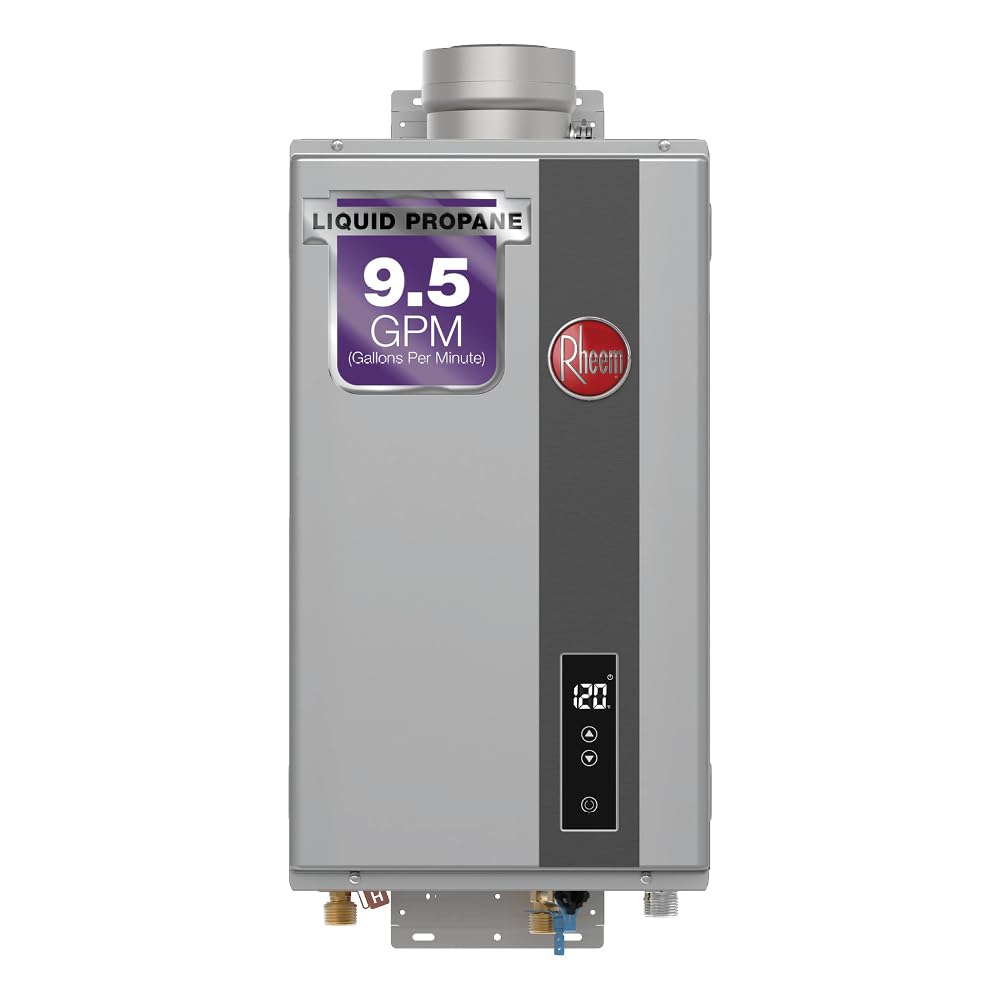
The Rheem RTG-95DVLP-3 is a non-condensing liquid propane tankless water heater delivering 9.5 GPM at a 199,900 BTU input. It’s built for homes that run on propane and need enough flow to supply two to three bathrooms plus a kitchen and laundry simultaneously. The non-condensing design means it vents through standard B-vent or stainless steel, not PVC, and it doesn’t produce condensate — so there’s no neutralizer to plumb and no drain line for acidic water.
Hot-start programming prevents the cold-water sandwich that plagues many tankless units during back-to-back shower usage, which is a genuine comfort improvement. The unit is compact at 24.2 inches tall and weighs 46.5 pounds, making it one of the lighter high-output tankless options on the market. Owners with propane service and decent mechanical skills report straightforward installations using PEX connections, with zero issues after several months of use.
The noise level is the main trade-off: owners describe it as louder than a low-end dishwasher, which could be annoying if the unit is mounted near a living area. It also lacks the energy efficiency of a condensing model — the flue gas leaves hot, which means some fuel is wasted. For a propane household that prioritizes flow rate and simplicity over ultra-high efficiency, this Rheem delivers reliably.
Why it’s great
- High flow for propane-fueled homes
- Hot-start programming reduces cold sandwich
- Lightweight and compact
Good to know
- Operates louder than expected
- Non-condensing — lower efficiency than condensing units
- Requires professional gas line sizing
9. Rheem RRTGH84DVLN Tankless
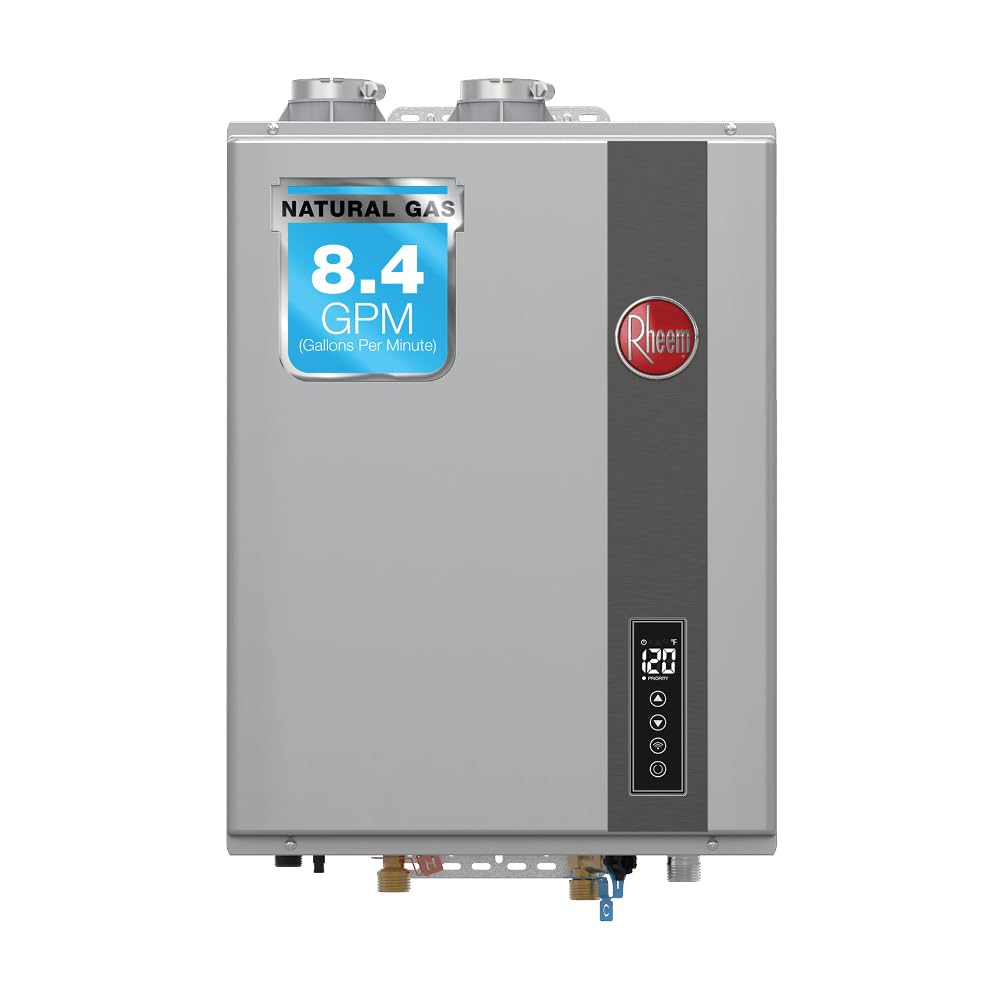
The Rheem RRTGH84DVLN is a non-condensing natural gas tankless heater with an 8.4 GPM flow rate and 157,000 BTU input. It operates on 120-volt household current, so no electrician is needed for high-voltage wiring — a small but practical advantage during installation. The temperature range goes from 100 to 140°F, with a default setting of 120°F that suits most households without risk of scalding.
Warranty coverage is a strong point: 15 years on the heat exchanger, 5 years on parts, and 1 year on labor. That’s among the best in the non-condensing category. Owners report that the unit runs silently — one unit shares a wall with the garage and is barely audible inside the house. An existing Rheem user with a 5- to 6-year-old unit reported reliable performance after annual winterization and spring restart.
Self-installation voids the warranty, which is a common policy across Rheem tankless products. Some users encountered error codes related to inlet vent configuration, and replacement control boards can cost over and take weeks to arrive. For those sticking with professional installation and following proper venting guidelines, this Rheem offers solid performance at a moderate price point.
Why it’s great
- Strong warranty: 15-year heat exchanger
- 120V installation — no high-voltage work
- Very quiet operation
Good to know
- Self-install voids warranty
- Error codes may require board replacement
- Water pressure drops under heavy load
10. ThermoMate RTC68iN Condensing Tankless
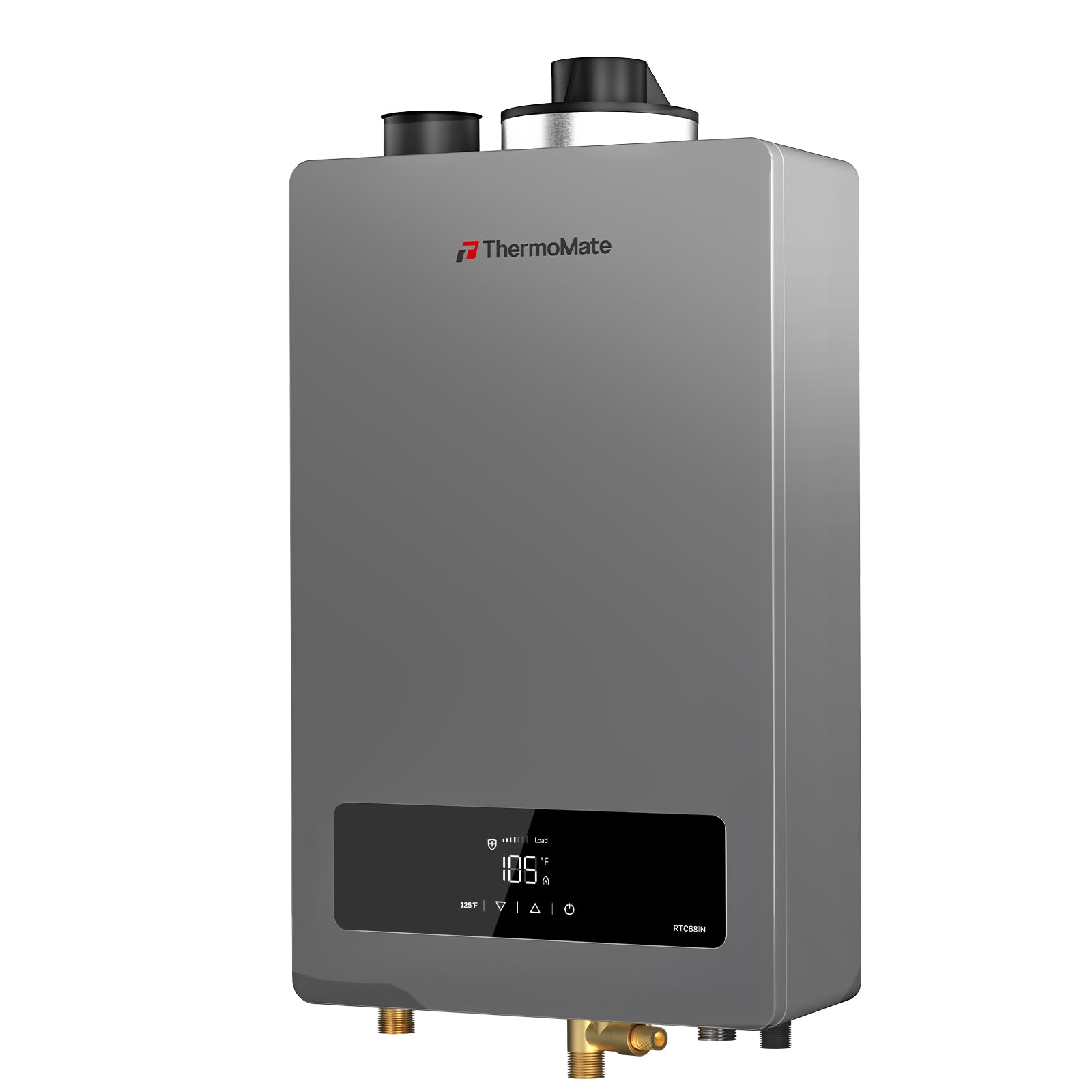
The ThermoMate RTC68iN is a condensing natural gas tankless water heater with a UEF of 0.91 and a flow rate of up to 9.38 GPM at warmer inlet temperatures. It uses a dual heat exchange system — one stainless steel condensing exchanger and one oxygen-free copper exchanger — to capture waste heat that traditional tankless units vent outside. This design cuts annual hot water costs compared to standard non-condensing models, according to the manufacturer’s estimates.
Intelligent water mixing valve technology maintains stable output temperature even when multiple showers, a dishwasher, and a washing machine all draw simultaneously. The sealed combustion design reduces noise compared to open-burner units. Eight safety protections — including boil-dry, freeze, and flame-out detection — and automatic frost protection that activates at 41°F make it suitable for unheated basements or garages in colder climates.
The condensate produced by condensing operation is mildly acidic and requires a drain connection. An external neutralizer kit is recommended but not included. Some owners noted that the installation kit does not include everything needed for a full hookup, so budget for additional gas and water fittings. For a home aiming to maximize efficiency without jumping to the premium tier, this ThermoMate offers strong value.
Why it’s great
- 0.91 UEF for significant energy savings
- Stable temperature under multi-fixture demand
- Frost protection for cold environments
Good to know
- Condensate neutralizer sold separately
- Installation kit is basic
- Professional installation strongly recommended
11. Goodman GR9S800803BN Single-Stage Furnace
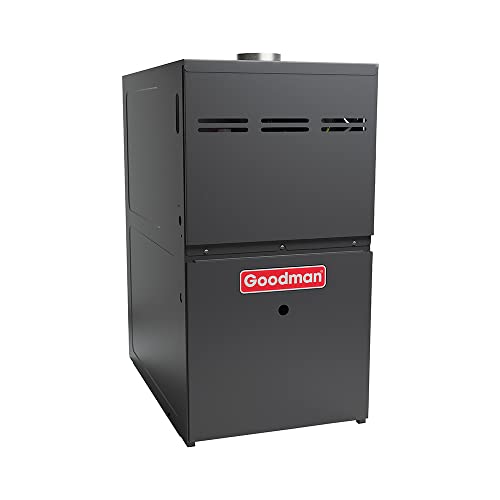
The Goodman GR9S800803BN is an 80 percent AFUE single-stage gas furnace producing 80,000 BTU, designed for upflow or horizontal installation. The 80 percent efficiency means it’s non-condensing — it uses standard metal venting and doesn’t require a condensate drain, which simplifies replacement in homes where upgrading to a condensing furnace would mean expensive venting changes. The multi-speed ECM motor improves airflow control over a standard PSC motor, reducing electricity consumption when the blower runs.
The aluminized steel primary heat exchanger is adequate for the 80 percent efficiency class, and the cabinet width of 17.5 inches fits most standard furnace closets without modification. Owners who performed their own installations noted that the furnace fired up correctly with minimal configuration, and that the unit is quiet during operation. Larger homes may need higher BTU output, but for a house under 2,000 square feet in a moderate climate, 80,000 BTU is generally sufficient.
This furnace does not include LP conversion kits, thermostat, or linesets — those are separate purchases. The single-stage burner runs at full output every time it cycles, which can cause temperature swings in well-insulated homes. For a budget-friendly replacement of an old 80 percent furnace, this Goodman works as advertised without unnecessary complexity.
Why it’s great
- Simple replacement for existing 80% units
- Standard metal venting — no PVC needed
- ECM motor reduces electricity use
Good to know
- LP conversion kit sold separately
- Single-stage can overshoot on mild days
- May need additional accessories for full install
12. GAS SHARK 12 Gal Boiler Cart
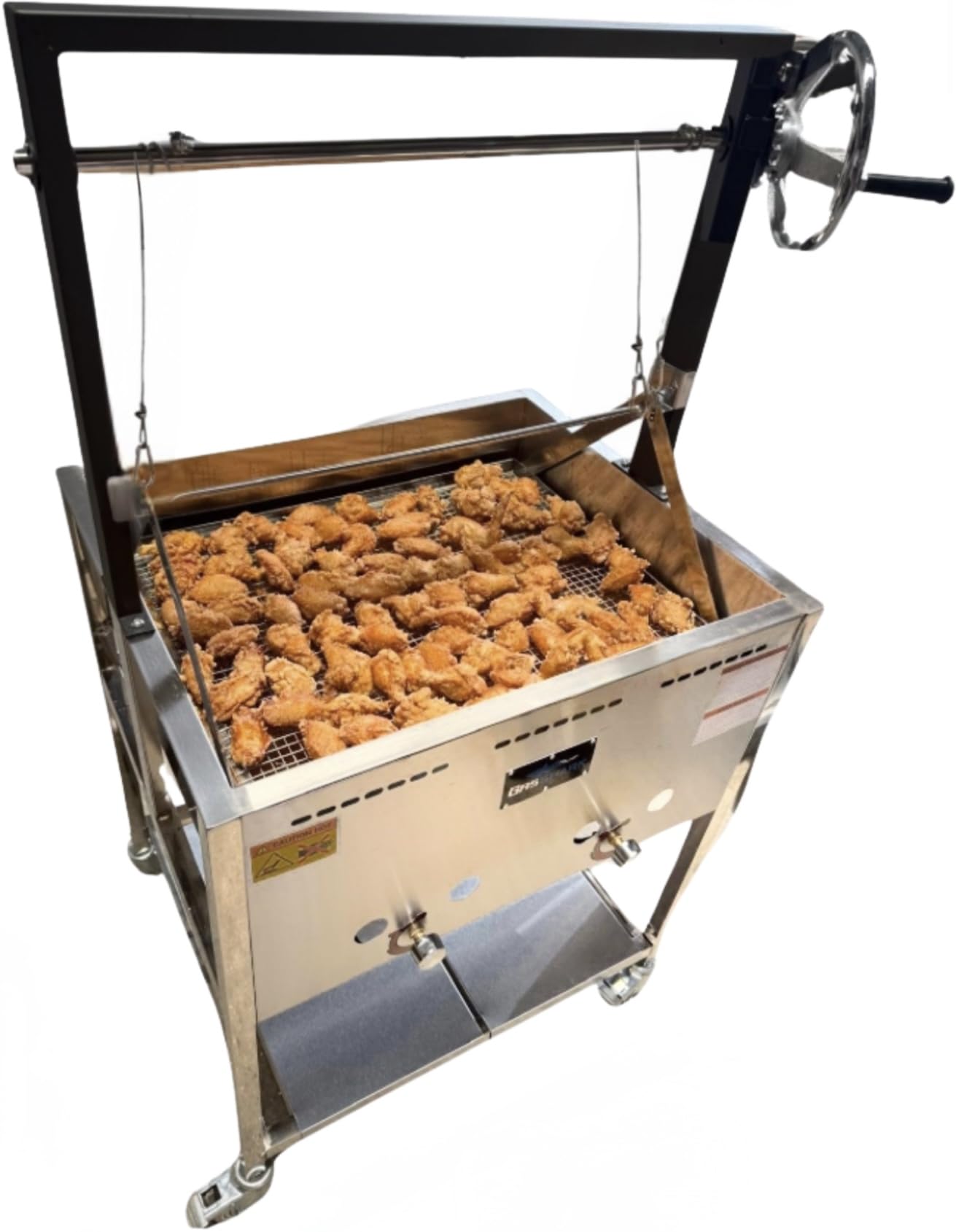
The GAS SHARK 12 Gallon Boiler Cart is a propane-powered outdoor cooking station designed for deep frying and Cajun seafood boils. Its two 150,000 BTU burners combine for a total of 300,000 BTU, delivering rapid heating for oil or water. The hand-crank basket lift system — a Santa Maria-style overhead frame — allows safe raising and lowering of heavy loads without splashing, which matters when you’re lowering a 20-pound turkey into hot oil or lifting a full pot of crawfish.
The stainless steel tub measures 30 by 25 by 10 inches deep and holds up to 12 gallons. An integrated thermometer gives real-time temperature monitoring, and the built-in drain valve makes cleanup straightforward — just open the valve to empty. The cart rolls on four caster wheels with locking brakes, and assembly takes about 30 minutes with basic tools. Owners reported frying two cases of catfish fillets in under 10 minutes and praised the ease of cleaning.
This unit is strictly for outdoor use — the CSA-approved propane hose and regulator are not rated for indoor operation. It does not come with a lid, so covering the pot during heating requires a separate purchase. For serious outdoor cooks who want a single station that handles both turkey frying and multi-gallon seafood boils, this cart delivers commercial-level capacity in a backyard-friendly package.
Why it’s great
- 300K BTU for fast heating
- Hand-crank basket lift for safety
- Large 12-gallon capacity
Good to know
- No lid included
- Outdoor use only
- Requires propane tank (not included)
13. Sootmaster 641M Industrial Soot Vacuum
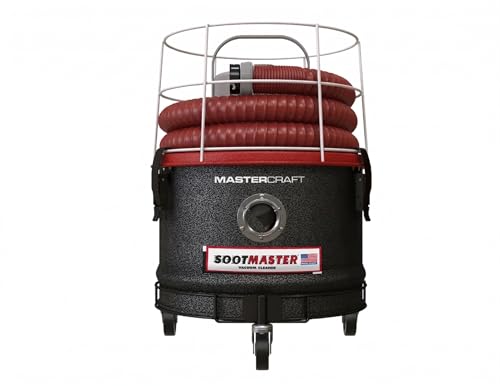
The Sootmaster 641M is a dedicated industrial soot vacuum engineered for cleaning boilers, furnaces, and commercial combustion systems. Unlike standard shop vacuums that recirculate fine particulate through the exhaust, this unit uses double filtration to trap soot and prevent dust from escaping back into the room. The 1 HP motor provides consistent suction for heavy dry soot and fine ash, and the cold-rolled steel tank is fire-resistant — a critical safety feature when collecting combustible particles.
HVAC and restoration professionals rely on this unit for routine boiler room and mechanical space maintenance. The all-metal construction (except for the casters) eliminates the fire risk that plastic-body vacuums present when collecting hot embers. It includes a canvas hose, crevice tool, and an inspection tag for compliance tracking. One owner with twenty years of experience stated it is the safest vacuum for soot they have used.
The Sootmaster brand is well-established in the professional cleaning industry, but the unit is expensive compared to general-purpose wet/dry vacuums. Some buyers experienced motor overheating, and the warranty and return process was difficult for one owner. For anyone performing regular boiler maintenance — whether as an HVAC contractor or a dedicated facility manager — this tool is purpose-built for the job.
Why it’s great
- Double filtration contains fine soot
- Fire-resistant steel construction
- Purpose-built for boiler/furnace cleaning
Good to know
- Expensive for a vacuum
- Motor overheating reported by some users
- Returns can be difficult
FAQ
What size boiler do I need for my home?
Is a condensing boiler worth the extra investment?
How often should I service my boiler?
Final Thoughts: The Verdict
For most users, the best boiler winner is the Rinnai i150SN because it delivers condensing efficiency, stainless steel construction, and multizone capability — everything a whole-home hydronic system needs. If you want tankless endless hot water, grab the Rinnai RX199iN with its 0.98 UEF rating. And for a luxury steam shower that turns your bathroom into a personal spa, nothing beats the Kohler K-5535-NA generator.