
Our readers keep the lights on and the weekend projects moving. As an Amazon Associate, I earn from qualifying purchases.
A bonding primer is the difference between a cabinet makeover that lasts a decade and one that peels within months. Unlike standard wall primers, these formulas use advanced adhesion technology to grip glossy laminate, engineered wood, and previously painted surfaces without days of sanding.
I’m Rikta — the co-founder and writer behind FitlyFast. My research into bonding primers focuses on real-world adhesion tests, coverage efficiency, and the specific urethane or acrylic chemistries that deliver a factory-like finish on kitchen and bathroom cabinetry.
Whether refreshing outdated oak or sealing laminate for a total transformation, choosing the right bonding primer for cabinets determines how your final paint job holds up against grease, moisture, and daily use.
How To Choose The Best Bonding Primer For Cabinets
A cabinet bonding primer must solve one core problem: sticking to non-porous surfaces that water-based paint would normally bead off. The primer’s resin type, application method, and dry time directly impact how the final paint job wears over years of cabinet door slams and grease exposure.
Resin Chemistry: Urethane vs Acrylic vs All-in-One
Urethane-modified acrylic primers like the INSL-X Stix create a tougher film that resists yellowing and blocking (doors sticking together). Straight acrylic bonders like XIM UMA excel on glossy laminates but require a compatible topcoat within a specific window. All-in-one chalk paints with built-in primer save steps but may lack the same bonding tenacity on high-gloss factory finishes.
Coverage and Dry Time for Multi-Coat Workflows
Most cabinet projects need at least two coats of primer. Look for a recoat window under two hours and a dry-to-touch time of 35 minutes or less — this keeps the project moving. Coverage ranges from 350 to 450 square feet per gallon for standard primers, while smaller quarts suit single vanities or accent cabinets without waste.
Application Method and Cleanup
Water-based bonding primers wash up with soap and water, but some high-build formulas may show brush marks if not self-leveling. Microfiber rollers minimize texture on flat door panels. For vertical surfaces, a low-VOC formula with minimal odor allows indoor application without evacuating the room.
Quick Comparison
On smaller screens, swipe sideways to see the full table.
| Model | Category | Best For | Key Spec | Amazon |
|---|---|---|---|---|
| INSL-X Cabinet Coat | Premium Enamel | Factory-like cabinet finish | Self-leveling urethane acrylic | Amazon |
| INSL-X Stix | Waterborne Bonding | High-gloss & tile surfaces | Bonds to glass & ceramic | Amazon |
| XIM UMA | Acrylic Bonder | Laminate & Formica | Low temp application | Amazon |
| Zinsser Bulls Eye 1-2-3 | All Surface Primer | Stain blocking & versatility | 35-minute dry time | Amazon |
| Jungarian Paint Kit | All-in-One Paint | No-sanding DIY projects | Built-in primer & tools | Amazon |
| Country Chic All-in-One | Chalk Paint | Furniture flips & crafts | 30-minute recoat time | Amazon |
| Stone Coat Bonding Primer | Epoxy Undercoat | Countertop & tile prep | Urethane modified acrylic | Amazon |
In‑Depth Reviews
1. INSL-X Cabinet Coat

This urethane acrylic satin enamel is formulated specifically for cabinets, delivering a smooth, self-leveling finish that hides brush strokes even for inexperienced painters. The gallon covers 350 to 450 square feet, enough for a full kitchen with a vanity to spare. Its super adhesion to hard-to-coat surfaces means you can skip a dedicated bonding primer layer on previously painted or primed cabinets, saving a full coat of labor.
Customer reviews consistently note the factory-like finish on oak cabinets, with multiple users reporting zero brush marks after application. The 24-hour full cure time ensures the film hardens properly for scrubbing and daily use, resisting chipping, scuffing, and kitchen grease. The included can opener and stir stick add practical convenience for large projects.
Some users needed three to four coats on very dark or raw wood to achieve complete hide, rather than the advertised one to two. The satin sheen provides a subtle luster that looks professional but may show surface imperfections if the substrate isn’t smooth. Overall, this is the closest you can get to a factory cabinet finish without spray equipment.
Why it’s great
- Self-leveling eliminates brush strokes
- Resists grease, stains, and moisture
- No separate bonding primer needed on sound surfaces
Good to know
- May require more coats for full hide on dark wood
- Must be applied above 50°F
2. INSL-X Stix Waterborne Bonding Primer

When standard primers fail on glossy surfaces like ceramic tile, glass, or engineered wood, Stix is the fix. This waterborne urethane-acrylic hybrid creates a mechanical and chemical bond that withstands peeling even on non-porous substrates. The quart size works well for smaller projects like a bathroom vanity or a single set of cabinet doors, though coverage is generous for its volume.
Users report it adheres where other primers would simply shrivel or bead off, particularly on the slick factory coating of engineered wood cabinets. The thin consistency allows one coat to bond effectively before topcoating, though a second coat improves opacity. Cleanup is simple with soapy water, and the low-VOC formula keeps indoor air quality manageable during application.
The 4-hour full cure time means you cannot rush the process — rushing leads to tacky results. Some users note that the primer initially looks like it’s pulling away from the surface, but re-brushing after two to three minutes smooths it out into a uniform film. This is not a one-coat wonder; plan for two coats of prime and two coats of paint for best durability on high-use cabinets.
Why it’s great
- Bonds to extremely slick surfaces
- Water-based for easy cleanup
- Low odor and low VOC
Good to know
- Thin consistency may need multiple coats for coverage
- Requires 24-36 hours between coats for best bond
3. XIM UMA Acrylic Bonder and Primer/Sealer

XIM UMA has long been the go-to for painters tackling laminate countertops and Formica cabinets. Its acrylic bonder formula improves wet adhesion on hard, glossy surfaces, and it can be applied in lower temperatures and high humidity where other primers struggle. The quart size provides enough material for a small countertop or set of cabinet doors, though larger projects may require multiple units.
Reviewers who have failed with standard primers on laminate report that UMA passes the fingernail scratch test — the bond holds under pressure. It works especially well as a base layer for epoxy countertop pours, sealing Bondo patches and old paint before the final coating. The low odor makes it tolerable for indoor work without a respirator, though ventilation is still recommended.
The primer goes on lighter than expected and may appear blotchy even after three thin coats on cultured marble or high-gloss surfaces. This cosmetic unevenness does not affect bonding performance but requires a thicker topcoat to achieve a uniform final look. For laminate cabinets specifically, pairing UMA with a quality urethane topcoat delivers a durable, peel-resistant finish.
Why it’s great
- Exceptional adhesion to glossy laminates
- Works in low temperature and high humidity
- Excellent leveling for a smooth base
Good to know
- Finish can appear blotchy and uneven
- Quart size may not cover large cabinet sets
4. Zinsser Bulls Eye 1-2-3 All Surface Primer
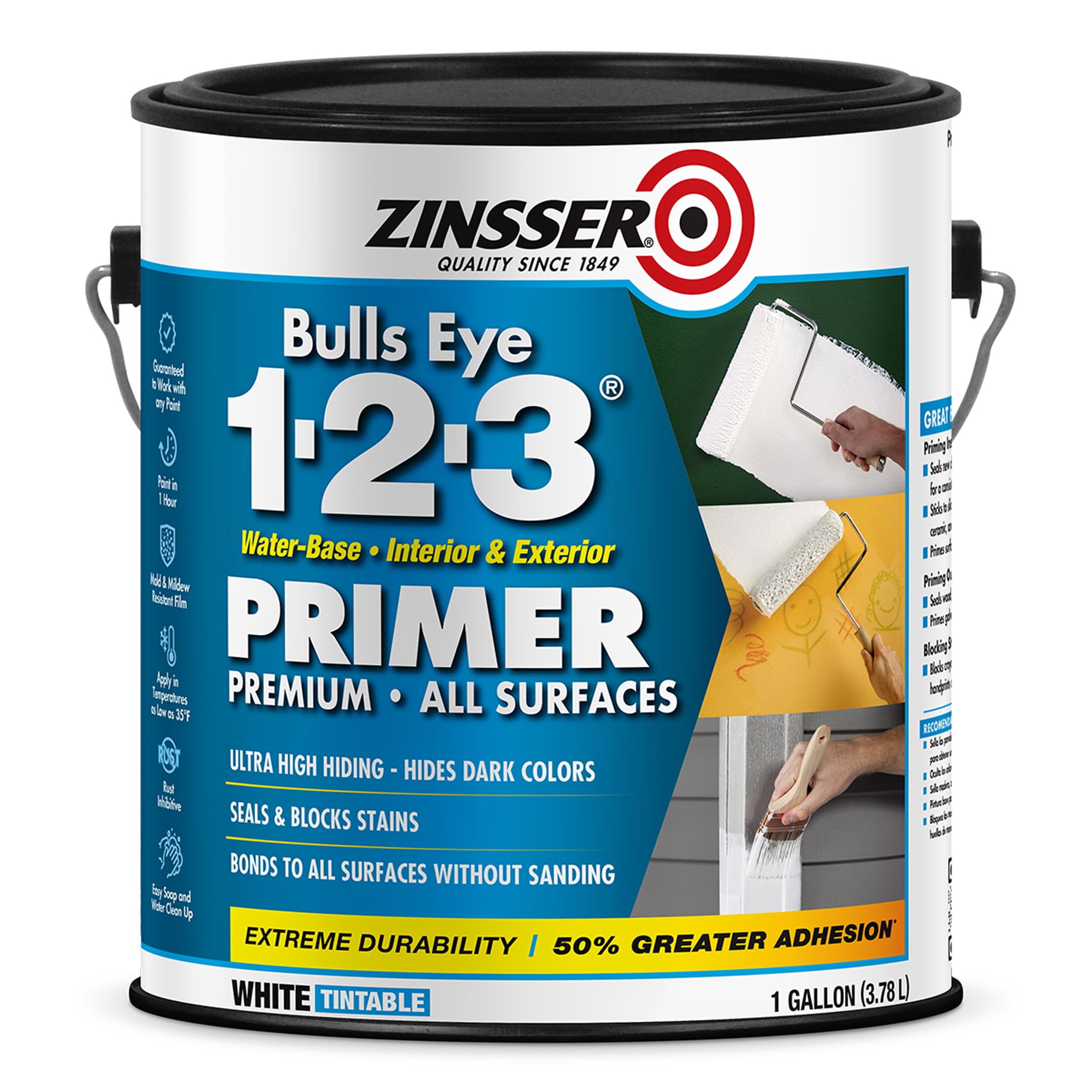
While not marketed strictly as a bonding primer, the Zinsser Bulls Eye 1-2-3 has earned a reputation for sticking to glossy and difficult surfaces without sanding, thanks to its water-based acrylic formula. It seals uniformly and provides excellent stain-blocking resistance, making it a solid choice for cabinets with water rings or nicotine discoloration. The gallon size covers 400-450 square feet, giving you ample material for a full kitchen.
The 35-minute dry-to-touch time keeps projects moving quickly, and it can be topcoated with either oil or latex paint after one hour. Users praise its ability to cover pink bleed-through on radiators and stubborn stains in a single coat, though two coats deliver better hide on dark substrates. The flat finish provides a good mechanical key for the topcoat to grip.
Some users note a strong smell during application that requires good ventilation, contrary to the low-odor claims. It also cannot be applied below 35°F, limiting its use in unheated garages during colder months. For cabinet projects where stain blocking is the primary concern, this primer is a versatile workhorse, but for maximum adhesion on glossy laminate, a dedicated bonding primer like Stix or UMA is a better choice.
Why it’s great
- Single-coat stain blocking on tough discoloration
- Fast dry time for quick recoat
- Compatible with oil and latex topcoats
Good to know
- Strong odor requires ventilation
- Not recommended for high-gloss laminate without sanding
5. Jungarian Furniture Paint Kit
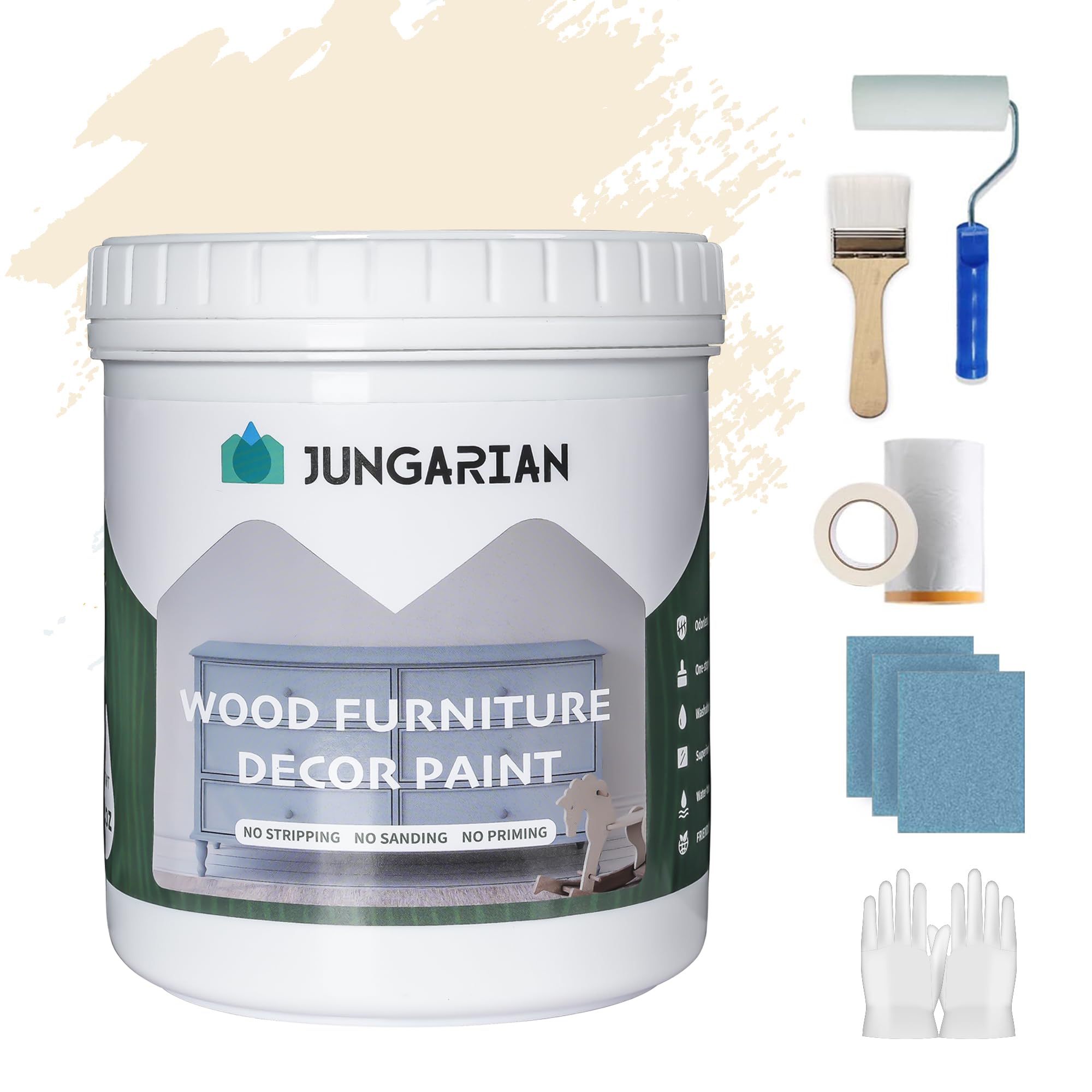
This all-in-one paint kit is designed for beginners who want to skip the priming step entirely. The water-based acrylic paint claims strong adhesion without sanding or primer, and the 32-ounce container includes a stirrer, brush, tape, and plastic wrap — everything needed to start painting immediately. The matte finish hides minor surface imperfections and dries to a wear-resistant film in 30 minutes.
Users report excellent results on kitchen cabinets, with many noting they painted entire kitchens using less than one container. The self-leveling formula minimizes brush marks, though the included brush shed bristles for some users. The low-odor, low-VOC composition allows indoor application without respiratory discomfort, and cleanup is simple with warm water.
Multiple coats are required — the first coat often looks streaky, and full coverage typically takes two to three coats. The paint is not waterproof, so cabinets near sinks or dishwashers may need an additional clear topcoat for moisture protection. For those wanting a single-product solution with all tools included, this kit delivers convenience, but the lack of a dedicated bonding primer means adhesion on glossy factory cabinets may not match the durability of a separate primer-plus-paint system.
Why it’s great
- Complete kit with brush, tape, and tools
- Low odor for indoor use
- No separate primer needed
Good to know
- Not waterproof — needs topcoat near moisture
- Brush quality can cause bristle shedding
6. Country Chic All-in-One Chalk Paint
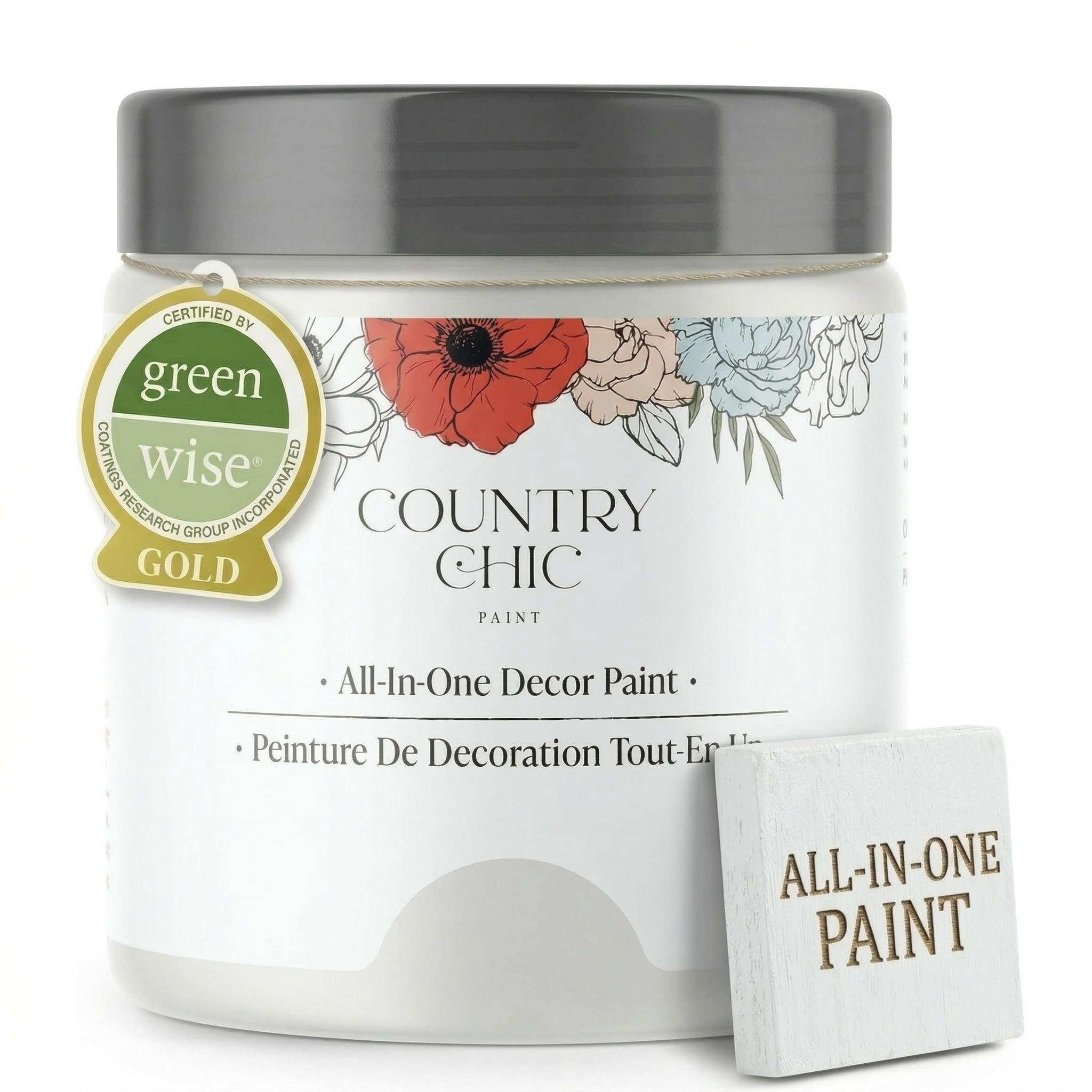
Country Chic’s chalk paint combines primer, paint, and top coat in one 8-ounce bottle, making it ideal for small furniture flips and cabinet accent pieces. Certified Green Wise Gold, it contains no phthalates, formaldehyde, or heavy metals, and the ultra-low VOC formula is safe for use in nurseries or kitchens with minimal odor. The chalky matte finish dries in 30 minutes and can be distressed for a vintage look.
Users love the thick consistency that provides good coverage on dark surfaces like black dressers without sanding. The built-in primer adheres well to wood and metal, though the paint is very thick — described as mayonnaise consistency — and may need thinning with a small amount of water for smooth application. The color matches pictures accurately, with the Simplicity white offering true bright coverage.
The 8-ounce size is best suited for small projects like a single cabinet door or a vanity table. For a full kitchen, the cost per square foot adds up quickly compared to larger-format primers and paints. The lid security during shipping has been inconsistent, with some jars arriving with loose lids and leaked paint. This product shines for decorative DIY pieces, but for heavy-use cabinets, a dedicated bonding primer and durable topcoat remain the more practical route.
Why it’s great
- Eco-friendly with Green Wise Gold certification
- Thick formula covers dark surfaces without sanding
- Quick 30-minute recoat time
Good to know
- Small 8-ounce size not economical for large projects
- Packaging issues with loose lids in transit
7. Stone Coat Countertops Bonding Primer and Sealer

While designed primarily as a bonding primer for epoxy countertop projects, this urethane-modified acrylic formula creates a strong mechanical bond on laminate, tile, granite, and solid surfaces that translates well to cabinet substrates. The translucent white liquid goes on clear, allowing it to work under both dark and light topcoats. The quart covers 30-40 square feet with two coats, making it suitable for a single bathroom vanity or countertop.
Reviews highlight its excellent adhesion to laminate countertops that previously rejected standard primers, and its ability to cover yellow discoloration completely. The low-odor, low-VOC profile makes it comfortable for indoor use without a respirator. The water-based formula cleans up easily with warm soapy water, a major convenience for DIYers finishing a project in a single weekend.
The primer requires sanding between coats for optimal adhesion, adding an extra step that dedicated cabinet primers may not need. It is also a specialized product — while it works on cabinets, its formulation is optimized for epoxy topcoats rather than standard latex or oil-based cabinet paints. For epoxy countertop projects it is essential, but for traditional painted cabinets, a cabinet-specific bonding primer like the INSL-X Stix offers a more direct solution.
Why it’s great
- Designed to bond to ultra-slick countertop surfaces
- Low odor for indoor use
- Water-based with easy cleanup
Good to know
- Requires sanding between coats
- Optimized for epoxy, not standard cabinet paint
FAQ
Can I use a bonding primer on laminate cabinets without sanding?
What is the difference between a bonding primer and a regular primer for cabinets?
How many coats of bonding primer do cabinet doors need?
Final Thoughts: The Verdict
For most users, the bonding primer for cabinets winner is the INSL-X Cabinet Coat because it combines self-leveling urethane acrylic technology with a durable satin finish that eliminates the need for a separate primer on sound surfaces. If you need to bond to extremely slick laminate or ceramic tile, grab the INSL-X Stix. And for a beginner-friendly all-in-one solution with tools included, nothing beats the Jungarian Furniture Paint Kit.