
Our readers keep the lights on and the weekend projects moving. As an Amazon Associate, I earn from qualifying purchases.
Painting latex over oil-based paint feels like a roll of the dice — without the right bonding primer, your new coat will peel off in sheets within months. The chemical difference between water-based and oil-based finishes means they refuse to grip each other without a specialized adhesive bridge.
I’m Rikta — the co-founder and writer behind FitlyFast. I’ve spent years analyzing coating chemistries and cross-referencing real-world adhesion results to find primers that actually solve the latex-over-oil challenge.
This guide breaks down the specific acrylic-urethane blends, mechanical bonding agents, and surface-prep protocols that make bonding primer for latex over oil projects succeed where generic primers fail.
How To Choose The Best Bonding Primer For Latex Over Oil
The fundamental problem is that oil-based paints cure into a hard, non-porous film. Latex paint relies on mechanical adhesion — it needs a rough or absorbent surface to grab. A bonding primer bridges this mismatch by using sticky resins that chemically grip the slick oil surface while also providing a toothy base for latex.
Resin Chemistry: Acrylic-Urethane vs. Standard Acrylic
Standard 100% acrylic primers offer decent adhesion, but acrylic-urethane hybrids deliver the strongest grip on glossy oil surfaces. The urethane component adds flexibility and toughness, allowing the primer film to resist the internal stresses that cause peeling when temperatures fluctuate.
High-Build vs. Thin-Film Formulas
High-build primers contain more solids and fillers, letting them level out surface imperfections and glue down peeling edges of old paint. Thin-film primers penetrate better into slightly porous substrates but may require multiple coats to build enough thickness over fully cured oil enamel.
Application Temperature Range and Cure Time
Bonding primers vary widely in their minimum application temperature. Some formulas work down to 35°F, making them suitable for garages or exterior projects in cooler months. Cure time also matters — overnight drying before topcoating is typical, but check whether the primer needs 1 hour or 24 hours before it can accept latex.
Quick Comparison
On smaller screens, swipe sideways to see the full table.
| Model | Category | Best For | Key Spec | Amazon |
|---|---|---|---|---|
| INSL-X Stix Acrylic Waterborne Bonding Primer | Acrylic-Urethane | Hard-to-coat glossy surfaces | Acrylic-urethane blend | Amazon |
| Rust-Oleum Universal Bonding Primer | Universal Acrylic | Metal and smooth finishes | 35 sq ft per quart coverage | Amazon |
| Flood Emulsa-Bond Exterior Additive | Paint Additive | Mixing into latex for adhesion | Add 8-16 oz per gallon | Amazon |
| Zinsser Peel Stop Triple Thick | High-Build Clear | Peeling and cracked surfaces | 50-200 sq ft per gallon | Amazon |
| Diamond Brite Oil Alkyd Primer | Oil-Based Alkyd | Rust protection on metal | 300 sq ft per gallon coverage | Amazon |
| INSL-X Aqua Lock Plus Primer Sealer | 100% Acrylic | Budget-friendly multi-surface | 75-100 sq ft per quart | Amazon |
| Liquid Rubber Multipurpose Primer | Water-Based Clear | Concrete and wood bonding | Water-thin clear formula | Amazon |
In‑Depth Reviews
1. INSL-X Stix Acrylic Waterborne Bonding Primer

The Stix formula is built around an acrylic-urethane hybrid resin that actively grips glossy oil paint, tile, PVC, and even glass. Professional painters consistently choose this primer for tricky residential repaints where a standard acrylic would peel within weeks. Its low VOC profile and soap-and-water cleanup make it practical for indoor use without strong solvent odors.
Coverage lands at 75 to 100 square feet per quart, and the primer sands easily between coats. Users report that it brushes on smoothly with excellent leveling, though you’ll need to wash brushes immediately after use because the urethane component dries to a tough film. Multiple reviews highlight success on kitchen cabinets and bathroom vanities previously coated with oil enamel.
The main tradeoff is cost — this primer sits at a mid-range price point, but its adhesion performance justifies the investment for critical surfaces. For large areas, a gallon size would be more economical, but the quart is ideal for doors, trim, and furniture projects.
Why it’s great
- Acrylic-urethane chemistry delivers exceptional grip on oil finishes
- Low odor and water cleanup for comfortable indoor use
- Quick dry time allows same-day topcoating in many cases
Good to know
- Price per quart is higher than standard acrylic primers
- Plastic ring on can opening can be difficult to remove
- Requires light sanding for best adhesion on extremely glossy surfaces
2. Rust-Oleum Universal Bonding Primer

Rust-Oleum’s Universal Bonding Primer is formulated to adhere to slick, non-porous surfaces including glossy paint, metal, and plastic. Its matte finish provides an ideal tooth for latex topcoats, and users consistently report excellent results on metal lockers, kiln-treated pottery, and Formica countertops where other primers failed.
The primer applies smoothly with a brush and minimal drips, but requires a full 24-hour cure before topcoating. This slower cure ensures maximum bond strength but demands patience.
Several reviews note that a single coat is often sufficient, with a second coat optional for heavily stained or dark surfaces. The primer’s thickness is well-balanced — not too runny, not too stiff — making it forgiving for DIY users. One caution: the can’s listed coverage is conservative, so expect to need more than you might guess.
Why it’s great
- Excellent adhesion on metal and glossy finishes without sanding
- Smooth, drip-resistant application with brush or roller
- Durable base resists chipping beneath latex topcoats
Good to know
- Coverage is low at 35 sq ft per quart
- Requires 24-hour cure time before painting
- Matte finish may show application marks if overworked
3. Flood Emulsa-Bond Exterior Latex Bonding Additive

Emulsa-Bond takes a different approach — instead of a standalone primer, it’s a liquid additive you mix directly into latex paint or primer. Adding 8 to 16 ounces per gallon transforms ordinary latex into a bonding formula that grips chalky oil paint, old aluminum siding, and glossy surfaces. Professional painters use this as a secret weapon for repaints where traditional primers have failed.
The additive makes the paint slightly stretchier and improves penetration into microscopic cracks and pores. Users report that painted surfaces last 50% longer compared to untreated latex. It works particularly well on exterior surfaces like aluminum siding, asbestos shingles, and weathered wood where moisture and UV exposure accelerate peeling.
The one critical limitation: Emulsa-Bond doesn’t store well once mixed, so only combine it with the paint you’ll use in a single session. The additive itself has a lengthy shelf life in its original container. For projects requiring a primer-coat approach, you can mix it into both the primer and the first topcoat for maximum adhesion.
Why it’s great
- Converts standard latex into a bonding paint without extra primer coat
- Proven on chalky oil paint and weathered siding materials
- Extends paint lifespan by improving adhesion at the film level
Good to know
- Mixed paint won’t store; mix only what you’ll use immediately
- Requires thorough re-stirring if left overnight
- Not a standalone primer — must be mixed with paint or primer
4. Zinsser Peel Stop Triple Thick High Building Primer
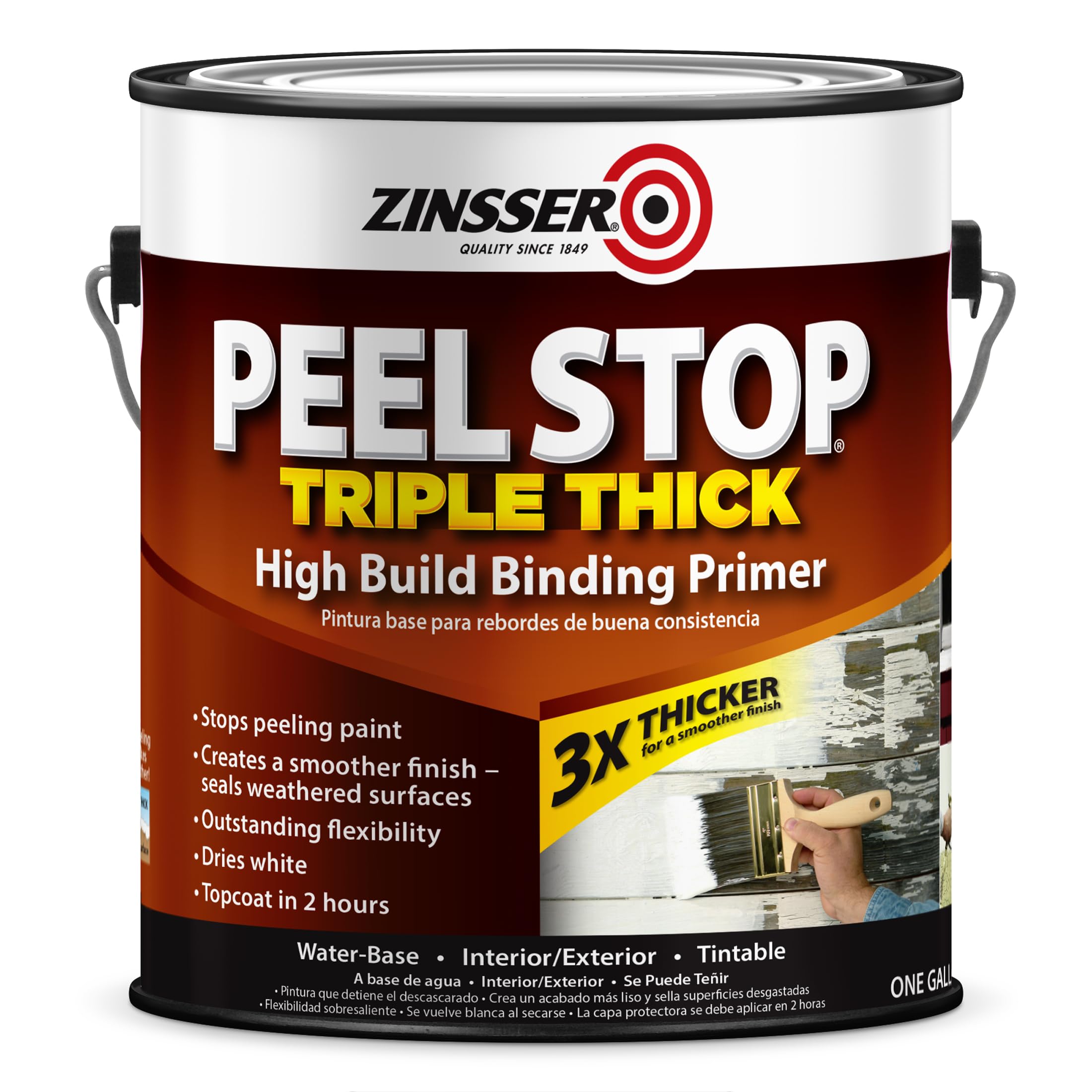
This triple-thick formula is designed for surfaces where the old oil paint is already peeling or cracking. The high-build clear liquid penetrates under loose edges, glues them down, and fills minor gaps to create a smooth, flexible surface that latex can grip. It dries to the touch in 30 minutes, making it one of the fastest-bonding options for urgent repairs.
Coverage varies dramatically by surface porosity — from 50 to 200 square feet per gallon — because heavily peeling surfaces absorb more material. The primer dries clear with a hard, plastic-like film that seals stains and prevents new coating cracking. Users specifically praise it for bathroom ceiling repairs where moisture and old oil paint create a nightmare for adhesion.
The main drawback is consistency: some customers reported defective cans from certain production lots where the product separated and couldn’t be remixed. Buy from reliable sellers and check the can immediately upon arrival. The clear finish means you must keep track of where you’ve applied it, especially on white ceilings.
Why it’s great
- Triple-thick formula glues down peeling edges of old oil paint
- Dries clear and flexible, compatible with any topcoat color
- Fast 30-minute dry time speeds up multi-day projects
Good to know
- Quality control issues reported with some cans separating
- Coverage varies significantly based on surface condition
- Clear formula makes it hard to see application coverage
5. Diamond Brite Industrial Oil Alkyd Primer, Gray

When the surface is already oil-based, sometimes the smartest move is to stay oil-based. Diamond Brite’s alkyd primer provides maximum rust resistance on metal surfaces and bonds seamlessly with existing oil enamel without the chemical mismatch that latex-on-oil creates. It delivers one-coat coverage over 300 square feet per gallon — the most efficient coverage in this roundup.
The gray color works well as a uniform base for both light and dark topcoats. Users report excellent adhesion on metal doors, T-111 siding, and wrought iron where previous latex coatings bubbled and peeled under sun exposure. The alkyd resin dries to a hard, durable surface that resists scuffs, fading, and cracking.
The caveat is cure time — oil alkyd primers take significantly longer to dry than waterborne options, often needing a full day or more depending on temperature and humidity. Cleanup requires mineral spirits rather than soap and water. This primer is best suited for outdoor metalwork or projects where slow cure isn’t a bottleneck.
Why it’s great
- Perfect chemical match for existing oil-based paint layers
- Excellent rust protection for metal surfaces
- Broad 300 sq ft per gallon coverage reduces material cost
Good to know
- Slow drying and curing — can take over 24 hours
- Requires mineral spirits for cleanup, not water
- Strong solvent odor needs ventilation during application
6. INSL-X Aqua Lock Plus 100% Acrylic Primer Sealer

Aqua Lock Plus is a no-frills 100% acrylic primer that works well on lightly oiled surfaces if the old coating has been properly sanded and deglossed. It’s not a dedicated bonding primer like the Stix line, but its acrylic resin provides enough adhesion for interior walls, drywall, and plaster where the oil paint is fully cured and has some texture remaining.
Coverage is generous at 75 to 100 square feet per quart, and the primer dries tack-free in 30 minutes with a 1-hour recoat window — one of the fastest turnaround times available. The low VOC formulation makes it comfortable for indoor use, and customer reviews consistently praise its stain-blocking ability on new sheetrock and ceiling repairs.
The limitation is clear: this is not formulated for truly glossy oil surfaces. On high-sheen enamel or previously painted kitchen cabinets with a slick finish, you must sand thoroughly or use a dedicated bonding primer. Best used for projects where the old oil paint has dulled over time or where you’ve already done mechanical deglossing.
Why it’s great
- Fast 30-minute dry time speeds up project turnaround
- Low odor and low VOC suitable for indoor use
- Good coverage at budget-friendly price point
Good to know
- Not formulated for glossy oil surfaces without prep
- Requires sanding or deglossing for reliable adhesion on oil paint
- Texture can trap dirt in high-traffic areas
7. Liquid Rubber Multipurpose Primer

Liquid Rubber’s primer has a distinctly thin, water-like consistency that soaks deep into porous surfaces rather than sitting on top. It’s technically a bonding agent for concrete and wood, but its clear, non-toxic formula can work on lightly oiled surfaces if the oil film is thin and well-weathered. The primer dries clear with a subtle sheen, leaving no visual residue under latex topcoats.
Users report mixed results on heavily oiled surfaces — some find it bonds effectively after proper cleaning, while others note that the lack of solids means it doesn’t build the film thickness needed to bridge glossy oil enamel. It excels on decking and exterior wood where the old coating is chalky rather than glossy.
The water-thin consistency makes application tricky — drips and runs happen easily if you overload the brush. Multiple coats are recommended for solid coverage, and the primer must be topcoated within 24 hours while still tacky. Best suited for DIYers working on previously painted wood or concrete where adhesion is tricky but not extreme.
Why it’s great
- Non-toxic and water-based, safe for interior use
- Dries clear without altering paint color
- Penetrates deep into porous surfaces for strong mechanical bond
Good to know
- Water-thin consistency makes application messy without practice
- Not designed for high-gloss oil surfaces; limited adhesion there
- One-year durability issues reported on demanding exterior projects
FAQ
Can I apply latex paint directly over oil paint without a bonding primer?
Do I need to sand oil paint before using a bonding primer?
What is the difference between a bonding primer and a regular primer?
Final Thoughts: The Verdict
For most users, the bonding primer for latex over oil winner is the INSL-X Stix Acrylic Waterborne Bonding Primer because its acrylic-urethane blend provides the most reliable grip on glossy oil finishes while keeping cleanup easy with water. If you want a unique additive system that converts any latex into a bonding paint, grab the Flood Emulsa-Bond. And for those dealing with actively peeling oil paint on metal or outdoor fixtures, nothing beats the Diamond Brite Oil Alkyd Primer for chemical compatibility and rust protection.