
Our readers keep the lights on and the weekend projects moving. As an Amazon Associate, I earn from qualifying purchases.
The frustration is real: traditional earbuds block out traffic, crowd chatter, and workout partners while leaving your ear canals sore and sweaty. Bone conduction technology solves both problems at once by sending sound waves directly through your cheekbones, leaving your ear canals completely open so you stay aware of your environment and free from in-ear pressure.
I’m Rikta — the co-founder and writer behind FitlyFast. I’ve spent countless hours analyzing the acoustic driver specs, waterproof ratings, memory capacities, and battery endurance data that actually separate a great bone conduction headphone from a forgettable one so you don’t have to guess.
Because not every model delivers equal sound clarity or swim-ready sealing, this guide breaks down the technical differences and real-world trade-offs you need to identify the absolute best bone conduction earbuds for your specific workouts, commutes, and daily listening habits.
How To Choose The Best Bone Conduction Earbuds
Bone conduction headphones are not a one-size-fits-all category. The most important factors are waterproof sealing level, internal storage for offline play, Bluetooth chip generation, and overall fit weight. Understanding each will save you from buying a pair that fails in the pool or sounds too buzzy on the trail.
Waterproof Rating: IP68 vs. IPX8 vs. IPX6
If you plan to swim laps or submerge entirely, look for IP68 — protected against continuous immersion beyond 1 meter. IPX8 covers submersion up to specific depths (often 5 meters), but both require switching to MP3 mode since Bluetooth signals cannot travel through water. For heavy sweat and rain runs, IPX6 or IPX7 is sufficient.
Internal Storage for Offline Play
Bluetooth stops working underwater, so swimmers need earbuds with onboard MP3 memory. 8GB holds roughly 1,500 to 2,000 songs, while 32GB can store up to 8,000 tracks. If you swim frequently or want to leave your phone at home, prioritize models with at least 8GB and support for common audio formats like MP3, WAV, FLAC.
Bluetooth Version and Call Quality
For dry-land use, Bluetooth 5.3 or 5.4 offers better power efficiency, lower latency, and more stable multipoint pairing across devices. If you rely on hands-free calls in windy conditions, dual-mic ENC and a physical windscreen are more valuable than a slightly higher Bluetooth number.
Quick Comparison
On smaller screens, swipe sideways to see the full table.
| Model | Category | Best For | Key Spec | Amazon |
|---|---|---|---|---|
| SHOKZ OpenRun Pro 2 | Premium Dual-Driver | Bass-rich training + calls | 12 hours battery, IP55 sweatproof, USB-C | Amazon |
| SHOKZ OpenRun Pro | Premium | All-day wear & outdoor safety | 9th gen transducer, 10H battery, Sweat Resistant | Amazon |
| MARLALL S800 LiteSurge | Mid-Range | Swimming & allergy-free listening | IP68, 32GB MP3, Bluetooth 5.4 | Amazon |
| SANOTO Bone Conduction | Mid-Range | Office & call-heavy remote work | Dual-mic ENC, windproof mic, 33g | Amazon |
| ANSTEN Swimming Headphones | Mid-Range | Open-ear swim & cycle combo | IP68, 8GB MP3, Bluetooth 5.4 | Amazon |
| IFECCO Waterproof Headphones | Budget-Friendly | Entry-level swim & run | IP68, 8GB MP3, Bluetooth 6.0, 28g | Amazon |
| ZOVIMAX Bone Conduction | Budget-Friendly | Budget-conscious everyday use | IPX8, 32GB MP3, Bluetooth 6.0, 14.2mm driver | Amazon |
In‑Depth Reviews
1. SHOKZ OpenRun Pro 2

The OpenRun Pro 2 represents a true architecture shift in bone conduction: it pairs a standard bone conduction transducer for mids and highs with an air conduction driver dedicated to producing actual bass depth. This dual-driver approach eliminates the thin, buzzy low-end that plagues most bone conduction models, delivering 3D spatial audio that keeps you motivated through runs and gym sessions. The unibody frame uses Ni-Ti alloy memory wire so it snaps back to shape after every wear.
Battery life is a legitimate 12 hours at moderate volume, and the included USB-C charging is a welcome departure from the proprietary magnetic cables SHOKZ previously required. The Shokz app provides dedicated EQ modes including a Pure Bone Conduction Classic Mode that bypasses the air driver entirely, plus a Volume Boost Mode for noisy roads. Dual wind-resistant mics with AI noise reduction filter out 96.5 percent of background wind up to 15 mph, making calls remarkably clear even during windy bike commutes.
The mini form factor sits flush against the temple without pressing into eyeglass arms, and the reflective strip on the band adds visibility for low-light runs. The IP55 rating handles sweat and rain but is not submersible, so this is not a swim headphone. Sound leakage at high volume is minimal but noticeable in quiet indoor settings.
Why it’s great
- Dual drivers deliver real bass without skull buzz
- 12-hour battery with fast USB-C charging
- Excellent AI mic noise reduction for outdoor calls
- Mini frame comfortable with glasses and helmets
Good to know
- IP55 not suitable for swimming or submersion
- Sound leaks slightly at max volume in quiet rooms
2. SHOKZ OpenRun Pro

SHOKZ built its reputation on this generation, and the OpenRun Pro remains a reference for open-ear safety during road cycling and trail running. The 9th-generation bone conduction technology with TurboPitch delivers clear mids and highs with a richer bass presence than earlier SHOKZ models, though the bass still vibrates the transducers at high volumes — a physical limitation of single-driver bone conduction. The 29-gram wraparound titanium frame is nearly invisible during wear and stays locked in place through sprints and jump squats.
Battery life hits 10 hours of continuous music or calls, and the 5-minute quick charge restores 1.5 hours of playback — a lifesaver when you forget to charge overnight. Multipoint pairing connects to two devices simultaneously, so you can switch between workout playlist and work calls seamlessly. The IP55 sweat-resistant rating handles heavy perspiration and rain but cannot go underwater. Fit is excellent with helmets and glasses; the frame clears collars easily.
Call quality is solid in quiet environments, but wind noise at cycling speeds above 15 mph becomes distracting. The proprietary magnetic charger is the single most common complaint across user reviews — losing it means ordering a replacement cable. Sound leakage at moderate-to-high volume is present and can be heard by someone sitting next to you.
Why it’s great
- Industry-leading bone conduction clarity and fit
- 10-hour battery with ultra-fast quick charge
- Seamless multipoint pairing for dual devices
- Lightweight titanium frame stays secure
Good to know
- Proprietary magnetic charger, not USB-C
- Bass causes transducer vibration at high volumes
3. MARLALL S800 LiteSurge
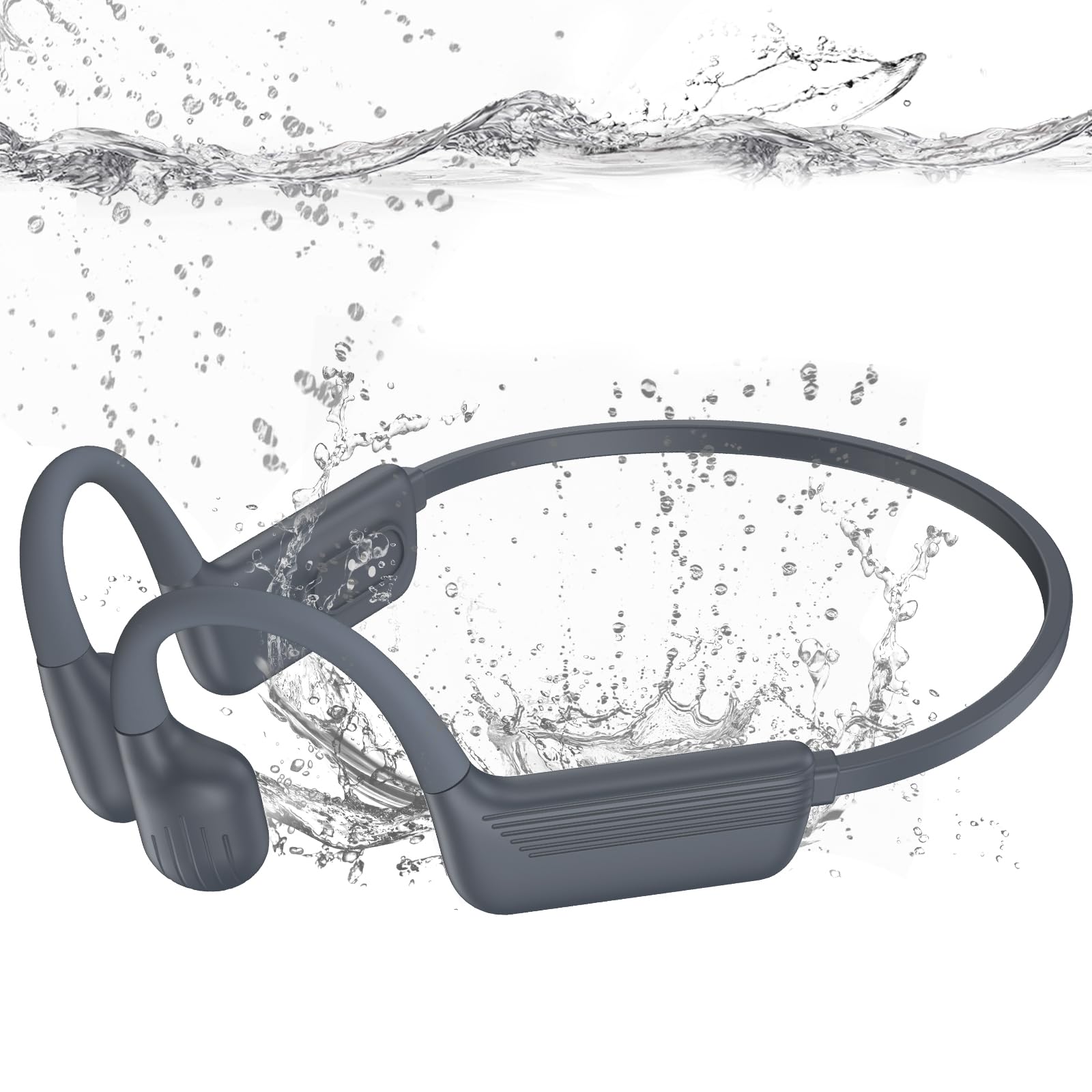
The MARLALL S800 is built specifically for swimmers who want massive offline music libraries. The 32GB internal memory holds roughly 5,000 to 8,000 songs in MP3, WAV, WMA, and FLAC formats, letting you rotate playlists without ever touching your phone. The IP68 rating means full submersion beyond 1 meter is safe as long as you switch to MP3 mode — Bluetooth signals cannot propagate through water, and the capacitive buttons are sealed with nano-coating to prevent misfires.
Bluetooth 5.4 provides reliable dry-land connectivity up to 10 meters, and the open-ear design sits comfortably under a swim cap and goggles without pressure points. The liquid silicone material is skin-friendly and resists pool chlorine and saltwater damage. Sound quality is surprisingly good for bone conduction in this price range — clearer than the entry-level Shokz models according to several reviewers, though the microphone is noticeably muffled for phone calls compared to the SHOKZ OpenRun Pro.
The magnetic charging cable doubles as a data bridge for loading songs onto internal storage. Transferring music from iPhone or streaming services requires a third-party app to convert to MP3, which can be a hassle for non-technical users. The 0.05-pound weight is barely noticeable, but the frame is slightly wider than premium alternatives, which may press against temple glasses arms.
Why it’s great
- 32GB onboard storage holds entire music library
- True IP68 waterproofing for pool and open water
- FLAC support for high-res audio files
- Comfortable under swim cap and goggles
Good to know
- Mic quality muffled compared to premium rivals
- Requires MP3 conversion for streaming library transfers
4. SANOTO Bone Conduction Headphones with Mic
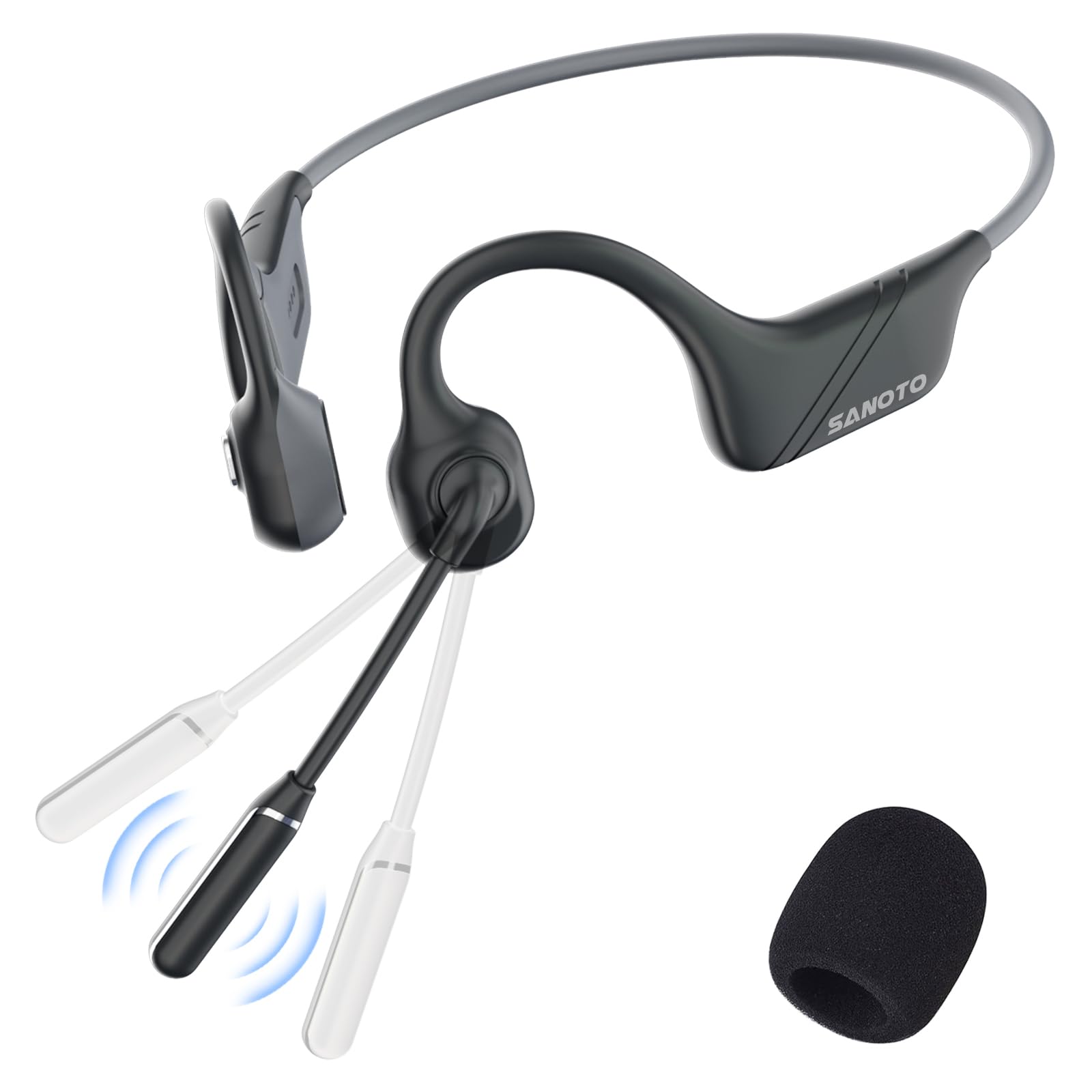
The SANOTO is engineered for a very different use case than the swim-focused models: professional voice calls in noisy environments. The adjustable boom microphone with a detachable foam windscreen is a rarity in bone conduction headphones, and it makes a tangible difference. Dual-mic ENC isolates your voice from background chatter, fans, and road noise, so conference participants hear you clearly even from a coffee shop. The mute function is accessed by double-clicking the multifunction button during calls — simple and effective.
At just 33 grams with an ergonomic titanium frame wrapped in skin-friendly silicone, this is one of the lightest bone conduction headsets available. The open-ear design sits gently on the cheekbones without clamping pressure, making it suitable for all-day wear during remote work shifts. Bluetooth 5.3 plus multipoint pairing connects to a laptop and phone simultaneously, auto-switching audio between the two. The 8-hour talk time / 6-hour listening time covers a full workday with a single 2-hour charge.
Sound quality for music is adequate but not exceptional — the single bone conduction driver lacks the bass depth of the SHOKZ dual-driver models. The power button sits on the underside of the right module, which can accidentally trigger pairing mode when adjusting the headset. The frame is optimized for voice and call clarity rather than workout durability, so sweat resistance is moderate rather than swim-proof.
Why it’s great
- Boom mic with windscreen delivers pro-grade call clarity
- Ultra-light 33g frame for all-day comfort
- Seamless dual-device multipoint pairing
- Dedicated mute button for conference calls
Good to know
- Music sound quality lacks bass response
- Power button position can accidentally trigger pairing
5. ANSTEN Swimming Headphones
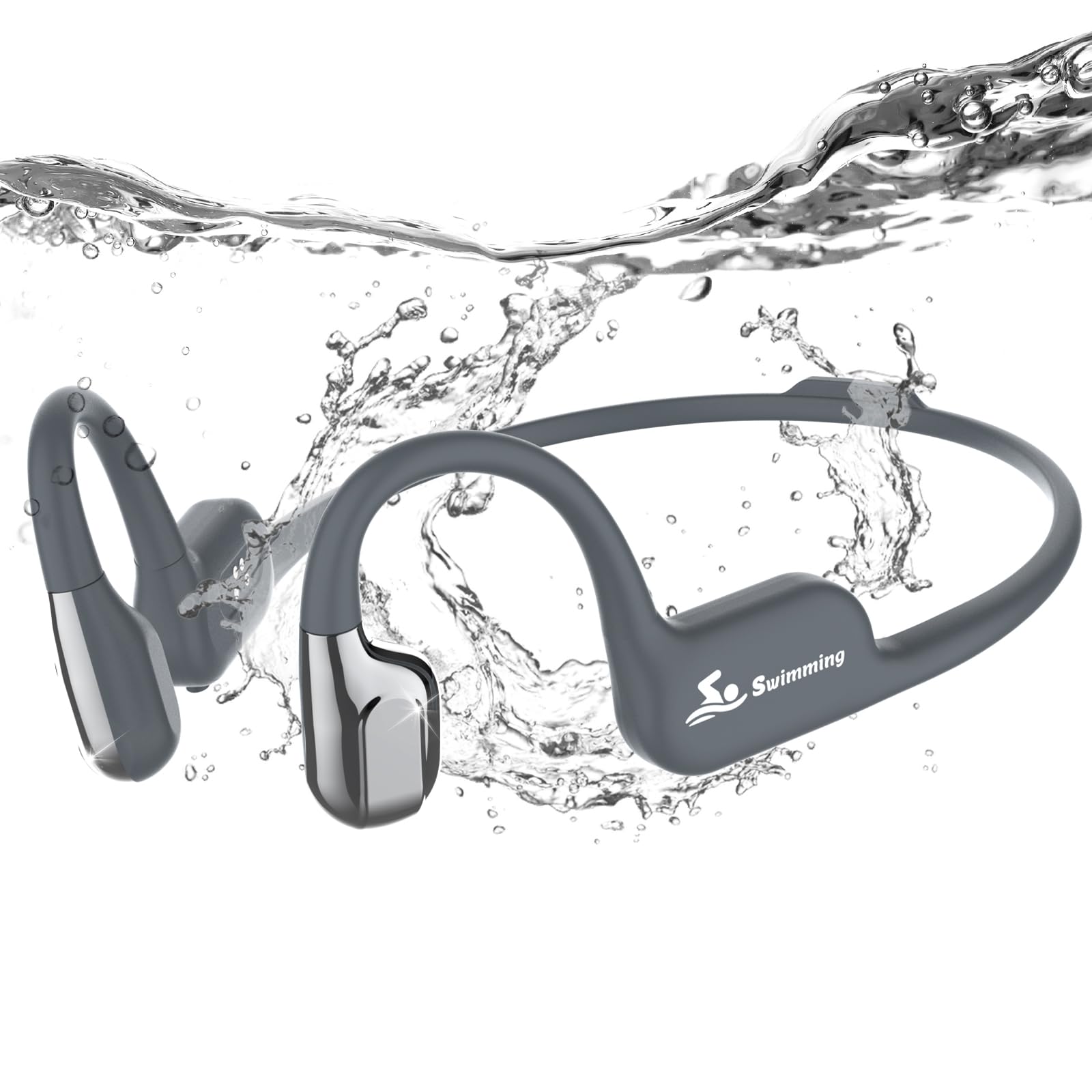
The ANSTEN strikes a solid balance between swim-ready durability and everyday dry-land usability. The IP68 waterproof rating protects against full submersion, making it safe for pool laps and surf sessions as long as you switch to MP3 mode. The 8GB internal memory holds roughly 1,500 songs and supports quick mode-switching with a double-click of the function button. Bluetooth 5.4 provides stable wireless streaming up to 10 meters on land.
Build quality is a step above budget-tier competition: the adjustable elastic straps include two magnetic charging cables in the box, and the ergonomic ear hooks keep the frame planted during flip turns and sprints. The 180mAh battery recharges in about 2 hours and delivers the advertised 8 hours of continuous playback at moderate volume. The dark gray colorway is low-profile and barely visible under a swim cap.
Sound quality is described by reviewers as “not top notch but not terrible” — the bone conduction drivers produce clear mids and highs but lack richness in the low end. Some users note the buttons are stiff before breaking in. The enclosed ABS material is durable but feels less premium than the liquid silicone used on the MARLALL. Battery life at maximum volume drops to around 5–6 hours.
Why it’s great
- True IP68 waterproofing for submersion swimming
- Bluetooth 5.4 for low-latency dry-land streaming
- Includes two magnetic charging cables
- Comfortable ergonomic fit under swim gear
Good to know
- Bone conduction audio lacks bass depth
- Buttons feel stiff before first few uses
6. IFECCO Waterproof Headphones
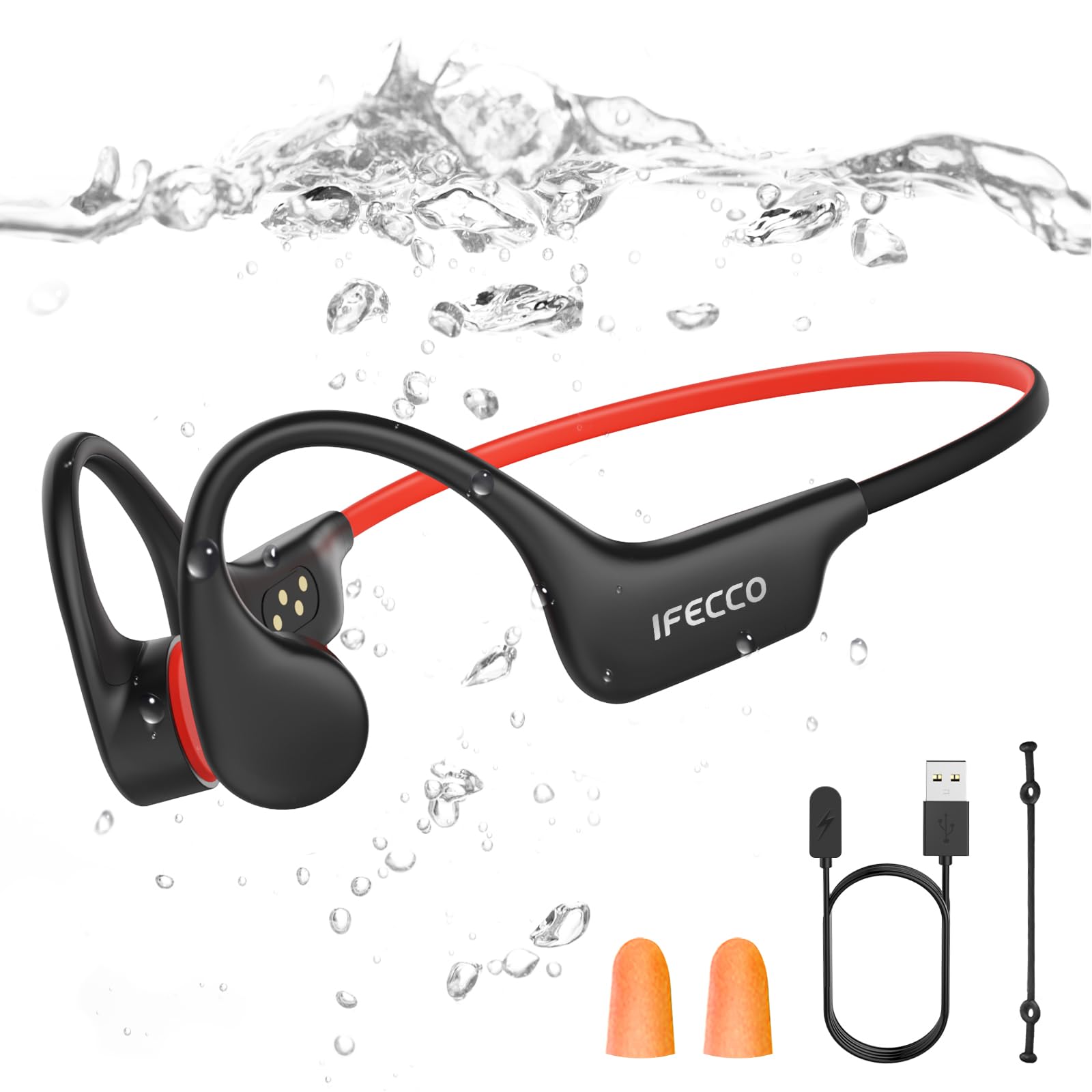
If weight is your primary concern, the IFECCO is the lightest entry in this lineup at 28 grams. The titanium frame is flexible enough to fit smaller head sizes, and the open-ear pads promote airflow to prevent heat buildup during intense workouts. The IP68 rating supports submersion to 3 meters for 60+ minutes, making it a capable swim companion as long as you remember to use MP3 mode — Bluetooth cuts out the moment the headset goes underwater.
The 8GB internal storage holds around 2,000 songs, and Bluetooth 6.0 offers theoretical improvements in low-power streaming and pairing speed compared to older versions, though real-world range is still limited to roughly 10 meters. The 8-hour battery life covers most training sessions. The black-red color variant is sporty but polarizing — some users wish the finish were more muted.
Sound quality exceeds expectations for the price tier: the 14.2mm dynamic bone conduction drivers deliver clear mids and acceptable highs, though bass is predictably thin. The main reliability concern noted by buyers is moisture trapped in the magnetic charging port after swimming — the case needs to be dried thoroughly before charging to avoid connection issues. Call clarity is average; the microphone picks up ambient noise in busy environments.
Why it’s great
- Ultra-light 28g titanium frame disappears on the head
- True IP68 rating for submersion swimming
- Bluetooth 6.0 for efficient streaming
- 8GB memory for offline music playback
Good to know
- Charging port needs thorough drying after swimming
- Mic performance is average in noisy settings
7. ZOVIMAX Bone Conduction Headphones
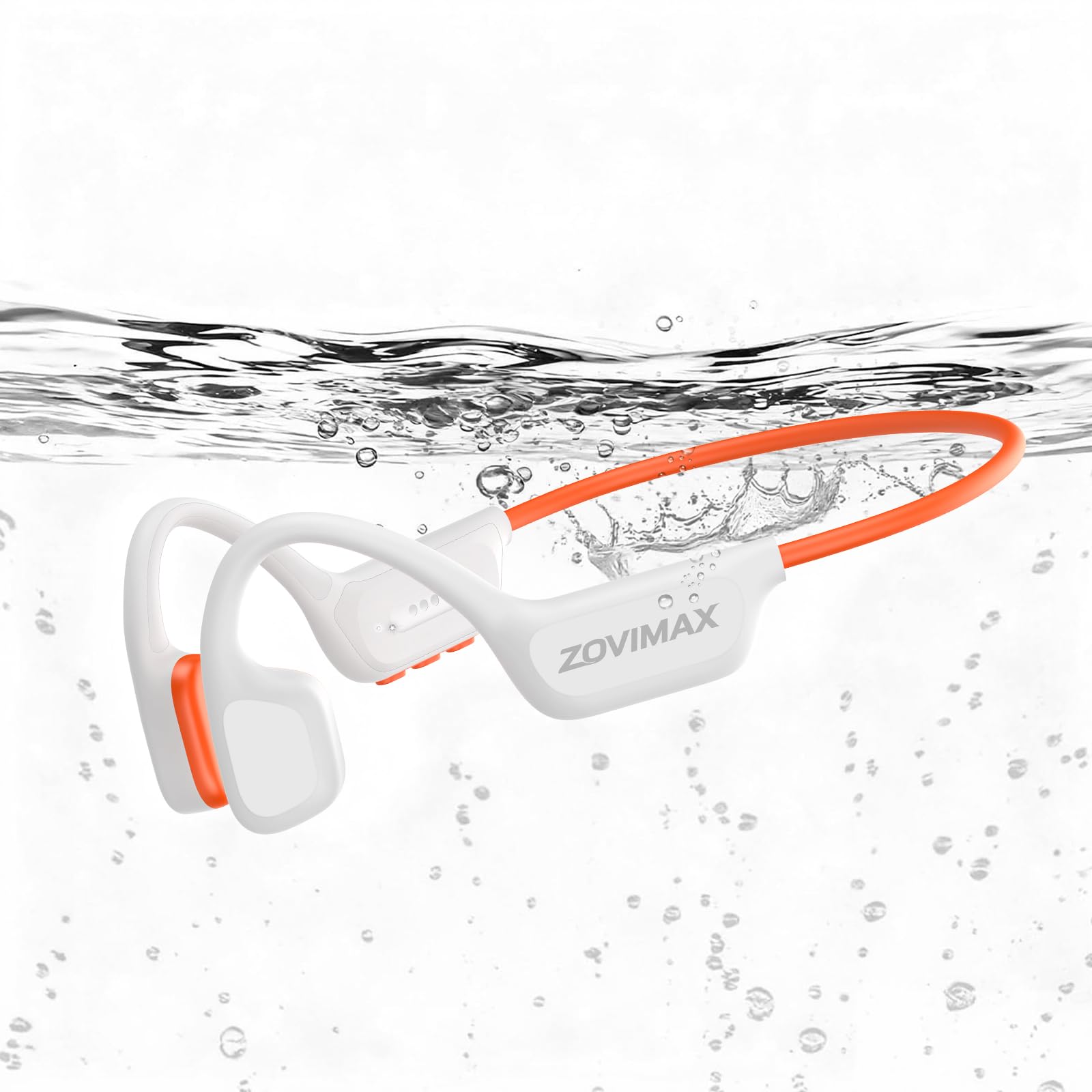
The ZOVIMAX offers an aggressive feature-per-dollar ratio: IPX8 waterproofing, 32GB internal storage, Bluetooth 6.0, and a large 14.2mm dynamic driver — all at the budget end of the spectrum. The IPX8 rating means full submersion up to 5 meters for 2.5 hours, making it the deepest-rated model in this comparison. The adjustable strap accommodates different head sizes, and the orange color is highly visible for outdoor safety.
The 32GB memory space is the same capacity as the MARLALL, giving you room for roughly 5,000 to 8,000 songs depending on bitrate. The magnetic charging cable doubles as a USB data link for drag-and-drop song transfers. Battery life is rated at 8 hours but real-world usage averages closer to 6–7 hours at moderate volume. The 14.2mm driver is larger than most bone conduction transducers and produces notably richer audio than typical budget models, though still lacking true sub-bass.
Bluetooth 6.0 pairs quickly and maintains a stable connection within 10 meters. Call quality is acceptable for occasional calls but not comparable to the SANOTO or SHOKZ premium models — the microphone picks up wind noise outdoors. The IPX8 seal is effective but the skin-friendly silicone pads attract dust and lint. The frame feels slightly bulkier than higher-end alternatives at 35 grams, and the included strap can slip if not tightened properly.
Why it’s great
- 32GB storage rivals premium swim headphones
- IPX8 rated for 5-meter submersion depth
- Larger 14.2mm driver for fuller audio
- Bluetooth 6.0 for stable connectivity
Good to know
- Silicone pads attract lint and dust
- Battery life below advertised in real-world use
FAQ
Can bone conduction earbuds work underwater?
How does bone conduction audio quality compare to regular earbuds?
What is the difference between Bluetooth 5.3 and Bluetooth 6.0 in bone conduction headsets?
Final Thoughts: The Verdict
For most users, the bone conduction earbuds winner is the SHOKZ OpenRun Pro 2 because its dual-driver design delivers the richest audio quality in the category while maintaining open-ear safety for outdoor workouts. If you swim multiple times per week and need massive offline storage, grab the MARLALL S800 LiteSurge for its 32GB capacity and true IP68 sealing. And for professionals who spend long days on calls and value call clarity above music quality, nothing beats the SANOTO Bone Conduction Headphones with its boom microphone and dual-mic ENC.