
Our readers keep the lights on and the weekend projects moving. As an Amazon Associate, I earn from qualifying purchases.
Standard hearing aids block your ear canal to pump sound in, which can feel isolating and cause feedback every time you hug someone or rest your head. Bone conduction technology bypasses this entirely by sending vibrations through your skull directly to your inner ear, leaving your ear canal open so you stay aware of your surroundings while enjoying clear audio. This shift in how sound reaches you makes them ideal for people with conductive hearing loss, single-sided deafness, or anyone who finds traditional earbuds uncomfortable for long wear.
I’m Rikta — the co-founder and writer behind FitlyFast. I’ve spent countless hours analyzing how bone conduction drivers, DSP noise reduction, and rechargeable battery systems perform across the hearing aid and open-ear headphone markets to separate genuine medical-grade devices from simple audio playthings.
After reviewing dozens of models across eight tiers of build quality and feature depth, I’ve settled on the most reliable lineup of bone conduction hearing aids that balance speech clarity, all-day comfort, and smart noise handling for real conversations.
A note on medical use: Several products in this guide are OTC (over-the-counter) hearing aids, while others — like the SHOKZ models — are consumer bone-conduction audio headphones, not medical hearing aids. Manufacturer specs (dB gain, noise reduction percentages, and similar figures) are quoted from the listings themselves and have not been independently lab-verified. If you have diagnosed hearing loss, especially anything beyond mild-to-moderate, talk to an audiologist before choosing a device, and do not rely on marketing claims alone.
How To Choose The Best Bone Conduction Hearing Aids
Bone conduction hearing aids serve two distinct audiences: those with medical hearing loss who need speech amplification and those who want open-ear awareness while listening to audio. Your choice depends on whether you need a medical-grade hearing aid with FDA registration or a bone conduction headset for situational safety. Knowing the difference upfront saves you from buying an amplifier disguised as a hearing aid or a headset that cannot deliver enough gain for conversations.
Gain Level and Channel Count
Gain, measured in decibels (dB), tells you how much the device amplifies incoming sound. Mild to moderate hearing loss typically requires 30–50 dB of peak gain. Channel count — usually 8, 12, or 16 — determines how finely the device can separate speech from background noise. More channels allow the digital signal processor to isolate human voices while suppressing refrigerator hum, traffic, or crowd chatter. Devices with fewer than 8 channels often amplify everything equally, which makes noisy environments worse.
Open-Ear vs. In-Canal Design
True bone conduction hearing aids sit on the bone behind your ear (BTE style) or use a wraparound band to press transducers against your temple. This leaves your ear canal completely unblocked, reducing the plugged-up sensation called occlusion. In-canal designs that claim bone conduction are usually standard receivers that happen to vibrate — they still block the ear. If your priority is situational awareness and comfort during all-day wear, choose a device that explicitly keeps the canal open rather than inserting a dome or tip.
Rechargeable Battery and Charging Case
Hearing aids run for hours daily, so battery endurance dictates whether the device stays useful throughout a full day of social activity. A single charge should deliver at least 16–20 hours of runtime. The charging case must hold multiple full recharges — look for cases offering 3–5 extra cycles. Quick-charge features (10–15 minutes for several hours of use) matter when you forget to charge overnight. Also check whether the device uses standard USB-C or proprietary magnetic chargers, since proprietary cables are harder to replace on the road.
Quick Comparison
On smaller screens, swipe sideways to see the full table.
| Model | Category | Best For | Key Spec | Amazon |
|---|---|---|---|---|
| ELEHEAR-Beyond Pro | Premium RIC | Premium speech clarity & AI features | VocClear 2.0, 20hr runtime, up to 8500Hz | Amazon |
| ELEHEAR-Beyond | Premium BTE | App-controlled noise cancellation | VocClear AI, 50dB gain, 100hr total battery | Amazon |
| Vivtone Xpure 2.0 | Premium RIC | Bluetooth streaming & app fine-tuning | RIC design, 24hr battery, app EQ control | Amazon |
| Nova Hearing Aids | Mid-Range CIC | Zero feedback & moisture drying case | 80% noise reduction, 20hr battery, drying case | Amazon |
| Vivtone Lucid508 | Mid-Range BTE | Tinnitus masking & quiet/noisy modes | 41dB peak gain, 25hr use, 125hr backup | Amazon |
| SHOKZ OpenComm2 | Mid-Range Headset | Crystal-clear calls & boom mic clarity | 16hr talk time, noise-canceling mic, USB-C | Amazon |
| Flaygo Rechargeable | Budget CIC | Invisible fit & automatic operation | 16-channel chip, 110hr case battery | Amazon |
| SHOKZ OpenRun Pro | Budget Sport | Workout safety & situational awareness | TurboPitch bass, 10hr battery, IP55 | Amazon |
| SHOKZ OpenRun | Budget Sport | Lightweight sport & all-day comfort | IP67, 8hr playtime, 10-min quick charge | Amazon |
In‑Depth Reviews
1. ELEHEAR-Beyond Pro Hearing Aids
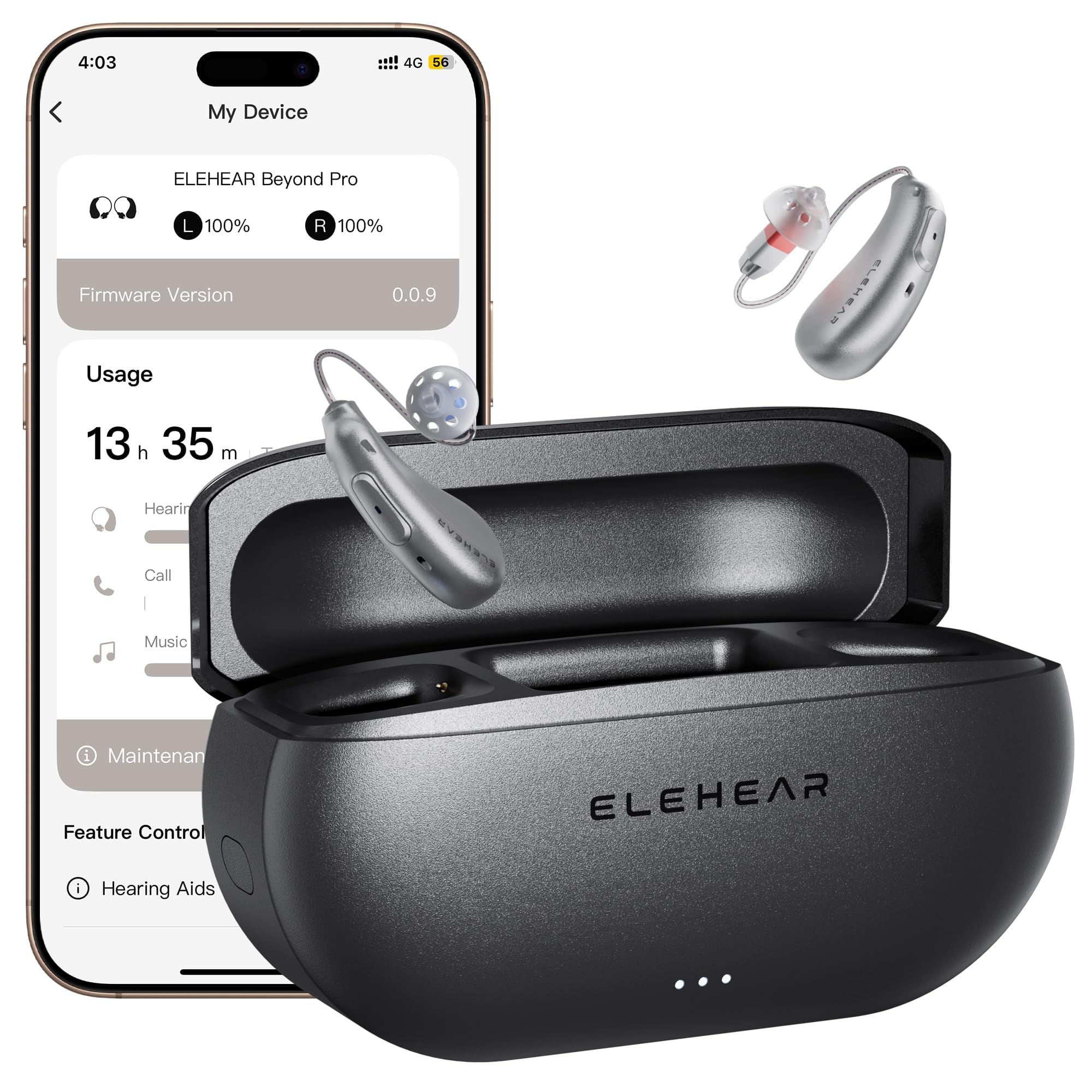
The ELEHEAR-Beyond Pro represents the current ceiling for bone-conduction-style hearing aids that double as Bluetooth streamers. VocClear 2.0 delivers 30% clearer speech reproduction with extended high-frequency response up to 8500Hz and latency down to 8 milliseconds, so conversations feel natural rather than delayed or tinny. The Receiver-in-Canal design keeps the ear canal partially open, which reduces the occlusion effect common in traditional BTE aids.
Battery performance is genuinely all-day: 20 hours per charge plus four full recharges from the case, with a 15-minute quick charge giving you six hours of use. The app includes 20 soundscapes for tinnitus masking and real-time AI translation across 11 languages, which is a unique value-add for travelers or multilingual households.
As with any OTC hearing device, individual results vary with the specific hearing loss pattern involved — a consult with an audiologist is worthwhile before relying on any OTC device as your primary hearing solution. Make sure you test the fit with the multiple dome sizes included before committing to daily wear.
Why it’s great
- Industry-leading VocClear 2.0 algorithm for speech clarity
- 20-hour battery with 6-hour quick charge
- AI translation and tinnitus masking built into app
Good to know
- Higher price tier for premium features
- Consult an audiologist to confirm fit for your hearing loss level
2. ELEHEAR-Beyond Hearing Aids

The ELEHEAR-Beyond is a step below the Pro but still delivers serious processing power for mild to moderate hearing loss. VocClear AI boosts speech clarity by 17% while cutting background noise by 24dB, and the 50dB peak gain covers the range most seniors need for TV conversations and restaurant talk. Four scene modes accessible through the app let you switch between quiet, noisy, outdoor, and music environments without fiddling with onboard buttons.
Battery life hits 20 hours per charge with an additional 80 hours from the charging case, and a 15-minute emergency charge provides six hours of runtime. The behind-the-ear design is lightweight and works well with glasses. Fit can vary by ear shape, so check the return policy in case the included wire length or dome sizing doesn’t work for you. Bluetooth streaming works for phone calls and music, with about 30 feet of range per the manufacturer.
Noise suppression is claimed to work well in restaurants and windy outdoor settings, though as with most consumer-tunable amplification, very loud environments will still challenge the algorithm. The in-app hearing test can help customize the frequency response, but it is not a substitute for a professional hearing evaluation — check with an audiologist first, especially if your hearing loss is more than mild to moderate. For the price, this is a strong balance of smart features and amplification.
Why it’s great
- 50dB gain with AI-driven speech boosting
- Four scene modes via intuitive app
- 100-hour total battery with quick charge
Good to know
- Default wire may be too short for some ear shapes
- AI struggles in extremely loud environments
3. Vivtone Xpure 2.0

Vivtone’s Xpure 2.0 brings a Receiver-in-Canal design that minimizes distortion and feedback while keeping the ear canal relatively open. The companion app lets you fine-tune volume and frequency response, and includes preset sound modes for quiet conversations, noisy restaurants, and outdoor settings. As with any OTC device, matching the profile to your specific hearing loss pattern is easiest with guidance from an audiologist.
Battery life reaches 24 hours on a single charge, and the charging case stores a full week of standby power. Bluetooth streaming works for phone calls and music. The over-ear hook design is intended to keep the earpieces stable during daily wear.
Manufacturer support includes live phone assistance, which is a helpful differentiator for anyone who wants help troubleshooting fit or app pairing. For anyone wanting app-controlled tuning without the premium price of high-end OTC models, the Xpure 2.0 is worth considering — just confirm gain and fit needs with a hearing professional first.
Why it’s great
- App-based customization
- 24-hour battery with week-long charging case
- Over-ear hook design for daily-wear stability
Good to know
- Confirm gain/fit needs with an audiologist before buying
- OTC device — not a substitute for a clinical fitting
4. Nova Hearing Aids
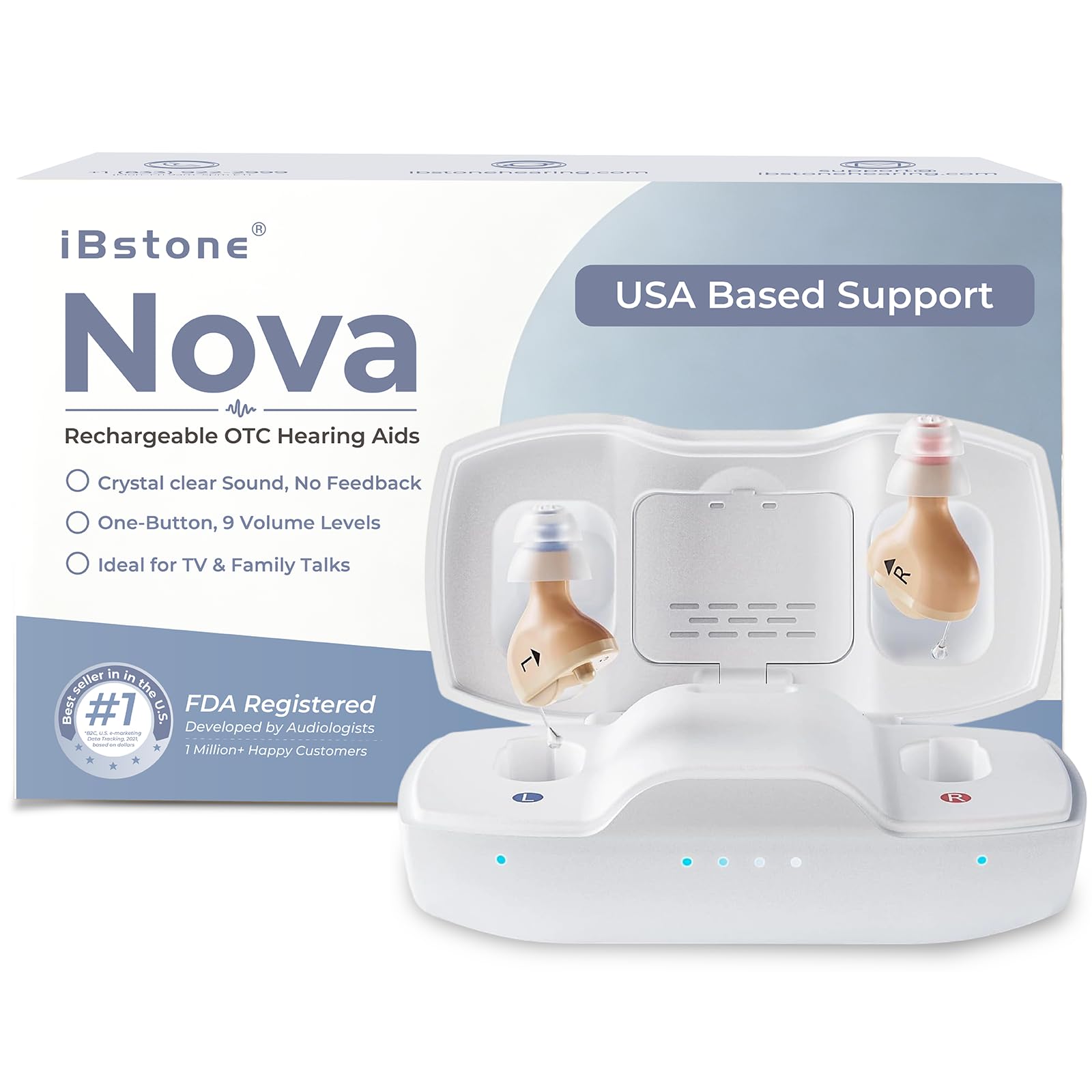
Nova hearing aids focus on the two biggest complaints from first-time users: feedback whistling and moisture damage. The proprietary chip reduces background noise by 80% and eliminates feedback entirely — even during hugs or when leaning against a pillow. The charging case doubles as a drying chamber that automatically removes moisture overnight, which extends the lifespan of the receiver and prevents the muffled sound caused by humidity.
Battery life reaches 20 hours on a single 1.5-hour charge, and the case holds multiple recharges. The completely-in-canal design is intended to be discreet, sitting deep enough that others are unlikely to notice you’re wearing them. Nine pairs of soft domes are included to help achieve a snug fit that limits sound leakage.
On the downside, the mode switching and volume cycling can feel cumbersome because the onboard button cycles through settings rather than offering dedicated controls. The manufacturer’s noise-reduction claims are strongest in moderately noisy spaces; very crowded rooms remain a challenge for any device in this class. The drying tablets for the case can be hard to find separately. Note that the marketing language for this listing leans heavily on emotional appeals — treat specific noise-reduction and comfort percentages as manufacturer claims rather than independently verified results, and check with an audiologist if you have significant hearing loss.
Why it’s great
- Zero feedback even during physical contact
- Built-in moisture drying case
- 80% noise reduction with smart chip
Good to know
- Volume cycling is cumbersome
- Drying tablets hard to source separately
5. Vivtone Lucid508
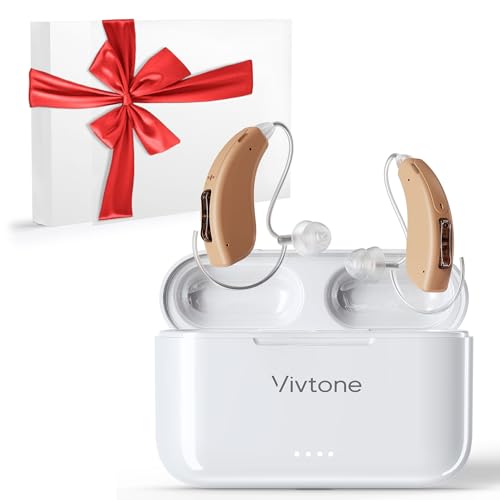
The Vivtone Lucid508 is a behind-the-ear hearing aid that stands out for its dedicated tinnitus masking mode, which generates a soothing tone to reduce the perception of ringing in the ears. Alongside standard quiet and noisy environment modes, the tinnitus relief setting makes this a strong option for users who struggle with both hearing loss and persistent internal noise. Peak sound gain reaches 41dB, appropriate for mild to moderate hearing loss.
Battery life delivers 25 hours of use from a 2-hour charge, and the charging case provides four additional full recharges for a total of 125 hours of backup power. The auto-on/off feature activates when you remove or insert the aids from the case, eliminating the need to fumble with tiny buttons. The design is lightweight and nearly invisible behind the ear, with medical-grade silicone that reduces skin irritation during extended wear.
Comfort and sound quality are the headline features at this price point, though as with most OTC devices in this tier, the sound profile is unlikely to match high-end prescription aids fitted by an audiologist. The charging case has a rounded bottom that cannot stand upright, which is a minor annoyance for seniors who prefer a stable docking station. The included anti-lost lanyard and clip add practical value for active users. Overall, the Lucid508 offers a reasonable feature set with tinnitus support at a mid-range price — talk to an audiologist first if you have more than mild to moderate hearing loss.
Why it’s great
- Dedicated tinnitus masking mode
- 125 hours total battery with case
- Auto-on/off for easy daily use
Good to know
- Sound can be tinny compared to premium aids
- Charging case does not stand upright
6. SHOKZ OpenComm2

The OpenComm2 is technically a bone conduction headset rather than a medical hearing aid, but its exceptional microphone array and open-ear design make it a powerful communication tool for people with hearing difficulties who need to take calls throughout the day. The noise-canceling boom mic with DSP technology is designed to cancel wind and ambient noise for clearer calls in moving vehicles or open-plan offices.
Talk time stretches to 16 hours per charge — far beyond typical sport headsets — with a 5-minute quick charge providing 2 hours of talk time. The 35-gram frame is flexible and coated with soft silicone, making it comfortable for all-day wear without pressure points. USB-C charging replaces the legacy proprietary magnetic connector, so you can charge with any modern phone cable. Multipoint pairing lets you connect to both a PC and phone simultaneously.
The main limitation is that the wraparound band is too large for small heads, causing a loose fit that can lead to headaches after 1–2 hours of wear. The app offers limited EQ customization with only music and talk presets. For users with average or larger head sizes who prioritize call clarity over music fidelity, this is the best open-ear headset available.
Why it’s great
- Best-in-class noise-canceling boom mic
- 16-hour talk time with USB-C charging
- Multipoint dual-device connectivity
Good to know
- Band too large for smaller heads
- Limited EQ customization in app
7. Flaygo Rechargeable Hearing Aids

The Flaygo Rechargeable Hearing Aids prove you do not need to spend a fortune for a 16-channel digital chip that separates speech from background noise. Despite the budget-friendly price point, the adaptive filtering algorithm accurately identifies and suppresses ambient noise while enhancing speech clarity. The completely-in-canal design is one of the smallest on the market, fitting deep enough to be invisible during daily wear.
Battery performance is surprisingly generous: 16 hours per charge and a power display charging case that holds over 110 hours of additional use — enough for a full week without plugging in the case. The automatic on/off feature activates 15 seconds after insertion, so there is no manual switching required. Four volume levels are accessible through a tiny button, though the small size can make adjustment finicky for users with limited dexterity.
The listing markets these as genuine digital hearing aids rather than simple sound amplifiers, which — if accurate — would be notable at this price tier; buyers should verify FDA OTC hearing aid classification on the product listing before purchase, since not all budget devices marketed this way meet that bar. The silicone tips need proper sizing to avoid feedback. For someone entering the OTC hearing aid market on a tight budget, the Flaygo is worth considering, with a professional hearing check recommended first.
Why it’s great
- 16-channel chip at an entry-level price
- 110+ hour charging case capacity
- Auto on/off and invisible CIC fit
Good to know
- Volume button requires good dexterity
- Correct tip sizing essential to avoid feedback
8. SHOKZ OpenRun Pro

The SHOKZ OpenRun Pro is a bone conduction sport headphone that excels at keeping you aware of your surroundings during outdoor activities. The 9th-generation bone conduction technology combined with TurboPitch delivers a richer bass response than earlier Shokz models, though the physical vibration at high volume can cause a tingling sensation on the cheekbone. The titanium wraparound frame is featherlight and stays secure during running, cycling, or intense gym sessions.
Battery life reaches 10 hours of continuous music and calls, with a 5-minute quick charge providing 1.5 hours of playback. The IP55 sweat resistance rating handles heavy workouts but does not allow submersion — rain and sweat are fine, but pool swimming is out. The proprietary magnetic charger is a common complaint because losing it means ordering a replacement cable rather than using any USB-C cord. The back band can also bump into high collars or prevent lying down flat.
Sound quality is excellent for podcasts, audiobooks, and phone calls, but audiophiles will find bass muddy and the maximum volume insufficient for noisy environments. The microphone picks up background noise during calls, which matters if you take calls in windy or crowded places. For active users who prioritize situational safety over sonic fidelity, the OpenRun Pro is the best sports-oriented bone conduction headset.
Why it’s great
- Secure fit for high-intensity workouts
- Quick charge delivers 1.5 hours in 5 minutes
- Excellent situational awareness for outdoor safety
Good to know
- Proprietary magnetic charger, not USB-C
- Bass causes cheekbone vibration at high volume
9. SHOKZ OpenRun

The base SHOKZ OpenRun is a lighter, more affordable entry point into bone conduction audio. The IP67 waterproof rating makes it fully sweatproof and rainproof, though still not suitable for swimming. The 8th-generation bone conduction driver delivers decent mids and highs but virtually no bass — the driver simply cannot push enough vibration for low-frequency punch without causing discomfort. This is fine for voice content but disappointing for music lovers.
Battery life is rated at 8 hours with a 10-minute quick charge for 1.5 hours of use. The featherweight titanium frame is extremely flexible and comfortable for all-day wear, solving ear pain issues that traditional earbuds cause. Bluetooth 5.1 provides stable connections within 33 feet, and multipoint pairing works well for toggling between devices. The included protective case and sport headband add practical value for travel.
As with any lithium battery device, avoid leaving it on the charger longer than needed to protect long-term battery health. The volume is capped by design as a hearing-safety measure, so these will not get as loud as some sport headphones in very noisy environments. For a lightweight bone conduction headphone for calls and podcasts, the standard OpenRun is a solid budget pick — remember this is a consumer audio headphone, not a hearing aid.
Why it’s great
- IP67 waterproof for heavy sweat and rain
- Featherlight, flexible titanium frame
- Excellent customer service and warranty support
Good to know
- Very weak bass response
- No overcharge protection can shorten battery life
FAQ
Are bone conduction hearing aids the same as bone conduction headphones?
Who benefits most from bone conduction instead of traditional hearing aids?
How many dB of gain do I need for moderate hearing loss?
Can I wear bone conduction hearing aids with glasses or sunglasses?
Final Thoughts: The Verdict
For most users, the bone conduction hearing aids winner is the ELEHEAR-Beyond Pro because VocClear 2.0 delivers 30% clearer speech with AI-assisted tuning and the deepest feature set at its price tier. If you want app-controlled customization with strong noise cancellation for daily conversations, grab the ELEHEAR-Beyond. And for active users who need situational safety during outdoor workouts, nothing beats the secure fit and quick charge of the SHOKZ OpenRun Pro.