
Our readers keep the lights on and the weekend projects moving. As an Amazon Associate, I earn from qualifying purchases.
Reliable bone conduction headphones let you stay connected to your music and calls without sealing off your ears from the world around you. Whether you’re cycling through traffic, logging miles on the trail, or just want to keep one ear on your surroundings, the open-ear design delivers situational awareness that traditional earbuds simply can’t match.
I’m Rikta — the founder and writer behind FitlyFast. I’ve spent years analyzing the bone conduction market, poring over driver specs, battery endurance claims, and real user feedback to separate the products that actually deliver from those that just market well.
This guide breaks down the top contenders across every price tier and use case so you can confidently pick from the best bone headphones available right now.
How To Choose The Best Bone Headphones
Not all bone conduction headphones are created equal. The technology varies significantly between budget models and premium offerings, and the right choice depends heavily on how you plan to use them. Here are the key factors that separate a great pair from a frustrating one.
Driver Size and Type
The bone conduction transducer is the heart of these headphones. Larger drivers (15mm to 16mm) generally produce more volume and fuller sound, but the driver type matters too. Premium models like the SHOKZ OpenRun Pro 2 use a dual-driver setup that combines bone conduction for highs with air conduction for bass, delivering richer audio than single-driver designs can achieve.
Water and Dust Resistance (IP Rating)
IPX5 or IP55 is the baseline for sweat and light rain protection, which works for most runners and gym-goers. If you plan to swim or use headphones in heavy rain, look for IP68-rated models that can handle submersion. Keep in mind that Bluetooth signals do not travel through water, so swimming models require a built-in MP3 player for underwater playback.
Bluetooth Version and Connectivity
Bluetooth 5.1 and higher offer stable connections with good range. Multipoint pairing is a valuable feature that lets you connect to your phone and laptop simultaneously, switching between calls and music without manual re-pairing. For swimming headphones, the Bluetooth version is less critical since you will use MP3 mode underwater.
Battery Life and Charging
Eight to ten hours is standard for daily use. If you plan all-day adventures or multi-day trips without charging, look for models with 12-hour or longer battery life. Fast charging is also a practical feature: five minutes of charging should deliver at least an hour of playback. USB-C charging is preferred over proprietary magnetic chargers for convenience.
Built-in Storage for Phone-Free Listening
Some bone conduction headphones include onboard memory (typically 32GB) for storing music directly. This is essential for swimmers who cannot use Bluetooth underwater, and convenient for runners who want to leave their phone behind. Make sure the supported audio formats include MP3, WMA, FLAC, and WAV for maximum compatibility.
Quick Comparison
On smaller screens, swipe sideways to see the full table.
| Model | Category | Best For | Key Spec | Amazon |
|---|---|---|---|---|
| SHOKZ OpenRun Pro 2 | Premium Sport | Serious athletes and audiophiles | Dual bone + air conduction driver | Amazon |
| SHOKZ OpenComm2 | Premium Call | Office calls and comms | Noise-canceling boom mic | Amazon |
| SHOKZ OpenRun Pro | Premium Sport | Outdoor running and cycling | 9th gen bone conduction + TurboPitch | Amazon |
| CXK X17 | Mid-Range Sport | Swimming and intense workouts | 32GB MP3 + IPX8 waterproof | Amazon |
| DEMICEA LibreSwim X6 | Mid-Range Sport | Swimming and outdoor sports | 32GB MP3 + IP68 waterproof | Amazon |
| Yomdud Bone Conduction | Budget Sport | Budget-conscious runners | 29g ultra-light + 10hr battery | Amazon |
| Soundcore V20i | Budget Open-Ear | Entry-level open-ear listeners | 16mm drivers + BassUp technology | Amazon |
In‑Depth Reviews
1. SHOKZ OpenRun Pro 2

The SHOKZ OpenRun Pro 2 represents the current peak of bone conduction engineering. Its dual-driver architecture combines a traditional bone conduction transducer for crisp highs with an air conduction driver for deep, punchy bass—solving the long-standing complaint that bone conduction headphones lack low-end response. The result is a rich, 3D soundstage that feels fuller than any single-driver bone conduction model on the market.
Weighing just over an ounce with a unibody Ni-Ti alloy frame, these headphones are nearly forgettable during long runs or gym sessions. The IP55 rating handles sweat and rain, while dual wind-resistant microphones with AI noise reduction cut 96.5% of background noise for crystal-clear calls. Battery life clocks in at a solid 12 hours, and the USB-C charging port is a welcome upgrade over proprietary connectors.
The dedicated EQ modes in the Shokz App let you switch between pure bone conduction sound in Classic Mode and a volume-boosted profile for noisy environments. The reflective strip on the band adds a layer of safety for night runners. Some users report that the mini sizing is critical for comfort, so measure carefully before buying.
Why it’s great
- Dual bone and air conduction drivers deliver genuinely impressive bass
- 12-hour battery life covers multi-day use without charging
- USB-C charging replaces proprietary magnetic cables
- Excellent call quality with wind-resistant mic array
Good to know
- Sizing is critical — wrong fit compromises comfort and audio
- Not fully waterproof; IP55 is sweat/rain resistant only
- Can be drowned out in very loud environments
2. SHOKZ OpenComm2

The OpenComm2 is purpose-built for voice communication rather than music. Its standout feature is the noise-canceling boom microphone with DSP technology, which makes conversations sound as clear as if you were in the same room. During a car wash test, the mic isolated speech from the spray and machinery noise impressively well—truckers and remote workers alike have praised its performance in noisy cabs and open offices.
Weighing only 35 grams with a soft silicone finish, the OpenComm2 is designed for all-day wear. The IP55 rating means it can handle sweat and light rain, and the USB-C charging is a major convenience over older Shokz models that used proprietary pins. Talk time reaches an impressive 16 hours, with listening time at 8 hours per charge. A five-minute fast charge delivers two hours of talk time, which is handy for quick refuels between calls.
Multipoint pairing lets you connect to both your phone and computer simultaneously, and the physical buttons for volume, mute, and playback are intuitive to use without looking. The only significant drawbacks are the fit for smaller heads—some users report pressure and headaches—and the lack of a dedicated EQ for music tuning.
Why it’s great
- Industry-leading boom mic with DSP for crystal-clear calls
- 16-hour talk time and USB-C charging
- Ultra-light 35g weight with flexible silicone frame
- Reliable multipoint pairing for phone and PC
Good to know
- May feel too large or heavy for smaller heads
- Music playback sound quality is secondary to call performance
- Limited EQ customization compared to sport-focused models
3. SHOKZ OpenRun Pro

The OpenRun Pro is Shokz’s ninth-generation bone conduction headphone, refined for outdoor athletes who prioritize safety and comfort. Its wraparound titanium frame is lightweight and stable, staying firmly in place even during sprints or burpees. The open-ear design keeps you aware of traffic, trail hazards, or gym chatter, which is a genuine safety advantage over noise-canceling in-ear models.
Audio quality is solid for bone conduction, with Shokz’s TurboPitch technology enhancing volume and bass compared to earlier generations. The bass is still not as deep as traditional headphones—bone conduction physics has its limits—but treble clarity is excellent and the overall sound is more than adequate for podcasts, calls, and most music genres. Battery life runs 10 hours, and a five-minute quick charge gives you 90 minutes of playback, which is very practical for busy schedules.
The magnetic charging cable is a sticking point for many users who wish Shokz would switch to USB-C. The proprietary connector is easy to lose and incompatible with standard cables. Also, the headphones vibrate noticeably on the cheekbones at higher volumes, which some find distracting. That said, for running and cycling, the OpenRun Pro remains a top-tier choice.
Why it’s great
- Excellent fit and stability for high-intensity movement
- Superior situational awareness for road and trail safety
- Fast charging delivers 90 minutes from a 5-minute charge
- Reliable multipoint pairing for phone and computer
Good to know
- Proprietary magnetic charger instead of USB-C
- Noticeable cheekbone vibration at high volume
- Not as loud in noisy outdoor environments
4. CXK X17 Bone Conduction Headphones
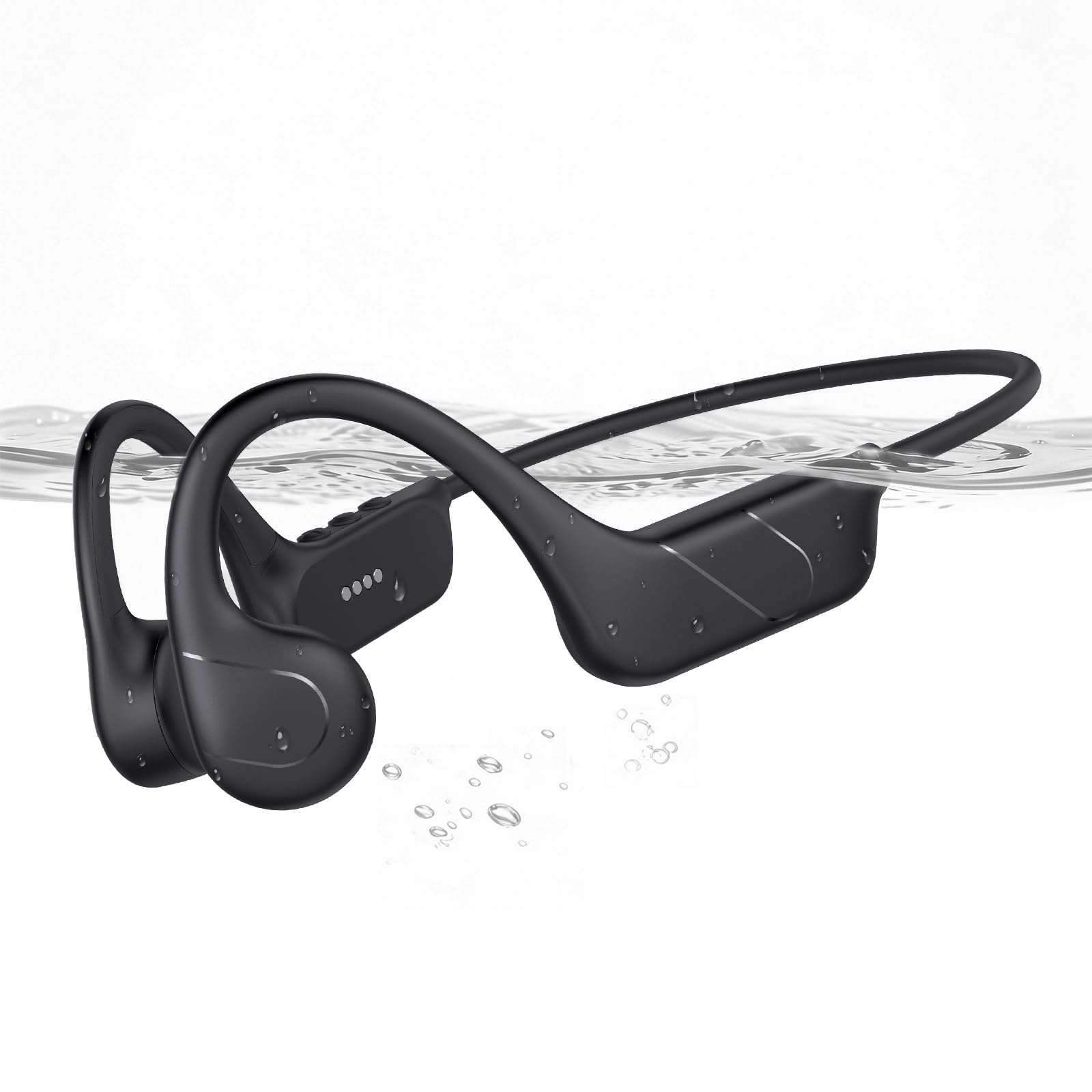
The CXK X17 is built for swimmers and triathletes who need music underwater. With an IPX8 rating, it can be submerged to 2 meters for up to 2 hours, making it one of the most waterproof bone conduction headphones available. The triple-seal design prevents water ingress even during repetitive pool laps or open-water sessions. Before entering the water, you switch to MP3 mode by double-clicking the power button, enabling phone-free playback from the built-in 32GB memory that holds roughly 8,000 songs.
The 15x10mm CXK PulseCraft transducer delivers louder and clearer audio than many budget underwater headphones. The sound quality is good enough to distinguish instrument details, and the bass, while not earth-shaking, is more present than expected for this form factor. The ear hooks keep the unit secure during vigorous swimming strokes, and the adjustable headband accommodates different head shapes without slipping.
Battery life is an impressive 12 hours in either Bluetooth or MP3 mode. The dual-mic AI noise cancellation works well for calls on land, and the included Boean App lets you customize EQ settings and even generate AI music. On the downside, the Bluetooth 6.0 labeling is somewhat misleading—it is not a certified standard—but connectivity is stable within the standard 33-foot range. The proprietary magnetic charging cable is another minor annoyance.
Why it’s great
- IPX8 waterproof rating allows true underwater use
- 32GB onboard storage holds thousands of songs
- 12-hour battery covers long training sessions
- Secure fit with ear hooks for swimming and running
Good to know
- “Bluetooth 6.0” is not an official standard
- Proprietary magnetic charger, not USB-C
- Only MP3, WMA, FLAC, and WAV formats supported for onboard storage
5. DEMICEA LibreSwim X6
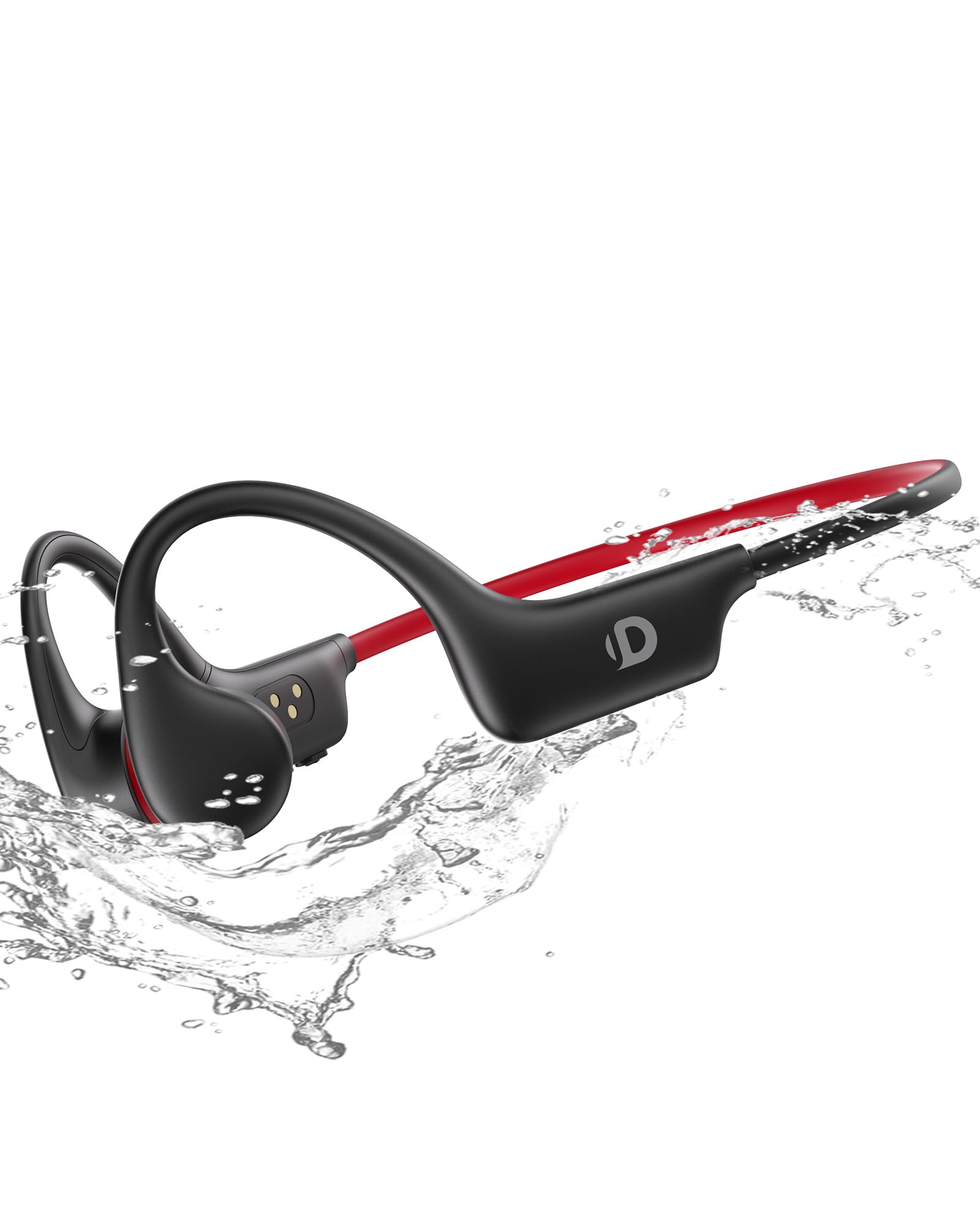
The DEMICEA LibreSwim X6 competes directly with the CXK X17 for swimmers on a tighter budget. Its IP68 rating means it can handle extended submersion—not just splashes—and the nano-hydrophobic coating protects the internal components from sweat, rain, and pool water. Like the CXK, it includes 32GB of built-in storage for loading up to 4,000 songs, allowing phone-free listening during swims.
The 0.99-ounce frame uses a 0.7mm flexible memory Ti-alloy wire wrapped in skin-friendly silicone. It is comfortable for all-day wear and works well with sunglasses or goggles. The rear bridge maintains its shape after repeated flexing, which adds durability. SoundBeam directional sound field technology reduces audio leakage, keeping your music private even at moderate volumes.
The 16mm bone conduction driver produces clear vocals and decent instrumental separation, though bass is weak and the microphone is only passable for calls. The three-button interface takes some getting used to, and the magnetic pin charger is less convenient than USB-C. Some users report that the buttons failed after a month of use, which raises durability concerns. For the price, however, it offers a compelling feature set for swimmers who want storage and waterproofing without spending premium-tier money.
Why it’s great
- IP68 waterproof rating for full submersion
- 32GB onboard storage for phone-free music
- Lightweight and flexible Ti-alloy frame
- Good value for swim-capable bone conduction
Good to know
- Button durability concerns reported by some users
- Weak bass and mediocre microphone quality
- Magnetic pin charger instead of USB-C
- Noticeable sound leak at higher volumes
6. Yomdud Bone Conduction Headphones

The Yomdud Bone Conduction Headphones are a budget-friendly entry point for those curious about bone conduction technology. At just 29 grams, they are among the lightest options available, and the open-ear design lets you stay fully aware of your environment. The 16mm speaker driver delivers clear sound with adequate volume for quiet indoor use and moderate outdoor environments.
Battery life reaches 10 hours on a full charge, and a 10-minute quick charge gives you an hour of playback—useful when you forget to charge overnight. The IPX5 rating provides protection against sweat and rain, making these suitable for gym sessions and casual jogging. Bluetooth 5.4 ensures stable connections up to 33 feet, with quick pairing out of the box.
The main trade-off is sound quality. While the audio is clear for spoken word and podcasts, music lacks bass depth and can sound thin at higher volumes. The microphone performs well for phone calls with minimal background noise pickup. Some users reported Bluetooth dropouts after extended use, though the manufacturer provided responsive warranty replacements. For the price, this is a capable starter pair, but serious athletes will want to upgrade.
Why it’s great
- Ultra-light 29g design for virtually weightless wear
- 10-hour battery with fast charging support
- IPX5 sweat and rain resistance
- Bluetooth 5.4 for stable pairing
Good to know
- Limited bass response and thin music sound
- Some units may have Bluetooth dropouts over time
- Not suitable for loud outdoor environments
7. Soundcore V20i by Anker

The Soundcore V20i is technically an open-ear headphone rather than a pure bone conduction model, but it competes in the same category of situational-awareness audio. Its adjustable ear hooks rotate to four positions, letting you find the most comfortable angle for your ear shape. The IP55 rating provides solid protection against sweat and dust, and the customizable LED lights add a fun, personalized touch for gym use.
Audio performance punches above its entry-level price point thanks to 16mm titanium-coated drivers with BassUp technology. The bass is noticeably richer than typical budget bone conduction headphones, though bassheads will still want more low-end presence. The four-mic array with AI enhancement delivers clear call quality even in moderately noisy settings. Battery life is 8 hours per charge, with the charging case providing an additional 28 hours, for a total of 36 hours—one of the best endurance figures in this list.
The V20i uses Bluetooth 5.4 for stable multipoint connections, allowing seamless switching between your phone and laptop. Sound leakage is minimal at normal listening volumes, but the open-ear design means you lose some audio detail in loud environments. The touch controls and companion app with EQ customization are welcome additions at this price, but the touch interface can be finicky during workouts.
Why it’s great
- 36-hour total battery life with included case
- Adjustable ear hooks for personalized fit
- Strong bass for an open-ear design with BassUp technology
- Clear call quality with four-mic AI system
Good to know
- Not true bone conduction but open-ear hybrid design
- Touch controls can be finicky during sweaty workouts
- Sound quality degrades in noisy environments
FAQ
How do bone conduction headphones work without going in my ears?
Can I use bone conduction headphones for swimming?
Why does the bass sound weak on bone conduction headphones?
Will bone conduction headphones work with glasses or helmets?
How long do bone conduction headphones typically last before breaking?
Final Thoughts: The Verdict
For most users, the best bone headphones winner is the SHOKZ OpenRun Pro 2 because it delivers the most complete listening experience with its dual driver system, long battery life, and USB-C convenience, making it the gold standard for both athletes and daily users. If you need a dedicated call-focused headset for work, grab the SHOKZ OpenComm2. And for swimming and underwater use, nothing beats the CXK X17 with its IPX8 rating and generous onboard storage.