
Our readers keep the lights on and the weekend projects moving. As an Amazon Associate, I earn from qualifying purchases.
Choosing a live bonsai means committing to a living sculpture that can thrive for decades if treated right. The difference between a tree that withers in weeks and one that grows stronger every year comes down to root health, species selection, and whether the plant was forced into a pot before its root system was ready.
I’m Rikta — the co-founder and writer behind FitlyFast. I’ve spent years analyzing nursery stock, potting substrates, and shipping stress patterns to separate beginner-friendly specimens from overpriced cuttings that arrive dead.
Whether you want a desk companion or a patio centerpiece, finding the best bonsai plants means matching the tree’s natural dormancy needs to your available light and temperature conditions — no ficus will survive a dark cube, and no juniper will last inside a sealed living room.
How To Choose The Best Bonsai Plants
The single biggest mistake new buyers make is treating a bonsai like a regular houseplant. A juniper left on a nightstand will suffocate without winter dormancy, and a jade overwatered in a glazed pot will rot within two weeks. Success starts with matching the species to your environment, then inspecting the root zone before you commit.
Match the tree to your light and season
Succulent bonsai like dwarf jade tolerate low indoor humidity and thrive on a bright windowsill. Junipers demand full outdoor exposure, cold winter rest, and morning sun that doesn’t scorch their needles. Hawaiian umbrella trees need consistent warmth and high humidity — they will drop leaves in a dry office with no misting.
Inspect the soil and root structure
The most common shipping failure is a tree packed in waterlogged peat with no drainage. Healthy bonsai arrive in granular, fast-draining mix. Lift the tree gently from the pot if you can: white, firm roots signal a strong specimen; mushy, brown roots indicate rot that will kill the plant within weeks.
Quick Comparison
On smaller screens, swipe sideways to see the full table.
| Model | Category | Best For | Key Spec | Amazon |
|---|---|---|---|---|
| Dwarf Jade Bonsai | Succulent Bonsai | Indoor beginners, busy homes | 3 years old, 5–8 in height | Amazon |
| Green Mound Juniper | Outdoor Conifer | Patio & garden display | 3 years old, 4–6 in height | Amazon |
| Hawaiian Umbrella | Tropical Indoor | Office desks, high-humidity rooms | 3 years old, 5–8 in height | Amazon |
| Windswept Juniper Pre-Bonsai | Pre-Bonsai Starter | Wiring practice, shaping projects | Pre-styled, 4 in nursery pot | Amazon |
| Ceramic Bonsai Pot 10 Inch | Replacement Pot | Repotting, upgrading root space | 10.8 in outer diameter, glazed | Amazon |
| Bonsai Tree Kit Classic | Seed Starter Kit | Family projects, growing from seed | 5 tree varieties, coconut coir soil | Amazon |
| Dwarf Juniper with Fisherman | Gift Bonsai | Decorative gift, office decor | 6 years old, ceramic figurine pot | Amazon |
In-Depth Reviews
1. Brussel’s Bonsai – Live Dwarf Jade Bonsai Tree
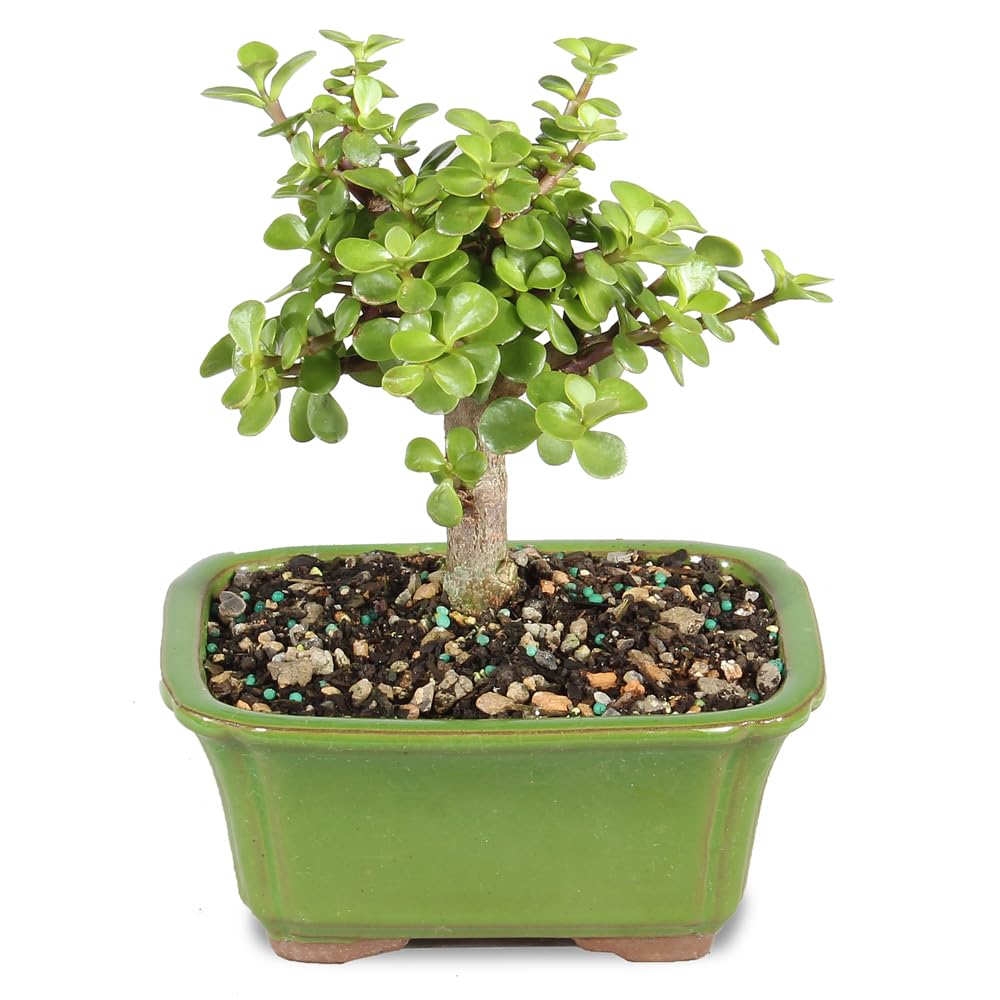
This dwarf jade (Portulacaria afra) arrives with a thick, woody trunk and glossy miniature leaves that look like a mature tree in miniature form — exactly what most beginners picture when they search for a bonsai. Because it’s a succulent, it stores water in its trunk and leaves, so missed waterings won’t kill it the way they would a juniper or ficus. At 3 years old and 5-8 inches tall, it already has enough structure to feel like a real bonsai rather than a cutting.
Shipping packaging uses styrofoam peanuts and secure wrapping, which most buyers report kept the plant intact with moist soil and no broken branches. The included ceramic pot is functional but plain — expect to repot into something deeper if you want aggressive root growth. The soil mix leans toward peat, which can stay too wet for jade; adding perlite or switching to a succulent mix improves long-term health significantly.
Reviews consistently praise its hardiness and visual appeal, though a minority report the soil shipped saturated enough to cause root stress. Check the pot upon arrival — if the soil feels wetter than a wrung-out sponge, remove the tree, trim any mushy roots, and replant in a dry draining mix. Left in wet peat, the jade will drop leaves within a week.
Why it’s great
- Forgiving succulent structure tolerates erratic watering
- Thick trunk gives it mature bonsai appearance from day one
- Compact size fits desks and shelves with no grow-light requirement
Good to know
- Peat-heavy soil needs repotting for long-term health
- Some shipments arrive with soil too wet for root safety
2. Brussel’s Bonsai – Green Mound Juniper
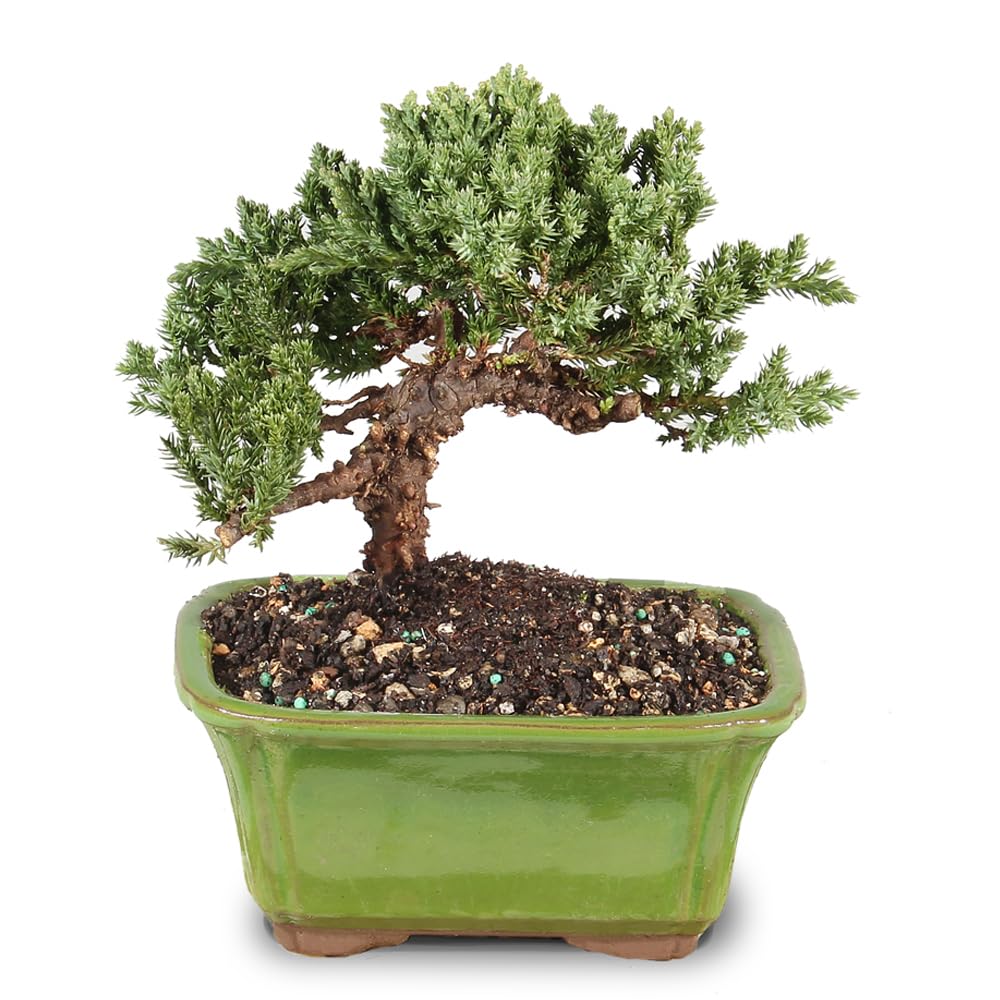
Green Mound Juniper is the default recommendation for anyone with a patio, porch, or balcony who wants a bonsai that survives all four seasons. This 3-year-old specimen comes densely packed with rich green foliage that responds well to pruning and wiring. Junipers need winter dormancy below 60°F to reset their growth cycle — keeping one indoors year-round will exhaust it within 12 months.
The ceramic container is a functional blue bowl that provides adequate drainage, but the real value is the tree’s root system. Brussel’s Bonsai has a reputation for growing specimens with fibrous root balls that take to repotting well. Buyers who received healthy trees report rapid new shoot growth within two weeks of placement in morning sun. The included slow-release fertilizer gives the tree a nutritional buffer for the first month.
Negative reviews cluster around trees that arrived with root rot or pest issues — symptoms of a specimen that was overwatered in the nursery or stressed before shipping. Check the needle bases: if they feel loose or drop when touched, the tree may already have root damage. Does not ship to California, Alaska, or Hawaii due to agricultural restrictions.
Why it’s great
- Hardy outdoor species survives frost and low-maintenance care
- Fibrous root system handles repotting and reshaping well
- Fertilizer included for steady early growth
Good to know
- Must stay outdoors year-round — will die inside
- Soil can arrive compacted; repotting recommended
3. Brussel’s Bonsai Hawaiian Umbrella Bonsai Tree
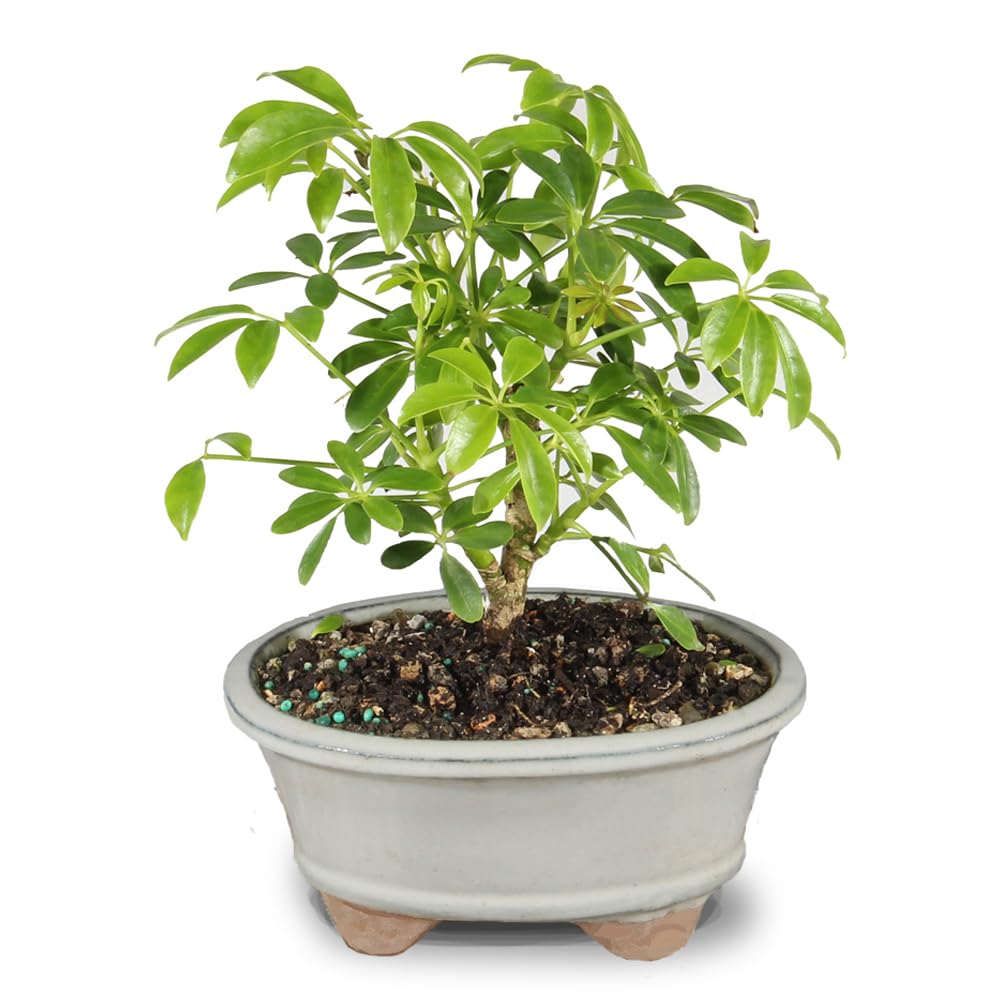
Hawaiian umbrella (Schefflera arboricola) offers a distinctly different look from junipers and jades — its leaves are divided into delicate umbrellas that form a dense, rounded canopy. This 3-year-old tree arrives wired into a ceramic pot that features a rock-like texture many buyers find more attractive than the standard glazed bowls. It’s an indoor-only species that needs consistent warmth and high humidity to maintain leaf density.
The included humidity tray is a real advantage: fill it with water and pebbles to keep the microclimate moist without waterlogging the roots. Buyers who mist daily and keep the tree in bright indirect light report vigorous new growth. However, the soil in this tree tends to deplete quickly — multiple owners note leaf drop after one month when no liquid fertilizer was applied. Plan to feed with a balanced 10-10-10 every two weeks during the growing season.
Packaging is generally secure, but some reviews mention the care instructions arrived wet or illegible. The tree itself can recover from leaf drop if the roots are healthy, but if it arrives with blackened leaves and saturated soil, repot into a draining mix immediately. This is not a low-maintenance plant — it requires weekly attention.
Why it’s great
- Unique umbrella-shaped foliage stands out from typical bonsai
- Humidity tray included for maintaining moisture levels
- Compact size fits office desks and kitchen tables
Good to know
- Needs regular liquid fertilizer to prevent leaf drop
- Not suitable for low-humidity or drafty spaces
4. Bonsai Outlet Windswept Juniper Pre-Bonsai

This pre-styled windswept juniper from Bonsai Outlet is a genuine pre-bonsai — it comes shaped into a dramatic leaning form with braced branches, ready for wiring and further refinement. Unlike the Brussel’s offerings, this tree is sold in a standard 4-inch nursery pot rather than a decorative ceramic container, which makes sense for anyone who plans to repot immediately. The windswept silhouette gives it immediate visual interest even before any reshaping work.
Health reports from buyers are uniformly strong: the tree arrives vigorous, with dense foliage and a robust root ball that survives shipping well. It responds to wiring enthusiastically — the branches bend without snapping when done during active growth. Keep it outdoors year-round and only bring it inside for brief display. Buyers in cold climates have successfully overwintered it in unheated garages and cold frames with minimal protection.
One trade-off is size: at roughly 5 inches tall and 6-7 inches spread, it’s smaller than the Brussel’s juniper at a similar price. The value is in the shaping, not the mass. If you want a finished showpiece, this will feel underwhelming. If you want a blank canvas to develop over several seasons, the pre-styled form gives you a huge head start.
Why it’s great
- Pre-styled windswept shape saves months of training work
- Healthy root system takes well to repotting and wiring
- Compact size fits small balconies and shelves
Good to know
- Smaller stature than some similarly priced alternatives
- No decorative pot included
5. EPFamily Ceramic Bonsai Pot 10 Inch
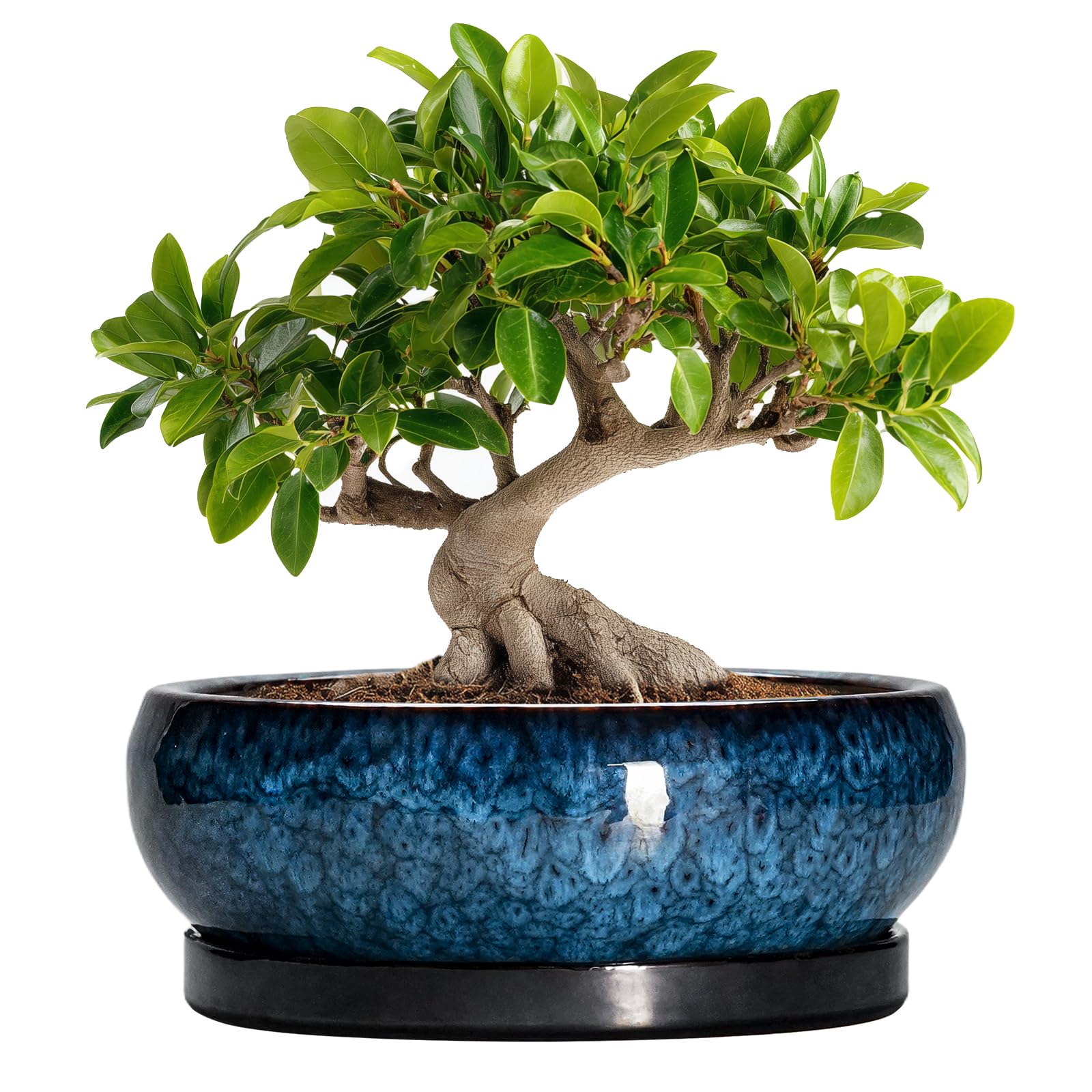
This is not a tree — it’s a premium ceramic pot designed for bonsai and succulents, but it belongs in this list because many buyers pair it with the live trees above. The 10.8-inch outer diameter provides generous root space for a 3- to 6-year-old tree, and the 9mm drainage mesh prevents soil from escaping while keeping roots aerated. The matching ceramic saucer protects surfaces from runoff better than the thin wooden trays that often warp.
The glazed blue finish is fired at high temperature, which makes it resistant to cracking, fading, and peeling even in direct sun. Multiple buyers report using it for repotted jade, juniper, and ficus with excellent results — the shallow depth mimics traditional bonsai containers while still giving roots room to spread laterally. The 4.1-inch height is enough to anchor a 6-inch tree without making it look top-heavy.
One common caveat: the included wooden tray (not the ceramic saucer) can deform if water sits on it for extended periods. Use the ceramic saucer instead for daily watering and reserve the wooden tray for display only. The pot itself is weighty at nearly 7 pounds, so it won’t tip over easily on a windy balcony.
Why it’s great
- High-temperature glazed ceramic resists weather damage
- Drainage mesh and saucer system prevents root rot
- Spacious 10-inch diameter fits maturing trees
Good to know
- Wooden tray accessory warps if left wet
- Ceramic alone is heavy for hanging or wall displays
6. AVGERO Bonsai Tree Kit Classic
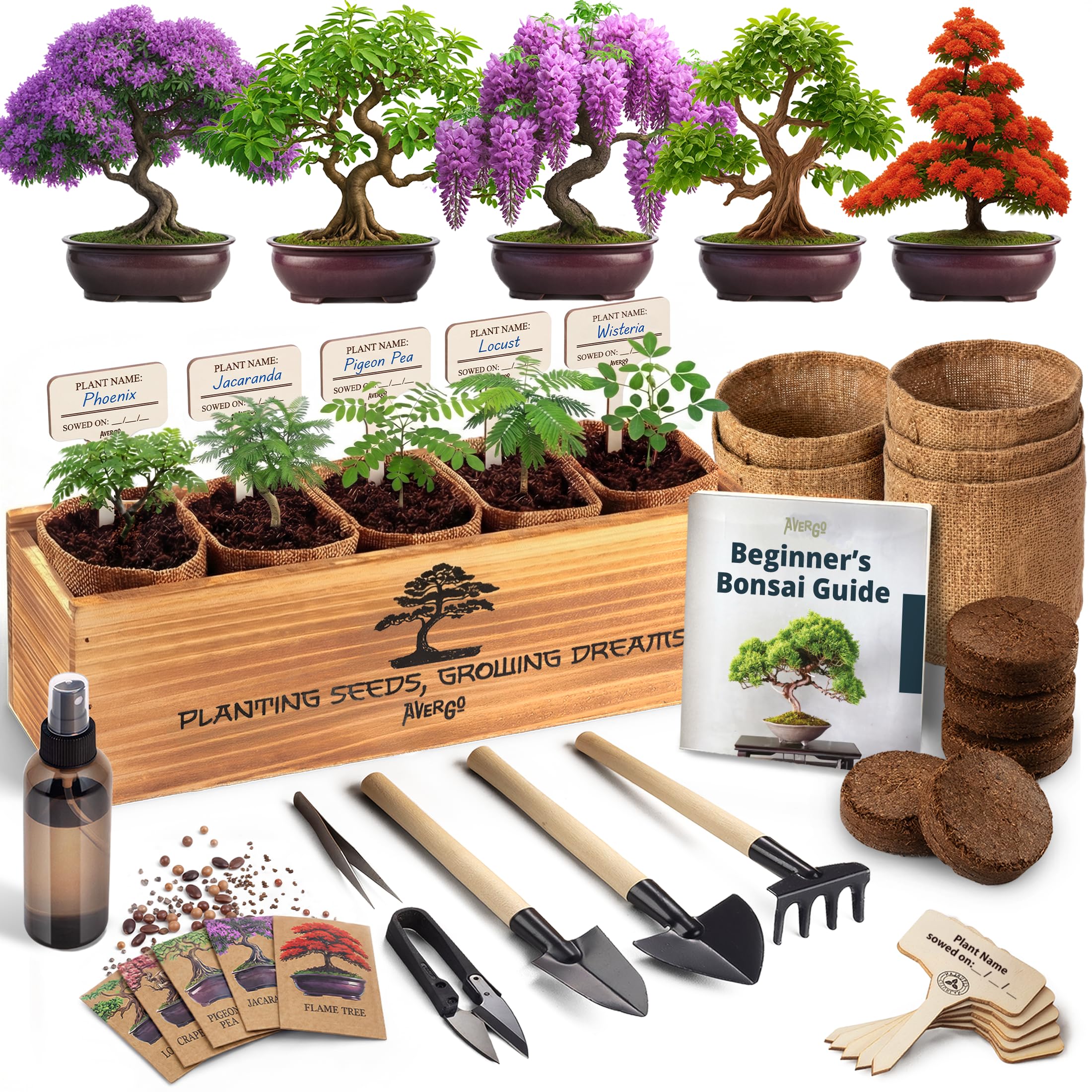
This starter kit shifts the strategy from buying a live tree to growing one from seed — a longer timeline but a more educational process. It includes five species: Wisteria, Flame Tree (Delonix Regia), Blue Jacaranda, Pigeon Pea, and one more variety, plus extra seed packs to compensate for low germination rates. The kit also provides coconut coir soil pellets, wooden planters, bamboo plant markers, and basic bonsai tools for shaping.
Germination results vary widely by species. Pigeon pea tends to sprout first — within two weeks — while Wisteria often molds before germinating if the coir stays too wet. Buyers who used the extra seeds to hedge their bets reported better success. The instructions are clear enough for a first-time grower, but the kit’s limitation is that you won’t have a recognizable bonsai for at least 12-18 months — this is for the patient gardener.
The wooden planters have a natural look but no drainage holes, which can be problematic for seedlings. Most experienced growers transfer germinated seeds into small pots with drainage after the first true leaves appear.
Why it’s great
- Includes five distinct tree species plus backup seeds
- Tools and planters provide everything for a start-to-finish project
- Fun educational activity for families and beginners
Good to know
- Wooden planters lack drainage holes for seedlings
- Wisteria has poor germination rates in wet coir
7. Live Dwarf Juniper with Ceramic Fisherman

At approximately 6 years old, this dwarf juniper is the oldest tree in the lineup and comes with a glazed ceramic pot that includes a ceramic fisherman figurine. The maturity gives it a thicker trunk and more established branch structure compared to the 3-year-old trees elsewhere on this list. Buyers who keep it outdoors report it holds its shape with minimal pruning and develops attractive bark texture over time.
The ceramic pots are high-temperature fired and vary in color and shape — each tree is unique. The seller includes artificial moss for visual effect, which adds a natural look but does not affect plant health. Care instructions come with each order and emphasize keeping the soil consistently moist and providing direct sunlight through a window or on a patio.
A minority of buyers find this tree challenging even for experienced gardeners — it requires precise watering frequency and does not tolerate neglect. If your watering schedule is unpredictable, the dwarf jade is a safer choice. The figurine pot also makes repotting more difficult if the tree outgrows its container. This is a conversation-piece gift for someone willing to give a bonsai daily attention.
Why it’s great
- 6-year maturity provides thicker trunks and established form
- Glazed ceramic pot with figurine makes an immediate gift
- Unique, handcrafted appearance with individual variation
Good to know
- Requires consistent watering — not beginner-forgiving
- Figurine pot complicates future repotting
FAQ
Can I keep a juniper bonsai indoors?
How often should I water a dwarf jade bonsai?
What does “pre-bonsai” mean?
Why did my bonsai lose its leaves after I brought it home?
Final Thoughts: The Verdict
For most users, the best bonsai plants winner is the Brussel’s Dwarf Jade because it combines forgiving succulent care, a mature trunk appearance, and compact size that fits any bright indoor spot. If you want a patio-centric outdoor tree that handles cold winters and needs minimal reshaping, grab the Green Mound Juniper. And for a ready-to-gift conversation piece with pre-trained branch structure, nothing beats the Dwarf Juniper with Ceramic Fisherman.