
Our readers keep the lights on and the weekend projects moving. As an Amazon Associate, I earn from qualifying purchases.
A bonsai tree’s character lives in every branch, and the tool you use to shape it defines whether that cut heals cleanly or leaves a crushed, ragged wound. Cheap scissors don’t just fail fast — they damage the wood grain and set your tree back weeks. Finding a pair that feels balanced, stays sharp through dozens of sessions, and slices through both soft foliage and harder root wood is the single biggest upgrade you can make to your daily pruning workflow.
I’m Rikta — the co-founder and writer behind FitlyFast. Over the last several months, I’ve been deep in the gardening tool market, comparing steel chemistries, pivot tolerances, and handle ergonomics across the most popular bonsai-specific shears available right now.
Whether you are maintaining a juniper or training a maple, the right pair of best bonsai scissors will reward you with precise, clean snips for years rather than frustrating weeks of dulling blades and loose joints.
How To Choose The Best Bonsai Scissors
Bonsai shears are not generic garden clippers. The cutting demands — thin branch tips, dense root balls, tight interior growth — require specific geometry and steel. Buy the wrong shape and you’ll fight every cut; buy the wrong steel and you’ll resharpen weekly.
Steel Type and Edge Retention
Budget-friendly stainless (like 420 series) resists rust but dulls faster on woody material. Mid-range alloy steels such as 5Cr15MoV offer a better balance of hardness and stain resistance. Premium Japanese carbon steels — Yasugi or Yasuki White Steel — take a sharper edge and hold it longer, but require post-use oiling to prevent patina or rust. The trade-off is simple: more maintenance or more frequent sharpening.
Blade Length and Pivot Precision
Ashinaga (long-shank) scissors separate your hand farther from the blade, which improves visibility and leverage in tight foliage. Shorter blades (around 50-60 mm) offer better maneuverability for detail work. The pivot joint’s tightness matters even more — any lateral play will cause the blades to misalign and crush fibers rather than shear them. Look for a reinforced pin or bolt-adjustable tension system.
Handle Ergonomics and Weight
You will use these scissors in sessions that last fifteen minutes to an hour. A heavy, unbalanced pair fatigues the hand rapidly. Rubber over-molded grips reduce slip when hands are damp from misting, and a symmetrical (ambidextrous) handle profile allows you to switch between detailed cuts and power cuts without adjusting your grip mid-session.
Quick Comparison
On smaller screens, swipe sideways to see the full table.
| Model | Category | Best For | Key Spec | Amazon |
|---|---|---|---|---|
| Wazakura Yasugi Steel Ashinaga | Premium | All-wood shaping & root work | YCS3 Alloy Tool Steel, 200 mm length | Amazon |
| TONMA Ashinaga (Japanese AUS-8) | Premium | Heavy-duty & daily garden use | AUS-8 stainless, 4.5 mm blade thickness | Amazon |
| SenkichiKin Yasuki White Steel | Premium | Fine detail trimming & foliage | Forged Yasuki White Steel #2, 6 mm cut cap | Amazon |
| Saboten By-Pass Pruning Shears | Mid-Range | Larger branches & outdoor pruning | Carbon steel w/ fluorine coat, 20 mm cut cap | Amazon |
| TianBonsai Pro 200 mm (5Cr15MoV) | Mid-Range | Versatile all-purpose bonsai work | 5Cr15MoV alloy steel, 200 mm overall length | Amazon |
| VOUIU 8in Concave Cutter | Mid-Range | Concave branch removal & fork pruning | Stainless steel, 210 mm / anvil-style blade | Amazon |
| Shear Perfection Platinum Series | Entry-Level | Light trimming & craft use | Stainless steel, 60 mm blade length | Amazon |
In‑Depth Reviews
1. Wazakura Yasugi Steel Ashinaga Bonsai Scissors

Hand-forged by third-generation artisans in Sanjo, Japan, the Wazakura Ashinaga uses YCS3 alloy tool steel — the same Yasugi specialty steel known in Japanese cutlery for its ability to take a razor edge while resisting chipping on hardwood. The 200 mm ashinaga (long-shank) silhouette separates your hand from the blade, giving you unimpeded sightlines into dense canopy and excellent leverage for root pruning without torquing your wrist.
The short 54 mm blade is deliberately proportioned for tip work: it slips between crowded branches and makes flush cuts on 6 mm wood without crushing the surrounding fibers. The all-carbon-steel build (no rubber grip) transmits feedback directly to your hand, which experienced pruners prefer for reading branch density. It weighs only 148 g, so fatigue stays low even during a full training session.
Owners consistently note the zero-play pivot and the crisp, clean cut on both green shoots and dry deadwood. The tool ships lightly oiled; a brief wipe-down and light oil after use keeps the high-carbon edge in shape. For the bonsai enthusiast who treats shears as an extension of their hand, this pair represents the best balance of traditional craftsmanship and modern material science.
Why it’s great
- YCS3 Yasugi steel holds a very sharp edge on woody material longer than standard stainless.
- Ashinaga design offers superior reach and cutting visibility inside tight branch structures.
Good to know
- High-carbon steel requires regular oiling to prevent surface rust; not a set-and-forget tool.
- Some users find the all-metal handle less grippy when hands are wet or soiled.
2. TONMA Ashinaga (Japanese AUS-8) Bonsai Scissors
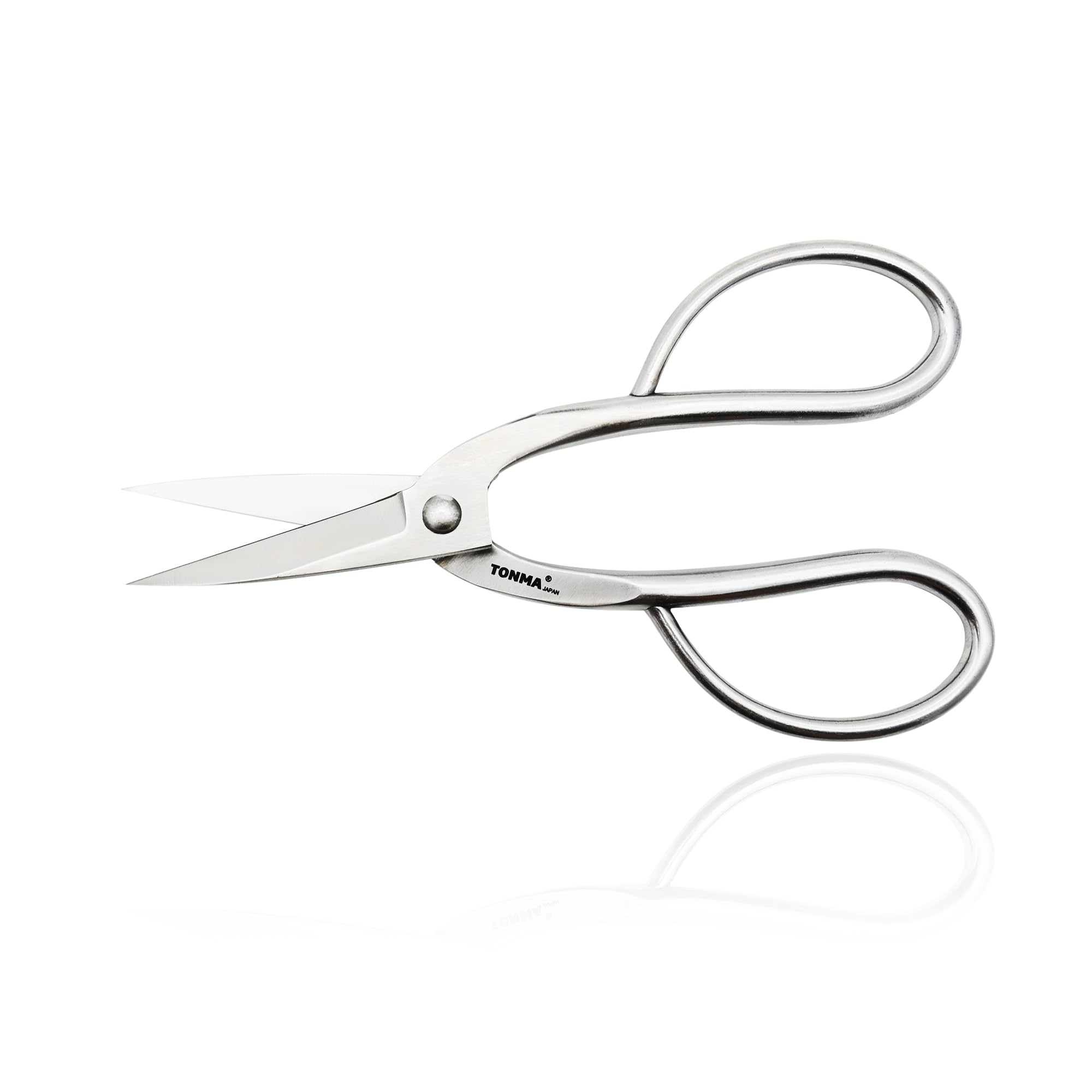
While many bonsai scissors prioritize thin, wispy blades for delicate foliage work, the TONMA Ashinaga goes the opposite direction with 4.5 mm thick AUS-8 stainless steel — a Japanese alloy known for balanced hardness (HRC 59±1) and corrosion resistance. This scissor is built to handle the tough stuff: cutting dahlia tubers, thick woody stems, and branches that would fold a lighter pair.
The one-piece solid stainless construction eliminates the weak points found in cheaper riveted designs. The ergonomic handles are all-steel with subtle contouring; they lack rubber over-molding, which keeps the tool clean (no sap-gripping rubber) but means grip relies on handle shape alone. At 6.8 oz (193 g), it has a reassuring heft that power-cuts through 8 mm green wood without needing two hands.
Customer feedback highlights the “fantastic pruner” label and the satisfaction of cutting dead wood that smaller scissors simply bounce off. The anti-rust performance of AUS-8 is noticeably better than carbon steel, so this scissor suits outdoor gardeners who want a low-maintenance, high-durability tool they can wipe and stash after a session. The trade-off: the thicker blade is less maneuverable for micro-detailing than a slimmer profile.
Why it’s great
- Thick AUS-8 blade handles heavy pruning without flexing or chipping.
- One-piece stainless build requires less maintenance than high-carbon options.
Good to know
- Blade thickness reduces precision for very fine work like thread-grafting or close-tip trimming.
- All-metal handles can feel slick without a rubberized grip layer.
3. SenkichiKin (forest Originals) Yasuki White Steel Bonsai Scissors
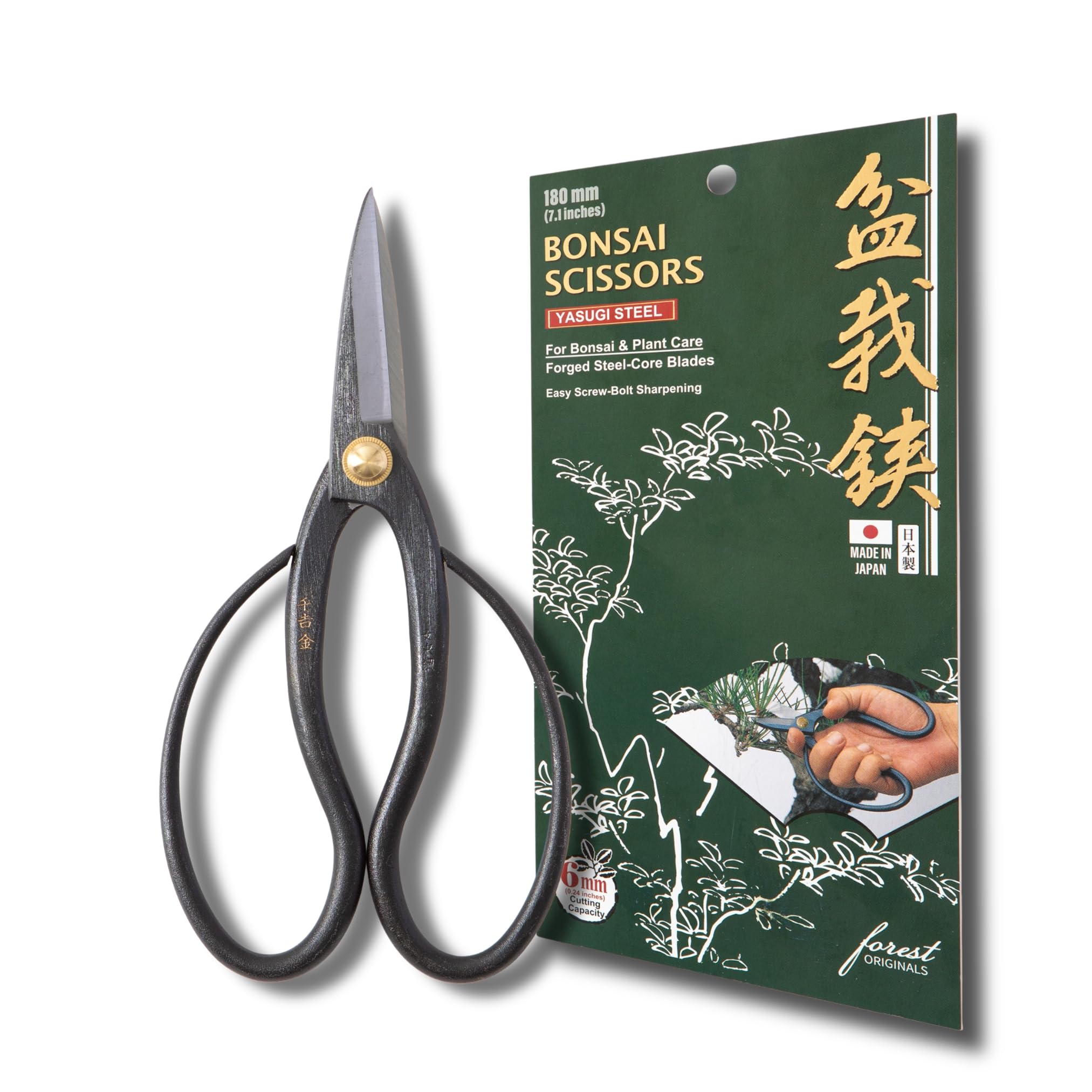
The SenkichiKin takes a different philosophy than the beefier TONMA: it prioritizes razor-fine edge geometry over sheer thickness. Forged from Yasuki White Steel #2 — a high-carbon steel prized in Japanese kitchen knives for its ability to achieve extreme sharpness — these 180 mm scissors are designed for detail work where every snip needs to leave a clean, non-crushed surface for faster wound healing on delicate species like maples and pines.
The blades are removable via a bolt fastener, a genuinely useful feature that allows you to disassemble the tool for thorough cleaning and sharpening without misaligning the pivot. At 160 g, the weight sits in the middle of this list — light enough for one-handed foliage trimming, heavy enough to feel substantial when cutting 6 mm fresh wood. The rubberized grip on the handles makes a meaningful difference during longer shaping sessions, reducing the hand fatigue that bare metal handles can cause.
Several arthritic-handed users specifically praise the ergonomic fit and the clean, crisp action. The nashiji (pear-skin) finish is not just aesthetic; it helps reduce sap adhesion. This scissor is a strong candidate for the bonsai artist who does frequent fine pruning and is comfortable with the maintenance routine that high-carbon demands.
Why it’s great
- Yasuki White Steel #2 provides the sharpest edge potential among the options here.
- Removable blades allow easy disassembly for maintenance and resharpening.
Good to know
- White steel is more prone to staining and requires dedicated care after every session.
- Cut capacity (6 mm fresh wood) is limited; not ideal for thick branch removal.
4. Saboten Japanese Bypass Pruning Shears (Forest Originals)

The Saboten shears are technically a pruning shear, not a dedicated bonsai scissor, but they earn a spot here because of their 20 mm cutting capacity — enough to handle the thicker trunk branches and root work that standard scissors struggle with. The high-carbon steel blade receives a fluorine coating that actively repels sap and resin, cutting down on the sticky buildup that ruins a pruning session with less-treated tools.
A 20 mm cut capacity means this is the tool you reach for when a branch has outgrown your 6 mm scissors but is not yet thick enough for a concave cutter. The rubber-plastic handle and ergonomic profile are comfortable for all-day garden maintenance, not just bonsai-specific work. The Duracon safety lock is practical for storage in a garden apron or bag, preventing accidental open-blade snags.
Customer reviews consistently describe the Saboten as “sharp, easy-grip” and capable of cutting both soft pine and dead 3/4-inch hardwood in a single squeeze. The bypass action leaves cleaner wounds than anvil-style shears. The main trade-off: the larger blade is less precise. It is a heavy pruner best paired with a dedicated detail scissor rather than used as your sole bonsai tool.
Why it’s great
- Fluorine coating dramatically reduces sap adhesion during heavy pruning sessions.
- 20 mm capacity tackles branches that standard bonsai scissors cannot handle.
Good to know
- Larger profile and heavier weight reduce fine control for delicate shaping work.
- Not a direct substitute for a precision scissor; best used alongside one.
5. TianBonsai Professional Grade 200 mm Bonsai Scissors

The TianBonsai 200 mm shears represent the most practical all-rounder in the mid-range tier. They are constructed from 5Cr15MoV alloy steel — a Chinese stainless formula that hardens to roughly HRC 58-60, offering significantly better edge retention than generic 420 stainless while still being relatively rust-resistant without oiling. This makes them a forgiving first purchase for the grower who wants professional results without the maintenance routine of raw carbon steel.
The 200 mm overall length and 2.13-inch blade follow a conventional straight-blade bypass profile. Owners who already own the brand’s smaller shears describe these as their “favorite of the series,” noting that the hybrid build provides enough power for thin roots while remaining nimble enough for foliage. The package includes a leather sheath and a storage pouch, which is a thoughtful addition for tool organization.
Multiple long-term users report that these shears remain rust-free with simple cleaning after each session, and the edge stays serviceable for months of regular use before needing a touch-up. The pivot is tight out of the box and users with up to three pairs attest to consistent quality. For the bonsai practitioner who wants a single pair that genuinely does everything from leaf trimming to light root work, this is the most balanced option at a reasonable investment.
Why it’s great
- 5Cr15MoV alloy balances sharpness and corrosion resistance without special maintenance.
- Included leather sheath and storage bag add real value for tool organization.
Good to know
- Not as razor-sharp out of the box as premium Japanese carbon steel options.
- The alloy handle is basic; no rubber grip for slip resistance during longer sessions.
6. VOUIU 8-Inch Concave Cutter

A concave cutter is not a general-purpose scissor; it is a specific tool designed to remove branch forks and leave a recessed wound that heals faster and cleaner than a flush cut. The VOUIU 8-inch concave cutter fills this niche at a fraction of the price typically demanded by premium Japanese concave cutters. The anvil-style blade crushes the branch fiber against a flat plate, which is the correct mechanism for concave work — a bypass blade cannot achieve the same hollowed cut profile.
Made from stainless steel and measuring 210 mm, this cutter provides substantial leverage. Reviewers use it not only for bonsai but also for hoof maintenance and general yard trimming, which speaks to its sturdy build. The offset cutting edge design helps position the blades correctly for a clean concave profile, and the tool ships well packaged with a storage bag for protection. Multiple owners note that it feels “well made and sturdy” for the investment level.
The primary limitation is that this is a single-task tool. It is not suited for general foliage trimming or precise tip cuts. Some users report that the handle length feels slightly long for smaller hands, though the extra leverage is beneficial when cutting thicker branches. For bonsai enthusiasts who practice regular structural pruning and branch removal, the VOUIU cutter offers specialized functionality without the premium price.
Why it’s great
- Concave blade profile promotes faster healing on branch removal cuts.
- Stainless steel construction is rust-resistant and low-maintenance.
Good to know
- Anvil-style cutters crush the branch rather than shearing; not for delicate work.
- Longer handle length may feel awkward for users with smaller hands.
7. Shear Perfection Platinum Series Stainless Steel Bonsai Scissors

The Shear Perfection Platinum Series is the most entry-level option in this guide, and it plays that role honestly. It uses stainless steel blades with a 60 mm straight edge — shorter than most bonsai-specific shears — which makes it more suited for light pruning, trimming small leaves, and general craft work (fabric, paper, cardstock) than heavy woody bonsai material. The blades are thin and sharp out of the box, with a smooth cutting action that users describe as “sharp and smooth” for fussy cuts.
The rubber-grip handle is a welcome feature at this level, providing solid comfort for occasional trimming sessions. The scissor is ambidextrous and relatively lightweight at 0.2 lbs, which reduces hand fatigue for light users. Some owners report that after three years of maintenance (simple cleaning, no sharpening), the scissors still cut cleanly through branches up to 3 mm, which is a strong testimonial for the basic stainless edge holding up better than expected.
The main caveat: this scissor is not designed for heavy or repeated pruning. The thin blade may flex or dull quickly on dense wood, and the pivot lacks the reinforced construction of mid-range or premium options. It is best viewed as an affordable starter pair for the newcomer who is not yet ready to invest in high-carbon steel, or as a backup scissor for lightweight maintenance tasks.
Why it’s great
- Rubberized grip provides comfortable handling for short trimming sessions.
- Smooth, thin blade is ideal for light foliage work and cuts paper or fabric easily.
Good to know
- Thin blade is not built for heavy wood, root pruning, or repeated dense use.
- Edge retention is limited compared to mid-range alloy or carbon steel alternatives.
FAQ
How often should I oil my high-carbon bonsai scissors?
Can I use a concave cutter for general foliage trimming?
What is the practical difference between a 180 mm and a 200 mm bonsai scissor?
Final Thoughts: The Verdict
For most users, the best bonsai scissors winner is the Wazakura Yasugi Steel Ashinaga because it marries traditional Japanese forging with YCS3 tool steel that holds an aggressive edge through dense material while weighing under 150 grams. If you prioritize minimal maintenance and the ability to tackle thick branches without fear, grab the TONMA AUS-8 Ashinaga. And for the detail-oriented grower who spends hours on fine foliage shaping, nothing beats the removable-blade convenience and white-steel sharpness of the SenkichiKin Yasuki White Steel scissors.