
Our readers keep the lights on and the weekend projects moving. As an Amazon Associate, I earn from qualifying purchases.
Boot insoles are not just a comfort add-on; they are the critical interface between your foot and the stiff, unforgiving construction of a work boot or hiking boot. The wrong insole can turn a ten-hour shift or a long trail day into a painful grind of aching arches, burning heels, and numb toes, while the right one transforms that same boot into a supple, supportive platform that keeps you moving all day.
I’m Rikta — the co-founder and writer behind FitlyFast. I’ve spent years analyzing the biomechanical engineering, material science, and user feedback behind hundreds of boot-specific orthotics to separate genuine performance upgrades from simple foam slabs.
This guide breaks down the best arch-support, cushioning, and stability options available so you can confidently choose the right boot insoles for your specific foot shape, boot type, and daily demands.
How To Choose The Best Boot Insoles
Selecting the right insole for your boots begins with understanding your foot type and the specific demands of your activity. A construction worker standing on concrete all day has very different needs from a hiker navigating rocky terrain, and the insoles reflect that in their construction, density, and support profile.
Recognize Your Arch Type
The single most important factor is your arch height. Low arches (flat feet) require insoles with a lower, more supportive profile that prevents over-pronation. Medium arches need a versatile, balanced support. High arches demand a pronounced, rigid arch to fill the void and distribute pressure evenly, preventing heel and ball-of-foot pain. Many premium insoles now offer low, medium, and high arch versions.
Match Insole Firmness to Your Activity
Softer, high-rebound foam insoles are excellent for reducing fatigue during long, repetitive days on hard floors. Firmer insoles with semi-rigid bases (often incorporating carbon fiber or polypropylene) provide superior stability for carrying heavy loads, hiking uneven terrain, or managing conditions like plantar fasciitis. Boot volume is also critical — a too-thick insole can crowd your toes, while a flimsy one will compress and offer no support.
Check Boot Compatibility and Durability
Not all insoles fit all boots. Some are designed for the specific toe-box shape and deep heel pocket of work boots or hiking boots. Look for trim-to-fit options, but be careful not to over-trim, which can ruin the support structure. Durability is tied to materials: closed-cell foams last longer than open-cell, and a moisture-wicking top layer with antimicrobial treatment prevents odor and breakdown over hundreds of miles or shifts.
Quick Comparison
On smaller screens, swipe sideways to see the full table.
| Model | Category | Best For | Key Spec | Amazon |
|---|---|---|---|---|
| PowerStep Pinnacle Hiker | Premium | High arch support & plantar fasciitis relief | Semi-rigid arch with maximum cushion | Amazon |
| CURREX HikePro | Premium | Trail stability & anti-slip heel | 3D Dynamic Arch & SuperGrip heel | Amazon |
| Superfeet Hike Women’s | Premium | Women’s-specific medium-high arch | EVOLyte carbon fiber stabilizer | Amazon |
| KEEN Utility K30 High Arch | Mid-Range | High arches & metatarsal support | Dense foam with high-arch profile | Amazon |
| Timberland PRO Insite AFT | Mid-Range | Work boot comfort & plastic arch | Plastic arch support footbed | Amazon |
| ARIAT Men’s Energy Max Work | Mid-Range | Rebound comfort & odor defense | Agion anti-odor moisture wicking liner | Amazon |
| Dr. Scholl’s Work Insoles | Budget | All-day shock absorption | Massaging gel & Polygiene odor control | Amazon |
In‑Depth Reviews
1. PowerStep Pinnacle Hiker Orthotic Insoles

The PowerStep Pinnacle Hiker is the benchmark for anyone dealing with high arches or plantar fasciitis while wearing boots. Its semi-rigid arch shell provides non-collapsing support that stabilizes the foot on uneven trails and long concrete shifts alike, while the top layer of maximum cushion prevents pressure points from developing under the metatarsal heads.
Users consistently report zero foot pain even after hiking over sixteen miles or standing all day on hard work surfaces. The build quality is notable — the firm arch does not pack out over months of use, making it a durable investment for serious boot wearers who refuse to compromise on biomechanical alignment.
One caveat is its thickness: because the insole is quite substantial, it can crowd the toe box in boots that are already snug. Buyers with wide or generously-sized boots will find the fit ideal, but those with tight-fitting footwear may need to size up or stick to lighter alternatives.
Why it’s great
- Exceptional semi-rigid arch support eliminates foot fatigue
- Top-tier cushioning prevents heel and forefoot pain
- Podiatrist-recommended design durable for hundreds of miles
Good to know
- Thicker construction may compress toes in snug boots
- Firm feel requires a short break-in period
2. CURREX HikePro Insoles

The CURREX HikePro is engineered specifically for the dynamic demands of trail hiking, with a patented 3D Dynamic Arch Technology that adapts to low, medium, or high arches. What sets it apart is the deep, decoupled heel cup with SuperGrip anti-slip surface that locks the heel in place, preventing the forward sliding that causes toe jamming on steep descents.
Shock absorption is a standout feature — the recycled EVA base with air vent technology dissipates impact on rocky terrain while remaining breathable and odor-resistant. Hikers have praised its performance under heavy packs on long uphill climbs, noting a significant reduction in foot fatigue compared to stock insoles.
For users with normal to low arches, this is one of the most comfortable options available, but the firmness under the heel and forefoot may feel pronounced for those accustomed to soft foam inserts. It also commands a premium price, so it is best suited for dedicated outdoor enthusiasts.
Why it’s great
- Anti-slip heel cup stops foot sliding on inclines
- Breathable and odor-resistant recycled EVA core
- Three arch profiles for customized fit
Good to know
- Firm feel may not suit those wanting plush cushioning
- Premium cost for specialized hiking design
3. Superfeet Hike Women’s Support Insoles
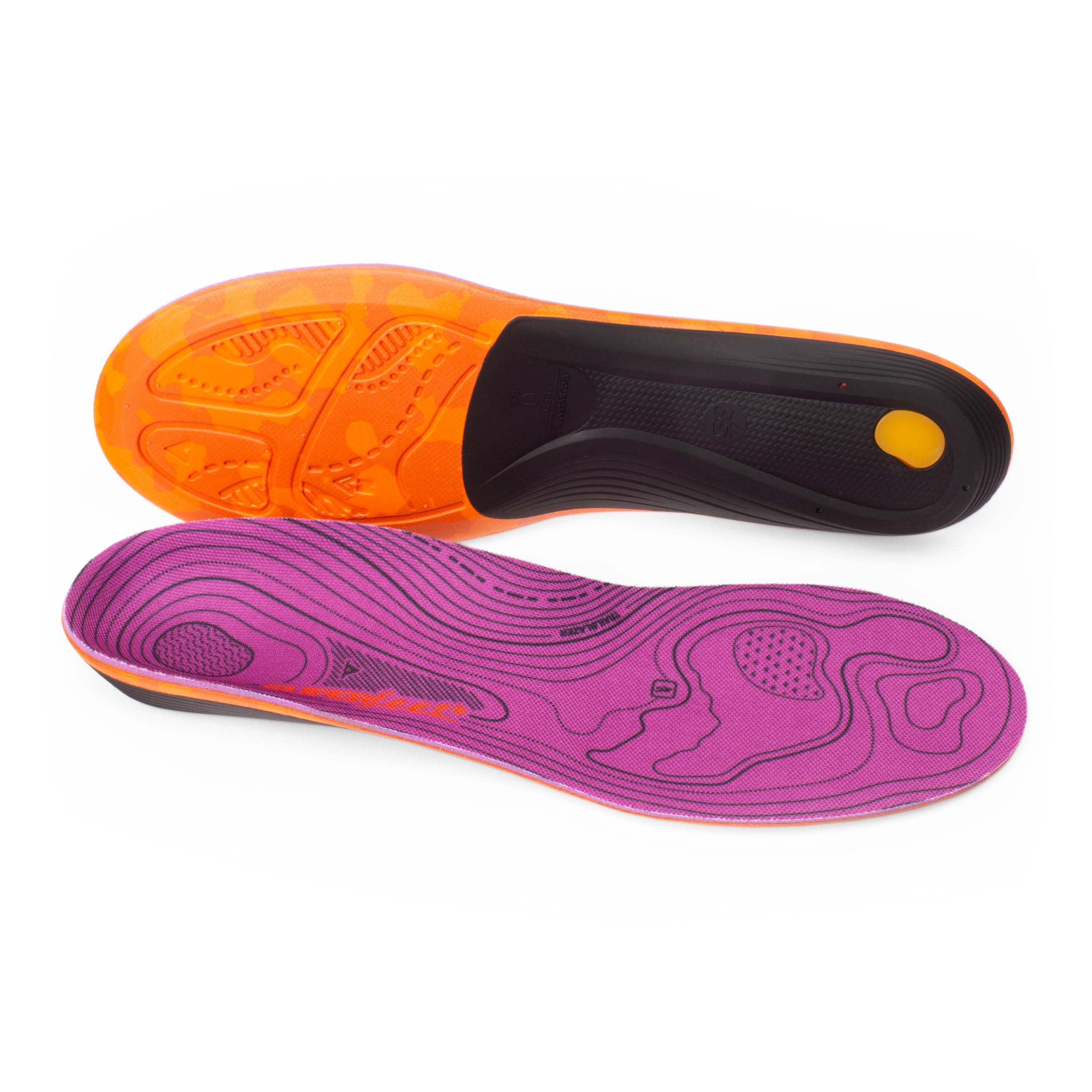
Superfeet is a trusted name in orthotic support, and the Hike Women’s model brings that engineering to a foot-specific last. It features a proprietary EVOLyte carbon fiber and polymer blend stabilizer that provides lightweight, responsive support without adding bulk, making it ideal for women’s medium to high arches on technical trails.
The Moisturewick top cover is highly effective at controlling odor and keeping feet dry during long days out, and the trim-to-fit design is straightforward with clear size guidelines. Users consistently report that the deep heel cup eliminates forward sliding and the toe jamming that occurs on steep downhill sections.
For those with flat feet, the pronounced arch can feel aggressive during the break-in period, and some users may need to size up for an optimal fit. However, for hikers who need structural support for knee and hip alignment, this insole is a remarkably effective upgrade from stock foam.
Why it’s great
- Carbon fiber stabilizer for weight-defying support
- Excellent heel lock for downhill stability
- Breathable top cover reduces moisture and odor
Good to know
- High arch may be uncomfortable for flat-footed users
- Minimal foam cushioning; support-focused design
4. KEEN Utility K30 High Arch
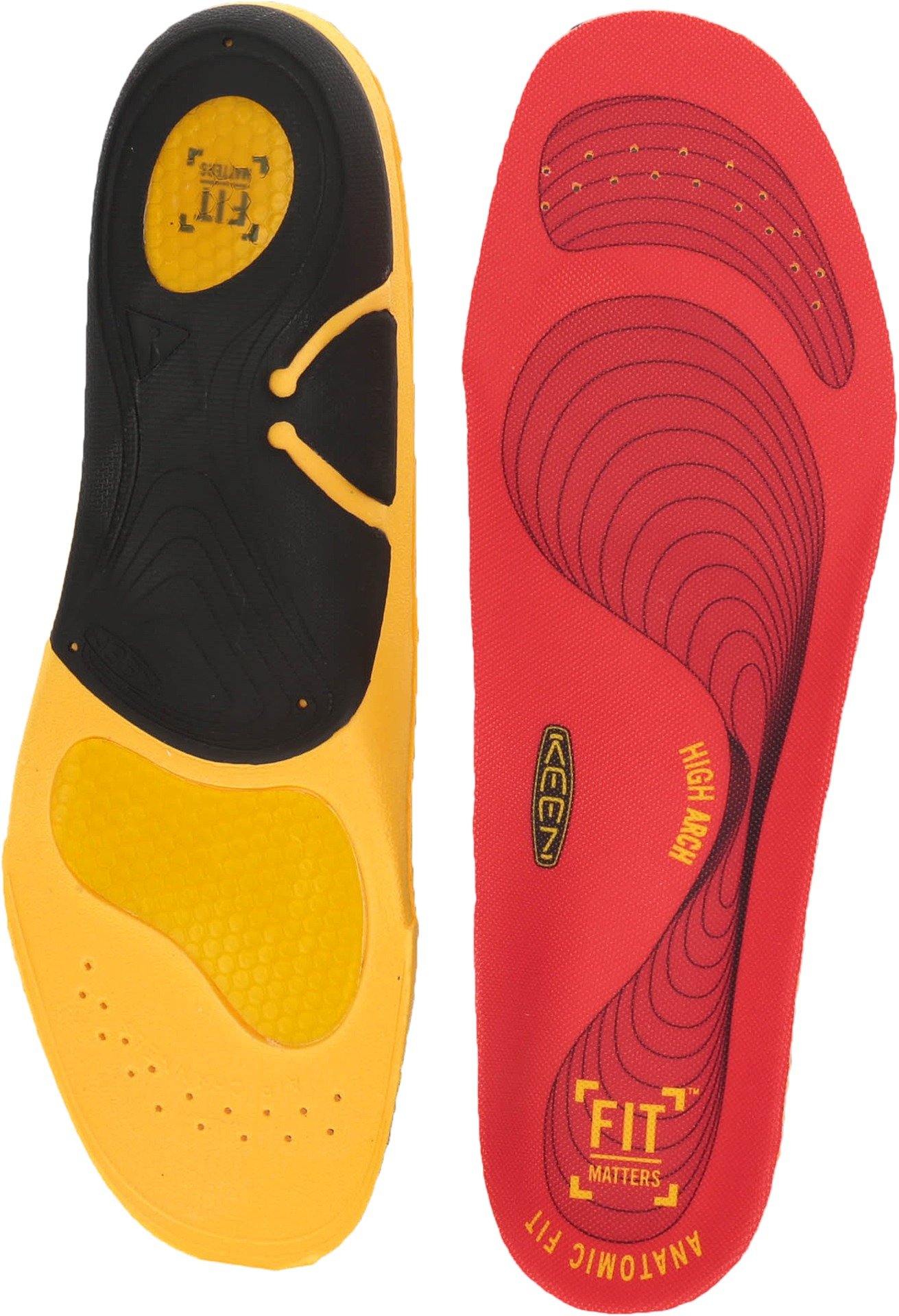
The KEEN Utility K30 is a purpose-built powerhouse for high-arched feet, offering a pronounced orthotic profile that provides exceptional arch and metatarsal support. Users with prior foot fractures or chronic knee and lumbar pain have reported complete elimination of discomfort on concrete, gravel, and field surfaces, which speaks to its structural integrity.
The unique sizing guide uses a tracing template that prevents common cutting errors, ensuring a precise fit inside work boots from brands like Irish Setter and Thorogood. The dense foam construction does not pack out quickly, maintaining its aggressive arch height for the life of the insole.
Because of its firm, high-arching nature, it is not a universal solution — users with low or neutral arches may find it uncomfortable. A break-in period is necessary, and the insole should never be trimmed to the point of altering the arch structure.
Why it’s great
- Aggressive high-arch profile reduces knee and hip pain
- Metatarsal pad supports fractured/recovering feet
- Durable construction with precise tracing guide
Good to know
- Only suitable for high-arched users
- Firm feel requires several days of break-in
5. Timberland PRO Insite Technology AFT Footbed

The Timberland PRO Insite AFT Footbed is a workhorse insole that delivers reliable comfort for workers on their feet all day. Its defining feature is a plastic arch support insert embedded within the foam — this provides a stable, non-collapsing foundation that fits well inside work boots and steel-toe shoes without adding excessive bulk.
Users in construction and trade roles who log over 6,000 steps daily on hard surfaces report that these insoles make work boots feel like walking on air by the end of a ten-hour shift. The trim-to-fit design is straightforward, and the insole lasts several months before needing replacement.
Compared to higher-end options, the cushioning layer is thinner, so it does not offer the plush, springy feel of premium gel or foam insoles. The arch support is moderate and works best for medium arches, not flat or extremely high arches.
Why it’s great
- Plastic arch support structure prevents collapse
- Great fit inside work boots and steel-toe shoes
- Reduces fatigue during long standing shifts
Good to know
- Thinner cushioning than premium competitors
- Arch support suited mainly for medium arches
6. ARIAT Men’s Energy Max Work Insole

The ARIAT Energy Max Work Insole focuses on the sensation of rebound and energy return, using a thick foam layer that cradles the foot and dissipates pressure laterally. This makes it a strong choice for workers who prioritize a lively, comfortable feel over rigid orthotic correction.
The moisture-wicking liner is treated with Agion technology for intense odor defense, and the open-cell foam regulates temperature to keep feet cool even during hot days. Users report that the no-trim sizing matches their shoe size exactly, and the insole holds up well in everyday work boots without losing its bounce.
For those needing strong arch support or correction, the Energy Max is more of a comfort insole than a medical orthotic. It works best for users with normal to low arches who want a plush, fatigue-reducing layer in their boots.
Why it’s great
- Superior energy rebound reduces leg fatigue
- Agion odor control keeps boots fresh
- No-trim sizing for exact fit
Good to know
- Limited arch support — not for flat feet or high arches
- Primarily a comfort insole, not orthotic-grade
7. Dr. Scholl’s Work Insoles

The Dr. Scholl’s Work Insoles are a budget-conscious entry point that still delivers good performance for the price. Their massaging gel technology provides noticeable shock absorption on hard surfaces like concrete and asphalt, and the Polygiene StayFresh technology is an effective additive for foot odor control during long shifts.
Users generally report good comfort and reduction of foot fatigue, with the insoles fitting easily into both work boots and casual boots after a simple trim. The reinforced arch offers mild support that helps prevent aching at the end of the day without being overly intrusive.
The main trade-offs are that the arch support is moderate at best and the durability is lower than premium options — some users find the foam compresses after a few months of heavy use. For occasional wear or as a first upgrade from stock insoles, it is a solid entry-level choice.
Why it’s great
- Gel cushioning absorbs shock on hard floors
- Odor control technology keeps boots fresh
- Affordable entry point for boot comfort
Good to know
- Support is moderate — not for serious arch issues
- Foam may pack out faster than premium insoles
FAQ
How much arch support do I need in a boot insole?
Can boot insoles be trimmed to fit any boot size?
Final Thoughts: The Verdict
For most users, the boot insoles winner is the PowerStep Pinnacle Hiker because it provides the best balance of semi-rigid arch support and maximum cushion for both work and hiking boots. If you want superior heel stability for uneven trails, grab the CURREX HikePro. And for a premium, lightweight option designed specifically for women’s feet, nothing beats the Superfeet Hike Women’s Support.