
Our readers keep the lights on and the weekend projects moving. As an Amazon Associate, I earn from qualifying purchases.
Nothing kills a day on the trail or a week at the job site faster than a boot sole that has started to separate at the toe or peel back at the heel. The wrong adhesive leaves you walking with a flapping slab of rubber, re-gluing every few weeks, or watching your repair crack apart after the first rain. This guide focuses exclusively on adhesives formulated to handle the flex, weight, and moisture that boots endure — not general-purpose craft glues that fail under real pressure.
I’m Rikta — the co-founder and writer behind FitlyFast. I’ve spent hundreds of hours analyzing chemical formulations, cure times, and real-world user reports to separate the few boot sole repair glues that actually bond to rubber and leather from the many that simply promise to.
Whether you are reattaching a Vibram outsole on your favorite hiking boots or rebuilding a worn heel on your work boots, knowing exactly which adhesive creates a flexible, waterproof, and permanent bond is the difference between a one-and-done fix and a recurring headache. This is the complete guide to the best boot sole repair glue on the market today.
How To Choose The Best Boot Sole Repair Glue
Selecting the right adhesive for your boots comes down to understanding the material of your sole and the type of repair you are making. A glue that works well on a smooth leather dress shoe may peel right off a rugged rubber lug sole. Focus on the bond’s flexibility, cure time, and resistance to water and temperature changes.
Adhesive Chemistry: Contact Cement vs. Urethane vs. Cyanoacrylate
Contact cement like Barge creates a permanent, flexible bond by welding two coated surfaces together after a tacky stage, making it ideal for full-sole reattachments. Urethane adhesives such as Aquaseal SR cure into a clear rubber that absorbs impact, perfect for patching holes and rebuilding worn heels. Cyanoacrylate gels (super glues) set in seconds for small, precise repairs but lack the flexibility for large sole separations on heavily flexed boots.
Flexibility and Impact Resistance
A boot sole bends every time you take a step. An adhesive that dries rigid will crack under this repetitive stress within days. Look for glues marketed as flexible or rubberized — these formulations move with the sole rather than against it, preventing the repair from failing at the glue line.
Water and Temperature Resistance
Boots face rain, snow, mud, and extreme heat or cold. A boot sole repair glue must maintain its bond in wet conditions and withstand temperature swings without becoming brittle or softening. Urethane and contact cement formulas typically offer superior all-weather performance compared to standard cyanoacrylate.
Quick Comparison
On smaller screens, swipe sideways to see the full table.
| Model | Category | Best For | Key Spec | Amazon |
|---|---|---|---|---|
| Barge All Purpose Cement Quart | Contact Cement | Full sole reattachment | 15-minute cure time | Amazon |
| GEAR AID Aquaseal SR 2 Pack | Urethane | Patching holes / rebuilding heels | 12-hour full cure | Amazon |
| SHOE GOO 3.7OZ Black | Rubber Compound | Worn heel and toe rebuilds | Flexible rubberized bond | Amazon |
| Eagle Shoe Cement 4 oz | Shoe Cement | Budget-friendly sole repair | 4 oz container | Amazon |
| LEENEXUS Super Glue Gel 5g | Cyanoacrylate Gel | Quick fixes / small separations | 30-45 second set time | Amazon |
| Cerca de Shoe Glue 1 oz | Epoxy Resin | At-home DIY full kit | Includes tools + unglueing agent | Amazon |
| Barge SuperStik Cement 1 Quart | Contact Cement | Premium high-volume use | Waterproof & one-coat formula | Amazon |
In‑Depth Reviews
1. Barge All Purpose Cement Quart

Barge All Purpose Cement is the gold standard contact cement for serious boot repairs. Its solvent-based formula creates a bond so strong that the leather or rubber often tears before the glue line fails. This is the same adhesive used by professional cobblers, and for good reason: it offers a long tack time that lets you position the sole exactly, then forms a permanent, flexible grip resistant to water and temperature extremes.
The quart-sized container is ideal for multiple repairs or large-scale projects. Users consistently report successful reattachment of Vibram soles on heavy hiking boots and work boots, with repairs holding up through snow, mud, and daily abuse. The included brush applicator makes coating large surfaces straightforward, and the 15-minute cure time for the tacky stage is forgiving enough for DIY use.
Be aware that this glue has a strong solvent odor that requires excellent ventilation — work outdoors or in a well-ventilated shop. The bottle cap seal can degrade over time if not cleaned, but storing it with a foil-lined cap extends its life significantly. For anyone serious about boot repair, Barge is the benchmark.
Why it’s great
- Industrial-strength bond that outlasts the boot material itself.
- Flexible contact cement formula handles repeated sole flex without cracking.
- Large quart size provides excellent value for multiple repairs.
Good to know
- Strong solvent fumes require proper ventilation during use.
- Cap seal can dry out if not maintained between uses.
2. GEAR AID Aquaseal SR Shoe Repair Adhesive 2 Pack
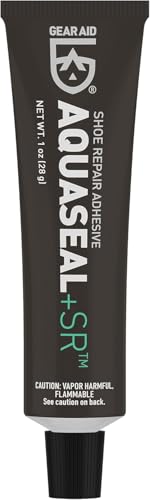
Aquaseal SR (formerly known as Freesole) is a unique urethane adhesive that dries into a clear, flexible rubber rather than a hard plastic. This makes it the top choice for sealing holes in soles, rebuilding worn heels, or creating toe protectors on work boots. It bonds aggressively to leather, rubber, neoprene, and even GORE-TEX, and remains flexible enough to withstand the constant bending of a hiking boot without peeling or cracking.
The two-pack provides ample product for multiple repairs, and the tube format allows for precise application directly into cracks or along separated edges. Users praise its performance on heavy hiking boots and water aerobics shoes, noting that it stays intact even after exposure to rain, snow, and salt. Self-leveling consistency means it fills gaps smoothly, though you should avoid over-applying to tread channels as it can create a slick surface when wet.
Full cure takes about 12 hours, so you will need to clamp or weight the repair overnight. Using an accelerator like Cotol-240 can speed this up significantly. For patching or rebuilding rather than reattaching a full sole, this urethane formula is unmatched in its class.
Why it’s great
- Cures into a flexible, clear rubber that absorbs impact without cracking.
- Excellent for filling holes, rebuilding heels, and sealing leaks on any boot material.
- Superior abrasion resistance extends the life of high-wear boot areas.
Good to know
- Full cure requires 12 hours with clamping pressure.
- Filling tread channels can reduce wet traction on smooth surfaces.
3. SHOE GOO 3.7OZ Black

Shoe Goo is a household name for a reason — this rubberized compound is designed specifically for rebuilding worn heels and toes on boots and sneakers. Unlike thin glues that seep through cracks, Shoe Goo has a thick, pasty consistency that lets you build up material on damaged areas, effectively forming a new rubber layer that flexes naturally with the sole.
The 3.7 oz tube in black matches most boot soles, making repairs virtually invisible. Users have successfully used it to resurrect decades-old work boots and hiking boots, with the compound remaining flexible and waterproof even after prolonged exposure to wet conditions. It also works as a general-purpose rubber adhesive for other gear repairs due to its strong bonding and insulating properties.
Application is straightforward, but the compound takes time to cure fully — expect to leave boots untouched for 24 hours for maximum strength. It is best suited for rebuilding rather than reattaching a fully detached sole; for full sole separation, a contact cement is more appropriate. For spot repairs and adding material to worn areas, Shoe Goo is the clear choice.
Why it’s great
- Thick formula builds up worn heels and toes like new rubber.
- Flexible and waterproof bond that handles real boot abuse.
- Black color blends seamlessly with most boot soles.
Good to know
- Requires 24-hour cure for full strength.
- Not ideal for reattaching fully detached soles — better for rebuilding.
4. Eagle Shoe Cement Heavy Duty 4 oz

Eagle Shoe Cement offers a reliable entry into the world of boot sole repair without a high price tag. This solvent-based adhesive creates a strong, flexible bond ideal for reattaching detached soles on sneakers, boots, and dress shoes. Its paste-like consistency stays where you put it, making application on vertical surfaces like boot heels manageable.
The 4 oz bottle provides a generous amount of glue for multiple repairs, and the medium viscosity formula is easy to spread with the included brush. Users report successful repairs on 20-year-old Merrell hiking boots, with the bond holding through wet weather and daily walking. Quick-drying properties mean you can clamp the repair and have functional boots within a few hours of full cure time.
The main concern reported is the quality of the bottle’s seal — some units arrive with the lid not fully tightened, leading to leakage during shipping. Check the cap immediately upon arrival. The adhesive itself performs well, making this a solid budget-friendly option for anyone needing a quick sole fix without investing in premium cements.
Why it’s great
- Strong, flexible bond at an accessible price point.
- Large 4 oz volume covers multiple boot repairs.
- Works well on leather, rubber, and synthetic boot materials.
Good to know
- Bottle seal can leak during shipping if cap is not secure.
- Not as thick as premium contact cements for heavy vertical application.
5. LEENEXUS Super Glue and Cement for Shoes 5g Gel
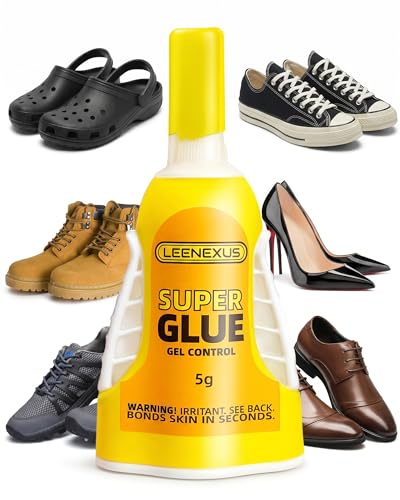
LEENEXUS takes the super glue concept and optimizes it for shoe repair with a gel formula that stays put on vertical surfaces. The thick, no-drip consistency allows precise application to small separations along the toe or heel without running onto the upper. The side-squeeze bottle and anti-clog cap with a built-in cleaning needle ensure the glue stays usable longer than typical thin super glues.
This cyanoacrylate gel sets in 30-45 seconds, making it ideal for quick fixes where you need immediate hold — a loose heel cap, a delaminating toe edge, or a crack in a non-flexing area. Users praise its performance on ceramic and plastic repairs too, highlighting its versatility. The claim of micro-anchor technology is supported by reports of strong bonds on rubber and leather.
However, the rigid nature of cyanoacrylate means it is not suitable for full sole reattachments on flexible boots. The bond will crack under the constant bending of a lug sole. For that specific use, a flexible contact cement is required. For small, low-flex repairs that need instant grip, this is a fantastic option.
Why it’s great
- Gel formula stays put without dripping for precise application.
- Fast 30-45 second set time for instant repairs.
- Anti-clog cap extends the usable life of the bottle.
Good to know
- Rigid bond unsuitable for high-flex areas like full boot soles.
- Small 5g bottle is best for minor spot fixes, not large repairs.
6. Cerca de Shoe Glue Heavy Duty 1 oz
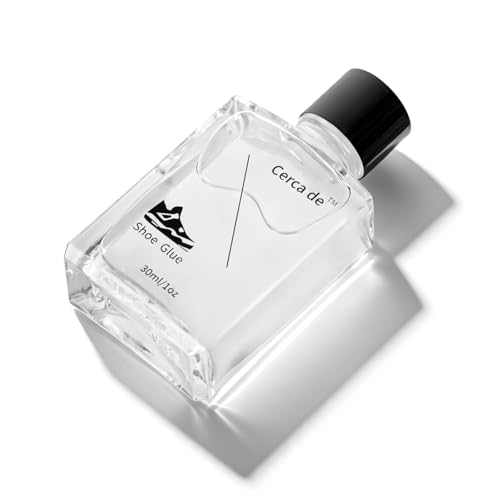
Cerca de’s offering stands out because it arrives as a complete repair kit rather than just a bottle of glue. In addition to the 1 oz epoxy-based adhesive, the package includes an unglueing agent, brush, rubber bands, disposable gloves, and a sanding stick. This makes it an excellent entry point for someone new to boot repair who wants all the necessary preparation tools in one purchase.
The glue itself is a clear, flexible epoxy that forms a waterproof and cold-resistant bond. Users report successful repairs on sneakers and boots, with the bond remaining secure even after walking in rain. The environmentally friendly formula claims to be non-corrosive to shoe materials, which gives peace of mind when working on expensive footwear.
While the kit is comprehensive, the 1 oz bottle is relatively small — enough for a few repairs but not a long-term supply for frequent fixers. The 24-hour full cure time is standard for epoxy. For a single boot sole repair or two, this all-in-one package provides everything you need without separate trips to the store.
Why it’s great
- Comes with all tools needed for a proper repair including sanding stick and gloves.
- Flexible and waterproof epoxy bond suitable for various boot materials.
- Non-corrosive formula safe for delicate leather and fabrics.
Good to know
- Small 1 oz size may not be enough for multiple large repairs.
- Epoxy requires full 24-hour cure before boots see heavy use.
7. Barge Original SuperStik Cement 1 Quart

Barge SuperStik is the clear cousin to the original Barge All Purpose Cement, optimized for a one-coat application with extremely high flexibility. This contact cement is designed for boot repairs where you need the bond to remain pliable after curing — the glue line stretches and moves with the sole rather than resisting and cracking. It is waterproof and will not freeze, making it reliable for work boots exposed to harsh winter conditions.
The quart can offers exceptional value for anyone planning multiple boot repairs or working professionally. Users consistently report that the bond is stronger than the boot material itself, with glue holding after years of hard use. It works on leather, rubber, nylon, and wood, covering nearly every boot construction material on the market.
Like all solvent-based contact cements, SuperStik has a strong odor that demands ventilation. The metal can’s screw cap can be problematic — if not sealed perfectly, the cement can dry out quickly between uses. Transferring to a smaller airtight container or using a fine brush for application and immediately sealing the cap helps preserve the product. For volume and performance, this is a top-tier choice.
Why it’s great
- One-coat contact cement saves time on large sole repairs.
- Extremely flexible bond handles boot flexing without cracking.
- Large quart can provides the best value for frequent repairs.
Good to know
- Strong fumes require working outdoors or with excellent ventilation.
- Cap seal must be kept airtight to prevent the cement from drying out.
FAQ
Can I use regular super glue to fix my boot sole?
How do I prepare the sole surface before applying glue?
How long should I wait before wearing boots after repair?
Final Thoughts: The Verdict
For most users, the boot sole repair glue winner is the Barge All Purpose Cement Quart because it provides a professional-grade, flexible bond that holds up to extreme abuse on hiking and work boots. If you need to patch holes or rebuild worn heels, grab the GEAR AID Aquaseal SR 2 Pack. And for a budget-friendly entry point with a complete repair kit, the Eagle Shoe Cement 4 oz gets the job done without breaking the bank.