
Our readers keep the lights on and the weekend projects moving. As an Amazon Associate, I earn from qualifying purchases.
Back pain often traces directly to the ground — every hard step sends shock up through the heel, ankle, and spine. A boot that lacks proper arch support, heel stabilization, and midsole cushioning forces your lower back muscles to overcompensate, turning a casual walk or a shift on concrete into hours of discomfort. Choosing footwear engineered with orthotic-grade support and shock-absorbing soles changes how your entire body handles each stride.
I’m Rikta — the co-founder and writer behind FitlyFast. My research dives into the biomechanics of footwear, comparing midsole technologies, arch heights, and outsole constructions to identify which boots actually reduce spinal load over long wear periods.
This guide breaks down the top models built with specific features — like reinforced heel cups, removable orthotic insoles, and responsive cushioning — that directly target back pain relief, helping you find the best boots for back pain for your daily demands.
How To Choose The Best Boots For Back Pain
Back pain relief starts from the ground up. Not every boot with a thick sole qualifies. You need to look for specific engineering that controls how your foot strikes the ground and how that force travels upward.
Arch Support & Heel Stabilization
A boot with a flat, unsupportive footbed allows the arch to collapse during each step. This misalignment forces the pelvis to tilt and the lower back muscles to grip tighter. Look for boots that include a molded orthotic footbed or a distinct arch contour made of firm EVA or polyurethane. A deep heel cup is equally important — it locks the calcaneus in place, preventing the heel from rolling inward and disrupting the kinetic chain.
Shock Absorption & Midsole Technology
The midsole material dictates how much impact force reaches your spine. Standard foam compresses too quickly under load. Boots designed for back pain use responsive cushioning systems — either a dense, slow-recovery foam or mechanical shock absorbers like springs or specialized grid structures. These materials spread the landing force over a longer period, reducing the peak load on your lumbar discs.
Outsole Flexibility & Gait Pattern
A rigid sole that does not bend at the metatarsal heads forces the foot to slap the ground, increasing shock transfer. A well-designed boot for back pain has a rocker bottom profile or a multi-directional tread pattern that allows a smooth heel-to-toe transition. This reduces the braking force when your foot lands and minimizes the jarring sensation that triggers back muscle tension.
Quick Comparison
On smaller screens, swipe sideways to see the full table.
| Model | Category | Best For | Key Spec | Amazon |
|---|---|---|---|---|
| Gravity Defyer G-DEFY Sierra | Premium Hiking Boot | VersoShock spring technology | VersoShock sole system | Amazon |
| Z-CoiL Outback Pain‑Relief | Premium Work/Hiking Boot | Maximum spinal shock reduction | Helical coil spring in heel | Amazon |
| Merrell Moab 3 Tactical Zip | Premium Tactical Boot | Sneaker-like all-day comfort | Merrell Air Cushion midsole | Amazon |
| KEEN Utility Pittsburgh | Mid-Range Work Boot | Waterproof steel-toe durability | KEEN LuftCell PU midsole | Amazon |
| Timberland PRO Boondock | Mid-Range Work Boot | Harsh outdoor work conditions | Anti-fatigue technology midsole | Amazon |
| Orthofeet Highline Leather | Mid-Range Orthopedic Boot | Flat feet & plantar fasciitis | Orthotic insole + arch support | Amazon |
| Orthofeet Ryder Slip-Resistant | Mid-Range Orthopedic Boot | Post-surgery recovery & neuropathy | Dual-zip + orthotic insole | Amazon |
| Women’s Orthopedic Snow Boot | Mid-Range Winter Boot | Warmth + arch support for women | Firm arch + heel stabilization | Amazon |
| Men’s Orthopedic Mid Trekking | Budget Hiking Boot | Budget-friendly cushioning | Orthotic cushion sole | Amazon |
In‑Depth Reviews
1. Gravity Defyer G-DEFY Sierra Waterproof Men’s Hiking Boot

The Sierra boots use Gravity Defyer’s patented VersoShock sole system, which is a mechanical spring-like structure built into the midsole. This design absorbs vertical impact and returns energy, significantly reducing the shock wave that travels to the lumbar spine. The boot also comes with three different removable insoles, allowing you to dial in the exact arch height and cushioning density for each foot individually.
Users consistently report that the Sierra provides excellent warmth, stability, and a noticeable reduction in back and hip pain during prolonged standing. The leather upper is water-resistant and insulated, making it suitable for cold and wet conditions. The boot is heavier than a standard hiking boot, which provides a planted feel but may feel bulky for travel or quick walks.
A small number of reviews mention that the stiff VersoShock sole, while great for shock absorption, can create a rocker-like feel that takes a few days to adjust to. One user reported heel blistering from an interior seam, easily resolved with a heel pad. Overall, this is the most targeted pain-relief boot for spinal protection.
Why it’s great
- VersoShock mechanical spring system reduces spinal load
- Three interchangeable insoles for custom arch fit
- Waterproof, insulated, and very stable under load
Good to know
- Heavy and bulky for casual wear or travel
- Sole is stiff and requires a short break-in period
2. Z-CoiL Men’s Outback Pain-Relief Footwear

The Z-CoiL Outback takes a different engineering approach by using a large visible coil spring built into the heel. This spring compresses on impact and releases slowly, dramatically reducing the force transmitted to the knees, hips, and lower back. The design is polarizing — it looks unusual but users with severe sciatica and hip replacements report near-instant relief.
One long-term reviewer, a 77-year-old veteran on his feet for 12-plus hours daily, found the Z-CoiL boots noticeably reduced his sciatica pain within a week. The boot is made in Korea and uses high-quality leather. The spring stiffness is weight-dependent, so heavier users get the proper compression without bottoming out. The outsole is durable, lasting roughly two years with regular use on concrete.
The boot does not come in half sizes, which can be a fit challenge. Several users order one full size up and use extra insoles to dial in the fit. The sole is not waterproof, and the spring mechanism creates a noticeable rocker motion that not everyone enjoys. For pure mechanical pain relief, however, this is the most effective option available.
Why it’s great
- Helical coil spring absorbs maximum shock before it reaches the spine
- Excellent for severe sciatica and hip replacement recovery
- High-quality leather construction made in Korea
Good to know
- No half sizes — fit requires careful sizing up
- Not waterproof and sole lasts about 2 years
3. Merrell Moab 3 8 Inch Tactical Zip Waterproof Boot

The Merrell Moab 3 Tactical Zip combines the legendary Moab hiking platform with a tactical build that includes a side zipper for easy on-and-off. The Merrell Air Cushion midsole is a heel-specific air pocket that provides responsive cushioning without the stiffness of a mechanical spring. The Vibram outsole offers excellent traction on wet rocks and uneven ground, which helps reduce the micro-adjustments your back muscles make on unstable surfaces.
Multiple users remark that these boots feel like sneakers right from the first wear. One electrician reported wearing them for over 8 hours of manual labor with zero foot or back fatigue. The arch support is moderate — enough for general comfort but not as aggressive as dedicated orthotic boots. Users with low arches find that adding a simple over-the-counter orthotic solves the fit issue.
A few reviewers note that the waterproofing is adequate for puddles but not for full submersion. The side zipper is convenient but requires some unlacing, meaning you cannot just slip your foot in. The boot also runs warm and is better suited for cooler months. For a lightweight, sneaker-like boot that handles tough terrain without aggravating the back, the Moab 3 is a top contender.
Why it’s great
- Air Cushion heel provides responsive, non-stiff shock absorption
- Sneaker-like feel straight out of the box
- Vibram outsole stabilizes footing on uneven ground
Good to know
- Waterproofing is not submersible; best for wet ground, not streams
- Side zipper still requires some unlacing for entry
4. KEEN Utility Men’s Pittsburgh Waterproof Steel Toe Boots
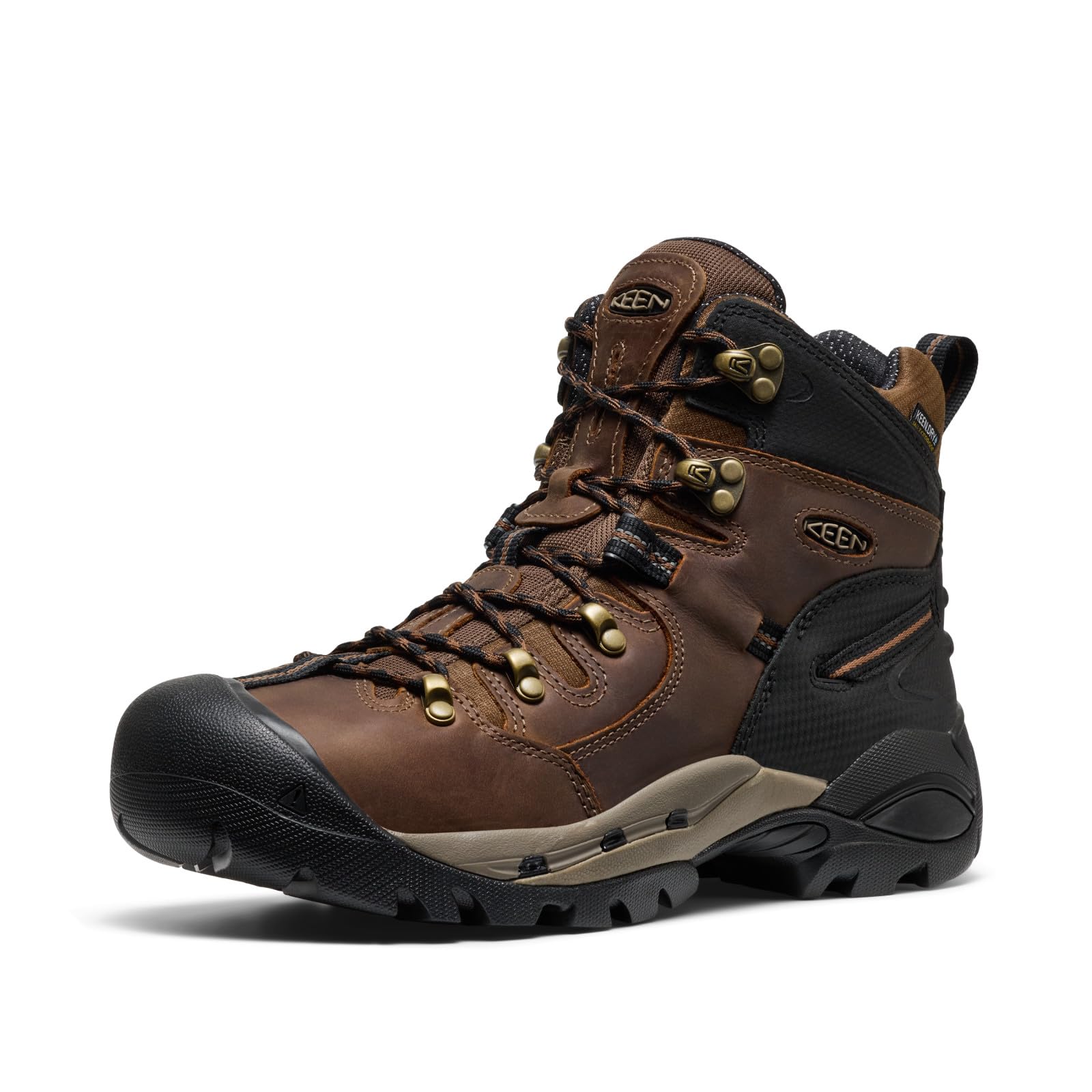
KEEN Utility Pittsburgh boots are built for hard industrial environments while retaining enough cushioning to protect the lower back. The LuftCell midsole is a high-rebound polyurethane foam that resists compression better than standard EVA, keeping its shape and shock-absorbing properties through a full work week. The steel toe is rated for safety, and the rubber toe cap adds abrasion resistance against concrete and metal.
A diesel technician reported that the Pittsburgh boots lasted nearly a full year under 12-to-16-hour days on concrete, with excellent comfort throughout. The boot’s waterproofing includes a gusseted tongue that prevents water entry even in deep puddles. The lace retention system keeps laces in place without constant re-tying, though the stock laces are prone to damage from welding sparks.
Some users note that while the boot is comfortable immediately, the grey and black colorway has a different fit that caused foot pain for a few. The boot is slightly heavy, but the high-rebound foam keeps the perceived weight manageable. For anyone needing a safety-rated boot that does not punish the back on long shifts, the KEEN Pittsburgh is a solid pick.
Why it’s great
- LuftCell PU midsole maintains shock absorption for months
- Steel toe and rubber toe cap for heavy-duty protection
- Waterproof with gusseted tongue prevents water entry
Good to know
- Stock laces may not hold up to welding sparks
- Different colorways may have slight fit differences
5. Timberland PRO Men’s Boondock 6 Inch Composite Safety Toe Work Boot
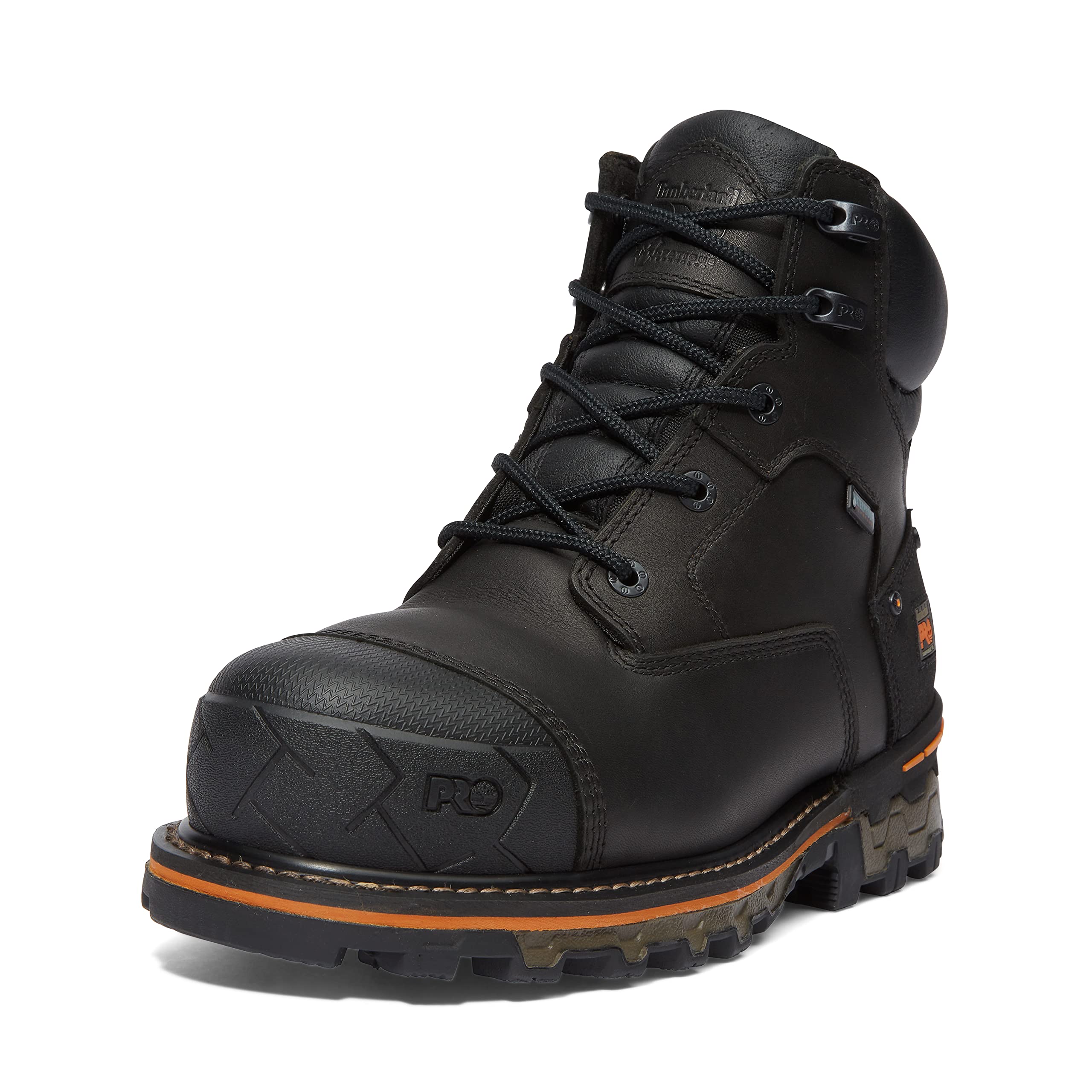
The Timberland PRO Boondock uses an anti-fatigue technology midsole that consists of an inverted cone geometry inside the foam. This design absorbs shock at the heel and returns energy during toe-off, mimicking a spring effect without a visible coil. The composite toe is non-metallic, which avoids triggering metal detectors in secure job sites while still providing impact protection.
A marine construction worker reported that this boot is his ninth pair, emphasizing its durability in wet, demanding conditions and its excellent comfort. The boot is fully waterproof and provides outstanding traction on ice when treated with mink oil. Several users mention that the tongue fabric can rub on the shin if tied too tightly, a minor issue solved by folding the tongue fabric inward.
The stock laces are thick and short, which some users replace with longer laces for a better fit. The boot runs true to size for most, though users with very wide feet should consider the wide sizing. For a work boot that combines heavy-duty protection with a noticeable reduction in back fatigue, the Boondock is a reliable choice.
Why it’s great
- Anti-fatigue sole absorbs heel strike shock and returns energy
- Composite toe is lightweight and metal-detector friendly
- Excellent durability for marine construction and wet work
Good to know
- Tongue fabric may rub on shin when laced tightly
- Stock laces are short and thick; replacements recommended
6. Orthofeet Men’s Orthopedic Highline Slip Resistant Leather Boot

The Orthofeet Highline is a leather orthopedic boot that comes with a built-in orthotic insole designed to support the arch and stabilize the heel. This boot is specifically tuned for users with flat feet or plantar fasciitis, conditions that often radiate pain into the lower back. The extra wide toe box allows the metatarsal bones to splay naturally, which improves balance and reduces the need for compensatory back muscle engagement.
A retail worker averaging 18,000 steps per day reported that two days of wearing the Highline boots eliminated their foot pain — they were still tired at the end of the shift, but completely pain-free. Users with flat feet consistently praise how these boots support their arch without feeling aggressive. The non-slip outsole is smooth and stable on polished floors.
Some reviewers note the boot runs about a half size large. The orthotic insole takes up some internal volume, so this extra space is actually desirable for thicker socks. The boot design is more casual and less rugged than a work boot, making it ideal for standing on hard surfaces rather than job sites with heavy debris.
Why it’s great
- Integrated orthotic insole provides targeted arch support
- Extra wide toe box allows natural foot splay
- Out-of-box comfort with no break-in for most users
Good to know
- Runs about half a size large
- Less rugged construction compared to heavy-duty work boots
7. Orthofeet Men’s Orthopedic Ryder Slip-Resistant Dual-Zip Leather Boot

The Orthofeet Ryder is similar to the Highline but adds dual rear zippers for easier entry — a critical feature for users with neuropathy, post-surgical swelling, or limited mobility. The boot includes removable orthotic insoles with multiple layers of cushioning, plus an arch support system that can be further adjusted with separate spacers. The leather upper is soft and compliant, reducing pressure points.
One reviewer recovering from major foot surgery found that the Ryder boots provided the comfort and roominess needed while the zippered back allowed easy wear with a swollen foot. Another user with foot drop reported that the boot works well with lace-attaching AFOs thanks to the metal grommets. The boot is lightweight and slip-resistant, making it safe for daily use in environments like restaurant kitchens or hospitals.
A small quality concern is the zipper pull — one user reported a tang breaking within a month, which was replaced under warranty. The boot fits slightly large, which is actually beneficial for users who need extra insole space. For anyone needing a highly adjustable, easy-on boot that supports the arch and reduces back stress, the Ryder is an excellent choice.
Why it’s great
- Dual rear zippers for incredibly easy on/off
- Adjustable orthotic system with arch spacers
- Lightweight design compatible with AFO braces
Good to know
- Zipper pulls can be fragile; warranty covers replacement
- Runs slightly large
8. Women’s Orthopedic Wide Snow Boots with Arch Support
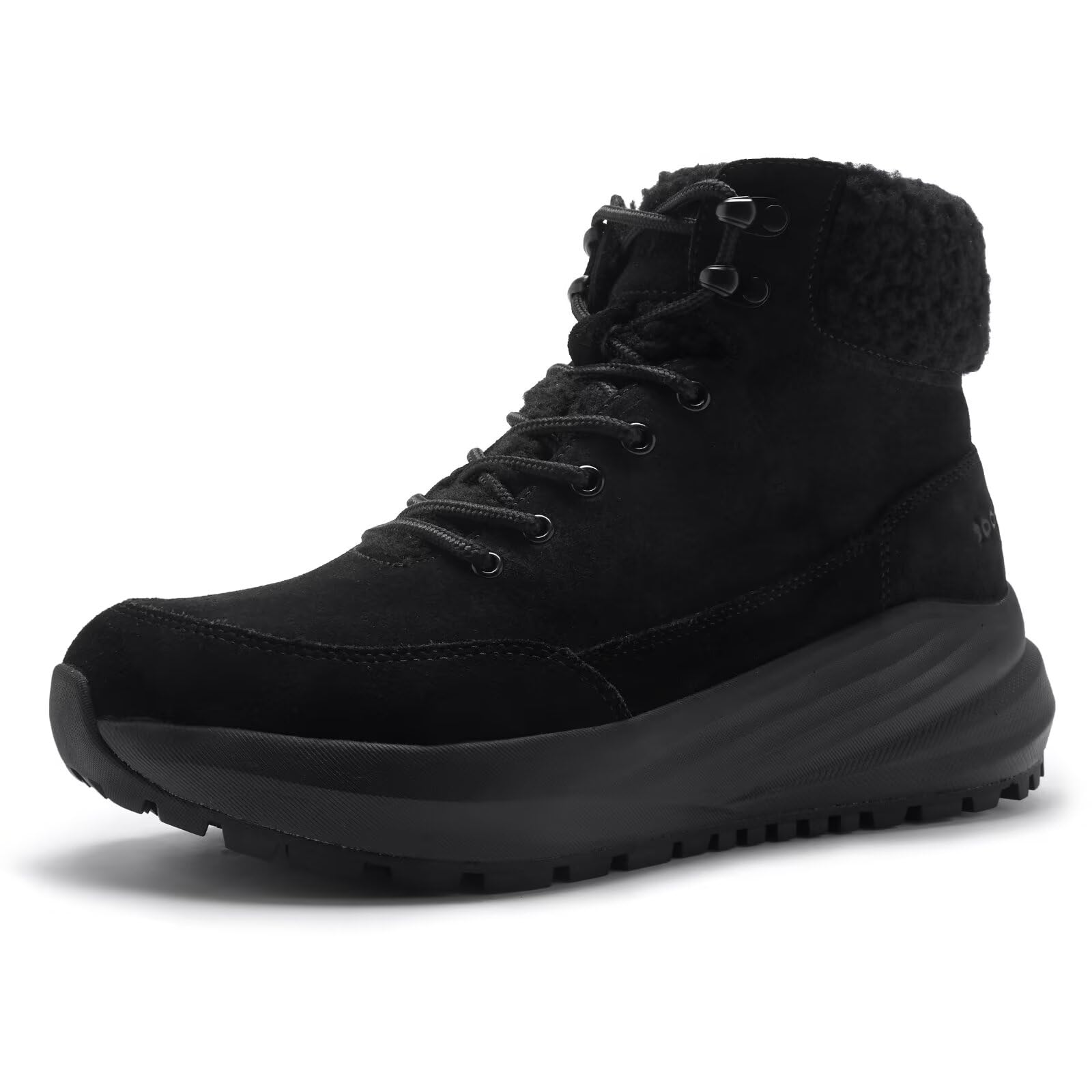
These women’s orthopedic snow boots are designed with a firm arch support and a heel stabilization frame that prevents lateral wobble on icy or slushy surfaces. The interior is lined with fleece for warmth, and the wide toe box accommodates high insteps and bunions. The boot laces up through a mid-ankle shaft, providing a locked-in feel that reduces ankle rolling — a common contributor to back pain when walking on uneven winter terrain.
A reviewer who underwent foot surgery reported that these boots gave her life back post-surgery, citing the firm arch support and heel stabilization as key features that allowed her to walk pain-free for the first time in months. Another user with terrible foot problems called them a “game changer” for their support and stability. The outsole provides good grip in snow and slush, and the boots are lightweight despite their insulation.
The boots are not fully waterproof — they kept feet dry in snow and slush but are not designed for deep puddle immersion. Some users found the ankle area had a slight chafing issue that was resolved by loosening the laces slightly. These boots are specifically built for women, with the arch support positioned correctly for the female foot anatomy.
Why it’s great
- Firm arch support and heel stabilization for walking on uneven surfaces
- Fleece lined and lightweight for winter warmth
- Wide toe box accommodates high insteps and post-surgery feet
Good to know
- Not fully waterproof; best for snow and slush
- Ankle area may require lace adjustment for narrow legs
9. Men’s Orthopedic Mid Trekking Hiking Boot

This budget-friendly trekking boot offers a cushioned orthotic sole and mid-ankle support at an entry-level price point. The footbed has a defined arch contour that provides more structure than a flat sneaker, and the outsole uses a multi-directional tread pattern for decent grip on trail surfaces. For someone looking to test whether a supportive boot helps their back pain without a large investment, this boot is a reasonable starting point.
Several reviewers report that the boots are comfortable for walks and all-day wear, with one user specifically noting their feet felt good after long hours. The boot fits true to size and provides adequate ankle stability for light hiking and daily errands. However, there are significant durability concerns — one user reported the toe blew out after two months of every-other-day wear, suggesting the materials are not suited for heavy daily use.
Other reviews praise the value and comfort, with notes that the boots look good and feel supportive out of the box. The build quality is clearly lower than the premium options, with the upper material and sole bonding being the primary weak points. For casual, occasional wear where back pain relief is the goal, this boot works well — for daily construction or long-distance hiking, the durability deficit is a real risk.
Why it’s great
- Cushioned orthotic sole provides immediate support for back pain
- True-to-size fit with good ankle stability
- Entry-level price for testing supportive boots
Good to know
- Durability concerns — toe may wear through within months
- Not suitable for heavy daily use or rugged terrain
FAQ
How does boot arch support actually reduce lower back pain?
Are rigid work boots better or worse for back pain?
Can a wide toe box help with back pain?
Final Thoughts: The Verdict
For most users, the best boots for back pain winner is the Gravity Defyer G-DEFY Sierra because it combines a proven mechanical shock-absorbing sole with interchangeable insoles for custom arch support. If you want maximum spinal shock reduction, grab the Z-CoiL Outback — its coil spring technology is unmatched for severe sciatica or hip pain. And for a lightweight, sneaker-like feel that works across terrain, nothing beats the Merrell Moab 3 Tactical Zip.