
Our readers keep the lights on and the weekend projects moving. As an Amazon Associate, I earn from qualifying purchases.
A firefighter’s boot isn’t just footwear—it’s a critical piece of PPE that must withstand extreme heat, sharp debris, slippery surfaces, and hours of relentless standing. Choosing a pair that blends safety, all-day comfort, and durability can mean the difference between a productive shift and a painful one.
I’m Rikta — the co-founder and writer behind FitlyFast. I’ve spent hundreds of hours analyzing the technical specifications, safety certifications, and real-world performance data of industrial and tactical footwear to help you make a truly informed decision.
Whether you’re looking for waterproofing, puncture resistance, or insulation, this guide breaks down the top-rated models available now for the boots for firefighters category.
How To Choose The Best Boots For Firefighters
Not all heavy-duty boots are built for the unique hazards of firefighting. Before you buy, focus on the three pillars that separate a true fireman’s boot from a standard work boot: safety compliance, thermal resilience, and structural stability.
Safety Certifications & Toe Protection
Look for ASTM F2413-18 (or newer) ratings for impact and compression resistance. A steel toe is the gold standard for crush protection, while some rely on composite toes to reduce weight and avoid conducting heat or cold. Always verify the boot meets NFPA 1971 if you need structural firefighting gear.
Waterproofing & Moisture Management
Firefighters face both standing water and heavy sweat. Gore-Tex liners provide the best balance of waterproofing and breathability. Non-membrane boots may dry faster after a washdown, but they’ll soak through during hose work. A drainage system or vented ankle design can help shed water quickly.
Underfoot Protection & Traction
A puncture-resistant midsole (often flexible stainless steel) is non-negotiable for stepping on nails, glass, or debris at a fire scene. The outsole should be oil- and slip-resistant, with deep lugs for mud, water, and ladder rungs. Vibram and Vibram-style outsoles are common on premium models.
Quick Comparison
On smaller screens, swipe sideways to see the full table.
| Model | Category | Best For | Key Spec | Amazon |
|---|---|---|---|---|
| Danner Acadia 8″ | Premium | All‑day shift stability | Stitchdown, recraftable | Amazon |
| SCARPA Fuego | Premium | Wildland firefighting | Stiff, 2.0 lb per boot | Amazon |
| Kenetrek Wildland Fire 10″ | Premium | Wildland & trail support | 10″ shaft, 7mm nylon midsole | Amazon |
| LOWA Zephyr MK2 GTX | Mid-Range | Lightweight tactical use | Re‑soleable, Gore‑Tex | Amazon |
| ROCKY S2V Tactical | Mid-Range | Duty & station wear | S2V drainage system | Amazon |
| Danner Kinetic 8″ | Mid-Range | Everyday comfort first | Gore‑Tex, no break‑in | Amazon |
| Georgia Boot Logger GTX | Mid-Range | Wet, cold weather work | Gore‑Tex, insulated | Amazon |
| Merrell Moab 3 8″ | Budget | Light duty & training | Weight: 1.5 lb per boot | Amazon |
| ROCKY Side Zip Jump | Budget | Value polishable shine | Side zipper, 4.5 lb pair | Amazon |
In‑Depth Reviews
1. Danner Men’s Acadia 8″ Boot

The Danner Acadia sits at the top for a reason—its stitchdown construction and full-grain leather body make it arguably the most rebuildable firefighter boot on the market. The Gore-Tex liner keeps water out during hose operations, while the Vibram Kletterlift outsole provides reliable grip on wet apparatus floors and ladder rungs.
Berry compliance means the Acadia is made in the USA with domestic materials, a strong consideration for department procurement standards. Wearers report a break-in of roughly a week to a month, after which the stiff leather molds perfectly to the foot.
The boot runs narrow and large—order down a half to full size and up one width. No insole ships with the boot, so plan on adding one for arch support. After break-in, users log years of service before a recraft is needed.
Why it’s great
- Factory recraftable for extended life
- Stitchdown platform provides superior stability
- Quiet, non-squeaky soles on tile
Good to know
- No insole included; only a plastic arch shank
- Long break-in for some users (1 month)
- Runs narrow, requires sizing adjustment
2. SCARPA Fuego Hiking Boots

SCARPA designed the Fuego specifically for wildland firefighting—the stiff sole and dense suede upper protect the foot from shifting shale, hot ash, and sharp brush. The boot feels like a ski boot out of the box, but that rigidity translates to unmatched support when carrying a heavy pack over uneven terrain.
Almost every user recommends going up a half to full size from your normal measurement. The stock insole is thin with almost no padding, so an aftermarket insert is essential for all-day comfort on the fire line. Once broken in (expect a full season), the heel and ankle lock down without hot spots.
Stitching and material quality are flawless, with no reports of delamination after heavy use. The lack of a waterproof membrane is intentional—they drain quickly when wet, a distinct advantage for wildland crews who cross creeks regularly.
Why it’s great
- Extremely stiff sole reduces fatigue on uneven ground
- Thick ankle padding protects during brush busting
- Durable suede resists abrasion from debris
Good to know
- No padded insole included; replacement needed
- Very long break-in (3+ months for full flex)
- Runs small and narrow; order up one full size
3. Kenetrek Wildland Fire 10″
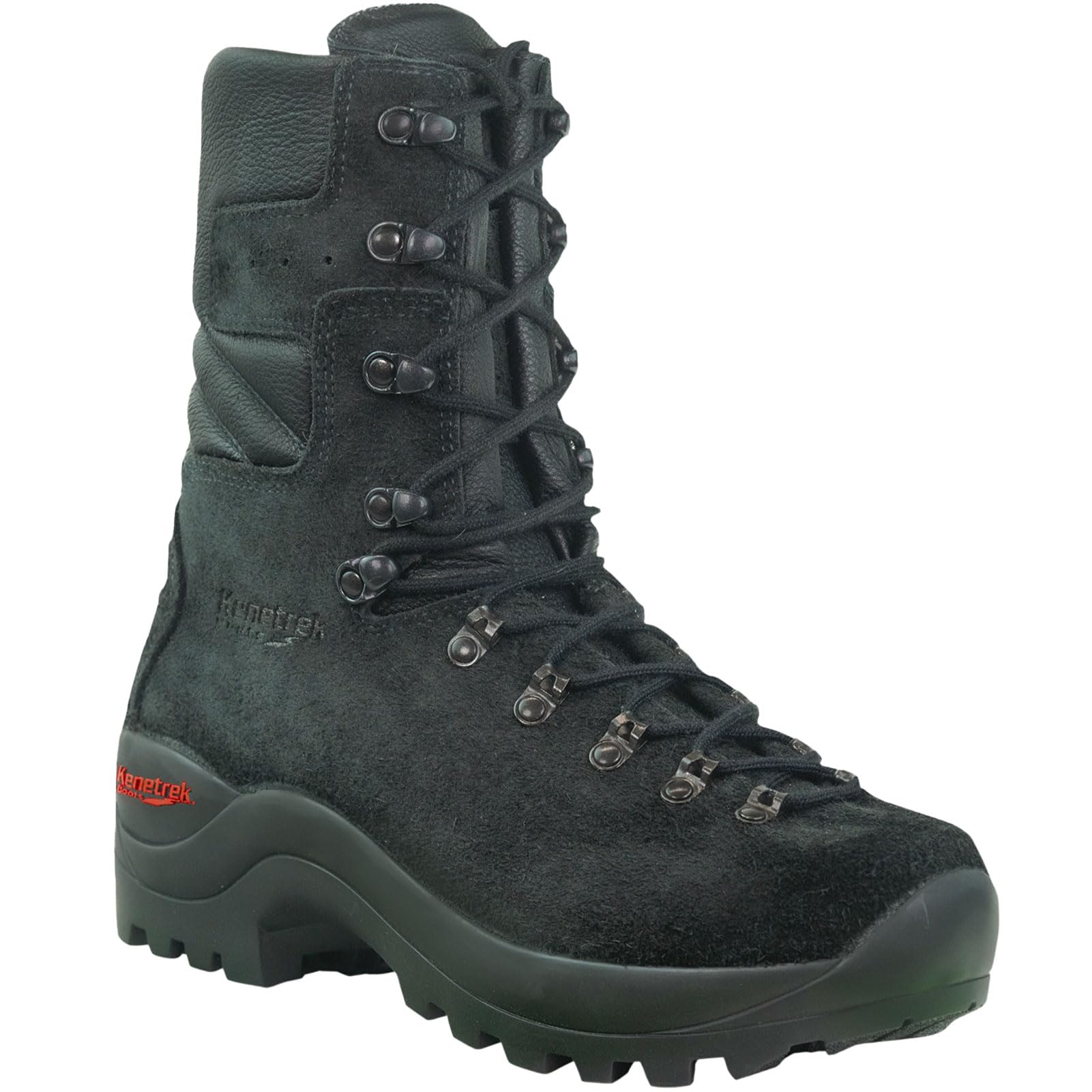
The Kenetrek Wildland Fire boots strike a near-perfect balance between the lightness of a hiker and the rugged support of a logger boot. The 10-inch shaft provides excellent ankle protection without feeling clunky. The 7mm nylon midsole delivers torsional rigidity ideal for steep, uneven terrain.
Many firefighters on wildland crews report zero break-in needed, with the stock insoles offering enough support to wear right out of the box. The heel is slightly taller than traditional logger designs, which helps with downhill braking on loose soil and scree.
After three years and 200–250 miles, some users found the sole support began to degrade, which is a reasonable lifespan for such an active use case. The included laces are thin—upgrading to Kevlar laces is a smart move for added durability.
Why it’s great
- No break-in required for most users
- Tall 10-inch shaft provides superior ankle support
- Blends hiker lightness with logger toughness
Good to know
- Stock laces are thin; consider replacing with Kevlar
- Sole support may degrade after 200+ miles
- Runs slightly long and wide for some foot shapes
4. LOWA Zephyr MK2 GTX Mid
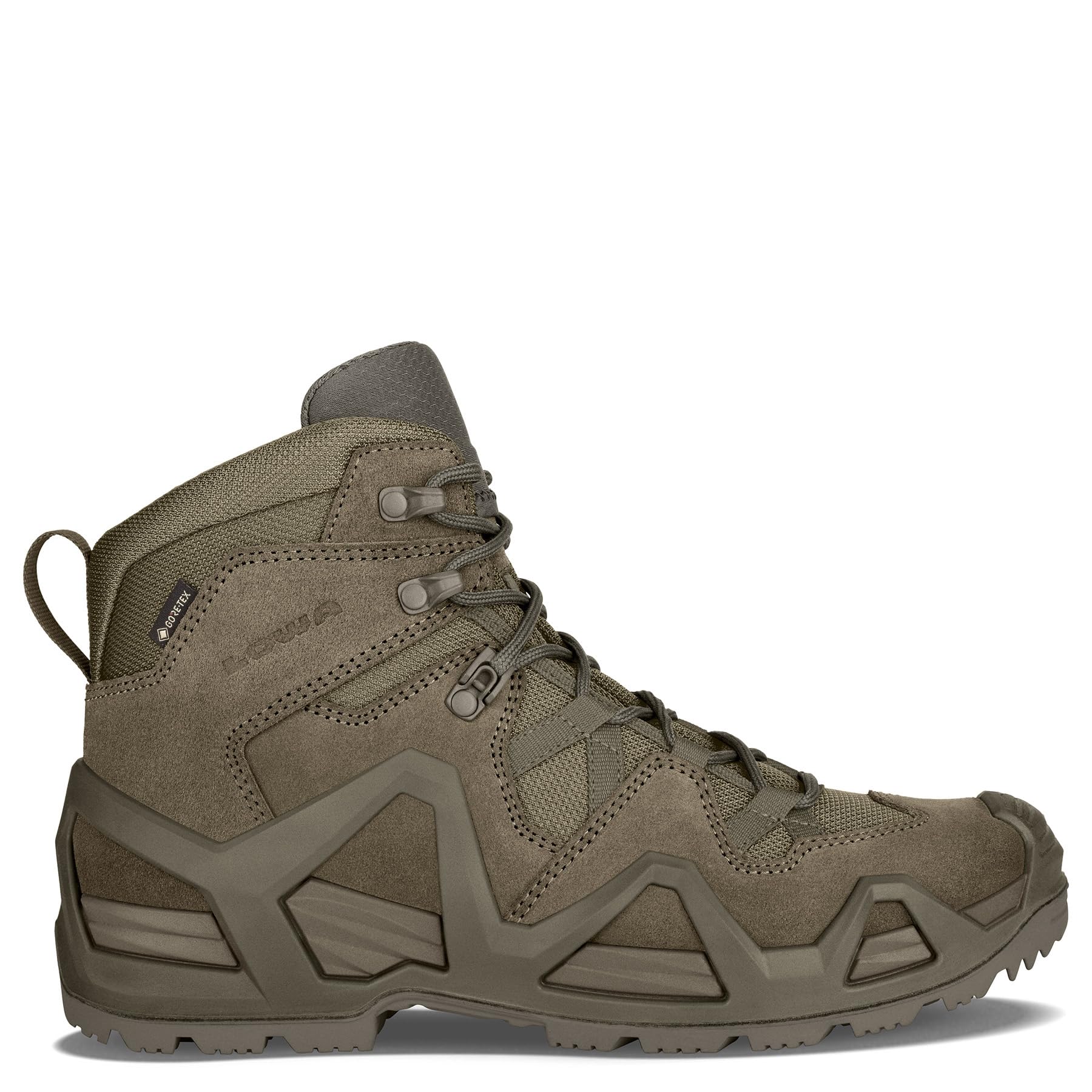
The LOWA Zephyr MK2 GTX is a standard-issue tactical boot in many military and law enforcement units, and its design translates well to firehouse duty. It features a re-soleable construction (unlike many lightweight boots) and a Gore-Tex membrane that keeps feet dry during exterior operations.
One of the biggest advantages is weight—the Zephyr is noticeably lighter than traditional firefighting leathers, reducing fatigue on long shifts. The rubber outsole is hard and durable, though slightly less grippy on wet, polished surfaces than softer compounds.
Fit is consistent and accommodating. Customs or shipping delays have been reported with import orders, so buying from a reliable domestic seller is recommended. Users who have owned multiple pairs cite the Zephyr as the benchmark for high-speed tactical footwear.
Why it’s great
- Re-soleable construction extends boot life
- Very lightweight for its protection level
- Proven durability from infantry and LE users
Good to know
- Less grip on wet smooth surfaces vs. softer rubber
- Customs issues with international shipments
- Not NFPA 1971 certified for structural fire
5. ROCKY S2V Tactical Military Boot

The ROCKY S2V has been a staple for military and corrections personnel for years, and its reputation holds for fire station duty. The S2V (socks-to-vents) drainage system allows water to exit quickly after a dousing, making it a solid choice for hose line work and decon washdowns.
The boot fits comfortably out of the box with virtually no break-in needed. The outsole is soft and quiet on tile floors, though that softness means it wears faster—some users report the sole needing replacement after a year of daily wear. The boot also tends to squeak on smooth surfaces.
It’s a mid-range option that delivers strong value for departments needing a reliable daily driver. The black version fits stiffer than the tan variant, so try the exact color and size you intend to buy if possible.
Why it’s great
- S2V drainage system moves water out fast
- Comfortable immediately, no break-in required
- Proven track record from military deployments
Good to know
- Soft sole wears down within a year on concrete
- Audible squeaking when walking on tile
- Black version fits stiffer than tan
6. Danner Kinetic 8″ Waterproof Tactical

The Danner Kinetic 8″ combines a polishable full-grain leather toe with a ripstop nylon upper for breathability and reduced weight. The Gore-Tex liner provides reliable waterproofing, though some users report the membrane loses effectiveness after about a year of heavy use.
What sets the Kinetic apart is its out-of-the-box comfort: the dual-density footbed and cushioned midsole make it feel like a sneaker from the first wear. This is a huge advantage for firefighters who need immediate comfort without a painful break-in period.
The stock laces are a known weak point—they fray within the first week. Replacing them with paracord or Kiwi laces solves the issue. The outsole tread holds up well over time, often outlasting the waterproofing.
Why it’s great
- Zero break-in, feels like a sneaker
- Polishable toe maintains a sharp uniform look
- Lightweight with excellent heel cushioning
Good to know
- Stock laces fray quickly; replace immediately
- Waterproofing may fade after one year
- Runs warm in summer months
7. Georgia Boot Logger GORE-TEX Work Boot
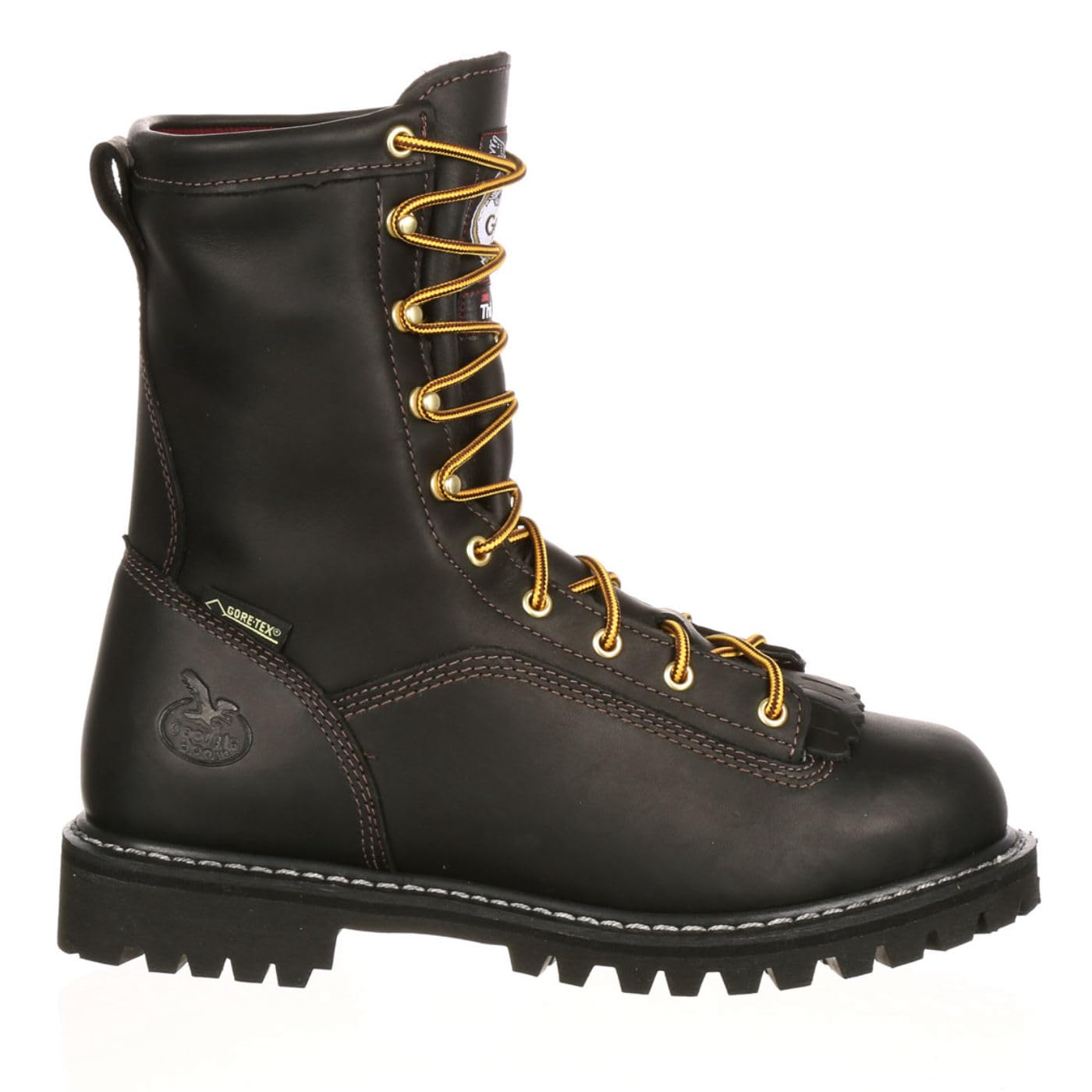
The Georgia Boot Low Heel Logger offers a classic welted combat boot construction at a more accessible price point than many premium competitors. The Gore-Tex liner and insulation make it a strong choice for cold-weather station work and overnight incidents.
The steel shank provides excellent arch support and corrects step fatigue during long stands on concrete. The leather is slightly thinner than Danner’s offering, and the stitching is rougher, but the boot remains fully waterproof and stable after six months of daily use.
Break-in is longer—roughly two weeks of stiff ankles before the leather softens. The boot runs slightly wide, so those with narrow feet may need to size down. It’s heavier than most mid-range options, but the trade-off is solid durability for the price point.
Why it’s great
- Gore-Tex liner and insulation for cold weather
- Steel shank reduces foot fatigue on hard surfaces
- Welted construction allows resoling
Good to know
- Long break-in with very stiff ankles
- Leather is thinner than premium Danner models
- Heavier than most mid-range tactical boots
8. Merrell Moab 3 8″ Tactical Zip Waterproof

The Merrell Moab 3 8″ Tactical is built on the acclaimed Moab hiking platform, offering a sneaker-like feel in a duty boot package. The side zipper aids quick on/off, though users note the boot still requires lacing before zipping for a secure fit. It’s an excellent choice for lighter duty or training scenarios.
Weight is a standout feature—at around 1.5 pounds per boot, it’s significantly lighter than leather firefighting boots. The cushioning is plush and supportive for 8+ hour shifts on pavement or woodland trails. Sizing runs large; many users order a half to full size down.
The waterproof membrane works well in rain and light water exposure, but the boot runs very hot and non-breathable in warm conditions. A non-waterproof version would be welcome for summer use. The side zipper doesn’t allow entry without lacing, limiting its emergency donning speed.
Why it’s great
- Extremely lightweight reduces leg fatigue
- Plush cushioning feels like athletic sneakers
- Good traction on pavement and packed trails
Good to know
- Runs very hot; poor breathability
- Side zipper requires laces for snug fit
- Sizing is inconsistent; try a half size down
9. ROCKY Side Zipper Jump Boot

The ROCKY Side Zipper Jump Boot is a budget-friendly entry that doesn’t compromise on a professional appearance. The pre-shined toe takes a polish well, making it a good option for station wear, inspections, and ceremonial use.
Comfort is a high point—the boot reduces foot and lower back pain even after 5–6 days of weekly wear. The fit accommodates wide feet better than many narrow-last designs, and the weight is manageable at 4.5 pounds for the pair.
The side zipper is short, making the boot difficult to put on and take off compared to zippers on higher-end models. The upper ankle area runs narrow, and the heel area lacks cushioning. Adding a supportive insole and breaking in the leather can mitigate these issues.
Why it’s great
- Pre-shined toe polishes to a high gloss
- Reduces foot and lower back pain during shifts
- Wide-foot friendly and comfortable
Good to know
- Side zipper is too short for easy entry/exit
- Lacks arch support; needs an insole replacement
- Narrow in the upper ankle area
FAQ
What is the most important safety standard for firefighter boots?
How often should I replace my firefighting boots?
Can I use the same boots for wildland and structural firefighting?
Final Thoughts: The Verdict
For most users, the boots for firefighters winner is the Danner Acadia 8″ because its stitchdown construction, Gore-Tex waterproofing, and recraftable design deliver the best combination of safety and longevity. If you need a stiff, wildland-specific boot with minimal break-in, grab the Kenetrek Wildland Fire 10″. And for a budget-friendly option that handles station wear and inspections while keeping your feet comfortable, the ROCKY Side Zipper Jump Boot is a solid entry point.