
Our readers keep the lights on and the weekend projects moving. As an Amazon Associate, I earn from qualifying purchases.
Every step with a heel spur can feel like a needle pressing into the bottom of your foot. The sharp, stabbing pain in the heel disrupts your gait, limits your daily activity, and turns simple tasks like walking or standing into a test of endurance. Finding footwear that provides the right combination of deep heel cushioning, rigid arch support, and a stable platform is not a luxury—it is a medical necessity for managing this condition.
I’m Rikta — the co-founder and writer behind FitlyFast. I have spent countless hours analyzing the biomechanics of heel pain, studying customer feedback on support footwear, and comparing the specific construction details—heel counter stiffness, midsole density, insole depth, and outsole shock absorption—that separate a therapeutic boot from a decorative one.
This guide focuses exclusively on footwear designed to mitigate the impact and inflammation associated with plantar fasciitis and heel spurs. After reviewing dozens of models and filtering for arch support, cushioning technology, and real-world relief reports, I have identified the seven most effective options available. These are the best boots for heel spurs you will find right now.
How To Choose The Best Boots For Heel Spurs
Selecting the right boot for a heel spur involves more than grabbing a pair with a thick sole. You need to evaluate support architecture, material density, and outsole geometry to ensure each step absorbs shock rather than transferring it to the inflamed heel bone. Focus on these three factors during your search.
Heel Counter Stiffness and Cushion Depth
The heel counter is the rigid cup at the back of the boot that cradles your calcaneus. A flimsy counter collapses under load, allowing the heel to move sideways and aggravate the spur. Look for a firm, molded plastic or reinforced counter that keeps your heel locked in place. The cushioning directly under the heel should be at least 10–15 mm thick in a responsive material like RE-ZORB, EVA foam, or polyurethane gel.
Arch Support Profile and Insole Accommodation
Heel spurs are mechanically linked to tight plantar fascia. A boot with a built-in medial arch support that rises at least 15–20 mm helps reduce tension on the fascia and offloads the heel bone. The insole should be removable so you can replace it with a custom orthotic or a more aggressive arch booster if your practitioner recommends one. The Orthofeet line, for example, includes fitting spacers and an Arch Booster accessory in the box.
Outsole Stability and Shock Dissipation
The outsole must provide a wide, flat base to prevent ankle rolling, which shifts weight unevenly onto the heel. Look for channels or grooves cut into the rubber that compress on impact, dissipating vertical force before it reaches the heel. The Ryka Devotion X Max RS and the OrthoComfoot mid boots both feature compression zones in the outsole specifically designed to lower deceleration forces during heel strike.
Quick Comparison
On smaller screens, swipe sideways to see the full table.
| Model | Category | Best For | Key Spec | Amazon |
|---|---|---|---|---|
| Orthofeet Women’s Carmel Hiking Boot | Hiking Boot | Waterproof all-day hiking relief | Ortho-Cushion + Arch Booster | Amazon |
| Orthofeet Women’s Wander Slip-On | Casual Sneaker | Hands-free everyday wear | Removable orthotic + 3 fit spacers | Amazon |
| OrthoComfoot Women’s Mid Hiking Boots | Hiking Boot | Lightweight trail cushioning | Shock-absorbing EVA midsole | Amazon |
| Orthopedic Business Leather Dress Shoe | Dress Shoe | Workplace formal support | Wingtip oxford with arch support | Amazon |
| Ryka Devotion X Max RS Walking Shoes | Walking Shoe | High-mileage fitness walking | Full-length RE-ZORB cushion | Amazon |
| OrthoComfoot Men’s Mid Trekking Hiking Boots | Hiking Boot | Rugged outdoor ankle support | Ankle-high orthopedic build | Amazon |
| Men’s Orthopedic Road Running Shoes | Running Shoe | Budget-conscious daily walking | Spacious toe box + arch support | Amazon |
In‑Depth Reviews
1. Orthofeet Women’s Carmel Hands-Free Waterproof Hiking Boot
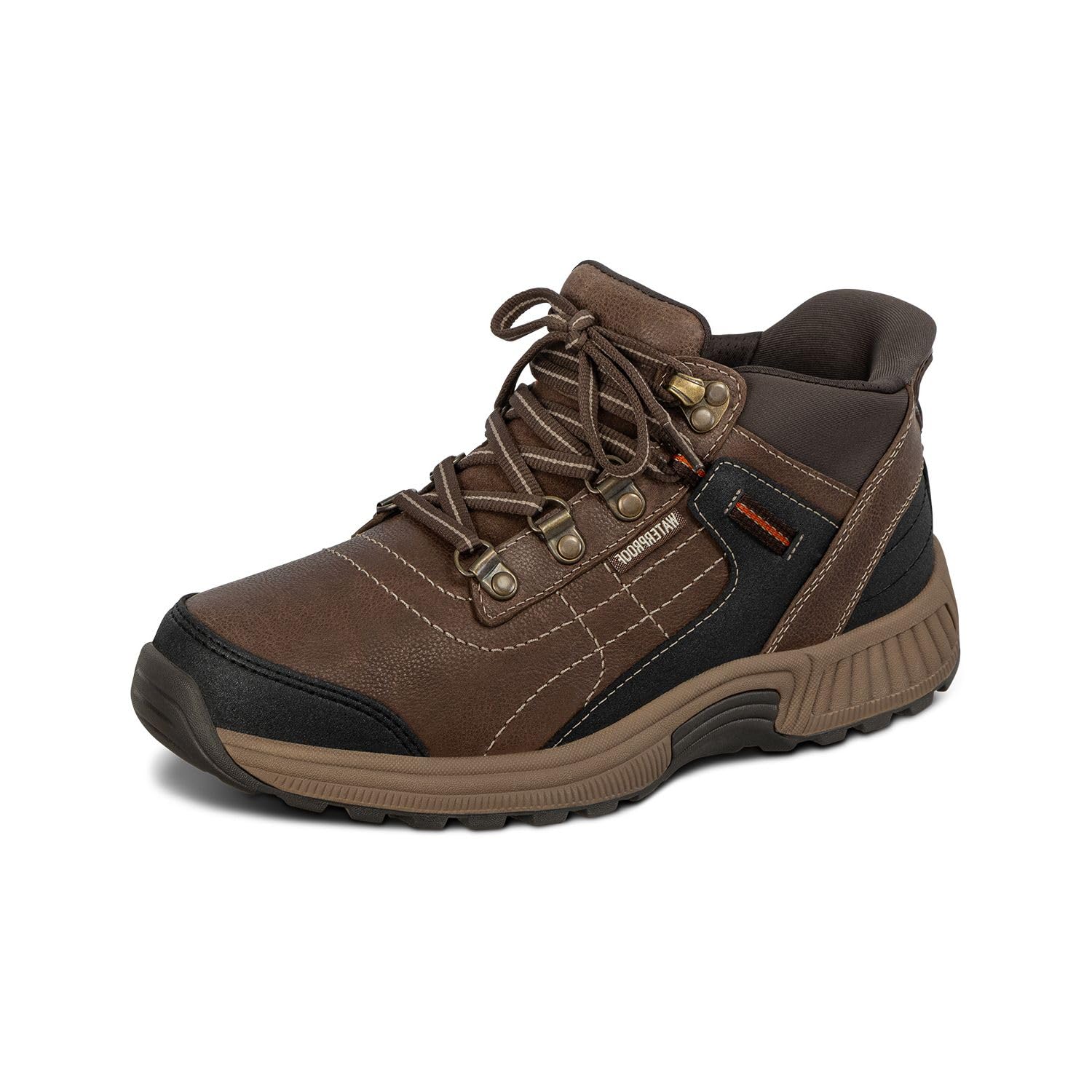
The Orthofeet Carmel is the highest-performing boot in this review because it combines an orthopedic-grade Ortho-Cushion system with true waterproof leather and a slip-resistant outsole. The built-in orthotic insole provides substantial arch elevation, and the included Arch Booster accessory lets you increase medially support without buying a separate insert. The hands-free slip-on design uses a stretch collar and external heel pull tab, which reduces the need to bend over—a critical feature for anyone with lower body mobility issues.
Customer feedback consistently highlights the roomy toe box and lack of heel slippage once the laces are snug. Multiple reviewers mention wearing these boots for eight-plus hours without any exacerbation of heel pain, even on uneven terrain. The full-length RE-ZORB (or comparable Ortho-Cushion) midsole compresses on heel strike to dissipate shock before it reaches the calcaneal spur.
The only consistent complaint is that the laces are unnecessarily long and that the boot is not truly slip-resistant on wet polished cement. For hiking, grass, and everyday walking on pavement, the traction is more than adequate. This boot is the single most complete solution for women who need waterproofing, arch support, and spur relief in one package.
Why it’s great
- Ortho-Cushion insole plus Arch Booster for custom support depth
- Waterproof leather keeps feet dry in wet conditions
- Hands-free slip-on design reduces bending stress
Good to know
- Laces are longer than necessary
- Not completely slip-resistant on wet indoor floors
2. Orthofeet Women’s Wander Hands-Free Leather Slip-On Casual Sneaker
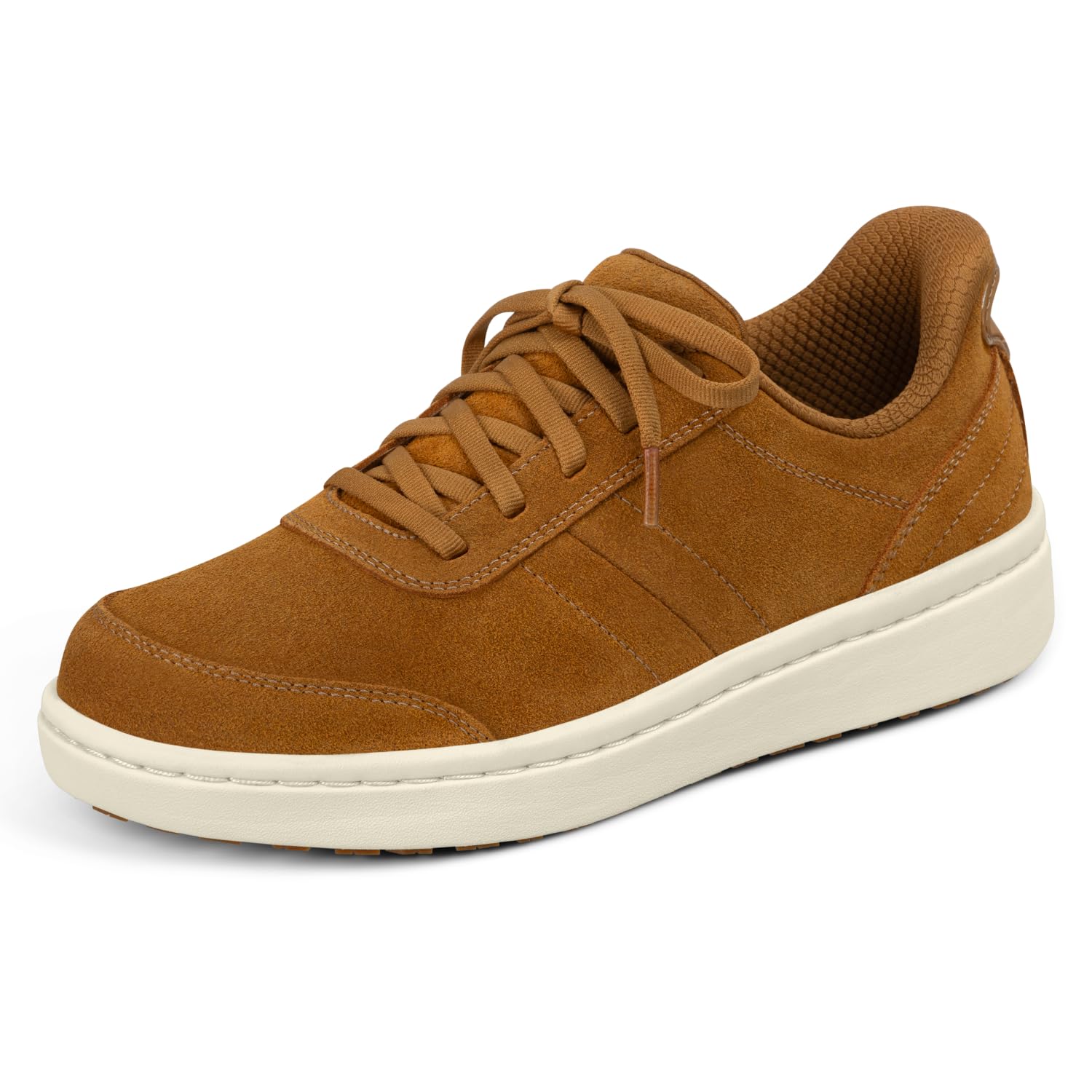
The Orthofeet Wander Slip-On bridges the gap between casual sneaker and medical orthotic with a hands-free entry system that does not compromise midfoot security. The upper is soft, flexible leather that molds to the foot without creating pressure points over inflamed tissue. Inside, the Ortho-Cushion insole is removable, and the boot ships with three fitting spacers plus the Arch Booster, allowing you to fine-tune the volume and arch height to offload your heel spur effectively.
Users with high arches and narrow heels report that the Wander manages to secure the heel without slipping, thanks to a padded collar that extends up above the ankle bone. The wide toe box prevents toe crowding, which can indirectly shift gait and increase heel loading. The outsole provides a stable platform for walking on pavement and light trails, making this shoe suitable for daily errands, retail work, or long periods of standing.
The primary trade-off is that the hands-free design may not provide enough lockdown for high-impact activities like running or vigorous hiking. Additionally, the heel cup depth is moderate, and users with very shallow heels may still experience some lift. For everyday spur management in a sneaker format, this model delivers exceptional value at a mid-range price point.
Why it’s great
- Ortho-Cushion system with removable insole and Arch Booster
- Hands-free entry with padded collar for heel lockdown
- Wide toe box reduces forefoot pressure and gait shifts
Good to know
- Heel cup may be too shallow for some foot shapes
- Not designed for high-impact running or heavy trail use
3. OrthoComfoot Women’s Orthopedic Waterproof Mid Trekking Hiking Boots
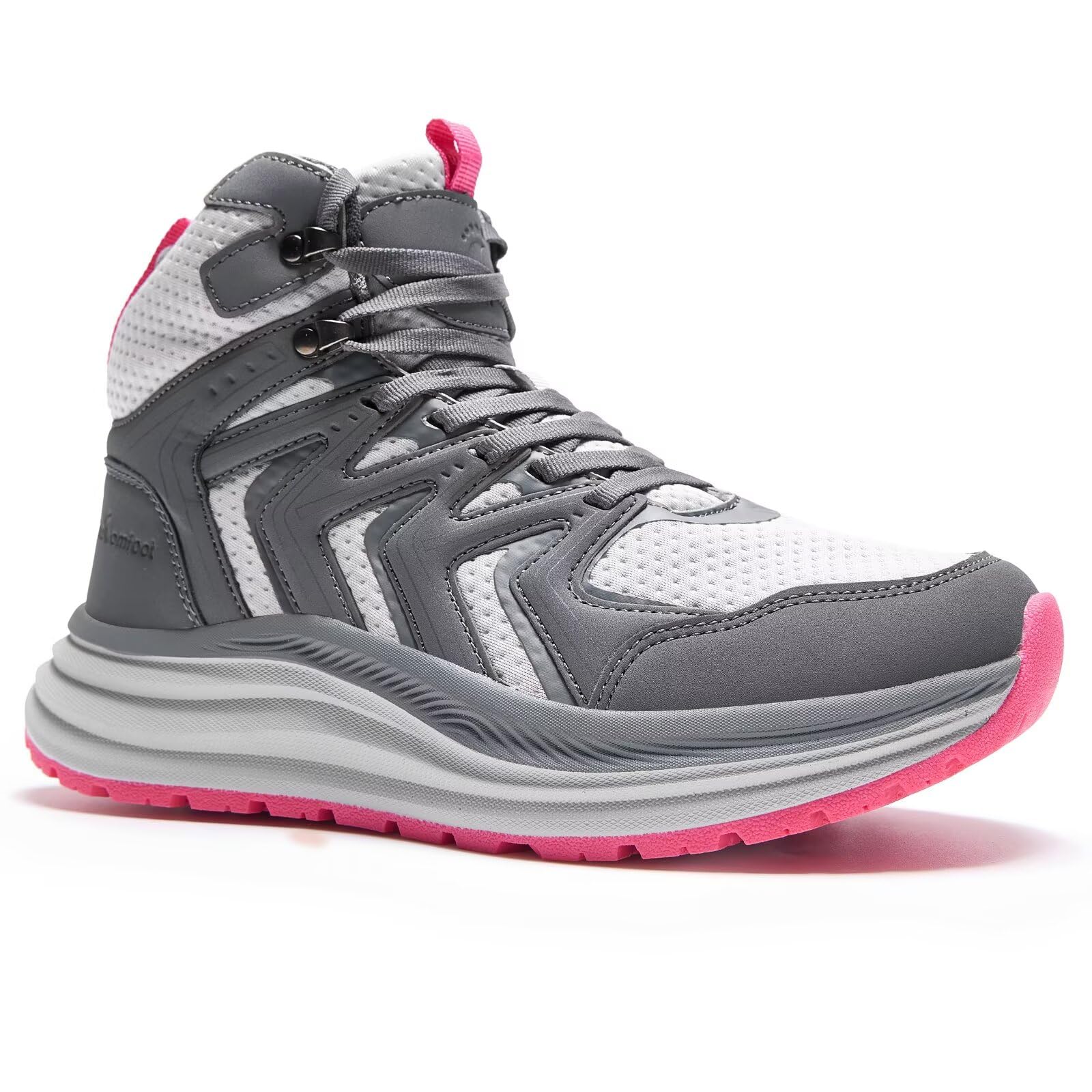
The OrthoComfoot Women’s Mid Trekking Boot delivers impressive shock attenuation at a mid-range price without sacrificing ankle stability. The EVA midsole is thick enough to provide a soft landing during heel strike, while the external heel counter adds enough rigidity to prevent excessive pronation—a common contributor to plantar fascia strain. The boot is listed as waterproof, and the upper uses a combination of synthetic mesh and leather overlays for breathable protection.
Reviewers with flat feet and heel spur diagnoses report being able to double their walking distance after switching to this boot. The arch support is built into the insole rather than relying solely on midsole shaping, which means the support is removable and can be upgraded. The toe box is roomy enough to accommodate foot swelling during long hikes without creating friction over the heel.
Durability is the main area of uncertainty. A small number of users note that the materials feel less substantial than premium leather boots, and there are isolated reports of stitching separation after several months of heavy use. For moderate use—daily walks, light hiking, and standing—the boot holds up well. If you need a boot that will survive weekly trail missions all year, consider the higher-priced Orthofeet Carmel.
Why it’s great
- Thick shock-absorbing EVA midsole reduces heel impact
- Waterproof upper with breathable mesh and leather overlays
- Removable arch-support insole allows custom orthotic use
Good to know
- Long-term durability concerns with stitching and materials
- Not as rigid as higher-end leather hiking boots
4. Orthopedic Business Leather Dress Shoes
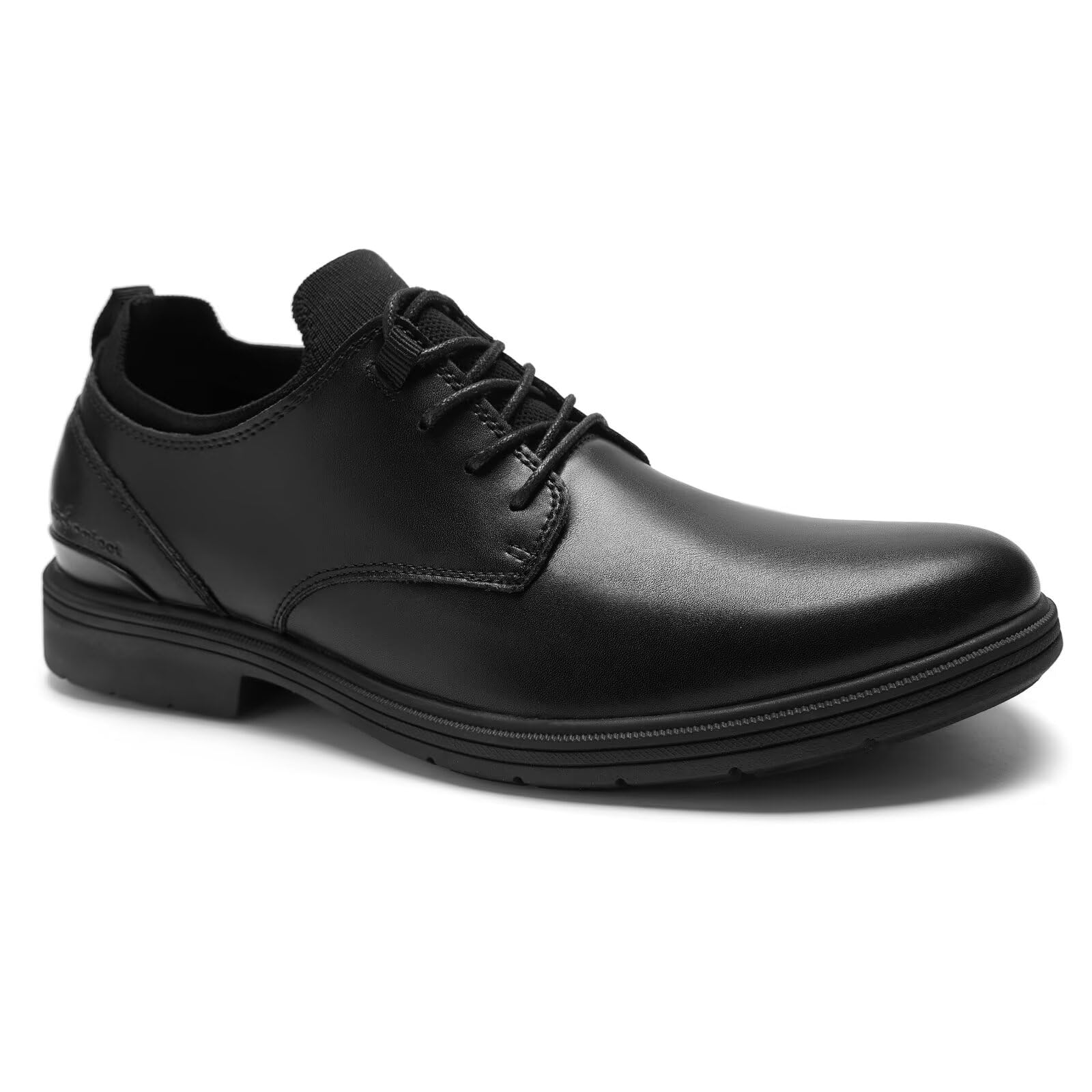
Finding a formal oxford that conceals orthopedic support without looking like a medical shoe is difficult, but this business leather wingtip manages the feat. The shoe uses a classic Goodyear-welted leather upper with a genuine cap-toe design, yet the internal construction includes a supportive orthotic insole and a cushioned midsole that softens heel impact. The arch support is pronounced enough for flat-footed users and those with plantar fasciitis-related spurs.
User reviews from restaurant managers and office workers confirm that this shoe allows all-day standing and walking without the typical heel-stabbing sensation. The leather is stiff initially but breaks in over a few wears without creating pressure blisters over the spur site. The rubber outsole includes mild traction and a slight heel raise that shifts some load away from the calcaneus.
The main compromise is breathability: the leather upper does not ventilate as well as mesh, so prolonged wear in hot environments may cause moisture buildup. Also, the arch support, while good, is not as customizable as the Orthofeet system—you cannot adjust the height or add spacers. For professional environments where dress code prohibits athletic wear, this is the best option for managing heel spur pain discreetly.
Why it’s great
- Classic wingtip oxford appearance with hidden orthopedic support
- Built-in arch support with cushioned midsole for heel relief
- Roomy toe box accommodates orthotics and foot swelling
Good to know
- Leather upper limits breathability in warm conditions
- Arch support is not adjustable or removable
5. Ryka Devotion X Max RS Walking Shoes
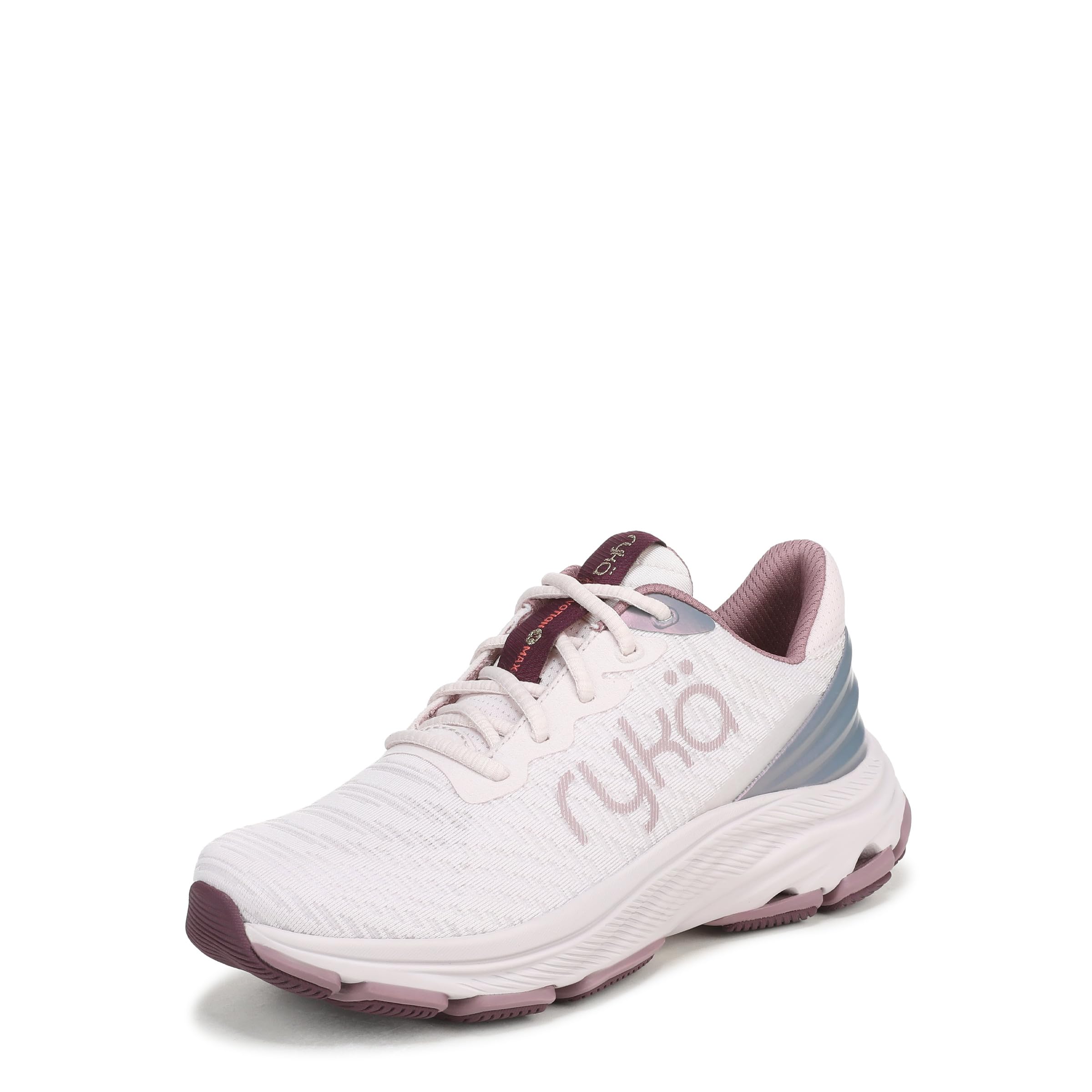
The Ryka Devotion X Max RS is lab-tested specifically for high-performance fitness walking, and its full-length RE-ZORB cushioning is designed to reduce deceleration forces during heel strike. At 244g per shoe, it is the lightest option here, making it ideal for walkers who log several miles daily. The 10mm heel-to-toe drop encourages a mid-foot or forefoot strike pattern, which can offload the heel spur entirely if you adjust your gait slightly.
Multiple users transitioning from Hoka Bondi and On shoes report that the Ryka Devotion offers superior arch support and a wider toe box, both of which reduce side-to-side foot movement that aggravates spur pain. The removable insole is compatible with custom orthotics, and the anatomical heel cradle provides extra support for the rearfoot. The outsole compression channels actively absorb shock rather than just transmitting it through the midsole.
The trade-off is that the lightweight mesh upper lacks the ankle support of a mid or high-top boot. If you need lateral stability for trail running or uneven ground, this shoe will not provide that. It is best reserved for smooth, predictable surfaces—pavement, track, gym floors—where you want maximum cushion and minimum weight.
Why it’s great
- Full-length RE-ZORB responsive cushioning proven to reduce impact forces
- Lightweight at 244g, ideal for high-mileage fitness walking
- Roomy toe box with removable insole for custom orthotics
Good to know
- Low-top design offers minimal ankle support
- Best suited for smooth, predictable surfaces
6. Men’s Orthopedic Mid Trekking Hiking Boots
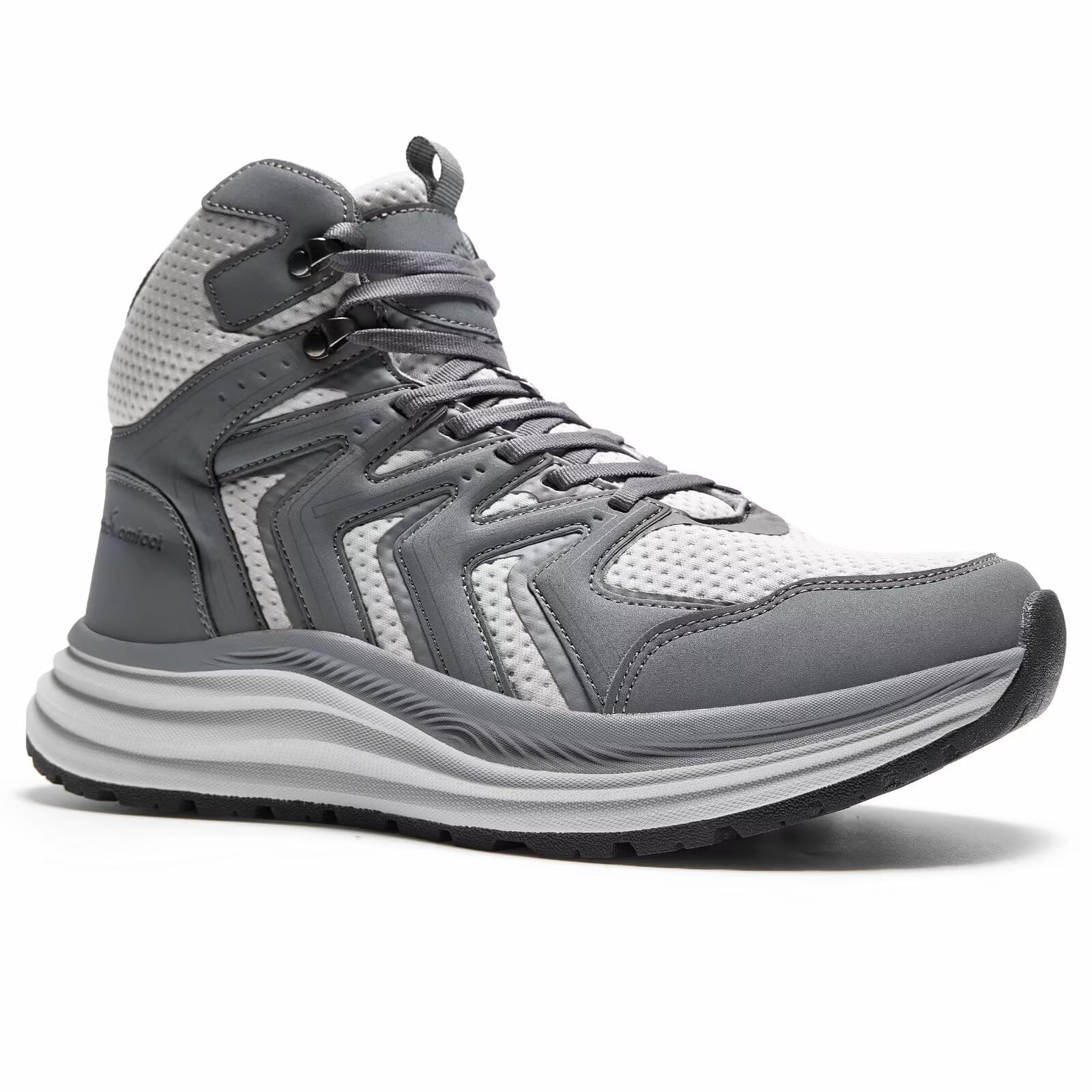
This OrthoComfoot mid-trekking boot is constructed for men who need ankle support without the bulk of a full-height hiking boot. The padded collar rises above the medial and lateral malleoli, which helps prevent ankle rolling that can overload one side of the heel. The insole provides pronounced arch support, and the EVA midsole is thick enough to absorb moderate impact during trail walks.
Users highlight the immediate comfort from the first wear—no extended break-in period—and the fact that the boot accommodates wide feet without pinching. The price point makes it an accessible entry into orthopedic footwear for heel spur management. Several reviewers with plantar fasciitis report significant reduction in morning heel pain after switching to this boot for daily walks.
The durability narrative is split. While many users praise the comfort, a few report that the materials feel low-quality and express concern about the upper tearing near the lace eyelets. If you need a boot for light to moderate use and prioritize comfort and support over hard-trail longevity, this is a solid mid-range choice.
Why it’s great
- Ankle-high build provides lateral stability on uneven terrain
- Arch support and thick EVA midsole comfort from first wear
- Accommodates wide feet without pinching
Good to know
- Material quality concerns reported near lace eyelets
- Better suited for light to moderate use than heavy trail work
7. Men’s Orthopedic Road Running Shoes
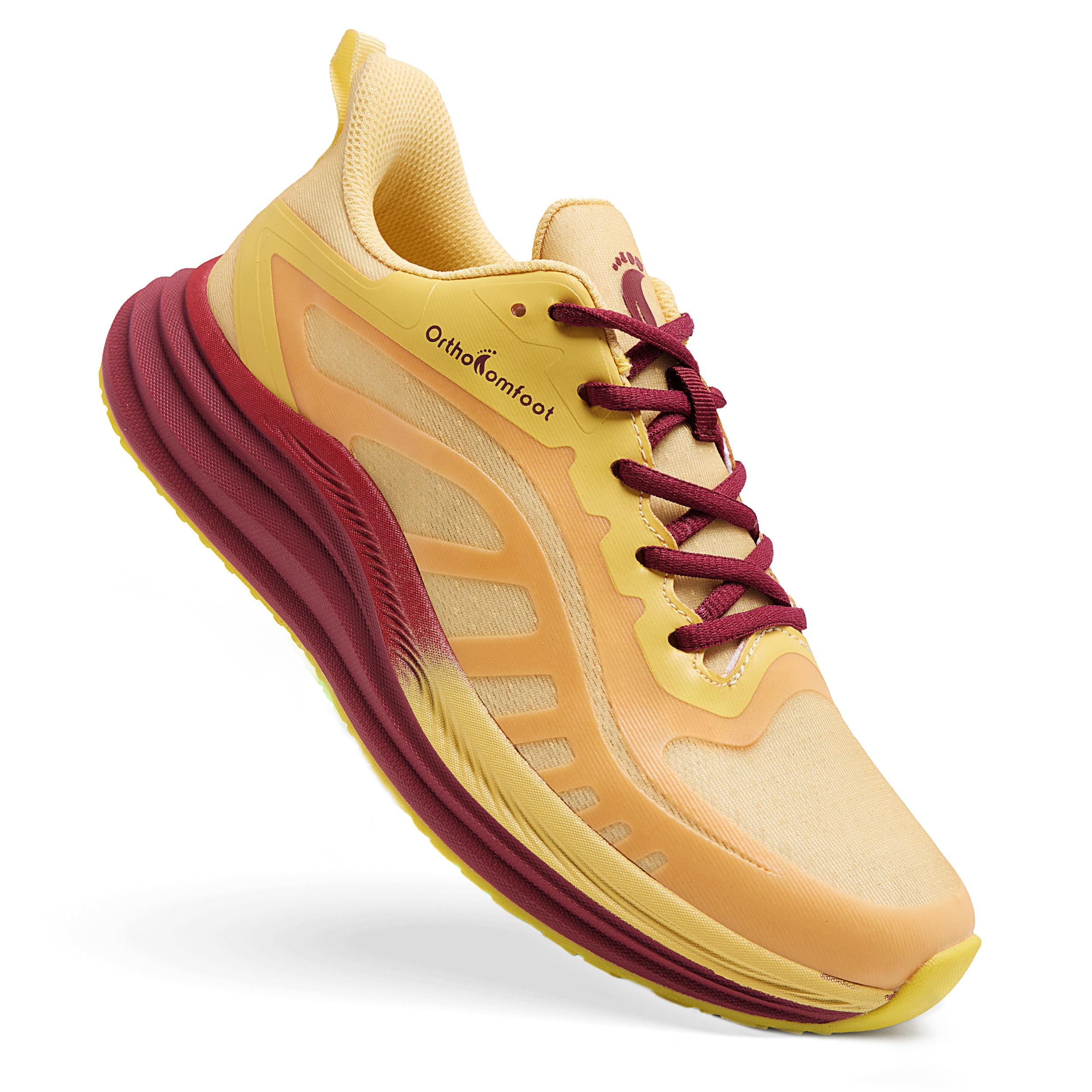
These orthopedic road running shoes are the most budget-friendly option in this review, but they still deliver the arch support and heel cushioning necessary for spur relief. The insole is designed with a visible medial arch rise, and the EVA midsole provides adequate shock absorption for road walking and light jogging. The upper is a breathable mesh that flexes well, and the toe box is notably spacious, which helps prevent toe crowding that can alter gait and increase heel loading.
Customer reviews consistently describe the shoe as comfortable for all-day wear, with multiple users commenting that they no longer need additional orthotics. The lightweight construction (around 10 oz per shoe) reduces fatigue during extended walks. The outsole pattern provides basic traction on dry pavement.
The obvious limitation is the lack of a rigid heel counter or a structured upper. This shoe is best considered a walking sneaker rather than a true boot. It will not provide ankle support or the same level of rearfoot stability as a mid- or high-top boot. For the price, it serves as a reliable everyday shoe for heel spur management on flat surfaces.
Why it’s great
- Built-in arch support and padded heel relieve spur pain
- Wide toe box accommodates orthotics and reduces forefoot pressure
- Lightweight and breathable mesh upper for all-day comfort
Good to know
- Lacks a rigid heel counter for rearfoot stability
- No ankle support; unsuitable for uneven trails
FAQ
Is a high heel-to-toe drop better for heel spurs?
Can I use custom orthotics in any boot with a removable insole?
Does waterproof membrane reduce breathability and cause foot overheating?
Final Thoughts: The Verdict
For most users, the boots for heel spurs winner is the Orthofeet Women’s Carmel Hiking Boot because it combines waterproof leather, the adjustable Ortho-Cushion system with Arch Booster, and a hands-free slip-on design that makes daily wear effortless. If you want a lighter, everyday sneaker with similar adjustability, grab the Orthofeet Wander Slip-On. And for a professional dress shoe that hides orthopedic support without sacrifice, nothing beats the Orthopedic Business Leather Dress Shoes.