
Our readers keep the lights on and the weekend projects moving. As an Amazon Associate, I earn from qualifying purchases.
That stomach-dropping sensation of a foot sliding out from under you on a sheet of black ice is more than just a scare—it’s a signal that your footwear isn’t working for you. The right pair of winter boots uses advanced rubber compounds, aggressive lug patterns, and often proprietary grip technologies to convert a treacherous sidewalk into stable, confident terrain.
I’m Rikta — the co-founder and writer behind FitlyFast. I’ve spent hundreds of hours cross-referencing outsole chemistry, insulation gram weights, and waterproof membrane specs to identify the models that genuinely deliver on their ice-traction claims and keep you safe when pavement turns to glass.
This guide is designed to help you navigate the terrain-specific technology that defines the very best boots for ice, breaking down the measurable specs that separate a secure winter stride from a dangerous slip.
How To Choose The Best Boots For Ice
Not every winter boot can handle a glare-ice parking lot. The difference comes down to a few measurable specs that separate real grip from marketing claims. Focus on these elements to make the right call.
Outsole Rubber Compound
Standard rubber hardens in cold temperatures, losing pliability and grip. Look for boots using proprietary ice-grip compounds—like Vibram Arctic Grip, Columbia Omni-Grip, or Muck’s Vibram Arctic Grip A.T.—that stay flexible in freezing temperatures. These compounds use microscopic fibers or special polymers to create friction on wet ice where traditional rubber slides.
Lug Pattern & Depth
A flat sole is useless on ice. Effective ice boots use deep, multi-directional lugs with sharp edges that bite into frozen surfaces. Look for lugs at least 4-5mm deep with siping (small cuts in the rubber) that squeegees water away. Wide spacing between lugs also helps shed snow and mud so the rubber can contact the ice directly.
Insulation & Waterproofing
Cold feet are dangerous feet—numb toes can’t feel the surface. Insulation weight (measured in grams of Thinsulate or PrimaLoft) should match your activity level: 200-400g for active use, 600-1000g for stationary activities like ice fishing. Equally important: a waterproof breathable membrane (like Gore-Tex or Columbia’s OutDry) keeps moisture out so insulation stays dry and effective.
Quick Comparison
On smaller screens, swipe sideways to see the full table.
| Model | Category | Best For | Key Spec | Amazon |
|---|---|---|---|---|
| Helly Hansen Garibaldi V3 | Premium | Urban & alpine ice traction | 400g PrimaLoft, HH Max Grip outsole | Amazon |
| Muck Arctic Ice Tall | Premium | Wet ice & deep slush | Vibram Arctic Grip A.T. outsole | Amazon |
| Columbia Expeditionist Shield | Mid-Range | All-day urban commute on ice | Omni-Heat Infinity + Omni-Grip outsole | Amazon |
| KEEN Revel III Mid | Mid-Range | Long walks on icy trails | 200g KEEN.Warm insulation, multi-directional lugs | Amazon |
| Columbia Burnsider Omni-heat Infinity | Mid-Range | Commuting on packed snow & ice | Omni-Heat Infinity, Omni-Grip outsole | Amazon |
| Rocky Blizzard Stalker PRO | Mid-Range | Stationary ice fishing & hunting | 1200g Thinsulate, Blizzard outsole | Amazon |
| Kamik Forester | Budget | Farm chores on hard-packed snow | Removable felt liner, deep-lug rubber outsole | Amazon |
In‑Depth Reviews
1. Helly Hansen Men’s Garibaldi V3 Winter Boots

The Garibaldi V3 is the gold standard for ice traction in a winter boot. Helly Hansen’s proprietary Max Grip outsole uses a soft-compound rubber that stays pliable in sub-zero temperatures, delivering bite on wet ice that rivals dedicated crampon-ready boots. The 400-gram PrimaLoft insulation hits the sweet spot for active use—warm enough for standing around in a ski village but not so heavy that your feet sweat during a brisk walk.
Real-world testing by users in Northern Michigan and high-alpine environments confirms that this boot holds its grip on ice-glazed sidewalks and packed snow at temperatures as low as -11°F. The full-grain LWG leather upper adds durability and a clean look that transitions from trail to casual wear without screaming “hiking boot.”
Underfoot, the Pro Guard toe and heel protection adds stability on uneven ice, while the Hover-Stride midsole provides enough cushion for all-day wear. If you need one boot that tackles black ice on the commute and handles a weekend in the mountains, this is the clearest choice.
Why it’s great
- Max Grip outsole delivers exceptional wet-ice performance.
- 400g PrimaLoft insulation is ideal for active cold-weather users.
- Premium LWG leather build with excellent durability.
Good to know
- Premium pricing puts it at the top of the budget range.
- Fit runs true to size; order your normal size.
2. MUCK Men’s Arctic Ice Tall Boot + Vibram Arctic Grip A.T.

When the ground is pure glare ice covered in slush, the Muck Arctic Ice Tall is the boot that refuses to budge. The Vibram Arctic Grip A.T. outsole is specifically engineered for wet ice traction—microscopic fibers in the rubber compound literally create friction where every other sole slides. This is the go-to for ice fishermen, utility workers, and anyone who spends hours standing on frozen surfaces.
The 15-inch shaft with a rugged Spandura upper provides deep water and snow protection, while the bioDEWIX footbed manages moisture and odor. Users consistently report warmth in 20°F conditions even after hours of sitting still, thanks to the thermal foam insulation built into the boot. The pull-on closure with a heel tab makes getting in and out quick, even with cold hands.
Note that some long-term users report sole separation after heavy use, so if you put serious miles on these every day, they may need replacement every couple of seasons. That said, for pure ice grip in a pull-on rubber boot format, nothing else in this class matches the Arctic Grip technology.
Why it’s great
- Vibram Arctic Grip A.T. is the best wet-ice compound available.
- Deep 15-inch height for serious snow and water protection.
- Excellent warmth for stationary use in extreme cold.
Good to know
- Sole durability concerns after heavy daily use.
- Not designed for all-day walking; better for stationary tasks.
3. Columbia Men’s Expeditionist Shield

The Expeditionist Shield brings Columbia’s most advanced thermal and traction tech into a single package. Omni-Heat Infinity is Columbia’s metallic-dot reflective lining, bouncing body heat back to your feet, while the Omni-Grip outsole uses a specialized rubber compound with aggressive lugs to grip ice and snow. Users report confident footing on icy urban sidewalks and packed snow trails at temperatures well below freezing.
The waterproof-breathable build ensures that slush and puddles stay outside, and the insulation is warm enough for commuting but breathable enough to avoid overheating during active walking. The boot is noticeably lightweight—a huge advantage for city use where you’re on and off public transit, walking blocks, and occasionally kicking through snowbanks.
Some users note that it’s not fully waterproof for deep puddle submersion, but for typical urban slush and shallow snow, it performs well. If your daily routine involves navigating ice-glazed sidewalks and you want a boot that’s more agile than a heavy rubber pull-on, the Expeditionist Shield is a smart fit.
Why it’s great
- Omni-Heat Infinity reflective lining for efficient warmth.
- Lightweight and agile for all-day urban wear.
- Omni-Grip outsole handles ice and packed snow well.
Good to know
- Not fully waterproof for deep submersion.
- Some users find it not warm enough for extreme stationary cold.
4. KEEN Men’s Revel III Mid Waterproof Insulated Hiking Boot
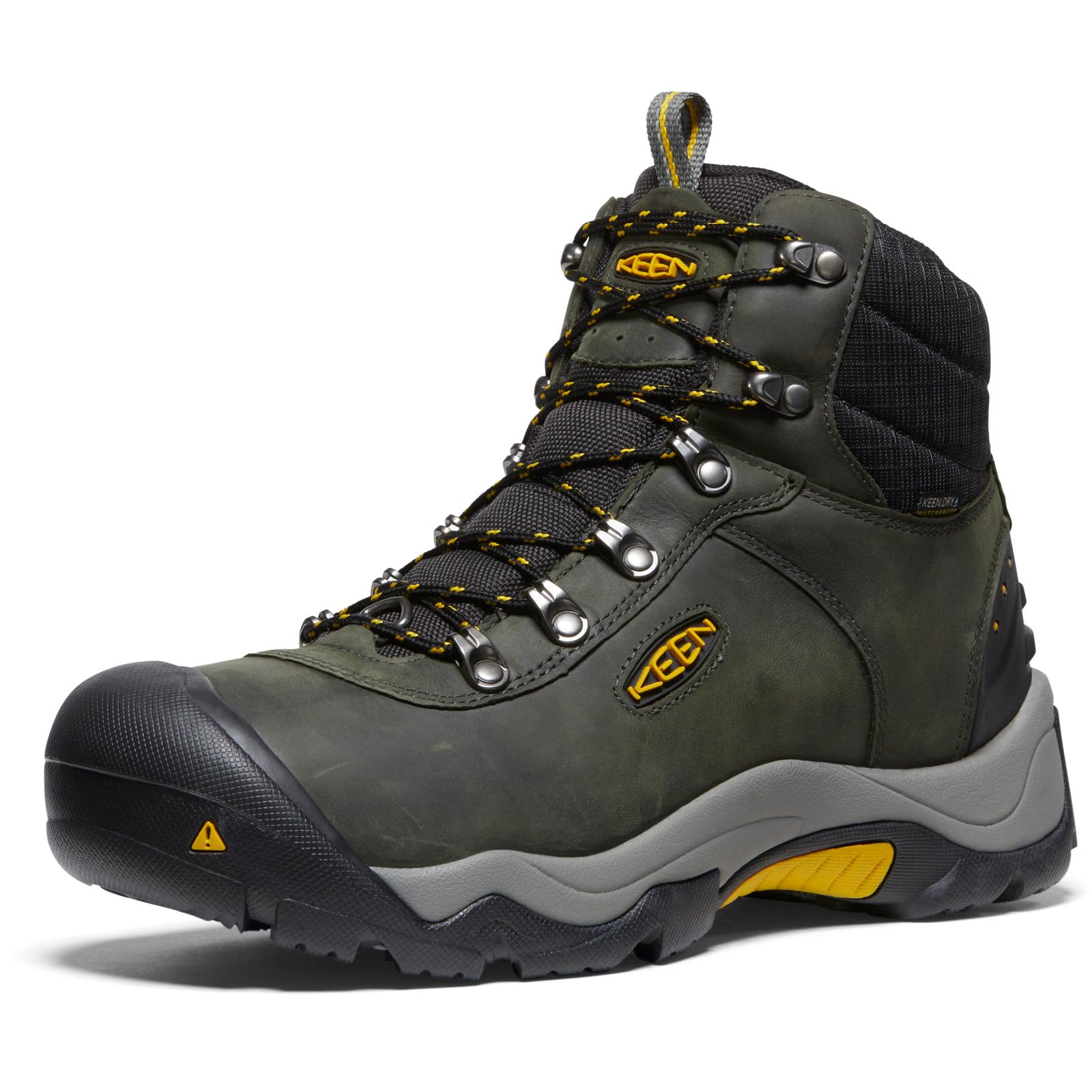
The Revel III Mid is the most versatile mid-range boot for ice and snow hiking. KEEN’s traditional wider toe box accommodates thick wool socks without crowding, which is crucial for keeping toes warm and circulation strong during long walks on icy trails. The 200-gram KEEN.Warm insulation is ideal for active winter hiking where a heavy boot would cause sweating and cold feet.
The multi-directional lug pattern provides solid grip on packed snow and moderate ice, and users report excellent compatibility with slip-on traction devices like Stabilicers for extra insurance on glare ice. The waterproof membrane has held up for years in user reports—some users report 2-3 years of daily 15,000-step use with no leaks.
One trade-off: the soft sole that improves ice traction slightly reduces ankle support compared to stiffer boots. It’s an excellent trade for comfort and grip, but if you need maximum stability for carrying heavy loads on ice, this may not be the ideal choice. For everyday winter hiking and commuting at a fair price, it’s hard to beat.
Why it’s great
- Roomy toe box for thick socks and better warmth.
- Multi-directional lugs grip well on packed snow and ice.
- Proven durability over years of daily heavy use.
Good to know
- Soft sole reduces ankle support for heavy loads.
- Some users experience sizing inconsistency.
5. Columbia Men’s Burnsider Omni-heat Infinity Hiking Boots
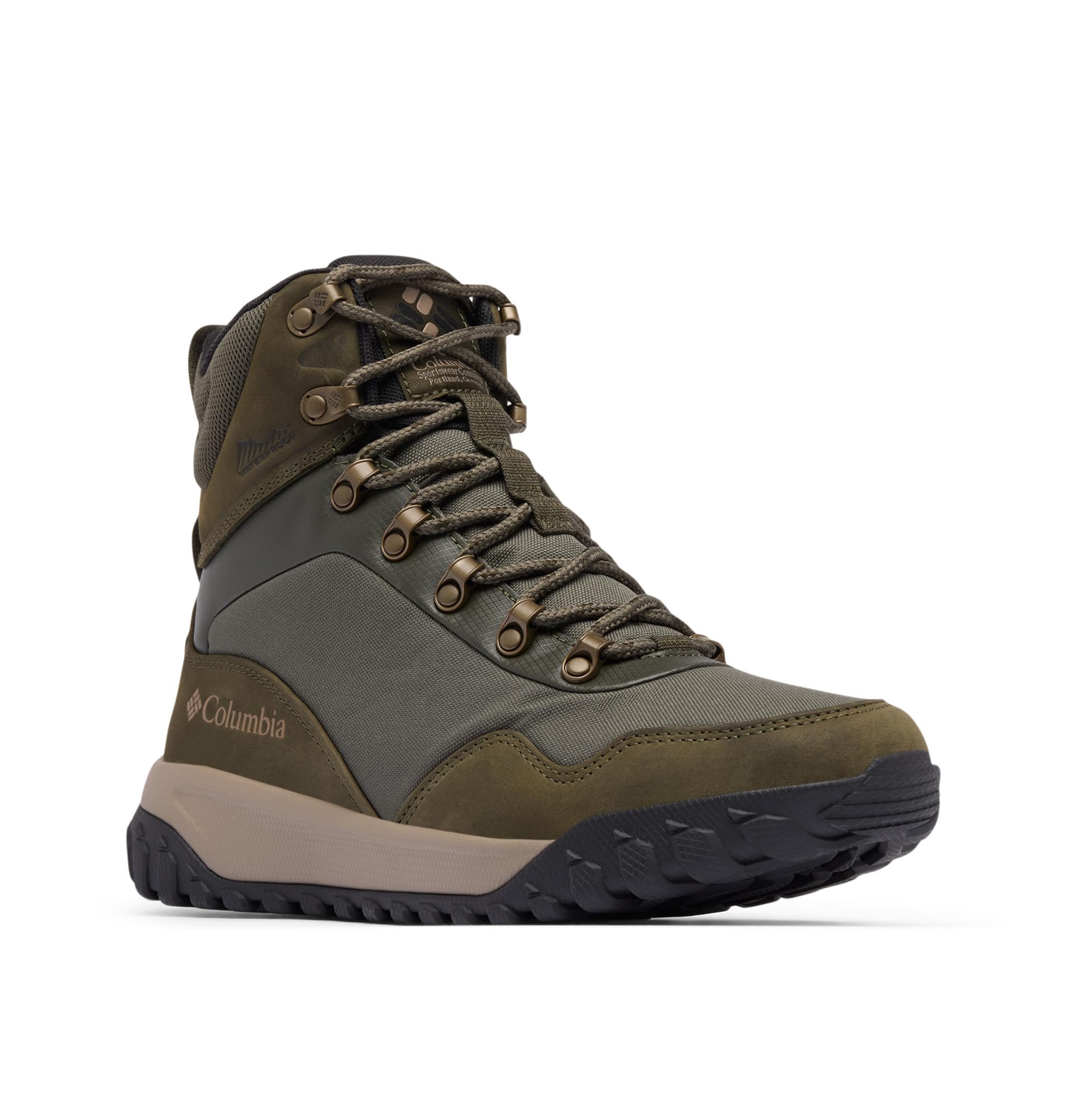
The Burnsider is designed for the traveler who needs one boot that works across varied winter conditions—from wet urban slush to icy cobblestones to packed snow trails. It uses the same Omni-Heat Infinity reflective lining and Omni-Grip outsole as the Expeditionist Shield but in a slightly different silhouette optimized for commuting and day trips.
Users who wore these on trips to Quebec City and Iceland report that their feet stayed toasty and dry through long days of walking and climbing. The outsole handled wet ice during glacier hikes when combined with crampons, and the mid-height collar provided enough ankle support for uneven terrain. The cushioning around the heel is notably plush, reducing soreness on long days.
The main consideration is sizing—some users with wide feet find the toe box slightly narrow for thick socks, so sizing up by half a size is a common recommendation. For the price, this delivers impressive Omni-Heat warmth and dependable ice traction in a package that won’t weigh down your luggage.
Why it’s great
- Verified performance in Iceland and Quebec freezing conditions.
- Plush heel cushioning for all-day comfort on hard surfaces.
- Lightweight enough for travel and daily wear.
Good to know
- Narrow fit may require sizing up for wide feet.
- Not designed for extreme temperatures below 0°F.
6. ROCKY Blizzard Stalker Waterproof 1200G Insulated Boot

For ice fishing, deer hunting, or any scenario where you’re sitting still for hours in sub-zero temperatures, the Blizzard Stalker PRO is a specialist tool. The 1,200 grams of Thinsulate Ultra insulation is an extreme amount of thermal protection—enough to keep feet warm on frozen concrete floors or ice shelter floors when the temperature drops to 6°F.
The Blizzard outsole uses a multi-directional design with deep lugs that provide solid traction on snow and acceptable grip on ice. Users report that the rubber compound handles hard-packed snow well, though glare ice is still a challenge. The 8-inch height and split suede upper with 900-denier textile offer good durability and water resistance for walking through brush and shallow slush.
The main drawbacks are weight (5.4 pounds per pair) and the lace hooks, which some users report breaking after limited use. The sizing runs large by about half to one full size to accommodate thick socks, so ordering down is a common strategy. If your priority is maximum warmth for stationary cold exposure and you’re on a mid-range budget, this is a strong play.
Why it’s great
- 1200g Thinsulate for extreme cold protection.
- Multi-directional Blizzard outsole works well on snow.
- Durable split suede and 900-denier upper.
Good to know
- Heavy at 5.4 lb per pair for size 10.
- Lace hooks have durability issues for some users.
7. Kamik Men’s Forester
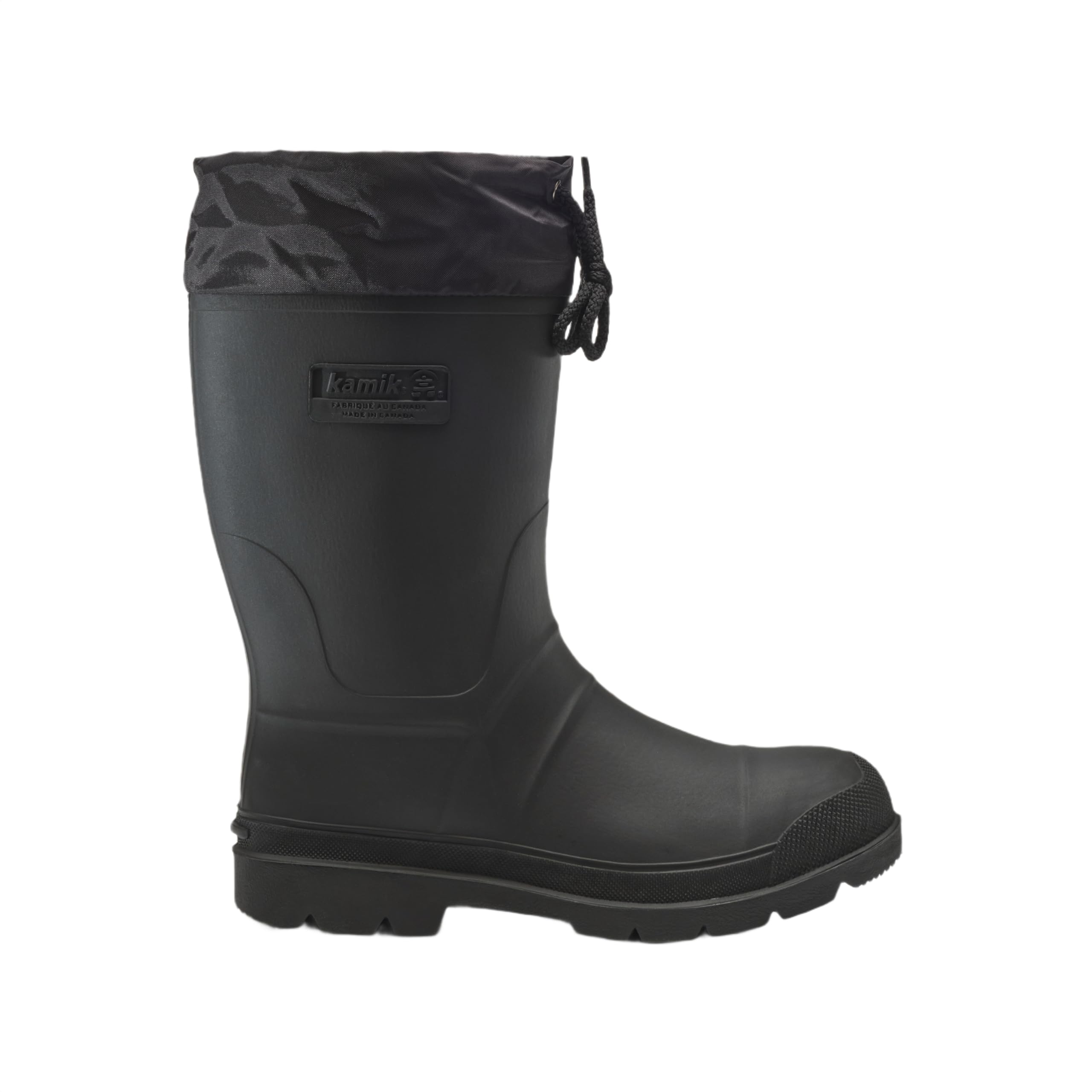
The Kamik Forester is the budget-friendly workhorse for farm chores, snow blowing, and light outdoor tasks where ice traction matters but doesn’t demand premium rubber technology. The lug sole is deep and aggressive, providing decent grip on hard-packed snow and moderate ice, though it won’t match the wet-ice grip of a Vibram Arctic Grip equipped boot.
The removable felt liner is a clever feature for a boot at this price point—you can pull it out to dry separately, extending the boot’s life and comfort. Users with wide feet (up to 4E) report a comfortable fit, which is unusual for a budget boot. The 100% waterproof rubber construction keeps feet dry through puddles and slush, and the cinch top prevents snow entry.
The main trade-off is that the Forester is heavy and not designed for long-distance walking or extended standing. The felt liner needs regular drying to maintain insulation performance, and the rubber can eventually crack after a few seasons. For the price, this is the most capable ice boot for light-duty use.
Why it’s great
- Removable felt liner for easy drying and maintenance.
- Deep-lug outsole provides good snow traction.
- Excellent value for farm and chore use.
Good to know
- Not designed for walking long distances.
- Heavy build may cause fatigue over extended wear.
FAQ
What is the best outsole for walking on pure ice?
Can I add crampons or microspikes to any boot for ice?
How does insulation weight affect ice boot performance?
Final Thoughts: The Verdict
For most users, the boots for ice winner is the Helly Hansen Garibaldi V3 because its HH Max Grip outsole delivers reliable traction on wet ice while the 400g PrimaLoft insulation and premium leather build make it versatile for both commuting and weekend adventures. If you need the ultimate wet-ice grip for stationary work or extreme conditions, grab the Muck Arctic Ice Tall with its Vibram Arctic Grip A.T. compound. And for a budget-friendly option that handles farm chores and light snow, nothing beats the Kamik Forester.