
Our readers keep the lights on and the weekend projects moving. As an Amazon Associate, I earn from qualifying purchases.
Specs are compiled from manufacturer listings and verified buyer reviews and can change over time — please confirm the key details on the product page before buying.
Morton’s Neuroma makes every step a gamble — a sharp, burning pain between your toes that turns a simple walk into a wince. The fix isn’t more padding; it’s the right shape: a wide toe box that lets your metatarsal bones spread apart naturally, plus enough cushion to keep the nerve from getting squeezed. This guide cuts through the noise to find the boots that actually stop that pinch.
I’m Rikta — the founder and writer behind FitlyFast. This guide is built by comparing the manufacturers’ published specifications and the patterns across verified customer reviews, so you get each pick’s real strengths and trade-offs instead of marketing spin.
After digging into the data on heel drop, toe-box volume, arch support, and real-world owner feedback, these are the best options you should consider when shopping for the boots for morton’s neuroma that will keep you moving without the jab.
Our Picks at a Glance
How To Choose The Best Boots For Morton’s Neuroma
A boot that treats Morton’s Neuroma well starts from the ground up, but most buyers focus on the wrong thing first. Instead of asking “are they soft?”, start with the shape your foot occupies inside.
The Toe Box is Everything
A tapered toe box is enemy #1 for Morton’s Neuroma — it squeezes the metatarsal heads together, pinching the nerve. Look for a boot that offers a genuinely square or anatomical toe box (often called “natural shape” or “foot-shaped”). This gives your toes room to splay outward, reducing the compression that triggers the burning sensation. A “wide” label isn’t always enough; many wide boots are simply wider at the ball but still taper at the toes.
Low Heel Drop Keeps Your Foot Stable
Every step in a high-heel (high-drop) boot slides your foot forward, cramming your toes into the front of the shoe. For a neuroma, you want a heel drop under 8mm — ideally closer to zero. This keeps your metatarsal heads in their natural position and stops the nerve from getting crushed between the bones and the ground.
Removable Insoles for Your Own Orthotics
A metatarsal pad (a small dome placed just behind the ball of your foot) is among the most effective tools for lifting the metatarsal heads and decompressing the nerve. The boot must have a removable insole so you can drop in your own orthotic or a metatarsal pad without raising your foot too high inside the boot. A boot that glues its insole in place is a non-starter for this condition.
Quick Comparison
| Model | Best For | Heel Drop | Toe Box Shape | Insole | Amazon |
|---|---|---|---|---|---|
| Orthofeet Dakota★ Best Overall | All-Day Relief | Low | Wide & anatomical | Removable orthotic | Amazon |
| FitVille Wide HikerBest Value | True X-Wide Fit | Low | Roomy & wide | Removable ArchCore | Amazon |
| Arc’teryx Kopec Mid GTXLightweight Trekker | Lightweight Trekking | Low | Wide and roomy | Fixed | Amazon |
| Men’s Orthopedic Trekking | Plantar + Neuroma | Low | Extra wide toe box | Removable with inserts | Amazon |
| Xero Shoes Tari II | Zero-Drop Barefoot Feel | Zero | Foot-shaped | Thin & removable | Amazon |
| Men’s Orthopedic Tactical | Work & Standing | Low | Very wide toe box | Removable with spacers | Amazon |
| OrthoComfoot Waterproof Hiker | Wet Trail Stability | Low | True 4E wide | Removable orthotic | Amazon |
| Women’s Orthopedic Ankle Boot | Wide Women’s Fit | Low | Wide & anatomical | Removable with spacers | Amazon |
In‑Depth Reviews
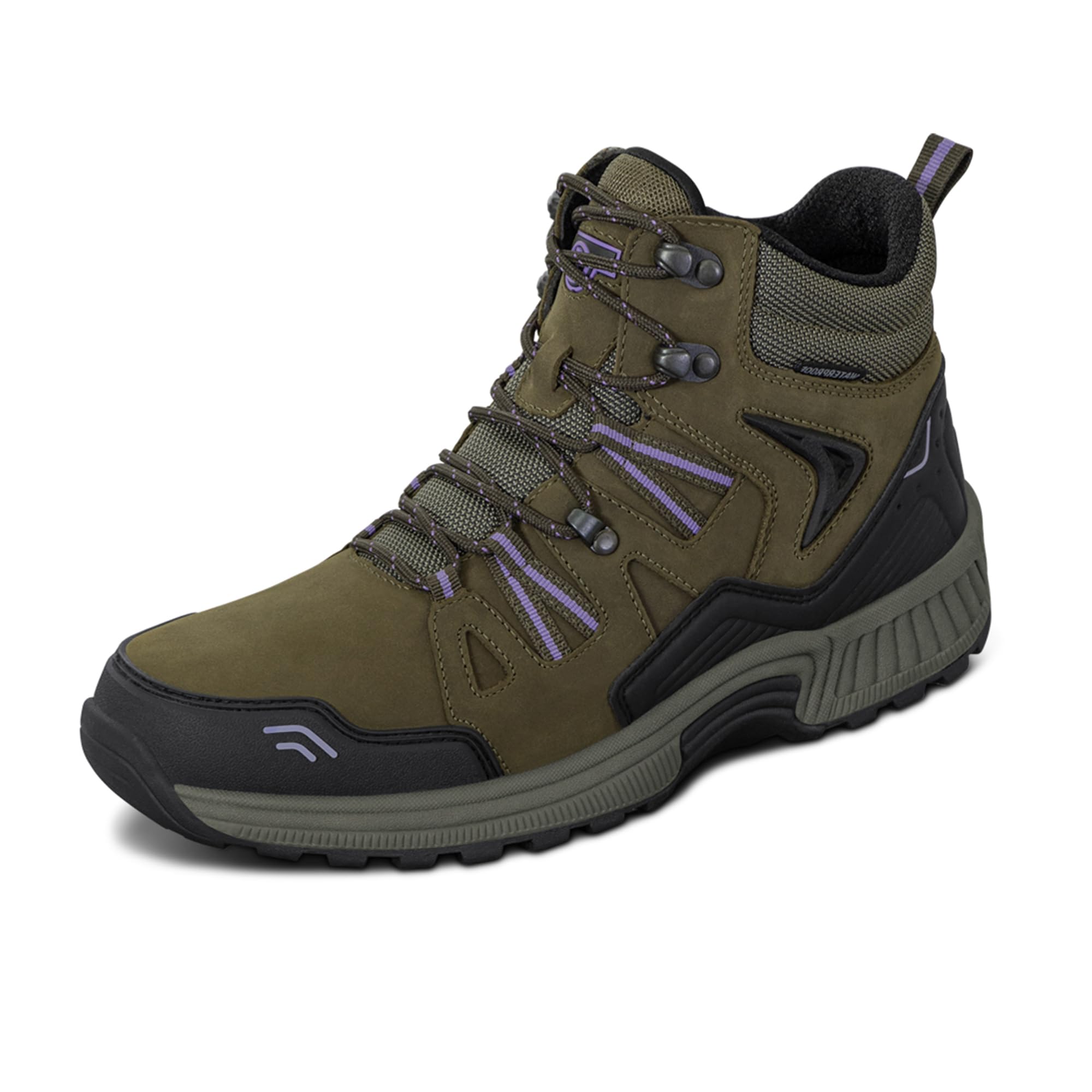
1. Orthofeet Dakota Orthopedic Women’s Hiking Boots
Our pick — over 4★ from 200+ verified ratings; the strongest balance of quality and price.
The gold standard for Morton’s Neuroma — built-in orthotic relief that owners call a “must” for bunions and high arches.
Buyers report wearing the Dakota for twelve straight days in Alaska rain and snow without foot fatigue or soreness. That matters for Morton’s Neuroma because the Ortho-Cushion system combines a built-in orthotic insole, a shock-absorbing sole, and a pressure-free fit — the three things that keep the nerve from getting pinched between the metatarsal heads. The comfort is the aspect praised most, with 45 buyers singling it out for daily relief.
The wide toe box prevents cramping, and the fit wins over 32 owners. One owner reported a 17-mile hike in wet, rocky terrain kept feet dry, well-supported, and not sweaty, outperforming their Keen, Merrell, and Solomon boots. The leathered upper is supple, not clompy, and the boots come with two extra insoles so you can dial in the snugness.
On the trade-off side, durability and sturdiness receive mixed notes from 9 owners each — the sole is flexible and conforming, which some felt could be thicker for sharp rocky paths. An occasional owner found the ankle fit too loose for their preference. But for a boot that works from the start (no break-in required according to many), this is the nearest thing to a prescription-level solution you can buy without a script.
What You Get
- Removable orthotic insole lets you swap in custom metatarsal pads
- Waterproof and warm — tested in snow and rain for 12 days straight
- True to size with ample toe-room for bunions and neuromas
The Fit Note
- Flexible sole feels thin over sharp rocks — not a peak-bagging boot
- Ankle opening runs large for some; narrow-ankle wearers and those with high arches may need thicker socks
Grab These If: You want a slip-on waterproof hiker that treats your neuroma from day one. The orthotic support is built-in, not an afterthought.
Look Elsewhere If: You need a stiff, technical boot for rocky, off-camber terrain where a rigid sole protects your feet from sharp edges.
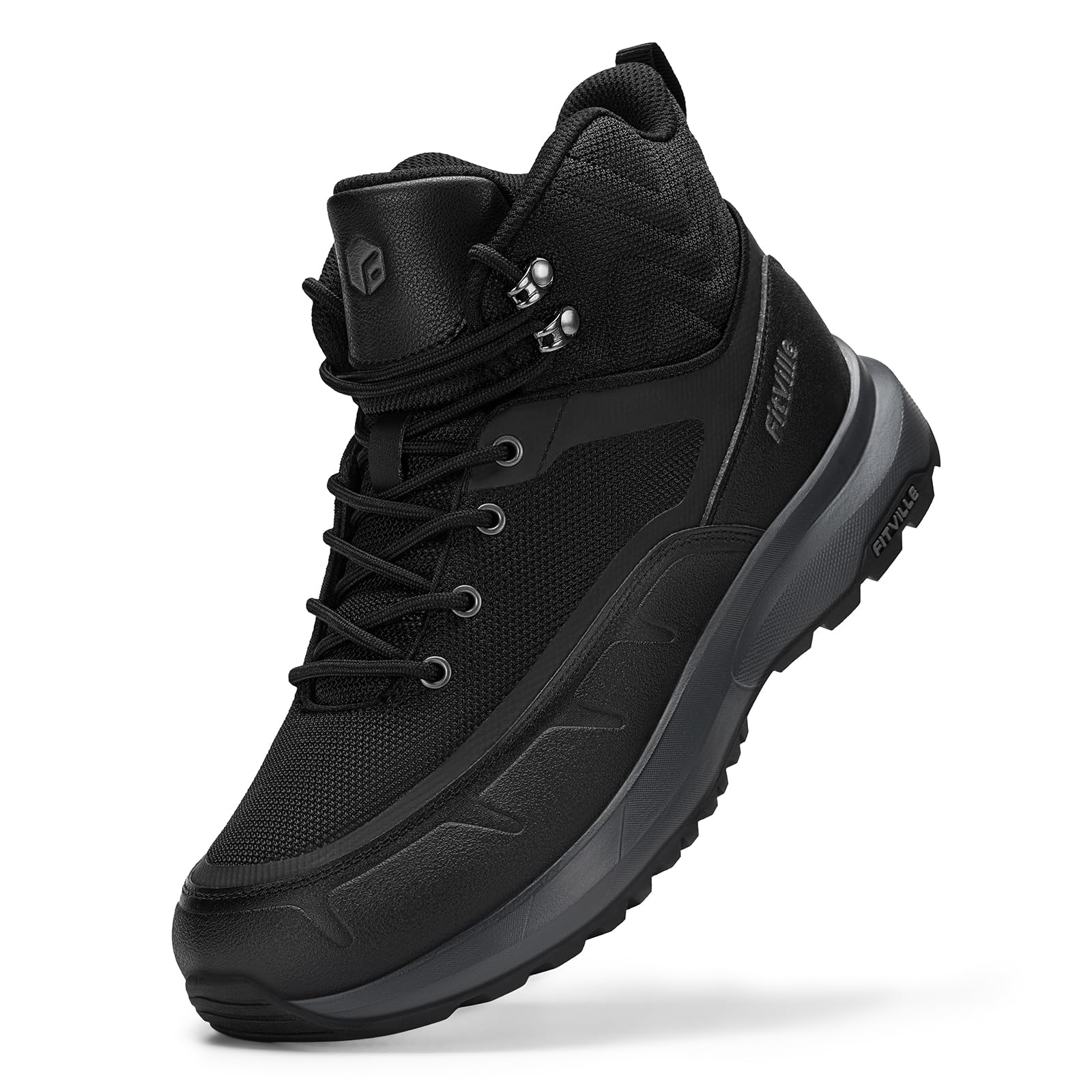
2. FitVille Wide Mens Boots Orthopedic Hiking Shoes
True X-wide with a wide toe box that fits as advertised — no sizing up required for the extra room your nerve needs.
FitVille solves a specific puzzle for Morton’s Neuroma: most hiking boots make you choose between ankle support and a wide fit. Size up for width and you lose the heel lock; squeeze into a normal width and you blister by mile three. These boots deliver a mid-top collar that protects the ankle on uneven descents while the wide-platform last and roomy toe box let your metatarsals spread. Available in Wide and Extra Wide — so you don’t need to guess.
The removable ArchCore insoles feature built-in arch support and a deep heel cup. One buyer confirmed three months of hiking in the Andes, Hawaii, and the Rockies, calling the boots “true X-wide with wide toe box, fits as expected.” A construction worker wearing them daily on concrete floors called them “sturdy but super comfortable” and plans to buy again. Comfort is the top-named aspect, with 8 owners raving about it.
The water-resistant leather and synthetic upper sheds light rain, while the multi-surface rubber outsole with aggressive tread grips wet rock and loose gravel. The cushioned EVA midsole absorbs impact without the slugging weight of a full leather boot, which is a key advantage for those whose neuroma flares up when a boot feels too heavy and clunky.
Strength
- True Wide and Extra Wide sizing — no guessing or ordering up
- Built-in ArchCore insole with deep heel cup for nerve decompression
- Impressive real-world testing in the Andes, Hawaii, and Rockies
Trade-Off
- One owner described the cushioning as “bricks” — the sole is firm, not plush
- Fit is mixed; a few owners mention they still feel tight despite being labeled wide
Reach For This If: You have truly wide feet and need a budget-friendly boot that handles real hiking, not just pavement.
Think Twice If: You want a pillowy-soft, cloud-like sole — this boot is supportive but firm.
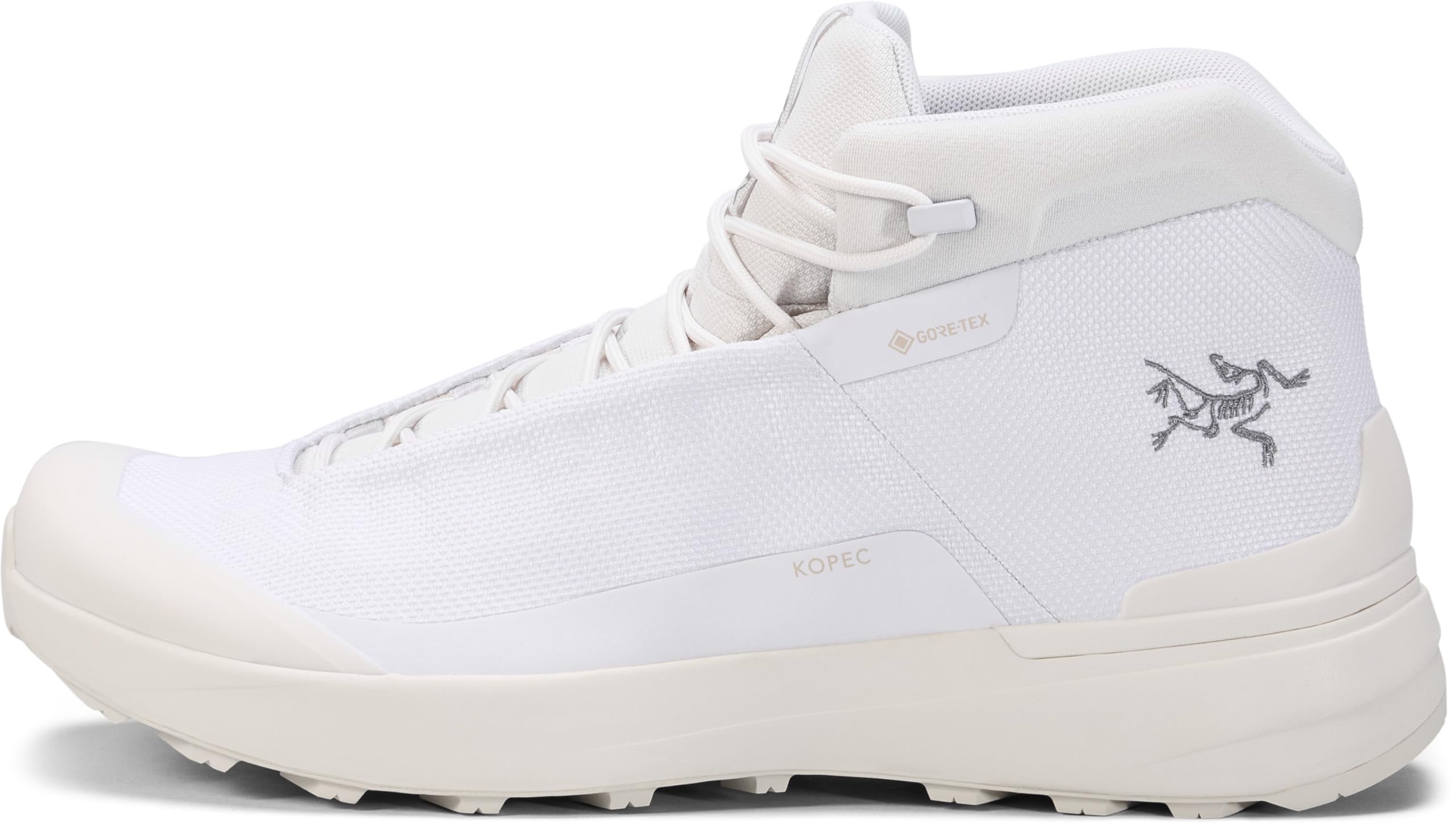
3. Arc’teryx Kopec Mid GTX Boot
A featherweight hiker with a wide toe box — nearly zero break-in, so your neuroma doesn’t suffer through a stiff new boot.
The Kopec Mid GTX is the agile, all-season hiker for people who want to cover ground without the weight. For Morton’s Neuroma, the standout spec is the wide toe box described in the product data — giving your toes room to splay on the downhills that usually jam the nerve. The PFAS-free GORE-TEX protection seals out water and snow, and the Vibram Megagrip outsole with a custom lug pattern delivers a secure bite on wet rock and loose dirt.
The dual-density midsole provides the cushion-support combo, and owners say the boots are “very comfortable after break-in” with “almost zero break in time” — a massive plus when a neuroma flares from friction. Quality is what owners praise most, with 13 bringing it up; comfort follows with 8 mentioning it. One flat-footed owner with “extremely flat feet” called them “extremely comfortable and well-made,” praising the sturdy, balanced feel.
The trade-off here is that the insole is fixed, meaning you can’t easily drop in a metatarsal pad without altering the fit. The mid-height design gives ankle protection on uneven descents, and a molded pad cushions your ankle. If you need a lightweight technical hiker where the toe box is genuinely wide but the boot feels like a performance shoe, this is it. The one real complaint: light colors are hard to clean.
What Shines
- Extremely lightweight — barely notice them on your feet for miles
- Wide toe box with room to splay, as confirmed in the data
- Vibram Megagrip outsole for confident footing on varied terrain
The Hitch
- Insole is fixed, so custom orthotics or met pads are tricky to install
- Light colors stain easily and are hard to clean
Best For: The day-hiker who values low weight, a wide toe box, and nearly instant comfort.
Skip If: You rely on custom orthotics — you need a removable insole.
4. Men’s Orthopedic Trekking Hiking Boots
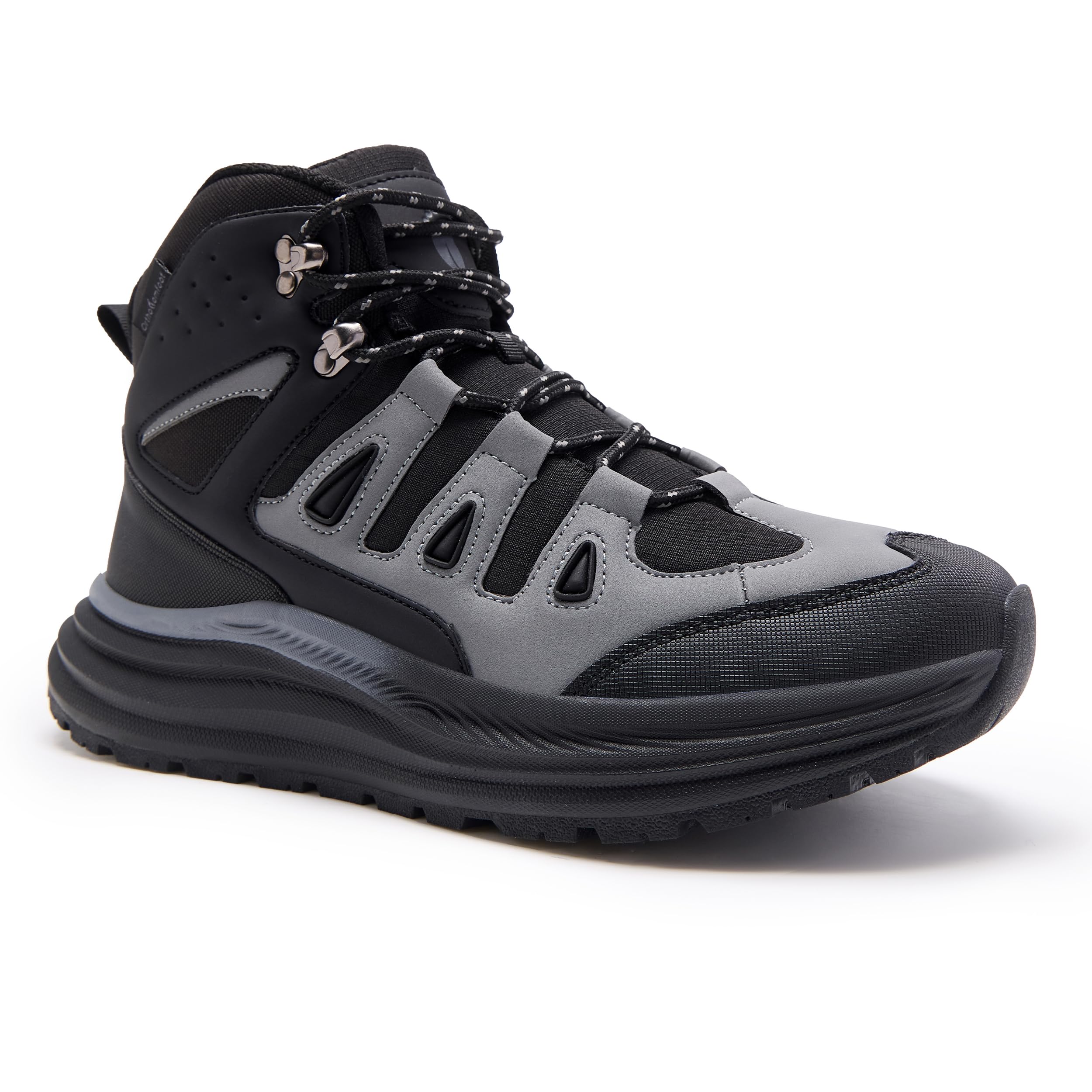
Targeted arch support and a wide toe box that owners call a “standout” for plantar fasciitis and neuroma relief.
These trekking boots are built for someone dealing with both plantar fasciitis and Morton’s Neuroma — which is common, because both conditions involve poor foot mechanics. The boot features a built-in EVA arch support and a deep heel cup that distributes weight and eliminates heel bruising. One owner said “my feet no longer hurt after working,” and a 265-lb bodybuilder reported the EVA arch support eliminated heel bruising.
The wide toe box is the standout feature. Several owners note it’s the widest they’ve found. The mid-height ankle coverage provides stability on moderate hikes and daily walks, while the rugged outsole with slip-resistant grip handles trails and yard work. It comes with extra footbed inserts, so you can adjust the volume for your custom orthotics. “No breaking in required” is a repeated theme — extremely comfortable from the start.
The honest downside: the build is budget-grade. The leather is thin, and the glued mudguards can peel. The traction is poor on wet surfaces, and the EVA sole may delaminate over time. One owner described the boot as “looks inexpensive with synthetic materials.” This is not a boot for rugged, multi-day backpacking. It is a comfortable, supportive boot for light trails, standing all day, or daily wear.
Real Relief
- Built-in EVA arch support with deep heel cup — works from the start
- Extra wide toe box is the main selling point, owners confirm
- Comes with extra inserts for customizing the fit depth
Know This
- Thin leather and glued mudguards; durability is a concern
- Wet traction is weak — avoid slippery trails or wet pavement
Choose This If: You need a comfortable, supportive boot for standing on concrete or light trail use.
Don’t Choose This If: You need a durable, technical hiker for rugged or wet terrain.
5. Xero Shoes Women’s Tari II Barefoot Leather Chelsea Boot
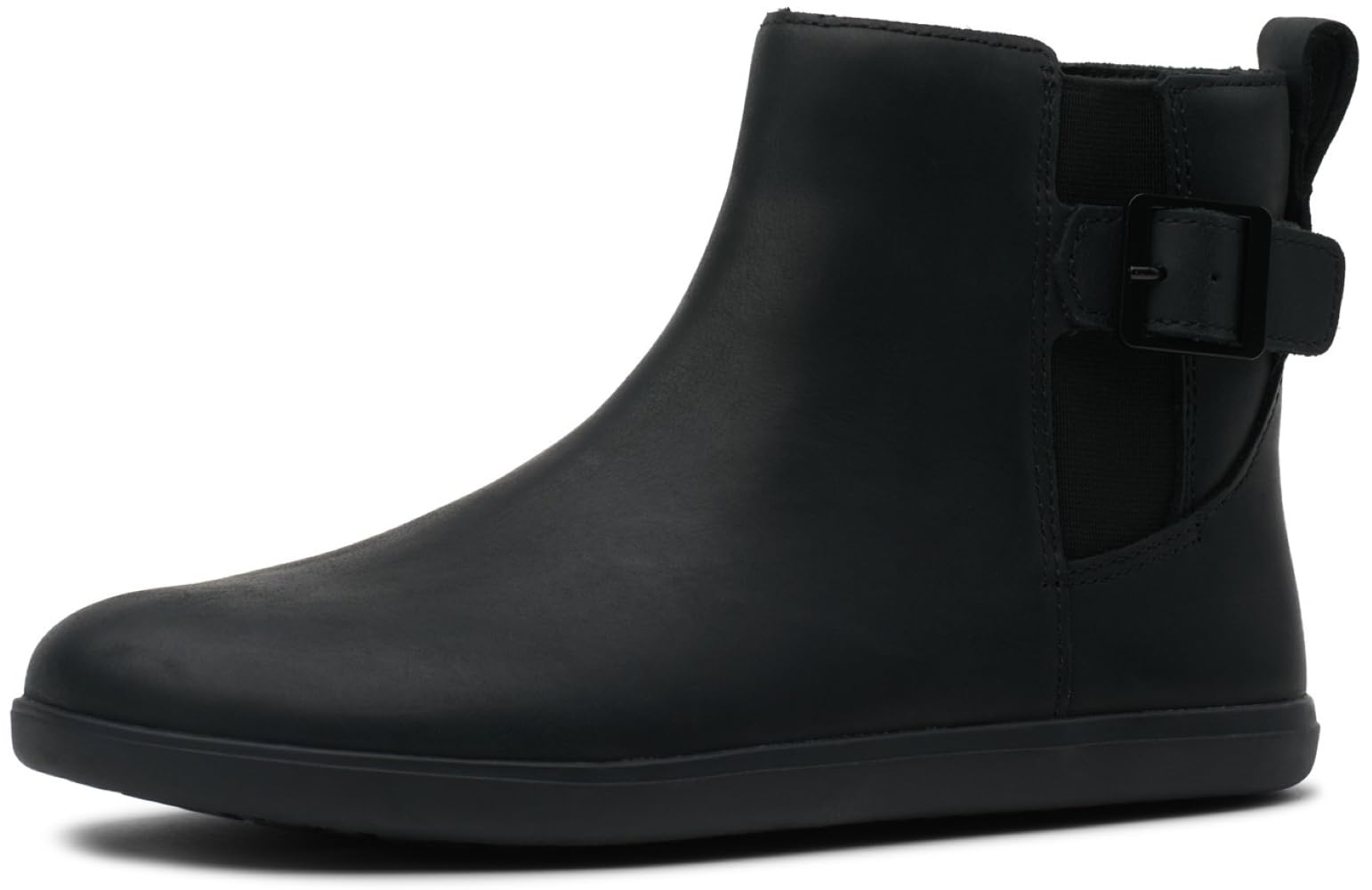
A foot-shaped Chelsea boot that gives your toes maximum room — ideal for neuroma relief with a barefoot feel.
The Tari II is the most radical fix on this list: a zero-drop, foot-shaped boot that lets your foot work exactly as nature intended. For Morton’s Neuroma, the wide toe box is the key weapon, and this boot delivers it in spades. Owners rave about “TOE ROOM! LOOKS NICE!” and confirm the boot is “true to size” with a wide toe box that looks great with boot-cut jeans. The zero-drop design keeps your heel from sinking and your forefoot from sliding forward into the nerve-compression zone.
This boot is featherweight and comfortable from day one — which is a big deal because a stiff boot can aggravate a neuroma during break-in. Multiple owners confirm it’s “very comfortable from day one” and that the boot is “easy to walk in.” The leather upper gives it a clean, stylish look that works with both pants and dresses, making it a versatile pick for someone who wants neuroma-friendly footwear that doesn’t look like a medical shoe. The base price is also lower than the Xero Shoes website, making it a better buy here.
The catch is the fit: while the toe box is generous, the heel has been reported to slip for some owners, and the boot runs slightly long. One owner found it “very tight across the ball of the foot,” which is the exact spot you need room for a neuroma. The zero-drop design also means there is no cushion under the forefoot, so if your neuroma is already sensitive, this might feel too minimal. You must try it, but the return windows are generous.
Standout Trait
- True foot-shaped toe box — maximum room for your metatarsals to splay
- Zero-drop heel keeps forefoot from sliding, reducing nerve compression
- Light, flexible, and stylish — doesn’t look like a medical boot
Heads-Up
- Heel can be loose for some — returns are common due to poor heel lock
- Minimal underfoot cushion; not for those who need deep forefoot padding
Ideal For: Someone comfortable with a barefoot feel who wants a stylish, zero-drop boot with generous toe room.
Not For: Those who need thick forefoot cushioning or a secure heel lock.
6. Men’s Orthopedic Wide Toe Box Tactical Boots
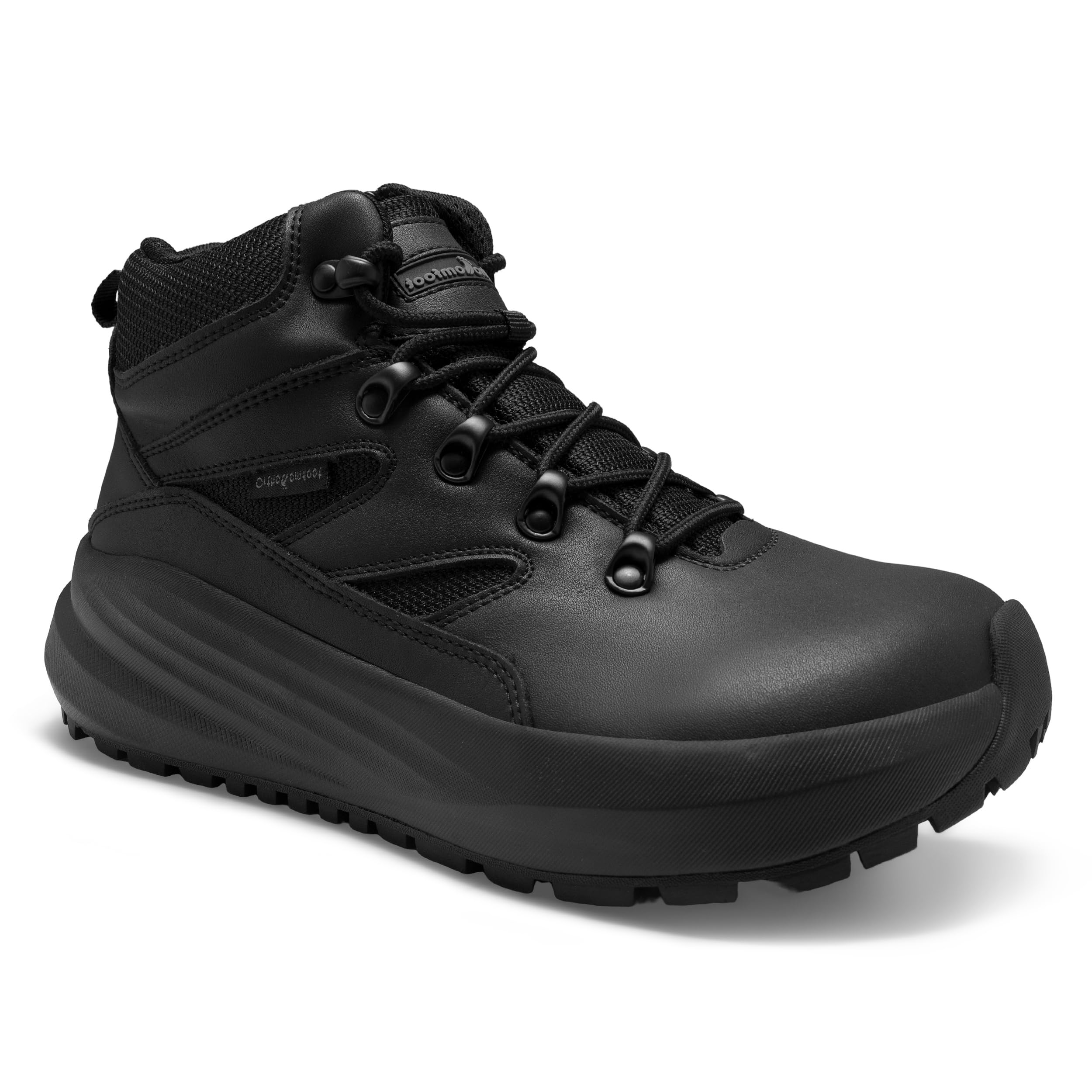
A cushioned boot with a side zipper and extra-wide toe box that turns a concrete shift into a pain-free day.
These tactical-style boots are built for the person who stands for hours on hard surfaces — warehouse workers, food service pros, and retail employees. The wide toe box and rigid arch support eliminate heel pain and prevent the metatarsal bones from squeezing the nerve. A delivery worker in warehouse and food service said these boots “tame punishing concrete floors” with a slip-resistant outsole that grips wet and greasy surfaces.
The boots come with two sets of insoles (thin/thick) plus heel inserts, so you can customize the fit depth for custom orthotics or met pads. The side zipper and Velcro make them easy to take on and off — no cumbersome lacing every time. Owners say they are “extremely comfortable, sneaker-like boots” that don’t feel like heavy combat boots. The built-in arch support is praised for providing immediate pain relief for plantar fasciitis and wide feet.
The catch: they are not true combat or safety-toe boots despite the tactical look. The build is lightweight, with some owners questioning the long-term durability of the materials. One owner found the sizing too short and had to return them. They are warm, so they aren’t ideal for hot weather. For the price, the comfort and support are excellent, but don’t expect a boot that will survive a decade of rough duty.
Pain Relief
- Side zipper and Velcro for easy on/off — great for swelling feet
- Comes with two insoles and heel inserts for custom arch support
- Wide toe box and plush cushioning absorb impact on concrete
Limitation
- Not a true composite-toe or waterproof boot despite the tactical look
- Sizing runs small for some; order up or use the removable insole swap
Reach For This If: You stand on concrete all day and need quick on/off access plus genuine arch support.
Not For: Heavy-duty fieldwork or anyone who needs a real safety-toe boot.
7. OrthoComfoot Men’s Orthopedic Wide Waterproof Hiking Boots
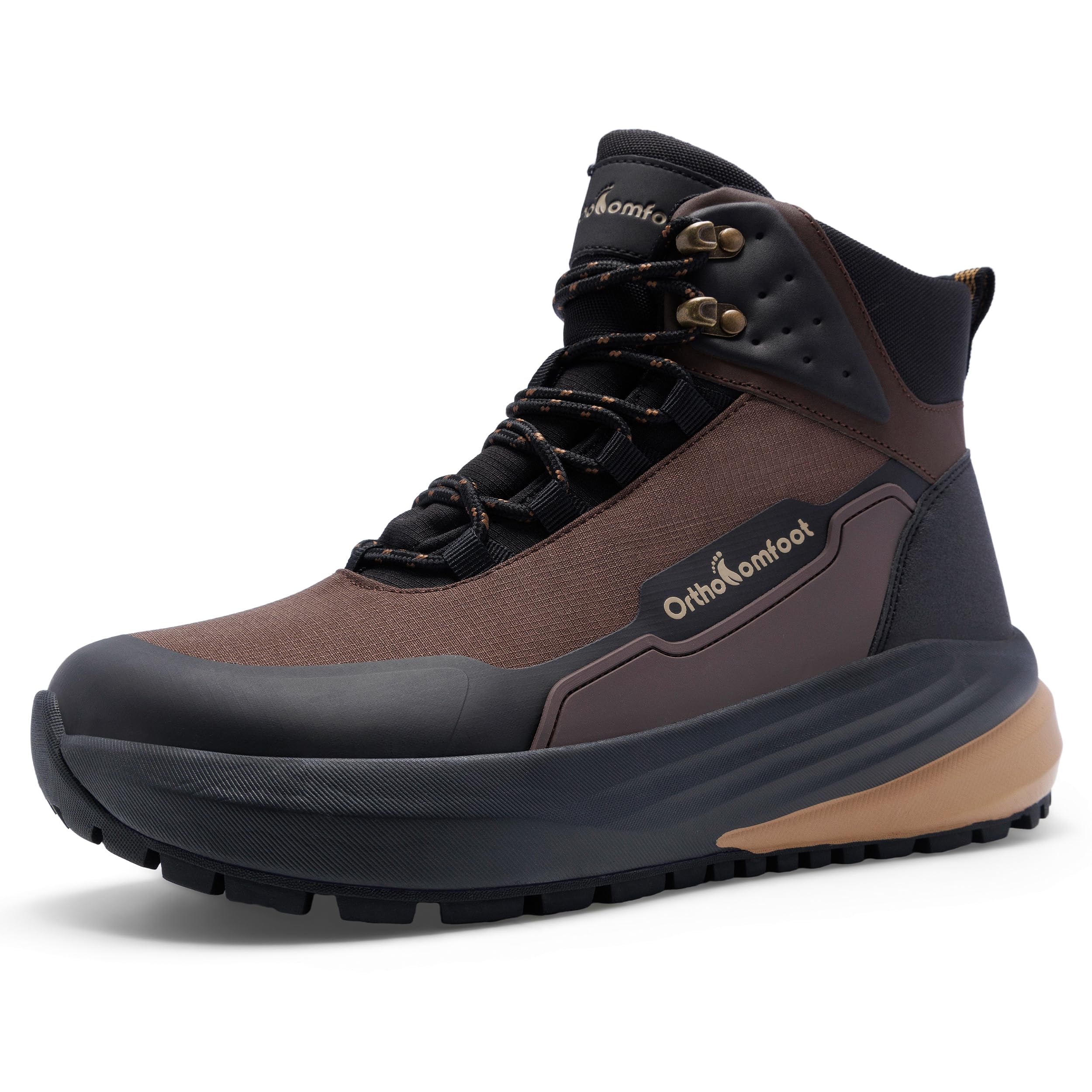
A true 4E wide waterproof hiker that owners say delivers “trail bliss restored” for wide feet and neuroma pain.
OrthoComfoot is the boot that understands “wide” isn’t just about the label. The 4E wide fit with a roomy toe box is genuine — owners confirm it fits their wide feet perfectly, with one saying it’s “the best boot for massively wide feet (size 11, widest width).” The built-in orthotic arch support and deep heel cradle are designed for plantar fasciitis, and multiple customers note immediate heel pain relief and reduced foot fatigue.
The waterproof membrane keeps feet dry on wet trails, and the slip-resistant outsole grips well on wet terrain. The boot requires no break-in — it’s comfortable from the first wear. One owner called it a “standout” for correcting a leg length discrepancy via the included insoles; another said the extra-wide toe box fits swollen feet from edema and club foot. The boot is durable, with high-quality stitching and a lightweight feel compared to alternatives like Redwings.
The downsides are minor but real: the boots are slightly bulky, and the break-in is short but not non-existent. One owner noted some initial quality concerns (rubber logo peeling, cheap laces) and questioned long-term durability for the price. They are also on the heavier side, which could be a factor for someone whose neuroma is sensitive to mass. But for a true 4E wide, waterproof hiker with built-in orthotic support, this is a top-tier pick.
What Works
- True 4E wide fit — owners with massive wide feet confirm it works
- Built-in orthotic arch support with deep heel cradle for pain relief
- Waterproof and slip-resistant for all-weather trail confidence
The Cost
- Some initial quality concerns — rubber logo peeling, cheap laces
- Slightly bulky feel; not a lightweight day hiker
Grab These If: You have truly wide, swollen feet and need a waterproof hiker with serious arch support.
Look Elsewhere If: You want an ultralight, nimble boot for fast day hikes.
8. Women’s Waterproof Wide Toe Box Orthopedic Ankle Boots
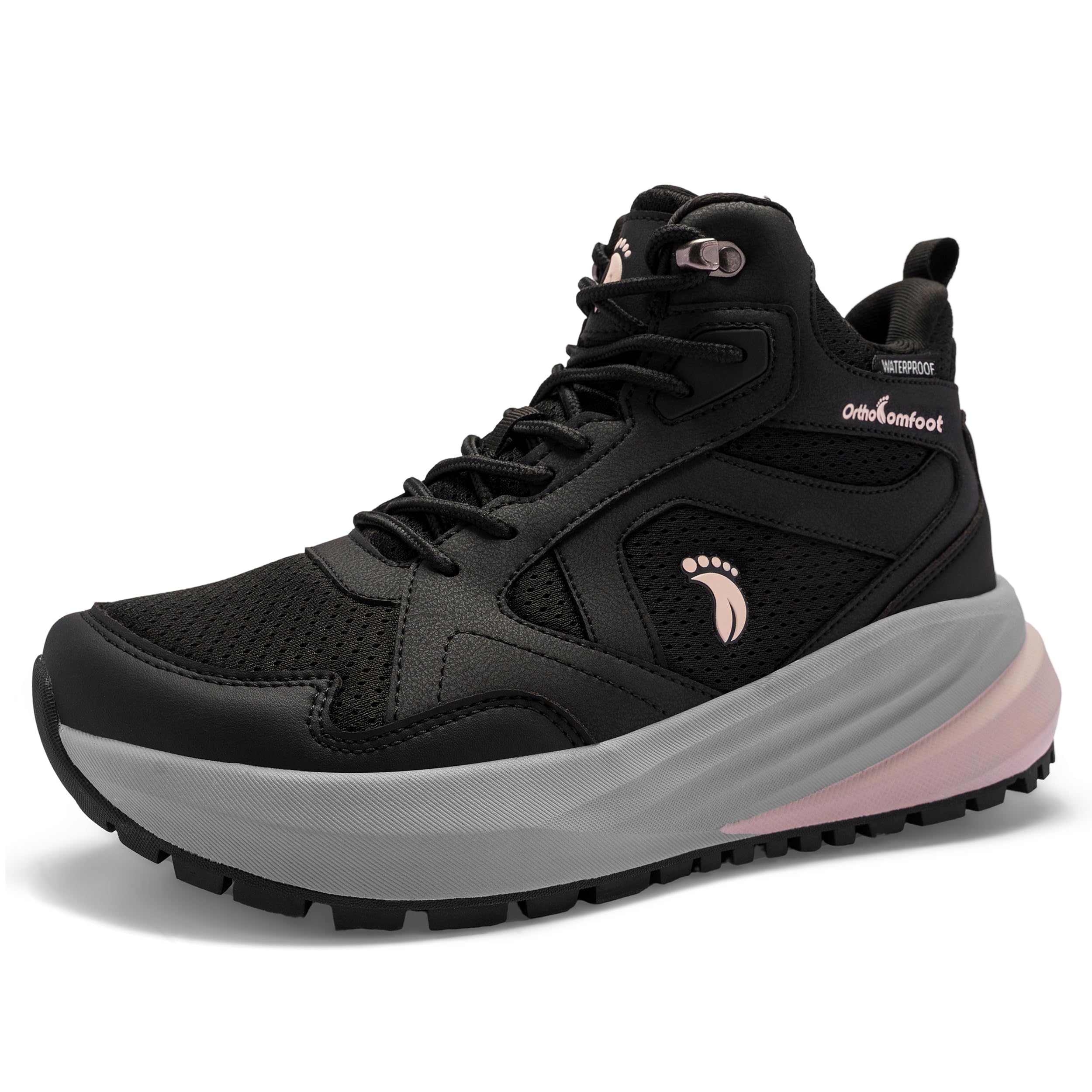
A women-specific, mid-height boot with a true wide toe box that owners call “the best for flat wide feet.”
This boot is designed specifically for women with Morton’s Neuroma who need a wide toe box, arch support, and waterproofing in a mid-height package. The standout detail is that it includes spacer inserts for skinny feet, so you can dial in the fit without your heel slipping — a common issue with wide-toe-box boots. Owners say it is “extremely comfortable for wide, flat feet with bunions” and that the wide toe box accommodates bunion and hammer toe deformities.
The boots feature a thick, cushioned sole and a gel insole with arch support. The waterproof protection is real — owners have tested it in wet areas for outdoor work. The non-slip tread provides solid grip on trails, and the mid-height ankle coverage offers stability. One owner uses them for her 1.5-mile daily walk and says they are “sturdy and comfortable.”
The recurring warning: these run small. Multiple owners say to order half to a full size up — “size 9 too short for a standard 9 foot.” The boots are also heavy (1.76 lbs each for an 8-wide) and the lining attracts lint. The arch support is excellent, but the insole features an acupressure pad and shock-absorbing beads that some find too firm. If you are a woman with wide feet and a neuroma that needs a wide toe box and serious arch support, this is a solid pick — just size up.
Strengths
- True women’s wide toe box with spacer inserts for skinny feet
- Waterproof and non-slip for wet trails and daily wear
- Excellent arch support with gel insoles for plantar and neuroma relief
Caveats
- Runs small — order half to a full size up for proper length
- Heavy at 1.76 lbs each; not for fast, lightweight hiking
Best For: Women with wide feet, bunions, and neuroma who need a sturdy waterproof boot for moderate hiking or outdoor work.
Not For: Those with narrow feet who can’t size up easily, or anyone looking for a lightweight day hiker.
Understanding the Specs
Heel Drop (mm)
Heel drop is the difference in height between the heel and the forefoot. For Morton’s Neuroma, a lower drop (under 8mm) is crucial because it keeps your foot from sliding forward into the toe box on every step. When your foot slides, your metatarsal bones compress the nerve. A zero-drop boot like the Xero Shoes Tari II removes this slide entirely. Most hiking boots have a 8-12mm drop; look for the ones with low or zero drop to protect the nerve.
Removable Insole
This is the single most important feature for neuroma relief. A removable insole lets you drop in a custom orthotic or a metatarsal pad (a small dome placed behind the ball of your foot) that lifts the metatarsal heads and decompresses the nerve. Without a removable insole, you are stuck with the factory support. Some boots like the Orthofeet Dakota have built-in orthotics that work extremely well, but if you have a custom prescription, you need that removable base.
FAQ
Can I wear custom orthotics with these boots?
Will a wide toe box alone fix my Morton’s Neuroma pain?
How do I know if a boot is truly “wide” vs just labeled wide?
Do I need a metatarsal pad even if the boot has good arch support?
Is a zero-drop boot like the Xero Shoes Tari II safe for someone with a recent neuroma flare?
How long do these boots typically last before the cushioning wears out?
Can I wear these boots for running if I like low-drop?
Do any of these boots come in a half size for a perfect fit?
Should I size up to get a wider toe box even if the length is fine?
Are these boots good for people with high arches and a neuroma?
Final Thoughts: The Verdict
Across the board, the boots for morton’s neuroma winner is the Orthofeet Dakota because it combines a built-in orthotic system, proven waterproofing, and a wide toe box that owners repeatedly call a “must” for bunions and high arches — all without needing any break-in. If you need a true X-wide fit on a budget, the FitVille Wide Hiker delivers genuine extra-wide sizing with ArchCore insoles. And for those who want a lightweight technical hiker with a wide toe box, the Arc’teryx Kopec Mid GTX is the agile, almost-no-break-in choice.
How We Picked
We do not accept paid placement. Every pick is matched to a real buyer and a real use-case; we do not hands-on test units.
Sources & Methodology
Specifications: manufacturer listings and product documentation. Review insights: verified customer reviews, as of July 2026. Pricing: not shown on this page (it changes often); check the current price via the retailer link.
As an Amazon Associate, FitlyFast earns from qualifying purchases. This does not affect which products we feature.