
Our readers keep the lights on and the weekend projects moving. As an Amazon Associate, I earn from qualifying purchases.
Stepping into a deep puddle or trudging through fresh snowfall shouldn’t mean soggy socks and numb toes for the rest of the day. The right pair of boots for rain and snow acts as a sealed barrier, combining a waterproof membrane with reliable insulation and aggressive outsoles that bite into slush, ice, and mud. The challenge is cutting through the marketing hype to find a boot that genuinely seals moisture out while keeping your feet warm without overheating.
I’m Rikta — the co-founder and writer behind FitlyFast. I’ve spent hundreds of hours cross-referencing waterproofing technologies, insulation weights, rubber compounds, and real-world user accounts from cold-weather workers, hikers, and daily commuters to build this guide around the most important metrics for wet, cold feet.
Whether you need a lace-up insulated hiker for the commute or a tall rubber pull-on for mucking through deep slush, this guide breaks down seven standout models that earn their keep in wet, cold conditions. You’ll know exactly which pair of boots for rain and snow matches your winter reality before you ever click add to cart.
How To Choose The Best Boots For Rain And Snow
Picking a wet-weather boot involves balancing three key factors: how much wet slop you’ll walk through, how cold it gets, and whether you need to walk miles in them or just dash from car to office. Here are the specs that separate a good winter boot from a disappointing one.
Waterproof Construction: Membrane vs Rubber vs Sealed Seams
True waterproof boots use either a sealed membrane (like a bootie lining), a one-piece rubber shell, or fully taped and sealed seams. Membranes breathe better for active wear but can fail if debris damages the outer fabric. Solid rubber construction is bombproof for standing in slush but traps sweat during high-output walks. Look for boots that specify “fully waterproof” rather than “water-resistant” — the latter only repels light rain, not puddle submersion.
Insulation Weight: The 200g to 400g Rule
Insulation is measured in grams per boot, typically using synthetic fills like PrimaLoft or Thinsulate. 200g handles temps down to around 20-25°F with moderate activity. 400g pushes that range down to near zero or below zero for standing around in deep cold. More insulation equals more bulk and less breathability, so match the gram weight to your actual activity level and local lows — over-insulating leads to sweaty, cold feet faster than under-insulating.
Outsole Traction: Lug Depth and Rubber Formulation
Slush, refrozen snow, and wet pavement require different tread patterns than dry hiking. Look for deep, widely spaced lugs (5mm or more) made from a softer rubber compound that stays pliable in the cold. Hard rubber compounds turn into hockey pucks below freezing. Some brands add specific ice-grip compounds or carbide spikes for serious ice conditions, but for standard rain and snow commuting, a deep chevron or block-style lug pattern provides reliable bite.
Boot Height and Closure System
Tall boots (10 inches or higher) keep you dry when stepping into deep puddles or snow drifts, but they reduce ankle mobility and can chafe behind the knee. Ankle-height or mid-calf boots are better for walking long distances, provided the cuff seals well against snow entry. Lace-up systems give a more precise fit than pull-on rubber boots, which is critical for long walks, while rubber pull-ons offer quicker on/off convenience for barn or muddy-yard work.
Quick Comparison
On smaller screens, swipe sideways to see the full table.
| Model | Category | Best For | Key Spec | Amazon |
|---|---|---|---|---|
| Helly Hansen Garibaldi V3 | Premium Lace-Up | Harsh winter commuting | 400g PrimaLoft insulation | Amazon |
| The North Face Chilkat V | Premium Lace-Up | Daily use & light hikes | 200g premium insulation | Amazon |
| SOREL Tivoli V Tall | Premium Tall Boot | Deep snow & stylish warmth | Tall waterproof build | Amazon |
| Columbia Expeditionist Shield | Mid-Range Hiker | Light snow & rain commutes | 200g insulation, lightweight | Amazon |
| XPETI Crest Thermo | Mid-Range Hiker | Cold-weather hiking on a budget | Thermo insulation, ankle support | Amazon |
| Trudave Rubber Boots | Entry Rubber | Deep mud & slush farm work | 6mm neoprene, steel shank | Amazon |
| Kalkal Insulated Rubber Boots | Entry Rubber | Wet yard & garden tasks | 6mm neoprene, taller shaft | Amazon |
In‑Depth Reviews
1. Helly Hansen Men’s Garibaldi V3 Waterproof Winter Boots

The Helly Hansen Garibaldi V3 is the benchmark for serious wet-and-cold footwear. Its 400-gram PrimaLoft insulation handles sub-zero temps with authority, while the combination of waterproof leather and a sealed membrane keeps moisture out even during prolonged exposure to slushy sidewalks and snowdrifts. The HH Max Grip outsole uses a deep, chevron-inspired lug pattern that clings to ice-crusted pavement and hard-packed snow far better than standard winter treads.
Owners consistently report warmth down to -11°F with no cold spots, and the breathability of the PrimaLoft prevents that clammy sweat buildup typical of cheaper heavily insulated boots. The HH Hover-Stride midsole delivers impressive shock absorption for long commutes, and the full lace-up system allows cuff tension adjustments that most pull-on rubber boots lack. A few users mention the top heel pull loops can tear if yanked aggressively, but the bottom loops hold securely.
This boot is heavier than a standard hiking boot, but the trade-off for extreme warmth and bombproof waterproofing is worth it for anyone facing real winter conditions daily. The Garibaldi V3 fits true to size for most, though users planning to wear thick merino wool socks may prefer going up a half size for additional toe box wiggle room. It’s a boot built to last multiple winters without delamination or liner failure.
Why it’s great
- 400g PrimaLoft handles sub-zero temps comfortably.
- HH Max Grip outsole provides among the best wet-snow traction.
- Durable LWG waterproof leather construction.
Good to know
- Premium weight — not a lightweight summer hiker.
- Heel pull loops can be fragile if overused.
2. The North Face Men’s Chilkat V Lace-up Waterproof Snow Boot

The North Face Chilkat V strikes an excellent balance between lightweight feel and real weather protection. Its 200-gram premium insulation is ideal for most winter conditions down to about 20°F, especially during active commuting where too much insulation would cause sweat buildup. The waterproof membrane and sealed construction held up against deep snow in Northeast storms, and the heel ridge is specifically designed to accept snowshoe bindings or crampons for those who venture off the sidewalk.
Users consistently praise the lightness of this boot compared to heavier Sorel models, noting that long walks and all-day wear don’t cause foot fatigue. The rubber outsole uses a multi-directional lug pattern that grips well on packed snow and slush, though a few reviewers noted some sliding on hard-packed ice. Sizing runs slightly small — most buyers recommend going up a half size, especially if you plan to wear a thick sock layer.
A common durability concern across North Face boot history involves rubber-to-leather delamination at the toe after heavy use, and some early reviews for the Chilkat V express the same worry. That said, the boot remains a top choice for its combination of weight, warmth, and waterproofing at a price that undercuts many premium competitors. It’s best suited for daily around-town use, light trail snowshoeing, and general winter commuting.
Why it’s great
- Lightweight for daily all-day wear.
- Heel ridge compatible with snowshoes and crampons.
- Reliable waterproofing for snow and slush.
Good to know
- Runs half size small — plan to size up.
- Annual durability concerns with rubber-leather seam.
3. SOREL Women’s Tivoli V Tall Waterproof Boot
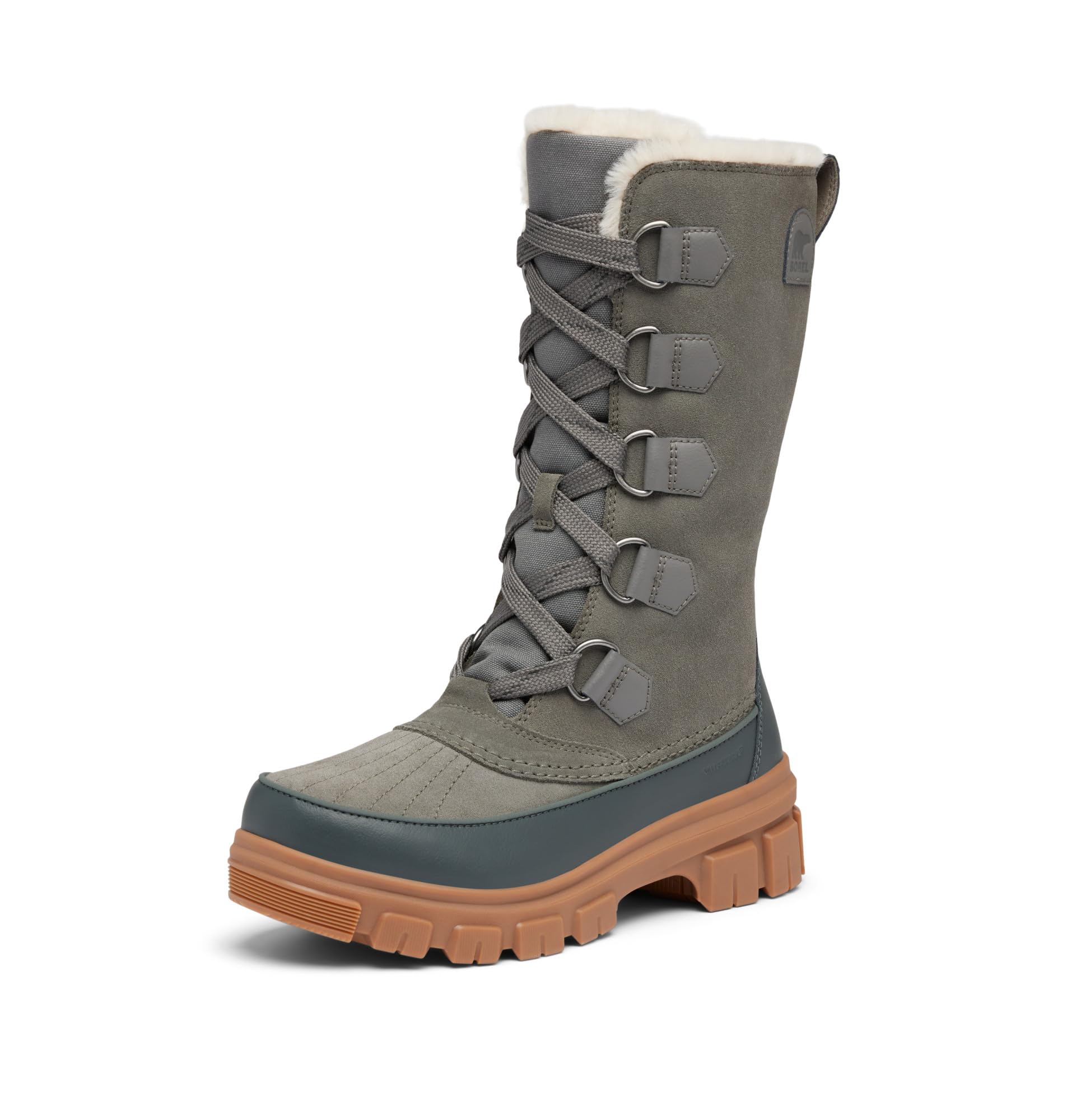
SOREL has built a reputation on tall, fashionable boots that don’t sacrifice cold-weather performance, and the Tivoli V Tall is a perfect example of that formula. The tall shaft keeps deep snow from topping in even during two-foot drifts, while the seam-sealed waterproof construction ensures total moisture protection. A removable 9mm washable recycled felt inner boot provides substantial warmth without excessive bulk, and the handcrafted rubber outsole delivers reliable traction on icy sidewalks and snow-covered paths.
Owners consistently report that these boots stay warm and dry even in single-digit temperatures, with enough insulation to handle hours outside without heated socks for most. The lacing system allows a custom fit around the calf, which helps prevent snow entry and reduces the sloppy heel lift common in pull-on rubber boots. A few users noted minor ankle rubbing when laced tightly, easily mitigated with moleskin or thinner socks at the cuff.
These boots are built to last — multiple reviewers mention SORELs surviving ten-plus winters without failure. The trade-off is a slightly heavier feel compared to a lace-up hiker, and the tall shaft reduces ankle mobility for dynamic movement. For stylish winter walks, commuting through deep snow, or standing at outdoor events in wet cold, the Tivoli V Tall remains a top contender that blends form with genuine function.
Why it’s great
- Tall shaft prevents snow entry even in deep drifts.
- Removable felt inner liner for easy drying.
- Proven durability lasting multiple winters.
Good to know
- Heavier than lace-up hiker boots.
- Reduced ankle mobility for active walking.
4. Columbia Men’s Expeditionist Shield

The Columbia Expeditionist Shield delivers surprising warmth and comfort for a boot that sits at a very accessible price tier. Its 200-gram insulation combined with Columbia’s reflective Omni-Heat lining keeps feet warm down to about 10°F, and the sealed construction resists water well enough for snow and rain commutes. Users report that the boot feels like a lightweight hiker rather than a clunky snow boot, making it a strong choice for daily wear where you don’t want to feel like you’re stomping around in moon boots.
Real-world feedback highlights the boot’s excellent out-of-box comfort — most reviewers found no break-in period required, and the overall fit is true to size with a generous toe box. The aggressive outsole tread provides solid grip on loose snow and mud, though it tends to pick up gravel and salt that gets tracked inside the home. Some users noted that after several months of heavy use the boot resists water well rather than being fully waterproof in deep puddle submersion, but it dries quickly when wet.
The Expeditionist Shield runs slightly half-size small according to multiple reports, so ordering up is recommended for thick sock wearers. The gold trim around the collar is a minor stylistic complaint, but it doesn’t impact function. For the price, this boot offers an excellent warmth-to-weight ratio and is a smart pick for anyone needing a reliable cold-weather boot without paying premium-tier prices.
Why it’s great
- Lightweight hiker feel with real snow boot warmth.
- No break-in period required.
- Excellent value for the insulation level.
Good to know
- Not fully submersible waterproof — more water-resistant.
- Aggressive tread picks up debris and salt.
5. XPETI Men’s Crest Thermo High-Top Winter Hiking Boots
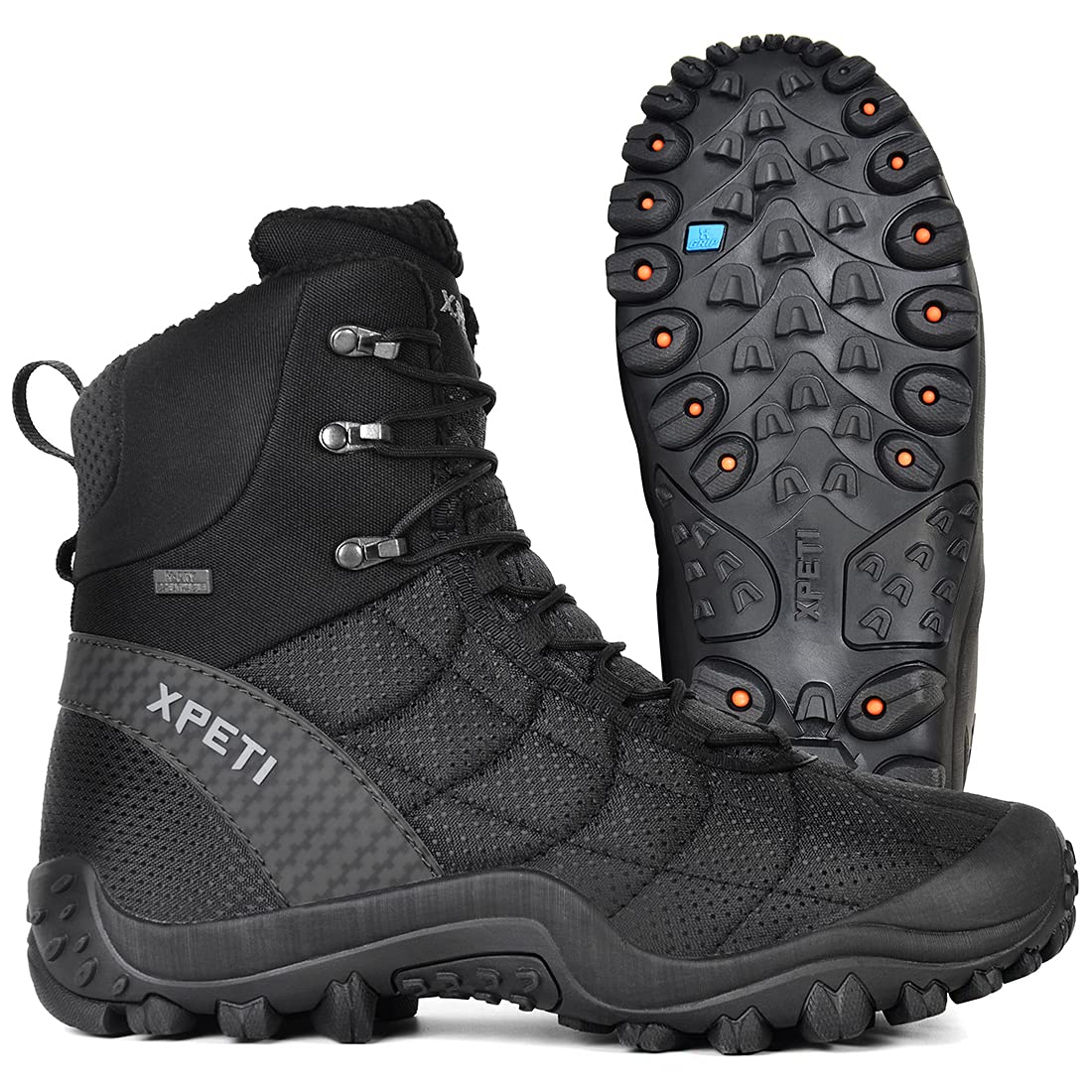
The XPETI Crest Thermo is a surprisingly capable winter hiker that punches above its price point. The high-top design provides excellent ankle support, and the insulated interior keeps feet warm in the 26-39°F range with normal socks, though heavy wool socks can make them too hot. The outsole traction is a standout feature — users report confident grip on icy grass, muddy slopes, and loose snow, giving it a legitimate claim as a budget-friendly winter hiking boot.
Comfort out of the box is another strong point — multiple reviewers noted zero break-in period, and the roomy toe box accommodates orthotic insoles without crowding. The all-rubber lower construction makes cleaning easy and provides reliable water resistance, though some buyers experienced minor moisture entry through the lace eyelets during prolonged rain exposure. Reapplying a waterproofing treatment seems to resolve this for most.
A small but notable design quirk: the bottom lace hook can press into the ankle bone when bending forward, which may annoy users who spend long hours in a crouched or seated position. Sizing runs about a full size small — most buyers sized up two from their normal shoe size to accommodate thick socks. For the price, the XPETI Crest delivers solid warmth, great traction, and robust ankle support, making it a legitimate alternative to more expensive winter hikers.
Why it’s great
- Excellent ankle support for a budget boot.
- Grips icy grass and mud confidently.
- Comfortable with zero break-in time.
Good to know
- Lace hook can press on ankle bone when bending.
- Runs small — size up at least one to two sizes.
6. Trudave Rubber Boots for Men & Women with Steel Shank
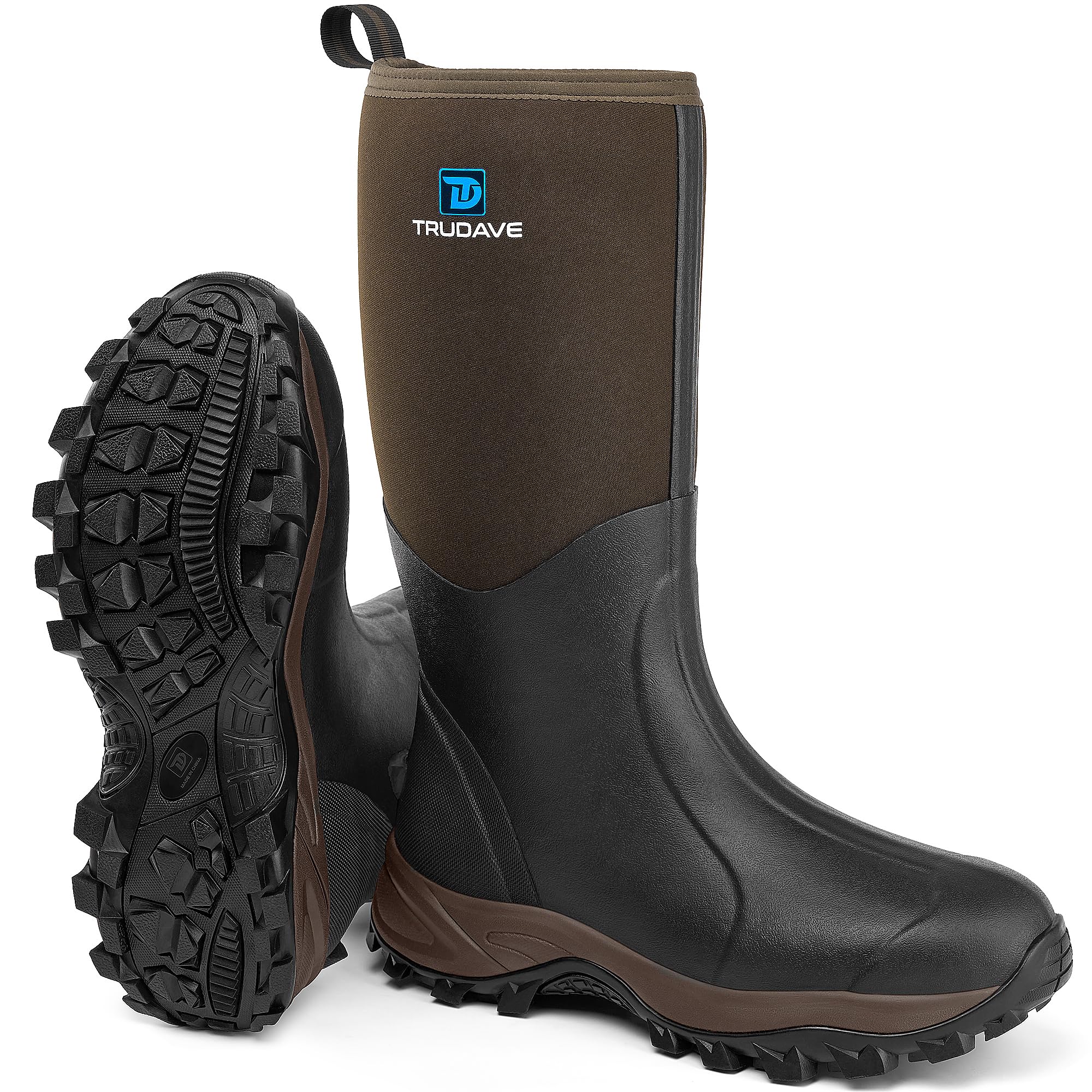
The Trudave rubber boots offer a compelling alternative to premium muck-style boots at a fraction of the price. The 6mm neoprene upper provides enough insulation for deep winter mud work and snow, while the steel shank adds structural rigidity that supports long standing hours on hard surfaces. The deep-lug outsole delivers excellent traction on loose soil, slush, and wet grass, making these a strong choice for farm work, hunting, or property maintenance in wet conditions.
Users consistently report that these boots are more breathable than traditional heavy rubber boots, meaning less sweat buildup during active work. The insulation handles temps down to around -20°F with thick wool sock layering, though some buyers noted that in milder wet conditions the boots feel less warm than expected. The wide toe box and true-to-size fit accommodate thicker socks without pinching, though the top edge of the neoprene cuff can chafe behind the knee for some wearers.
Durability reports are mixed — some buyers report the boots lasting two years of heavy daily use before rubber cracking, while others saw seam failure at the neoprene-to-rubber junction after similar duration. For the price, this is competitive with boots costing significantly more. If you need a pull-on rubber boot for deep slush, muddy jobs, or snow that doesn’t require the premium price of a big brand, the Trudave delivers solid performance.
Why it’s great
- Steel shank provides good arch support for standing work.
- More breathable than traditional all-rubber boots.
- Excellent value for a 6mm neoprene insulated boot.
Good to know
- Mixed long-term durability with rubber cracking possible.
- Neoprene cuff may chafe behind the knee.
7. Kalkal Insulated Waterproof Womens Rubber Boots
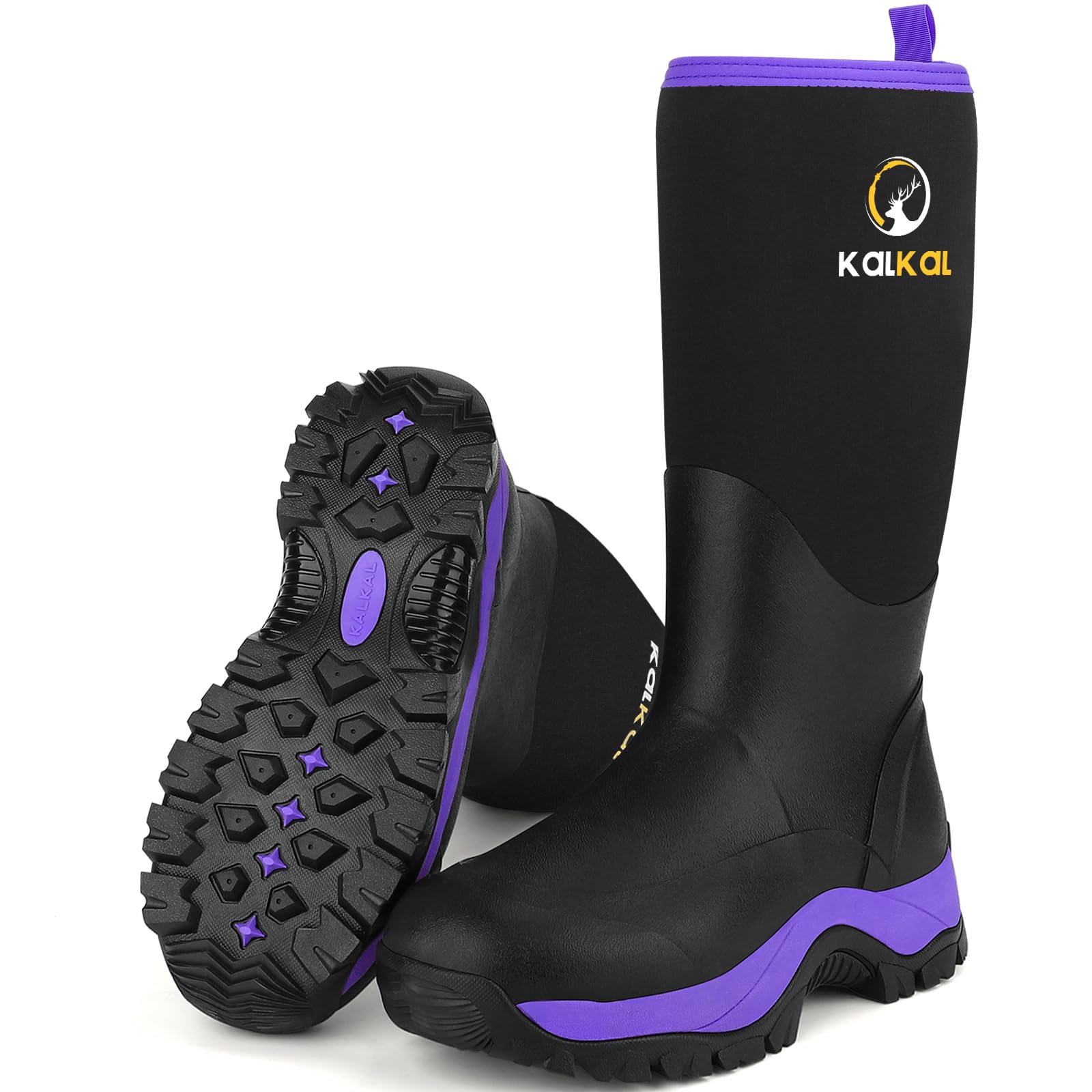
The Kalkal insulated rubber boots are a strong entry-level option for anyone who needs tall, waterproof pull-on boots for wet yard work, gardening, or light clamming. The 6mm neoprene lining provides enough warmth for cold wet conditions, and the tall shaft keeps mud and standing water from sloshing over the top. The thick rubber outsole uses a deep tread pattern that handles wet grass and soft ground convincingly, though buyers report it struggles on icy or hard-packed snow surfaces.
Comfort is a standout feature at this price tier — the boots come with a wide toe box that accommodates thick socks, and the neoprene upper conforms to the calf without excessive tightness, though users with larger calves may find the fit snug. Sizing runs slightly large, which is ideal for layering thick wool socks without cramping toes. The boots feel slightly clunky and heavy compared to premium muck boots, but for occasional wet-weather use they are entirely adequate.
Durability reports are mixed beyond the two-year mark, with some users noting rubber cracking at flex points and neoprene-to-rubber seam failures after extended heavy use. Many buyers report being pleased enough with the value to repurchase when the first pair wears out. For anyone needing inexpensive, waterproof, insulated boots for casual wet-weather chores and shallow snow, the Kalkal boot offers solid utility without a big investment.
Why it’s great
- Comfortable wide toe box for thick sock layering.
- Tall shaft provides good protection from standing water.
- Budget-friendly insulated rubber boot option.
Good to know
- Poor traction on ice and hard-packed snow.
- Long-term durability concerns with seam failures.
FAQ
Should I size up for boots I plan to wear with thick wool socks?
Can I wear 400g insulated boots for active hiking without overheating?
Final Thoughts: The Verdict
For most users, the boots for rain and snow winner is the Helly Hansen Garibaldi V3 because it combines the warmth of 400g PrimaLoft with a genuinely grippy winter outsole and durable waterproof leather, making it the single most capable boot in this lineup for real winter conditions. If you want a lightweight daily commuter that still handles snow and slush, grab the The North Face Chilkat V. And for deep snow where fashion matters as much as function, nothing beats the SOREL Tivoli V Tall.