
Our readers keep the lights on and the weekend projects moving. As an Amazon Associate, I earn from qualifying purchases.
Wet, slushy mornings and muddy trails demand footwear that keeps your feet dry without sacrificing comfort or grip. The wrong pair leaves you with cold socks, slippery steps, and a miserable day ahead. This guide cuts through the noise to find the boots that truly handle the worst of snow and rain.
I’m Rikta — the co-founder and writer behind FitlyFast. After hours of combing through user experiences, material specs, and real-world performance data on waterproof membranes, insulation thickness, and outsole tread patterns, I’ve built this guide to help you invest in the right pair.
Whether you’re facing a daily commute through slush or weekend treks in the backcountry, finding the right pair of boots for snow and rain means looking past marketing claims and focusing on measurable traits like seam-sealed construction, neoprene thickness, and lug depth.
How To Choose The Best Boots For Snow And Rain
Finding a reliable boot for snow and rain requires balancing three main factors: waterproofing integrity, thermal insulation, and outsole grip. A boot that nails all three will keep you dry, warm, and stable on slick surfaces. Here’s what to scrutinize before buying.
Waterproofing: Seams Matter As Much As Material
Many boots claim to be waterproof, but the real test is in the seams. A rubber or neoprene shaft is inherently waterproof, but boots with leather or fabric uppers rely on a membrane like Omni-Tech or a sealed internal bootie. Always look for “seam-sealed” construction — this prevents water from wicking through stitch holes. For heavy snow or puddle splashing, a taller shaft (mid-calf or higher) provides critical extra protection.
Insulation: Match The Layer To The Climate
For mild rain and wet fall weather, uninsulated or thin 2mm neoprene boots are fine. Once temperatures drop into the 20s and teens, you need 5mm to 6mm neoprene or a boot rated with 200g to 400g synthetic insulation. Beware of “warm” as a vague label — look for a specific mm thickness or gram weight. A boot that is too warm for your climate will cause sweaty feet, which then leads to cold feet anyway.
Traction: Look For Deep, Multi-Directional Lugs
Wet grass, mud, and packed snow all demand a sole with deep lugs (at least 4-5mm) and spaced-out channels that self-clean. A flat, shallow tread is fine for a concrete sidewalk but dangerous on a muddy incline. Boots with a steel shank add stability on uneven ground, which is a major benefit if you are carrying weight or walking on slick rocks.
Quick Comparison
On smaller screens, swipe sideways to see the full table.
| Model | Category | Best For | Key Spec | Amazon |
|---|---|---|---|---|
| Timberland White Ledge Mid | Hiking Boot | All-terrain hiking in wet conditions | Seam-sealed waterproof leather | Amazon |
| SOREL Tivoli V Tall | Tall Winter Boot | Deep snow & cold commutes | Waterproof shell with wool lining | Amazon |
| Trudave Women’s Steel Shank | Muck Boot | Barn chores & wet yard work | 6mm neoprene, steel shank | Amazon |
| Trudave Men’s Steel Shank | Insulated Boot | Insulated outdoor work & hunting | 5mm neoprene, steel shank | Amazon |
| Columbia Transverse Hike | Hiking Boot | Immediate comfort out of the box | Omni-Tech waterproof membrane | Amazon |
| HISEA Women’s Mud Boots | Garden Boot | Budget garden & light rain use | Insulated neoprene rubber | Amazon |
| HISEA Men’s Ankle Bootie | Short Boot | Quick slips for wet grass & mud | 100% waterproof rubber | Amazon |
In‑Depth Reviews
1. Timberland Men’s White Ledge Mid Waterproof Hiking Boots

This boot is the gold standard for all-season wet conditions where you need both ankle support and waterproof confidence. The seam-sealed waterproof leather upper keeps slush and puddle water out, while the multi-directional lug sole offers tenacious grip on everything from muddy hillsides to icy gravel. Users consistently report excellent durability after a full year of heavy use, noting the sole shows minimal wear compared to other mid-range boots.
Comfort is immediate, with a wide toe box that never pinches and a flexible collar that prevents the common rubbing on the Achilles. Many buyers recommend sizing down a half step for a locked-in feel, especially when adding a supportive insole. The nylon shank provides a stable platform for carrying gear or navigating uneven terrain, making this a true hybrid for casual wear and serious day hikes.
The trade-off is that the leather requires periodic maintenance with mink oil to preserve its waterproof integrity. Over time, neglect can lead to water penetration, so this boot asks for a small commitment to care. It also lacks heavy insulation, so for deep winter snow below 20°F, you will need thick wool socks or a dedicated insulated boot.
Why it’s great
- Seam-sealed construction ensures reliable waterproofing for years with proper care.
- Immediate comfort with no break-in period, even for wide feet.
- Excellent outsole grip on rock, mud, and loose gravel.
Good to know
- Leather requires regular mink oil treatment to stay waterproof.
- Not insulated; needs thick socks for sub-zero temperatures.
2. SOREL Women’s Tivoli V Tall Waterproof Boot
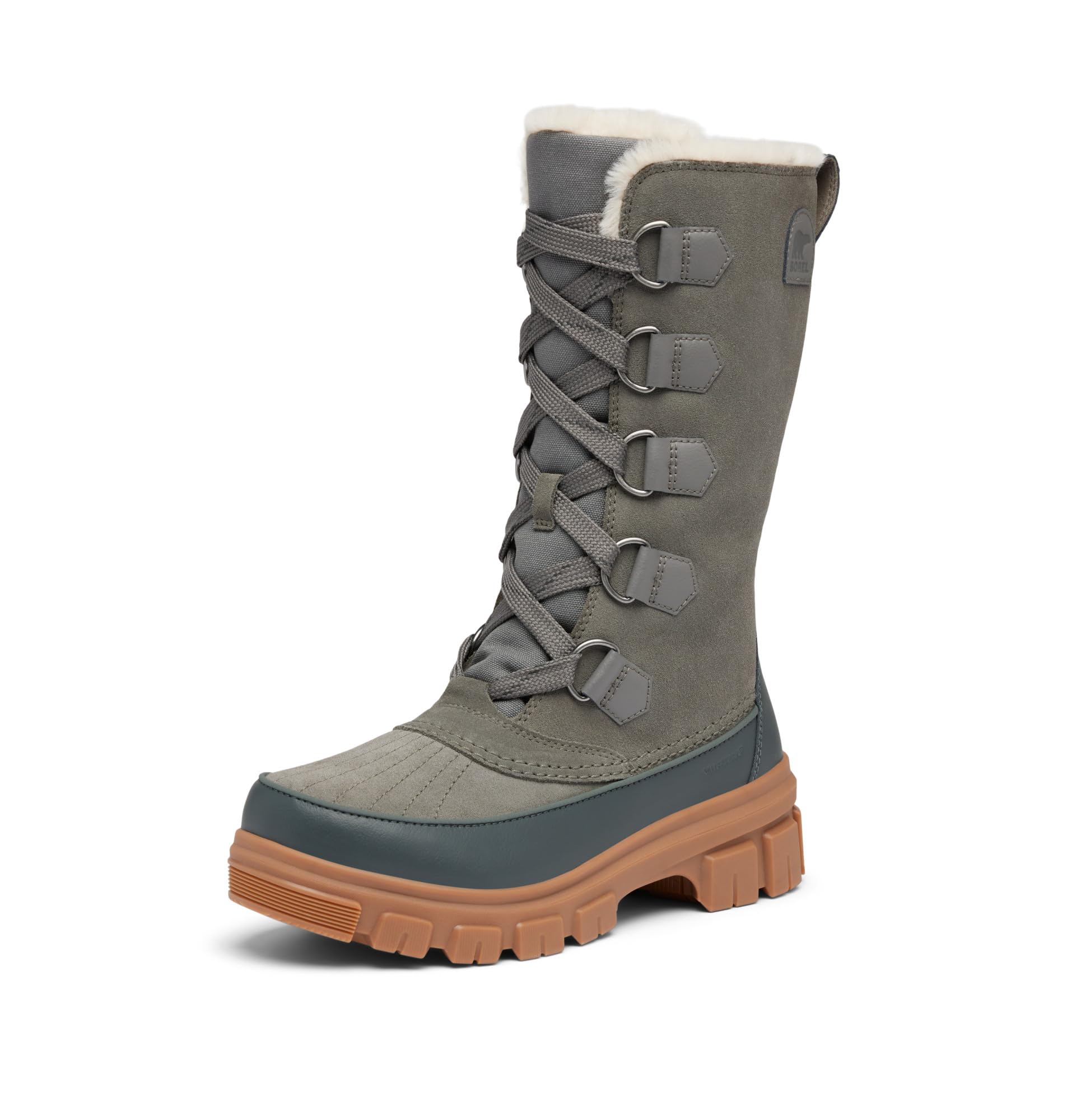
For urban commuters and snowy-day explorers who prioritize warmth and style equally, this boot delivers serious cold-weather performance. The waterproof shell wraps around a removable wool-blend liner that traps heat effectively, with users reporting warm feet down into the teens without needing extra layers. The tall shaft provides excellent snow blocking, preventing powder from sneaking in during deep steps.
Comfort is a standout feature, with many reviewers noting the fit accommodates orthotics and thicker socks without feeling cramped. The thick laces resist freezing, and the traction pattern holds well on light ice and packed snow. One user even reported hers lasted over a decade, which speaks to the quality of the outsole bonding and upper materials.
The downsides are minor but worth noting. A few users experienced minor ankle chafing when laced very tightly, which resolved with looser lacing or a moleskin patch. This boot is also not designed for deep mud or heavy-duty barn work — it excels in snow and slush but lacks the aggressive tread for extreme mud.
Why it’s great
- Warm down to teens with the removable wool liner.
- Tall shaft keeps snow out during heavy accumulation.
- Durable construction with a track record of multi-year use.
Good to know
- May rub the ankle if laced too tightly right out of the box.
- Tread is best for snow/slush; not ideal for deep mud.
3. Trudave Rubber Boots for Women with Steel Shank
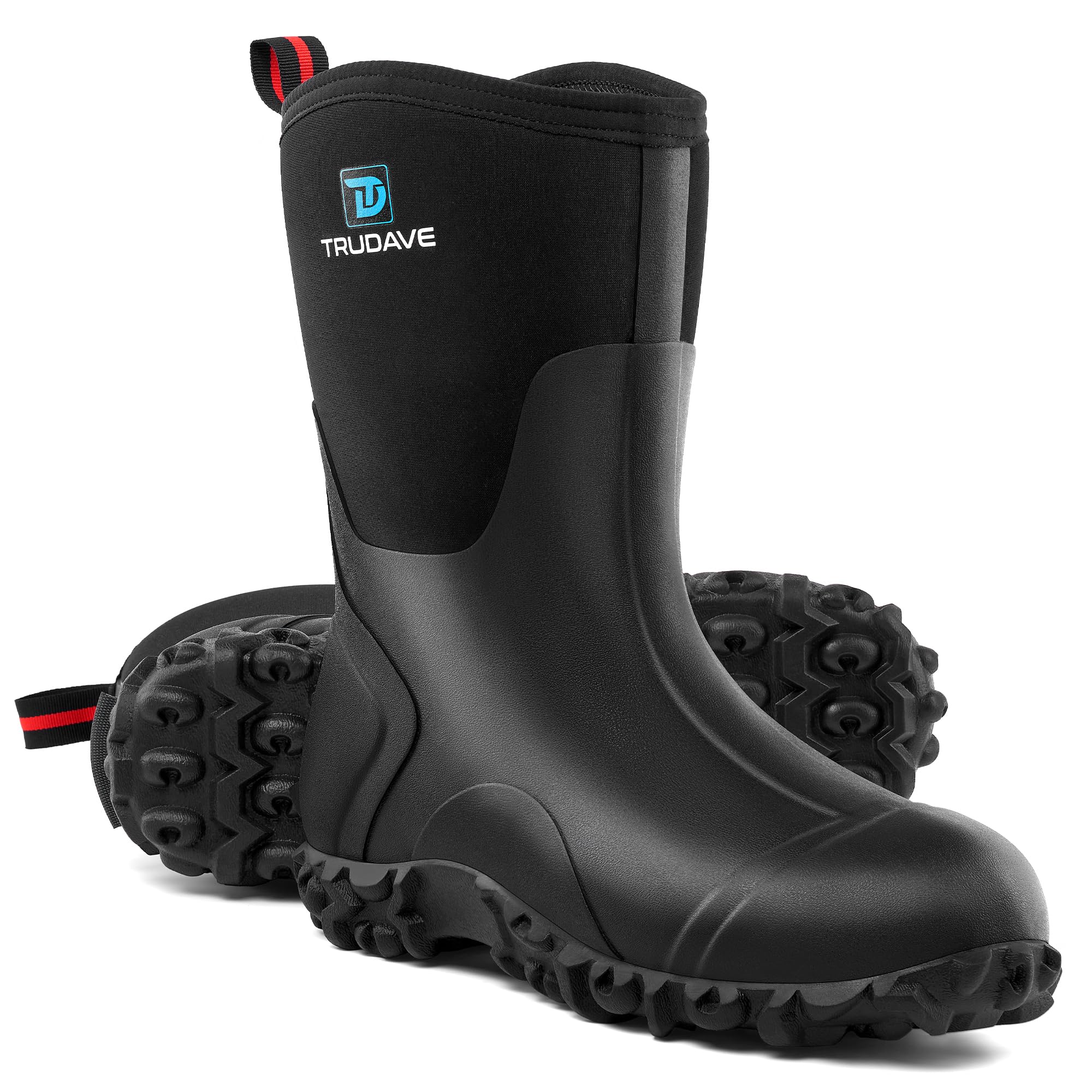
Designed for the toughest wet conditions, these boots bring 6mm neoprene insulation and a steel shank to the table, making them ideal for horse pens, muddy fields, and icy yard work. The steel shank provides rigid support for shoveling and standing on uneven ground, reducing foot fatigue significantly compared to standard garden boots. Users rave about the comfort, noting they can spend hours in wet snow and mud without cold or wet feet.
The fit runs slightly large, which is intentional to allow for thick fleece socks without compression. The mid-calf height hits a sweet spot — tall enough to wade through snow but low enough to avoid the restrictive feeling of full-height wellies. The outsole features deep lugs that self-clean, shedding mud with each step.
A durability caveat emerged in a three-month update: one user reported the seam separating the sole from the boot base. While this appears to be an isolated case, it is worth noting that these boots may not survive the same abuse as a full rubber-molded boot. They are excellent for regular chores but may not be the choice for extreme industrial use.
Why it’s great
- 6mm neoprene offers substantial warmth for cold, wet chores.
- Steel shank provides excellent support for standing and shoveling.
- Mid-calf height is versatile for snow and mud without being restrictive.
Good to know
- Potential for sole separation in isolated cases after extended use.
- Limited color options without a surcharge.
4. Trudave Rubber Boots for Men with Steel Shank

A formidable option for men who need a durable, insulated boot without paying premium prices. The 5mm neoprene core provides enough warmth for Alaskan-style Zodiac excursions and winter hiking, as confirmed by users who took them through cold, wet conditions on demanding trips. The steel shank is a critical feature here, offering stability on boat decks and muddy trails where a flexible sole would be a hazard.
The design prioritizes practicality: the rubber shaft rolls up compactly for packing, the soles wash clean in a sink, and the pull loops make donning easy even with cold hands. Users report the fit runs large, which many consider a benefit for layering thick socks, but those with narrow feet may need to size down to avoid slop.
The only real criticism is a lack of arch support, which is common in this boot style. Adding a supportive insole solves the problem easily, and the footbed is roomy enough to accept an aftermarket insert without feeling cramped. For the price, the combination of insulation, steel shank, and waterproofing is hard to beat.
Why it’s great
- 5mm neoprene keeps feet warm in near-freezing wet conditions.
- Steel shank offers essential stability for uneven work surfaces.
- Easy to pack, clean, and pull on.
Good to know
- Runs large; size down or add a thick insole for best fit.
- No built-in arch support; aftermarket insole is recommended.
5. Columbia Women’s Transverse Hike Waterproof Hiking Boots

If foot comfort is your highest priority, this boot stands out because it requires no break-in period whatsoever. Reviewers describe pulling them from the box and immediately traversing wet cobblestone in Scotland or hiking in Alaska — with zero hot spots or blisters. The Omni-Tech membrane delivers reliable waterproofing that held up for two-week trips through rain and puddles.
The fit is specifically designed for narrow heels and high arches, which is a rarity in this category. The collar extends high enough to provide supportive ankle wrap without restricting flex, and the overall weight is impressively light. The tread uses a Omni-Grip pattern that bites into wet rocks and loose soil with confidence.
The primary shortcoming is the lack of substantial arch support for those with fallen arches or plantar fasciitis. Several users noted they added insoles for extended hikes. The boot is also uninsulated, so while it is waterproof for rain, it requires thick wool socks for temperatures below freezing.
Why it’s great
- Truly zero break-in — comfortable from the first step.
- Omni-Tech membrane provides reliable, lightweight waterproofing.
- Ideal for narrow heels and high arches.
Good to know
- Limited arch support; a third-party insole may be necessary.
- Uninsulated; not designed for deep winter cold.
6. HISEA Women’s Mud Rain Boots
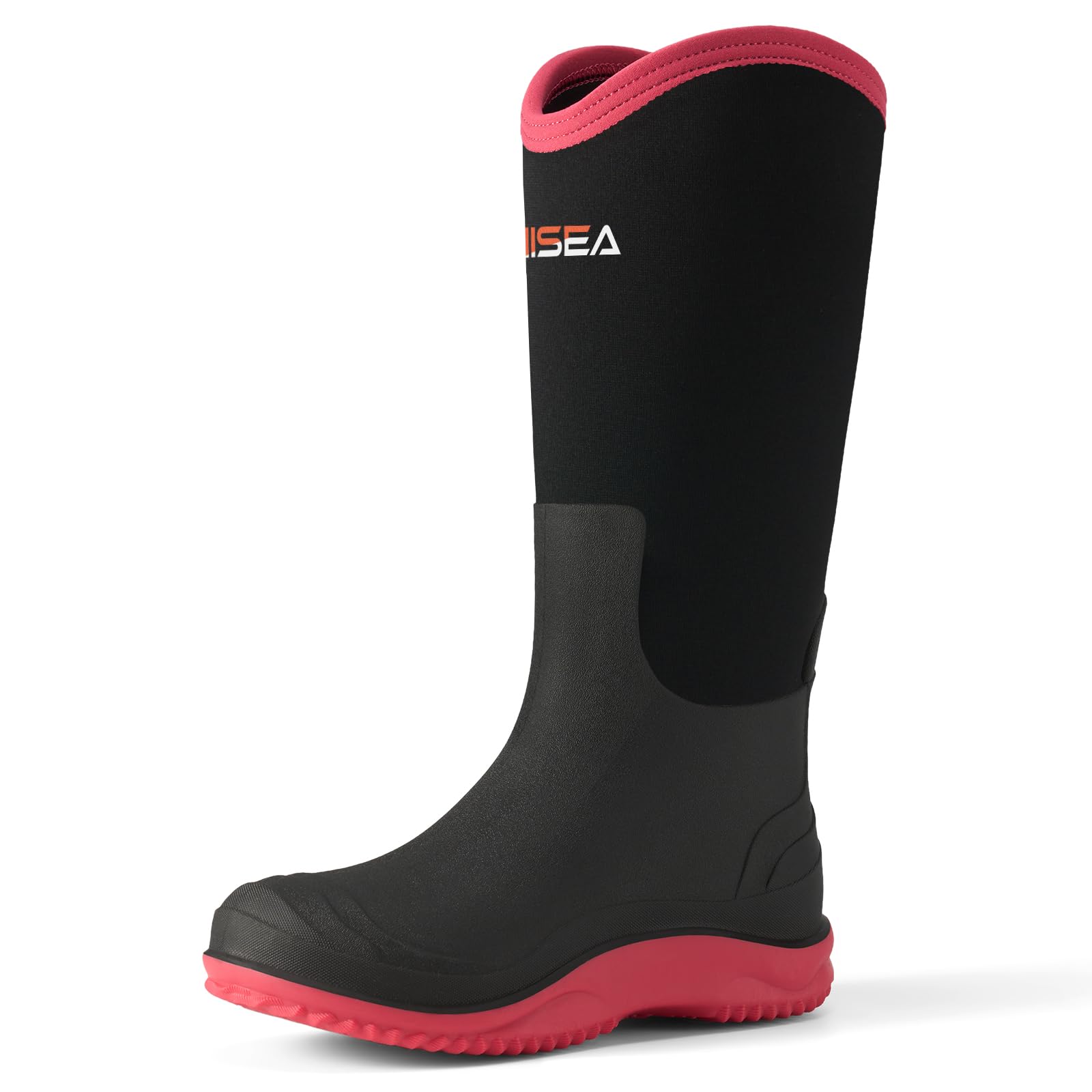
For gardeners and homesteaders on a budget, these boots deliver surprising quality at a friendly price point. The neoprene upper stretches to accommodate high arches and wide calves without pinching, while the rubber sole provides slip resistance on wet grass and muddy patches. Users consistently praise the comfort, with many describing them as “like running shoes” in terms of underfoot cushioning.
The hands-free entry is a real convenience feature — the boot shaft stays open without collapsing, allowing you to slide your foot straight in. The roomy toe box prevents cramped toes during long hours of yard work, and the waterproof rubber is easy to hose off after a day in the muck. The black with fuchsia accents offers a subtle pop of color.
The main trade-off is that the neoprene is not heavily insulated, making these best for mild rain and warmer wet weather rather than deep snow. They also run large, so sizing down is recommended for a snug fit. They lack the steel shank found in more expensive work boots, so they are not ideal for heavy load-bearing tasks.
Why it’s great
- Extremely comfortable for a rubber boot — feels like a sneaker.
- Easy hands-free entry and removal.
- Waterproof and easy to clean after muddy chores.
Good to know
- Not insulated; best for mild wet weather rather than snow.
- Runs large; size down one step for best fit.
7. HISEA Men’s Ankle Rain Boots

This ankle-height bootie is purpose-built for a specific scenario: quick trips into wet grass, muddy lawns, and shallow puddles where full-height boots feel like overkill. The 100% rubber construction is tested by users who have worn them through two heavy winters, reporting zero leaks and excellent durability. The flexible footbed is soft and bouncy, providing surprising comfort for all-day wear during light yard work or kayaking.
The wide fit is a major advantage for men with wider feet or those who want to wear them with thick socks. The large pull loops at the back make them easy to yank off after a muddy day. The tread uses a rugged pattern that provides good traction on wet grass and loose dirt, though it can be slightly slippery on wet smooth concrete.
The main limitation is the ankle height. They also lack any arch or heel support, which means after a full day of standing, your feet may fatigue faster than in a boot with a shank. They are an excellent low-cost solution for light wet-duty, not a heavy winter boot.
Why it’s great
- Lightweight and flexible for quick slips in and out.
- 100% waterproof rubber tested over multiple winters.
- Excellent fit for wide feet and easy to clean.
Good to know
- Ankle height unsuitable for deep snow or deep puddles.
- No arch support; aftermarket insoles recommended for long days.
FAQ
Can I use a waterproof spray on my neoprene boots to improve their durability?
What is the difference between a waterproof membrane and a rubber boot?
Final Thoughts: The Verdict
For most users, the boots for snow and rain winner is the Timberland White Ledge Mid because it balances seam-sealed waterproofing, immediate comfort, and aggressive traction for the widest range of wet conditions. If you want deep snow protection with stylish warmth, grab the SOREL Tivoli V Tall. And for heavy-duty barn work and muddy chores, nothing beats the Trudave Women’s Steel Shank.