
Our readers keep the lights on and the weekend projects moving. As an Amazon Associate, I earn from qualifying purchases.
The relentless impact of concrete against your heels, arches, and knees isn’t just a nuisance; it’s accumulated fatigue that drains your energy long before the shift ends. A boot built solely for protection or fashion won’t buffer that slab’s unforgiving surface, leaving you desperate for relief by lunchtime. The difference between a grueling day and a productive one comes down to the specific layering of foam density, outsole geometry, and arch support engineered into your footwear.
I’m Rikta — the co-founder and writer behind FitlyFast. For this guide, I’ve analyzed cushioning systems, measured outsole thickness, and compared the anti-fatigue technologies across dozens of pairs to isolate the specific design elements that absorb shock and support your frame on hard, flat surfaces.
Whether you rack up miles on a warehouse floor or stand stationary over a workbench, the right pair changes your recovery from surviving to thriving. This breakdown covers the top contenders to help you find the absolute best boots for standing all day on concrete.
How To Choose The Best Boots For Standing All Day On Concrete
Selecting a boot for concrete is a game of force management, not just comfort. The wrong sole or last shape multiplies ground impact into your hips and lower back.
Wedge Sole vs. Lug Sole Geometry
Lug soles with deep treads create isolated pressure points on a flat surface, reducing your contact patch and concentrating force through your heel and metatarsal. A wedge sole, cut flat from heel to toe, maximizes surface contact with the ground. This distributes your weight evenly and stabilizes your stance during long stationary periods. For concrete, the wedge is almost always the superior geometry.
Midsole Density and Energy Return
A midsole that is too soft will bottom out after a week, offering no rebound. A midsole that is too hard transfers shock directly upward. The Goldilocks zone in standing-day boots uses a polyurethane or EVA compound with a density that resists compression yet returns enough energy to reduce the muscle pump your calves need to keep blood moving. Look for brands naming their anti-fatigue foam technology.
Arch Support vs. Flat Insoles
Most budget boots ship with a flat, removable insole that does nothing for your arch. When standing on concrete, a collapsed arch pulls your knee inward, shifting load toward the inside of your foot. Prioritize boots with a built-in orthotic or a pronounced arch shank (like a steel shank) that prevents the boot from bowing under your weight. This keeps your skeleton aligned from the ankle up.
Quick Comparison
On smaller screens, swipe sideways to see the full table.
| Model | Category | Best For | Key Spec | Amazon |
|---|---|---|---|---|
| Timberland PRO Endurance | Premium | Steel Safety & All-Day Shock | Anti-Fatigue Tech footbed | Amazon |
| KEEN Gibson | Premium | Lightweight Composite Toe | KEEN.ReGEN midsole | Amazon |
| ARIAT Turbo Chelsea | Premium | Carbon Toe & Anti-Fatigue | Energy Max insole | Amazon |
| Orthofeet Granite | Premium | Orthopedic Support | Ortho-Cushion system | Amazon |
| Timberland PRO Boondock | Mid-Range | Composite Toe & Waterproof | 4.5 lb heft per boot | Amazon |
| KEEN Kenton Mid | Mid-Range | Light-Active Trades | 18.3 oz per shoe | Amazon |
| Golden Fox 622P | Mid-Range | Resoleable Goodyear Welt | PU wedge sole | Amazon |
| AZXPROT Wedge Boot | Budget | Soft Toe & Shock Absorption | Dual-density outsole | Amazon |
| Steel Toe Rubber Boot | Budget | Wet/Muddy Concrete Sites | 6mm neoprene lining | Amazon |
In‑Depth Reviews
1. Timberland PRO Endurance 6″ Steel Toe

The Timberland PRO Endurance stands as a complete package for standing on concrete because it integrates a steel safety toe with a dedicated Anti-Fatigue Technology footbed that actively returns energy with each step. The full-grain waterproof upper combined with a puncture-resistant plate means you don’t sacrifice protection for comfort on the slab.
Users consistently report zero foot fatigue even after 11-hour shifts in shops and on construction sites, with some noting that the thick rubber outsole and midsole absorb impact that would normally travel up the shin. The generous internal volume around the steel toe reduces pressure across the top of the foot, a common complaint with cheaper safety toes.
While the boot is noticeably heavier than composite-toe competitors, the stability and shock absorption you gain on flat concrete make the weight trade worthwhile. Expect a short break-in period of about two weeks before the leather and footbed settle to your specific gait pattern.
Why it’s great
- Anti-Fatigue Technology returns energy to reduce muscle pump during long standing hours
- Steel toe and puncture plate offer max protection without sacrificing interior comfort
Good to know
- Heavier build may feel cumbersome for workers who also climb ladders frequently
- Requires a deliberate break-in period for the leather to conform
2. KEEN Utility Gibson Mid Composite Toe

The KEEN Gibson brings a sneaker-like flexibility to the work boot category without losing the protective specs needed for industrial environments. Its KEEN.ReGEN midsole uses a compression-resisting foam that returns to shape quickly, preventing the “bottomed out” feeling that plagues soft midsoles after weeks on concrete.
Carbon fiber composite toe offers ASTM-rated protection while adding minimal weight—users describe these as “insanely comfortable” right out of the box with little break-in. The slip-resistant rubber outsole meets SATRA non-slip standards, giving you secure footing on polished or oily concrete. The wide KEEN toe box naturally allows your splay toes to spread, which reduces arch strain during static standing.
One recurring note is that the thick leather upper scuffs easily, but a thumb rub or conditioner quickly restores the finish. The boot prioritizes out-of-box fit, comfort, and durability over aesthetics, making it a top pick for anyone who lives on concrete floors in warehouses or light manufacturing.
Why it’s great
- Compression-resisting KEEN.ReGEN midsole maintains cushioning over months of daily use
- Wide toe box allows natural foot splay to reduce arch strain on flat surfaces
Good to know
- Leather upper scuffs easily, though marks can be buffed out
- Not fully waterproof; water can wick through at the sole edge in wet conditions
3. ARIAT Turbo Chelsea Carbon Toe

The ARIAT Turbo Chelsea packs a carbon-composite toe and 90-degree heel into a Chelsea silhouette that slips on and off quickly—perfect for workers who transition between the concrete floor and a truck cab multiple times a day. The Energy Max anti-fatigue insole sits atop a cushioning midsole that absorbs shock distinctly at the heel strike.
Users who wear these for 9+ hour standing shifts report needing zero break-in time and note the boot survives 18 months of heavy industrial use before needing replacement. The DRYShield waterproof membrane keeps feet dry in wet concrete pours, and the oil- and slip-resisting outsole has been tested to 150°C, so hot surfaces won’t degrade traction.
The boot’s main trade-off is interior volume—the composite toe and padding eat into toe box space, so you may need to go a half-size up if you have wide feet. The ATS technology provides ergonomic arch support, but the Chelsea elastic gore can be tight on taller ankles during initial wear.
Why it’s great
- Energy Max insole and ATS support combine for immediate comfort without break-in
- Durable build that often exceeds 18 months in demanding industrial roles
Good to know
- Composite toe reduces interior toe box space; size up for wide feet
- Slip resistance is less reliable on inclined steel surfaces or slopes
4. Orthofeet Granite Waterproof Boot

The Orthofeet Granite is designed explicitly for people whose feet, knees, or lower back rebel against concrete. Its Ortho-Cushion system integrates a built-in orthotic insole with a shock-absorbing polyurethane outsole and an extra-wide toe box that eliminates crowding. This reduces the shearing stress that causes metatarsalgia and arch pain during static stance.
Users who work 10-12 hour shifts on concrete report immediate relief from heel pain and the elimination of aggravated arthritis symptoms. The boot is slip-resistant and fully waterproof, making it suitable for wet warehouse or outdoor concrete environments. The soft leather upper conforms quickly but holds up to 55+ hours per week of industrial wear across six months.
The insole is removable if you prefer custom orthotics, and the boot ships with fitting spacers to adjust arch height. The tread depth is shallower than a true lug sole, so on loose gravel or grass transitions the grip is average. For pure concrete duty, though, the flat wedge-like outsole maximizes your surface contact.
Why it’s great
- Ortho-Cushion system dramatically reduces foot, knee, and back pain for long standing shifts
- Extra-wide toe box prevents toe crowding and related arch strain on hard surfaces
Good to know
- Shallow tread reduces grip on loose surfaces outside of concrete
- Insoles may feel thin after several weeks; replacement insoles are available
5. Timberland PRO Boondock 6″ Composite Toe
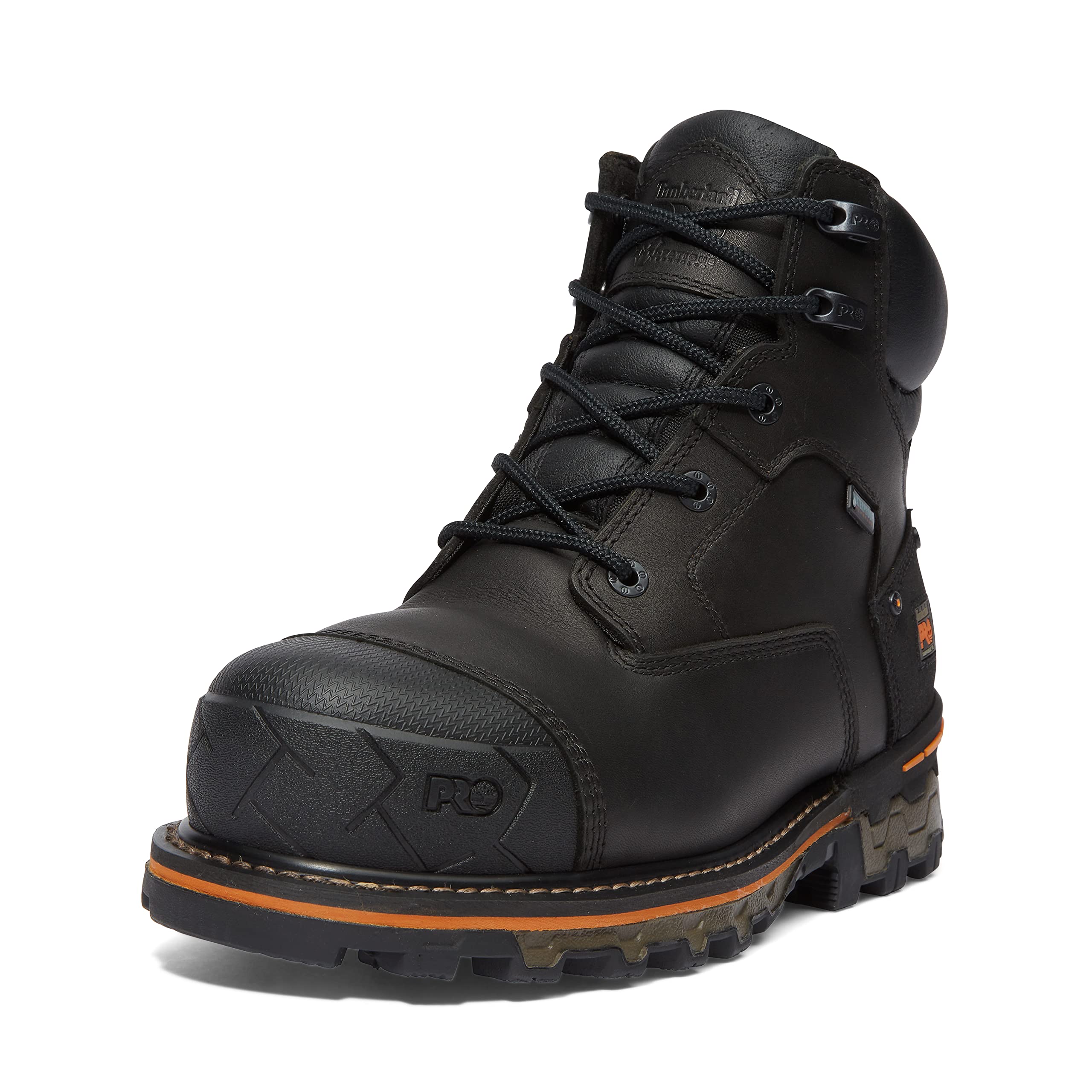
The Timberland PRO Boondock is a legendary silhouette in industrial footwear, known for its exceptional waterproofing and rugged toughness. The composite safety toe avoids metal detector issues while still meeting protective standards, and the outsole features deep lugs that offer traction on ice and uneven terrain—though on flat concrete the tread pattern isn’t as stable as a wedge sole.
Users who wear these for 11-hour shifts in wet marine construction report keeping their feet completely dry. The boot weighs around 4.5 lb per pair, which is heavier than many modern competitors, but the substantial build translates into durability that often exceeds multiple years of daily abuse. The anti-fatigue technology in the footbed does help absorb some shock.
The main drawback for concrete duty is the high lug profile, which reduces your ground contact area and can create a subtle rocking sensation during prolonged standing. The boot also runs slightly large, and some users feel shin irritation from the top collar if tied too tightly. Consider these for mixed-conditions concrete work rather than pure indoor slab standing.
Why it’s great
- Industry-leading waterproof performance keeps feet dry in wet concrete environments
- Extremely durable build that often lasts multiple years in demanding conditions
Good to know
- Deep lug outsole creates less stable ground contact on flat concrete than a wedge sole
- Heavier build may contribute to fatigue for workers who stand stationary for full shifts
6. KEEN Utility Kenton Mid Comp Toe

The KEEN Kenton Mid blurs the line between a work boot and a high-top sneaker, weighing only 18.3 oz per shoe. This low mass makes it an appealing option for assemblers, maintenance technicians, and warehouse workers who need protection without the heavy feel of traditional boots. The compression toe is ASTM-rated for impact.
The flat outsole with minimal tread offers excellent grip on oily concrete surfaces, and users report the soles resist oil and fluid damage with minimal tread wear. The wide KEEN fit prevents toe cramping, which helps blood circulation during long standing periods. The boot is comfortable directly out of the box and requires virtually no break-in.
The critical missing feature for concrete duty is substantial cushioning—some users note the hard midsole provides limited padding for 10+ hour standing shifts. These are best suited for light-to-moderate concrete exposure where you’re moving frequently, not rooted in one spot. Water resistance is also poor; water wicks through at the sole edge quickly.
Why it’s great
- Extremely lightweight design reduces leg fatigue during active workdays on concrete
- Excellent grip on oily and polished concrete prevents slips in wet conditions
Good to know
- Minimal midsole cushioning may not provide enough shock absorption for full-day stationary standing
- Not waterproof; water enters at the sole edge in wet conditions
7. Golden Fox 622P Plain Toe Wedge

The Golden Fox 622P is one of the few budget-conscious boots that uses a Goodyear welt construction, making it resoleable and giving it a lifespan far beyond its purchase price. The polyurethane wedge sole provides excellent shock absorption on concrete, and the foamed structure contains tiny air bubbles that keep the boot lightweight and flexible.
Users who work as carpenters or in construction report these boots hold up well after 10+ hour daily shifts, with the wedge sole tracking less mud and debris than lugged alternatives. The oil-tanned leather develops a patina over time and scuffs easily, which is expected from a work boot. The steel shank offers solid arch support during prolonged standing.
The boot runs large—most buyers need a half to full size down. There are no speed hooks at the top, so lacing takes slightly longer. The traction on wet smooth surfaces is mediocre compared to dedicated rubber outsoles, but for dry concrete warehouse floors, the wedge contact patch delivers excellent stability.
Why it’s great
- Goodyear welt construction allows resoling, dramatically extending boot life
- PU wedge sole maximizes ground contact for stable standing on flat concrete
Good to know
- Runs large; order a half to full size down for proper fit
- Traction is mediocre on wet, smooth surfaces
8. AZXPROT 6″ Soft Toe Wedge Boot
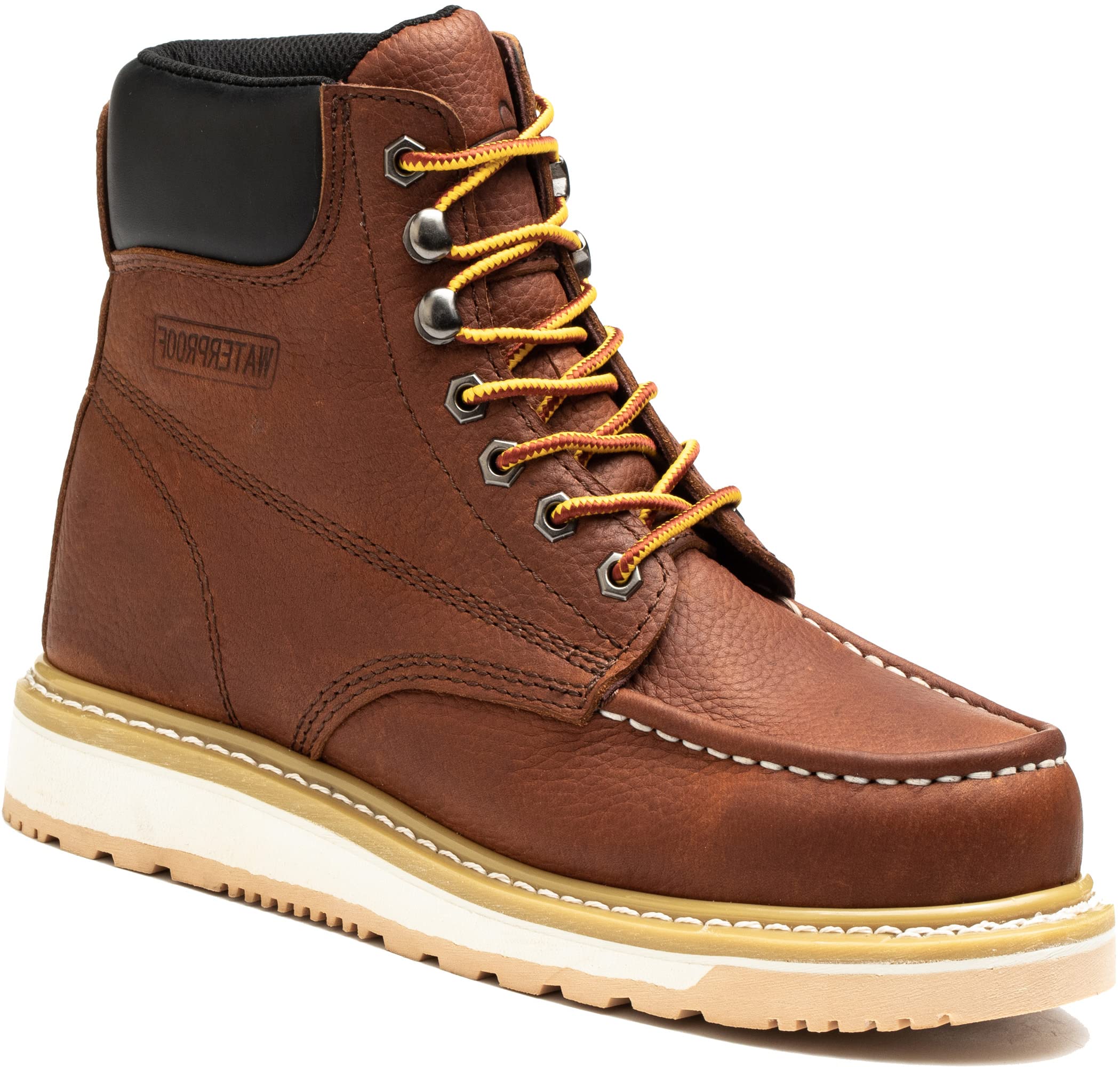
The AZXPROT wedge boot offers an entry-level price point for someone needing a soft toe design with good shock absorption on concrete. The dual-density outsole combines rubber and polyurethane, giving you wear resistance under the heel and forefoot while maintaining flexibility through the midfoot. The anatomically-engineered cushioning insole provides rebound that helps during 8-hour shifts.
Users who bought these for daily warehouse or landscaping wear describe them as “comfortable as hell” and specifically note that they hold up well with regular use. The full-grain leather upper resists cracking better than corrected-grain leather at this price tier, and the Goodyear welt construction adds surprising durability for the investment.
The boot is water-resistant rather than fully waterproof, meaning it handles splashes but not standing water. Some users report the sizing runs a half-size large, so measure carefully. The lining is dense and silky, but breathability is moderate—warmer for summer concrete work. If you need a basic wedge silhouette without steel or composite toe protection, this is a solid foundation.
Why it’s great
- Dual-density rubber/PU sole provides good shock absorption at a competitive entry price
- Full-grain leather resists cracking better than budget-tier alternatives
Good to know
- Water-resistant, not waterproof—not suitable for wet concrete pours
- Runs a half-size large; careful sizing is required for proper fit
9. Steel Toe Rubber Boot with Neoprene
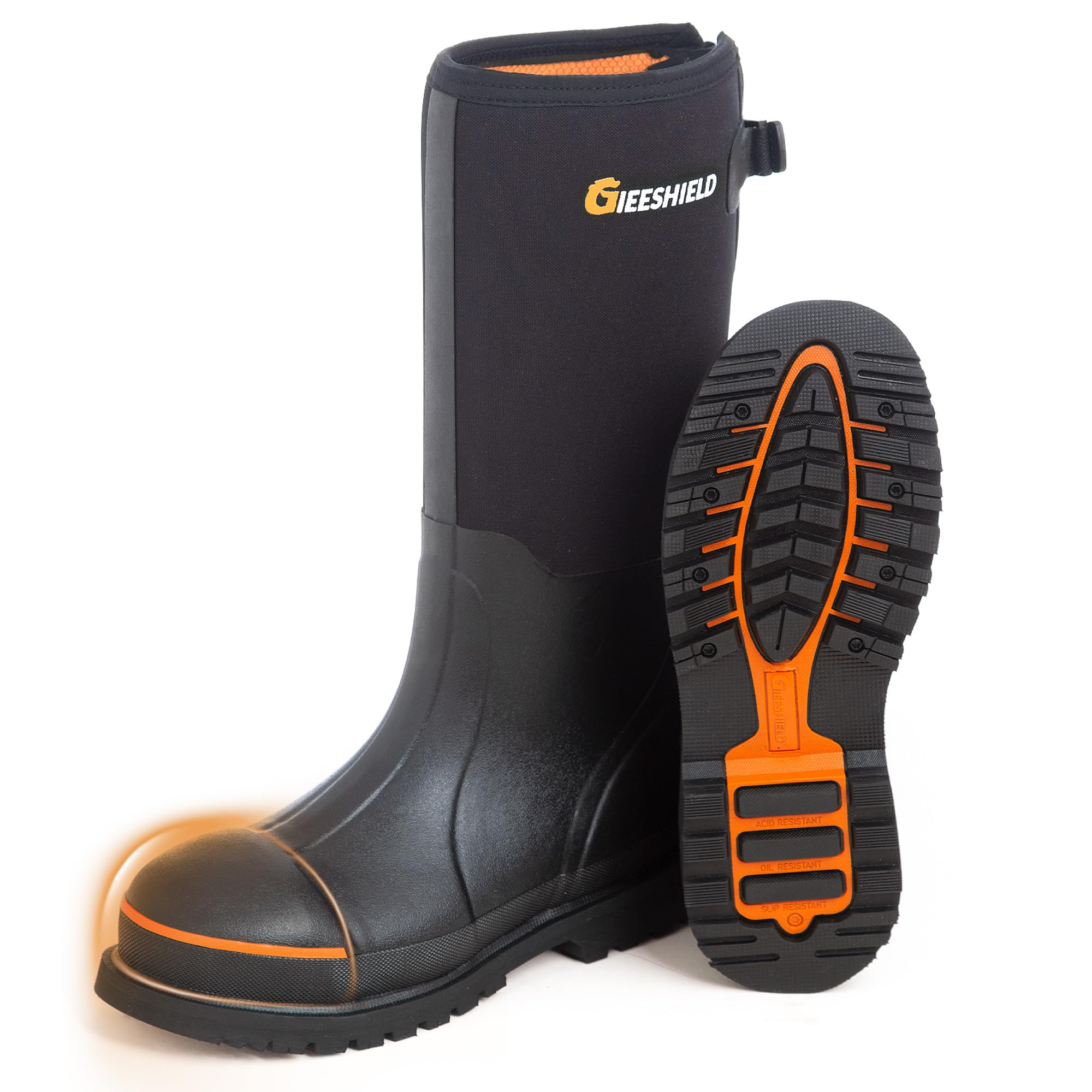
This rubber work boot with a steel toe and 6mm neoprene lining is engineered for the wet side of concrete work—flooded areas, rainy job sites, and slurry pours. The vulcanized seam construction ensures your feet stay bone dry after hours submerged in a few inches of water, something standard leather boots cannot guarantee.
Users who work in flooded outdoor yards or mud-heavy concrete finishing confirm these boots keep feet comfortable and dry. The steel shank provides structural rigidity during standing on hard surfaces, and the neoprene lining offers insulation down to about 30°F. The heavyweight rubber shell is durable against abrasions on job site surfaces.
The trade-offs are significant: the boot is heavy and not designed for all-day standing comfort on dry concrete. The thick rubber shell lacks the midsole cushioning found in dedicated standing-day boots, and the steel toe can feel cold against your toes in deep winter. These are a specialized tool for wet or muddy concrete scenarios, not a general standing-day boot.
Why it’s great
- Vulcanized seams and rubber shell provide guaranteed waterproofing for wet concrete work
- Steel shank offers stability during standing on uneven or flooded surfaces
Good to know
- Heavy build and lack of midsole cushioning make it less comfortable for dry concrete standing
- Steel toe transfers cold in low temperatures; not ideal for prolonged below-freezing exposure
FAQ
Why do wedge sole boots work better on concrete than lug soles?
How thick should the midsole be for standing on concrete?
Can I replace the insole in a work boot to improve standing comfort?
Final Thoughts: The Verdict
For most users, the boots for standing all day on concrete winner is the Timberland PRO Endurance because it combines steel-toe protection with Anti-Fatigue Technology that actively returns energy, reducing muscle pump during extended stationary shifts. If you want a lightweight composite toe, grab the KEEN Utility Gibson for its compression-resisting midsole and wide toe box. And for orthopedic relief, nothing beats the Orthofeet Granite with its built-in orthotic system and extra-wide fit.