
Our readers keep the lights on and the weekend projects moving. As an Amazon Associate, I earn from qualifying purchases.
When your workday involves climbing trunks, balancing on limbs, and operating a chainsaw from an elevated position, your footwear isn’t just an accessory, it’s your foundation. The wrong boot can turn a routine cut into a dangerous slip, making the choice of the right pair a matter of both performance and personal safety. You need a boot that offers a secure grip on wet bark, protection from a running saw chain, and enough ankle support to keep you stable on uneven terrain.
I’m Rikta — the co-founder and writer behind FitlyFast. After countless hours spent analyzing buyer feedback, technical specifications, and real-world wear patterns across the arborist and logging communities, I’ve built this guide to cut through the noise and help you find a pair that genuinely performs in the tree.
Whether you’re a professional arborist, a weekend land clearer, or a utility lineman, finding the right pair of boots for tree work means balancing cut resistance, climbing dexterity, waterproofing, and all-day comfort.
How To Choose The Best Boots For Tree Work
Selecting a boot for tree work involves more than just picking a rugged pair of work boots. You need to evaluate specific safety ratings, traction patterns, and construction materials that are uniquely suited to climbing, cutting, and spending long hours on rough ground.
Cut Resistance and Safety Ratings
If you run a chainsaw while standing on a trunk, your boot needs to do more than cushion your step. Look for boots stamped with a protective grade rating — Class 1 boots offer basic cut resistance, while Class 2 provides a higher level of defense. A steel toe cap is a non-negotiable for protecting against falling limbs and heavy equipment.
Sole Pattern and Heel Design
A logger heel — a distinct, raised heel — dig into bark and soft ground, giving you a stable platform when you’re on a slope or climbing. A low-heel profile offers more even weight distribution for long days on flat ground but sacrifices grip on narrow branches. The lug pattern should be self-cleaning to avoid mud build-up that kills traction.
Waterproofing and Insulation
Working in wet conditions without waterproof boots leads to blisters and cold feet. Look for a fully waterproof membrane like Gore-Tex or a high-quality rubber upper for swampy environments. Insulation, usually measured in grams of Thinsulate, is only necessary if you’re working through freezing temperatures.
Ankle Support and Boot Height
An 8-inch or taller boot shaft provides the ankle stability needed for uneven terrain and ladder work. The upper must be stiff enough to prevent rolling without being so rigid it chafes your shin. Some modern arborist boots use softer, taller ankle pads to offer both support and comfort for long climbs.
Quick Comparison
On smaller screens, swipe sideways to see the full table.
| Model | Category | Best For | Key Spec | Amazon |
|---|---|---|---|---|
| Arbpro EVO 2 | Arborist Boot | Professional tree climbing | Climbing zone Vibram sole | Amazon |
| Chippewa Paladin Logger | Logger Boot | Rugged terrain & long wear | Vibram Tacoma TC4 Plus outsole | Amazon |
| Georgia Logger GORE-TEX | Logger Boot | Wet & cold conditions | 200g Thinsulate + GORE-TEX | Amazon |
| Safetoe Class 1 Cow Leather | Chainsaw Boot | Budget chainsaw protection | ASTM F2413 steel toe | Amazon |
| Carolina Elm 8″ Logger | Logger Boot | Ground-level logging | Memory Foam footbed | Amazon |
| Carolina Waterproof Logger | Logger Boot | All-day comfort & safety | Tapered logger heel | Amazon |
| Carolina Insulated Logger | Insulated Boot | Cold weather work | 600g Thinsulate insulation | Amazon |
| Viking Class 2 Boots | Chainsaw Boot | Wet site chainsaw work | SBR natural rubber build | Amazon |
| Ariat Groundbreaker | Steel Toe | Light ground work | Duratread outsole | Amazon |
In‑Depth Reviews
1. Arbpro EVO 2 Climbing Boots
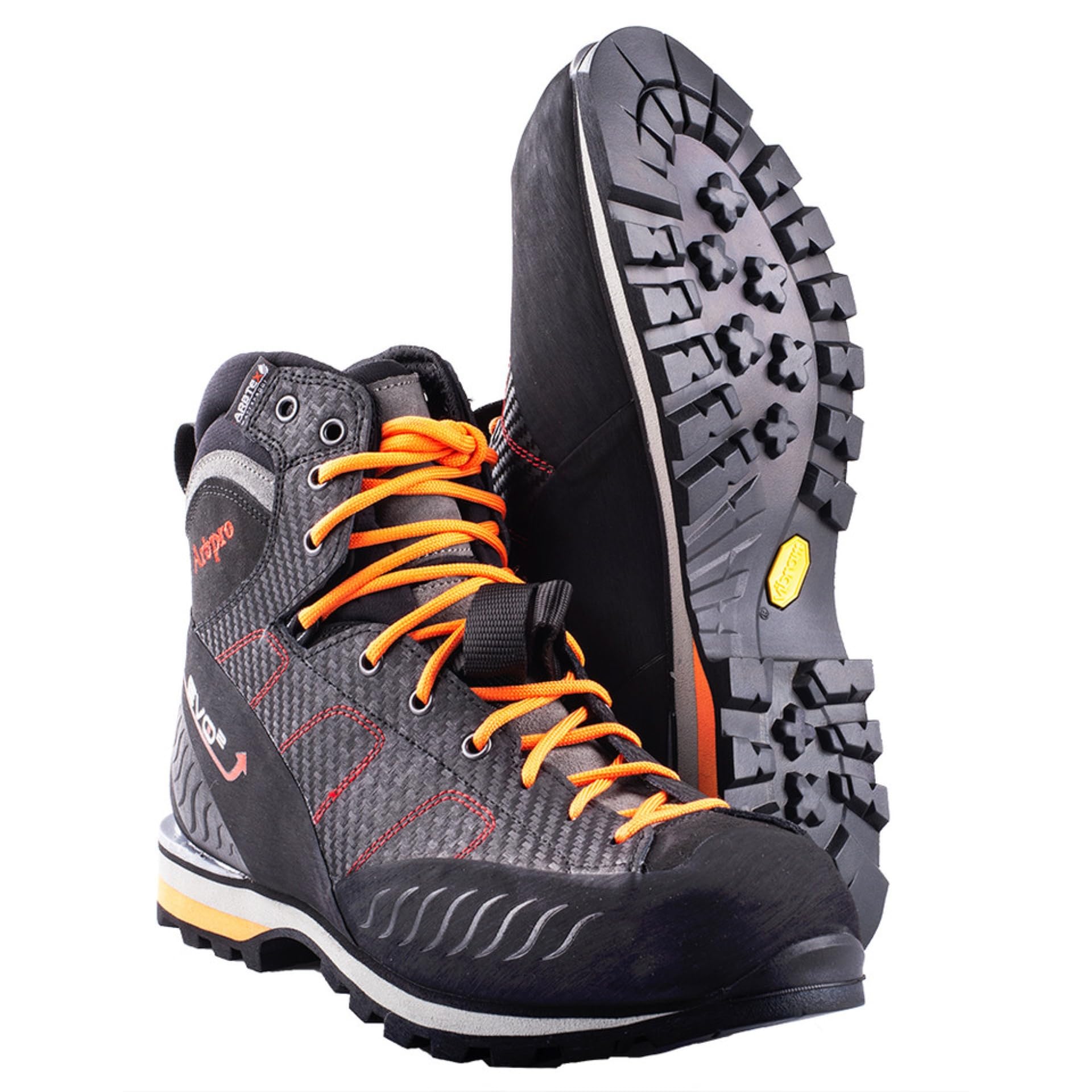
The Arbpro EVO 2 is purpose-built for the working arborist who lives in the canopy. Its defining feature is the custom Vibram sole with a distinct climbing zone at the tip, allowing you to wedge the boot into narrow crotches without slipping. The 25mm taller ankle support pad is softer than standard logger boot shafts, providing stability during ascents without limiting your range of motion.
The upper uses premium Perwanger leather with an Event membrane for breathable water resistance. The lacing system avoids metal hooks entirely, protecting your climbing ropes from snagging and fraying. European sizing runs slightly small, so ordering a half size up is common among professional users. The soft sole compound is optimized for bark grip, but it wears faster on pavement, making these a dedicated climbing tool rather than an all-rounder.
Long-term users report these lasting six to twelve months under heavy use, but the boot is resoleable, which extends its lifecycle significantly. The slim profile and reinforced stitching address the durability complaints of earlier models. For professional climbers who spend most of their day off the ground, the EVO 2 justifies its premium price with purpose-focused design features you won’t find in standard logger boots.
Why it’s great
- Climbing zone sole provides unmatched bark grip
- Breathable Event membrane keeps feet dry without overheating
- Metal-free lacing protects climbing ropes from wear
Good to know
- Soft sole wears quickly on hard surfaces
- Sizing runs small, order a half size up
2. Chippewa Men’s 8″ Lace-To-Toe Steel Toe Logger
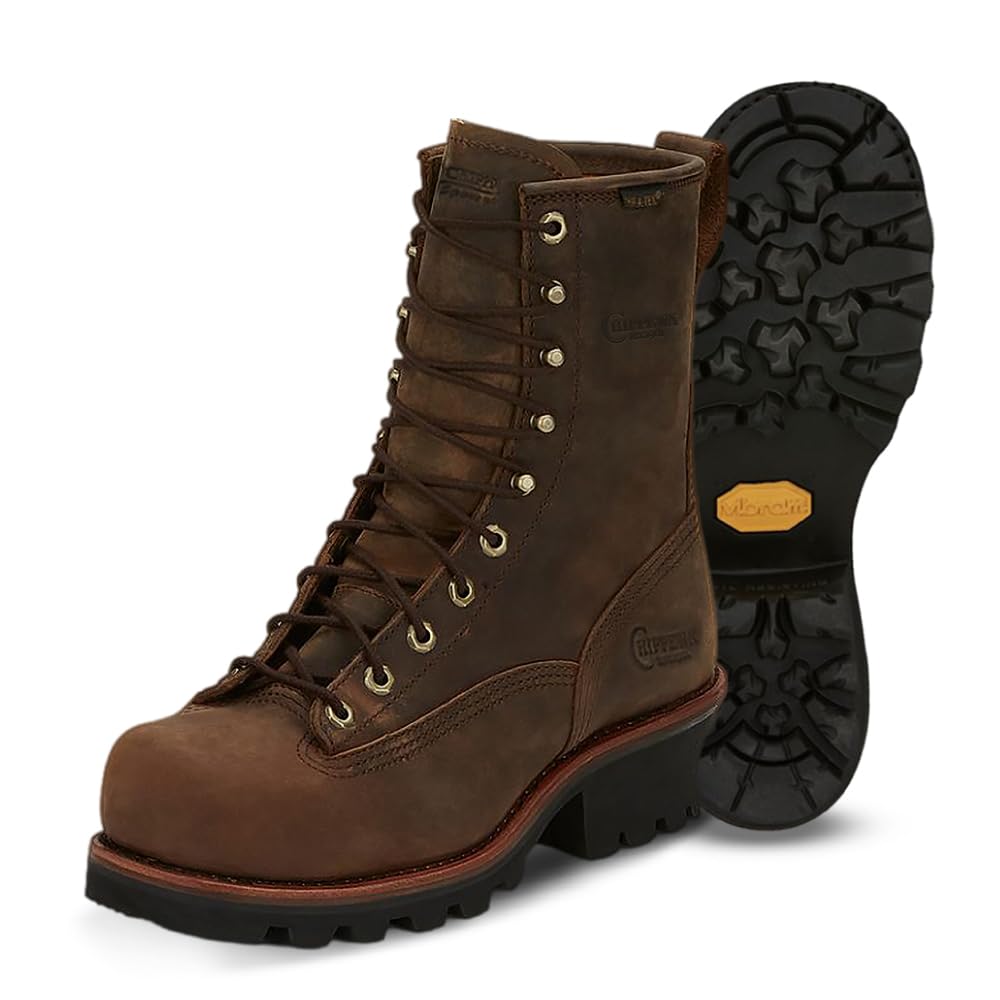
Chippewa’s Paladin logger boot is a tank. The full-grain waterproof leather upper, Goodyear welt construction, and Vibram Tacoma TC4 Plus outsole combine to form a boot that outlasts most competitors. The wider toe box is a blessing for those with broad feet, offering room to splay your toes for better balance on uneven ground without sacrificing the protective steel toe cap.
The moisture-wicking lining helps manage sweat during active days, and the triple-ribbed steel shank provides the torsional rigidity needed when carrying heavy loads across sloped terrain. The logger heel is pronounced and aggressive, digging into soft ground and bark rather than sliding.
Many long-term owners report that the sole wears out before the leather upper, a testament to the build quality. The design is bulky, which can be a drawback for nimble climbing maneuvers, but for ground work and heavy-duty cutting, the Chippewa offers unmatched durability. It is also electrical hazard rated, adding a layer of protection for those near live equipment.
Why it’s great
- Excellent durability for ground and slope work
- Wider toe box improves balance and comfort
- Vibram outsole with aggressive logger heel
Good to know
- Bulkier profile not ideal for technical climbing
- Needs a break-in period of several days
3. Georgia Boot Men’s Low Heel Logger GORE-TEX
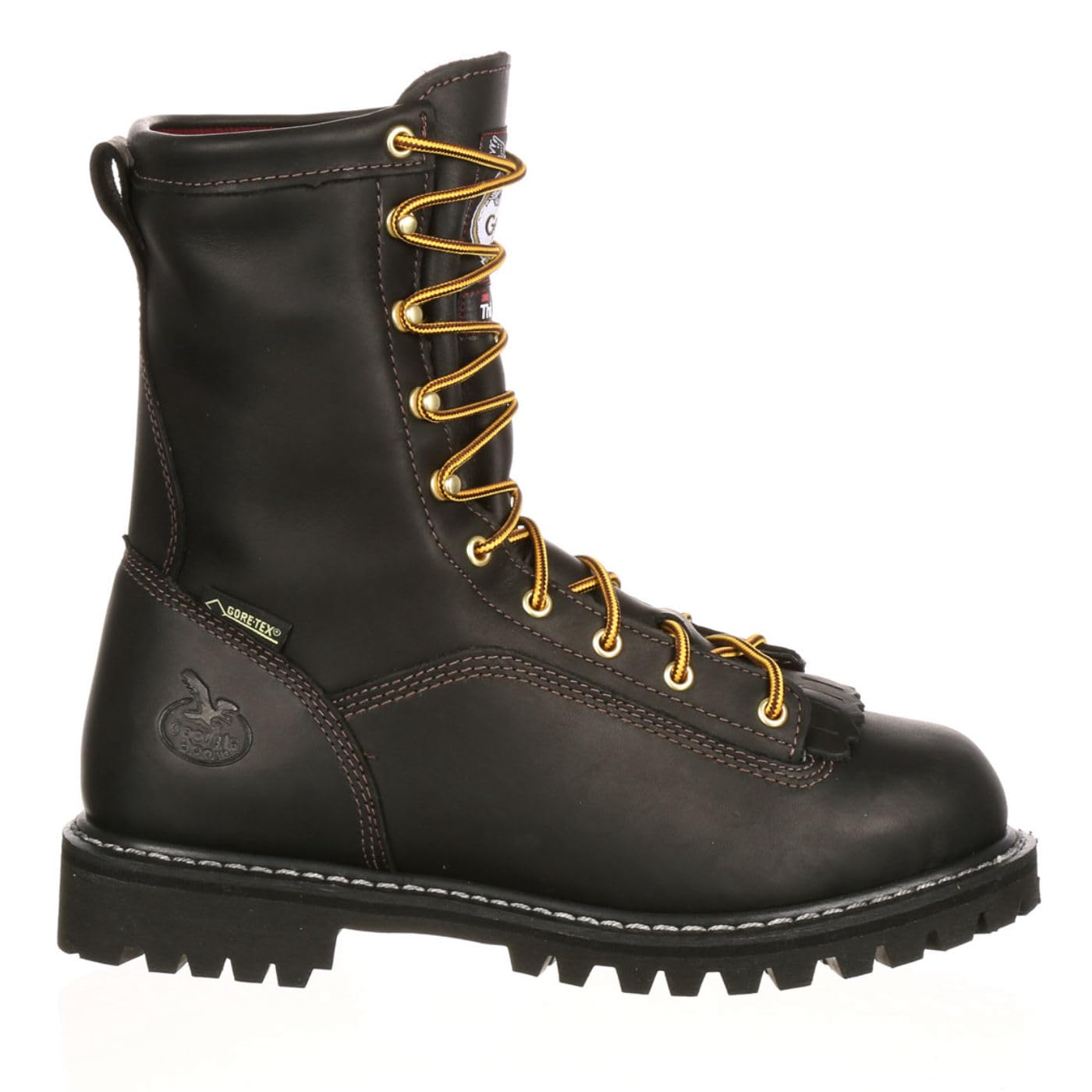
The Georgia Boot G8040 Low Heel Logger is a classic workhorse for wet and cold environments. The full-grain black leather upper is paired with a reliable GORE-TEX membrane, keeping feet dry through rain-soaked mornings and wet brush. Inside, 200 grams of 3M Thinsulate insulation provides warmth without excessive bulk, making these suitable for late fall and early spring tree work.
The low-heel platform sets this apart from traditional logger boots, offering a flatter profile that reduces fatigue during long days on flat or gently rolling ground. The Vibram lug outsole resists oil, heat, and chemicals while delivering solid traction on mud and wet concrete. The Goodyear welt construction adds to the boot’s longevity, allowing for resoling when the tread wears thin.
Reviewers consistently note the excellent ankle support after the break-in period, though the stiff shaft takes several weeks to fully soften. The removable cushioned orthotic insole helps with arch fatigue, and the lace-to-toe design allows for a snug, customized fit. Compared to pricier boots like Danner Rainforest, the Georgia offers similar waterproofing and durability at a more accessible price point.
Why it’s great
- Reliable GORE-TEX waterproofing for wet conditions
- Goodyear welt construction allows resoling
- Low heel reduces fatigue on level ground
Good to know
- Stiff ankle requires a long break-in period
- Low heel offers less grip on steep slopes
4. Safetoe Class 1 Ultra Cow Leather Chainsaw Boots

The Safetoe Class 1 boot is an entry-level chainsaw boot that delivers core safety features without breaking the bank. The steel toe cap meets ASTM F2413 standards for impact and compression protection, while a Kevlar puncture-resistant midsole adds a layer of defense against sharp debris on the ground. The double PU outsole is oil and slip resistant, providing decent traction for ground-level tree work.
The upper is constructed from top-layer nubuck cow leather, and a four-layer rebound (4LR) technology system in the midsole aims to reduce foot fatigue during long shifts. The memory foam insole is a thoughtful addition that improves comfort during break-in. The lacing system is straightforward, and the overall weight is lighter than many competitors, which helps on days when you’re constantly moving.
Durability is the primary trade-off at this tier. Some users report the leather staining easily if not wiped immediately, and the build quality may not survive a full season of heavy daily abuse. However, for weekend tree work or light professional use, the Safetoe offers a functional safety boot with solid protection specs. Sizing can be inconsistent, so measuring your foot against the brand’s chart is essential.
Why it’s great
- Steel toe and Kevlar plate for basic safety
- Lightweight design for its category
- Budget-friendly price point
Good to know
- Staining and wear appear quickly on leather
- Not as durable as premium logger boots
5. Carolina Elm 8″ Steel Toe Logger Boots
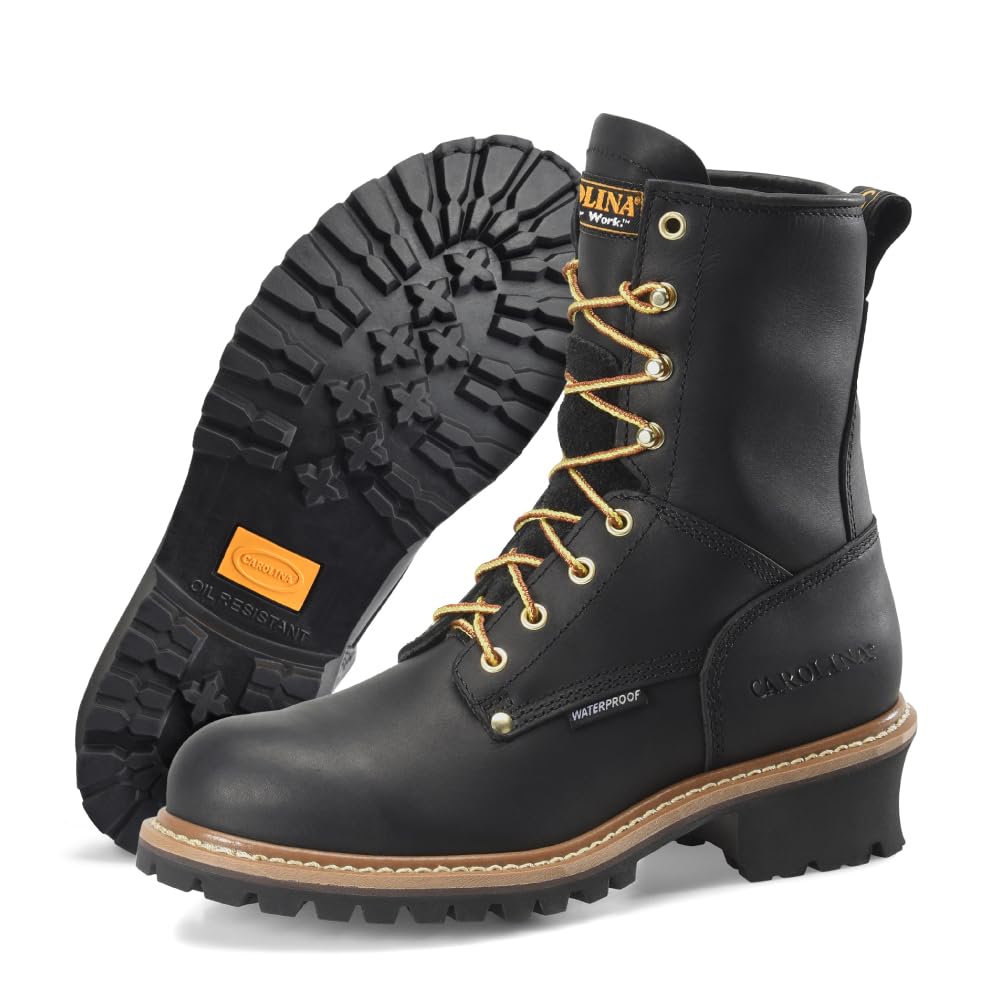
The Carolina Elm 8″ Steel Toe Logger Boot is a solid mid-range option for ground-based tree work. The waterproof leather upper keeps feet dry through wet grass and light rain, while the steel toe cap and slip-resistant rubber lug outsole meet the basic safety requirements for most job sites. The Pillow Cushion Memory Foam footbed is noticeably comfortable out of the box, reducing initial break-in discomfort.
A triple-rib steel shank runs the length of the boot, providing structural support for carrying heavy tools and climbing ladders. The tapered logger heel adds stability on soft ground and slopes. At this price tier, the Carolina delivers respectable durability for seasonal use, but reviews report variability in longevity — some owners get years of service, while others see sole separation within months under harsh conditions.
The dark brown leather looks professional and hides dirt well. The 8-inch height provides adequate ankle support for uneven terrain, though the padding is less substantial than premium models. This boot works best for those who split time between tree work and general construction, offering a balance of protection and comfort that doesn’t demand a high budget.
Why it’s great
- Memory foam footbed for immediate comfort
- Triple-rib steel shank for robust support
- Waterproof construction for wet conditions
Good to know
- Durability can be inconsistent across pairs
- Not the best option for extended climbing
6. Carolina 8″ Logger Boots for Men

Carolina’s 8″ Logger builds on the Elm design with a focus on fit and comfort for wider feet. The extra-wide sizing option is a genuine differentiator for those who struggle with standard D widths, and the memory foam footbed molds to the foot over the first few days of wear. The removable kiltie adds a layer of dust and debris protection to the lacing area.
The tapered logger heel and triple-rib steel shank work together to provide stable footing on slopes and rough terrain. The slip-resistant rubber outsole uses a deep lug pattern that clears mud effectively. The full-grain leather upper is thick and high-quality, earning praise from users comparing them to pricier brands like Georgia Boot. Electrical hazard protection is included, which linemen and utility workers will appreciate.
Some users note the kiltie and tongue can feel tight across the top of the foot when paired with thick thermal socks, especially during break-in. The boots are heavy, as expected for a logger profile, but the padding in the collar reduces chafing. For arborists who need a stable daily driver for mixed ground and climb work, these Carolinas offer a reliable option with a proven fit.
Why it’s great
- Extra-wide widths available for broader feet
- Memory foam footbed reduces fatigue
- Deep lug outsole clears mud well
Good to know
- Kiltie and tongue can be tight with thick socks
- Heavy build may tire legs over long shifts
7. Carolina Elm 8” Waterproof Insulated Logger Boots
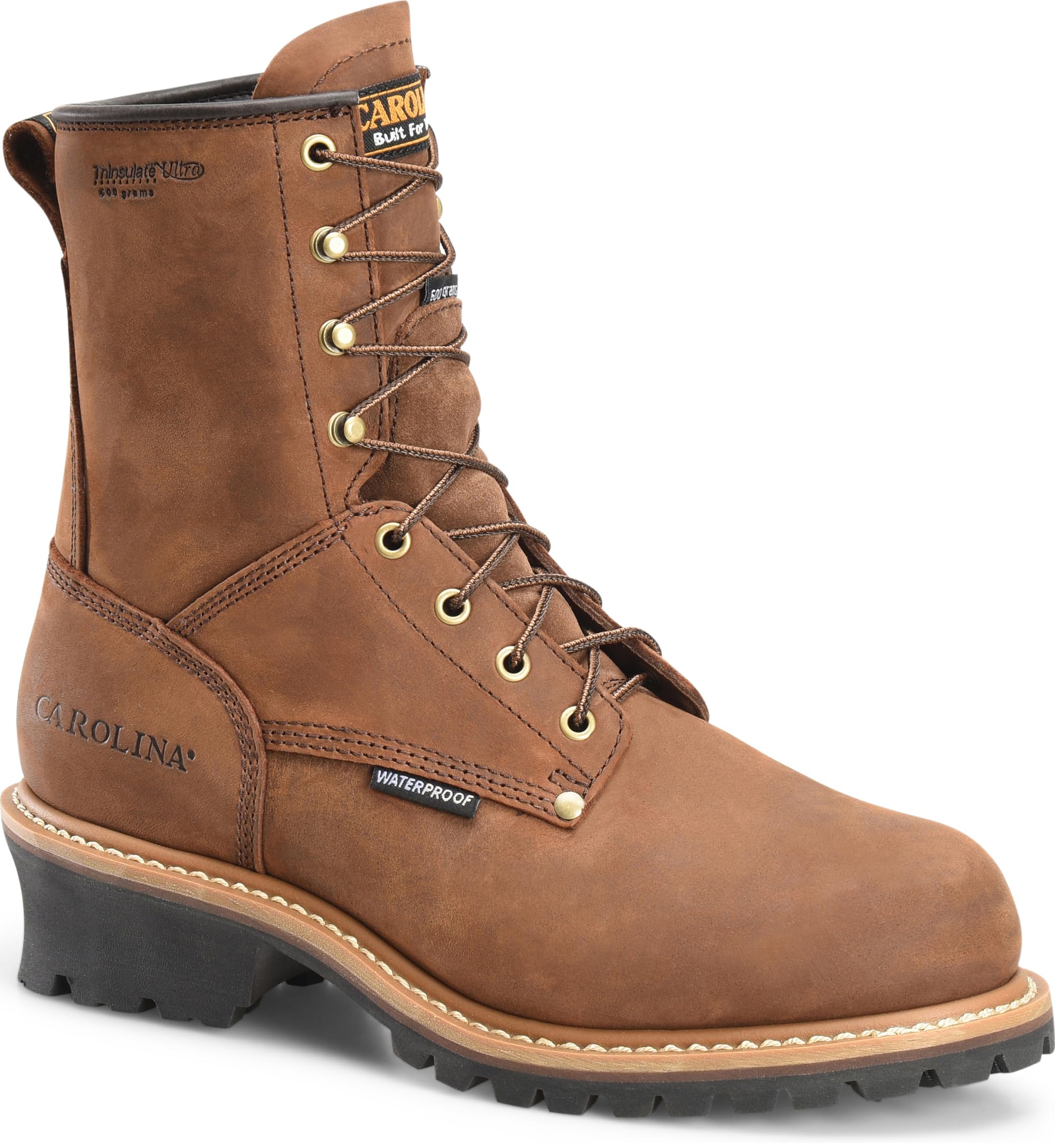
When the temperature drops, the Carolina Elm 8” Insulated Logger keeps feet warm without turning into a rigid ice block. The 600 grams of Thinsulate insulation is substantial enough for freezing conditions, while the waterproof construction ensures wet snow and slush stay outside. The Taibrelle lining adds a soft layer against the foot, improving comfort during extended cold-weather shifts.
The steel toe cap and slip-resistant rubber lug outsole provide the safety and traction expected of a tree work boot. The leather midsole adds puncture resistance beyond the standard steel shank. At just over 3 pounds per boot, the weight is manageable for its insulation level. Users report the boot fits true to size but requires a break-in period to soften the stiff leather upper.
The trade-off for heavy insulation is breathability — these boots get warm quickly in mild temperatures. They are best reserved for dedicated cold-weather use. Users logging hours in northern winters praise their warmth, while those in moderate climates find them too hot for anything above freezing. The durability is consistent with Carolina’s mid-range reputation, offering solid performance for the price.
Why it’s great
- 600g Thinsulate keeps feet warm in freezing temps
- Waterproof build handles snow and slush
- Reasonable weight for insulated boot
Good to know
- Too warm for use above freezing
- Break-in required to soften the upper
8. Viking Class 2 Ultra Flexible Chainsaw Boots
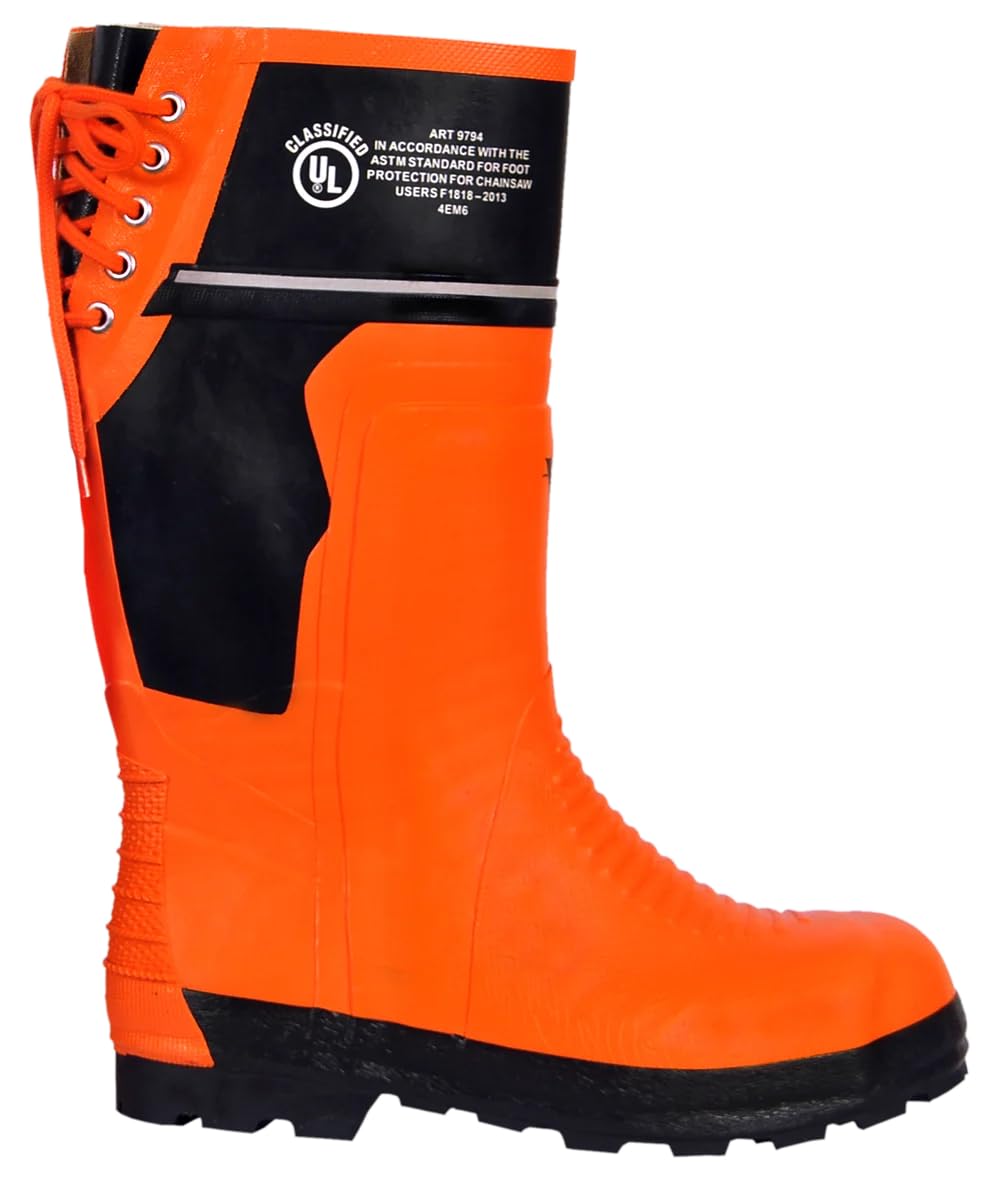
Viking’s Class 2 Chainsaw Boots are the go-to choice for wet, muddy tree work sites where waterproofing is the top priority. The SBR blended natural rubber upper is completely waterproof and resists hazardous liquids, while the bright safety orange color and reflective stripe ensure high visibility in low-light conditions. The 305,000 Flex Rating means the rubber stays flexible even in cold weather, reducing fatigue.
These boots run large, so sizing down is essential — most users order a full size smaller and still have room for thick wool socks. The steel toe cap offers impact protection, and the Class 2 cut-resistance rating provides a higher level of chainsaw defense than entry-level boots. The self-cleaning lug tread is excellent for shedding mud, maintaining traction where logger-style heels would pack up with clay.
The trade-off for all-rubber construction is weight and breathability — these boots are heavy and will make your feet sweat in warm weather. They also lack the ankle support of a leather logger boot, making them less suitable for climbing. For ground workers who spend their days in wet ditches or swampy terrain, the Viking Class 2 delivers a level of waterproofing that leather cannot match.
Why it’s great
- Fully waterproof rubber construction
- Class 2 cut resistance for chainsaw safety
- High-visibility color improves job site safety
Good to know
- Runs large, order a full size down
- Poor ankle support for climbing activities
9. Ariat Men’s Groundbreaker Wide Square Toe Steel Toe Work Boot
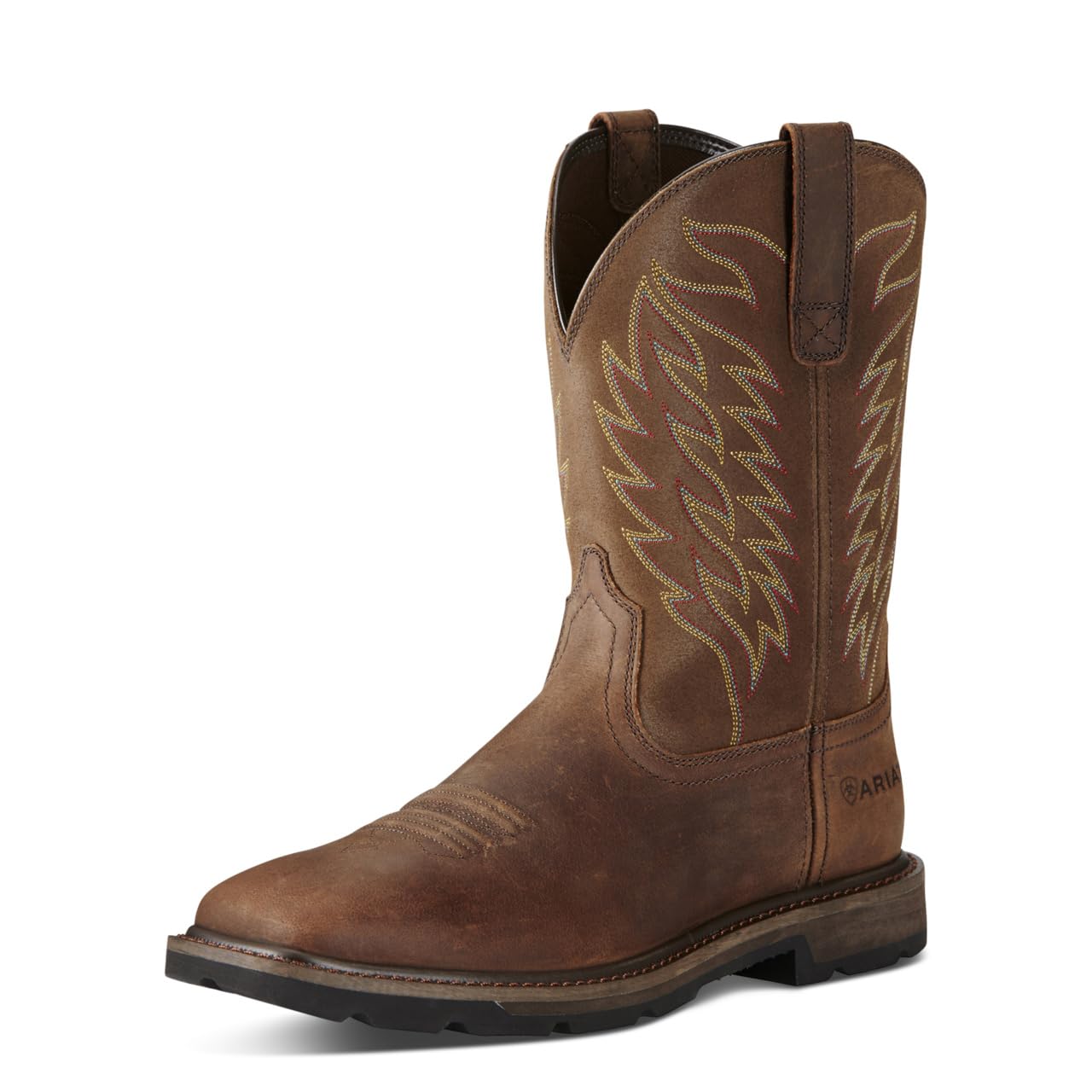
The Ariat Groundbreaker is a western-style steel toe work boot that offers a comfortable entry point for light tree work and property maintenance. The full-grain leather upper is durable and looks good, making it suitable for tasks where you need steel toe protection without the weight and stiffness of a dedicated logger boot. The Duratread outsole provides wear resistance and flexibility for walking on level ground.
The wide square toe design gives your toes ample room to spread, reducing fatigue during long days on your feet. The steel toe cap meets basic safety standards, and the comfort insole provides support out of the box with minimal break-in time. Users report wearing these for full shifts without discomfort, a notable advantage over stiffer safety boots.
However, the Groundbreaker lacks the cut resistance, aggressive tread, and ankle support required for chainsaw work or climbing. The heel is a standard walking heel, not a logger heel, so it offers little grip on slopes or bark. This boot is best suited for those who need basic foot protection for tasks like hauling brush, operating a chipper on flat ground, or general outdoor work rather than dedicated tree climbing.
Why it’s great
- Very comfortable out of the box with no break-in
- Spacious wide square toe design
- Lightweight compared to logger boots
Good to know
- No cut-resistance or aggressive tread for climbing
- Lacks ankle support needed for rough terrain
FAQ
Are regular work boots safe for using a chainsaw in a tree?
What is the difference between a logger boot and an arborist boot?
Do I need waterproof boots for tree work?
Final Thoughts: The Verdict
For most users, the boots for tree work winner is the Arbpro EVO 2 because its climbing-specific sole and ankle support outperform any general logger boot when you’re off the ground. If you want unbeatable durability for ground-level logging, grab the Chippewa Paladin Logger. And for wet site chainsaw work where waterproofing is the priority, nothing beats the Viking Class 2 Boots.