
Our readers keep the lights on and the weekend projects moving. As an Amazon Associate, I earn from qualifying purchases.
The only thing standing between your feet and a 200-foot flame front, a 50-pound pack, and 16 hours of hiking over jagged rock and ash is a single pair of boots. That’s not hyperbole — it’s the daily reality of a hotshot crew or an initial-attack firefighter. Choosing the wrong boot doesn’t just mean blisters; it means compromised safety, failed ankle support on steep slopes, and soles that delaminate when you need them most.
I’m Rikta — the founder and writer behind FitlyFast. I’ve spent over a decade analyzing wildland gear specs, studying NFPA certifications, and cross-referencing firefighter reviews to separate genuine safety from marketing fluff.
Every boot on this list has been vetted for the specific qualities that matter in the fire line: heat-resistant leather, supportive midsoles, aggressive outsoles, and a proven track record in the field. This is the definitive guide to finding the boots for wildland firefighting that will carry you through a full season without breaking down.
How To Choose The Best Boots For Wildland Firefighting
Before you look at a single price tag, understand that wildland boots are a safety item, not a comfort item. Many beginners buy based on comfort alone, only to find the outsole smooths out after a few hikes, the leather cracks from heat exposure, or the ankle support is too soft for a steep descent under load. Here’s what separates a good boot from a hazard.
Heat Resistance and Leather Quality
The primary material matters more than any other feature. Full-grain, fire-resistant leather (often rough-out or oil-tanned) offers the best defense against radiant heat and ember contact. Avoid boots with heavy textile panels — synthetics can melt or ignite under extreme conditions. Look for 7-8 oz. leather uppers and Kevlar stitching, which won’t burn through when brushed by a hot coal.
Outsole and Midsole Support
Wildland terrain demands a deep-lugged outsole in a rubber compound that grips loose dirt, scree, and wet grass without shedding chunks. Vibram or similar high-temperature rubber is preferred. The midsole is equally important: a 7mm nylon or thick leather midsole provides the stiffness needed for side-hilling and carrying heavy tools. Too flexible, and you risk foot fatigue and rolled ankles.
Construction Method and Repairability
The two main construction styles for wildland boots are stitch-down (Goodyear welt) and cement construction. Stitch-down boots — where the upper is sewn directly to the sole — are far more durable and can be resoled multiple times, extending their life for years. Cemented soles are lighter and cheaper to produce, but once they delaminate, the boot is trash. For a primary fireline boot, stitch-down is almost mandatory.
Ankle Support and Height
An 8-inch to 10-inch boot height is standard. The taller shaft supports the ankle against lateral rolls on uneven terrain. Look for a padded collar and a stiff heel counter. Many veteran firefighters prefer a logger heel — a distinct, low-logger-style heel that locks the foot in place on steep downhills and provides a solid platform for the strike.
Quick Comparison
On smaller screens, swipe sideways to see the full table.
| Model | Category | Best For | Key Spec | Amazon |
|---|---|---|---|---|
| Kenetrek Wildland Fire Boots | Premium | All-season comfort + support | 7mm Nylon Midsole | Amazon |
| SCARPA Fuego | Premium | Steep terrain & mountaineering | Stiff Sole / Vibram | Amazon |
| Danner Wildland Tactical | Mid-Range | Zero break-in comfort | Fire-Resistant Leather | Amazon |
| HAIX Missoula 2.1 | Premium | Lightweight & modern fit | Heat-Resistant Sole | Amazon |
| ARIA Stump Jumper BOA | Mid-Range | Fast on/off & cushioning | BOA Closure System | Amazon |
| Belleville 880ST | Mid-Range | Steel toe & insulation | 200g Thinsulate | Amazon |
| Georgia Boot G8040 | Budget-Friendly | Value work boot for lighter duty | Steel Shank | Amazon |
| JIM GREEN African Ranger | Budget-Friendly | Barefoot / wide toe box | Stitch-Down | Amazon |
| O’Neal Sierra PRO WP | Entry-Level | Light riding & support | Waterproof Mid-Calf | Amazon |
In‑Depth Reviews
1. Kenetrek Men’s Wildland Fire Boots
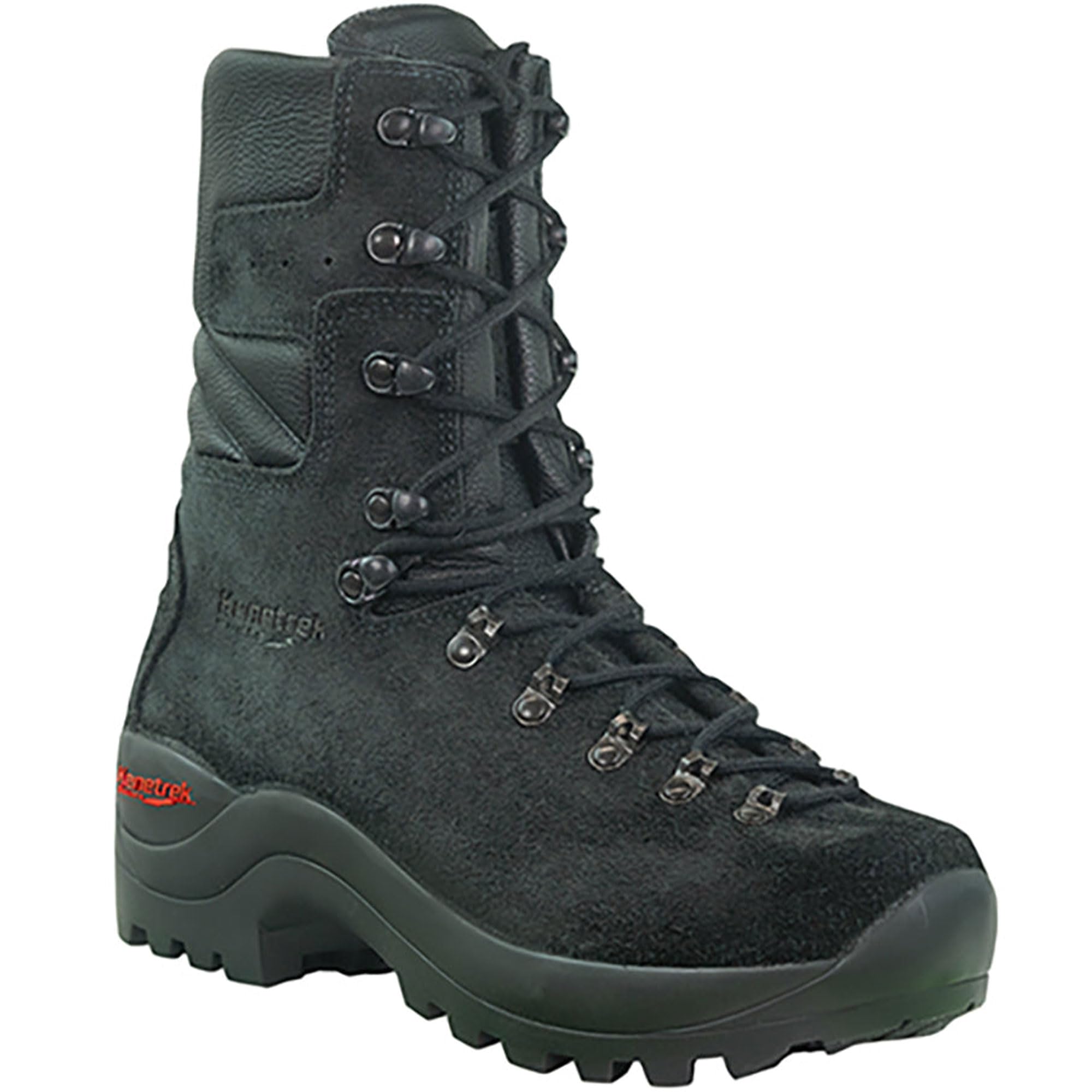
Kenetrek has nailed the sweet spot between a traditional logger boot and a modern hiker with this premium offering. The 7mm nylon midsole provides incredible stiffness for side-hilling without the punishing weight of a full-steel-shank logger. The fire-resistant leather upper is both protective and surprisingly flexible, leading to a break-in period that most users report as nearly non-existent — a huge advantage when you’re deploying straight out of the box.
The Kevlar stitching is a standout feature for wildland use, resisting ember damage that would melt standard thread. The outsole uses a deep, aggressive lug pattern that performs well on loose dirt and scree, and the heel design offers a solid platform for steep descents. At 10 inches, the height offers excellent ankle protection and keeps debris out without restricting movement.
Some users note the included laces are thin; many replace them with Kevlar cord for added durability. The boot runs slightly large for some, especially in the toe box, so sizing down half a size or using a thick insole is common. After heavy use, the support can degrade after 200-300 miles, but the construction is good enough to merit a resole if the uppers hold up.
Why it’s great
- Perfect blend of logger support and hiker comfort
- No break-in period reported by most users
- Kevlar stitching resists ember damage
Good to know
- Thin stock laces; plan to upgrade
- Support can break down after several hundred miles of hard use
- Sizing can run slightly long/wide
2. SCARPA Fuego Hiking Boots

The SCARPA Fuego is a purpose-built mountaineering boot that transitioned into wildland firefighting because of its incredible stiffness and durability. It’s not a boot you buy for comfort out of the box — it’s famously stiff, feeling like a ski boot for the first several miles. But that stiffness translates directly to reduced fatigue on long downhills and superior edging on loose terrain, making it a top choice for firefighters working in steep, rocky country.
The suede upper is tough and resists abrasion well, and the Vibram outsole uses a grippy compound that maintains traction on wet rock and loose dirt. Stitch-down construction means these boots can be resoled if the uppers hold up, though the break-in process is demanding and can cause blistering if not managed correctly. Many users size up by a full size to accommodate thick socks and avoid pinching.
After break-in, the Fuego becomes a precision tool for rugged terrain. The unpadded insole is a common complaint — most users swap it for an aftermarket insert for added cushioning. It also runs narrow, which is a consideration for those with wider feet. For pure steep-terrain performance, it’s hard to beat, but the commitment to break-in is significant.
Why it’s great
- Exceptional stiffness for steep terrain support
- Durable suede upper and Vibram outsole
- Resoleable stitch-down construction
Good to know
- Extremely long break-in period (can be weeks of blisters)
- Runs small/narrow; size up significantly
- Stock insole is thin; needs replacement
3. Danner 8″ Wildland Tactical Firefighter Boots

Danner has a legendary reputation in the wildland community, and this Tactical Firefighter model lives up to it. Made with fire-resistant leather and built in the USA, this boot offers a level of comfort that’s rare in this category. Multiple veteran firefighters with 20+ years of experience report this as the most comfortable wildland boot they’ve ever worn, with essentially zero break-in required. The ankle support is excellent while the padding remains soft enough for all-day wear.
The outsole is an oil- and slip-resistant rubber that grips well on wet surfaces and loose terrain, though some users note it wears faster than harder compounds used on logger boots. The 8-inch height is lower than traditional 10-inch boots, which some prefer for flexibility. The construction is more similar to a heavy-duty hiking boot than a traditional logger, meaning it’s lighter but not as stiff for extreme side-hilling.
One notable concern: this boot is not rebuildable in the way that traditional stitch-down boots are, which affects its overall lifespan. Some users report the interior heel lining wearing out within a year of heavy use. Danner offers a warranty, but it’s worth factoring in the replacement cost. For those who prioritize immediate comfort and support, it’s a top-tier choice.
Why it’s great
- Exceptional comfort with no break-in required
- Excellent ankle support for a hiking-style boot
- Made in USA with fire-resistant materials
Good to know
- Not rebuildable; limited lifespan for heavy users
- Outsole wears faster than traditional logger soles
- Interior heel lining can fail prematurely
4. HAIX Missoula 2.1 Wildland Firefighting Boots

HAIX is a major supplier for fire services in Europe, and the Missoula 2.1 is their dedicated wildland boot for North American terrain. Its defining feature is its light weight — these boots are noticeably lighter than traditional loggers or even the Danner, which can be a significant advantage over a 16-hour shift. The heat-resistant sole is a unique selling point, designed to withstand the high ground temperatures common in fireline environments.
The fit is modern and tends to be more accommodating for average-width feet, though some users with very narrow or very wide feet report issues. The water-resistant upper works well in wet grass and light rain, but it’s not fully waterproof. The lacing system is standard but effective, and the boot offers a good balance of support and flexibility for general wildland work.
Quality control reports are mixed. While many users praise the comfort and ruggedness, there are isolated reports of lacing hardware breaking within hours of wear. This appears to be an occasional manufacturing defect rather than a systemic issue. The sole also lacks the deep lugs of a logger-style boot, which can be a disadvantage in loose scree or mud.
Why it’s great
- Very light weight for reduced fatigue
- Heat-resistant sole for fireline safety
- Comfortable with minimal break-in
Good to know
- Lace hardware can break prematurely in some units
- Less aggressive outsole than logger boots
- Not ideal for steep, loose terrain
5. ARIAT Stump Jumper 6″ BOA Waterproof Composite Toe
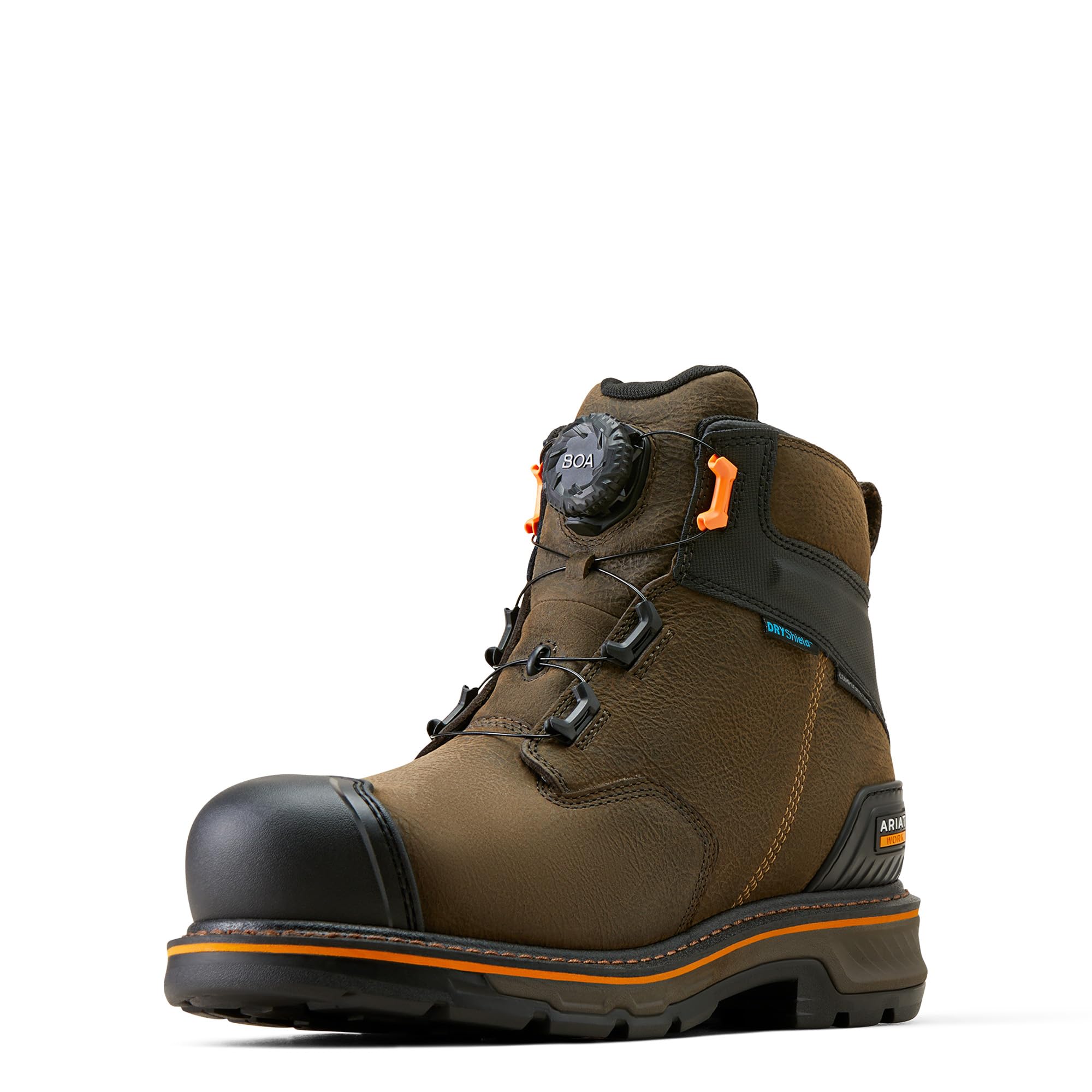
The ARIAT Stump Jumper is a 6-inch boot with a BOA lacing system that allows for rapid on and off — roughly 20 seconds to lace and 6 seconds to release. For firefighters who need to gear up quickly or adjust fit throughout the day, this is a significant practical advantage. The composite toe meets safety standards without the weight of steel, and the waterproof membrane keeps feet dry in wet conditions.
The boot is true to size for most users, with a broad toe box and a comfortable baseline cushion that works well with custom orthotics. The midsole is flexible enough for comfortable walking but provides less support for heavy packs than tall logger boots. Users report a short break-in period of just a few days before the leather softens.
Durability is a concern for heavy-duty wildland use. Some users report the outsole wearing smooth in as little as 4 months of daily landscaping work, and the 6-inch height provides less ankle support on steep terrain compared to 8-inch or 10-inch alternatives. The BOA system is convenient, and ARIAT offers free wire replacement, but it’s one more component that can fail in the field.
Why it’s great
- BOA system enables fast, secure lacing
- Comfortable out of the box with good cushioning
- Composite toe is lightweight and safety-rated
Good to know
- Outsole wears quickly under heavy use
- 6-inch height offers less ankle support
- BOA hardware can be a failure point
6. Belleville 880ST Waterproof Steel Toe Boots

Belleville is a trusted name in military and tactical footwear, and the 880ST carries those standards into a steel-toe, insulated work boot. The 200g Thinsulate insulation makes it a strong option for northern fireline deployments or cold-weather shifts, providing warmth without excessive bulk. The ASTM F2413-24 steel toe rating gives solid protection against falling debris — a real hazard during tree felling and line construction.
The outsole is softer than many competitors, which provides excellent grip on wet surfaces like steel decks and wet rock, but it wears faster on abrasive concrete and rocky terrain. The construction is cement-based, not stitch-down, which means resoling is not viable — once the sole wears out, the boot is finished. Sizing runs slightly large due to the lining, and many users recommend ordering a half size smaller.
One of the strongest selling points is the comfort out of the box. Multiple reviewers — including military personnel and industrial workers — report no break-in period and no blistering even during 12-hour shifts. The lack of a steel shank means it’s less supportive for heavy pack loads compared to a logger boot, but for general duty and cold-weather work, it’s a solid mid-range pick.
Why it’s great
- No break-in period needed
- Steel toe and 200g insulation for cold weather
- Excellent grip on wet surfaces
Good to know
- Not resoleable; sole wears fast
- Soft sole wears quickly on abrasive terrain
- Less stiff support for heavy loads
7. Georgia Boot Men’s Low Heel Logger GORE-TEX
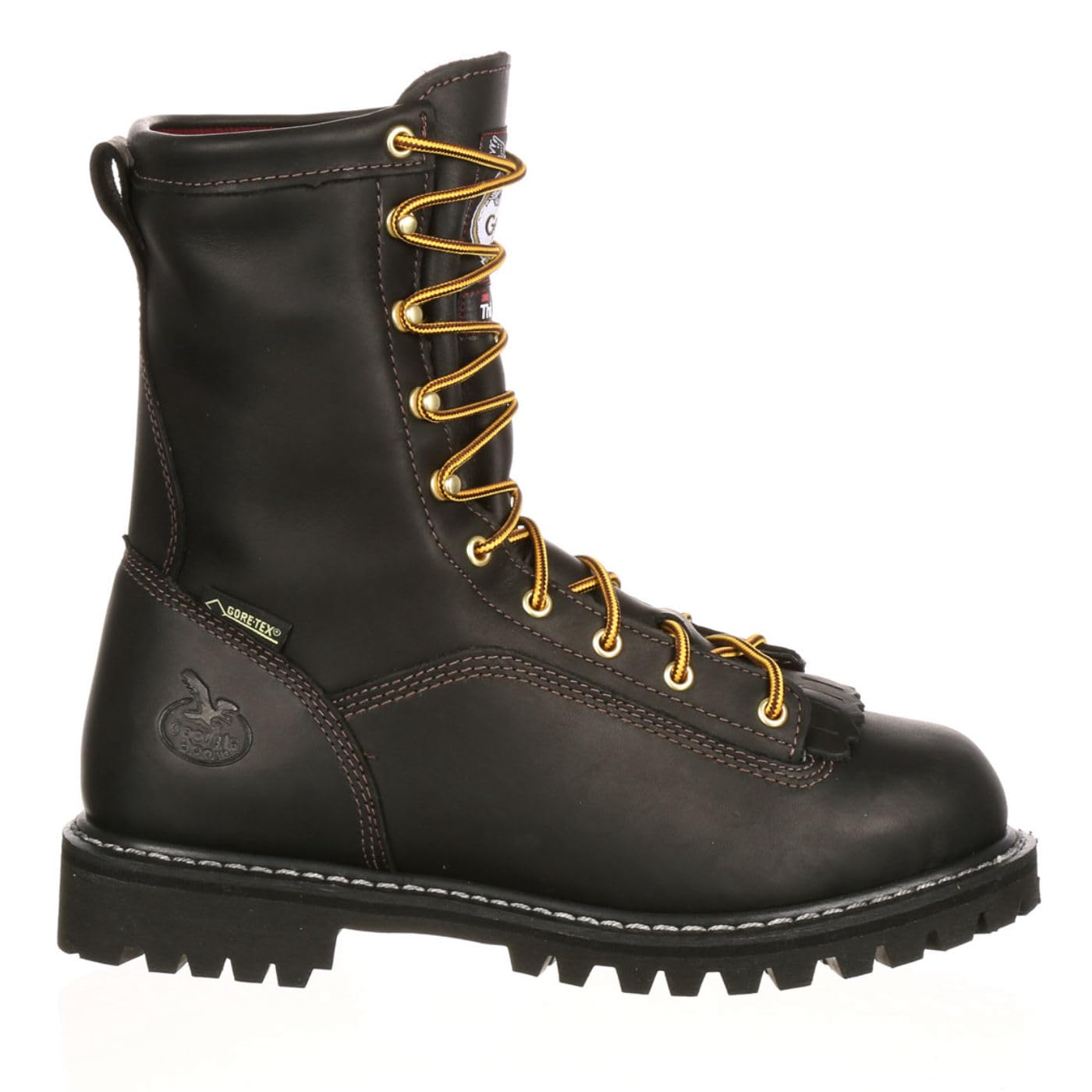
The Georgia Boot G8040 is a classic affordable work boot that has been used for years in landscaping, forestry, and light wildland support roles. It’s not a dedicated firefighting boot, but its steel shank, welted construction, and GORE-TEX liner have made it a go-to for budget-conscious firefighters doing support or initial-attack duties. It offers surprising value for under .
The boot is built with real welted construction, which is impressive at this price point, though the leather is thinner than premium models and the stitching is rougher. The GORE-TEX liner provides excellent waterproofing, and the low-heel logger sole offers good traction on moderate terrain. Break-in is required — users report it takes 1-2 weeks to soften the stiff ankle collar.
The most common complaint relates to the stock laces, which fray quickly; a replacement with leather laces is strongly recommended. Regular conditioning with beeswax or Obenauf’s is also necessary to prevent the leather from cracking, especially after exposure to heat and dry conditions. It runs roomy in the toe box, which is a plus for wide feet but can cause instability for others. For the price, it’s a tough boot, but it lacks the heat resistance and overall durability of purpose-built wildland boots.
Why it’s great
- Excellent value with welted construction
- GORE-TEX waterproof liner is effective
- Good traction on moderate terrain
Good to know
- Thinner leather needs regular conditioning
- Stock laces fray quickly; replace immediately
- Not heat-rated; not suitable for primary wildland use
8. JIM GREEN Men’s Barefoot African Ranger Boots

The JIM GREEN African Ranger is a specialty boot designed for the barefoot movement — zero drop, minimal cushioning, and a massive anatomical toe box. It’s built with full-grain leather and real stitch-down construction, making it a durable and resoleable boot for a fraction of the price of premium wildland options. For the small subset of firefighters who prefer a barefoot experience for ground feel and foot strength, this is a unique option.
The leather quality and stitching are excellent at this price point, and the boot is light and breathable. The wide toe box is a relief for those with bunions or wide feet, and the zero-drop platform encourages better posture and foot mechanics. The break-in period is long and can be painful, especially if you’re not used to barefoot footwear. Users report significant blistering during the initial wear.
The lack of cushioning means it’s not suitable for rough terrain hiking without significant conditioning. The outsole is soft and grippy but not ideal for extremely sharp rock or steep slopes. It is not a fire-specific boot — it lacks heat-resistant materials and a logger-style heel. It’s best suited for station wear, light trail walking, or for use as a secondary boot for conditioning and recovery work.
Why it’s great
- Excellent build quality for the price with stitch-down construction
- Wide toe box relieves bunion and foot pain
- Light, breathable, and durable leather
Good to know
- Not fire-rated; no heat resistance
- Very long break-in with blister potential
- No cushioning; not for rough terrain without conditioning
9. O’Neal Sierra PRO WP Boot

The O’Neal Sierra PRO WP is an adventure riding boot that has a very different purpose than a wildland firefighter. It’s a mid-calf waterproof boot with a hiking-style sole, designed for dual-sport and ADV motorcycle riding. It’s included here because some users have adapted it for lighter field use, but it should not be considered a primary fireline boot.
The build quality is solid for its intended price range, with glued seams that hold up well to regular riding. It offers good protection for low-speed spills and provides good feel for the shifter and brake. The hiking boot sole provides decent traction for walking around camp or short hikes. It runs true to size for average-width feet, and the break-in period is quick — a few days of wear, and it softens up nicely.
The boot lacks any heat-resistant materials, a logger-specific heel, and the ankle support required for carrying heavy packs on steep terrain. The upper cuff can be too large for those with small calves, causing painful rubbing. For anyone looking for a boot to use on the fire line, this is not a serious option — it is included strictly as a contrast to the dedicated firefighting boots above.
Why it’s great
- Quick break-in; comfortable for short walks
- Waterproof construction for wet conditions
- Good ground feel for low-speed riding
Good to know
- Not a firefighting boot — no heat resistance
- Lacks ankle support for heavy packs
- Upper cuff too large for small calves
FAQ
Can I use regular hiking boots for wildland firefighting?
How should wildland fire boots fit?
Are steel toe boots required for wildland firefighting?
How long do wildland fire boots typically last?
Do I need to waterproof wildland fire boots?
Final Thoughts: The Verdict
For most users, the boots for wildland firefighting winner is the Kenetrek Wildland Fire Boot because it combines the stiff support of a logger boot with the comfort and break-in ease of a modern hiker, all built with fire-resistant leather and Kevlar stitching. If you want a zero-break-in option that feels more like a hiking boot, grab the Danner Wildland Tactical. And for steep terrain where stability is the single priority, nothing beats the original stiffness and durability of the SCARPA Fuego.