
Our readers keep the lights on and the weekend projects moving. As an Amazon Associate, I earn from qualifying purchases.
Alaska’s winter doesn’t negotiate. When the trail disappears under three feet of powder and the mercury drops past forty below, the wrong boot stops being a discomfort and becomes a genuine safety risk. You need a boot engineered for extreme cold, not a fashion statement that looks good at the lodge.
I’m Rikta — the co-founder and writer behind FitlyFast. My analysis process for this guide involved cross-referencing customer field reports from Alaska’s interior, the North Slope, and maritime zones against each boot’s insulation weight, waterproof membrane type, and outsole rubber compound to find models that actually perform when conditions turn hostile.
After weeks of sorting through technical specs and hundreds of verified reviews from people who live and work in serious winter conditions, I’ve built this definitive guide to the boots to wear in alaska.
How To Choose The Best Boots To Wear In Alaska
Alaska is not one climate — it’s a mosaic of coastal rain, interior deep freeze, and arctic tundra. The boot that works for a December stroll in Anchorage will fail on a January ice-fishing trip north of Fairbanks. You must match the boot’s insulation weight, waterproofing, and outsole to the specific environment and activity you plan for.
Insulation Weight vs. Activity Level
The single most critical spec on any Alaska winter boot is its insulation weight, almost always listed in grams (200g, 400g, 1000g). Here is the rule: more insulation is not always better. A 1000g boot like the Irish Setter Elk Tracker is perfect for standing still on a hunting stand at -10°F, but the same boot will cook your feet if you try hiking uphill through snow. For active use like snowshoeing or winter hiking, 400g is the sweet spot — warm enough for most Alaska conditions without turning your boots into sweatboxes that later freeze. For extreme stationary use — ice fishing, aurora photography, or sitting in a cold truck — jump to 600g or 1000g.
Waterproofing Is Non-Negotiable
Wet feet in sub-freezing temperatures lead to frostbite within minutes. Every boot on this list uses a waterproof membrane — either Gore-Tex (the industry standard for breathability), a brand-specific system like Oboz B-DRY, or a full rubber-and-leather construction like Sorel’s sealed seams. Do not buy a boot labeled only “water-resistant” for Alaska; the phrase means nothing when you step through a frozen puddle that reaches above the boot’s tongue. Look for “waterproof” with taped seams or a bonded membrane.
Outsole Rubber and Tread Pattern
Standard winter boots use a rubber compound that hardens and loses grip below about 20°F. Premium Alaska-ready boots use a “Polar Rubber” or “arctic compound” formulation that stays pliable and grippy at -40°F. Baffin’s Polar Rubber and Kenetrek’s K-Talon outsole are examples of compounds designed to bite into ice, not slide across it. Check the customer reviews for traction mentions on packed snow and glare ice — this is where budget boots fail first.
Quick Comparison
On smaller screens, swipe sideways to see the full table.
| Model | Category | Best For | Key Spec | Amazon |
|---|---|---|---|---|
| Kenetrek Mountain Extreme 400 | Premium Hiking | Active winter hiking & mountaineering | 400g Thinsulate, full-grain leather, 10″ shaft | Amazon |
| Danner Acadia 8″ | Tactical All-Rounder | Extended wear, resoleable duty boot | Gore-Tex liner, Vibram Kletterlift outsole | Amazon |
| Baffin Control Max | Arctic PAC Boot | Extreme cold static use (ice fishing) | Arctic-rated, removable liner, Polar Rubber | Amazon |
| Baffin Eiger | Arctic PAC Boot | Severe cold with moderate movement | Arctic-rated, removable liner, locking snow collar | Amazon |
| Irish Setter Elk Tracker 1000g | Extreme Insulation | Big game hunting, sub-zero standing | 1000g Thinsulate, full-grain leather, Goodyear welt | Amazon |
| Sorel Caribou | Classic Snow Boot | All-day snow play, daily winter wear | Removable felt liner, waterproof vulcanized rubber | Amazon |
| Oboz Bridger 10″ Insulated | Insulated Hiker | Winter backpacking, rugged trail hiking | 400g Freeze Guard, B-DRY membrane, TPU chassis | Amazon |
| Helly Hansen Garibaldi V3 | Insulated All-Rounder | Wet & cold conditions, urban to trail | Primaloft 400g, waterproof leather, Max Grip outsole | Amazon |
| The North Face Chilkat V 400 | Everyday Snow Boot | Day-to-day winter wear, light trails | 400g insulation, waterproof construction, lightweight | Amazon |
In‑Depth Reviews
1. Kenetrek Mountain Extreme 400 Insulated Hiking Boots
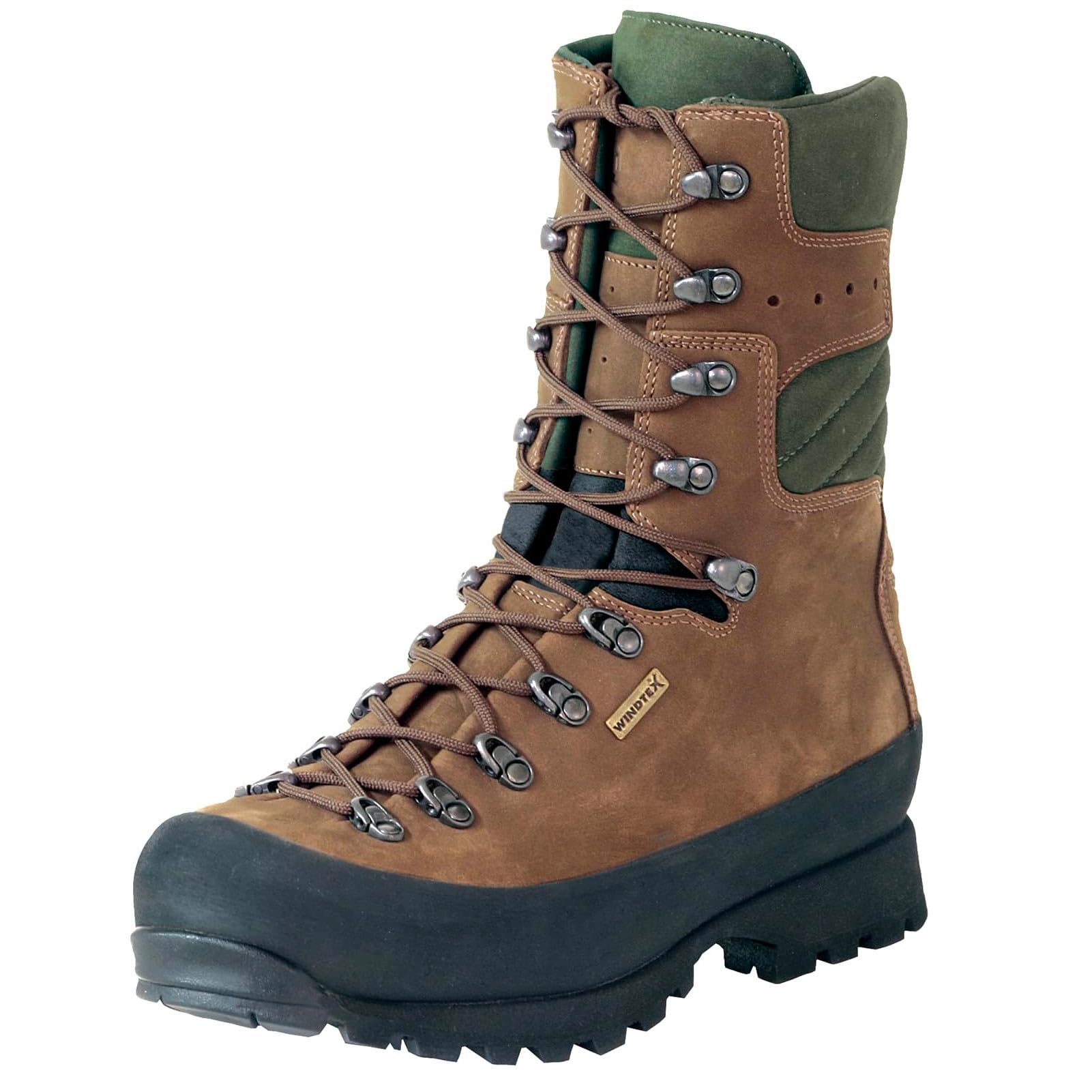
The Kenetrek Mountain Extreme 400 is what happens when a boot company builds for guides who spend all winter above the tree line. The 400-gram Thinsulate insulation hits the perfect balance for active use — warm enough for deep cold during a hike, not so thick that your feet boil once you get moving. The full-grain leather upper stands 10 inches tall, offering excellent ankle support and snow blockage without a separate gaiter. The K-Talon outsole uses a rubber compound that stays tacky on wet ice, a feature that matters when a slip on a frozen stream could mean a cold, dangerous hike home.
Reviewers consistently report that these boots feel broken in from the first wear, with no blister period. The reinforced double and triple stitching in high-wear areas extends the boot’s lifespan significantly beyond standard hiking boots. For the price, you are paying for materials and construction quality that allow the boot to be rebuilt when the sole eventually wears out, not tossed in a landfill.
The only meaningful downside is the upfront cost, which is the highest on this list. But when you calculate cost per season of use — especially for someone who needs a reliable winter boot every single day — the Kenetrek justifies its position as the top recommendation for serious Alaskan winters.
Why it’s great
- Perfect 400g insulation for active winter use — warm without overheating
- High-quality full-grain leather with double/triple stitching for extreme durability
- K-Talon outsole compound provides trustworthy grip on ice and hardpack
- Resoleable construction extends the boot’s useful life by years
Good to know
- Premium price point reflects investment-grade build quality
- Heavier than a standard hiking boot at 4.2 pounds
2. Danner Acadia 8″ Boot

The Danner Acadia has served law enforcement, military, and outdoor professionals for decades because it solves a specific problem: it needs to be waterproof, supportive, and resoleable in a package that fits under uniform pants. The 8-inch shaft is shorter than the Kenetrek, which makes it easier to pair with insulated pants or snow cuffs. The full-grain leather upper is polishable, a niche requirement for duty use but irrelevant for most recreational users. The real value here is the Gore-Tex liner, which keeps feet dry while letting sweat vapor escape, and the Vibram Kletterlift outsole that provides oil- and slip-resistance on both wet pavement and snow.
Customer reviews note that these boots run narrow and long, so ordering a half-size down and a wider width is common advice. The break-in period is about a month of regular wear, so do not buy these the day before a trip and expect immediate comfort. The stitchdown construction means Danner can resole them, giving them a service life measured in years, not seasons.
This is not a heavily insulated boot — it lacks a built-in insulation layer like Thinsulate — which means it works best for active use with quality wool socks. For someone who wants a durable boot for sub-freezing work or daily walks in Anchorage, the Acadia excels. It is less suited for extended stationary exposure at severe cold temperatures where insulation weight matters most.
Why it’s great
- Gore-Tex liner offers proven waterproofing and breathability
- Stitchdown construction allows professional resoling for extended life
- Low-profile 8-inch height fits well with winter pants
- Vibram Kletterlift outsole is slip-resistant on varied surfaces
Good to know
- Runs narrow, sizing can be tricky; order carefully
- Long break-in period of about one month
- No built-in insulation layer; relies on sock choice for warmth
3. Baffin Control Max Snow Boot
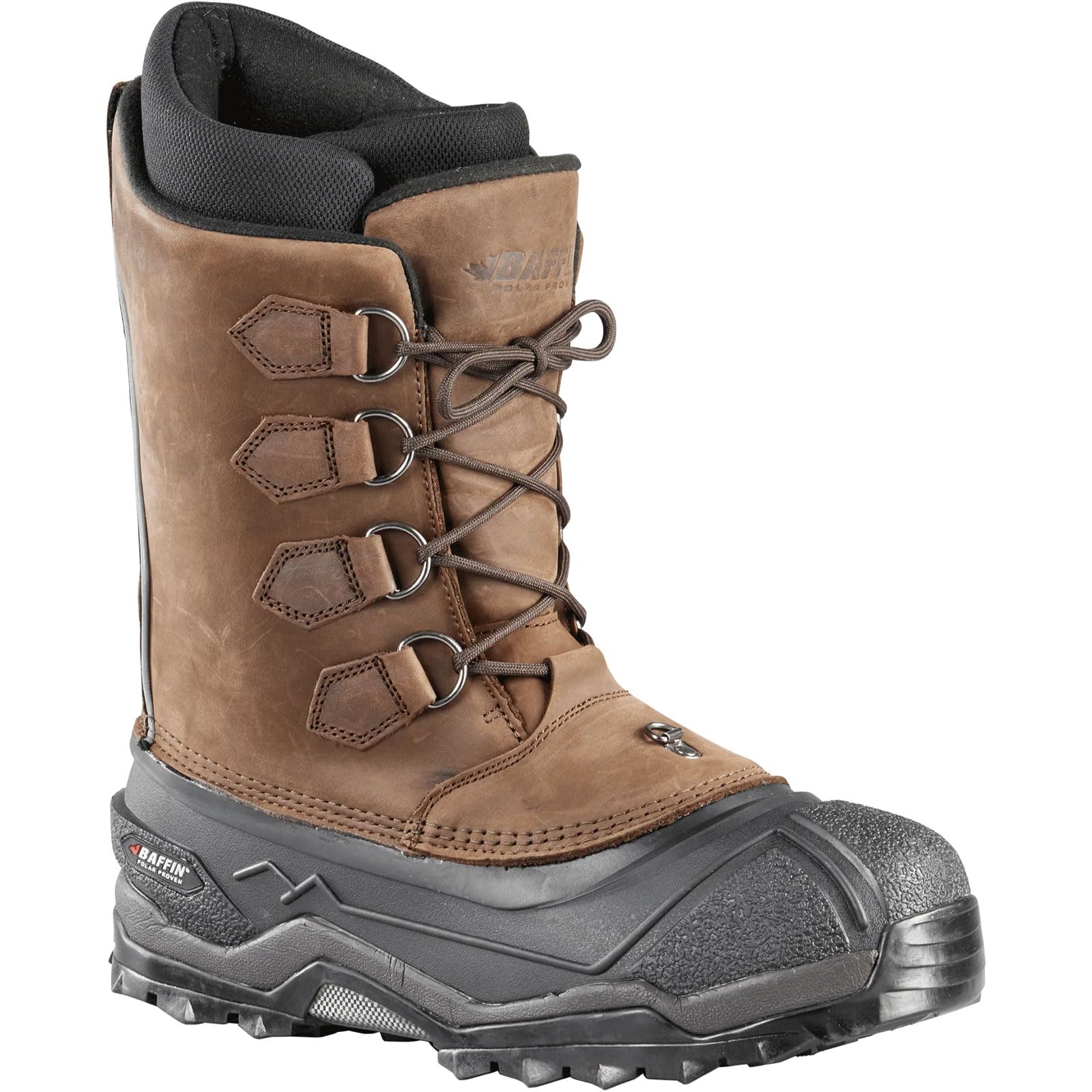
The Baffin Control Max is a PAC boot design — a thick, removable inner liner inside a rugged outer shell. This two-layer system traps a dead air space that provides dramatically more insulation per millimeter than a standard all-in-one boot. The Arctic rating on this boot is not marketing fluff; it is tested for standing use at extreme low temperatures. The Polar Rubber outsole stays flexible and grippy at -40°F, where standard rubber turns into hard plastic. This makes the Control Max the right choice for ice fishing, snowmachine riding, or aurora photography where you are stationary for long periods.
Customers highlight the pillow-like comfort and the ability to wear the boot with heavy wool socks. Sizing is critical — the insulation takes up significant interior volume. Order a half size up from your normal shoe size to accommodate the liner and a thick sock. The bulkiness is the biggest tradeoff: these boots are large and heavy, making them awkward for driving or walking on stairs. One reviewer compared the look to an astronaut boot on skinny legs.
This boot is purpose-built for one job: keeping feet warm when you are not moving. Do not buy it for hiking. Buy it for the days when you will stand on a frozen lake for four hours and need your feet to still be warm on the ride home.
Why it’s great
- Arctic-rated removable liner provides extreme warmth for stationary use
- Polar Rubber outsole stays flexible and grippy at -40°F
- Very comfortable underfoot, feels like walking on pillows
Good to know
- Extremely bulky and heavy; not suitable for hiking or driving
- Must size up half a size or more for proper fit with socks
4. Baffin Eiger Men’s Snow Boot
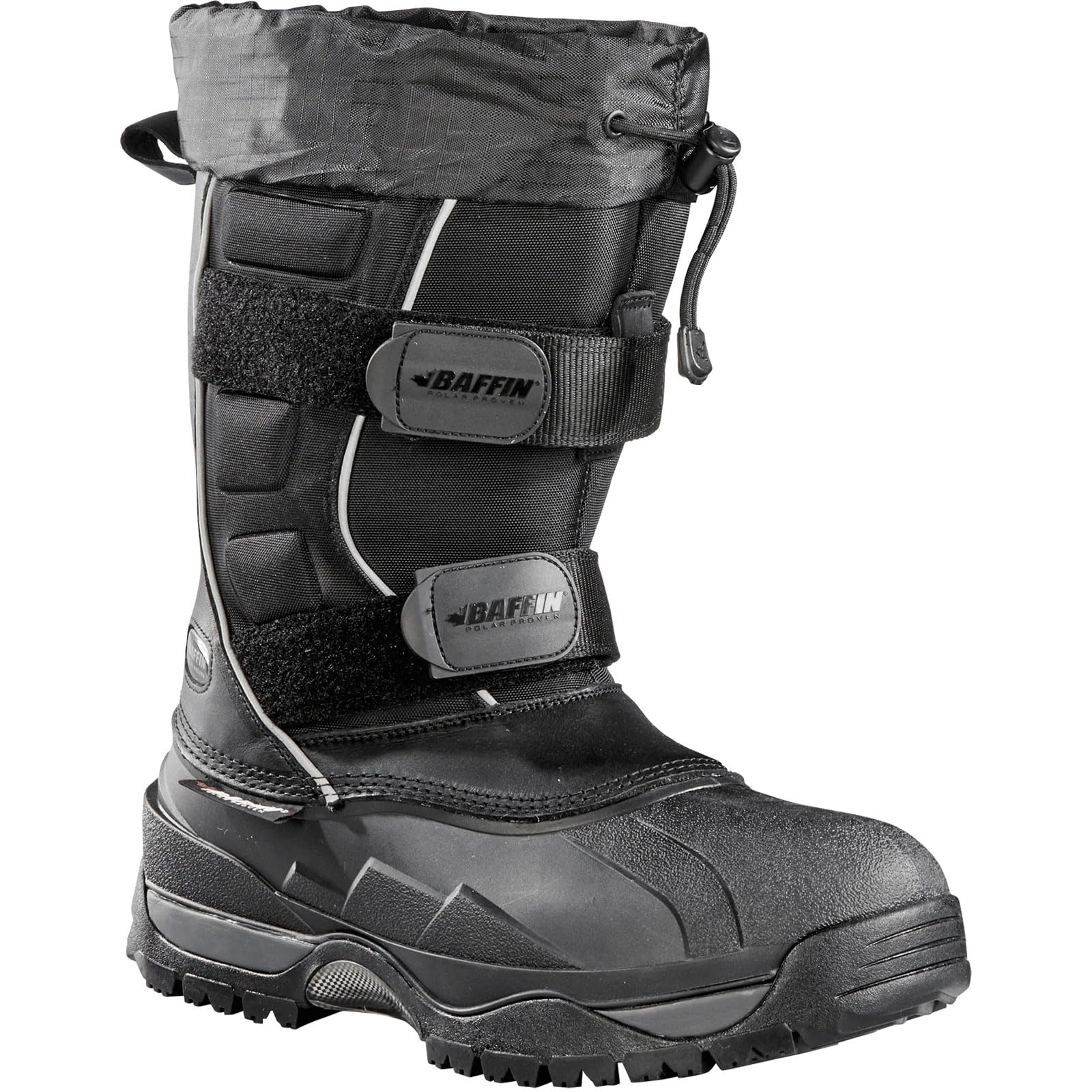
The Baffin Eiger sits between the Kenetrek and the Control Max in the Baffin lineup. It shares the Arctic rating and removable liner system of the Control Max, but uses a taller, full-grain leather upper with a nylon locking snow collar that seals out snow at the calf. The gaiter clip and lace system lets you lock the boot down tight enough to prevent snow intrusion even when postholing through deep powder. The Polar Rubber outsole is the same compound used on the Control Max, providing reliable grip in extreme cold.
Reviews from Alaska users confirm the Eiger keeps feet warm and dry in conditions that would cause frostbite in lesser boots within an hour. The removable liner lets you dry the boot quickly overnight, a huge advantage on multi-day trips. The fit runs narrower than the Control Max, so users with wide feet or thick calves should read sizing advice carefully. One reviewer noted the Eiger is not fully waterproof at the front seam, recommending caution around deep standing water.
For the price, the Eiger delivers Arctic-level insulation with better mobility than the Control Max. It works for moderate walking while still protecting against extreme cold. It is the best choice if you need one boot that can handle a snowmachine ride to the trailhead and then a short hike to a fishing hole.
Why it’s great
- Arctic-rated removable liner provides exceptional warmth for severe cold
- Locking snow collar and gaiter clip system keeps snow out effectively
- Taller leather upper offers better ankle support than bulkier PAC boots
Good to know
- Runs narrow; not suitable for wide feet without sizing up
- Some user reports of water intrusion at the front seam in deep standing water
5. Irish Setter Elk Tracker 1000g Insulated Hunting Boot

The Irish Setter Elk Tracker with 1000g Thinsulate Ultra insulation is the boot for the coldest, most sedentary hunting sits. When you are perched on a stand at 10°F with a wind chill of -20°F for hours, the massive insulation layer keeps blood flowing to your toes. The full-grain leather upper is fully waterproof, and the Goodyear leather welt construction allows professional resoling — a feature normally reserved for boots costing much more. The Bulls-Eye Air Bob aggressive outsole chews through mud, snow, and loose dirt without caking up.
Users report ordering a half size up to accommodate the thick insulation. The boot is heavy, described by one long-term owner as “Abrams tanks for the feet.” That weight translates to durability — many reviewers report a decade of use with proper maintenance like Sno-Seal treatment. The ScentBan technology in the lining is a plus for hunters who need to minimize human odor, but is irrelevant for general winter use.
The 1000g insulation is overkill for active hiking or for Alaska’s milder coastal regions. This boot shines in the interior and northern zones during deep winter, where standing still for hours is the norm. If you plan to hike, choose a 400g boot instead.
Why it’s great
- 1000g Thinsulate provides extreme warmth for stationary use in severe cold
- Goodyear leather welt construction enables professional resoling
- Very durable with many user reports of over a decade of service
Good to know
- Heavy and bulky; not suitable for active hiking or walking
- Sizing can be tricky due to thick insulation; plan to size up
6. Sorel Caribou Waterproof Snow Boot
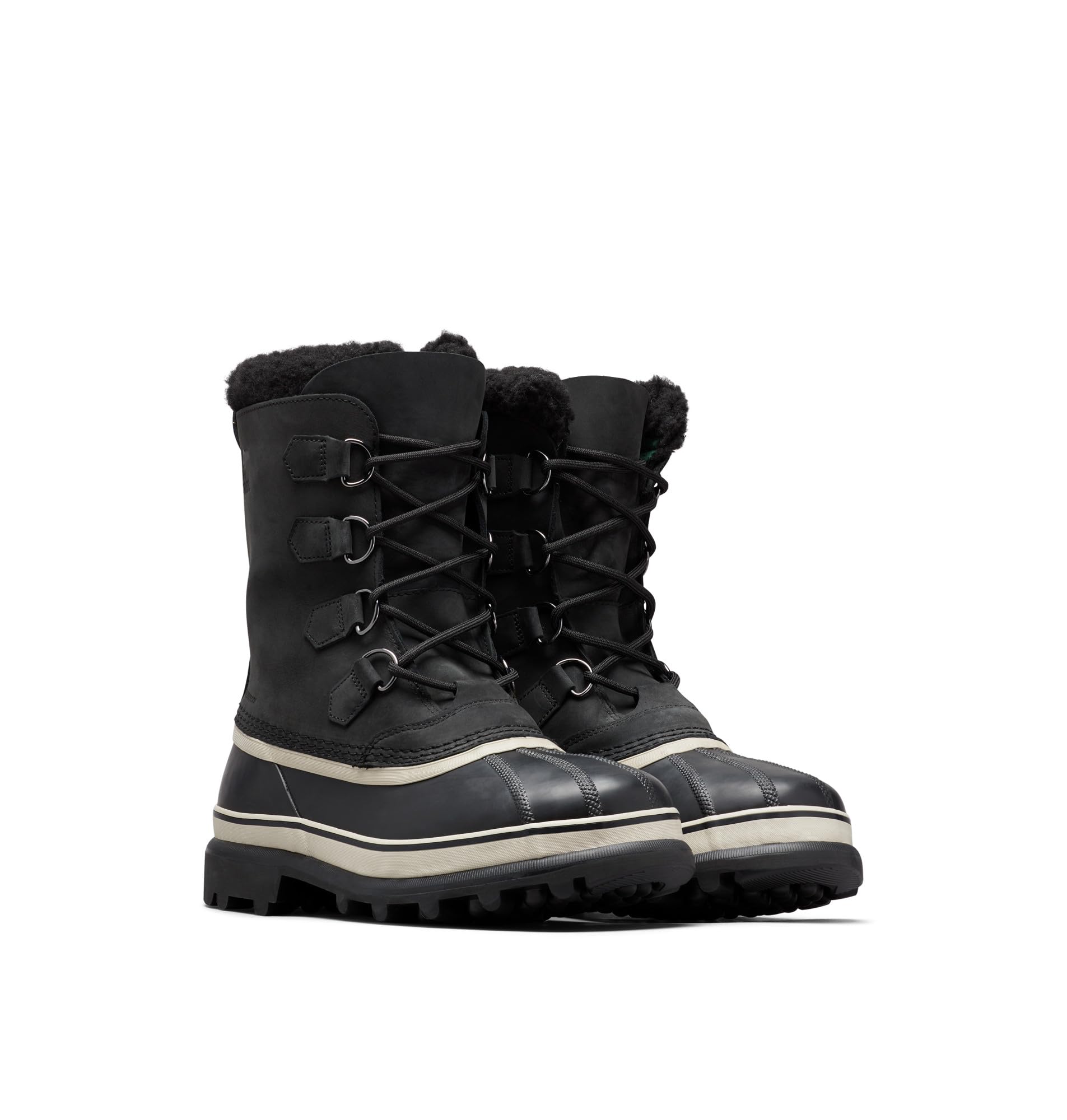
The Sorel Caribou is the boot that defined the category decades ago. The design is simple: a waterproof vulcanized rubber shell with a removable felt liner. The felt liner provides insulation through trapped air, and the rubber shell keeps all moisture out. The lace-up leather collar seals the top against snow entry. This design has been copied endlessly because it works. For Alaska’s wet, snowy coastal regions like Juneau or Seward, the rubber shell is a major advantage — no leather to dry out, no membrane to fail, just a simple barrier between your foot and the elements.
The most important detail about sizing is that these boots run very large. Multiple long-term owners confirm you should order at least a full size down, sometimes a size and a half. The roomy fit is intentional, allowing for thick socks and the felt liner. The boot is comfortable enough for all-day wear on snow and has enough tread for moderate snow conditions. It is not designed for technical hiking on ice or steep terrain.
The Sorel Caribou is best for daily winter wear in towns, snow play, light shoveling, and casual walks. It is not the warmest or most technical boot on this list, but its proven design and reasonable cost make it a solid entry-level choice for Alaska visitors or new residents.
Why it’s great
- Proven waterproof design with vulcanized rubber shell and taped seams
- Removable felt liner allows for quick drying and temperature adjustment
- Very durable; many users report decades of use from a single pair
Good to know
- Runs very large; you must size down significantly
- Not insulated enough for extreme cold or stationary use below -20°F
- Limited traction on steep, icy terrain
7. Oboz Bridger 10″ Insulated B-DRY Hiking Boots
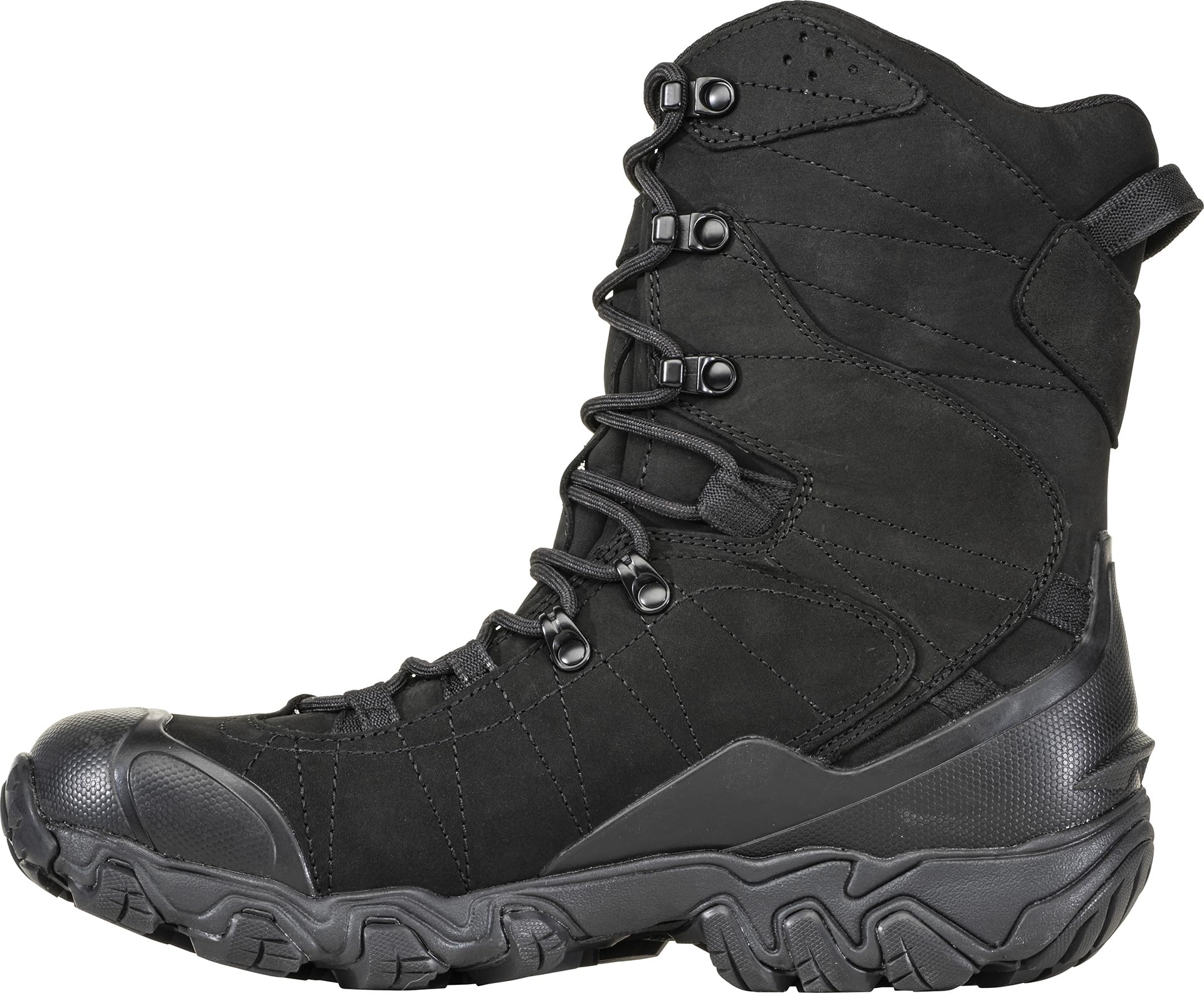
The Oboz Bridger 10″ Insulated boot is designed specifically for winter hiking and backpacking, not for standing still. The 400g Freeze Guard insulation uses 100% post-consumer recycled polyester and provides the right warmth level for a hiker moving through snow at temperatures down to about -20°F. The B-DRY waterproof membrane is Oboz’s proprietary system, and it performs well in wet snow and slush without the breathability issues some older waterproof membranes have. The nubuck leather upper is paired with a DWR coating to shed moisture.
The TPU chassis in the midsole adds torsional stability on uneven snow-covered terrain, and the Granite Peak outsole uses a winterized rubber compound that provides good traction on packed snow. Reviewers consistently praise the out-of-the-box comfort and the footbed, which has no pressure points. The laces stay tied without slipping, a small detail that matters when you stop to adjust in cold wind. The boot is true to size but several reviewers recommend ordering up a half size to allow for a thicker sock.
One important note: the 10-inch shaft is tall and can feel restrictive if you have large calves. The molded rubber toe cap and heel kick add durability where you need it most. For anyone planning winter hikes on Alaska’s maintained trails, this is a strong mid-range option.
Why it’s great
- 400g Freeze Guard insulation is ideal for active winter hiking
- B-DRY membrane and DWR nubuck offer reliable waterproofing
- TPU chassis provides excellent stability on uneven snow terrain
- Very comfortable out of the box with minimal break-in
Good to know
- Tall 10-inch shaft may be restrictive for some users with thicker calves
- Sizing runs slightly small; a half size up is recommended
8. Helly Hansen Garibaldi V3 Waterproof Winter Boots

Helly Hansen built the Garibaldi V3 for the skier or mountain town resident who wants a boot that works from the parking lot to the trail without looking out of place at dinner. The Primaloft 400g insulation hits the active-use sweet spot. The waterproof full-grain leather upper comes from an LWG-rated tannery, meaning the environmental standards are verified. The Max Grip outsole uses a winter compound that provides reliable traction on wet pavement, packed snow, and light ice. The Hover-Stride midsole adds a noticeable level of underfoot cushioning that reduces fatigue on long walks.
Reviewers in cold climates — including Northern Michigan and alpine resorts — report the Garibaldi holds up at temperatures down to -11°F without cold feet. The boot is true to size and does not require the aggressive sizing adjustments that PAC boots demand. The leather and anchored stitching construction makes this a durable option that can withstand multiple seasons of daily wear. One reviewer noted the boot breathes well enough to avoid the sweaty-foot problem common in fully waterproof boots.
The Garibaldi is not built for the extreme interior Alaska winter like the Baffin or Irish Setter options are. It is better suited for the milder Southeast and Southcentral regions, or for anyone who wants a single boot for both town and trail use.
Why it’s great
- Primaloft 400g insulation provides warmth for active use without overheating
- Waterproof leather upper from a certified sustainable tannery
- Max Grip outsole offers reliable traction on varied winter surfaces
- Cushioned midsole reduces fatigue during long walking days
Good to know
- Not rated for extreme interior Alaska cold; best for milder regions
- No removable liner, so drying time is slower than PAC boots
9. The North Face Chilkat V 400 Waterproof Snow Boot

The North Face Chilkat V 400 is the budget-friendly entry point on this list, but it punches above its weight class for the price. The 400g insulation is the same weight used in mid-range boots costing more, making it suitable for active winter wear in temperatures down to about -10°F. The waterproof construction uses a non-PFC DWR treatment and fully sealed seams, which is a responsible environmental choice without sacrificing rain and snow protection. The boot is noticeably lighter than the comparable leather options, reducing leg fatigue during long days on your feet.
Customer reviews consistently mention that these boots run small, and the standard advice is to order at least a full size up. Users with wide feet report the toe box is comfortable even with thick socks. The outsole provides good grip on wet pavement and packed snow but is not designed for technical ice traction.
The Chilkat V 400 is the right choice for someone who needs a warm, dry boot for daily winter wear, shoveling, and light trails but does not need the extreme insulation or build of a premium hunting boot. It is the most affordable option that still provides reliable performance for Alaska’s milder winter conditions.
Why it’s great
- 400g insulation provides solid warmth for active winter use at a lower price point
- Lightweight construction reduces leg fatigue during all-day wear
- Non-PFC DWR treatment is an environmentally conscious choice
Good to know
- Runs small; must order a full size up for a proper fit
- Not fully waterproof at ankle depth or deeper
- Less durable than full-grain leather options; not resoleable
- Sole traction is adequate for packed snow but not for steep ice
FAQ
Can I wear the same Alaska winter boots for hiking and ice fishing?
How much should I size up for Alaska winter boots?
Are insulated rubber boots like Sorel Caribou warm enough for interior Alaska?
What is the difference between Thinsulate and Primaloft insulation?
Final Thoughts: The Verdict
For most users, the boots to wear in alaska winner is the Kenetrek Mountain Extreme 400 because it provides the ideal 400g insulation for active winter use with premium build quality that lasts for years. If you want extreme insulation for standing still in the deep interior, grab the Irish Setter Elk Tracker 1000g. And for a versatile boot that works for both town and trail in Alaska’s coastal regions, the Helly Hansen Garibaldi V3 is your best bet.