
Finding a bottle that actually reduces reflux in a newborn is a specific challenge: standard nipples flood the mouth, air bubbles mix into the milk, and every ounce swallowed becomes a risk for pain and spit-up. The difference between a good feeding and a screaming session often comes down to the bottle’s internal vent design and nipple flow rate — not the brand name.
I’m Rikta — the co-founder and writer behind FitlyFast. I’ve analyzed seven leading newborn bottle systems specifically for the reflexes, swallowing mechanics, and air-trapping physics that affect a reflux-prone baby.
Whether you are comparing glass vs. plastic, vented bases vs. internal straws, or ultra-slow vs. preemie nipples, this guide isolates the one spec that matters most: how the system prevents air from entering the milk column. Here is my commercial-intent analysis of the bottle for newborn with reflux that actually works.
How To Choose The Best Bottle For Newborn With Reflux
Reflux in newborns is not just about spit-up — it is about the burning sensation caused by stomach acid mixed with swallowed air. The bottle you choose directly affects how much air enters the digestive tract. Here are the three specs that define an effective anti-reflux bottle.
Vent System Design: Base vs. Internal Straw
There are two dominant vent architectures. A bottom-vented base, like the MAM system, lets air enter through the base and bypass the milk entirely. An internal straw vent, like Dr. Brown’s, runs a tube through the milk to equalize pressure. Both prevent air bubbles from being swallowed, but the internal straw is more effective at vacuum-free feeding, which prevents the nipple from collapsing and flooding the baby’s mouth. For reflux, the internal straw system reduces the total air volume swallowed by a higher margin.
Nipple Flow Rate and Shape
A newborn with reflux needs an ultra-slow flow nipple — typically labeled SS (super slow) or Level 1. If the nipple releases milk faster than the baby can swallow, the baby gulps air to compensate. The nipple shape should also mimic the breast to encourage a deep, wide latch that seals the mouth around the base. A shallow latch lets air enter from the sides. Look for nipples with a latch-on line or a wide, soft base that fills the baby’s palate.
Material: Borosilicate Glass vs. PPSU vs. Standard Plastic
Borosilicate glass is the best material for newborns with reflux because it resists thermal shock, does not absorb odors, and can be sterilized repeatedly without degrading. The weight of a glass bottle also provides stability during feeding. PPSU plastic is the lightweight alternative that still resists high heat without BPA leaching. Standard polypropylene plastic is affordable but can absorb milk fats over time, which may affect taste and cleaning hygiene. For a reflux baby, glass is the gold standard.
Quick Comparison
On smaller screens, swipe sideways to see the full table.
| Model | Category | Best For | Key Spec | Amazon |
|---|---|---|---|---|
| Dr. Brown’s Options+ Glass | Glass + Internal Vent | Maximum air reduction | Internal vent tube system | Amazon |
| MAM Easy Start Anti-Colic+ | Vented Base | Self-sterilizing convenience | Vented base + SkinSoft nipple | Amazon |
| Philips Avent Natural Response | No-Drip Nipple | Breastfeeding transition | Flow 2 slow flow nipple | Amazon |
| Gulicola Glass Bottle | Borosilicate Glass | Minimal parts + glass safety | Extra slow flow SS nipple | Amazon |
| Pigeon PPSU Wide Neck | Premium Plastic | No-break lightweight anti-colic | PPSU material + SS nipple | Amazon |
| Avima Baby Starter Set | 22-Piece Kit | Complete starter bundle | Duo-Flo dual valve nipples | Amazon |
| Dr. Brown’s All-In-One Gift Set | Full Bundle | All accessories included | 7 bottles + warmer + pitcher | Amazon |
In‑Depth Reviews
1. Dr. Brown’s Natural Flow Options+ Narrow Glass 4 oz (3-Pack)
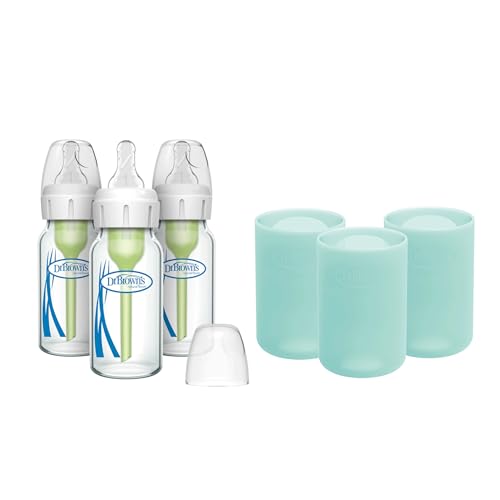
The Dr. Brown’s Options+ Glass is the clinical reference bottle for newborn reflux. The internal vent tube system creates a vacuum-free feeding environment that prevents air from mixing with the milk column — this is the same mechanism used in hospital nurseries. In customer reports, parents consistently describe a measurable reduction in spit-up volume and burping frequency compared to base-vented bottles. The borosilicate glass body withstands repeated sterilization cycles without clouding or odor absorption, and the included silicone sleeve provides grip and drop protection.
The Level 1 slow flow nipple delivers milk at a rate that matches a newborn’s natural suck-swallow rhythm. The narrow neck design is slightly more challenging to clean than wide-neck alternatives — the vent tube requires a dedicated brush for the internal channel. However, the anti-colic performance justifies the extra minute of cleaning. Parents who switched from base-vented bottles report that their baby no longer arches their back during feeds, a classic sign of air-induced esophageal pain.
The three-pack provides 4 oz bottles, which is the ideal volume for the first 8–10 weeks before milk intake increases. The glass retains heat better than plastic, meaning the milk stays at the target temperature longer during the feed. For a newborn already struggling with reflux, every variable you can stabilize — temperature, flow rate, air content — matters.
Why it’s great
- Internal vent tube removes more air than base-vent designs
- Borosilicate glass is heat-stable and odor-free after sterilization
- Silicone sleeve protects against drops and thermal shock
- Level 1 flow matches newborn suck-swallow coordination
Good to know
- Five-piece assembly requires a small vent brush for thorough cleaning
- Narrow neck is slightly harder to fill and scrub than wide-neck alternatives
2. Philips Avent Natural Baby Bottle 4 oz (2-Pack)

The Philips Avent Natural Response bottle solves a specific reflux trigger: the continuous drip. Unlike bottles with a constant flow nipple, the Natural Response tip releases milk only when the baby actively sucks, then stops when the baby pauses to swallow and breathe. This design prevents the passive flooding of the mouth that often causes a newborn to gag and swallow air. The anti-colic valve is integrated into the nipple skirt, keeping air away from the tummy during active feeding.
Parents transitioning from breastfeeding report zero nipple confusion because the wide, breast-shaped nipple mimics the feel and softness of the breast. The Flow 2 (slow flow) nipple is well-calibrated for a newborn — it is not as restrictive as an SS preemie nipple, but it requires active tongue and jaw movement to pull milk, which trains proper oral motor skills. The 4 oz size is compact, and the wide neck makes scooping formula powder and hand-washing effortless.
The no-drip design is a practical win: no milk wasted on onesies or burp cloths when the bottle tips over. The two-pack format is a smart starting point before committing to a full set. For a baby whose reflux is mild to moderate, this system reduces air intake without the complexity of an internal vent tube.
Why it’s great
- Milk stops flowing when baby pauses, preventing air gulping
- Wide breast-shaped nipple eases breastfeeding transition
- No-drip design keeps milk contained
- Only three parts for easy cleaning
Good to know
- Flow 2 nipple may still be too fast for some reflux-prone newborns
- No internal vent tube — air reduction relies on nipple response alone
3. MAM Easy Start Anti-Colic+ 4.5 oz
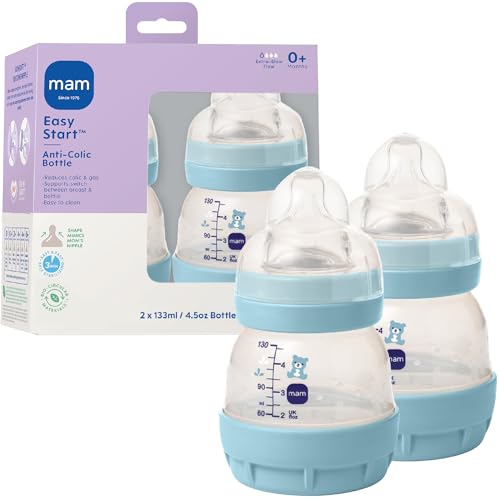
The MAM Easy Start Anti-Colic+ bottle uses a bottom-vented base where air enters through the bottom of the bottle, bypassing the milk column entirely. Clinical data on this specific model claims an 80% reduction in colic symptoms. For a newborn with reflux, the vented base prevents air bubbles from forming inside the milk, which means the baby swallows less air during active feeding. The SkinSoft nipple is extra slow flow and mimics the feel and shape of the mother’s nipple, achieving a 94% nipple acceptance rate in clinical testing.
The standout feature is the self-sterilizing capability: the bottle can be microwaved in the vented-base position for 3 minutes and remains sterile for up to 48 hours without needing a separate sterilizer. For exhausted parents of a reflux baby, eliminating one step from the nightly cleaning routine is a genuine quality-of-life improvement. The bottle is manufactured from bio-circular, BPA-free materials and is rigorously tested to exceed American and European safety standards.
The 4.5 oz size is transitional — it holds enough for a growing baby but remains small enough for small hands to hold during feeds. The bottom vent adds one extra part to clean, but the vent itself is wide and easy to brush. Parents who tried Philips Avent and Tommee Tippee before MAM often report that their baby finally stops pulling away from the bottle mid-feed.
Why it’s great
- Vented base prevents air from mixing with milk column
- Self-sterilizes in 3 minutes in the microwave
- Extra slow SkinSoft nipple mimics breastfeeding feel
- Bio-circular BPA-free materials exceed safety standards
Good to know
- Bottom vent adds an extra piece to clean and track
- Some babies need to switch to MAM pacifiers for best nipple acceptance
4. Gulicola Small Glass Baby Bottle 3 oz (2-Pack)

The Gulicola 3 oz glass bottle is built for the smallest, most delicate feeders. The 3 oz capacity is ideal for the first weeks of life when a newborn’s stomach holds only 1–2 ounces per feed. The borosilicate glass construction is premium — it survived drop tests in customer reviews without chipping, and it resists thermal shock when moving from refrigerator to bottle warmer. The SS (extra slow flow) nipple is the slowest flow available, designed specifically for preemies and newborns with reflux who need to control the pace of milk release.
The nipple includes a latch-on line that guides the baby’s lips into the correct position, encouraging a deep seal that reduces air entry around the mouth. The anti-colic vents are integrated into the nipple skirt, allowing continuous drinking without gasping for air. The four-piece assembly is minimal — no internal vent tube to brush — and the wide neck makes cleaning straightforward. Customers switching from Dr. Brown’s to Gulicola report missing the vent tube’s air removal but appreciating the simplicity.
The primary limitation is the vent system itself. Without an internal straw, some air bubbles can still form in the nipple during vigorous feeding, particularly if the baby compresses the nipple with their gums. The 3 oz size is a short-term solution — most babies outgrow the volume within 6 to 8 weeks. For a low-birth-weight or premature newborn with severe reflux, the combination of borosilicate glass and SS flow is a strong starting point.
Why it’s great
- 3 oz capacity matches tiny newborn stomach volume
- Borosilicate glass survives drops and thermal shock
- SS nipple is the slowest flow for precise pace control
- Latch-on line encourages deep, air-sealing mouth seal
Good to know
- Air bubble buildup in nipple during active feeding
- 3 oz volume is outgrown quickly in the first 2 months
5. Pigeon PPSU Nursing Baby Bottle Wide Neck 5 oz (2-Pack)
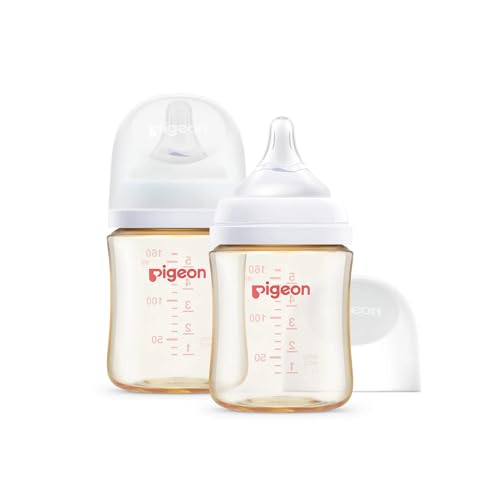
The Pigeon PPSU bottle is a premium plastic option that avoids the weight concerns of glass while maintaining high heat resistance. PPSU is a medical-grade thermoplastic that withstands repeated sterilization without degrading, unlike standard polypropylene. The wide-neck, streamlined body is easy to grip and clean, and the 5 oz capacity provides room to grow beyond the first month. The SS nipple is designed based on research into the three natural tongue movements babies make during breastfeeding, and the latch-on curve guides the baby into the correct oral position.
The anti-colic vent is integrated into the nipple, not the bottle base, which keeps the part count low. Parents report that their baby requires fewer burping sessions and that the nipple does not collapse during feeding — a common issue with cheaper plastics. The nipple material is soft and flexible, allowing natural tongue movement that mirrors breastfeeding. Customers who switched from Dr. Brown’s note that the Pigeon system produces less overall spit-up because the baby is not fighting the nipple to get milk.
The PPSU material is significantly lighter than glass, which is an advantage when the baby starts holding the bottle independently at 4–5 months. The lack of an internal vent tube means cleaning is fast, but the air removal is not as aggressive as the Dr. Brown’s internal straw system. For newborns whose reflux is triggered more by flow rate than by swallowed air volume, the SS nipple and soft silicone construction make this a top performer.
Why it’s great
- Medical-grade PPSU resists heat and sterilization without breaking down
- SS nipple is engineered for natural tongue movement
- Latch-on line guides correct baby mouth positioning
- Lightweight body is easy for baby to hold later
Good to know
- No internal vent tube means less aggressive air removal vs. Dr. Brown’s
- Higher price point than standard plastic alternatives
6. Avima Baby Anti Colic Starter Set (22-Piece)
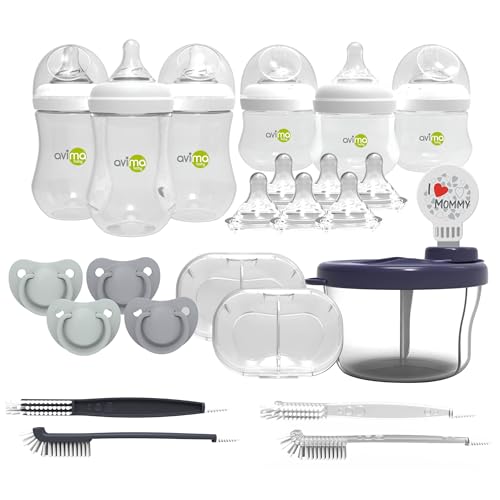
The Avima Baby Starter Set is a complete feeding solution for parents who want a single-purchase system. The set includes two 4 oz bottles and two 9 oz bottles with Duo-Flo nipples that feature two valves designed to flex and adjust the milk flow to the baby’s feeding pace. The dual-valve system is engineered to prevent nipple collapse, which is a common cause of air gulping in standard single-valve nipples. The kit also includes orthodontic-shaped pacifiers, a formula dispenser, a pacifier clip, a pacifier case, and cleaning brushes.
The wide-neck design keeps the part count at just four pieces per bottle, making cleaning fast even for the 9 oz bottles. The silicone nipples are soft and breast-shaped, and customers report that the transition from breastfeeding to bottle is smoother than with harder plastic nipples. The pacifier case doubles as a sterilizer, and the formula dispenser has a pacifier latch — small details that reduce the number of items parents need to carry when leaving the house.
The main trade-off is material: the bottles are standard BPA-free plastic, not glass or PPSU. Over months of repeated sterilization, the plastic can develop micro-scratches that may harbor milk residue. For mild to moderate reflux, the Duo-Flo valve system provides adequate air reduction. For severe reflux, the internal vent tube of Dr. Brown’s remains more effective. As a starter bundle, the value is high for the number of components included.
Why it’s great
- 22-piece kit covers bottles, pacifiers, dispenser, and cleaning tools
- Duo-Flo dual-valve nipples prevent collapse and adjust flow
- Four-piece assembly is easy to clean
- Pacifier case doubles as a portable sterilizer
Good to Know
- Standard plastic material may scratch over time
- Dual-valve system less effective than internal vent tube for severe reflux
7. Dr. Brown’s Options+ All-In-One Gift Set
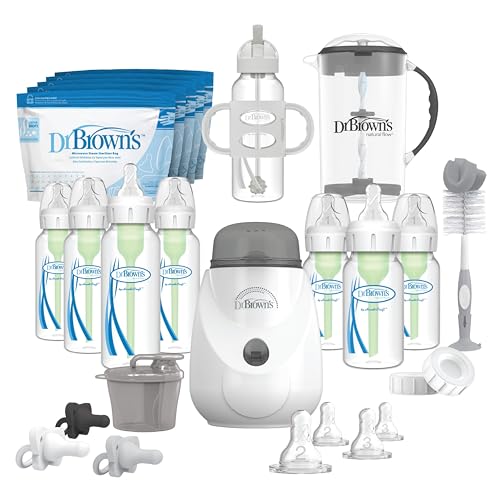
The Dr. Brown’s All-In-One Gift Set is the ultimate anti-reflux toolkit. It includes seven narrow bottles (four 8 oz and three 4 oz), Level 1, 2, and 3 silicone nipples, an Insta-Feed bottle warmer, three HappyPaci silicone pacifiers, a sippy straw bottle, a formula mixing pitcher, a formula dispenser, a bottle brush, and five microwave steam sterilizer bags. For a newborn with reflux, the combination of the internal vent system and the bottle warmer ensures that every feed is at the optimal temperature and free of air bubbles.
The bottle warmer is a standout component — it warms milk to body temperature evenly without hot spots, which is critical because temperature inconsistency can trigger reflux spasms in sensitive babies. The HappyPaci pacifiers share the same nipple shape as the bottles, maintaining oral consistency. The formula mixing pitcher allows parents to batch-prepare formula and refrigerate it, reducing the number of individual bottle prep steps during nighttime feeds. The included sippy straw bottle extends the set’s usability past the newborn stage.
The downside is the sheer volume of parts to manage. Each Dr. Brown’s bottle has five pieces, and with seven bottles, that is 35 pieces to wash, dry, and track. The set is also the highest total investment in this guide. For parents who want a single purchase that covers every feeding accessory from birth through 6 months, this set eliminates the need to buy any additional items.
Why it’s great
- Seven bottles cover 0–6 months without needing additional purchases
- Insta-Feed warmer eliminates hot spots that trigger reflux
- Formula mixing pitcher enables batch prep for consistent feeding
- HappyPaci pacifiers match bottle nipple shape for oral consistency
Good to know
- 35+ parts to clean with the full seven-bottle rotation
- Highest total investment in this guide
FAQ
Can a bottle really reduce infant reflux or does it just help with gas?
How many parts should I expect to clean with an internal vent bottle like Dr. Brown’s?
Is glass or plastic better for a newborn with reflux?
Final Thoughts: The Verdict
For most users, the bottle for newborn with reflux winner is the Dr. Brown’s Options+ Narrow Glass 4 oz (3-Pack) because the internal vent tube system removes the most air of any design tested, and the borosilicate glass provides thermal stability and easy sterilization. If you want a lighter, unbreakable bottle with a superb slow-flow nipple, grab the Pigeon PPSU Wide Neck. And for a self-sterilizing system that simplifies nighttime cleaning, nothing beats the MAM Easy Start Anti-Colic+.