
Our readers keep the lights on and the weekend projects moving. As an Amazon Associate, I earn from qualifying purchases.
You’ve spent good money on single-origin beans and a precision grinder, yet every morning your cup tastes flat, bitter, or just off. The culprit isn’t your gear—it’s what you’re brewing with. Tap water, even when filtered, contains chlorine, hard minerals, or a flat TDS that stifles extraction and mutes the complex notes your roaster worked so hard to develop.
I’m Rikta — the co-founder and writer behind FitlyFast. I’ve spent years analyzing water chemistry reports, dissecting mineral composition data, and cross-referencing third-party lab tests to find bottled water solutions that actually improve coffee extraction and cup clarity.
This guide breaks down the specific mineral profiles, pH ranges, and filtration technologies that separate a truly great coffee brew from a forgettable one. For anyone chasing café-quality results at home, finding the bottled water for coffee is the single most impactful upgrade you can make to your morning routine.
How To Choose The Best Bottled Water For Coffee
Water makes up over 98% of your brewed coffee, so its chemical composition controls extraction more than your grinder setting or water temperature. You need water with a specific mineral balance—not just any clean-tasting bottle.
Total Dissolved Solids (TDS) Range
The Specialty Coffee Association (SCA) recommends a TDS range of 100–150 ppm for optimal extraction. Water below 80 ppm (distilled or RO) produces sour, under-extracted coffee because there are too few minerals to pull solubles from the grounds. Water above 250 ppm (hard tap water) causes over-extraction, bitterness, and limescale buildup in your machine. Look for bottled water that falls inside this sweet spot, or use mineral packets to adjust pure water to the target range.
Calcium, Magnesium, and Bicarbonate Ratio
Calcium and magnesium are the two primary cations that bond with coffee compounds during brewing. Magnesium extracts brighter, fruitier flavors and is especially important for light roasts. Calcium adds body and mouthfeel. Bicarbonate acts as a buffer against acidity; too much bicarb flattens the cup, while too little leaves it sharp. A balanced profile with 30–60 ppm magnesium and 40–80 ppm calcium, paired with moderate alkalinity (40–60 ppm as HCO₃), produces the clearest flavor separation.
pH and Alkalinity
Most high-end bottled waters sit between pH 7.5 and 8.5, which is slightly alkaline. This range helps neutralize some of the coffee’s natural acidity without muting its brightness. However, heavily alkaline water (pH above 9.0) can suppress acidity to the point that your coffee tastes dull. For espresso and dark roasts, a neutral pH around 7.0–7.5 often performs better because it preserves the roast’s intended flavor structure.
Quick Comparison
On smaller screens, swipe sideways to see the full table.
| Model | Category | Best For | Key Spec | Amazon |
|---|---|---|---|---|
| Third Wave Water Medium Roast | Mineral Packets | Precision mineral dosing | 12 single-gallon sticks | Amazon |
| Coffee Water Mineral Packs | Mineral Packets | Cost-effective bulk brewing | Makes 25 gallons | Amazon |
| FIJI Natural Artesian Water | Bottled Artesian | Ready-to-drink convenience | TDS 208 ppm, pH 7.7 | Amazon |
| Brita Standard Filter Pack | Filter Pitcher | Tap water improvement | 6 filters, 40 gal each | Amazon |
| Waterdrop ED06W Electric Pitcher | Electric Filter | Instant countertop filtration | 40 gal, 20-day battery | Amazon |
| Waterdrop PF-AL Alkaline Filter | Alkaline Filter | Alkaline mineral enhancement | Raises pH to 8.0-9.5 | Amazon |
| ZeroWater 5-Stage Replacement Filter | Zero TDS Filter | Purest base water | Reduces TDS to 0 ppm | Amazon |
In‑Depth Reviews
1. Third Wave Water Medium Roast
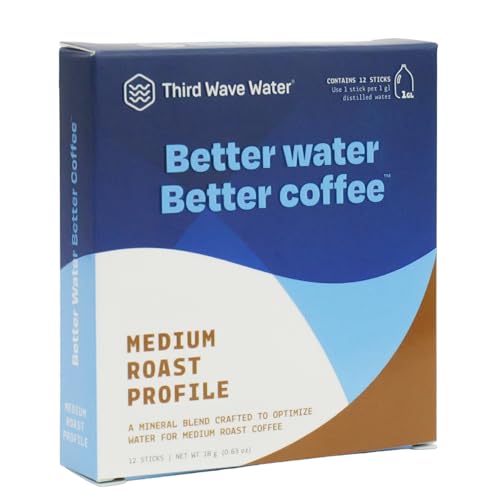
Third Wave Water is the most recognized name in coffee-brewing mineral packets, and for good reason. Each stick is pre-dosed with a specific blend of magnesium sulfate and calcium chloride engineered to hit the SCA-recommended TDS window when added to one gallon of distilled or RO water. The Medium Roast variant pushes magnesium content slightly higher to emphasize sweetness and reduce bitterness—exactly what a balanced medium roast needs to open up its cocoa and nutty notes.
Users consistently report a dramatic lift in clarity and depth compared to filtered tap water, especially those with reverse osmosis systems at home. The mineral profile is fine-tuned enough that five out of five Sharks on Shark Tank invested, and the company’s lab-tested ratios remove the guesswork entirely. One packet per gallon is all it takes—no measuring, no mixing.
The main trade-off is cost per gallon, which runs higher than generic mineral blends or DIY recipes. Some users with hypersensitivities to magnesium sulfate note mild digestive discomfort, though this is rare. If consistency and proven science matter more than saving a few cents per brew, this is the most reliable bottled-water-on-steroids solution available.
Why it’s great
- Precision mineral blend hits SCA TDS target perfectly
- Single-stick packets eliminate measurement errors
- Works with all coffee makers and espresso machines
Good to know
- Cost per gallon is higher than DIY alternatives
- Not recommended for those sensitive to magnesium sulfate
2. Coffee Water Mineral Packs
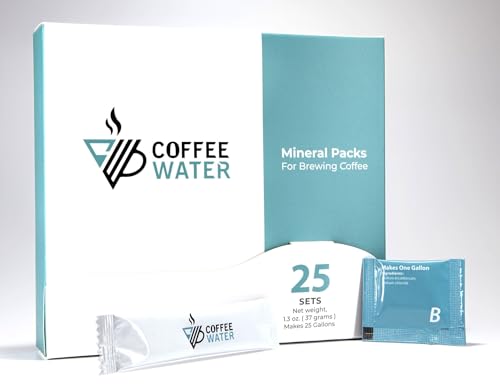
Where Third Wave charges a premium per gallon, Coffee Water undercuts it significantly without sacrificing adherence to SCA water standards. Each box contains 25 individual packet sets—one pouch of calcium/magnesium salts and one pouch of sodium bicarbonate—designed to be added to a gallon of distilled or RO water. The dual-packet approach lets you tweak the alkalinity separately if you dial in your preferred acid balance, though most users simply dump both in and stir.
Target TDS lands around 134 ppm, which sits comfortably in the SCA sweet spot. Customer feedback consistently notes that this blend removes the chemical taste and flatness from RO water, producing a punchy, flavorful cup with noticeably less bitterness than tap water. Many reviewers who tried both Third Wave and Coffee Water call this the better bang-for-buck, citing nearly identical cup quality for a fraction of the cost per gallon.
There is a quirk: the salts need to dissolve fully and release gas overnight before brewing. Using the water immediately can yield a slightly salty or weird taste, but after 12–24 hours of resting, it settles into a clean, neutral profile. If you plan ahead by a day, this is the most cost-effective way to brew consistent specialty-grade coffee at home.
Why it’s great
- Significantly lower cost per gallon than competing brands
- Dual-packet system allows independent mineral/alkalinity adjustment
- Balanced mineral profile works across all roast levels
Good to know
- Requires overnight rest to let gas dissipate
- Initial taste can be off-putting if used immediately
3. FIJI Natural Artesian Water

FIJI is not specifically designed for coffee, but its natural mineral composition makes it one of the most interesting ready-to-drink options on the shelf. Sourced from an artesian aquifer in Fiji, the water filters through volcanic rock that naturally enriches it with silica (91 mg/L), bicarbonate (140 mg/L), and a TDS of 208 ppm. The pH of 7.7 gives it a soft, smooth mouthfeel that many coffee drinkers find complements lighter roasts without muting their brightness.
Where FIJI truly stands apart is the silica content, which contributes a silky texture on the tongue. In a drip brewer, this translates to a cup with noticeably rounder body and less perceived astringency compared to typical spring waters. Users who have tested it side by side with RO water report that FIJI brings out floral and fruity notes in washed Ethiopian and Kenyan coffees with surprising clarity.
The catch is the TDS of 208 ppm—well above the SCA’s 150 ppm upper limit. For some roast profiles, particularly medium-dark and dark roasts, this can lead to over-extraction and a slightly muddy finish. Purists may find it too mineral-heavy for precise experimentation, but as a grab-and-go bottle that requires zero prep, it outperforms almost any tap or standard bottled water for coffee use.
Why it’s great
- Natural silica content creates a silky, smooth mouthfeel
- Consistent 7.7 pH balances coffee acidity well
- No preparation needed—just open and pour
Good to know
- TDS of 208 ppm exceeds SCA recommended maximum
- Can cause over-extraction with darker roasts
4. Brita Standard Filter Pack
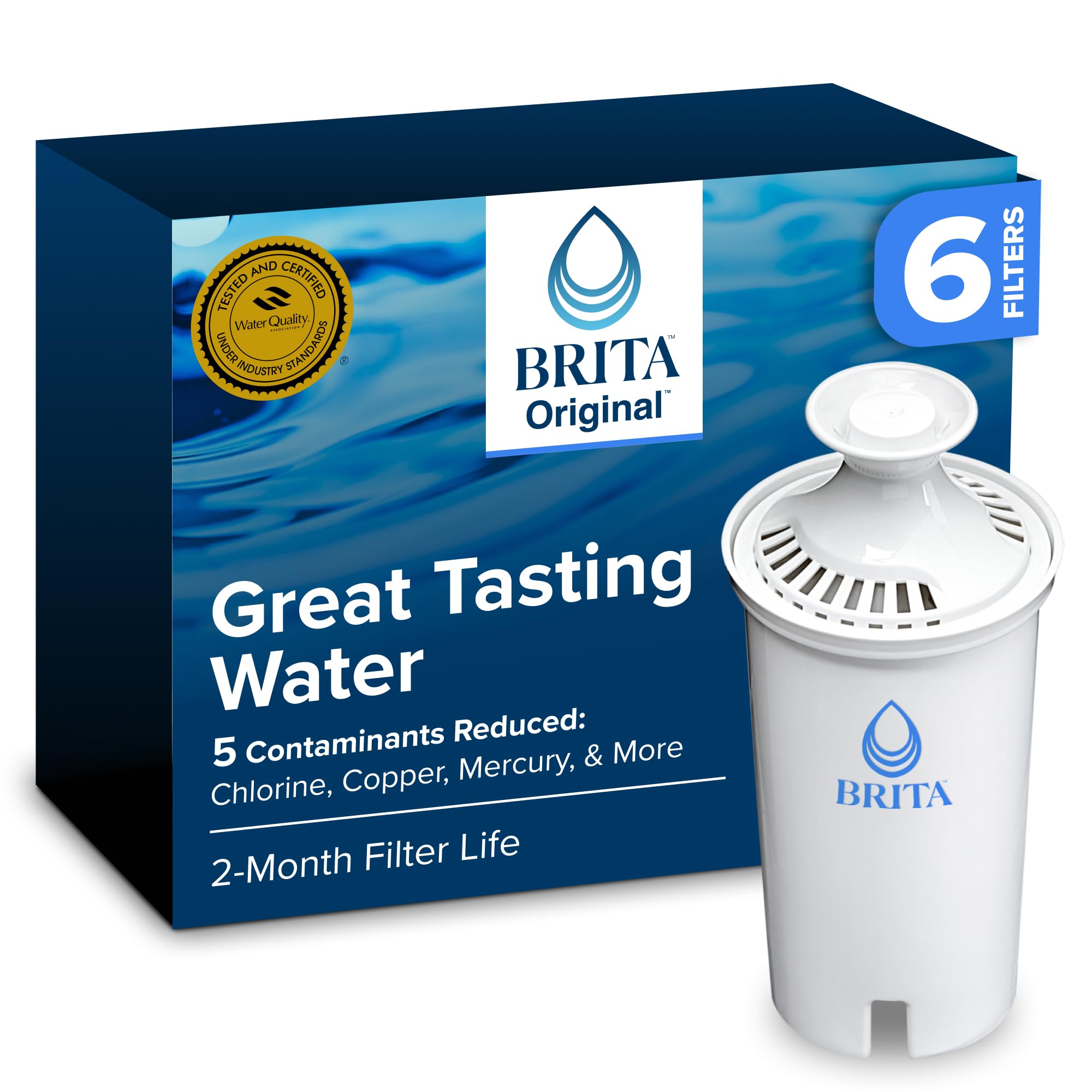
Brita is the household name for countertop water filtration, and while its standard filter does not target coffee-specific mineral profiles, it removes chlorine, copper, mercury, and cadmium that flatten or spoil coffee flavor. The activated carbon and ion-exchange resin reduce chlorine taste and odor almost instantly, making it a massive upgrade over straight tap water for anyone not ready to commit to mineral packets or bottled artesian water.
Each filter lasts 40 gallons or roughly two months, and the 6-pack included here covers a full year of filtration. Users consistently note that filtered tap water tastes cleaner and that their coffee no longer carries that chemical edge from municipal chlorine dosing. Brita filters are also NSF/ANSI certified, so the claims about specific contaminant reduction are backed by third-party testing.
The limitation is that Brita filtration does not adjust mineral content—it only removes impurities. Your starting tap water’s TDS largely remains the same, so if you have hard water (250+ ppm), you will still experience scaling and potential over-extraction. For those on moderate-quality municipal water, however, this is the easiest, lowest-friction way to improve your brew without any mineral science.
Why it’s great
- Effectively removes chlorine taste and odor
- Long filter lifespan saves money and plastic waste
- NSF/ANSI certified for contaminant reduction
Good to know
- Does not change mineral content—TDS stays the same
- Not effective for very hard water sources
5. Waterdrop ED06W Electric Pitcher

The Waterdrop ED06W is an electric countertop water filter that dispenses filtered water instantly at the press of a button, eliminating the wait time associated with gravity-fed pitchers. Its filtration system uses coconut shell activated carbon, ion-exchange resin, and activated carbon fiber to reduce chlorine, copper, calcium, and magnesium—effectively softening hard water that would otherwise cause scaling in your coffee maker.
With a built-in rechargeable battery rated for 20 days of normal use, this unit can sit anywhere in your kitchen without needing a power outlet nearby. The 17-cup capacity means fewer refills during heavy coffee brewing sessions, and users report that the filtered water noticeably improves coffee taste by removing the metallic or chlorine notes that mask bean origin flavors. Several reviews highlight that they stopped buying bottled water entirely after adopting this pitcher.
The biggest drawback is filter replacement cost, which runs higher than standard Brita filters. Additionally, this system does not raise TDS or add minerals, so it serves as a filtration tool rather than a water recipe solution. If your primary goal is removing hard water minerals and chlorine for a cleaner baseline, this is an excellent step up from passive pitchers.
Why it’s great
- Instant water dispensing with no gravity wait
- 20-day rechargeable battery for flexible placement
- Reduces calcium/magnesium that cause scale buildup
Good to know
- Replacement filters are more expensive than standard options
- Does not add minerals—only removes impurities
6. Waterdrop PF-AL Alkaline Filter

The Waterdrop PF-AL is a replacement filter for Waterdrop pitchers and dispensers that adds an alkaline remineralization stage to your water. Unlike standard carbon filters that only remove contaminants, this 6-stage filter raises pH to the 8.0–9.5 range and adds beneficial minerals including calcium, magnesium, zinc, and selenium. The result is a softer, more alkaline water that can smooth out the harsh acidity of dark roasts and enhance the natural sweetness of medium roasts.
Independent lab tests confirm that it reduces fluoride, chlorine, lead, copper, and mercury while adding back the trace minerals that make coffee taste fuller. The activated carbon fiber layer provides 10x the absorption capacity of standard filters, according to the manufacturer, which translates to a 100-gallon lifespan per filter—significantly longer than Brita’s 40-gallon limit. Users consistently report that coffee brewed with this filter tastes noticeably smoother and less acidic, even with budget beans.
The caveat is that the alkalinity boost may not suit everyone’s palate. Light roast enthusiasts who prize bright, acidic notes may find that pH above 8.5 flattens the very characteristics they love. Additionally, this filter is proprietary to Waterdrop systems, so you need a compatible pitcher to use it. If you prefer medium to dark roasts and want a single appliance solution that both filters and remineralizes, this is a strong contender.
Why it’s great
- Adds beneficial minerals (Ca, Mg, Zn, Se) to filtered water
- Raises pH to reduce coffee acidity
- 100-gallon filter lifespan is excellent value
Good to know
- Only compatible with Waterdrop pitchers/dispensers
- High pH may flatten bright acidity in light roasts
7. ZeroWater 5-Stage Replacement Filter

ZeroWater’s 5-stage ion-exchange filter is the only mainstream pitcher filter that reduces Total Dissolved Solids to 0 ppm. For coffee brewers who want a completely blank slate, this is the ultimate starting point because it removes everything—metals, minerals, salts, chlorine, fluoride, and even PFOA/PFOS. Water at 0 TDS has no flavor profile, which means it absorbs coffee solubles aggressively, but the extraction can become sour or hollow if used without mineral re-addition.
The filter is IAPMO certified to reduce lead, chromium, and mercury, and the BPA-free housing adds peace of mind. Users with very hard tap water (250+ ppm TDS) report dramatic improvements in taste and zero scale buildup in their coffee machines. The filter life depends entirely on your input water quality—users with moderate tap water (35–50 ppm TDS) get 5–6 months per filter, while those with hard water (266 ppm) may get only 3–4 weeks.
Many serious coffee drinkers use ZeroWater as the first stage before adding mineral packets from Third Wave or Coffee Water. On its own, 0 TDS water will produce under-extracted, flat coffee because there are no minerals to facilitate proper extraction. If you pair it with a mineral additive, however, you have complete control over your brew water recipe down to the last ppm.
Why it’s great
- Reduces TDS to 0 ppm for a perfect blank slate
- IAPMO certified for lead, chromium, and PFOA/PFOS reduction
- Eliminates scale buildup in coffee machines
Good to know
- Requires mineral addition for proper coffee extraction
- Filter lifespan varies widely based on water hardness
FAQ
Can I use distilled water straight from the bottle for coffee?
What is the ideal pH for water used in coffee brewing?
How do mineral packets differ from specialty bottled water like FIJI?
Does using a Brita filter improve coffee taste compared to tap water?
Final Thoughts: The Verdict
For most users, the bottled water for coffee winner is the Third Wave Water Medium Roast because it delivers lab-precise mineral dosing in single-use sticks, eliminating all guesswork from water preparation. If you want the best value per gallon without sacrificing SCA compliance, grab the Coffee Water Mineral Packs and plan one day ahead. And for those who prefer a ready-to-drink solution that requires zero preparation and offers a naturally silky mouthfeel, nothing beats the FIJI Natural Artesian Water.