
Our readers keep the lights on and the weekend projects moving. As an Amazon Associate, I earn from qualifying purchases.
Houseplants are resilient, but they’re also surprisingly sensitive to what you pour into the soil. Tap water carries chlorine, chloramines, and shifting mineral loads that build up over weeks, slowly turning vibrant leaf tips brown. Choosing the right bottled water for plants isn’t about being fancy — it’s about eliminating the hidden variables that stress roots and stunt new growth.
I’m Rikta — the co-founder and writer behind FitlyFast. My research focuses on matching water chemistry to specific household and horticultural needs, analyzing mineral profiles, purification methods, and pH stability across dozens of bottled water products.
For serious growers who want predictable results without guessing which jug works, this guide breaks down the cleanest, most consistent options on the shelf. Whether you need zero-mineral distilled water for sensitive seedlings or stable spring water for everyday hydration, the best bottled water for plants depends entirely on avoiding the wrong dissolved solids.
How To Choose The Best Bottled Water For Plants
Not all purified water is equal when it sits in a pot for a week. The wrong bottle introduces minerals that accumulate, salts that burn roots, or a pH that locks out essential nutrients. Here’s exactly what to check before you pour.
Total Dissolved Solids (TDS)
This number measures everything floating in the water — calcium, magnesium, sodium, and trace metals. For houseplants, aim for a TDS reading below 10 ppm. Distilled and deionized water sit near zero, while most spring waters carry 100–300 ppm that slowly builds crust on soil surfaces and clogs capillary action.
pH Stability Over Time
Distilled water typically sits around 5.8–6.2, which is slightly acidic and ideal for most potting mixes. Spring water often runs neutral to alkaline (7.0–8.2), which can shift soil pH upward after repeated watering. For acid-loving plants like ferns, calatheas, or orchids, acidic stability matters more than the starting number.
Purification Method
Steam distillation removes virtually everything — minerals, bacteria, heavy metals, and chlorine. Deionization exchanges ions but doesn’t filter non-ionized organics. Reverse osmosis sits between the two. For general plant care, steam-distilled water delivers the most consistent blank-slate profile without surprises.
Quick Comparison
On smaller screens, swipe sideways to see the full table.
| Model | Category | Best For | Key Spec | Amazon |
|---|---|---|---|---|
| Indco Deionized Water | Deionized | Chemical-free watering & cleaning | 1 Gal, Lab Grade DI | Amazon |
| CPAPi Distilled Water | Distilled | Travel & sensitive plants | 6-Pack, 20 oz each | Amazon |
| Pure Life Distilled Water | Distilled | High-volume daily watering | 6 x 128 fl oz gallons | Amazon |
| Snugell Distilled Water | Distilled | Small batch & precision watering | 12-Pack, 16.9 oz each | Amazon |
| RPI Laboratory Grade Water | Distilled | Propagation & clean-room precision | 4 L, Lab Grade H2O | Amazon |
| Resway American Red Cross Water | Distilled | Family multi-use & nursery | 12-Pack, 16.9 oz each | Amazon |
| GLAS Natural Spring Water | Spring | Eco-conscious watering | 12-Pack, 16.9 oz each | Amazon |
In‑Depth Reviews
1. Indco Deionized Water

This gallon of certified laboratory-grade DI water is the closest you’ll get to a pure H₂O base without a lab still. It undergoes deionization treatment that strips away both mineral cations and anions, leaving a TDS count near zero — exactly what finicky plants like calatheas and ferns need to avoid root burn and salt buildup.
Customers use it for everything from chemical peels to steam irons, but its value for plants lies in the consistent blank slate. No calcium deposits, no chlorine shock, no pH drift over the watering cycle. For anyone starting seeds or rooting cuttings, this eliminates the most common variable that kills young roots.
The one-gallon size is practical for smaller collections. It’s not meant for large-scale tropical gardens, but for precision watering of sensitive species, it outperforms most distilled options on the shelf.
Why it’s great
- Lab-grade purity means zero mineral residue on soil and leaves
- Ideal pH neutrality for seed starting and propagation
- No additives or stabilizers found in some distilled brands
Good to know
- Single-gallon container runs out quickly for larger plant collections
- Deionized water can be slightly more acidic — monitor pH if mixing with tap
2. CPAPi Distilled Water
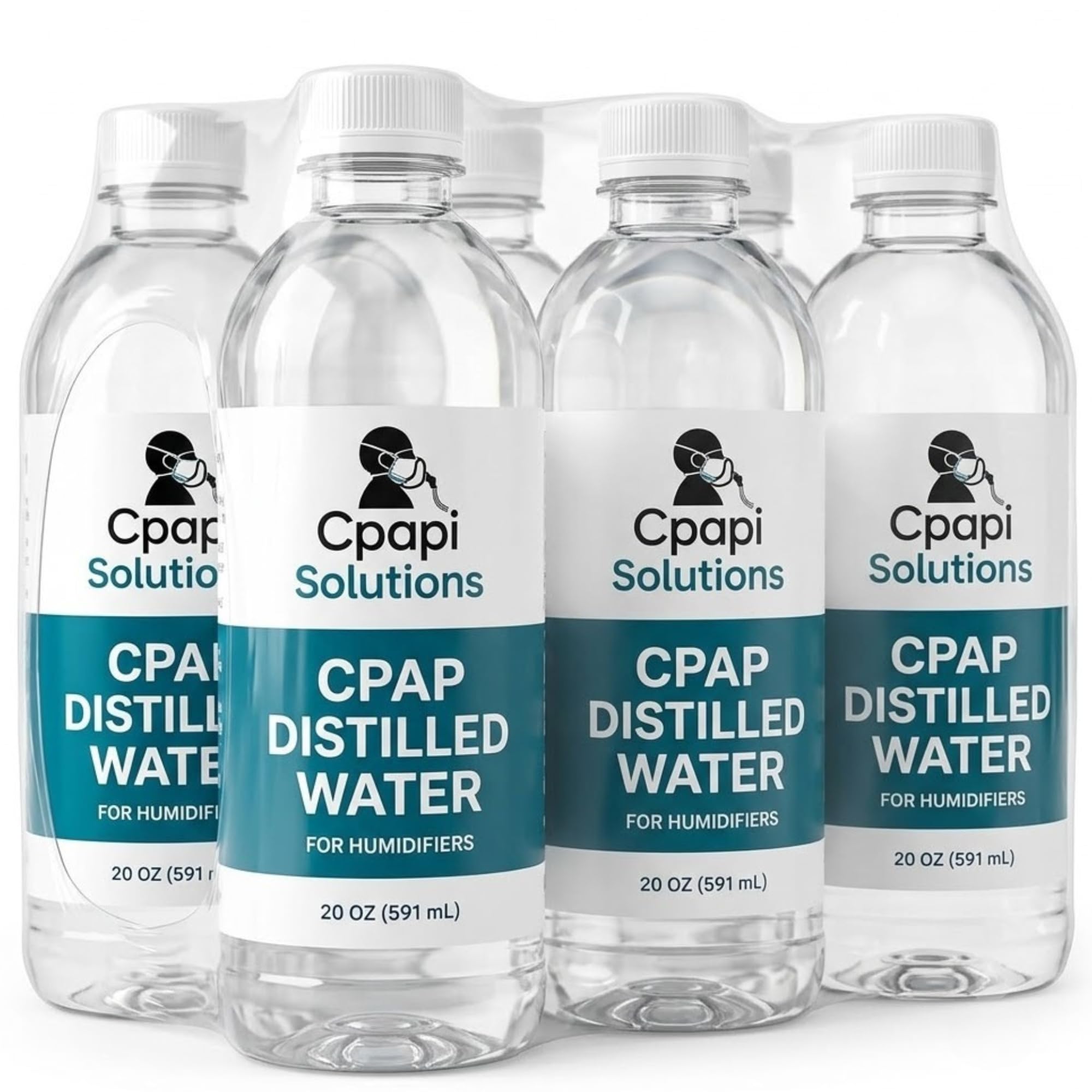
Designed specifically for CPAP humidifiers, this steam-distilled water delivers the same zero-mineral profile that prevents crust inside machines — and inside plant pots. The six-pack of 20-ounce bottles offers a convenient middle ground between small travel sizes and bulky gallons, making it easy to rotate fresh water for smaller houseplant collections.
The steam purification and multi-layer filtration remove chlorine, chloramines, and volatile organics that tap water leaves behind. For plants that show leaf tip burn or white salt rings on terracotta pots, switching to this eliminates those symptoms within three watering cycles.
Each bottle is tightly sealed and leak-resistant, which means no accidental soil oversaturation from a damaged jug. It’s a mid-range workhorse that balances purity with portability.
Why it’s great
- Steam distillation removes virtually all dissolved solids
- Small bottles reduce waste from half-used gallons
- BPA-free plastic safe for food-adjacent plant use
Good to know
- Per-bottle cost is higher than bulk gallon jugs
- Not ideal for large plant rooms needing 2+ gallons weekly
3. Pure Life Distilled Water
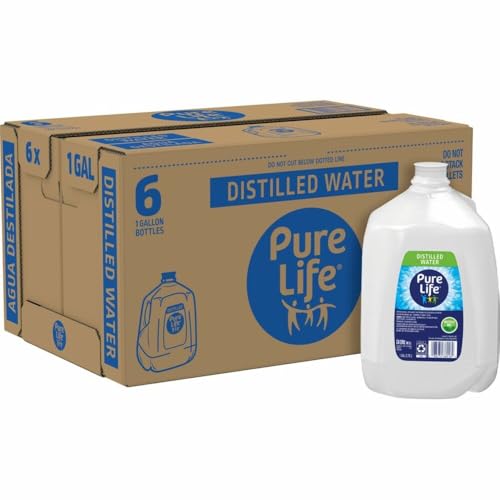
This six-pack of 128-ounce bottles delivers 768 ounces of distilled water in one go — enough to water a medium-sized indoor jungle for two to three weeks without restocking.
Pure Life uses steam distillation followed by carbon filtration, producing water with a consistently low TDS count. It’s kosher-certified and packaged in recyclable plastic, but the real draw for plant owners is the per-ounce efficiency. For ferns, spider plants, pothos, and peace lilies that demand consistent purity, this is the most cost-effective way to deliver it.
The larger bottles do require careful handling. A few users reported damaged boxes on delivery — always inspect the seal before watering to confirm no contamination during transit.
Why it’s great
- Massive volume per case reduces shopping frequency
- Consistent low-TDS steam-distilled quality across batches
- Works perfectly for humidifier and plant dual-use
Good to know
- Heavy packaging can arrive damaged if box is weakened by moisture
- Committed users note the recurring cost adds up over months
4. Snugell Bottled Distilled Water
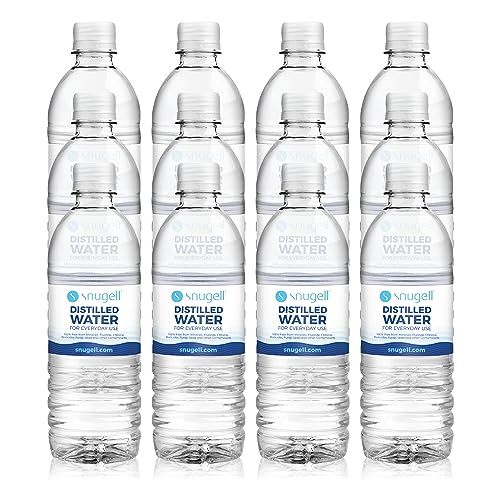
Snugell goes beyond basic distillation by adding UV and ozonation stages, which further break down any residual organic material. The result is water that stays shelf-stable longer — useful if you only water once a week and want the bottle to remain fresh between uses.
The 12-pack of 16.9-ounce bottles is the ideal size for plant parents who keep a dedicated watering can. Pop one bottle open, fill your can, and seal the rest for the next session. The resealable cap prevents evaporation and airborne dust from settling into the water between uses.
Users consistently note the fresh taste and clean feel, which translates directly into healthier soil conditions. No chlorine odor, no metallic aftertaste, and no white residue on leaf surfaces after misting.
Why it’s great
- Multiple purification stages ensure very low microbial load
- Resealable bottles prevent contamination over days of use
- Lightweight 16.9 oz size is easy to handle for daily watering
Good to know
- Higher per-unit cost compared to gallon-sized distilled options
- Some users find the mineral-free taste too flat for personal drinking
5. RPI Laboratory Grade Distilled Water
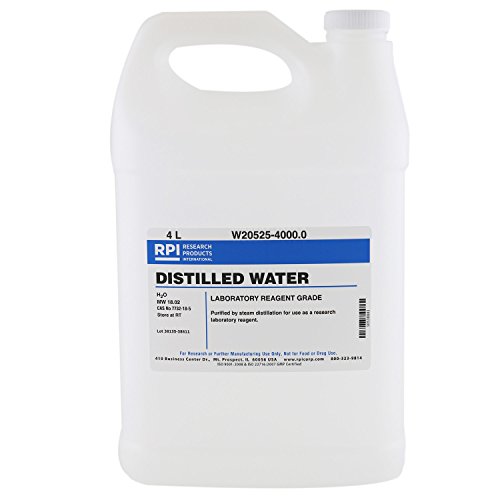
This is the same water used in research labs for reagent preparation and equipment rinsing. Its CAS-registered formula means every batch meets strict ASTM standards for Type II water, with conductivity low enough to be considered analytically pure. For plant applications, this translates to zero interference with soil chemistry.
Serious growers who propagate tissue cultures, germinate hard-to-start seeds, or maintain carnivorous plants (Venus flytraps, sundews) that die from tap minerals will find this indispensable. The 4-liter volume is modest, but the water’s purity floor is unmatched by consumer-grade distilled bottles.
Note that RPI labels this for research use, not food or drug consumption. While it’s safe for plants, if you plan to use the same bottle for both drinking and watering, this isn’t the right choice — keep it dedicated to your green collection.
Why it’s great
- Reagent-grade purity ensures zero mineral interference
- Consistent ASTM-certified quality batch to batch
- Excellent for specialized plants requiring ultra-pure water
Good to know
- Not labeled for food use — keep separate from drinking water
- Single 4-liter container costs more than consumer distilled gallons
6. Resway American Red Cross Purified Distilled Water

Vapor distillation combined with carbon filtration gives this water a TDS count near zero — perfect for plants that react to even small amounts of dissolved minerals. The American Red Cross branding adds a layer of trust for buyers who want a reliable product for both baby formula and houseplant care.
The 12-pack of 16.9-ounce bottles offers the same small-format convenience as Snugell but at a slightly lower per-bottle cost. Each bottle is BPA-free, recyclable, and sealed to prevent airborne contamination during storage. Users consistently report clean taste and no residue after months of continuous use.
If you’re rotating between a humidifier, a few houseplants, and the occasional formula mix, this one fits all those roles without compromise. The main downside is the recurring cost for heavy plant users — you’ll go through a 12-pack faster than expected if you water daily.
Why it’s great
- Vapor distillation removes both minerals and organic contaminants
- Convenient 16.9 oz size is easy to pour without overwatering
- BPA-free bottles safe for repeated handling near potting areas
Good to know
- Cost per ounce runs higher than buying gallon jugs
- Not ideal for large collections needing several gallons weekly
7. GLAS Water Natural Spring Water
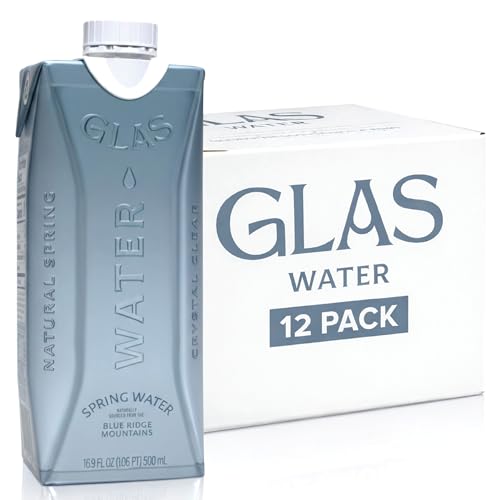
This is the only spring water on the list, and it earned its spot for a specific use case: plants that actually benefit from a low mineral presence. Unlike distilled water which is a blank slate, GLAS carries natural spring minerals that can be beneficial for hardy houseplants like snake plants or ZZ plants that tolerate — and sometimes prefer — trace calcium and magnesium.
The boxed format is FSC-certified paperboard with a plant-based cap made from sugarcane polymers, cutting out plastic entirely. For the eco-conscious grower trying to reduce single-use plastic waste, this is the only option that aligns with that goal. Customers consistently praise the clean, mineral-rich taste and the absence of any plastic leaching concerns.
Because spring water isn’t stripped of minerals, it’s not ideal for plants that need zero TDS (carnivorous plants, seedlings, calatheas). But for general indoor watering of established plants, it’s a sustainable choice that won’t leave white rings on your pots.
Why it’s great
- Zero plastic packaging — fully recyclable paperboard cartons
- Natural spring minerals benefit tolerant houseplants
- Plant-based cap avoids petroleum-derived materials
Good to know
- Spring mineral content varies — not suitable for sensitive species
- Paperboard boxes can’t be resealed once opened
FAQ
Can I use distilled water for all my houseplants?
Will spring water hurt my plants over time?
Final Thoughts: The Verdict
For most users, the best bottled water for plants winner is the Indco Deionized Water because lab-grade purity gives you total control over soil chemistry from day one. If you want a convenient travel-friendly option for small collections, grab the CPAPi Distilled Water. And for high-volume, budget-conscious watering of established plants, nothing beats the Pure Life Distilled Water 6-Pack.