
Our readers keep the lights on and the weekend projects moving. As an Amazon Associate, I earn from qualifying purchases.
When a baby has laryngomalacia, every feeding can feel like a battle against gravity and airflow. The soft, floppy tissue above the vocal cords makes it hard to coordinate sucking, swallowing, and breathing, leading to audible stridor, frequent coughing, and milk spilling from the nose or mouth. The right bottle doesn’t just deliver milk — it paces the flow so the baby can pause, breathe, and finish a feed without distress.
I’m Rikta — the co-founder and writer behind FitlyFast. After many hours analyzing the internal vent engineering, nipple orifice sizes, and glass vs. silicone construction of dozens of feeding systems, I’ve identified the seven designs that genuinely help babies with laryngomalacia swallow less air and feed at a controlled pace.
Whether you are supplementing with pumped milk or transitioning from a hospital-grade feeder, this guide isolates the one spec that matters most — flow restriction — so you can confidently choose from the best bottles for laryngomalacia that respect a compromised airway.
How To Choose The Best Bottles For Laryngomalacia
Laryngomalacia creates a physical bottleneck in the airway. A bottle that floods the mouth with milk before the baby can swallow forces the milk straight into the narrowed airway, triggering coughing, choking, and oxygen desaturation. Every choice — from nipple shape to vent complexity — either protects or threatens the baby’s breathing during feeding.
Prioritize Preemie and Extra-Slow Flow Nipples
Standard newborn nipples (Level 1) often deliver milk too fast for a baby who needs extra time to inhale between sucks. The ideal flow rate for laryngomalacia matches the preemie nipple: a single small hole that releases milk only when the baby actively sucks, stopping immediately when suction stops. Some bottles offer a dedicated Preemie Nipple with a size-0 orifice, while others rely on multiple micro-openings that require less suction force overall. Look for explicit “Preemie Flow” or “Extra Slow Flow” labeling — generic “Level 1” is rarely slow enough.
Examine the Vent Design
Babies with laryngomalacia already struggle to manage air in the upper airway, so swallowed air bubbles from a standard bottle exacerbate gas, reflux, and discomfort. Anti-colic bottles use a vented base or an internal straw system to separate air from milk. The trade-off is important: a vent that requires the baby to generate more suction to draw milk can actually increase the risk of aspiration. The best vents for this condition allow free passive airflow — they do not add resistance to the nipple. Dr. Brown’s internal vent tube is the gold standard for passive venting, while MAM’s bottom-vent disc provides a similar low-resistance path.
Choose an Appropriate Volume and Material
Large 9 oz bottles encourage parents to offer more milk per feed, but a baby with laryngomalacia typically feeds better with smaller, more frequent volumes. A 3 oz or 4 oz bottle keeps the total volume low enough that the baby does not become overwhelmed. For material, borosilicate glass resists thermal shock and never scratches, but it is heavier and can be harder for a weak-sucking baby to tilt. Medical-grade plastic (BPA-free, BPS-free) is lighter and easier to squeeze, though it absorbs odors over time and must be replaced more often. For laryngomalacia, glass wins on hygiene and chemical neutrality, but plastic wins if the baby needs help tilting the bottle to access every drop.
Inspect Nipple Shape for Deeper Latch
A nipple that mimics the shape of the mother’s breast encourages a deeper latch, which positions the milk stream behind the tongue and away from the airway opening. Wide, squat nipples with a broad base achieve this better than tall, tapered nipples. Nipples with a “dimple” or guide points on the tip help the baby’s tongue find the correct position, which trains a more efficient suck-swallow-breathe pattern. Avoid hard, inflexible silicone that forces the baby to compress the nipple against the roof of the mouth — this compresses the milk stream into a thin jet that can overshoot into the larynx.
Quick Comparison
On smaller screens, swipe sideways to see the full table.
| Model | Category | Best For | Key Spec | Amazon |
|---|---|---|---|---|
| Thyseed Anti-Colic Glass | Premium | Severe reflux & colic | Base vent + 5 micro-openings | Amazon |
| Dr. Brown’s Natural Flow Wide-Neck | Mid-Range | Consistent vacuum-free flow | Internal vent tube + Level 1 nipple | Amazon |
| Gulicola Natural Glass Set (3 oz + 5 oz) | Premium | Breast-to-bottle transition | Extra slow flow + slow flow nipples | Amazon |
| MAM Easy Start Anti-Colic+ Wide Neck | Mid-Range | Nipple acceptance & latch | Vented base + SkinSoft nipple | Amazon |
| Gulicola Small Glass 3 oz | Mid-Range | Newborn & preemie feeding | Extra slow flow nipple (0m+) | Amazon |
| Tommee Tippee Natural Start Anti-Colic | Value | Budget-friendly set | Self-sterilizing + anti-colic valve | Amazon |
| Dr. Brown’s Preemie Flow Set | Value | Premature & weak-sucking babies | Preemie Flow + Level T nipple | Amazon |
In‑Depth Reviews
1. Thyseed Anti-Colic Glass Baby Bottle
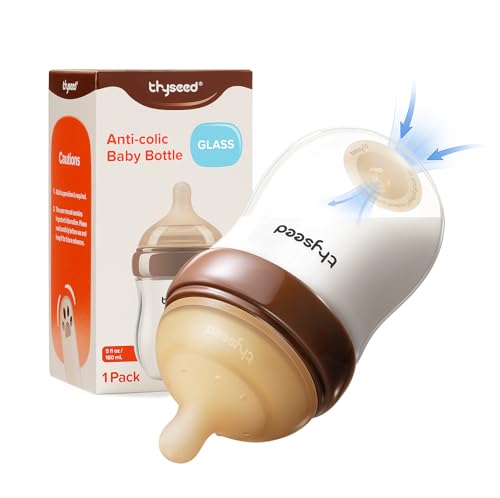
The Thyseed delivers a breakthrough for laryngomalacia: a clinically studied base vent (published in JAMA) that separates air from milk before it reaches the nipple, combined with five micro-openings that meter the flow into a gentle, non-flooding stream. The nipple is molded from ultra-soft WACKER liquid silicone, which feels close to skin and allows the baby to use natural tongue movement rather than hard compression to release milk. The result is a bottle that dramatically reduces the air-swallowing that triggers reflux and stridor episodes during and after feeds.
The wide, breast-shaped base encourages a deep latch that positions the milk stream behind the tongue, keeping it away from the laryngeal inlet. This is especially critical for laryngomalacia, where a shallow latch can dump milk directly onto the floppy tissue. Parents of babies with severe reflux and bottle refusal report that the Thyseed was the only bottle their baby accepted without gagging or turning away. The bottle uses only four parts — bottle, nipple, ring, and vent disc — making it easier to clean than multi-part vent systems.
Borosilicate glass construction withstands thermal shock and repeated sanitizing without degrading. The bottle offers six nipple flow rates, so you can move from the slowest micro-opening nipple to a faster one as the baby’s airway matures. The main drawback is the premium cost, but for a baby whose feeding difficulties are causing weight gain concerns or oxygen desaturation, this bottle often eliminates the problem entirely.
Why it’s great
- Clinically studied base vent minimizes swallowed air, reducing stridor and reflux
- Five micro-openings create a steady, paced flow that does not flood the airway
- Deep-latch nipple keeps milk behind the tongue, away from the larynx
Good to know
- Premium price point reflects advanced vent engineering and medical-grade materials
- Only one pack size; requires ordering additional units for rotation
2. Dr. Brown’s Natural Flow Wide-Neck 5 oz

The Dr. Brown’s Natural Flow system is the most widely used anti-colic bottle in American NICUs, and for good reason: its internal vent tube creates a vacuum-free environment so the baby does not have to fight negative pressure to get milk. For laryngomalacia, this is critical — any resistance that forces the baby to suck harder also forces the larynx to close tighter. The Level 1 slow-flow nipple releases milk at a controlled rate that gives a baby with airway obstruction time to breathe between swallows.
The wide-neck version offers a breast-like nipple shape that encourages the deep latch needed to direct the milk stream safely behind the tongue. Many parents report that babies who rejected narrow-neck bottles immediately accepted this wide nipple, and that the transition between breast and bottle was seamless. The 5 oz volume is ideal for small, frequent feeds — a 3 oz or 4 oz feed is often more appropriate for laryngomalacia, and the 5 oz size keeps the total milk height low enough to prevent gravity from forcing milk through the nipple too fast.
The vent system has a known leak issue when the bottle is tilted beyond 45 degrees, which matters when feeding a baby who needs to be held upright. The solution is to keep the bottle as horizontal as possible during feeds and to ensure the vent tube is fully inserted. The four-pack provides enough bottles for a full day of rotation, and the wide mouth makes formula mixing and scrubbing straightforward.
Why it’s great
- Internal vent eliminates vacuum resistance, reducing airway closure reflex
- Wide-neck nipple encourages deep latch, directing milk behind the tongue
- Four-pack provides practical rotation for frequent, small-volume feeds
Good to know
- Can leak if tilted past 45 degrees; horizontal feeding position is recommended
- Five-piece assembly requires extra cleaning time compared to simpler vent systems
3. Gulicola Natural Glass Baby Bottle Set (3 oz + 5 oz)
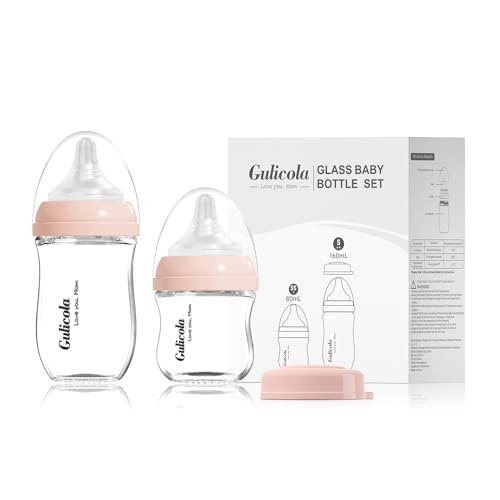
Gulicola’s two-bottle kit is specifically engineered for the breastfed baby with laryngomalacia. The set includes a 3 oz bottle fitted with an Extra Slow Flow nipple and a 5 oz bottle with a standard Slow Flow nipple, allowing the parent to match the flow rate precisely to the baby’s current feeding ability. The Extra Slow Flow nipple uses a single small orifice that releases milk only during active sucking — there is no passive drip, which is essential when a baby with laryngomalacia needs to pause for a breath without milk flooding the mouth.
The nipple has guide points on the tip that train the baby’s tongue into correct positioning, helping the baby develop an efficient suck without having to learn compensatory patterns that could worsen airway obstruction. The silicone is ultra-soft, mimicking the feel, flexibility, and movement of the mother’s breast. Parents of exclusively breastfed infants report that this bottle caused zero nipple confusion and that babies accepted it even when they had previously refused every other bottle.
The borosilicate glass survives repeated drops onto tile floors without shattering, a genuine safety win when you are dealing with exhausted parents. The wide neck (only four parts) simplifies cleaning, and the bottle can be used as a milk storage container when you swap the nipple for the included cap. The main limitation is the small 3 oz capacity, which is ideal for a newborn but will need to be paired with the 5 oz or 8 oz version as the baby grows.
Why it’s great
- Extra Slow Flow nipple matches laryngomalacia’s pause-heavy feeding rhythm
- Guide points on nipple train correct tongue latch, reducing airway spillover
- Borosilicate glass survives drops without cracking, even on hard floors
Good to know
- 3 oz size requires frequent refilling for larger feeds beyond the newborn stage
- Nipple flow options beyond slow flow must be purchased separately
4. MAM Easy Start Anti-Colic+ Wide Neck
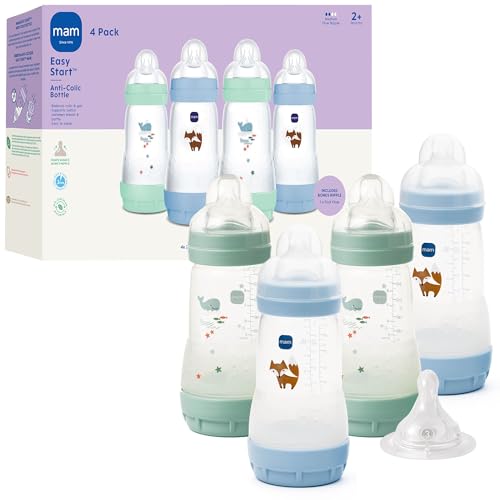
MAM’s Easy Start bottle uses a vented base that prevents air from entering the bottle as the baby drinks, reducing the air bubbles that exacerbate reflux and gas. The SkinSoft nipple is pre-compressed, meaning it requires less compression force to release milk — a distinct advantage for a baby with laryngomalacia who may have a weak or uncoordinated suck. The manufacturer reports a 94% nipple acceptance rate, and many parents who struggled with bottle refusal found that their babies latched onto the MAM nipple immediately.
The vented base design is simpler to clean than Dr. Brown’s internal straw system, since there is no extra tube or stem to scrub. The bottle self-sterilizes in three minutes in the microwave, and it stays sterile for up to 48 hours if left untouched. For laryngomalacia, the ability to run a quick sterilization cycle between feeds is helpful because the condition often requires strict hygiene to avoid any additional respiratory irritation.
The included Medium Flow nipple may be too fast for a newborn with laryngomalacia — it releases milk at a rate that can outpace a baby’s ability to swallow. The bottle ships with a bonus Fast Flow nipple, so you will need to purchase the Slow Flow nipple separately if your baby requires the slowest option. Some parents also note that the bottle measurements printed on the plastic fade after repeated dishwasher cycles.
Why it’s great
- Pre-compressed nipple requires less suction force, ideal for weak or uncoordinated sucking
- Vented base reduces air swallowing without adding internal parts to clean
- Self-sterilizing function ensures hygiene between feeds, reducing respiratory irritation risk
Good to know
- Medium Flow nipple may be too fast for severe laryngomalacia — Slow Flow must be bought separately
- Measurement markings on plastic can fade over time with dishwasher use
5. Gulicola Small Glass Baby Bottle 3 oz

This 3 oz glass bottle from Gulicola is the most compact option in the list, and its small size is a genuine asset for laryngomalacia. A 3 oz volume forces the parent to offer smaller, more frequent feeds — exactly what the baby’s airway needs to avoid overfilling the stomach and exacerbating reflux. The Extra Slow Flow nipple is the same one used in the two-bottle set: a single-orifice design that stops flowing the instant the baby stops sucking, eliminating the passive drip that can trigger a cough.
The nipple features guide points that position the baby’s tongue for a deeper latch, training the correct suck pattern from the first feed. The borosilicate glass is the same durable grade used in scientific labware, and it resists temperature shock from boiling water sterilization. The two-pack offers enough redundancy for a single day of feeding, though you may want to buy two packs for a full rotation.
The bottle is limited to 3 oz, which works well for the first two to three months but will require an upgrade to the 5 oz or 8 oz version as the baby’s stomach capacity grows. Also, the wide neck is relatively short, making it slightly harder for an adult hand to grip while feeding in the upright, anti-reflux position.
Why it’s great
- 3 oz capacity naturally limits feed volume, reducing reflux risk from overfeeding
- Extra Slow Flow nipple has zero passive drip, protecting against airway flooding
- High-quality borosilicate glass withstands thermal shock and repeated sterilization
Good to know
- 3 oz size will be outgrown quickly; plan to buy larger Gulicola bottles later
- Short wide neck can be slightly awkward for adult hands during upright feeding
6. Tommee Tippee Natural Start Anti-Colic 9 oz
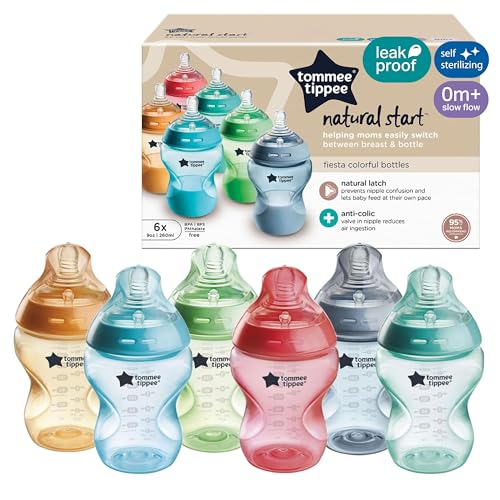
Tommee Tippee’s Natural Start bottle has a dedicated anti-colic valve integrated into the nipple, which vents air away from the milk and into the bottle’s headspace. For laryngomalacia, the valve’s main benefit is that it prevents vacuum lock — the baby never has to fight suction to keep milk flowing, which means less airway closure. The nipple is shaped to encourage a natural latch similar to the breast, and the soft silicone flexes and stretches to mimic the movement of feeding at the breast.
The 9 oz capacity is generous, but you can fill it to any lower volume, and the leakproof design means you can shake formula in the bottle without worrying about spills. The self-sterilizing feature works in the microwave in three minutes, which is convenient for quick turnaround between feeds. Many parents report that their babies accepted this bottle after refusing narrower nipples, and that it is significantly easier to clean than Dr. Brown’s multi-part system.
The main limitation for laryngomalacia is the nipple flow: the bottle ships with a Level 1 nipple, which is faster than a dedicated Preemie or Extra Slow Flow nipple. For a baby with severe airway obstruction, you may need to purchase the Slow Flow nipple separately. Some users also note that the measurement lines fade over time in the dishwasher.
Why it’s great
- Anti-colic valve in the nipple prevents vacuum lock, reducing airway closure reflex
- Self-sterilizing function provides quick hygiene turnaround between feeds
- Lightweight, leakproof design is practical for upright feeding positions
Good to know
- Level 1 nipple is faster than an Extra Slow Flow nipple; may need to buy slower separately
- Measurement markings may fade with repeated dishwasher cleaning cycles
7. Dr. Brown’s Preemie Flow Bottle Set

Dr. Brown’s Preemie Flow set is the only dedicated preemie flow bottle on this list, and it is the single best option for a baby with severe laryngomalacia who needs the absolute slowest possible nipple. The Preemie Flow nipple uses a size-0 orifice that releases milk in tiny, controlled droplets — the baby must actively suck to pull milk out, and flow stops the second suction stops. This eliminates the risk of passive flooding that can trigger coughing and choking in babies with a compromised airway.
The set includes a Level T (Transition) nipple, which has a slightly faster flow for use as the baby’s feeding coordination improves. This allows the parent to progress the flow without switching bottle brands. The anti-colic internal vent system is the same vacuum-free design used in all Dr. Brown’s bottles, and it is clinically proven to reduce colic and gas. For laryngomalacia, the vent’s ability to eliminate negative pressure inside the bottle is a major advantage — it means the baby does not have to work harder to draw milk, which in turn reduces the force of airway collapse.
The 4 oz (120 mL) volume is ideal for the frequent, small-volume feeds recommended for laryngomalacia. The three-pack provides enough bottles for a single day of rotation. The main trade-off is the vent system’s five-piece assembly, which requires more cleaning time than simpler designs. Some parents also report occasional drip leakage if the vent tube is not seated correctly after cleaning.
Why it’s great
- Preemie Flow nipple (size-0 orifice) is the slowest available, ideal for laryngomalacia
- Level T transition nipple allows flow progression without changing bottle systems
- Vacuum-free vent design reduces airway closure by minimizing negative pressure
Good to know
- Five-piece vent assembly requires thorough cleaning after every use
- Vent tube can misalign and cause drip leakage if not reassembled precisely
FAQ
Can I use a standard newborn nipple if my baby has laryngomalacia?
How small should the nipple hole be for a baby with airway obstruction?
Does the bottle material (glass vs. plastic) matter for laryngomalacia?
Should I hold my baby upright when using these bottles?
Final Thoughts: The Verdict
For most users, the bottles for laryngomalacia winner is the Thyseed Anti-Colic Glass Bottle because its clinically studied base vent and micro-opening nipple create a feeding rhythm that reduces stridor, reflux, and air swallowing simultaneously. If you want a trusted hospital-grade system with a dedicated Preemie flow nipple, grab the Dr. Brown’s Preemie Flow Set. And for a breastfed baby who needs the gentlest possible transition, nothing beats the Gulicola Natural Glass Set with its Extra Slow Flow nipple and tongue-guide tip.