
Our readers keep the lights on and the weekend projects moving. As an Amazon Associate, I earn from qualifying purchases.
Bouldering is about power, precision, and trust—trust that the rubber on your feet will stick to a dime-sized crystal when your entire body weight hangs from it. A shoe that lacks sensitivity or has a sloppy heel cup turns every climb into a fight against your own gear. Finding a pair that balances an aggressive downturn for overhangs with enough comfort for long training sessions is the central challenge every boulderer faces.
I’m Rikta — the co-founder and writer behind FitlyFast. I’ve spent countless hours analyzing the rubber compounds, midsole stiffness ratings, and heel rand designs across the latest bouldering shoe lineups to separate real performance gains from marketing fluff.
Whether you are projecting in the gym or brushing holds on the outdoor bloc, a well-chosen pair makes the difference between slipping off and sticking the send. That is why I assembled this guide to help you find the best bouldering shoes that match your foot shape, climbing style, and budget.
How To Choose The Best Bouldering Shoes
A bouldering shoe is a precision tool, not a casual sneaker. The wrong choice leads to heel slippage on hooks, dead spots on smears, or toes screaming after three problems. Focus on these four factors to narrow your options.
Downturn Profile and Asymmetry
The downturn (how much the toe curves downward) determines how well the shoe performs on steep overhangs. A highly downturned shoe, like the Scarpa Drago, puts your toes into a claw position for hooking edges on near-vertical terrain. Flat or moderate profiles offer better all-day comfort for slabs and vertical walls but sacrifice power on overhanging boulders. The asymmetry—how much the shoe curves inward from heel to toe—improves edging precision on small footholds but increases pressure on the big toe knuckle.
Rubber Compound and Thickness
The rubber is your only contact point with the rock. Softer compounds like Vibram XS Grip 2 (3.5mm) provide superior stick on slopers and friction-dependent smears but wear out faster. Harder compounds like Vibram XS Edge (4mm) excel on tiny edges and last longer, but they may feel slick on smooth indoor volumes. Brands like Ocun use their own CAT rubber blends that land between these extremes. For bouldering, most climbers prioritize stick over durability and accept faster resoling.
Heel Rand and Closure System
A secure heel rand is non-negotiable for heel hooking on steep boulders. Look for a molded heel cup that wraps the calcaneus without dead space. The Drago and Instinct VS from Scarpa are known for exceptional heel tension. Closure systems—Velcro straps versus slipper designs—affect how tightly you can lock the heel. For bouldering, dual-strap Velcro allows quick on/off between attempts and fine-tuned heel tension compared to laces.
Foot Shape Compatibility
No shoe works for every foot. La Sportiva Skwama and Solution accommodate wider forefeet with a narrow heel, while the Ocun Ozone favors Morton’s toe (longer second toe). The Butora Gomi fits slender, low-volume feet. If you have a high arch or wide midfoot, look at the Evolv Kronos or Scarpa Instinct VS. Never buy without checking the brand’s specific last shape against your foot’s widest point and heel depth.
Quick Comparison
On smaller screens, swipe sideways to see the full table.
| Model | Category | Best For | Key Spec | Amazon |
|---|---|---|---|---|
| Scarpa Drago | Premium | Max sensitivity, steep boulders | Vibram XS Grip 2, 3.5mm | Amazon |
| La Sportiva Solution | Premium | Aggressive performance, competition | PD75 last, 3.5mm Grip2 rubber | Amazon |
| Scarpa Instinct VS | Premium | All-around bouldering & sport | Vibram XS Edge 4mm + Grip2 patch | Amazon |
| La Sportiva Skwama | Premium | Wide forefoot, heel hooks | S-Heel, PAF locking system | Amazon |
| Ocun Ozone | Mid-Range | Morton’s toe, wide feet | Vibram 4mm, Asymetrix last | Amazon |
| Butora Gomi | Mid-Range | Slender feet, all-day comfort | NEO Fuse sticky rubber | Amazon |
| Scarpa Furia Air | Mid-Range | Breathable gym sessions | Vibram XS Grip 2, 3.5mm | Amazon |
| Evolv Kronos | Entry-Level | Intermediate all-around use | TRAX SAS rubber, dual-strap | Amazon |
| Ocun Striker QC | Entry-Level | Budget-friendly, gym bouldering | CAT rubber 1.1, 4mm | Amazon |
In‑Depth Reviews
1. Scarpa Drago

The Scarpa Drago is the tool for climbers who demand maximum tactile feedback from every square millimeter of rubber. Its 1.0mm Flexan midsole offers almost zero resistance, letting you feel the grain of the rock through the sole. The highly downturned, highly asymmetric last puts your toes into an aggressive claw position that excels on steep overhangs and slopey compression moves.
Vibram XS Grip 2 rubber at 3.5mm thickness delivers exceptional stick on indoor volumes and outdoor slopers alike. Reviewers note the shoe breaks in quickly—often after just two sessions—and molds to the foot without losing heel tension. The thin microfiber upper breathes well, though it contributes to faster rubber wear, as multiple users report needing resoling sooner than stiffer models. Fit is best for low-volume, narrow feet; those with wider midfoot or high-volume heels may find the fit too snug.
The Velcro closure allows micro-adjustments between burns, and the split-sole design enhances flexibility for smearing on flat surfaces. The Drago is not a first-pair shoe; it demands foot strength to maximize its potential but rewards with unmatched sensitivity on technical boulder problems.
Why it’s great
- Exceptional ground feel from ultra-thin midsole
- Sticky Grip 2 rubber bites every hold
- Quick break-in with secure heel fit
Good to know
- Rubber wears faster than edge-compound shoes
- Not suitable for wide or high-volume feet
- Expensive resoling cycle for frequent climbers
2. La Sportiva Solution
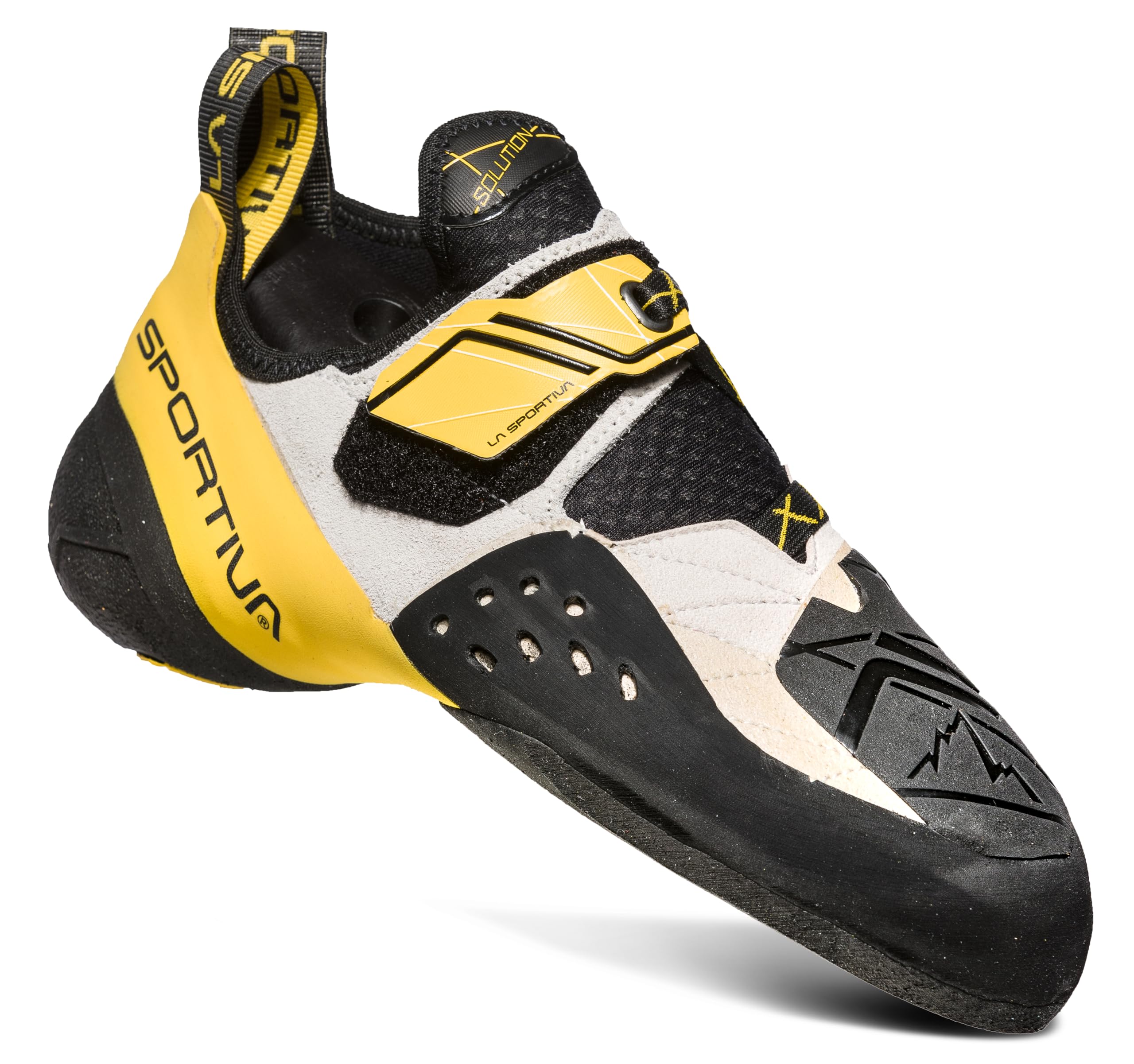
The La Sportiva Solution is a benchmark aggressive shoe that has earned a spot on competition podiums and boulder fields worldwide. Its PD75 last combines a large downturn with high asymmetry, creating a pointed toe profile that fits efficiently into pockets and onto razor edges. The Lock Harness slipper design wraps the heel securely, which reviewers consistently praise for heel hook stability on steep terrain.
Vibram XS Grip 2 rubber at 3.5mm provides a balanced blend of stick and durability for the aggression level. The no-lining synthetic upper limits stretch, so you should size down aggressively—most users recommend 1.5 to 2 full sizes below street shoe. The shoe feels stiff out of the box but breaks in after several sessions, molding to the foot while maintaining structural support for edging.
This is not a do-everything shoe; its downturn makes slab climbing and long multi-pitch routes uncomfortable. But for bouldering and steep sport climbing where every degree of toe-in angle matters, the Solution delivers precision that intermediate and advanced climbers will instantly feel. Several long-term users note the rubber patch on the toe is excellent for toe hooks on overhanging volumes.
Why it’s great
- Lock Harness wraps heel securely for hooks
- PD75 last maximizes power on steep terrain
- Durable build with minimal stretch over time
Good to know
- Long break-in period; painful initial sessions
- Poor performance on slab or vertical terrain
- Heel fit is narrow, not ideal for wide heels
3. Scarpa Instinct VS

The Scarpa Instinct VS is a versatile performer that bridges the gap between edging precision and hooking security. Its dual-rubber outsole uses 4mm Vibram XS Edge under the forefoot for stable edging on micro-chips and a 2mm Vibram XS Grip 2 patch at the toe for sticky smear and hook performance. The moderately downturned, asymmetric profile suits both steep boulder problems and vertical sport routes.
The heat-welded reinforcements on the microsuede upper add structure without extra weight, resisting stretch even after months of heavy use. The Bi-Tension rand system allows independent tensioning of the heel and toe, which reviewers say creates a zero-dead-space heel pocket that locks during aggressive heel hooks. The midfoot is accommodating for medium-width feet, though narrow-footed climbers may find excess material around the arch.
Comfort is a recurring theme in user feedback—many report being able to wear the Instinct VS for entire two-hour gym sessions without needing to remove them between problems. The 1.0mm Flexan midsole provides enough stiffness for confident edging on tiny holds without sacrificing the sensitivity needed for smearing on slab transitions.
Why it’s great
- Dual-rubber outsole edges and smears equally well
- Bi-Tension rand creates secure heel lock
- Great durability with minimal stretch over time
Good to know
- Size down 1–1.5 from street for performance fit
- Poor breathability due to layered upper
- Not ideal for narrow low-volume feet
4. La Sportiva Skwama

The La Sportiva Skwama is built for climbers with a wide forefoot who need a shoe that still locks the heel without dead space. The S-Heel design features a narrower, more sculpted heel pocket that reviewers say holds firmly during heel hooks even on overhanging terrain, while the wide toe box accommodates duck-foot shape without compressing the metatarsals.
The PAF (Padded Ankle Fit) locking system wraps the Achilles and ankle with a padded lip that prevents heel lift during dynamic heel hook moves. The Vibram XS Grip 2 rubber is applied in a full sole with a toe patch that aids toe hooking on volumes and pockets. The shoe is moderately downturned—less extreme than the Solution—making it more forgiving on slab sections while still powerful on overhangs.
Break-in is notably stiff, with several users reporting discomfort during the first three to four sessions. The shoe stretches roughly half a size after consistent use. The bottom cutout in the sole reduces rubber weight and enhances flexibility for smearing, though it slightly reduces edging stability on very small positive edges. This is a gym-to-crag workhorse for climbers who prioritize heel security and toe space.
Why it’s great
- Wide toe box fits broader forefoot comfortably
- S-Heel locks narrow heels securely
- Versatile downturn works on steep and vertical terrain
Good to know
- Very stiff initially; painful break-in period
- Rubber durability is moderate for the price tier
- Sizing is inconsistent between batches
5. Ocun Ozone
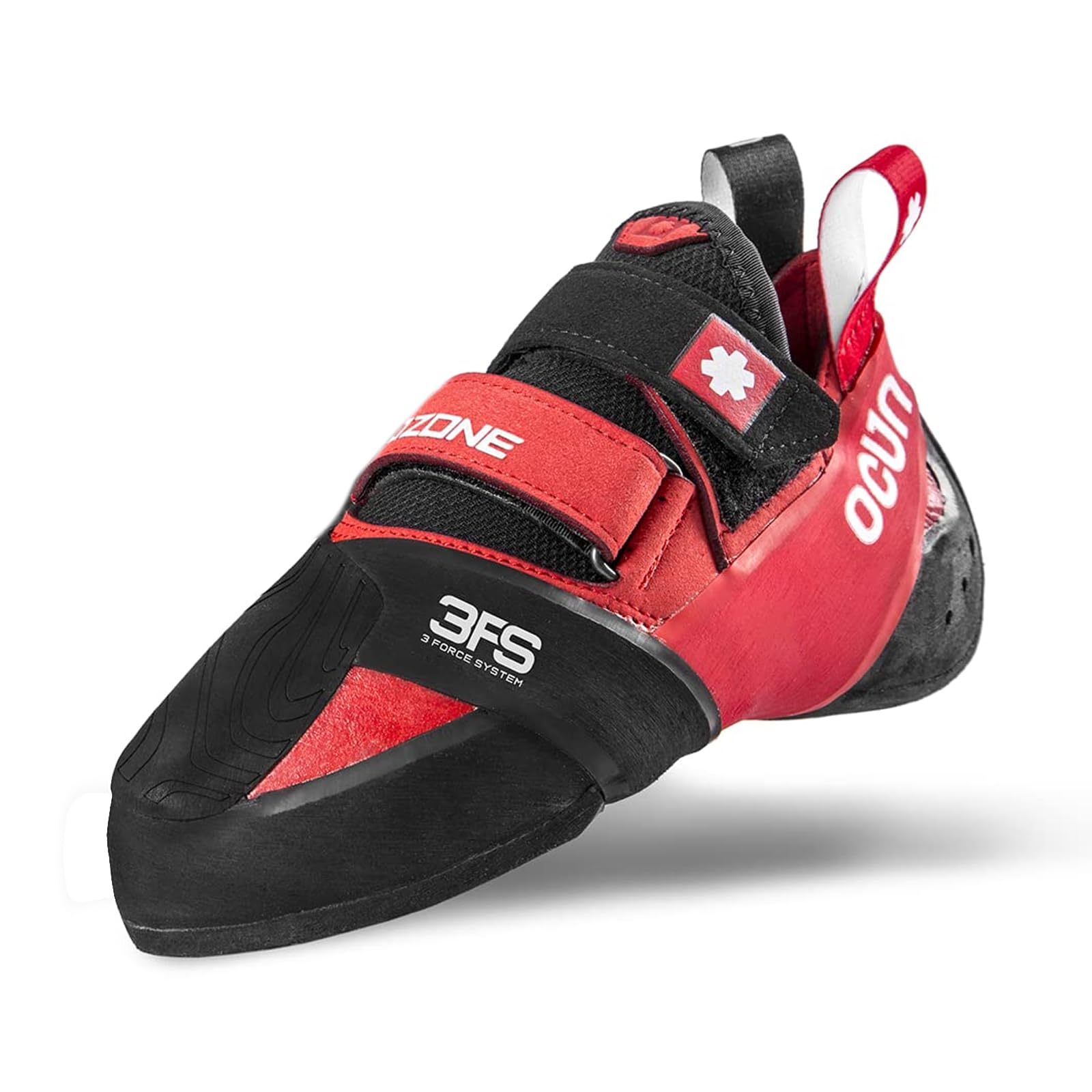
The Ocun Ozone is a mid-range shoe that carves a specific niche: climbers with a longer second toe (Morton’s toe). Its Asymetrix last centers the toe point slightly inward, aligning the rubber platform under the second toe for improved power transfer on small edges. The 3D Fit Middle midsole provides moderate stiffness that sits between soft slipper designs and stiff edging shoes.
Vibram 4mm rubber delivers dependable grip on most surfaces, though it is not as sticky as softer Grip 2 compounds used by Scarpa and La Sportiva. The microfiber upper resists stretch well, maintaining the initial fit for months. Reviewers with wider feet appreciate the generous toe volume, while those with narrow heels note the heel cup is less aggressive than premium competitors, occasionally feeling loose on dynamic heel hooks.
The dual-strap Velcro closure allows quick adjustments and easy removal between attempts. The weight—470 grams per pair—is heavier than the Drago or Furia Air, noticeable on technical footwork. For boulderers whose second toe is longer than their big toe, the Ozone provides a fit that other brands simply do not cater to, making it a top choice within that specific biomechanical group.
Why it’s great
- Asymetrix last aligns with longer second toe
- Generous toe box for wide forefoot
- Breathable microfiber upper resists stretch
Good to know
- Heel cup may slip during aggressive hooks
- Heavier than premium competitors
- Rubber less sticky than XS Grip 2
6. Butora Gomi
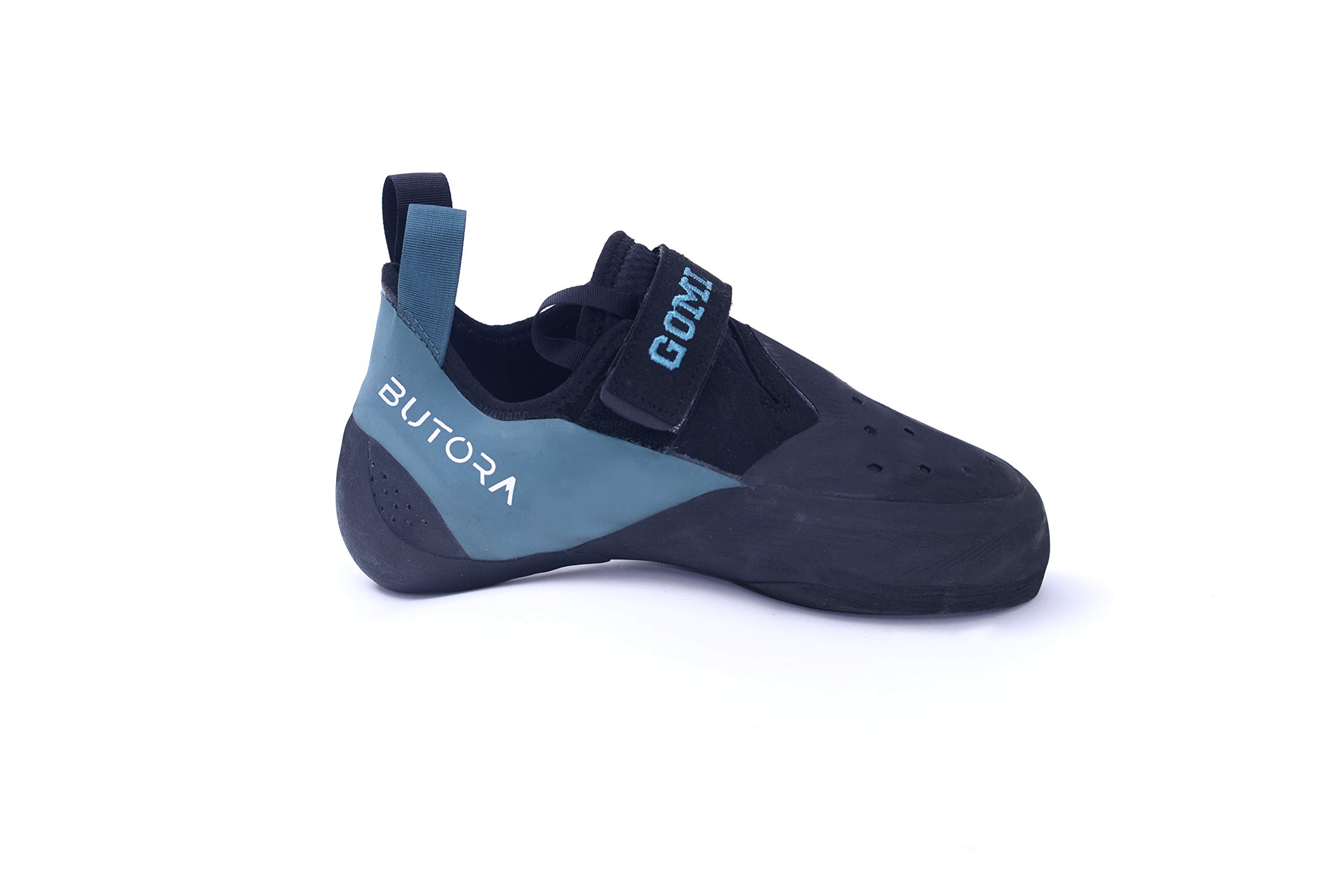
The Butora Gomi is a cozy, downturned shoe designed for slender, low-volume feet. Its NEO Fuse sticky rubber offers solid friction on both indoor holds and outdoor sandstone—reviewers mention it is especially good at smearing on slopey volumes where a harder compound would skate. The shoe breaks in quickly, with multiple users reporting no hot spots after the first session.
The last is slightly softer than Butora’s own Acro model, giving the Gomi more sensitivity on small footholds while maintaining enough structure for heel hooking. Users with 4E wide feet report no arch cramping and a comfortable fit at street shoe size, despite the profile being downturned. The heel rand stretches over several weeks, which improves comfort but may reduce heel lock performance for aggressive hooks.
Velcro straps allow for easy entry and micro-tension adjustments. The Gomi is less aggressive than the Scarpa Drago or La Sportiva Solution, making it a better choice for intermediate climbers who want performance features without punishing discomfort. Durability is average for the mid-range—the rubber holds up well on gym holds but may wear faster on abrasive outdoor granite.
Why it’s great
- Quick break-in with minimal discomfort
- NEO Fuse rubber is sticky on slopers
- Fits slender and low-volume feet well
Good to know
- Heel rand stretches over time, reducing hook security
- Not aggressive enough for elite-level overhangs
- Average rubber durability on abrasive rock
7. Scarpa Furia Air

The Scarpa Furia Air is built for climbers who prioritize breathability during long gym sessions without sacrificing performance. The perforated microsuede upper allows air to circulate, keeping feet cooler during high-intensity bouldering circuits. The highly downturned, highly asymmetric last mirrors the Drago’s aggressive profile, making it suitable for steep problems.
Vibram XS Grip 2 rubber at 3.5mm provides excellent stick on all surfaces. Reviewers consistently note that the shoe fits smaller than other Scarpa models, recommending sizing down a full size from the brand’s typical fit.
The heel cup is narrow and deep, which suits low-volume heels but may leave a gap for those with wider calcaneus bones. The soft upper material stretches more than leather-reinforced competitors, potentially changing the fit after several months. For boulderers who sweat through their shoes during two-hour sessions, the Furia Air’s ventilation is a unique advantage that offsets its premium price.
Why it’s great
- Perforated upper keeps feet dry during long sessions
- Highly downturned profile for steep bouldering
- Sticky Grip 2 rubber grips well on all surfaces
Good to know
- Sizing runs small; requires careful downsize
- Upper stretches more than leather models
- Narrow heel fit not suitable for wide heels
8. Evolv Kronos

The Evolv Kronos is the bridge between rental-grade shoes and aggressive performance models. Its slight camber with a downturned toe provides enough power for moderate overhangs while remaining comfortable enough for slab and vertical climbing. The synthetic upper resists stretch, maintaining consistent fit over time.
TRAX SAS rubber is Evolv’s stickiest compound, and it delivers reliable grip on indoor holds and outdoor rock alike. Reviewers highlight its performance on slab: the moderate profile allows confident smearing on low-angle terrain where aggressive shoes would skate. The dual-strap closure system lets you dial in heel tension without pressure points across the instep.
The Kronos is not aggressive enough for elite boulder problems requiring maximum toe-down angle. Sizing is inconsistent between batches, as several users note. For intermediate climbers transitioning from rentals to their first performance shoe, the Kronos offers a forgiving learning curve with enough edge support to project V4 to V6 boulder problems.
Why it’s great
- Versatile profile works on slab and overhangs
- TRAX SAS rubber is very grippy
- Comfortable for extended gym sessions
Good to know
- Not aggressive enough for steep boulder problems
- Sizing can be inconsistent between pairs
- Rubber wears quicker than harder compounds
9. Ocun Striker QC

The Ocun Striker QC is an entry-level option that delivers surprising comfort and solid performance for its price tier. The 2D Fit Middle midsole provides moderate stiffness—enough for edging on vertical terrain but forgiving enough for gym slabs. CAT rubber 1.1 at 4mm thickness balances stick and durability for the budget-conscious climber.
Reviewers consistently praise the fit for wide forefeet with narrow heels, a combination usually reserved for more expensive shoes. The microfiber upper resists stretch and keeps the shoe lightweight at 418 grams per pair. Multiple users recommend going half a size down from street shoe for a snug performance fit, though some found that going up half a size worked better for extended comfort.
The Striker QC is not designed for aggressive overhangs or heel hooking at steep angles. Its flat-to-moderate profile means the toe does not curve enough to pull on small edges on roof problems. For the boulderer who climbs mostly vertical to slightly overhung terrain and wants a comfortable, affordable shoe, this is an excellent starting point.
Why it’s great
- Excellent value for entry-level climbers
- Comfortable fit for wide forefoot and narrow heel
- Lightweight microfiber upper resists stretch
Good to know
- Flat profile limits performance on steep terrain
- CAT rubber less sticky than premium compounds
- Not suitable for aggressive heel or toe hooks
FAQ
Should I size down for bouldering shoes?
How does rubber compound affect bouldering performance?
Can I wear bouldering shoes for other climbing styles?
Final Thoughts: The Verdict
For most users, the best bouldering shoes winner is the Scarpa Instinct VS because it balances edging precision, heel hook security, and moderate downtime versatility for both gym and outdoor bouldering. If you want maximum sensitivity for technical slopey problems, grab the Scarpa Drago. And for a comfortable entry-level option that won’t break the bank, nothing beats the Ocun Striker QC.