
Our readers keep the lights on and the weekend projects moving. As an Amazon Associate, I earn from qualifying purchases.
A box turtle’s shell and skin rely on consistent humidity and a substrate deep enough to allow natural burrowing. The wrong bedding leads to poor shedding, shell pyramiding, or respiratory stress. Finding a mix that retains moisture without turning into a muddy swamp is the real challenge for keepers.
I’m Rikta — the co-founder and writer behind FitlyFast. This guide draws on hundreds of hours spent analyzing substrate particle size, moisture retention ratings, and customer feedback across the most popular options for terrestrial chelonians.
After sorting through organic coconut chips, compressed bricks, and bioactive blends, I’ve narrowed the field to the seven best contenders for your enclosure. Here is my analysis of the best box turtle bedding available right now.
How To Choose The Best Box Turtle Bedding
Box turtles are semi-terrestrial and semi-aquatic by nature, meaning their substrate must straddle two worlds: dry enough on top to prevent shell rot, yet damp underneath to support proper humidity. The wrong choice can lead to incomplete shedding, dehydration, or respiratory infections. Focus on these four factors to find the perfect base layer.
Moisture Retention vs. Drainage
The ideal bedding holds 70-80% humidity at the bottom layer while the surface remains dry. Coconut coir and coconut chips excel here — they absorb up to ten times their weight in water and release it slowly. Cypress mulch is a secondary option, but it often contains oils that can irritate a turtle’s eyes and respiratory tract.
Particle Size and Burrow Stability
Box turtles are natural diggers. Fine, dusty substrates like sand or pure peat moss collapse easily and can cause impaction if ingested. Medium coconut chips (roughly 1/4 to 1/2 inch) create stable tunnels that hold their shape. Loose coir fibers work well for top layers but need a heavier base to support deep burrowing.
Ingestion Safety and Dust Levels
Turtles explore the world with their mouths. Bedding that contains sharp wood splinters, chemical fertilizers, or high dust content poses a direct health risk. Always choose 100% organic, chemical-free substrates labeled safe for reptiles. Low-dust coconut products reduce the chance of respiratory irritation for both you and your turtle.
Ease of Spot Cleaning and Longevity
Frequent full substrate changes stress turtles. Look for bedding that clumps around waste, allowing quick spot removal without disturbing the whole enclosure. Compressed bricks require rehydration before use, but once expanded, they last four to six weeks before needing a full swap. Bioactive substrates can go months without replacement when paired with a clean-up crew.
Quick Comparison
On smaller screens, swipe sideways to see the full table.
| Model | Category | Best For | Key Spec | Amazon |
|---|---|---|---|---|
| REPTI ZOO 72 Quart Coconut Chip | Coconut Chips | Large enclosures & humidity | 2.5 cubic ft expanded volume | Amazon |
| Josh’s Frogs BioBedding Tropical | Bioactive Blend | Long-term bioactive setups | 10 quarts ready-to-use soil | Amazon |
| RediChip Loose Coconut Chip | Loose Chip | Arid species & mixing | 12 quart medium chips | Amazon |
| Halatool 4 Pack Compressed Brick | Compressed Brick | Value for multiple tanks | 1.4 lb per brick, 4 pack | Amazon |
| Legigo 4 Pack Coconut Fiber Brick | Fiber Brick | Humidity-loving reptiles | 1.4 lb per brick, 4 pack | Amazon |
| Niteangel Natural Coco/Cork | Loose Coir | Small pets & dig boxes | 0.29 kg loose coir | Amazon |
| Yarrdfir Coco Coir Liner | Coconut Mat | Base layer or temporary pad | 16 x 120 inch mat | Amazon |
In‑Depth Reviews
1. REPTI ZOO 72 Quart Coconut Chip Substrate

This compressed coconut chip block expands to an impressive 2.5 cubic feet — enough to fill a standard 40-gallon breeder tank with a deep 4-5 inch burrowing layer. The chips are thick and woody, not dusty fibers, so they resist collapsing when your turtle digs. Once hydrated, the substrate holds steady humidity around 75% for days without becoming waterlogged on top. For keepers managing a single large enclosure, this is the most volume-efficient option on the list.
The 100% natural coconut shell material has a mild, earthy scent that actively neutralizes ammonia odors from waste. Customers consistently report that a single hydration lasts over a week in sealed tanks, reducing the need for constant misting. The large chip size also makes spot cleaning straightforward — urates and feces sit on top rather than sinking into a muddy paste.
One trade-off: the compressed brick is extremely dense. Soaking it requires a container larger than the brick itself, and breaking apart the core chunks by hand takes patience. Allow 30-40 minutes for full expansion, then fluff the material with your fingers. Some users find the initial expansion splits weaker plastic totes, so use a metal or heavy-duty bin for hydration.
Why it’s great
- Massive 72-quart expanded volume per block
- Thick chips resist collapse during burrowing
- Excellent ammonia odor control
Good to know
- Brick is hard to break apart without a large container
- Initial expansion can crack plastic bins
2. Josh’s Frogs BioBedding Tropical Bioactive Substrate (10 qt)

This is the only pre-mixed bioactive substrate on the list, designed specifically to support a self-sustaining microfauna colony of springtails and isopods. The blend uses a low-organic matter tropical soil mix that stays wet without rotting, paired with charcoal pieces for filtration and texture. This is not a compressed brick — it is ready to pour straight from the bag, saving hours of preparation time for bioactive keepers.
Box turtles benefit from the bioactive cycle because the cleanup crew breaks down waste and sheds, meaning full substrate changes are needed only once every one to two years. The substrate holds moisture exceptionally well — reviewers note that even after six months, the bottom layers remain damp while the surface dries to a safe level. Live plants like pothos and ferns root vigorously in this mix, creating a more natural, enriching habitat.
The main downside is cost per quart. At roughly the same volume as the REPTI ZOO block, this bag costs significantly more. Additionally, the substrate contains a small amount of organic matter that can attract mites in setups without a proper drainage layer. It is best suited for keepers committed to a full bioactive cycle rather than those who want a simple, replaceable bedding.
Why it’s great
- Supports bioactive cycle for years between changes
- Holds moisture without turning anaerobic
- Plants root easily and thrive
Good to know
- Higher cost per quart compared to basic coir
- Requires drainage layer to prevent mite issues
3. RediChip Reptile Bedding Loose Medium Coconut Chip (12 qt)

RediChip stands apart because it comes pre-sorted and ready to use — no soaking, no expanding, no mess. The medium chips have been refined in the United States to remove dust and debris, resulting in a clean, uniform texture that is ideal for box turtles prone to respiratory sensitivity. You can pour it directly into the enclosure for arid setups or mist lightly for tropical species. This flexibility makes it a favorite among keepers who manage multiple species with different humidity needs.
The chip structure creates stable burrows that hold their shape even after your turtle tramples the surface. Many users mix this 50:50 with coco coir or sphagnum moss to create a layered humidity gradient. The loose format also makes spot cleaning faster — just scoop out the soiled chip cluster and replace it with fresh material. Reviewers consistently praise its compatibility with ball pythons and geckos, which reinforces its versatility for multi-species households.
The bag size is the primary limitation. At only 12 quarts, a single bag barely covers the bottom of a 40-gallon tank to a depth of two inches. You will likely need two or three bags to achieve the recommended 4-inch burrowing layer. The price per quart is also higher than bulk compressed bricks, so this is best as a mixing component rather than a primary volume filler.
Why it’s great
- Zero dust after processing
- Ready to use with no soaking
- Stable burrows that resist collapse
Good to know
- Small bag size (12 qt) for larger tanks
- Higher cost per quart than compressed bricks
4. Halatool 4 Pack Compressed Coconut Fiber Substrate
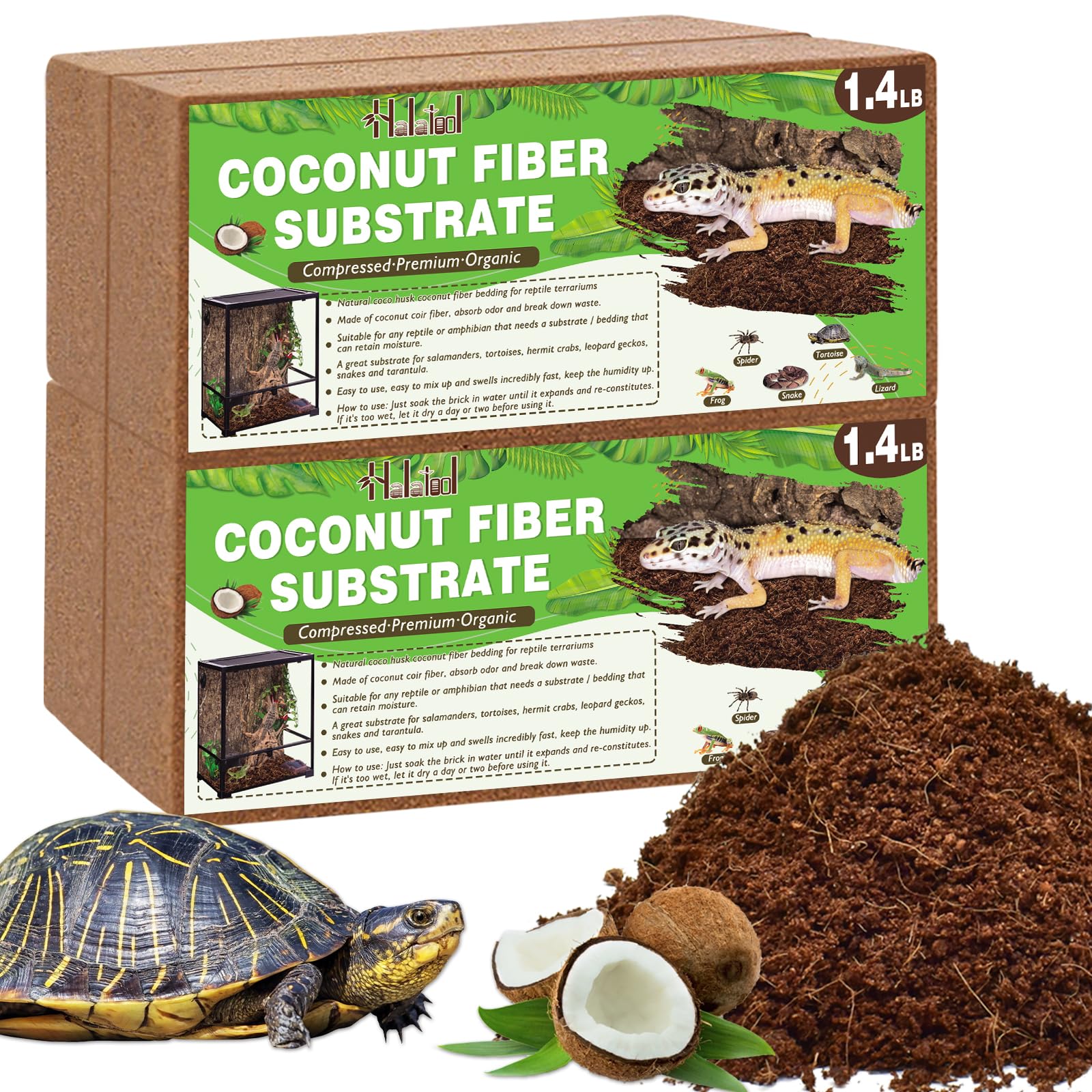
This four-brick pack delivers a high volume of organic coconut fiber at a competitive price point. Each 1.4-pound brick expands to roughly 8-10 times its compressed size, yielding enough material to fill two standard 20-gallon tanks to a depth of 3 inches. The fiber texture is soft and fine, similar to peat moss, making it excellent for hatchling box turtles that need a gentle surface for foraging. The sponge-like water absorption means a single hydration session keeps the substrate damp for up to a week in covered enclosures.
The bricks are 100% organic with no added fertilizers, pesticides, or chemical binders. Customers report using this successfully for tortoises, snakes, and even as a soil amendment for potted plants. The odor-neutralizing properties are reliable — the natural coconut fibers bind ammonia molecules and reduce smell between full cleanings. When stored dry, the compressed bricks take up very little space, making this a practical choice for keepers with limited storage.
The fine fiber texture is the double-edged sword. While it holds moisture beautifully, it can pack down too tightly under a heavy turtle, reducing airflow at the bottom layer. This may lead to anaerobic pockets if the substrate is not turned weekly. Also, the bricks are extremely compressed — without hot water, they take 45-60 minutes to fully soften and break apart.
Why it’s great
- Low cost per expanded quart
- Soft texture safe for hatchlings
- Compact storage before use
Good to know
- Fine fibers can compact under heavy turtles
- Requires hot water and time to expand fully
5. Legigo 4 Pack Coconut Fiber Substrate
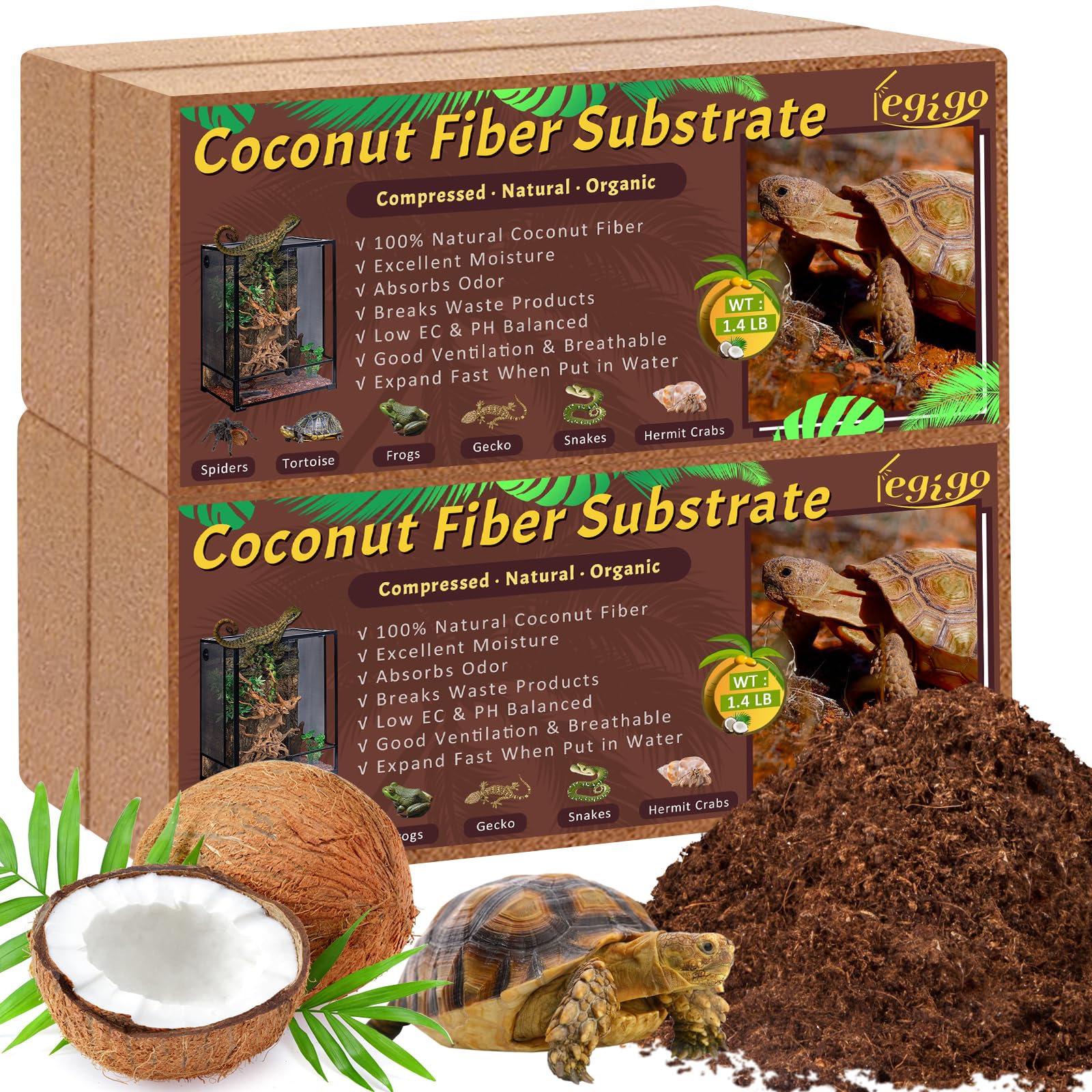
Legigo’s four-pack offers a similar value proposition to the Halatool kit but with a slightly coarser fiber grind that resists compaction better over time. Each brick weighs 1.4 pounds and expands to roughly the same volume, but the fibers remain separated rather than clumping into a dense mat. This is a meaningful advantage for box turtles that spend hours digging — the looser structure allows them to burrow without fighting compressed material.
The substrate is specifically marketed for reptiles and amphibians, and it shows in the quality control. There are no visible sticks, rocks, or foreign particles in the bricks. Customers with sulcata tortoises and crested geckos alike praise its ability to maintain humidity levels above 80% in sealed terrariums. The natural decomposition property is also a plus — used substrate can be composted in a garden without harming plants.
The biggest recurring complaint is the lack of clear instructions on the packaging. First-time users of compressed bricks may not realize they need to soak the block in warm water and break it apart manually. The bricks can also leave a slight coconut dust residue if not rinsed thoroughly, so a quick rinse after expansion is recommended for sensitive turtles.
Why it’s great
- Coarser fibers resist compaction
- Clean, chemical-free organic material
- Compostable after use
Good to know
- No instructions included on packaging
- May leave light dust film if not rinsed
6. Niteangel Natural Coco/Cork Hamster Bedding (Loose)

Niteangel’s loose coco bedding is marketed primarily for hamsters, but its soft, dust-free texture makes it a hidden gem for box turtle dig boxes. The material is finely shredded coconut coir mixed with cork particles, resulting in a light, airy substrate that turtles can easily push through. This is not a brick — it comes ready to use in a resealable bag, making it ideal for creating a dedicated burrowing zone within a larger enclosure.
The low-dust nature of this product is a standout feature. Even when handled dry, the coir releases almost no airborne particles, which is critical for turtles that keep their noses close to the ground while exploring. Customers with Syrian hamsters and gerbils consistently rate this 5 stars for odor control — the coconut material neutralizes ammonia effectively. For a box turtle dig box, this provides a soft, clean area for natural digging behavior without altering the humidity of the main substrate.
The bag quantity is very limited. At only 0.29 kilograms (roughly 10 ounces by weight), this bag fills a small 8×8 inch dig box to a depth of 2 inches. It is not suitable as a primary enclosure substrate unless you buy multiple bags, which quickly becomes expensive per quart. Treat this as a supplemental enrichment item rather than a bedding solution for the full tank.
Why it’s great
- Extremely low dust content
- Soft texture ideal for sensitive paws and shells
- Excellent ammonia odor absorption
Good to know
- Very small bag — not for full enclosure use
- Expensive per quart compared to bricks
7. Yarrdfir Coco Coir Liner 16×120 inch Mat
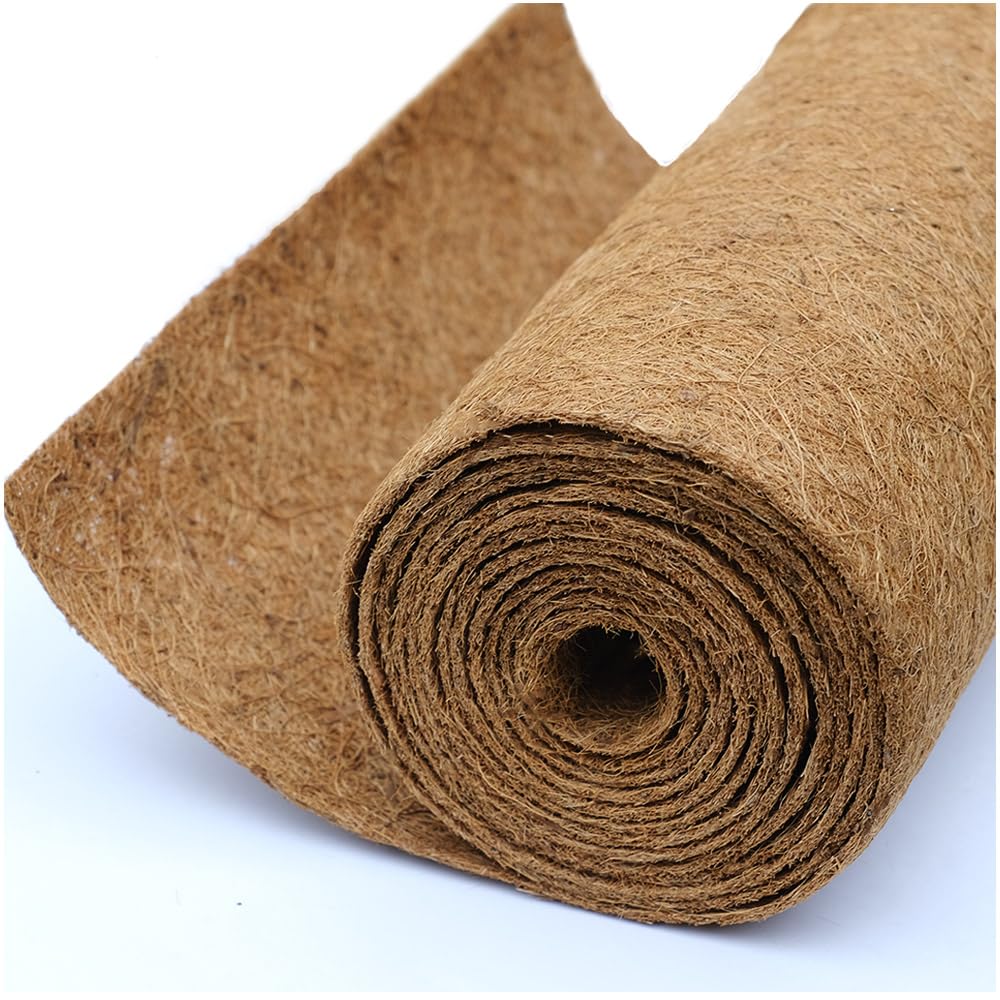
This coconut fiber mat is a unique entry — it is not a loose substrate but a fibrous sheet designed for planter liners and garden use. For box turtle keepers, it functions best as a base layer placed under a deeper loose substrate. The mat prevents turtles from digging down to the glass bottom, protecting their nails and preventing the enclosure from feeling like a bare floor. It can also be cut and layered as a temporary walking surface during substrate changes.
The material is natural coconut husk fiber, identical to the fibers used in coir bricks but woven into a flexible mat. It is breathable, lightweight, and strong enough to handle a turtle’s weight without tearing. Moisture wicks through the mat evenly, preventing puddles at the bottom of the tank. When used as a temporary pad, it is easy to rinse and reuse multiple times before replacement.
The mat is thin (roughly 1/8 inch), so it does not provide any meaningful burrowing depth on its own. It also sheds loose fibers when first cut, which can be messy. This product works best as a supplementary tool — for a full bedding solution, you still need a loose substrate like the REPTI ZOO chips or Legigo bricks layered on top.
Why it’s great
- Protects glass bottoms from scratching
- Reusable and easy to rinse clean
- Even moisture wicking across the base
Good to know
- Thin material — not a standalone substrate
- Sheds loose fibers when first cut
FAQ
Can I use pure coconut coir for my box turtle?
How often should I replace box turtle bedding?
Is cypress mulch safe for box turtles?
What depth of bedding does a box turtle need?
Final Thoughts: The Verdict
For most users, the best box turtle bedding winner is the REPTI ZOO 72 Quart Coconut Chip Substrate because it delivers the highest expanded volume at the best cost per quart while providing thick chips that hold burrows and humidity. If you want a bioactive setup that needs changing only once a year, grab the Josh’s Frogs BioBedding Tropical. And for a ready-to-use, zero-dust mixing companion, nothing beats the RediChip Loose Coconut Chip.