
Our readers keep the lights on and the weekend projects moving. As an Amazon Associate, I earn from qualifying purchases.
That nagging ache between your shoulder blades that gets worse by mid-afternoon isn’t a posture problem — it’s a support problem. The wrong bra forces your shoulders to carry the load, compressing trapezius muscles and pulling your upper spine forward. A properly engineered bra for back pain redistributes that weight to your ribcage, where strong bone structure can handle it.
I’m Rikta — the founder and writer behind FitlyFast. I analyze hundreds of customer reports and technical spec sheets each month to identify which bras actually deliver measurable back relief, not just marketing claims about posture.
The selection below focuses on models that use wide bands, racerback or longline construction, and wireless or strategically placed underwires to offload tension from your shoulders. If you are searching for a true bra for back pain, the key differentiator is how aggressively the band — not the strap — does the work.
How To Choose The Best Bra For Back Pain
Back pain from bras almost always traces to strap pressure and band instability. The fix requires looking past cup volume and focusing on four structural elements that determine how a bra transfers weight.
Band Width and Ribcage Fit
A 2-inch or wider band is the foundation. Narrow bands curl and dig, forcing the straps to compensate. The band should sit parallel to the floor and feel snug on the loosest hook — most back-pain relief comes from a band that stays put during arm movement. Longline styles extend the band 4 to 6 inches down the ribcage, spreading pressure over a larger surface area and reducing the load on any single point.
Strap Design and Attachment Point
Racerback and criss-cross back designs pull the straps toward the center of your back, which opens the chest and reduces rounding of the shoulders. Wider padded straps (1 inch or more) prevent the strap from slicing into the trapezius. Avoid thin spaghetti straps entirely — they concentrate weight into a small area and aggravate upper-back pain.
Wireless vs. Underwire for Posture
For daily back-pain relief, wireless construction is typically safer because it eliminates rigid pressure points along the sternum and ribcage. However, some underwire minimizers can help if they use a U-shaped or reinforced frame that stabilizes the band without poking. The critical spec is whether the underwire channel is long enough to follow the natural breast root without extending into the armpit or digging into the ribs.
Front Closure vs. Back Closure
Front-closure bras reduce the twisting motion required to fasten the band, which matters if you have limited shoulder mobility due to back pain. The tradeoff is that front clasps can create a visible bump under fitted tops and may not offer as fine-tuned a fit adjustment as a traditional three-hook back closure.
Quick Comparison
On smaller screens, swipe sideways to see the full table.
| Model | Category | Best For | Key Spec | Amazon |
|---|---|---|---|---|
| Elila Longline Posture Bra | Longline | Heavy bust, prolonged wear | Wide jacquard band, 2.5 inch | Amazon |
| Anita Women’s Bra | Wireless | Everyday comfort, lift | Non-stretch cups, molded side | Amazon |
| Playtex Ideal Posture Support | Criss-Cross Back | Shoulder pressure relief | Front close, criss-cross back | Amazon |
| SHAPELLX Post Surgery Bra | Compression | Post-op support, sensitive tissue | Soft compression, front closure | Amazon |
| HSIA Front Closure Posture Bra | Posture | Budget relief, adjustable fit | Adjustable front hooks, racerback | Amazon |
| HSIA Minimizer Full Coverage | Minimizer | Reducing bounce, minimizing profile | Unlined underwire, seamless cups | Amazon |
| HSIA Longline Back Smoothing | Longline + Minimizer | Smoothing profile, full support | 4-inch band, underwire longline | Amazon |
In‑Depth Reviews
1. Elila Women’s Plus Size Jacquard Front-Close Wireless Longline Posture Bra

The Elila 33772 is built around a wide jacquard band that extends several inches down the ribcage, creating a foundation that transfers breast weight away from the shoulders. Multiple reviews from long-term users describe this bra as the only one that encourages deeper breathing and an uplifted ribcage — a direct mechanical benefit of the longline design pulling the torso into better alignment.
The wireless cups are pronounced and structured, providing shape without underwire pressure points. The front closure makes fastening easy for anyone with limited shoulder mobility. That said, the front hooks sit directly under the sternum and can create visible bumps under clingy knits or thin fabric tops — a noted tradeoff for the back relief.
Be prepared for a significant break-in period. Several buyers report needing to order 4 inches larger in the band than usual and then wearing the bra for several days before the material softens. The returns window may close before the bra feels comfortable, so consider ordering a size up from your normal measurement and expecting a few days of stiffness.
Why it’s great
- Longline band distributes weight across the ribcage, not the shoulders
- Solid jacquard construction holds shape after many wears
- Front closure reduces twisting motions that aggravate back pain
Good to know
- Runs very small — order 4 inches larger in band than usual
- Front hooks create bumps under thin or bodycon clothing
- Significant break-in period before the band softens
2. Anita Women’s Bra (5409)
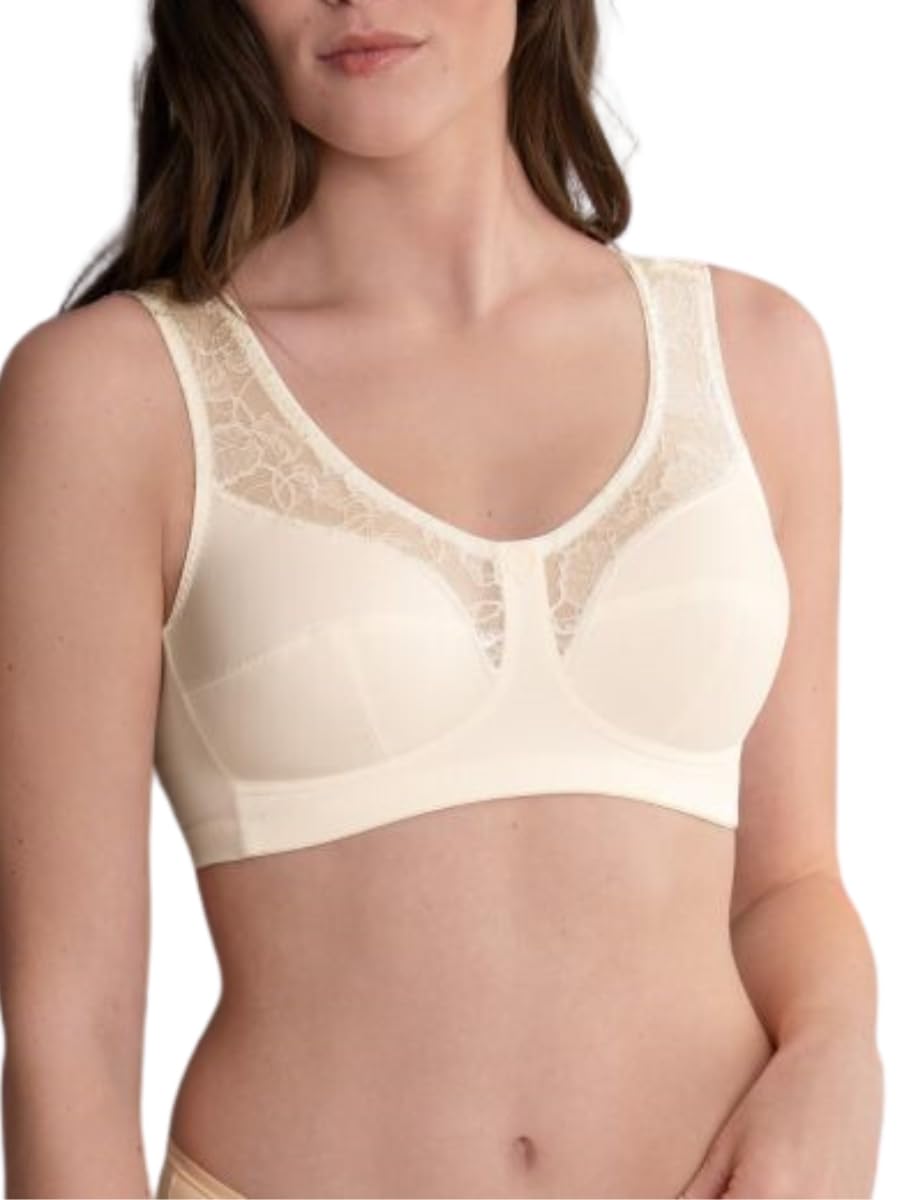
The Anita 5409 uses a non-stretch cup construction with molded side panels that anchor the breasts without an underwire. Multiple long-term users report that this is the most comfortable bra they have ever owned, with one reviewer specifically noting that it eliminated the need for a breast reduction surgery by providing enough lift and separation to prevent shoulder grooving.
The side panels fit smoothly against the ribcage, reducing the lateral pressure that can flare mid-back pain. The straps are non-adjustable — you must size the band carefully to get the right tension. Most buyers who found this bra effective sized down in the band to get a snugger fit, relying on the band rather than straps for support.
However, if you are used to underwire support, the Anita may feel insufficient. One reviewer with a larger bust found it offered no better lift than any other wire-free bra. It also lacks a racerback or criss-cross design, so it works best for those whose back pain originates from strap digging rather than a forward-rolling posture.
Why it’s great
- Molded side panels eliminate underwire poke points
- Non-stretch cups provide consistent lift throughout the day
- Extremely comfortable for all-day wear, per decades-long users
Good to know
- Non-adjustable straps require precise band sizing
- Not enough lift for those accustomed to underwire support
- No posture-specific back design (no racerback or criss-cross)
3. Playtex Ideal Posture Support and Elegance Women’s Wireless Bra
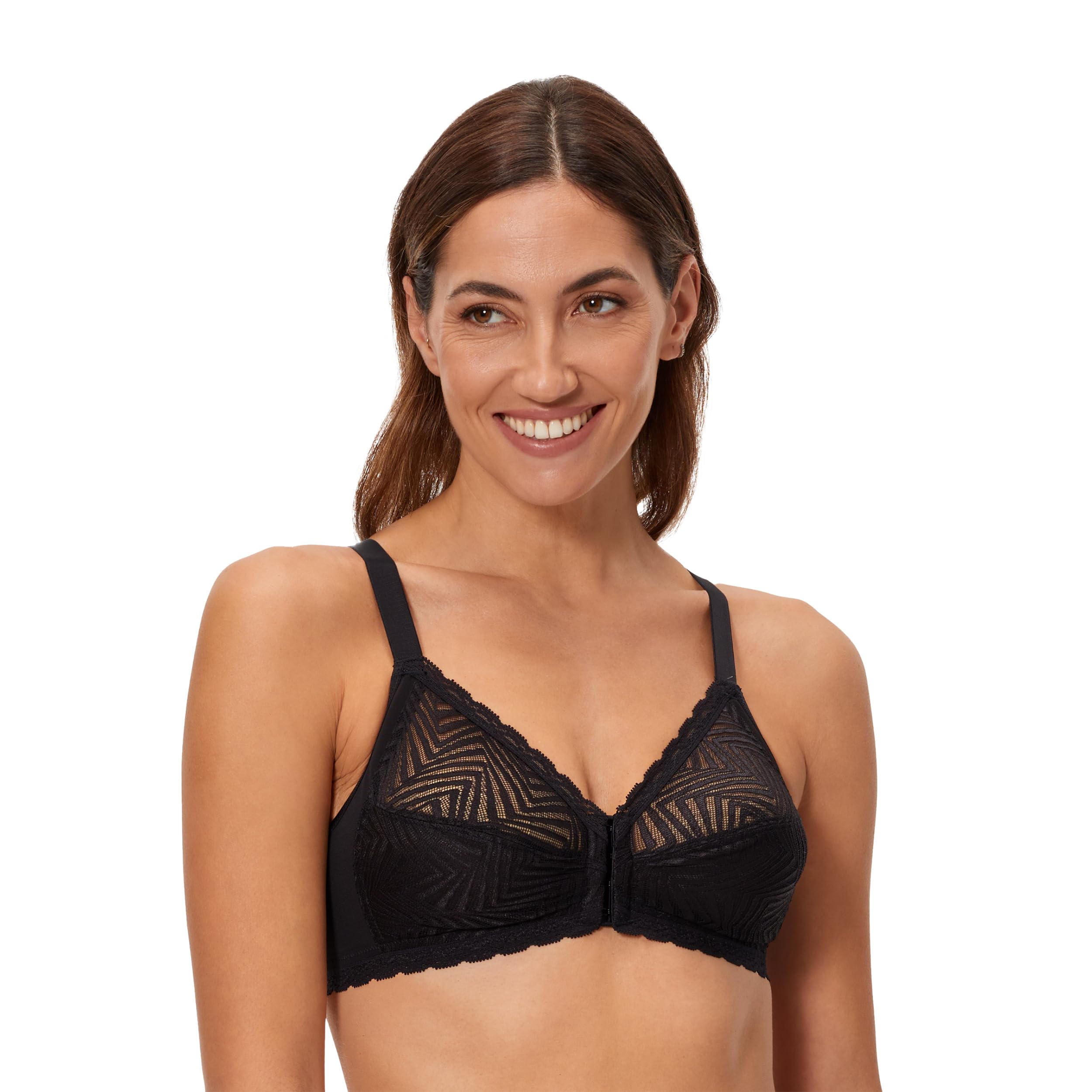
Playtex targets the specific pain point of shoulder pressure with a criss-cross back design that pulls the straps toward the center spine, opening the chest and reducing forward shoulder roll. The front-closure design makes it easy to put on and take off, which is a real benefit if twisting to reach a back clasp triggers mid-back spasms.
The cups are lightly padded and provide full coverage without underwire, making this a moderate-support option rather than a heavy-lift solution. The band is a standard width — not a longline — so the weight distribution depends heavily on the criss-cross geometry working correctly for your frame. Several buyers praised it for relieving sore shoulders during long workdays.
The key downside reported is comfort when seated. The bottom clasp sits directly at the sternum, and some users found it digs in painfully when sitting at a desk or driving. If you spend long hours in a seated position, the hard clasp may create a new pressure point that counteracts the back relief.
Why it’s great
- Criss-cross back opens chest and reduces shoulder rounding
- Front closure makes fastening easy for limited mobility
- Light padding provides shape without underwire bulk
Good to know
- Bottom clasp can dig in painfully when seated
- Runs small — order at least one band size up
- Moderate support, not designed for very heavy busts
4. SHAPELLX Post Surgery Bras Front Closure Compression Bra
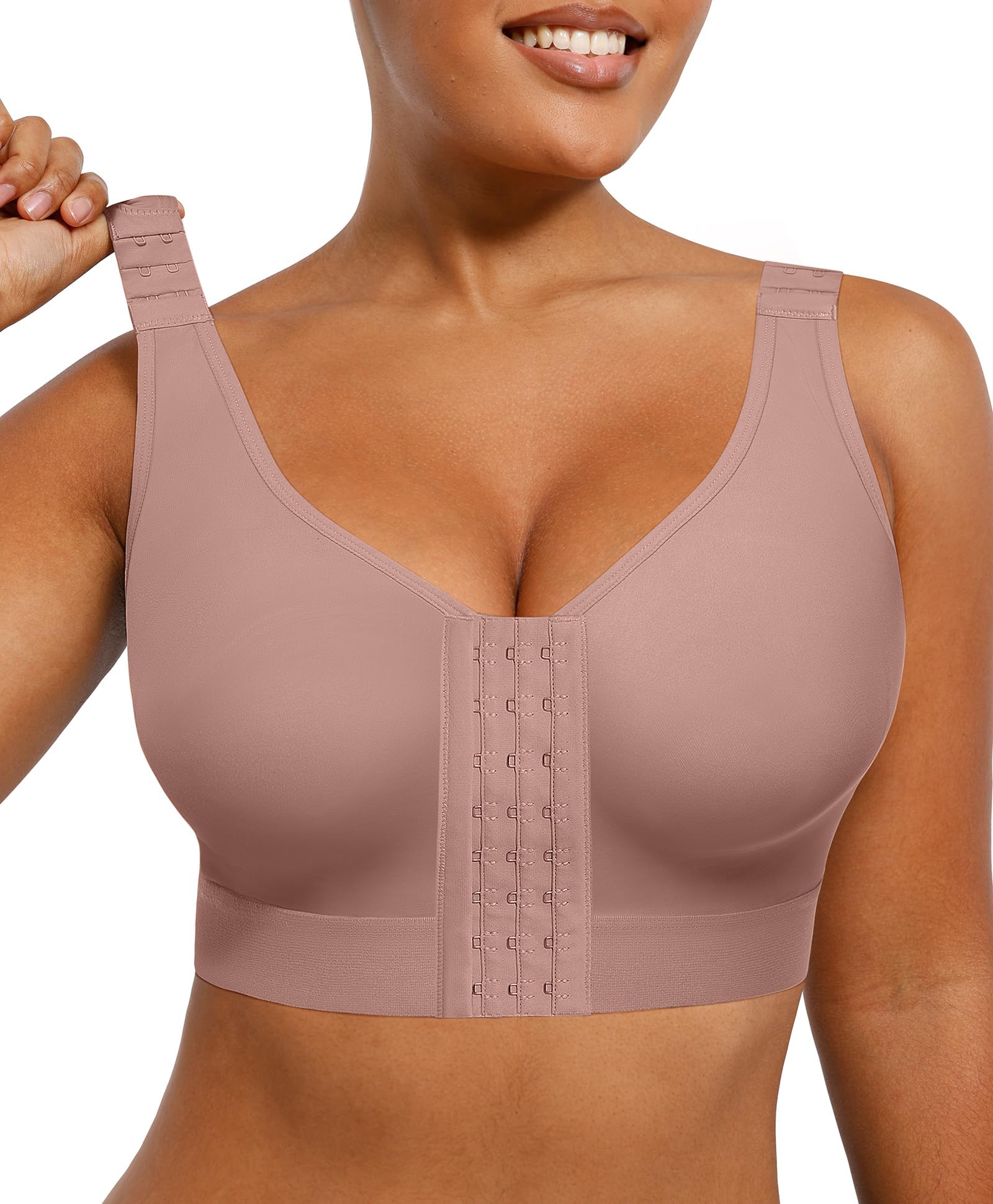
This SHAPELLX bra is engineered for compression and stabilization after breast surgery, but its design principles overlap heavily with what works for back pain: a snug, non-stretch band that holds everything tight against the ribcage and eliminates strap-dependent weight bearing. The soft fabric is explicitly designed not to aggravate incision sites, which means zero chafing or digging for sensitive upper backs.
The front closure and adjustable shoulder straps allow for fine-tuning without requiring you to twist or reach behind your back. Multiple post-reduction and post-mastectomy reviewers noted that the bra stayed comfortable during weeks of continuous wear and did not create new pain points under the arms or along the spine.
The fit runs large, particularly in the cup. Most buyers recommend sizing down from your normal measurement to get the compression benefit. The strap adjustment hooks are limited — some users found the shortest setting still too long for their frame. If you need an ultra-short shoulder drop, the hooks may not cinch tight enough.
Why it’s great
- Compression design holds tissue close to ribcage, reducing back strain
- Extremely soft fabric suitable for sensitive or post-surgical skin
- Front and shoulder adjustments easy to reach without twisting
Good to know
- Runs large — size down for proper compression
- Strap adjustment hooks limited; may not suit short torsos
- Not a fashion bra; medical look under clothing
5. HSIA Posture Bras for Women – Front Closure, No Underwire, Plus Size
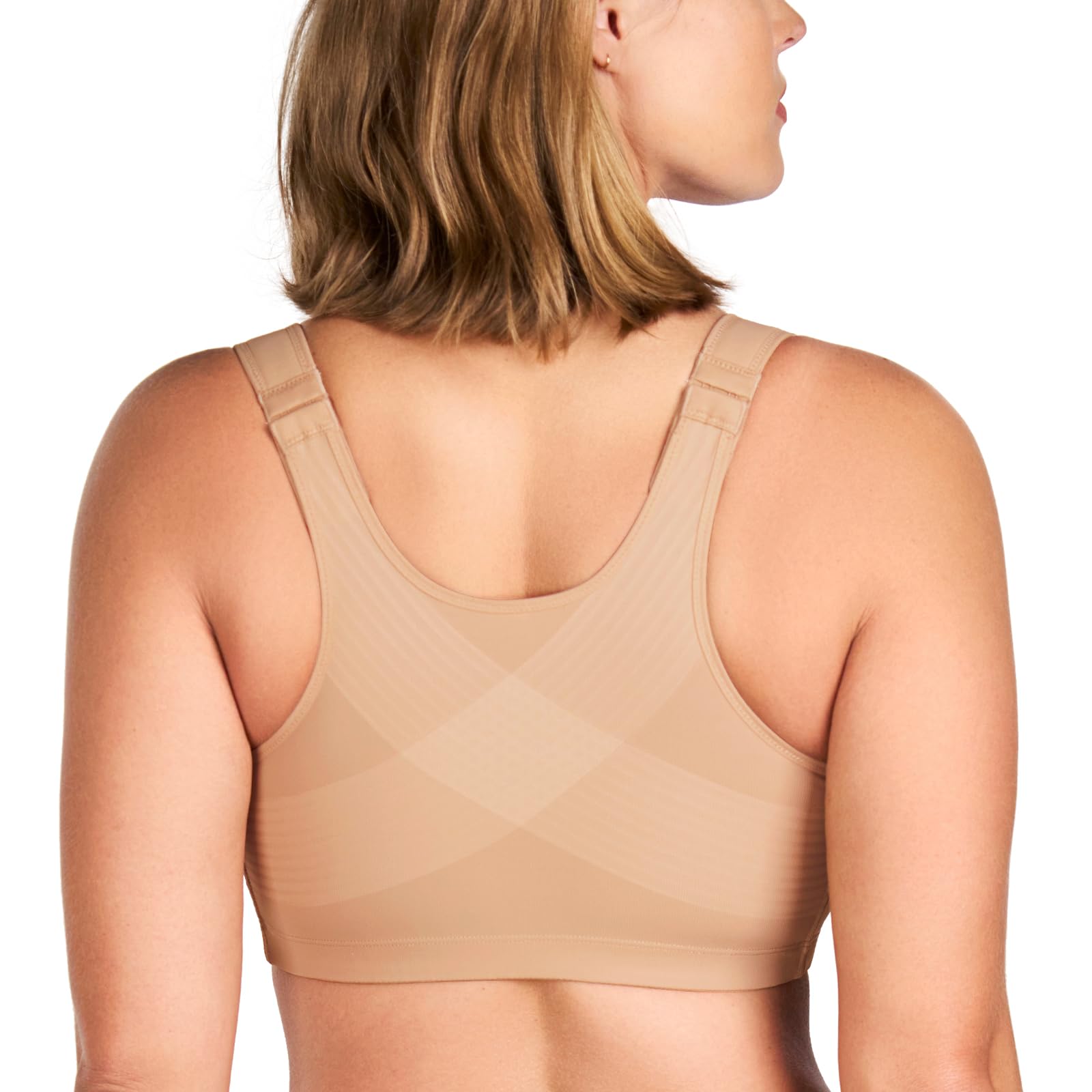
This HSIA model uses a racerback design with front closure to pull the shoulders back while making fastening simple. The material wicks moisture and has a soft skin feel that avoids the pulling sensation some posture bras create. Reviewers with larger busts noted immediate relief in shoulder weight after switching to this bra, and several described it as the bra everyone with a larger chest should try.
The adjustability is a strong point — the front clasps and strap hooks allow multiple fit points, which is helpful if your band or cup size fluctuates. The material stretches less than other budget-friendly options, meaning the support stays consistent through a full day of wear rather than loosening after a few hours.
The tradeoff is that the front closure creates a slight raised bump under thin shirts, and the design has a more medical or utilitarian look than a fashion-forward silhouette. Some reviewers found the straps uncomfortable if the shoulder hooks faced backward, requiring assistance to fasten. Sizing also proved tricky — a few buyers found the bra too small despite ordering their usual cup size.
Why it’s great
- Racerback design opens chest and reduces shoulder strain
- Wicking fabric stays dry and comfortable during extended wear
- Adjustable front closure and straps for fine-tuned fit
Good to know
- Front closure can create visible bump under fitted tops
- Some sizing inconsistency between cup and band
- Strap hooks may face backward, requiring help to fasten
6. HSIA Minimizer Full Coverage, Plus Size T-Shirt Unlined Underwire Bra, Joan Ultimate Soft
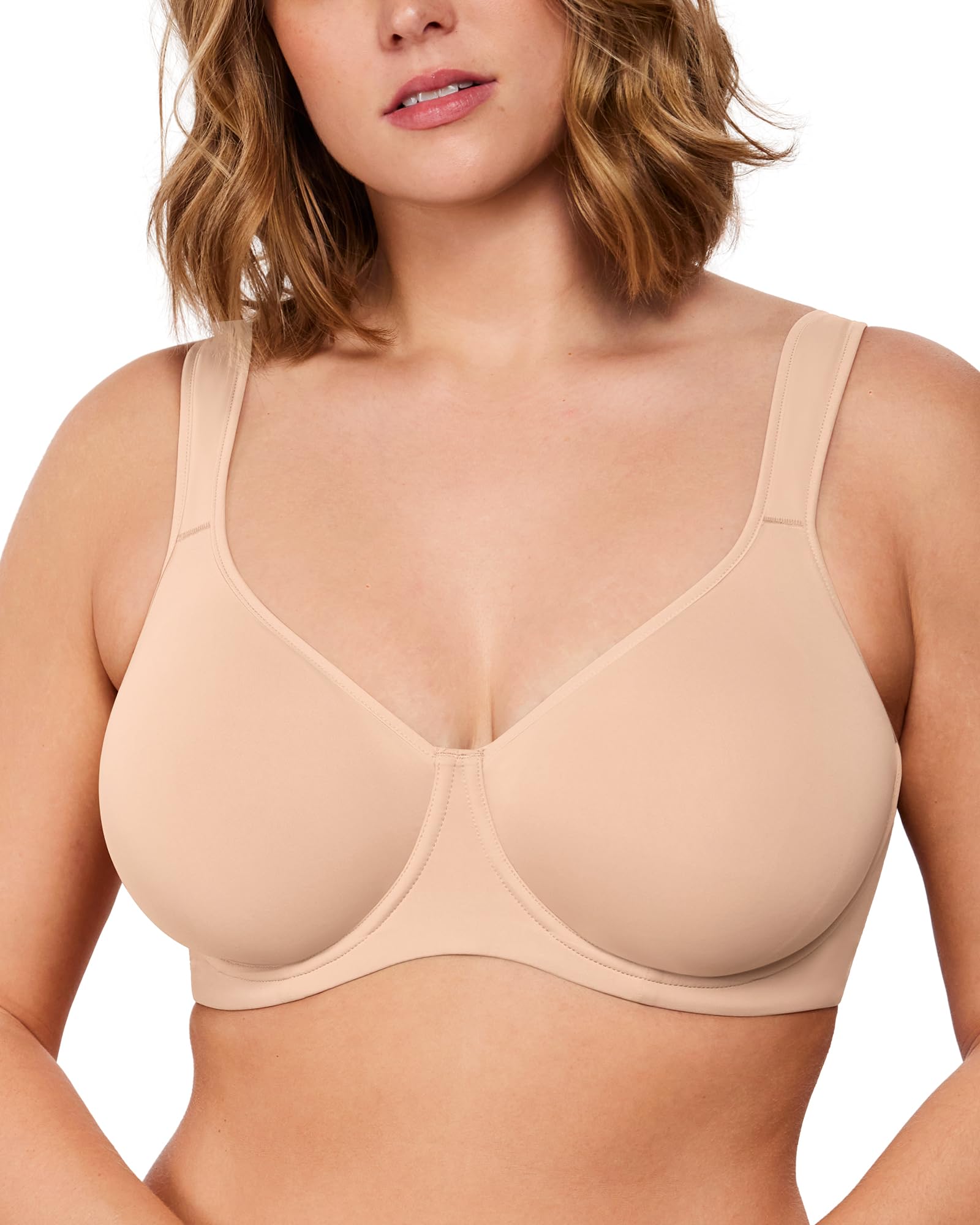
The HSIA Joan minimizer uses unlined underwire cups and wide, padded straps that stay in place without digging. The minimizer effect reduces the visual projection of the bust, which in turn reduces the forward torque on the spine that causes upper-back strain. Reviewers with cup sizes 36G and 38H reported that this bra made clothes fit better and eliminated the feeling of the bust pulling the body forward.
The band is a standard width, but the wide padded straps distribute shoulder pressure much better than typical thin minimizer straps. The cups run true to size for larger bands, though some reviewers suggest sizing down for a tighter fit that eliminates gaps at the top of the cup. The full side coverage prevents breast tissue from migrating toward the armpits, which can cause lateral back pain.
The underwire is the primary risk. Multiple reviewers reported that the wires came out of the channel within two months of wear, which makes this a less durable option than wireless alternatives. For back pain specifically, any wire failure can create a sharp pressure point that makes the bra unwearable. If you rotate bras and don’t wear this daily, the wire lifespan may stretch to a year or more.
Why it’s great
- Minimizer effect reduces forward pull on the spine
- Wide padded straps prevent shoulder digging
- Full side coverage eliminates lateral breast migration
Good to know
- Underwire can break through the channel within two months
- Fabric feels cheaper than comparably priced Wacoal options
- Not enough lift for very heavy busts without wire support
7. HSIA Longline Back Smoothing Bra, Full Coverage Unlined Underwire
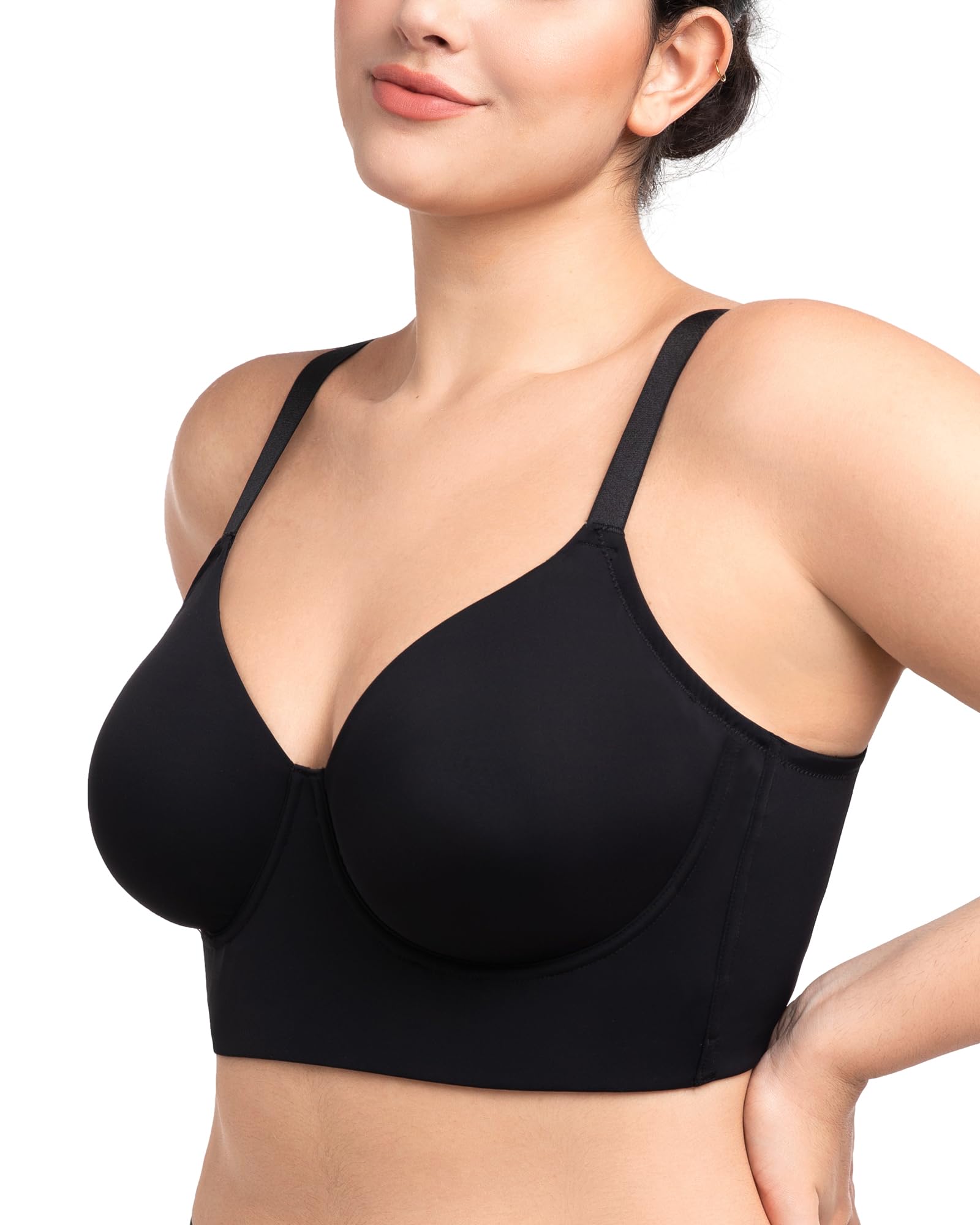
This HSIA longline extends the band a full 4 inches down the ribcage, creating a smoothing effect that eliminates back bulges while distributing breast weight across a larger surface area. The underwire is stabilized by the longer frame, reducing the digging risk that comes with short-band underwire bras. Reviewers wearing 34H described it as both snug and supportive, with no strap adjustment needed during the day.
The minimizing effect is strong — one reviewer reported that the bra made her bust look roughly two cup sizes smaller, which correlates with reduced forward torque on the spine. The material is described as soft but strong, not flimsy or cheap-feeling. Multiple buyers ordered additional colors immediately after the first wear.
The fit requires careful measurement. Several reviewers found the sides too tight and digging into the ribs in larger cup sizes before switching to a different band size. The underwire still poses a long-term durability concern, and the longline design means the bra shows under higher-waisted pants or cropped tops. If you need a bra that works under low-back clothing, this is not the right pick.
Why it’s great
- 4-inch longline band spreads weight across the entire ribcage
- Strong minimizing effect reduces spinal forward torque
- Material is soft yet durable, holding shape after many wears
Good to know
- Longline design not compatible with low-back clothing
- Sides may dig into ribs for some body shapes
- Underwire durability is a concern with daily use
FAQ
Can a bra actually fix my upper-back pain or just mask the symptoms?
How tight should the band be for back pain relief?
Should I choose wireless or underwire for back pain?
How do I know if my bra is contributing to my back pain versus helping it?
Final Thoughts: The Verdict
For most users, the bra for back pain winner is the Elila Longline Posture Bra because its wide jacquard band and wireless longline construction deliver the most effective weight distribution for daily wear. If you want a comfortable everyday option with molded side panels, grab the Anita Women’s Bra. And for targeted shoulder relief with a criss-cross back design, nothing beats the Playtex Ideal Posture Support.