
Our readers keep the lights on and the weekend projects moving. As an Amazon Associate, I earn from qualifying purchases.
That sharp, nagging ache on the outside or inside of your elbow can turn every swing, lift, or handshake into a painful event. Elbow tendonitis, whether from tennis, golf, or a long week at the keyboard, demands a targeted solution that addresses the specific strain on the tendon without restricting your movement. The right brace applies focused compression at the exact point of stress, dampening vibration and redistributing load away from the inflamed epicondyle, allowing you to stay active while the soft tissue recovers.
I’m Rikta — the co-founder and writer behind FitlyFast. My research dives deep into the mechanics of sports recovery gear, analyzing material composition, compression profiles, and pad geometries that determine whether a brace delivers genuine relief or just sits on your arm.
After evaluating the construction, pad types, and real-world feedback of over a dozen models, I’ve assembled a focused guide to help you select the most effective brace for elbow tendonitis that fits your activity level and pain profile.
Note: a brace is a supportive tool, not a medical treatment. If pain is severe, worsening, or doesn’t improve after a few weeks of rest and bracing, please consult a doctor or physical therapist for a proper diagnosis.
How To Choose The Best Brace For Elbow Tendonitis
Selecting the right brace for elbow tendonitis means moving beyond generic “one-size-fits-all” claims and focusing on how the device actually interacts with the common extensor or flexor tendon origin. The wrong choice can add pressure to the wrong area, worsening discomfort, while the right one provides near-immediate relief.
Pad Type and Placement Precision
The pad that applies counterforce pressure is the core of any effective strap. Gel pads conform to the arm’s curvature and stay softer over long wear, whereas dense foam or rigid plastic inserts can create a hard pressure point that digs in during dynamic movement. Look for a brace with a pad that is both adjustable along the strap and flexible enough to trace the natural contour of your forearm muscle belly — this ensures the load is redirected away from the tendon origin without cutting off circulation.
Compression Profile and Material Breathability
For tendonitis, compression should be localized, not circumferential and diffuse. A sleeve with graduated compression (tighter near the elbow, looser toward the wrist) improves venous return and reduces swelling, while a simple strap delivers spot pressure. Moisture-wicking nylon-spandex blends allow for multi-hour wear during sports or work without sweat buildup, whereas standard elastic traps heat and can lead to skin irritation folded inside a strap.
Size Range and Strap Security
A brace that migrates down the forearm the moment you lift or swing is functionally useless. Dual-ring or hook-and-loop closures with a D-ring provide a secure, one-handed cinch that holds position during explosive movements like a tennis serve or a golf swing. Measure your forearm circumference at the widest point (usually 1-2 inches below the elbow crease) and match it to the brace’s range — most straps fit 10-15 inches, but sleeves require more precise sizing to avoid rolling or sliding.
Quick Comparison
On smaller screens, swipe sideways to see the full table.
| Model | Category | Best For | Key Spec | Amazon |
|---|---|---|---|---|
| Nordic Lifting Compression Sleeves (Pair) | Sleeve | Weightlifting & Gym Sessions | 2mm Thick Nylon-Spandex | Amazon |
| Med Spec EpiGel Tennis Elbow Brace | Strap | Racquet Sports & Golf | Dual Adjustable Gel Pads | Amazon |
| SquareHit VictoryBand | Strap | Lightweight Daily Wear | 9g / Slim Profile | Amazon |
| OrthoSleeve Tennis/Golfer’s Brace | Sleeve | All-Day Office & Daily Use | 6-Zone Compression / 36g | Amazon |
| Mueller Tennis Elbow Support | Strap | Active Recovery & Walkers | Removable Gel Pad | Amazon |
| BraceAbility Epicondylitis Brace | Strap | Budget-Conscious & Smaller Arms | D-Ring / Up to 15″ Forearm | Amazon |
| FUTURO Performance Comfort Support | Sleeve/Strap Hybrid | Night Wear & Bump Protection | Breathable Open Construction | Amazon |
In‑Depth Reviews
1. Nordic Lifting Elbow Compression Sleeves (1 Pair)

Starting your search with a premium-grade sleeve rather than a simple strap gives you the advantage of graduated compression over the entire forearm and bicep, not just a single pressure point. These Nordic Lifting sleeves use a 2mm nylon-spandex weave that delivers consistent, breathable compression without the bulk of a neoprene wrap, making them a strong candidate for high-repetition activities like weightlifting and powerlifting where tendon strain accumulates across sets.
The construction is notably durable — premium yarns resist pilling better than generic elastic, and the anti-slip grip band at the top edge helps prevent the sleeve from migrating downward during dynamic leg drives or overhead presses. The pair format means you can rotate sleeves between sessions or support both elbows simultaneously.
One caution: the sleeves run snug, so measuring your bicep circumference is essential. A few users found the initial tightness intense, but the compression profile actually supports the tendon more effectively than a loose strap, especially during recovery between lifts. The ability to use HSA/FSA funds makes this a smart financial choice for those managing chronic elbow issues.
Why it’s great
- Full graduated compression supports both forearm and bicep equally.
- Anti-slip silicone band keeps position locked through intense lifts.
- HSA/FSA eligibility reduces out-of-pocket burden for chronic users.
Good to know
- May be too snug for users with larger biceps; check sizing chart carefully.
- Fabric can snag or pill if machine-washed frequently without a delicates bag.
2. Med Spec EpiGel Tennis Elbow Brace
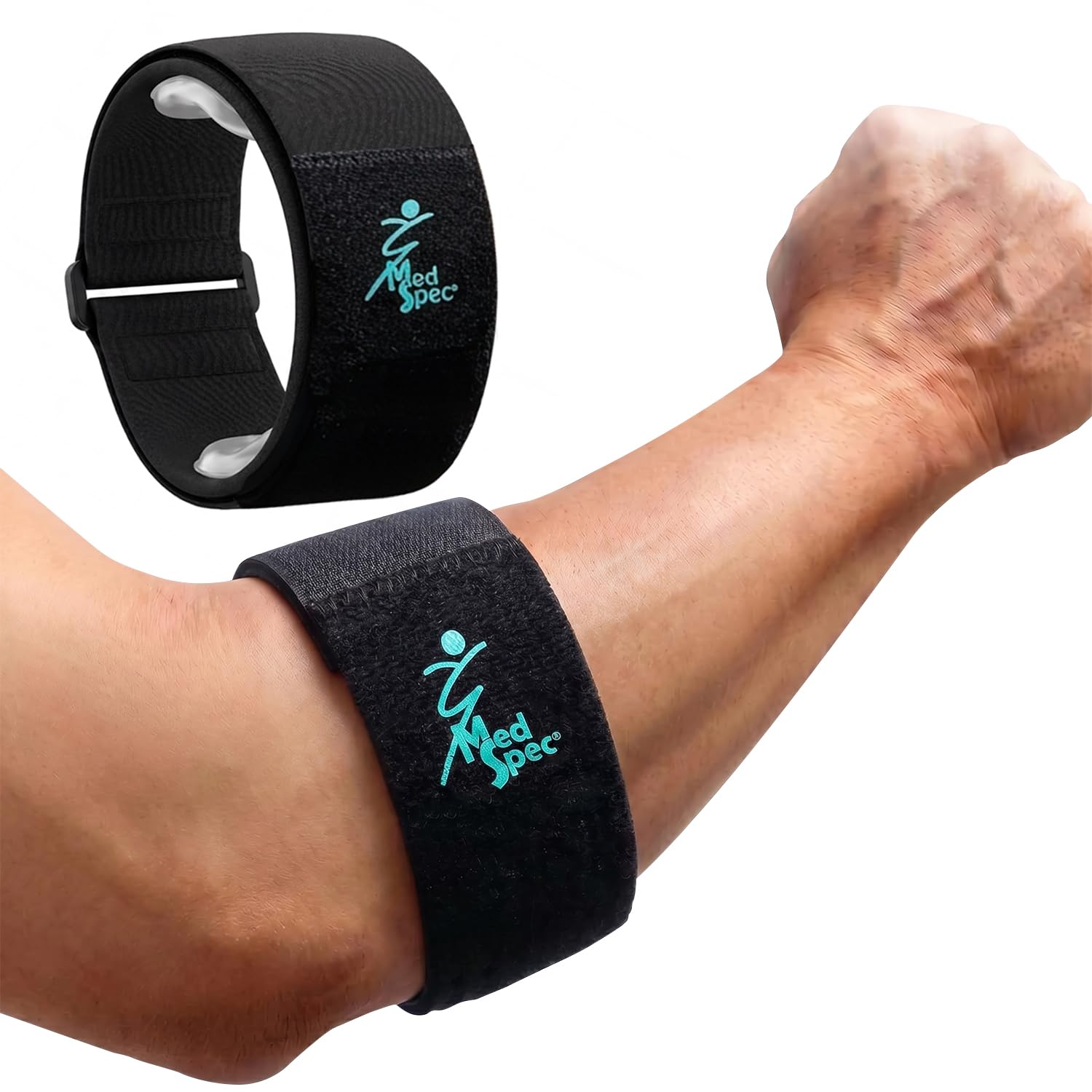
If your elbow pain intensifies during specific rotational movements — like a topspin forehand or a golf swing follow-through — the Med Spec EpiGel brace offers a level of pad customization that few straps in its tier can match. Two independent gel pads sit inside adjustable Velcro pockets, allowing you to slide them medially or laterally to target either the lateral epicondyle (tennis elbow) or the medial epicondyle (golfer’s elbow) with pinpoint accuracy.
The gel material itself is a key differentiator from cheaper foam or plastic pads. It conforms to the curve of the forearm muscle belly, distributing counterforce evenly without the hard “dig-in” sensation that often forces users to remove a strap mid-round, and the low-profile design fits under a golf glove or tennis overgrip without adding noticeable bulk. As the manufacturer notes, this brace is a support tool, not a cure — pair it with proper fit and rest, and check with a doctor or physical therapist if symptoms persist.
One noted limitation: for all-day wear (8+ hours), the gel can cause minor skin irritation in hot, humid conditions. Placing a thin cotton pad between the gel and skin resolves this without compromising the compression profile. Also, the Velcro channels that hold the pads may loosen over months of heavy adjustment, though the strap itself remains durable.
Why it’s great
- Two independent gel pads allow targeted pressure on specific epicondyle points.
- Adjustable pad positioning accommodates both tennis and golfer’s elbow in one device.
- Users report significant relief within 2-3 days of regular use during activity.
Good to know
- Gel can irritate sensitive skin during extended wear in hot weather.
- Velcro pad channels may stretch over time, requiring occasional repositioning creativity.
3. SquareHit Tennis VictoryBand Elbow Support Strap

There is a specific breed of elbow tendonitis sufferer — the regular racquet sports player, the competitive pickleball enthusiast, the weekend golfer — who needs a brace that disappears during play. The VictoryBand by SquareHit was engineered with that exact scenario in mind, weighing just 9 grams and using a slim elastic strap with a specialized internal pressure nodule that dampens the vibration frequency transmitted up the forearm on impact.
This is not a bulky counterforce strap with a chunky pad. Instead, a small, oval-shaped nub sits against the underlying muscle belly, aiming to absorb the shockwave that otherwise radiates into the inflamed tendon origin, while staying cool and out of the way of grip or wrist flexion during a serve or a chip shot.
The cost is notably higher than standard straps, and the sizing is less forgiving — the single-size design works for most adults, but those with extremely slender or thick forearms may find the fit imperfect. Additionally, because the pressure location is fixed by the band’s geometry, it may not suit someone whose pain emanates from a different spot than the typical lateral epicondyle compression point.
Why it’s great
- Ultra-light 9g design is nearly imperceptible during competitive play.
- Internal dampening nodule specifically reduces vibration-induced tendon strain.
- Superior breathability and heat dissipation vs. bulky Velcro straps.
Good to know
- Fixed pressure point may not align with every user’s pain location.
- Higher cost and less size adjustability than standard counterforce straps.
4. OrthoSleeve Tennis | Golfer’s Elbow Brace

For those whose elbow discomfort is triggered by prolonged static postures — a desk job, driving, or repetitive light assembly work — a compression sleeve can be more practical than a strap that may snag on clothes or shift during subtle arm rotations. The OrthoSleeve is a pull-on nylon sleeve that uses a 6-zone graduated compression gradient, meaning pressure is highest around the forearm muscle bellies and tapers off toward the wrist and bicep, promoting blood flow without constricting the elbow joint itself.
What sets this sleeve apart from basic elastic tubes is the inclusion of gel stabilizers sewn into the medial and lateral sides. These stabilizers provide a gentle, targeted counterforce that helps keep the elbow aligned during mouse use or typing, without a single protruding strap or buckle. The 36-gram weight and thin profile make it virtually invisible under a dress shirt or polo, which is a critical factor for professionals who need support but can’t justify a visible medical device.
Durability is the main trade-off. Like most nylon-blend compression sleeves, it will gradually lose some of its compression gradient with months of daily wear, particularly around the bicep opening, which can start to gap and slide down over time — especially on smaller or very muscular arms. It’s best viewed as a replaceable support layer, not a permanent fixture.
Why it’s great
- Graduated 6-zone compression improves circulation without joint restriction.
- Slim build fits invisibly under work attire for all-day desk use.
- Gel stabilizers provide targeted support without straps or buckles.
Good to know
- Compression fades after 4-5 months; not a long-term investment.
- May roll or slide on very small or very muscular arms over time.
5. Mueller Tennis Elbow Support with Gel Pad

Mueller Sports Medicine has been a household name in athletic support for decades, and this unit — a strap with a removable gel pad — reflects that lineage of practical, no-nonsense design. The integrated gel pad delivers immediate cushioning over the forearm muscle belly, and because it’s removable, you can wash the strap separately and reposition the pad precisely based on where your pain originates on a given day.
The double-knit fabric is moisture-wicking, which matters if you’re using the brace during a sweaty pickleball match or an outdoor run. It breathes better than neoprene alternatives and doesn’t trap heat against the skin. The Velcro closure is wide enough to distribute tension evenly, and the one-size-fits-most range (10-14 inches) covers the majority of adult arms without excessive strap tail flapping.
Where this brace stumbles is in long-duration wear. The hook-and-loop closure can loosen slightly during explosive lateral movements, and the gel pad may need occasional mid-session readjustment. It’s best used for active recovery sessions or shorter sports outings rather than 8-hour stretches at the office.
Why it’s great
- Removable gel pad allows easy washing and customized placement each wear.
- Breathable double-knit fabric reduces sweat buildup during active sports.
- Proven brand with a 60-year history in sports medicine reliability.
Good to know
- Gel pad can shift laterally during intense dynamic movements.
- Velcro closure may loosen over extended wear, requiring frequent re-tightening.
6. BraceAbility Epicondylitis Brace

Not every elbow tendonitis case requires premium materials or a high price tag to see results. The BraceAbility Epicondylitis Brace is a straightforward, utilitarian counterforce strap that works well for users with smaller forearm circumferences who need reliable compression without unnecessary weight. Its D-ring closure system allows for one-handed tightening, which is a practical feature when you’re mid-workout or at a job site and need to dial up tension quickly.
The embedded compression tube applies firmer, more direct pressure at the tendon than typical gel or foam pads, which some users prefer over softer padding. For lighter-framed individuals (forearm circumferences up to 15 inches), the strap fits snugly and stays put without bunching.
The main drawback is material roughness. The nylon and Velcro construction can irritate the skin, especially during high-rep movements that cause the strap to rotate slightly against the arm. The metal insert also creates a hard pressure point that some find uncomfortable during sustained wear (over 2 hours). This brace is best suited for short-duration activity rather than all-day management.
Why it’s great
- Metal insert provides firm, direct pressure ideal for smaller forearms.
- D-ring closure enables easy one-handed adjustment during activity.
- Compact strap design doesn’t interfere with wrist flexion or grip.
Good to know
- Rough nylon/Velcro material can irritate skin with extended wear.
- Hard metal pressure point becomes uncomfortable after 2+ hours of use.
7. FUTURO Performance Comfort Elbow Support
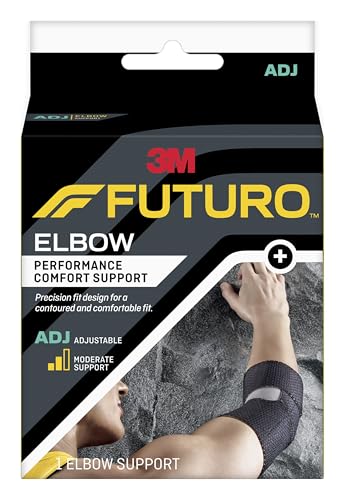
The FUTURO support occupies a middle ground between a full compression sleeve and a simple strap, using an open sleeve design with two independent Velcro straps that allow you to customize compression across three zones: above the elbow, across the forearm, and a middle layer. This hybrid structure is particularly useful for people who need bump protection for a swollen elbow but also want the targeted tendon pressure of a counterforce band.
The breathable, open-knit fabric is a standout feature for nighttime use. Unlike solid sleeves that trap heat and can make sleeping uncomfortable, this support allows airflow to keep the elbow dry while providing enough compression to reduce the ache that often flares up during rest. The adjustable straps let you fine-tune pressure differently for activity versus sleep. Note: if you have swelling, redness, warmth, or fever around the elbow (possible signs of an infected or septic bursa), a brace is not appropriate — see a doctor promptly instead of self-treating with compression.
However, the support level is moderate at best — this is not a heavy-duty brace for intense weightlifting or aggressive sports. The Velcro straps can lose grip after multiple wash cycles, and the sleeve can be difficult to pull on if your arm is swollen. It’s a niche solution best suited for low-impact activity, recovery periods, and protection against accidental bumps.
Why it’s great
- Three-zone adjustable compression via two independent Velcro straps.
- Open breathable fabric ideal for overnight wear and hot environments.
- Provides light bump protection alongside targeted tendon support.
Good to know
- Moderate support only; insufficient for heavy lifting or aggressive sports.
- Sleeve is tricky to pull on over a swollen or sensitive elbow joint.
FAQ
Should I wear an elbow brace for tendonitis while sleeping?
How tight should my elbow tendonitis strap be?
Can a brace fully cure elbow tendonitis?
Is a sleeve or a strap better for golfer’s elbow?
Final Thoughts: The Verdict
For most users, the brace for elbow tendonitis winner is the Nordic Lifting Elbow Compression Sleeves because they deliver full graduated compression that supports the tendon during heavy lifts and daily movement without the bulk or pressure-point discomfort of a strap. If you need targeted pad placement for tennis or golfer’s elbow, grab the Med Spec EpiGel Tennis Elbow Brace for its adjustable dual-gel system. And for discreet all-day wear under work clothes, nothing beats the OrthoSleeve Tennis/Golfer’s Elbow Brace for its slim, strap-free design.