
Our readers keep the lights on and the weekend projects moving. As an Amazon Associate, I earn from qualifying purchases.
A high ankle sprain is a different animal than a simple roll — it tears the syndesmosis ligaments above the joint, creating instability that lingers for months if not properly supported. The right brace for this injury doesn’t just wrap the foot; it locks the tibia and fibula together, preventing the painful separation that defines a syndesmosis injury.
I’m Rikta — the co-founder and writer behind FitlyFast. I analyze orthotic support systems, compression technologies, and stabilization mechanisms to identify which braces actually prevent the talus from shifting under load.
This guide breaks down the specific construction — figure-8 strapping, rigid side stays, and lace-up tensioning — that makes a brace genuinely effective for a high ankle sprain. After cross-referencing dozens of customer reports and technical specs, I’ve narrowed the field to the seven models that deserve your attention for the brace for high ankle sprain.
How To Choose The Best Brace For High Ankle Sprain
A low ankle sprain stretches the lateral ligaments below the joint — a high ankle sprain damages the syndesmosis that binds the tibia and fibula together. This distinction changes everything about what you need from a brace. You require compression that resists dorsiflexion and external rotation, not just inversion control.
Rigid Stabilization vs. Flexible Support
Elastic sleeves and cloth wraps provide mild compression for minor strains, but a high ankle sprain demands semi-rigid or rigid side stays that physically block the fibula from separating from the tibia. Look for molded plastic splints, reinforced stirrups, or stay pockets built into the brace body. Without rigid elements, the brace cannot counteract the specific forces that aggravate a syndesmosis injury during walking or pivoting.
Figure-8 Strapping and Lace-Up Tensioning
Figure-8 straps replicate the taping pattern that athletic trainers use to lock the ankle mortise. Combined with a lace-up closure, this system creates circumferential tension that compresses the syndesmosis and limits painful external rotation. The best high ankle braces use both mechanisms — the laces control overall fit, and the figure-8 straps add targeted directional resistance.
Fit, Breathability, and Shoe Compatibility
High ankle braces are bulkier than standard supports because they incorporate rigid components. Measure your ankle circumference and foot length against the manufacturer’s chart — a brace that’s too small will compress the bony malleoli, while one too large won’t stabilize the joint. Look for open-heel designs and breathable mesh panels that allow all-day wear without maceration. Also confirm that the brace fits inside your everyday footwear or athletic shoes, as many high-support models require going up half a shoe size.
Quick Comparison
On smaller screens, swipe sideways to see the full table.
| Model | Category | Best For | Key Spec | Amazon |
|---|---|---|---|---|
| Med Spec ASO Ankle Stabilizer | Premium | Trainer-Recommended Recovery | Figure-8 straps + CoolFlex padding | Amazon |
| Ossur FormFit Ankle Brace | Premium | Basketball / High-Impact Sports | Form-fit weave + figure-8 strapping | Amazon |
| Ultra 360 Lace Up Ankle Brace | Mid-Range | Volleyball / Lateral Movement | Lace-up + adjustable figure-8 straps | Amazon |
| Velpeau Ankle Stabilizer Brace | Mid-Range | Daily Wear / Grade 1-2 Sprains | Bi-injection plastic splints + gel pads | Amazon |
| ZOELION Ankle Brace | Mid-Range | Slim Fit / Everyday Mobility | Auto-adaptive side pads + triple-lock | Amazon |
| AGPTEK Ankle Brace | Budget | Value / Versatile Transition | Dual side stabilizers + quick-lace | Amazon |
| Swede-O Ankle Lok | Budget | Classic Lace-Up / Stabilization | Removable side stabilizers + elastic back | Amazon |
In‑Depth Reviews
1. Med Spec ASO Ankle Stabilizer
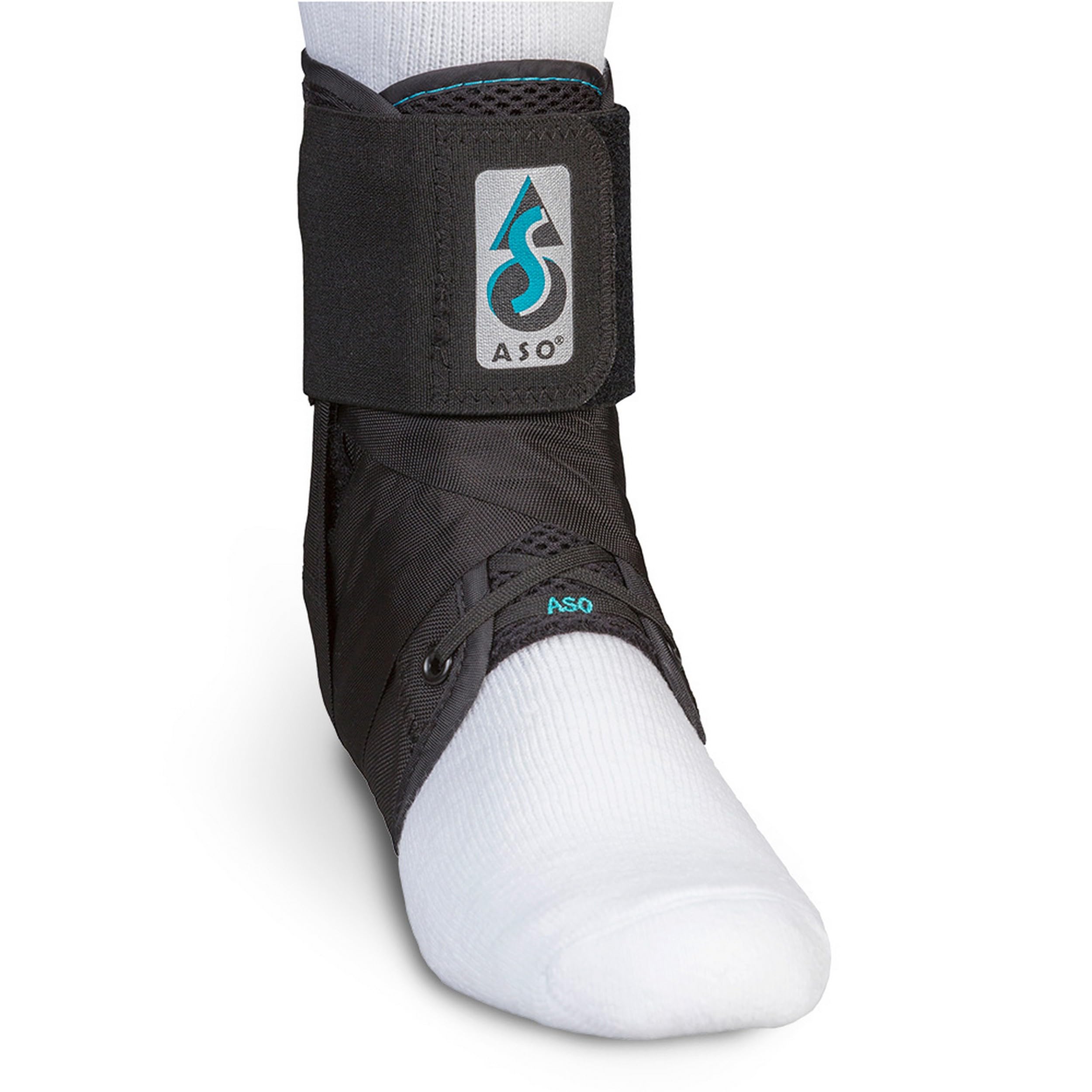
The Med Spec ASO is the brace that sports medicine doctors and athletic trainers consistently recommend, and for good reason: its lace-up base combined with independent figure-8 straps creates the compression pattern most effective for high ankle sprains. The figure-8 straps wrap around the distal tibiofibular joint, applying direct pressure that limits the painful external rotation and dorsiflexion that aggravate syndesmosis tears. The CoolFlex tongue padding and nylon body resist stretch over months of daily use, so the support doesn’t degrade after the first few weeks of recovery.
Customer feedback confirms its reputation — users report that the brace provides enough stabilization to walk comfortably during grade 2 sprain recovery while still allowing natural foot bend during the gait cycle. The bilateral design fits either foot, and the sizing aligns well with standard shoe measurements (size small for men’s 9). The only tradeoff is that the lace-up system requires some dexterity to tension evenly, and you’ll need to wear it with athletic shoes — slip-ons won’t accommodate the bulk.
For anyone recovering from a high ankle sprain who wants the same brace trusted by orthopedic surgeons and physical therapists, the ASO is the safest bet. It’s not the cheapest option, but the construction quality and stabilization return justify the investment for mid- to late-stage recovery and ongoing prevention.
Why it’s great
- Figure-8 straps directly counter syndesmosis separation
- CoolFlex padding prevents irritation during all-day wear
- Lightweight enough to fit inside most athletic shoes
Good to know
- Does not fit in slip-on shoes
- Lace-up system requires practice for even tension
2. Ossur FormFit Ankle Brace

Ossur is a name that commands respect in the orthotics world, and the FormFit lives up to that reputation with a design that pairs a form-fitting woven body with figure-8 strapping for inversion and eversion control. This brace is engineered specifically for athletes — basketball players in particular report that it eliminates ankle sprains entirely over years of use, with the figure-8 straps locking the syndesmosis without cutting off circulation. The lightweight construction weighs just over 7 ounces, making it one of the least bulky options for high ankle sprain support.
Long-term durability is the standout here: multiple users report the brace lasting 3 to 4 years with semi-annual washing, which is exceptional for a product in this category. The low profile fits inside most basketball shoes, though you may need to go up half a size. The lace-up closure feels similar to lacing a boot, providing a secure, customizable fit that contours to swelling changes during recovery.
For competitive athletes who need a brace that can survive a full season of high-intensity pivoting while preventing re-injury, the FormFit is the clear choice. It occupies the top tier alongside the ASO but differentiates itself through lighter materials and a more flexible fit profile.
Why it’s great
- Proven 3-4 year durability with regular use
- Excellent breathability and odor control
- Low profile fits most basketball and work boots
Good to know
- Requires 0.5-1 shoe size increase for athletic shoes
- May not fit narrow, low-profile footwear
3. Ultra 360 Lace Up Ankle Brace
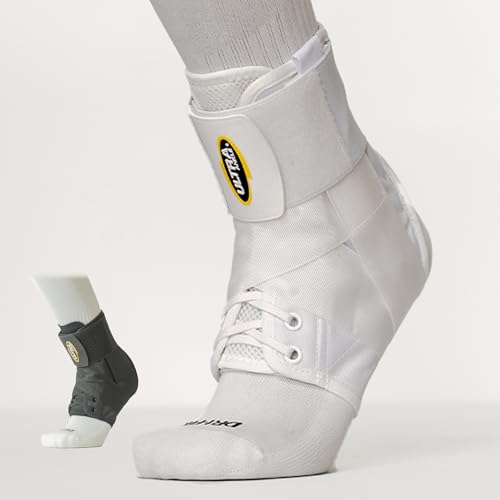
The Ultra 360 replicates the taping pattern that athletic trainers apply before games, using a full lace-up chassis combined with adjustable figure-8 straps that target the medial and lateral ankle. This dual-system approach is precisely what a high ankle sprain needs — the laces control circumferential compression while the figure-8 straps directly stabilize the syndesmosis against external rotation. The slim, breathable construction weighs only 60 grams, making it one of the lightest high-support braces on the market.
Volleyball players and runners praise this brace for preventing severe sprains during dynamic lateral movement. The lace-up system requires some fine-tuning — too tight and it compresses the foot arch, too loose and the stabilization drops off. But once you find the sweet spot, it holds securely through full matches. The low profile fits inside cleats and boots without adding noticeable bulk.
For multi-sport athletes who need one brace that transitions between volleyball, basketball, and running without feeling like a clunky orthopedic device, the Ultra 360 is an excellent mid-range option that punches above its price tier in stabilization performance.
Why it’s great
- Mimics professional athletic taping pattern
- Ultra-lightweight at 60 grams
- Fits inside cleats and boots
Good to know
- Comfort sweet spot requires careful lace adjustment
- Not designed for severe or post-surgical instability
4. Velpeau Ankle Stabilizer Brace
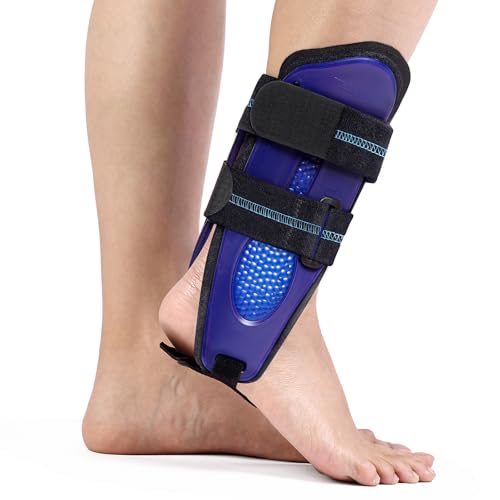
Velpeau’s stirrup-style brace uses bi-injection technology to create plastic splints that are semi-rigid yet feel soft against the skin, thanks to gel pads that cushion the medial and lateral malleoli. This design allows the brace to resist inversion without directly compressing the bony ankle protrusions — a key feature when the syndesmosis needs protection but the malleoli are already tender from the initial injury. The brace works for both feet and includes multiple pad options (foam or gel versions) so you can customize the compression profile.
Customers report that this brace effectively prevents side-to-side movement while allowing a normal walking stride, which is exactly the balance you need during mid-recovery from a grade 1 or 2 high ankle sprain. The main drawback is bulk — the splints and multiple straps create a noticeably thick profile that doesn’t fit well inside standard shoes. Users with thicker ankles or larger calves may also struggle with the top strap’s fixed pin placement, which limits adjustability.
For the price — sitting firmly in the mid-range — the Velpeau delivers exceptional value if you’re willing to wear it with Crocs, sandals, or wide-fitting shoes. It’s a strong choice for home recovery and non-athletic daily wear.
Why it’s great
- Gel-padded splints prevent malleolus irritation
- Works for both left and right feet
- Multiple pad versions for customizable compression
Good to know
- Bulky design doesn’t fit standard shoes well
- Top strap pin limits calf size adjustment
5. ZOELION Ankle Brace
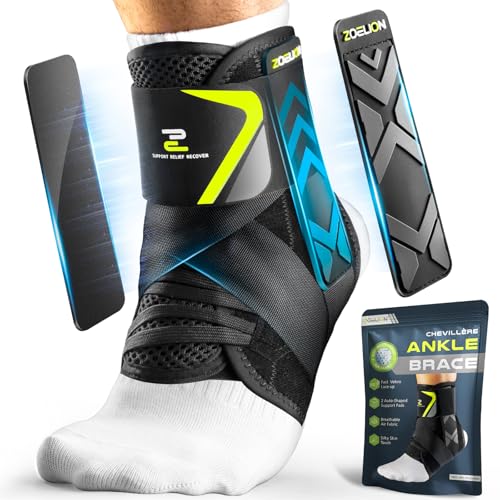
ZOELION’s brace differentiates itself with what they call Nu-Form Auto-adaptive Stabilization — side pads that mold to the ankle’s contours without compressing the malleoli, then self-adjust as swelling changes throughout the day. This is particularly relevant for high ankle sprains because syndesmosis injuries often cause variable swelling patterns that shift the brace’s fit. The triple-lock system combines an inner ankle wrap, figure-8 stabilizing straps, and a wide top closure to distribute pressure evenly across the distal tibia and fibula.
Customer reviews highlight the brace’s slim build — it’s one of the few high-support braces that actually fits inside regular footwear without forcing you to size up. The hook-and-loop quick lace system has been tested for 3,000 cycles, so the adhesive holds up through daily wear. The main complaint is that while the support is good for moderate instability, it doesn’t provide the rigid locking that a severe syndesmosis tear requires.
For active individuals with a grade 1 or mild grade 2 high ankle sprain who need a brace that disappears under pants and slides into sneakers, the ZOELION offers a compelling balance of mobility and stabilization at a mid-range price point.
Why it’s great
- Self-adjusting pads accommodate swelling changes
- Slim profile fits in most standard shoes
- Quick-lace system tested for long-term durability
Good to know
- Not rigid enough for severe syndesmosis tears
- Support is ‘good but not great’ per some users
6. AGPTEK Ankle Brace
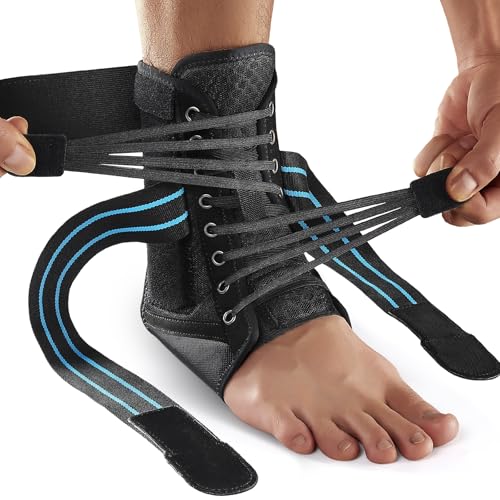
AGPTEK packs an impressive amount of technology into a entry-level price point: reinforced dual side stabilizers, X-cross compression straps, and a top wrap that together deliver 360-degree support around the ankle. The removable lateral splints let you dial the stabilization level up for rehab or down for daily activity, which is useful during the phased recovery of a high ankle sprain. The honeycomb ventilation zones and open heel design prevent heat buildup during extended wear.
Customer feedback is remarkably strong for a budget option — users consistently say this brace outperforms the ones provided by their orthopedic doctors. The medium size fits women’s size 10W, and the quick-lace system takes about a second to secure. Durability holds up well at two months of daily use. The main tradeoff is that the overall build feels less premium than the ASO or Ossur, and the stabilizers are thinner and less rigid than what you’d get at a higher price point.
For anyone on a tight budget who still needs real stabilization — not just compression — the AGPTEK is the best entry-level option for a high ankle sprain. It won’t survive three seasons of basketball, but it’s more than capable for recovery use and moderate athletic activity.
Why it’s great
- Outperforms many doctor-provided braces
- Removable splints allow progression through recovery
- Breathable construction with honeycomb ventilation
Good to know
- Stabilizers are less rigid than premium models
- Long-term durability still unproven
7. Swede-O Ankle Lok
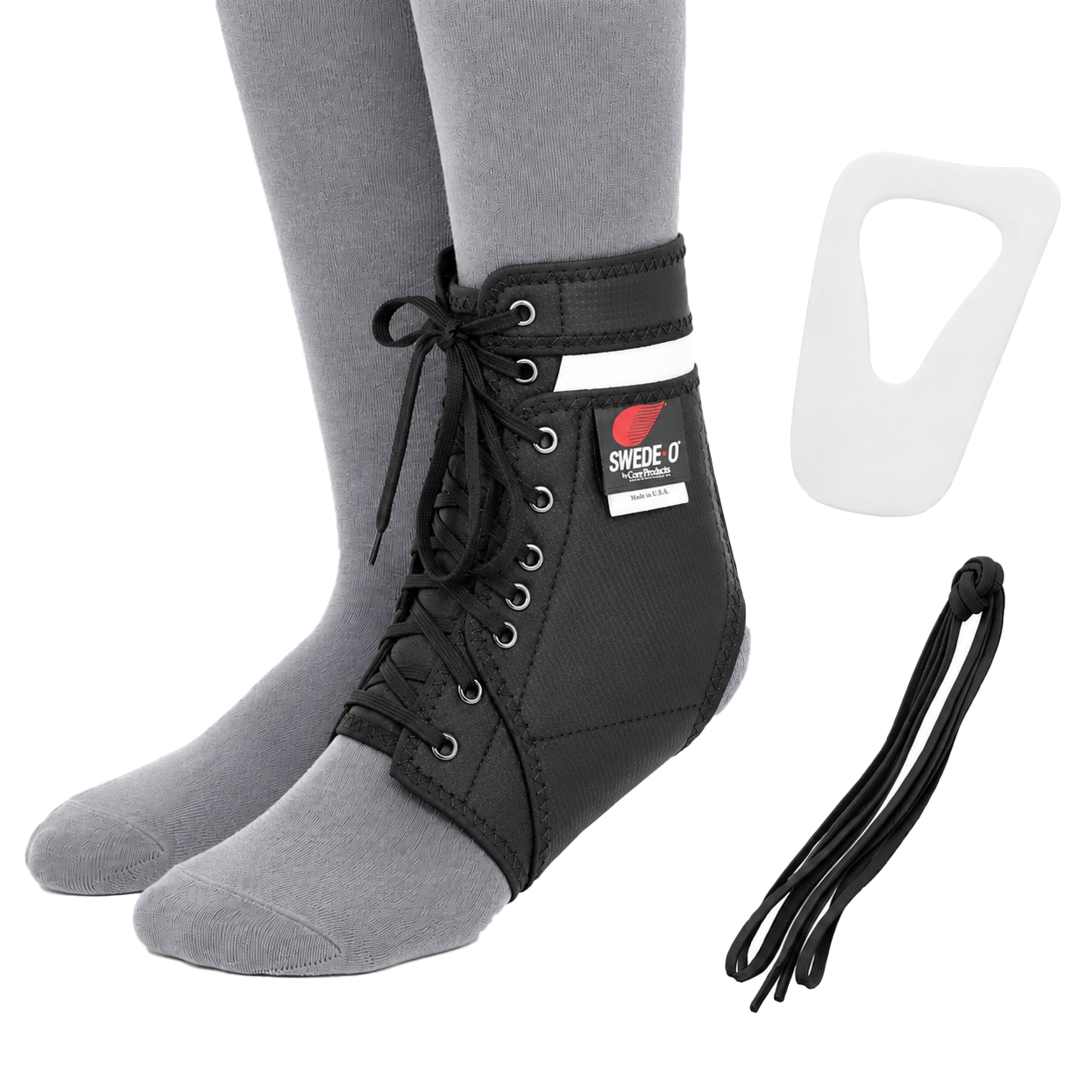
The Swede-O Ankle Lok is a straightforward, no-nonsense lace-up brace that has been on the market for two decades because the core design works. It features removable side stabilizers that lock the ankle in a protected position, combined with an exclusive lacing system that keeps the brace tight and secure even during dynamic movement. The full elastic back reduces blistering risk — a welcome feature for athletes who wear these through long practices.
Long-time users swear by this brace for severe ankle instability and arthritis-related pain. However, the design shows its age: the heavy cloth bottom prevents comfortable use with regular shoes, and users with arthritis or dexterity issues report that lacing takes up to 30 minutes. Some customers have also experienced durability issues, with the brace breaking after a few months of use. The bilateral design fits either foot, which adds convenience.
For those who prefer a traditional lace-up brace with proven stabilization and don’t mind the bulk or learning curve, the Swede-O is a functional choice at an entry-level price. But given the availability of more modern and durable options in the same budget range, it should be a secondary consideration for most high ankle sprain recovery needs.
Why it’s great
- Proven lace-up stabilization that locks the ankle
- Removable side stays for adjustable support
- Made in the USA
Good to know
- Difficult to put on, especially with dexterity issues
- Heavy cloth bottom doesn’t fit regular shoes well
- Some reports of durability concerns
FAQ
Can I wear a high ankle sprain brace with regular shoes?
How long should I wear a brace for a high ankle sprain each day?
Final Thoughts: The Verdict
For most users, the brace for high ankle sprain winner is the Med Spec ASO Ankle Stabilizer because its independent figure-8 straps and CoolFlex padding deliver the precise syndesmosis compression needed for recovery without sacrificing comfort. If you want a lighter, more flexible fit for competitive sports, grab the Ossur FormFit. And for an affordable daily-wear option that still offers removable splints and solid stabilization, nothing beats the AGPTEK Ankle Brace.