
Our readers keep the lights on and the weekend projects moving. As an Amazon Associate, I earn from qualifying purchases.
A deep lumbar curve pulls your pelvis forward, jams your lower back facet joints, and turns every sit-stand transition into a wince. Standard back belts just squeeze the belly—they don’t address the anterior tilt that defines lordosis. The right brace uses rigid uprights or an adjustable arch plate to mechanically rotate the pelvis posterior, flattening the curve and unloading the compressed discs.
I’m Rikta — the co-founder and writer behind FitlyFast. I’ve spent countless hours dissecting orthopedic brace specs, studying clinical biomechanics for postural correction, and comparing the real-world compression points across dozens of lordosis-specific models to isolate what actually counters excessive lumbar extension.
Whether your lordosis stems from prolonged sitting, weak core musculature, or a congenital spinal condition, selecting the correct brace for lumbar lordosis means matching the bracing rigidity to your activity level and curve severity.
How To Choose The Best Brace For Lumbar Lordosis
Not every back brace can force the pelvis into a posterior tilt. Look past the generic “lower back support” label and focus on the mechanical components that actually resist excessive arching. The three specs below matter more than brand name or strap count.
Stay Configuration and Rigidity
Lordosis demands stays that run vertically along the paraspinal muscles and press firmly against the sacrum. Four steel springs or memory-aluminum stabilizers distribute force evenly and prevent the brace from buckling when you bend forward. Plastic or foam-backed stays feel comfortable but lack the lever arm needed to rotate the pelvis.
Adjustable Arch Plate vs. Fixed Lumbar Pad
A removable foam pad offers mild cushioning, but an adjustable bionic decompression plate lets you dial in the exact angle of lumbar extension restriction. Three-position arch plates—flat for daily wear, moderate for work tasks, and steep for active correction sessions—give you control over how much of your lordotic curve is blocked.
Pulley or Dual-Tab Tensioning System
Standard Velcro straps pull the brace tight around the waist, but they rarely create differential tension between the upper and lower sections of the brace. A 4:1 pulley system or independent top/bottom tabs let you cinch the sacral base tight while leaving the upper abdomen looser, which mimics the biomechanics of a posterior pelvic tilt more accurately.
Quick Comparison
On smaller screens, swipe sideways to see the full table.
| Model | Category | Best For | Key Spec | Amazon |
|---|---|---|---|---|
| FEATOL Lower Back Brace | Premium Stays | All-day wear with 360° reinforcement | 5 reinforced stays (3 aluminum + 2 support plates) | Amazon |
| CYBERTECH LSO Back Brace | Max Decompression | Severe lordosis & post-surgery stabilization | Adjustable bionic arch plate (26°) + pulley system | Amazon |
| ASPEN Quikdraw PRO | Medical Grade | Clinical-level L1-L5 stabilization | Dual pull-tab pulley, inelastic nylon shell | Amazon |
| NEENCA Bionic Support Brace | Bionic Panel | Herniated disc & sciatica with lordosis | 2 metal lumbar panels + 4 memory-aluminum stays | Amazon |
| ASPEN Lumbar Support Brace | Pulley Precision | Acute flare-ups & localized compression | Patented 4:1 independent top/bottom tightening | Amazon |
| NEENCA Lower Back Brace (Medical) | Slim Profile | Low-profile daily wear under clothing | Medical-grade polyester/spandex, dual elastic straps | Amazon |
| MUELLER Lumbar Back Brace | Budget Entry | Driving & light lifting with removable pad | 4 steel springs, breathable mesh, odor-treated | Amazon |
In‑Depth Reviews
1. FEATOL Lower Back Brace with 5 Reinforced Stays
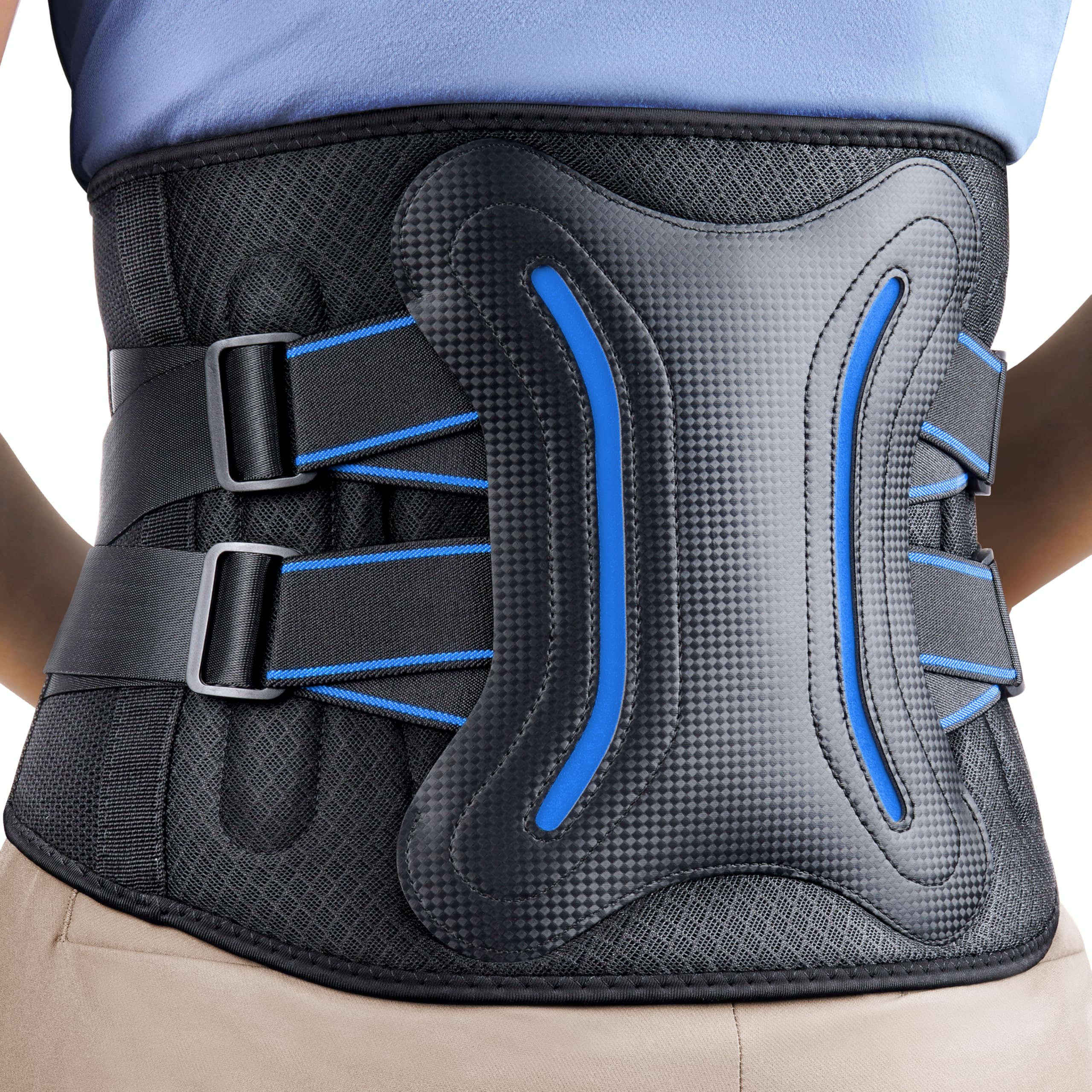
Five reinforced stays—three memory-aluminum uprights flanked by two support plates—create a rigid 360° shell that mechanically resists the anterior pelvic tilt driving your lordotic curve. The stays run the full length of the brace, so when you cinch the dual-tension straps, the entire lumbar spine is locked into a neutral position rather than just compressed at the belt line. Users recovering from severe spinal stenosis reported that the stiffness allowed them to walk upright without the typical end-of-day ache.
The no-roll design keeps the top edge from folding over when you sit or bend, a failure point common in softer braces. Breathable mesh fabric prevents overheating during extended wear, and the elastic material conforms to the waist without digging into the iliac crest. One size L user in their mid-70s described feeling capable of yardwork for two-plus hours without pain.
On the downside, the thick stays add noticeable bulk under form-fitting clothing—expect a visible outline through a thin shirt. The initial Velcro coverings on the tensioning straps require removal before first use, a step not clearly indicated in the packaging. For those who prioritize curve correction over stealth, this is the most mechanically complete option in the mid-range bracket.
Why it’s great
- 5-stay configuration blocks both lumbar extension and lateral bending
- No-roll top edge stays put during sitting and bending tasks
- Breathable mesh avoids sweat accumulation over long wearing periods
Good to know
- Visible bulge under tight clothing due to thick stays
- Missing clear instructions about removing Velcro strap covers
2. CYBERTECH LSO Back Brace with Maximum Decompression Plate

The bionic decompression plate is the standout feature here—a rigid arch that you can set to three positions: flat for general support, moderate for active work, and a steep 26° angle for active lumbar extension stretching. That adjustable arch lets you progressively reduce the lordotic curve over the course of a recovery program rather than relying on a static foam pad. The dual pulley system applies targeted compression without requiring strong hand grip, making this accessible for seniors or post-surgery patients with limited upper body strength.
This brace stabilizes the L1 through S1 vertebrae, essentially acting as an external skeleton for the lower spine. One user with a lower-back hernia that caused muscle spasms during physical therapy reported that the brace immobilized about 80% of their bending motion, allowing them to function during daily tasks. The included removable abdominal extension piece and soft plastic plate add extra support for post-partum or obese users who need anterior stabilization to balance the posterior arch pressure.
The main trade-off is complexity. Sizing is based on belly circumference at the navel, and the arch plate adjustment requires reading the manual carefully. A 14-year-old with CRMO was able to put it on independently, but some users found the process fiddly at first. The brace is also the bulkiest on this list—it’s not designed for concealment.
Why it’s great
- Three-position arch plate allows progressive lordosis correction
- Pulley system delivers strong compression with minimal hand strength needed
- L1-S1 stabilization suitable for post-surgery recovery
Good to know
- Bulky profile not suitable for wear under normal clothing
- Arch plate adjustment has a learning curve
3. ASPEN Quikdraw PRO Back Brace

Aspen’s Quikdraw PRO is the brace your physical therapist would recommend if they had to pick one for L1-L5 stabilization. The inelastic nylon shell does not stretch at all—every bit of tension translates directly to compression against the lumbar spine rather than being absorbed by fabric give. Dual pull tabs let you tighten the top and bottom halves independently, so you can lock down the sacral base hard while keeping the upper abdomen less restricted. This differential tension is critical for inducing a posterior pelvic tilt in lordosis patients because it pulls the tailbone forward without squeezing the ribcage.
Users consistently mention the durability as a decade-long companion. One reviewer owned the same brace for ten years and reported it still functioned perfectly. The stiff rear plate runs high enough to support the mid-back, which helps prevent the upper spine from compensating when the lower curve is restricted. Medical-grade, latex-safe construction also means it won’t trigger allergic reactions during extended wear.
The main drawback is the zero-give material, which makes deep bending or athletic movement feel restrictive. It is built for stability, not flexibility. The sizing runs small—measure at the navel and size up if you are between sizes. Some users found the pulley strings needed careful handling to avoid fraying over time.
Why it’s great
- Zero-stretch inelastic shell transfers all tension to spinal compression
- Independent top/bottom tabs allow precise posterior tilt targeting
- Decade-long build quality reported by long-term users
Good to know
- Sizing runs small; measure carefully and consider sizing up
- Restrictive material limits athletic bending movements
4. NEENCA Back Brace with Bionic Support System
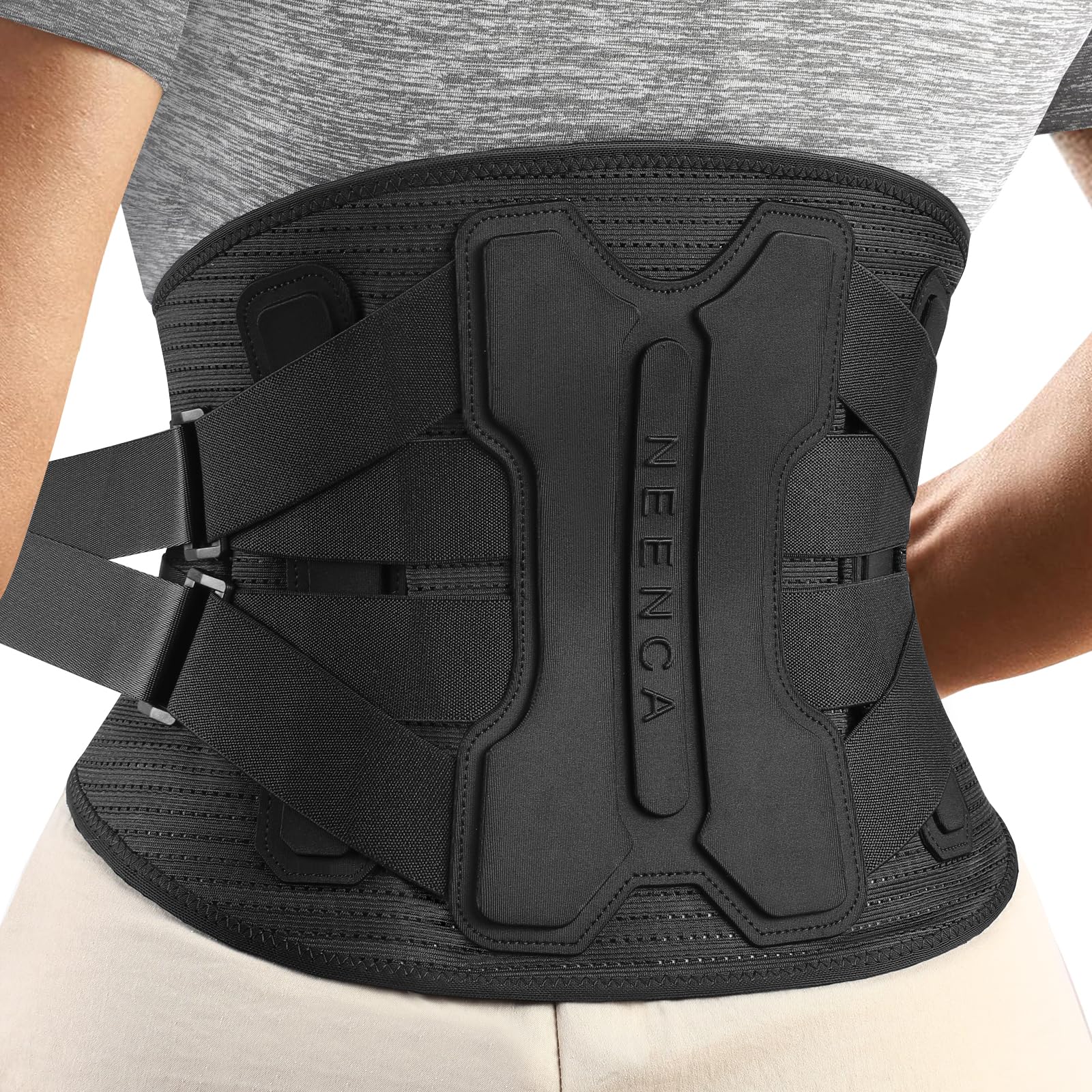
NEENCA’s bionic support system combines two rigid metal lumbar panels with four memory-aluminum stabilizers to create a cage that limits both forward flexion and hyperextension. For lordosis, the key is the lower metal panel—it sits directly over the sacrum and prevents the pelvis from tilting forward when you stand or walk. The eight adjustable straps let you customize tension at multiple points around the waist, which helps distribute compression evenly rather than concentrating it at a single belt line.
The 3D hollow knit fabric and velvet inner layer address a pain point many rigid braces ignore—skin irritation. Users with scoliosis and bulging discs reported immediate pain relief and the ability to stand straight after wearing it for short periods. The breathable construction also prevents the overheating that typically plagues neoprene-based braces during all-day wear.
A significant caveat is that the metal stays are inexpensive steel, not the advertised “memory-aluminum.” One buyer tested them with a magnet and confirmed the fraud. The brace still works mechanically, but the material mismatch undermines the premium positioning. Sizing runs small; multiple reviews recommend ordering two sizes larger than your waist measurement suggests.
Why it’s great
- Dual metal panels + four stays provide substantial curve-blocking rigidity
- Eight independent straps allow fine-tuned compression distribution
- Breathable 3D knit and velvet lining prevent skin irritation and sweat
Good to know
- Stays are steel, not memory-aluminum as advertised
- Sizing runs very small—order two sizes up from measured waist
5. ASPEN Lumbar Support Back Brace (Patented Pulley)

Aspen’s patented 4:1 pulley system is the mechanical highlight here—it multiplies your pulling force four times so you can achieve high compression without being strong. The dual-tab design lets you independently tighten the top and bottom halves of the brace, which matters for lordosis because you need the bottom section cinched harder to pull the sacrum forward. The inelastic material acts as an external skeleton, meaning the brace does not stretch under load; every pull translates to spinal stabilization rather than fabric deformation.
This is a medical-grade option used in trauma centers and rehab facilities, not a consumer gadget. Users with acute lower-back flare-ups and muscle spasms reported that the brace enabled them to walk and sit comfortably when nothing else worked. The low-profile nylon construction is breathable and fits under clothing more easily than the reinforced stay models.
The inelastic design has no give, so it is not suitable for sports or dynamic movement—think of it as a stabilization tool for recovery or light daily activity. Sizing runs small; the manufacturer recommends measuring at the navel and sizing up if you are between sizes. Velcro care is also important—fasten the sides together after each use to prevent lint buildup that weakens the grip.
Why it’s great
- 4:1 mechanical advantage pulley requires minimal hand strength
- Independent top/bottom adjustment targets sacral tilt effectively
- Medical-grade nylon is breathable and low-profile
Good to know
- Zero inelastic construction limits movement; not for athletics
- Sizing runs small; Velcro requires care to maintain grip
6. NEENCA Lower Back Brace (Medical Grade)

This NEENCA brace strips away the bulky metal panels in favor of a slim, medical-grade polyester-spandex shell that fits discreetly under clothing. While it lacks the rigid stays needed for severe lordosis correction, the multi-point support design still provides gentle lumbar compression that reminds you to maintain neutral spine posture. The dual elastic Velcro straps allow a snug fit without digging into the ribs, and the breathable mesh prevents overheating during office sitting or light errands.
Users with sciatica and general lower back pain reported that the brace stayed in place during daily movement and did not roll up at the front. The curvature support piece at the back keeps the spine straight when lying down or sleeping, which can help prevent night-time aggravation of lordotic strain. One reviewer with herniation and bone-on-bone issues noted that the brace significantly improved quality of life by providing stability during bed rest.
The elastic material cannot generate the same mechanical leverage as the steel-stay models. It is effective for mild to moderate lordosis awareness but will not force a posterior tilt in severe curves. The sizing guide requires waist measurement at the navel, and the brace runs small for larger waist circumferences.
Why it’s great
- Ultra-slim design fits under normal clothing without visible bulk
- Breathable mesh and spandex prevent overheating
- Curvature support piece helps maintain spine alignment during sleep
Good to know
- Elastic-only construction lacks rigid stays for severe curve correction
- Sizing runs small for larger waist measurements
7. MUELLER Sports Medicine Lumbar Back Brace with Removable Pad
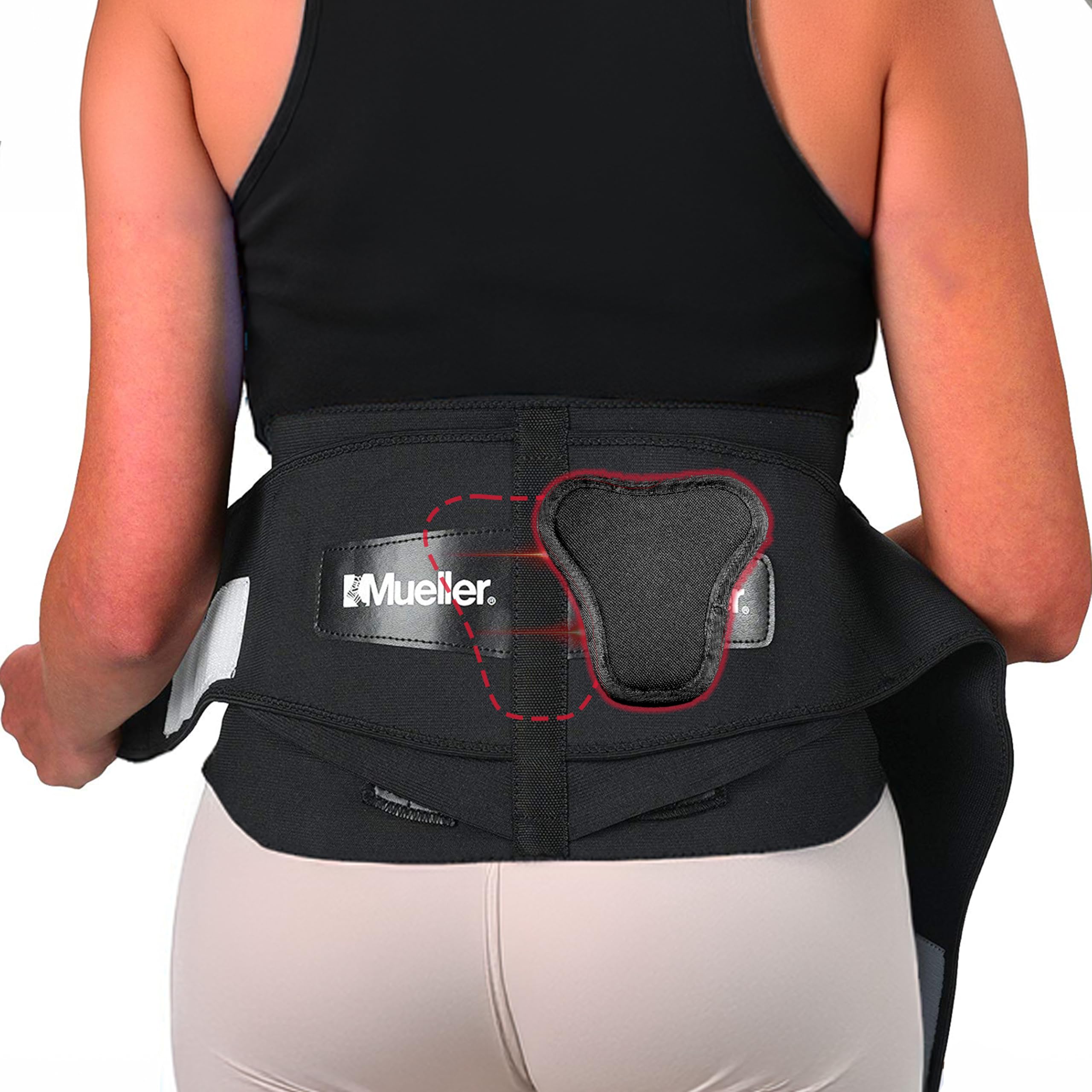
Mueller’s entry-level lumbar brace uses four embedded steel springs to deliver firm compression without the full cage of a medical-grade LSO. The removable lumbar pad provides mild posterior support, but it is a soft pad rather than a rigid plate, so it cushions the curve rather than actively correcting it. This makes the brace better suited for pain relief during driving or light lifting than for structured lordosis rehabilitation.
The breathable mesh fabric is treated to resist odor, a practical detail for users who wear the brace during work shifts or golf. One reviewer with sciatica reported that the brace effectively alleviated driving pain, especially when using two pads side-by-side. The adjustable closure system uses four-way Velcro straps that allow a custom fit across waist sizes from 22 to 70 inches depending on the size option.
Users who need serious curve reduction will exceed this brace’s capabilities. The steel springs provide good vertical stability but cannot induce a posterior pelvic tilt on their own. Prolonged constant wear can contribute to muscle atrophy—Mueller’s own reviewers warned against wearing it 24/7.
Why it’s great
- Four steel springs deliver targeted vertical compression
- Breathable, odor-treated mesh comfortable for extended daily wear
- Ample size range accommodates 22–70 inch waists
Good to know
- Removable foam pad offers cushioning, not active curve correction
- Constant wear may lead to core muscle weakening over time
FAQ
Can a brace actually reduce my lumbar lordosis curve over time?
Should I wear the brace while sleeping if I have lordosis?
How tight should I pull the straps for lordosis correction?
Can I use a lordosis brace if I have a herniated disc?
Final Thoughts: The Verdict
For most users, the brace for lumbar lordosis winner is the FEATOL Lower Back Brace because its five reinforced stays and no-roll design provide the mechanical leverage needed to block excessive arching while remaining comfortable for all-day wear. If you need maximum decompression with an adjustable arch plate, grab the CYBERTECH LSO Back Brace. And for a clinical-grade pulley system that lets you fine-tune sacral tilt independently, nothing beats the ASPEN Quikdraw PRO.