
Our readers keep the lights on and the weekend projects moving. As an Amazon Associate, I earn from qualifying purchases.
A midfoot sprain is a specific injury — it strikes the cluster of small bones and ligaments across the top of your foot, not the ankle itself. The wrong brace can bypass those injured structures entirely, leaving the Lisfranc ligament unprotected and prolonging recovery. Finding support that locks the midfoot while allowing the ankle and toes to move naturally is the difference between healing and re-injury.
I’m Rikta — the co-founder and writer behind FitlyFast. I’ve spent countless hours analyzing hundreds of foot and ankle braces, cross-referencing medical geometry, strap configurations, and real-user gait feedback to isolate the designs that genuinely stabilize the midfoot complex without creating new pressure points.
This guide breaks down the seven most effective supports currently available, evaluating each for its ability to control midfoot collapse, absorb ground reaction forces, and maintain a secure fit inside footwear. Whether you are recovering from a simple sprain or managing chronic instability, finding the right brace for midfoot sprain makes a measurable difference in how quickly and safely you return to full weight-bearing activity.
How To Choose The Best Brace For Midfoot Sprain
Midfoot sprains affect the Lisfranc ligament complex — a region that bears the brunt of your body weight with every step. A brace that only wraps the ankle joint fails to address the real injury site. You need a design with specific stabilizers and a strap path that crosses the tarsal and metatarsal bones.
Stabilizer Type and Rigidity
Look for semi-rigid stays or molded shells that sit across the dorsum of the foot. Removable splints offer flexibility — you can dial in more rigidity during early recovery and reduce support as the ligament heals. Stirrup designs with medial and lateral struts provide the most reliable roll control for the midfoot.
Strap Geometry and Adjustability
Figure-eight straps or independent cross-straps that wrap the midfoot allow you to customize compression across the injured area. Single-direction straps often pull the foot into eversion or inversion; a multi-strap system lets you balance pressure without distorting the natural foot position.
Footwear Compatibility
A thick, bulky brace that doesn’t fit inside your shoe defeats its purpose. Measure the brace profile against your daily footwear — midfoot sprain recovery usually requires continued walking and standing, so a low-profile design that slides into a standard shoe without crowding the toe box or heel counter is essential.
Closure System and Durability
Hook-and-loop closures are standard, but the strap width and material quality vary widely. Wide Velcro straps distribute pressure evenly and resist peel-off during movement. Check reviews for reports of strap fraying, buckle breakage, or splints poking through fabric — these failures render the brace unusable and force replacement mid-recovery.
Quick Comparison
On smaller screens, swipe sideways to see the full table.
| Model | Category | Best For | Key Spec | Amazon |
|---|---|---|---|---|
| Fitomo Triple-Lock | Mid-Range | Versatile active recovery | Removable side stabilizers + figure-8 straps | Amazon |
| DonJoy POD | Premium | High-impact sports return | Molded TPU shell, EVA underlayer | Amazon |
| Ultra High-5 Rigid | Premium | Daily stability in work boots | Rigid molded plastic frame | Amazon |
| McDavid Phantom | Mid-Range | Low-profile sport performance | Lace-free design, non-slip straps | Amazon |
| Velpeau Stirrup | Mid-Range | Grade 1-2 ligament injury | Bi-injection splint with gel pads | Amazon |
| DRwelland Stabilizer | Budget | Budget-friendly everyday use | Neoprene construction, adjustable straps | Amazon |
| JOMECA AFO Drop Foot | Budget | Drop foot correction | Arch bracket + forefoot support plate | Amazon |
In‑Depth Reviews
1. Fitomo Triple-Lock Ankle Brace
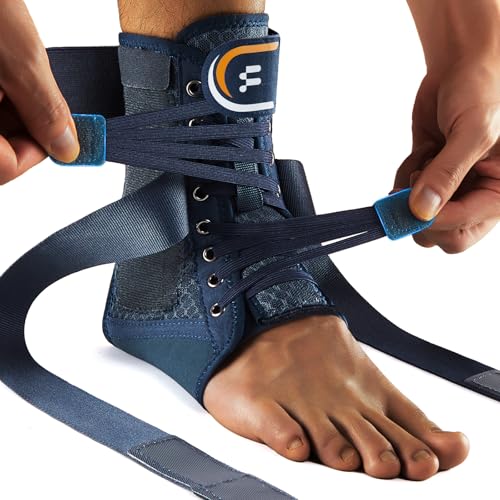
The Fitomo Triple-Lock delivers exactly what a midfoot sprain needs: targeted compression across the dorsal arch through its figure-8 strap configuration, plus removable side stabilizers that you can extract once the Lisfranc ligament regains tensile strength. The dual stabilizer slots sit high enough to control midfoot roll without digging into the malleoli. Users recovering from post-ORIF surgery and stroke-related foot drop both report confident walking within days, which speaks to the brace’s ability to lock the foot’s transverse arch.
Breathable polyester-nylon blend fabric resists heat buildup during extended wear, and the low-profile build slides into most athletic sneakers without forcing a shoe size change. The hook-and-loop straps use a wide Velcro panel that holds fast even during lateral cuts in basketball or volleyball. Multiple reviewers note that the brace stays put for six-plus months of daily use without strap fraying or splint migration — a durability benchmark that separates it from cheaper lace-up designs that lose tension after two weeks.
The one common complaint involves sizing: the medium fits a typical men’s 8-10, but reviewers with narrow ankles report a slightly loose heel pocket. Using the included extra strap anchor helps tighten the fit. The absence of a two-pack option also disappoints some buyers, but the single-brace quality justifies the investment for anyone needing a reliable midfoot stabilizer for active sports or full-time work.
Why it’s great
- Figure-8 strap path directly compresses the midfoot arch
- Removable stabilizers allow progression from rigid to flexible support
- Fits inside standard athletic shoes without bulk
- FSA/HSA eligible for medical spending accounts
Good to know
- May run large for narrow ankles
- Only sold as a single brace
2. DonJoy Performance POD Ankle Brace
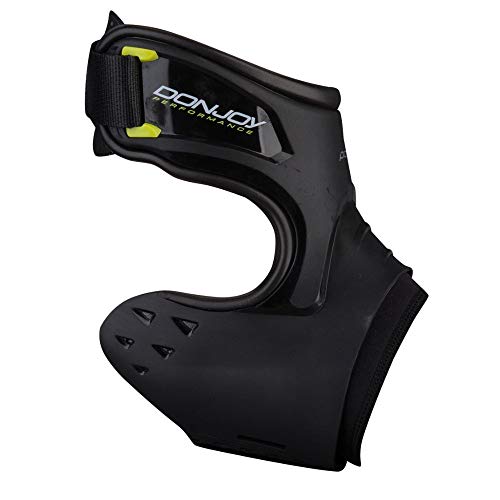
The DonJoy POD represents a step up in material engineering. Instead of fabric stays, it uses a molded TPU heel cup that wraps around the calcaneus and extends along both sides of the midfoot. This semi-rigid shell engages specifically during inversion or eversion moments — what DonJoy calls On-Demand technology — making it ideal for athletes returning to football, soccer, or basketball after a midfoot ligament strain. The EVA underlayer provides enough cushion that players can cut and pivot without the rigid frame digging into the bony prominences of the foot.
Reviewers consistently highlight that this brace allows natural plantarflexion and dorsiflexion while blocking the rotational forces that re-injure the midfoot. One user with a high instep reports that the shell requires a slight break-in period for a custom-like fit, but confirms the support eliminated the rolling sensation that plagued them for months. The low-profile silhouette fits into cleated footwear more easily than traditional lace-up braces, though a few users note it takes about three minutes to seat the heel properly inside tight soccer cleats.
The POD is not designed for daily casual wear — its athletic focus means the shell can feel rigid during extended standing or walking on pavement. Check the sizing chart carefully, as a poor match between ankle circumference and shell depth can cause pressure points near the lateral malleolus. For sport-specific protection of the midfoot during high-velocity lateral movement, this brace outperforms soft stabilizers by a wide margin.
Why it’s great
- TPU shell dynamically blocks inversion without restricting range of motion
- Comfortable EVA padding for high-impact sports
- Fits in cleats and court shoes with minimal bulk
Good to know
- Limited to right or left foot orientation
- Not optimal for all-day standing or walking
3. Ultra High-5 Rigid Ankle Brace
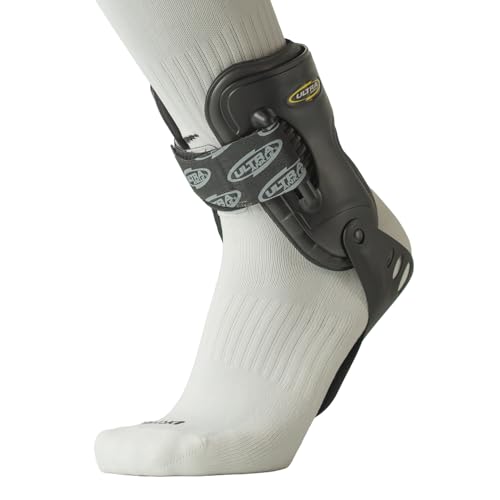
The Ultra High-5 targets a specific demographic: adults who need midfoot and subtalar control inside work boots or hiking boots for eight-plus hours a day. Its rigid plastic frame wraps the heel and extends along both sides of the foot, preventing the midfoot collapse that often accompanies standing on uneven surfaces. A single-strap closure simplifies donning and doffing — no complex lace routing or multiple tabs to manage during a work shift. The frame includes a heat-moldable feature that lets you customize the fit by warming the shell and pressing it against your foot.
Hikers who tested the brace on rocky terrain report zero ankle rolls during the break-in period, confirming that the rigid construction effectively locks the midfoot in neutral alignment. Users recovering from chronic ankle instability or post-fracture rehabilitation note that the brace prevented the giving-out sensation that had limited their walking distance. The low-profile frame slides into standard work boots without crowding the toe box, and the open heel design reduces blister risk compared to fully enclosed boots.
The rigid shell requires a deliberate break-in process — several users recommend wearing it for short intervals with doubled socks and using a heat gun on the plastic to fine-tune the contour around the malleoli. Without this custom fitting, the shell can cause pressure sores on the bony ankle protrusions. The High-5 is also not ideal for high-speed sports; its rigidity prioritizes stability over agility, making it a better fit for construction, trail hiking, and day-long standing than for basketball or soccer.
Why it’s great
- Rigid construction provides reliable midfoot locking during heavy use
- Heat-moldable frame allows custom contouring
- Designed to fit inside work and hiking boots
Good to know
- Requires break-in and custom molding for comfort
- Not suitable for high-agility sports
4. McDavid Phantom Ankle Brace
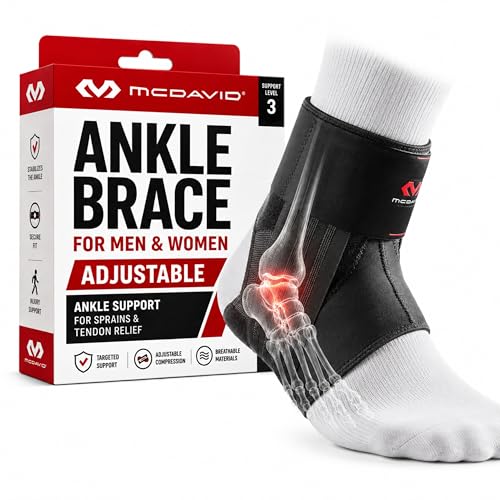
The McDavid Phantom employs a rear-entry design that eliminates the bulk of lace-up closures, making it an excellent option for athletes who need quick on-and-off access without sacrificing midfoot compression. The internal strapping system crosses the dorsal surface and wraps under the arch, generating a firm hold on the foot’s transverse arch. Reviewers with plantar fasciitis and tendon tears report that this brace reduces arch strain by supporting the medial longitudinal arch — a feature that also benefits midfoot sprain recovery by distributing weight away from the Lisfranc complex.
Its lightweight build (just 1.1 inches thick) fits seamlessly into standard court shoes and running sneakers, which is rare for a brace with internal stays. The non-slip straps maintain position during soccer matches and basketball games without constant adjustment. One soccer parent noted that the brace allowed their son to return to play after a Grade 2 sprain without any re-injury during the season, and the straps held firm through multiple games without losing grip.
Durability is the primary trade-off. Multiple reviews report that the internal plastic supports can crack after two to three months of heavy use, eventually poking through the fabric and requiring replacement. This makes the Phantom a better choice for moderate activity levels or shorter recovery windows rather than full-time daily wear. The sizing can also be touchy — users between sizes may find the heel pocket too loose, reducing midfoot control.
Why it’s great
- Rear-entry design makes application fast and easy
- Low-profile fits in most athletic shoes
- Arch support distributes weight away from midfoot
Good to know
- Internal stays may crack within months of heavy use
- Lace-free design limits custom tightness adjustments
5. Velpeau Stirrup Ankle Brace
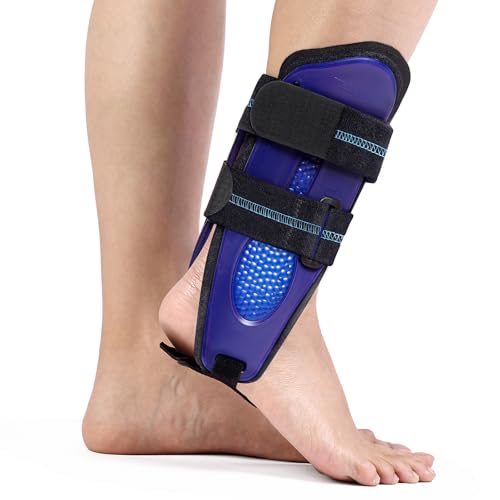
The Velpeau Stirrup Brace uses bi-injection technology to embed the medial and lateral malleoli in protective gel-lined shell holes — a design that prevents direct contact between the bone and the semi-rigid splint. This makes it significantly more comfortable for long-term wear than many stirrup competitors. The foam pad version uses breathable Modal fabric with a high-density sponge that isolates the skin from the plastic frame while quickly wicking moisture. Users with Grade 1 to 2 fibular ligament injuries report that the brace prevents side-to-side shifting without restricting forward motion, which aligns well with midfoot sprain recovery needs.
The brace converts between left and right feet by rotating the splint inserts, which adds versatility if you need to switch sides during recovery. Two large lateral straps with buckle closures distribute pressure evenly across the midfoot and lower shin, reducing the risk of strap migration. One user on vacation found it more comfortable than four other braces they owned for a shattered ankle, confirming that the gel padding and Modal lining reduce friction points effectively.
The bulk factor is the main consideration. The semi-rigid shell adds noticeable thickness that prevents normal shoe lacing — several users recommend pairing it with Crocs or looser footwear. The top strap includes a permanent pin that limits expansion for larger calves, which caused a poor fit for some buyers with thicker lower legs. If your footwear can accommodate the bulk, the Velpeau provides excellent midfoot control at a reasonable cost, but it is not a low-profile option for tight cleats or dress shoes.
Why it’s great
- Gel-lined shell holes prevent bone pressure points
- Reversible for left or right foot
- Breathable Modal fabric wicks moisture effectively
Good to know
- Bulky shell limits shoe compatibility
- Top strap not adjustable for thick calves
6. DRwelland Ankle Brace with Side Stabilizers
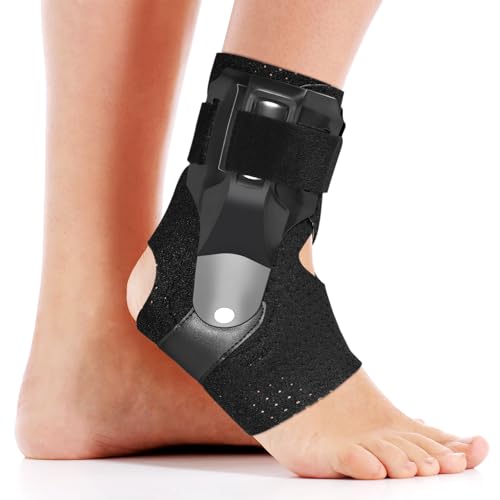
The DRwelland brace centers on comfort without sacrificing basic midfoot support. Its neoprene construction provides consistent compression that reduces swelling in the acute phase of a midfoot sprain, while the integrated side stabilizers add a layer of roll protection that compression sleeves alone cannot match. The adjustable straps across the top of the foot let you dial in the tightness around the Lisfranc area without cutting off circulation. This brace is light and flexible enough for sleep wear, which is valuable for nighttime swelling management.
The soft fabric wrap avoids seams along the heel, which one reviewer with plantar fasciitis noted reduced irritation compared to stitched braces. The stabilizers are thin enough to fit inside Hoka-style athletic shoes, making the brace practical for daily walking during recovery. Several users confirm that the brace solved chronic ankle rolling that had bothered them for months after a stroke or repeated sprains, and one physical therapist noted measurable gait improvement in their patient.
The plastic buckle that secures the top strap is the weak point. Multiple reviews report the buckle breaking after several weeks of use, which forces replacement. The neoprene material also retains more heat than breathable mesh alternatives, so extended wear in warm conditions can become sweaty. For low-impact daily use during early recovery where comfort is the priority, this brace works well — just be prepared for potential buckle failure within the first few months.
Why it’s great
- Soft neoprene is comfortable enough for sleep wear
- Side stabilizers provide real roll protection without bulk
- Fits comfortably inside athletic shoes
Good to know
- Plastic buckles prone to breaking under tension
- Neoprene traps heat during extended wear
7. JOMECA Drop Foot AFO Brace
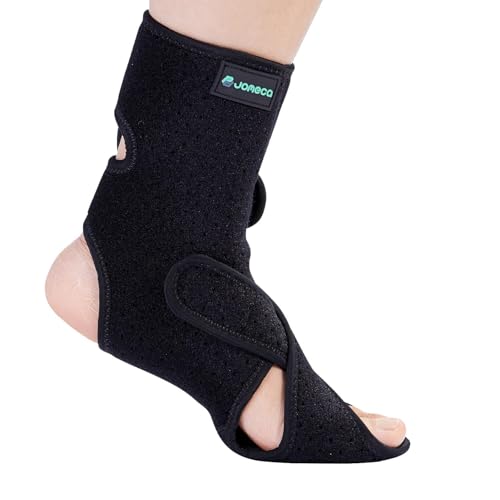
The JOMECA AFO brace takes a different approach to midfoot control by incorporating a forefoot support plate that works with cross-straps to correct foot drop and reduce instability in the lower limb. While its primary audience is individuals with neurological conditions such as MS, TBI, or post-stroke foot drop, the design’s arch bracket and forefoot plate can also benefit midfoot sprain patients who experience concurrent foot drop or severe dorsiflexion weakness. The open-heel and open-toe construction increase flexibility and breathability compared to full-foot orthoses.
Users with drop foot nerve pain report significant relief during sleep and walking, as the brace holds the foot in a neutral position that prevents the toe-dragging and midfoot collapse that aggravates Lisfranc injuries. The cross-strap system allows you to adjust varus and valgus alignment, which can help redistribute weight away from the injured midfoot structures. The perforated fabric and lightweight design make it one of the least restrictive AFO-style braces available for barefoot wear.
The brace does not pair well with standard footwear. The built-in thickness of the forefoot plate forces most users to size up in shoes, and some report pain when walking inside sneakers due to the plate pressing against the shoe’s upper. Users with very narrow feet also report a poor fit, with the brace gaping at the heel and requiring overtightening that cuts off circulation. This brace is best reserved for home, sleep, or barefoot use rather than daily walking or sports.
Why it’s great
- Forefoot plate and arch bracket correct foot drop and midfoot collapse
- Open-heel and toe design improves airflow and flexibility
- Effective for nighttime use to prevent plantarflexion contracture
Good to know
- Too thick for most standard shoes without sizing up
- Poor fit for very narrow or small feet
FAQ
Can a standard ankle brace help with a midfoot sprain?
How tight should I strap a midfoot brace during recovery?
Final Thoughts: The Verdict
For most users, the brace for midfoot sprain winner is the Fitomo Triple-Lock because its figure-8 strap system directly compresses the midfoot arch and its removable stabilizers let you control rigidity without buying a second brace. If you need sport-specific protection for cutting and pivoting, grab the DonJoy POD. And for steady daily stability inside work boots or hiking boots, nothing beats the Ultra High-5 Rigid.