
Our readers keep the lights on and the weekend projects moving. As an Amazon Associate, I earn from qualifying purchases.
A torn tendon in the foot turns every step into a calculated risk. The wrong brace fails to stabilize the joint, lets the tendon bear load it shouldn’t, and prolongs recovery instead of accelerating it. The right brace locks the ankle in a neutral position, offloads the injured tendon, and lets you move without re-tearing the fibers.
I’m Rikta — the co-founder and writer behind FitlyFast. I’ve mapped the internal stabilizer designs, compression gradients, and material densities of dozens of foot braces to isolate the ones that actually prevent inversion and eversion forces from reaching a torn tendon.
Whether you’re recovering from a partial Achilles tear, peroneal tendonitis, or a posterior tibial tendon dysfunction, finding the right brace for torn tendon in foot hinges on understanding how a brace transfers load from the foot to the leg — and which design does it without chafing, slipping, or crushing your arch.
How To Choose The Best Brace For Torn Tendon In Foot
A foot tendon tear demands a brace that restricts specific planes of motion—inversion and eversion—without crushing the arch or cutting off circulation. Understanding the three structural layers that define a tendon brace separates a recovery tool from a glorified sock.
Stabilizer System: Removable Splints vs. Built-In Pads
Removable splints give you the option to start with rigid immobilization during the early healing phase, then remove them as the tendon regains tensile strength. Permanently embedded pads offer consistent medial-lateral stability but can’t be dialed down. For a torn tendon, adjustable rigidity matters because the tendon’s load tolerance changes week by week.
Closure Architecture: Lace-Up vs. Hook-and-Loop
A full lace-up system distributes compression evenly across the dorsum of the foot, preventing pressure points that cause skin breakdown. Hook-and-loop closures accelerate application but can concentrate tension on a narrow band of fabric. For torn tendons, lace-ups with a secondary figure-8 strap provide the best mechanical control against rolling, especially during the return-to-activity phase.
Material Breathability and Bulk
A brace that traps sweat against the skin invites maceration around the incision site or irritated tendon sheath. Low-bulk nylon oxford or ballistic nylon fabrics with honeycomb ventilation zones allow heat escape while maintaining structural integrity. The brace must also fit inside a standard athletic shoe—any design that forces you into a wider shoe or alters your gait is adding new compensations on top of the original injury.
Quick Comparison
On smaller screens, swipe sideways to see the full table.
| Model | Category | Best For | Key Spec | Amazon |
|---|---|---|---|---|
| DonJoy Stabilizing Speed Pro | Lace-Up | Mid-stage recovery to full activity | 800D Ballistic Nylon | Amazon |
| Med Spec ASO Ankle Stabilizer | Lace-Up | Grade 2 sprains and tendonitis | Figure-8 Straps | Amazon |
| Neo-G Achilles Tendon Support | Sleeve | Achilles-specific heel cushion | Silicone Tendon Cushion | Amazon |
| medi Achimed Knit Support | Compression | Post-surgical Achilles support | Silicone Heel Wedges | Amazon |
| Fitomo Ankle Brace | Lace-Up | Triple-lock stability for swelling | Removable Side Stabilizers | Amazon |
| ZOELION Ankle Brace | Hybrid | Auto-adapting side pad stability | Nu-Form Auto-adaptive Pads | Amazon |
| AGPTEK Ankle Brace | Lace-Up | Entry-level value with splints | 360° Triple Support | Amazon |
In‑Depth Reviews
1. DonJoy Stabilizing Speed Pro Ankle Support Brace

The DonJoy Stabilizing Speed Pro is built from 800D ballistic nylon, the same material grade used in tactical gear, so edge wear around the eyelets and strap loops is nonexistent even after months of daily fastening. The speed-lace system gathers four lace segments per Velcro tab, cutting application time to roughly ten seconds while maintaining even tension across the dorsum — critical for a torn tendon where uneven pressure can shift the talus and re-stress the injured fibers.
The removable articulated medial and lateral stays deliver proprioceptive feedback that helps your brain re-learn stable gait patterns during late-stage rehab. Patients recovering from Achilles tendonitis reported pain levels dropping from 9 to 2-3 after switching to this brace, and the full circumferential elastic strap at the top wraps the distal tibia and fibula to prevent the brace from migrating down the leg during explosive movements like cutting in basketball or volleyball.
The D-rings that secure the figure-8 straps can dig into the bony prominences of the lateral ankle if you overtighten, and after months of heavy use the lacing eyelets may warp. However, the universal fit lets you wear it on either foot, and it slides into most athletic shoes without requiring a half-size up. For mid-stage to full-activity return after a tendon tear, this is the most mechanically capable brace in the lineup.
Why it’s great
- Military-grade nylon resist fabric fatigue and Velcro degradation
- Speed-lace system allows fast, even tension without pressure points
- Removable stays let you taper support through recovery phases
Good to know
- D-rings can create pressure points on the lateral malleolus when cinched tight
- Heel material can bunch inside the shoe if not seated properly during application
2. Med Spec ASO Ankle Stabilizer
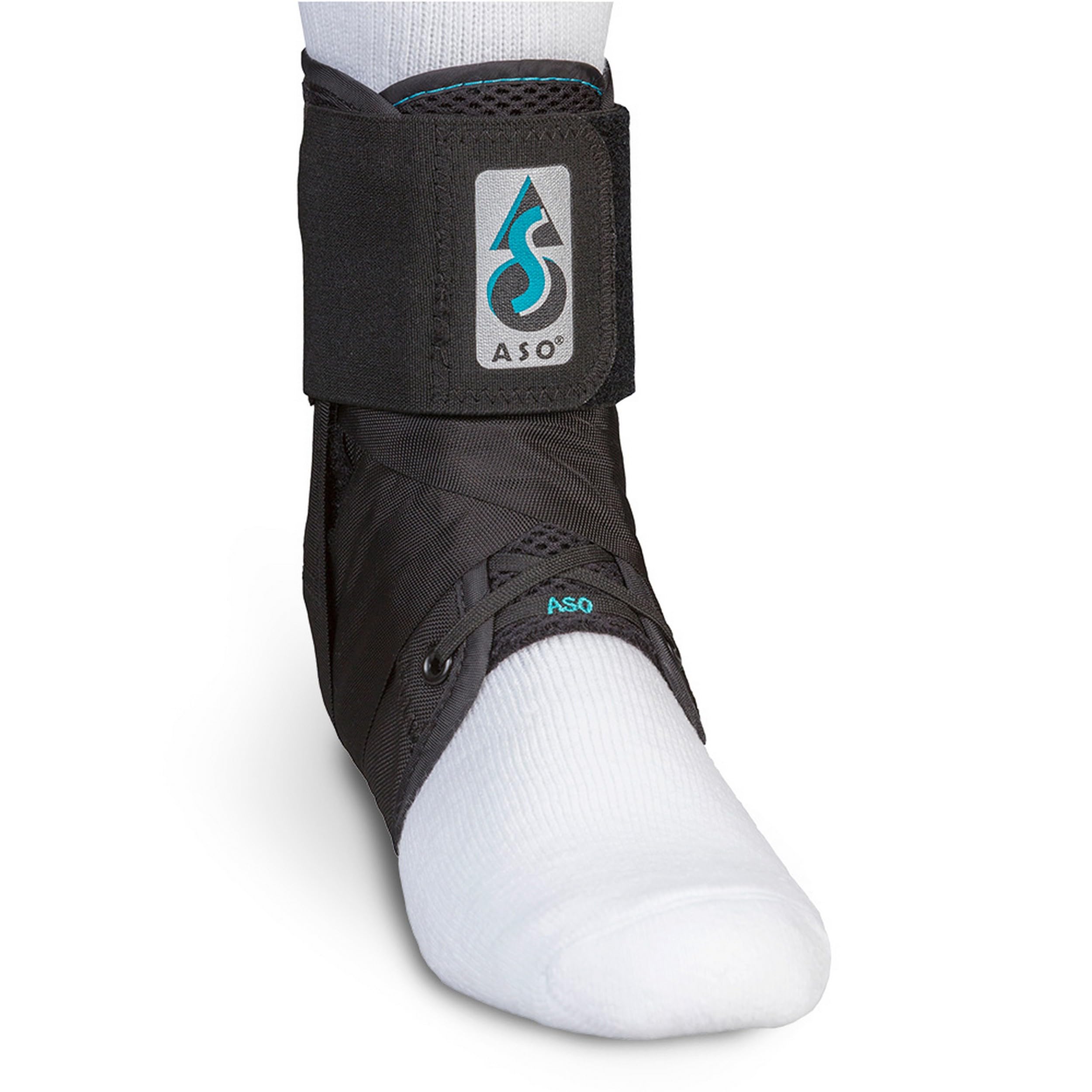
The Med Spec ASO has earned its place in athletic training rooms and physical therapy clinics because the figure-8 strap configuration directly counteracts the two mechanical motions that re-tear tendon fibers: inversion and eversion. The lace-up base pulls the foot into a neutral subtalar position, and then the figure-8 straps lock the calcaneus in place, limiting heel rise to about one-third of normal range — enough to prevent full tendon stretch during walking but not so restrictive that you lose all plantar flexion.
The CoolFlex padding and tongue construction prevent the irritation that often develops under the laces during extended wear, and the nylon shell resists stretching out over the 3-6 month recovery window typical for a grade 2 peroneal tendon tear. Users recovering from chronic ankle instability and post-sprain Achilles discomfort reported that the ASO provided more reliable inversion resistance than athletic tape while being faster to apply and remove.
It won’t fit into slip-on shoes or low-cut casual sneakers — the lace-up structure requires a shoe with enough tongue clearance. You’ll also need help tightening the laces the first few times until you find the tension sweet spot. For anyone with a history of ankle rolling who needs a brace that can handle both recovery and return to sport, the ASO is the gold standard among non-custom braces.
Why it’s great
- Figure-8 straps mechanically block inversion and eversion — the two movements that re-tear tendons
- CoolFlex tongue padding eliminates lace bite during extended wear
- Lightweight nylon shell resists stretch over months of daily use
Good to know
- Does not fit slip-on or low-cut casual shoes
- Requires assistance to achieve proper tension during initial wears
3. Neo-G Achilles Tendon Support With Silicone Tendon Cushion

The Neo-G takes a fundamentally different approach from the rigid braces above — instead of immobilizing the entire ankle, it uses a silicone tendon cushion that sits directly behind the Achilles and a graduated compression knit that offloads the tendon by improving proprioception and reducing edema. The cushion creates a physical buffer between the tendon and the back of the shoe, which matters when the torn portion of the Achilles is inflamed and every heel counter contact sends a sharp signal up the calf.
The multi-zone compression fabric is knitted from a specialist breathable material that wicks moisture, and the seamless anatomical fit prevents the chafing that sleeve-style supports often cause behind the malleoli. One user with chronic tendinopathy was able to walk long distances on vacation without flare-ups after their physical therapist recommended this exact model. The registered Class 1 Medical Device designation adds a layer of manufacturing quality assurance that third-party generic sleeves cannot match.
The support level is moderate rather than rigid — this is not the brace for an acute complete tear that needs full immobilization. It’s best used during the sub-acute phase when the tendon can handle weight but still needs offloading and compression to control swelling. The silicone pad is fixed, so you cannot remove it for less cushioning in later stages of recovery.
Why it’s great
- Silicone tendon cushion protects the inflamed Achilles from shoe-counter pressure
- Medical-grade knit with moisture wicking prevents skin maceration
- Seamless, low-profile design fits inside most walking shoes
Good to know
- Moderate compression does not provide rigid mechanical stop for full tears
- Fixed silicone pad cannot be removed for less cushion later in recovery
4. medi Achimed Knit Ankle Support

The medi Achimed is a German-engineered compression sleeve with two silicone heel wedges integrated into the knit structure — one sits behind the Achilles, the other cups the inferior calcaneus to offload tensile strain on the tendon during the toe-off phase of gait. The compressive fabric creates a massaging effect as the foot moves through the gait cycle, which helps pump fluid out of the peritendinous space and reduces the morning-stiffness sensation that Achilles tears produce.
The Clima Comfort fabric and the Comfort Zone over the instep eliminate the constriction that flat-knit sleeves cause on the dorsum, so you don’t develop numbness in the toes during long wear. Surgeons have recommended this brace specifically for post-operative Achilles repair, and users with irritated or inflamed Achilles tendons reported significant relief within two days of starting wear — enough to resume quarter-mile walks that had been impossible before.
The pull-on design makes application simple without Velcro or laces, but the tightness required for therapeutic compression makes removal difficult, especially if your hand grip is compromised by arthritis. The support level is moderate — it prevents tendon irritation during walking but won’t stop a forceful inversion movement during a fall. This is a daily-wear maintenance brace, not a high-activity protection device.
Why it’s great
- Two integrated silicone wedges offload tensile strain on the Achilles during toe-off
- Compressive knit creates a massaging effect that reduces peritendinous swelling
- Anatomic instep Comfort Zone prevents dorsal numbness during extended wear
Good to know
- Pull-on design is difficult to remove, especially with compromised hand strength
- Moderate support level not designed to prevent forceful inversion-eversion
5. Fitomo Ankle Brace with Quick Lace Up
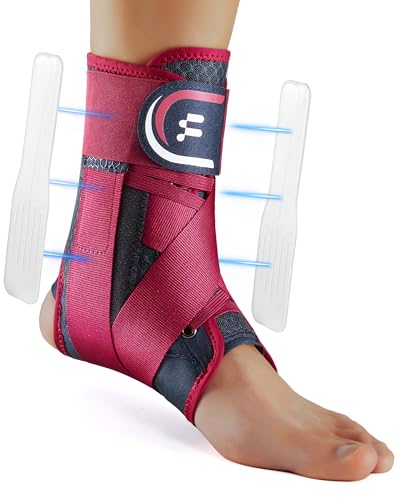
The Fitomo Ankle Brace uses a Triple-Lock system that sequences compression in three phases: the top strap locks the tibia and fibula, the cross straps pinch the talus into neutral, and the dual removable side stabilizers prevent varus or valgus collapse of the subtalar joint. This layered approach mimics the biomechanical logic of a professional athletic taping job, and the quick lace-up with hook-and-loop fasteners lets you replicate that tension in about fifteen seconds without a roll of tape and pre-wrap.
Users recovering from post-ORIF ankle surgery reported that this brace offered superior support compared to the bulky CAM boot they transitioned from, and that it fit inside a standard sneaker without forcing them to size up. The figure-8 adjustable strap lets you fine-tune compression by activity — looser for seated recovery at work, tighter for controlled walking during physical therapy. The 600+ micro-vents in the fabric keep the foot dry even in humid conditions.
The Velcro tabs, while easy to use, have a shorter adhesive surface than the DonJoy’s speed-lace system, so after months of daily wear the hook-and-loop may lose some grip. The Rose color option also limits style choices for those who prefer neutral tones. Still, at this support density with removable stabilizers, the Fitomo is the most adjustable brace in the mid-range category for a torn tendon that needs graduated support throughout healing.
Why it’s great
- Triple-Lock system sequences compression in three planes — top, cross, and side
- Removable side stabilizers allow graduated rigidity from post-op to activity
- Micro-vent fabric prevents moisture buildup during extended wear inside shoes
Good to know
- Velcro tabs may lose grip after several months of daily fastening and unfastening
- Rose color option is the only available shade — no black or neutral alternative
6. ZOELION Ankle Brace with Auto-adaptive Side Pads
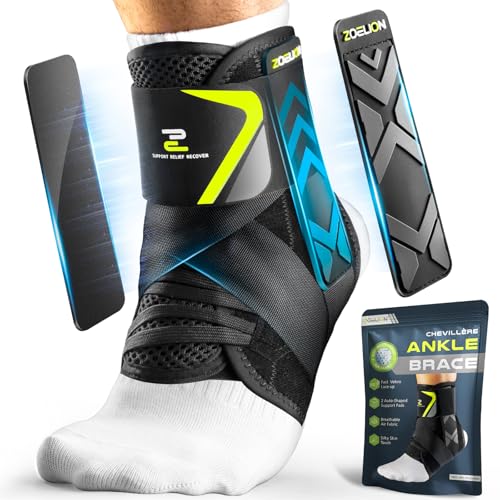
The ZOELION distinguishes itself with Nu-Form auto-adaptive stability pads on the medial and lateral sides — pads that self-mold to the contour of the malleoli during wear, distributing compression across the bone without digging into it. This matters for a torn tendon because hard pressure points shift your foot’s natural alignment off the subtalar neutral axis, and the body compensates by recruiting muscles in a way that re-stresses the injured tendon. By conforming to your specific ankle shape, the ZOELION eliminates that compensation risk.
The Triple-lock system pairs an Inner Ankle Wrap with Figure-8 Stabilizing Straps and a Wide Top Closure, creating a 360-degree cage that prevents the brace from migrating during dynamic movements like soccer or hiking. The hook-and-loop fastening has been tested to maintain adhesion over 3,000 cycles, and the lightweight low-elastic fabric contours from heel to sole without bunching behind the arch. Users with nerve damage and chronic ankle instability reported that the ZOELION stopped their ankle from rolling during daily walking, a claim that few sleeve-style braces can make.
The sizing is finicky — users with wide feet or active swelling need to size up, and the Medium runs small compared to other brands in the same size class. The instruction booklet covers six languages but the diagrams are small and can be confusing for first-time brace users. If you dial in the correct size, the adaptive pad design makes this the most anatomically intelligent option for peroneal or lateral ligament involvement.
Why it’s great
- Auto-adaptive side pads mold to your malleoli, eliminating hard pressure points
- Triple-lock system of wrap, figure-8 strap, and top closure prevents migration
- Hook-and-loop adhesive tested to maintain grip over 3,000 cycles
Good to know
- Sizing runs small — wide feet or swelling require ordering one size up
- Instruction diagrams are small and can be confusing for first-time users
7. AGPTEK Ankle Brace with Adjustable Lace-Up
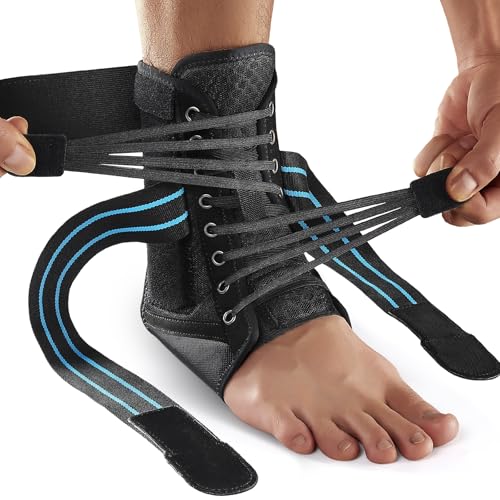
The AGPTEK Ankle Brace delivers a 360-degree support architecture — dual side stabilizers, X-cross compression straps, and a top wrap — at an accessible price point that makes it viable for those who need a brace quickly without a long wait on insurance authorization. The removable splints let you choose rigid stabilization during the early acute phase or flexible mobility as the tendon starts tolerating load, and the quick-lace system with dual-direction hook-and-loop fasteners can be secured in roughly one second — a real advantage when your hand mobility is limited by swelling or pain.
The honeycomb ventilation zones in the abrasion-resistant nylon Oxford fabric keep air moving across the foot, which reduces the risk of skin breakdown during extended wear in bed or under a boot. Multiple users recovering from post-surgical foot reconstruction reported that this brace was more comfortable and more supportive than the brace their orthopedic surgeon provided, and that it fit inside their regular shoes without forcing a footwear change.
The Medium runs small for women’s size 10 — if you’re between sizes, order up. The Velcro tabs on the top strap are shorter than those on premium models like the DonJoy, so they may lose adhesion sooner under heavy daily use. For someone recovering from a mild to moderate tendon strain who needs functional support at a low entry cost, the AGPTEK is a capable starting point.
Why it’s great
- Triple support system delivers 360-degree stabilization at a low entry cost
- Removable splints allow transition from rigid to flexible support
- Honeycomb ventilation fabric reduces skin maceration risk during extended wear
Good to know
- Sizing runs small — order up if you are between size boundaries
- Velcro tabs are shorter than premium models and may wear faster
FAQ
How tight should I fasten the brace for a torn tendon in my foot?
Can I wear a brace for a torn foot tendon inside my regular athletic shoes?
How long should I wear a brace after a foot tendon tear before transitioning out?
Final Thoughts: The Verdict
For most users, the brace for torn tendon in foot winner is the DonJoy Stabilizing Speed Pro because the 800D ballistic nylon frame and speed-lace system offer the best balance of structural integrity, application speed, and graduated support through multiple recovery phases. If you need a brace that fits inside a standard shoe and was designed in collaboration with athletic trainers and surgeons, grab the Med Spec ASO Ankle Stabilizer. And for post-surgical Achilles recovery where tendon offloading and gentle compression matter more than mechanical roll-stop, nothing beats the medi Achimed Knit Support.