
Our readers keep the lights on and the weekend projects moving. As an Amazon Associate, I earn from qualifying purchases.
The wrong brazing rod makes an HVAC repair a recurring headache. Leaks at the joint, brittle connections, or poor capillary action all trace back to selecting an alloy that doesn’t match your copper or brass base metals. A rod with the wrong silver content or melting window wastes gas and time, leaving you with a joint that fails under pressure.
I’m Rikta — the co-founder and writer behind FitlyFast. I’ve dug through hundreds of hours of spec sheets, customer field reports, and comparative melt-range data to find which silver-phosphorus-copper rods actually deliver strong, leak-free seals for HVAC professionals and serious DIYers.
You need a rod that flows reliably at the right solidus-liquidus window, penetrates deeply, and holds tight under refrigerant pressure. This guide breaks down the top options for the best brazing rod for hvac by examining silver percentage, working temperature, and real-world performance for copper-to-copper and copper-to-brass joints.
How To Choose The Best Brazing Rod For HVAC
Selecting a brazing rod isn’t about grabbing the cheapest box on the shelf. The alloy’s silver content, melting range, and physical form dictate whether you get a clean, pressure-tight seal or a joint that leaks under vacuum. Match the rod to the base metals and your torch setup.
Silver Content and Classification
HVAC brazing rods fall into BCuP (copper-phosphorus-silver) and BAg (silver) classifications. BCuP-5 rods contain 15% silver and are the standard for copper-to-copper joints because the phosphorus acts as a self-fluxing agent. BCuP-3 rods with 5% silver cost less but require a higher working temperature and flux for brass connections. BAg-7 rods with 56% silver are flux-coated and handle dissimilar metals like steel or stainless steel but command a premium price.
Melting Range and Working Window
The solidus temperature is where the rod begins to melt; the liquidus is where it becomes fully fluid. A rod like BCuP-5 with a solidus around 1190°F and liquidus near 1475°F gives you a wide working range, which forgives slight torch inconsistencies. A narrow window demands precise heat control. For field service, a wider window reduces the risk of overheating and damaging nearby components.
Rod Dimensions and Pack Size
A standard rod measures 0.050-inch thick, 1/8-inch wide, and lengths range from 10 to 20 inches. Shorter rods (10–14 inches) are easier to control in tight condenser or evaporator compartments. Longer rods (19–20 inches) give you more material per stick for larger diameter lines. Consider whether you need a dozen rods for a specific repair job or a full pound pack for ongoing service work.
Quick Comparison
On smaller screens, swipe sideways to see the full table.
| Model | Category | Best For | Key Spec | Amazon |
|---|---|---|---|---|
| Iswanta 15% Silver BCuP-5 | BCuP-5 | General HVAC repair | 15% silver, 20 sticks, 10-inch length | Amazon |
| Supplying Demand Stay-Silv 15% | BCuP-5 | Standard copper joints | 15% silver, 20-inch rods, pack of 4 | Amazon |
| SHINEONER BCuP-5 15% | BCuP-5 | Deeper work areas | 15% silver, 14-inch length, 15 sticks | Amazon |
| Bluefire JAgP-5 5% Silver | BCuP-3 | Budget-friendly copper work | 5% silver, 1 lb pack, 19.25-inch rods | Amazon |
| Aufhauser SilverAlloy 56% BAg-7 | BAg-7 | Dissimilar metals (steel, SS) | 56% silver, flux-coated, 3 rods | Amazon |
| Lucas-Milhaupt SIL-FOS 15% | BCuP-5 | Trusted brand performance | 15% silver, 7 sticks per tube | Amazon |
| Harris Stay-Brite #8 Kit | Silver Solder | Low-temp soldering alternative | Silver-bearing solder with flux kit | Amazon |
In‑Depth Reviews
1. Iswanta 15% Silver Brazing Rods AWS BCuP-5
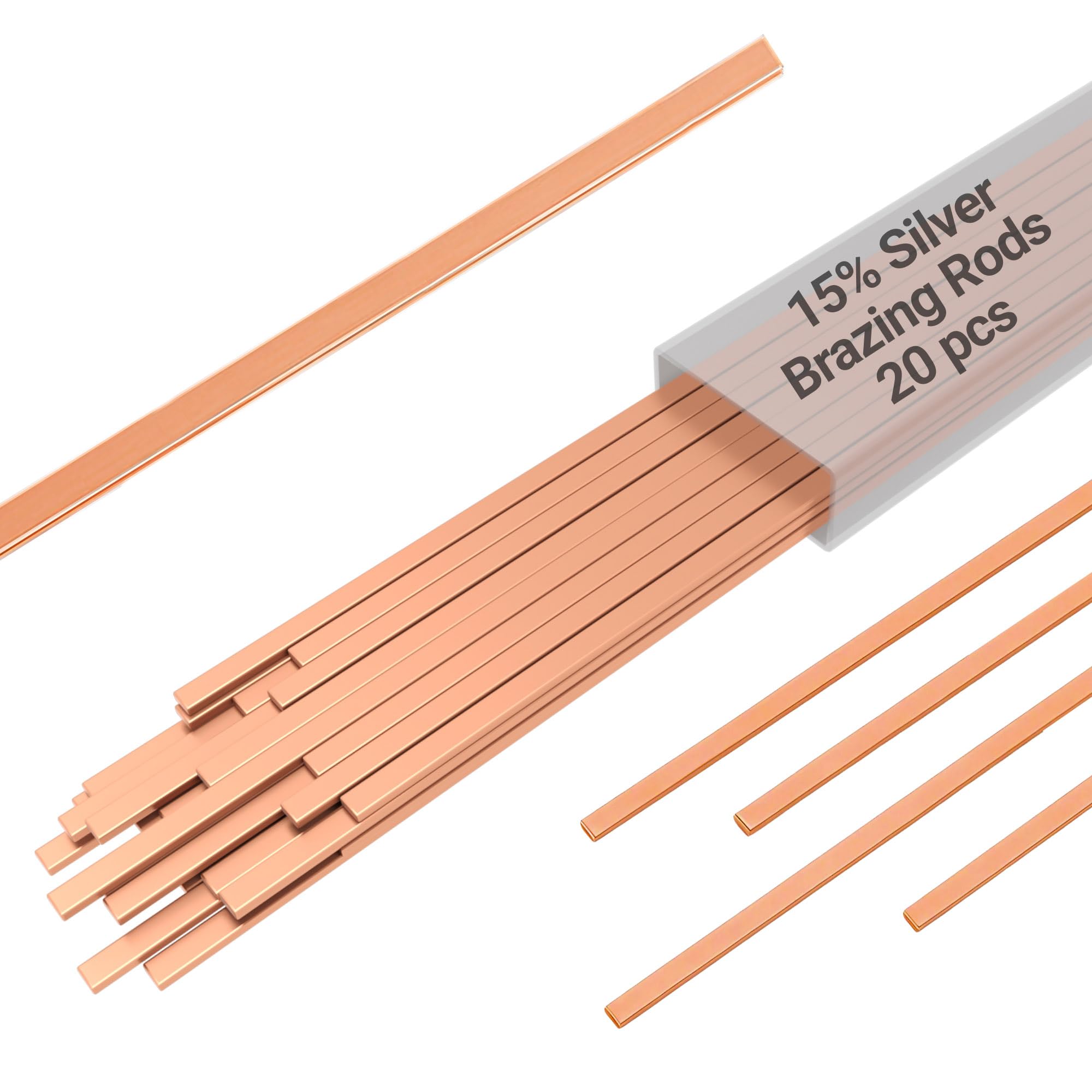
This BCuP-5 rod packs 15% silver into a compact 10-inch length, which is ideal for maneuvering inside tight refrigeration compartments and AC unit panels. The flat profile feeds evenly under the torch, and the self-fluxing phosphorus content means you don’t need additional flux for copper-to-copper joints. Customer reports confirm excellent wicking and capillary penetration on standard HVAC copper lines.
The working window of 1193°F to 1472°F aligns perfectly with oxy-acetylene and MAPP gas torches. The 20-stick count gives you a solid bench supply for multiple service calls without overspending on material you won’t use quickly. The 5.9-ounce weight per pack keeps your tool bag light.
Users consistently note that these rods flow as well as name-brand alternatives at roughly half the per-stick cost. The shorter length, while manageable, may require more sticks for larger diameter lines (1-1/8 inch or above) compared to 20-inch rods.
Why it’s great
- Excellent capillary flow with or without added flux
- Compact 10-inch length for tight workspace access
- Half the price of comparable premium rods
Good to know
- Short length demands more sticks for large-diameter joints
- Not recommended for steel or stainless steel without flux
2. Supplying Demand Stay-Silv 15% Flat Brazing Rods

Harris-branded Stay-Silv 15% rods have been a staple in the HVAC trade for decades, and this four-pack from Supplying Demand delivers the same alloy with a solidus of 1190°F and a recommended brazing range of 1300–1500°F. The 20-inch length reduces the number of sticks needed for 7/8-inch and larger lines, which speeds up repetitive joint brazing on multi-zone systems.
The flat profile (0.050 x 1/8 inch) provides good surface contact and a steady feed rate. Because it’s a self-fluxing BCuP-5 alloy, you can braze copper-to-copper without flux. For brass service valves or fittings, a separate flux is necessary. The 0.01-ounce item weight listed appears to be an error — each rod weighs roughly 0.25 ounces, and the four-pack totals about 1 ounce.
Technicians report that this rod melts evenly and fills gaps without leaving brittle residues. The minor downside is the pack contains only four rods, making it better suited for specific repair jobs rather than stocking a full truck supply.
Why it’s great
- Trusted Harris alloy formulation for consistent results
- Long 20-inch rods reduce joint count per repair
- Wide brazing window forgives torch temperature fluctuations
Good to know
- Only 4 rods per pack — not a bulk option
- Flux required for copper-to-brass joints
3. SHINEONER BCuP-5 15% Silver Brazing Rods
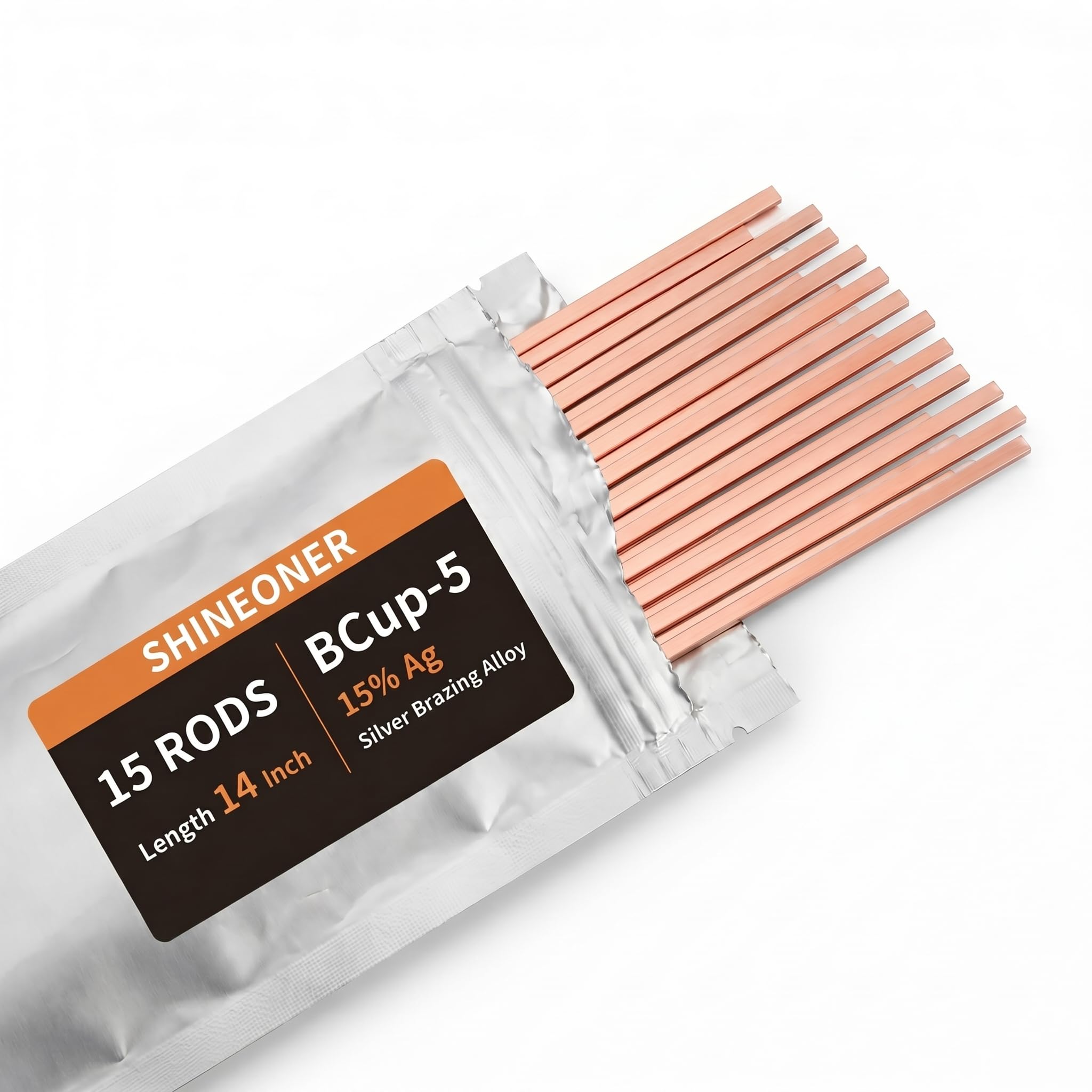
This 15-stick pack bridges the gap between short 10-inch rods and full-length 20-inch sticks. At 14 inches, these rods give you extra reach for deeper evaporator compartments or condenser units without the awkward handling of very long rods. The BCuP-5 classification means 15% silver content with a clear solidus of 1190°F and liquidus of 1475°F.
The flat shape promotes stable feeding and controlled torch handling, which is especially helpful for less experienced technicians learning to judge the right cherry-red color on the copper. The vacuum-sealed packaging protects the rods from oxidation during storage. Users note good fluidity on copper-to-brass joints when used with flux.
The 6.4-ounce pack weight is light enough for daily carry. Some field reports mention that the rods are slightly thicker than some competitors, which can be an advantage for filling larger clearances but may require a bit more heat input to fully melt the additional material.
Why it’s great
- 14-inch middleground length balances reach and control
- 15 sticks provide good value for daily service work
- Vacuum-sealed packaging prevents corrosion
Good to know
- Slightly thicker rod demands more torch BTUs
- Flux needed for any brass component
4. Bluefire JAgP-5 5% Silver Phos Copper Brazing Rods
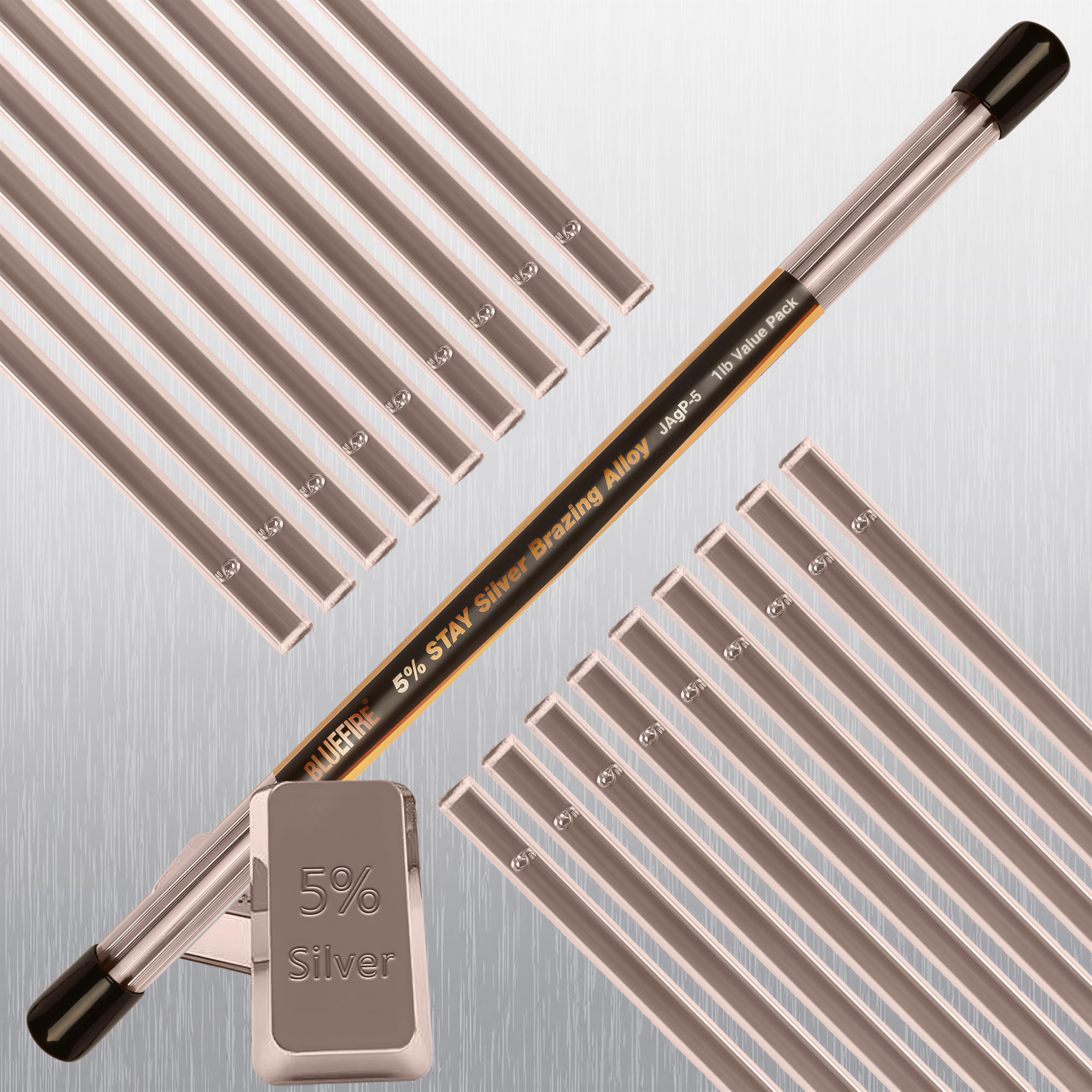
This pound-value pack provides 20 rods of 5% silver BCuP-3 alloy at 19.25 inches each. The 5% silver content lowers the material cost while still improving wettability and joint strength over pure copper-phosphorus rods. The solidus is 1189°F with a liquidus of 1419°F, which is slightly tighter than BCuP-5, but still workable with oxy-acetylene.
The lower silver percentage means this rod is best suited for copper-to-copper connections where fit-up is tight. For brass joints, the manufacturer recommends using a brazing flux like Bluefire JFB-102S. The 1-pound tube is a smart choice for technicians who go through rods quickly on residential split-system installations and want to keep per-stick costs low.
Multiple customer reports highlight that this 5% rod flows surprisingly well — one experienced user called it “butter-like” and switched from their usual 15% rods. The trade-off is a higher liquidus temperature, which requires slightly more torch heat and discipline to avoid overheating the joint.
Why it’s great
- Bulk 1-pound pack offers best per-stick value
- Flows exceptionally well for a 5% silver alloy
- Good for copper-to-copper production work
Good to know
- Requires flux for brass or bronze joints
- Narrower melting window demands steady torch control
5. Aufhauser SilverAlloy 56% BAg-7 Flux Coated Rods

When the job involves brazing stainless steel, steel, or cast iron to copper, the BAg-7 classification is the correct choice, and this Aufhauser rod delivers 56% silver with a pre-applied flux coating. The 1/16-inch core diameter is smaller than typical HVAC rods, which allows for precise deposition on complex joints. The flux coating activates during heating to clean the base metals and promote flow.
The rod meets AWS A5.8 BAg-7 and AMS 4763 specifications, and it’s DFARS compliant for US defense-related work. Users report that it bonds stainless steel to copper lines for compressor connections with exceptional tensile strength, and even beginners get good results using a Bernzomatic TS8000 with Map-Pro gas. The three-rod pack is expensive per stick, but for the specific job of joining dissimilar metals, there is no substitute.
The flux burns off slightly faster than the rod melts, so you must move quickly once the coating activates. For standard copper-to-copper HVAC work, the lower-cost BCuP rods are more economical, but this rod is essential for repair work on systems with steel components.
Why it’s great
- Flux-coated for steel, stainless, and brass joints
- Very high tensile strength on dissimilar metal connections
- Made in USA with military-grade certification
Good to know
- Premium cost per rod — use only when needed
- Flux burns off quickly; requires practiced timing
6. Lucas-Milhaupt SIL-FOS 15% Silver Solder

SIL-FOS is a legacy name in the HVAC industry, and this 15% silver phos-copper alloy confirms its reputation for smooth flow and no-flux copper-to-copper brazing. The 7-stick tube is a practical trial or small-job pack. Users consistently report that the rod follows heat well, wicks into the gap with clean capillary action, and produces leak-free joints on first attempt with clean tubing.
The alloy composition matches BCuP-5 standards, with a working temperature that pairs well with oxy-acetylene torches. For new HVAC/R students practicing joints, this rod offers the consistency to develop proper technique without fighting variable material behavior. The 15-inch rod length is comfortable for most service positions.
The main concern from customer feedback involves packaging quality — some tubes arrive with missing end caps, and a few buyers received fewer than 7 rods. If you get a properly sealed tube, the rods themselves perform at a professional grade. Check the cap seal upon arrival to confirm count.
Why it’s great
- Industry-standard brand with proven reliability
- Flows smoothly with no flux for copper joints
- Perfect for students and practice brazing
Good to know
- Packaging sometimes arrives with missing sticks
- Not cost-effective for bulk daily use
7. Harris Stay-Brite #8 Silver Solder Kit with Flux

This kit is not a traditional brazing rod — Stay-Brite #8 is a silver-bearing solder (not a BCuP brazing alloy) that melts at a much lower temperature. It’s designed for applications where you want to avoid the high heat of brazing, such as near TXV valves, filter driers, or components with heat-sensitive seals. The included Harris flux is formulated to match the solder’s working range.
The solder flows readily into clean copper joints and produces strong connections that passed 500 psi pressure tests and 300-micron vacuum holds in user reports. Some HVAC technicians prefer this method for service work where disassembly is difficult, because the reduced heat minimizes the risk of damaging nearby components.
The trade-off is significant: the joint’s mechanical strength is lower than a true brazed connection. One experienced reviewer specifically warns against using this for critical refrigerant lines because the solder can wash into the joint and leave beads inside. Use this kit for plumbing, drain lines, or low-pressure applications where brazing heat would cause collateral damage.
Why it’s great
- Low heat application protects sensitive components
- Complete kit with matched flux for reliable wetting
- Passes pressure tests for non-critical joints
Good to know
- Not a true brazing alloy — lower joint strength
- Risk of solder wash for high-pressure refrigerant lines
FAQ
Can I use 5% silver rods for all HVAC copper joints?
Do I need flux for brazing copper to copper with BCuP-5 rods?
What torch setup works best for HVAC brazing rods?
Final Thoughts: The Verdict
For most users, the best brazing rod for hvac winner is the Iswanta 15% Silver BCuP-5 because it delivers professional-grade capillary flow at a per-stick cost that beats premium brands by half. If you need longer rods for large-diameter line sets, grab the Supplying Demand Stay-Silv 15%. And for joining stainless steel or other dissimilar metals, nothing beats the Aufhauser SilverAlloy 56% BAg-7.