
Our readers keep the lights on and the weekend projects moving. As an Amazon Associate, I earn from qualifying purchases.
Brazing steel demands a rod that can bridge a thermal gap — heating the parent metal to a dull cherry red without melting it, while the filler metal flows into the joint with capillary precision. The wrong rod leads to brittle bonds, excessive fuming, or a joint that fails under load. The right one turns a torch into a fabrication tool.
I’m Rikta — the co-founder and writer behind FitlyFast. I’ve spent hundreds of hours analyzing chemical compositions, melting ranges, and tensile strength data across the brazing rod market to separate genuine high-performance alloys from commodity filler metals.
This guide breaks down the seven most compelling options available, focusing on which alloy families actually work on steel and which applications each rod truly serves. You’re reading the definitive brazing rod for steel comparison built on real specs and verified user outcomes — not marketing claims.
How To Choose The Best Brazing Rod For Steel
Steel is forgiving in brazing because it doesn’t burn off at the same temperature as aluminum, but it still demands a rod with the right melting range, tensile strength, and flux compatibility. The wrong choice produces joints that crack under vibration or fail during post-braze machining.
Alloy family and melting point
Low-fuming bronze rods (RBCuZn-C) are the workhorses for steel brazing — they melt around 1600 to 1700 degrees Fahrenheit and produce strong, ductile joints that handle stress. Silicon bronze rods run at a slightly lower range but require more careful heat management. Silver-bearing phos-copper rods are not suitable for steel because phosphorus causes embrittlement in ferrous metals; check the alloy composition before buying.
Flux type and application
Flux prevents oxidation on the steel surface and ensures capillary flow of the filler metal. Flux-coated rods simplify the process — just heat and dip — but the coating can be thin on some brands, leading to insufficient coverage on larger joints. Separate flux powder gives you control over coverage but adds a prep step. Look for a flux rated for the active temperature range of your rod; a 1400-to-2200-degree Fahrenheit range covers most steel brazing work.
Quick Comparison
On smaller screens, swipe sideways to see the full table.
| Model | Category | Best For | Key Spec | Amazon |
|---|---|---|---|---|
| SÜA RBCuZn-C Bronze Rod | Premium Bronze | General steel fabrication | 1630°F melting point | Amazon |
| Forney Super Sil Flo Rod | Silver-Phos Copper | Copper tubing, not steel | 1200°F melting point | Amazon |
| Bluefire JAgP-5 5% Silver Rod | Silver-Copper-Phos | Copper/brass joints (not steel) | 1419°F liquidus | Amazon |
| Forney 48490 Flux Coated Bronze Rod | Flux-Coated Bronze | Cast iron and steel repair | 1598°F, 65K PSI tensile | Amazon |
| Harris Stay Silv Brazing Flux | Flux Only | Silver solder and brazing prep | 1 lb jar, cream texture | Amazon |
| Hobart 770206 Aluminum Rods | Aluminum Only | Aluminum/magnesium repair | 700°F melting point | Amazon |
| Hot Max 24000 Brazing Flux | Flux Powder | Steel and cast iron brazing | 1400-2200°F range | Amazon |
In‑Depth Reviews
1. SÜA RBCuZn-C Low-Fuming Bronze Brazing Rod

The SÜA RBCuZn-C rod is a low-fuming bronze alloy designed specifically for joining steel to ferrous and non-ferrous metals. Its melting point of 1630 degrees Fahrenheit sits comfortably above the red-heat range of carbon steel, giving you a wide thermal window to work with before the filler hardens. The flux coating is printed with the alloy and rod diameter, which eliminates guesswork when you’re grabbing a rod mid-weld.
Users consistently report that this rod flows smoothly with Map gas alone — no need for oxy-acetylene unless you’re tackling thick sections. The high silicon content keeps fume generation low, which matters for indoor shop work. The 1/16-inch diameter is ideal for fine filling and building up worn surfaces without excessive metal deposition.
Packaging is thoughtful: the rods arrive in a rigid tube that prevents the flux coating from cracking during shipping. A common feedback loop is that after the first order, customers order a pound or two more because the consistency across rods is uniform. For a general-purpose steel brazing rod that doesn’t require separate flux dipping, this is the most balanced option on the market.
Why it’s great
- Low-fuming bronze alloy designed for steel joints
- Flux-coated and prints alloy info on rod
- Works with Map gas for most applications
Good to know
- Flux-coated rods cannot be bent — plan your access angle
- Requires clean steel surface for best capillary flow
2. Forney 48490 Flux Coated Bronze Brazing Rod
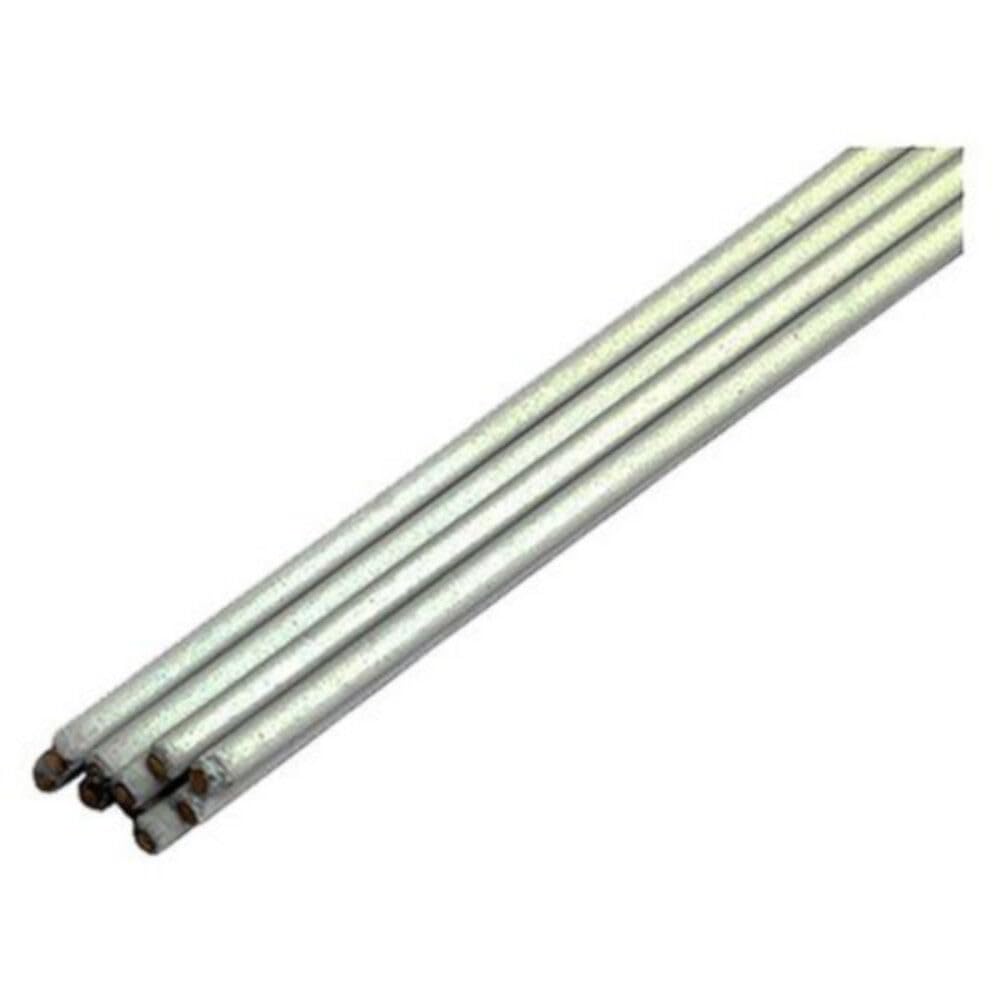
Forney’s flux-coated bronze rod delivers a tensile strength of 65,000 PSI with a melting point at 1598 degrees Fahrenheit, putting it squarely in the low-fuming bronze category for steel joining. The 3/32-inch diameter strikes a practical middle ground — thick enough to lay down a substantial bead on cast iron repairs yet fine enough for moderate joint gaps on fabricated steel parts.
The flux coating is pre-applied and formulated for good cleaning action, which reduces the risk of oxide inclusions in the joint. Users report minimal post-braze cleanup, with the slag flaking off easily after the bond cools. The low-fuming characteristic keeps your workspace clear, and the rod flows well with both oxy-acetylene and Map gas setups.
One distinction here is that this rod is manufactured in China under Forney’s quality control, which keeps the price accessible. Experienced fabricators note that while the flux coating is adequate for smaller joints, you may want to add extra flux powder for larger repair areas where the pre-coating gets consumed too fast. For most mid-size repair jobs on steel and cast iron, this rod provides a reliable bond without the premium price.
Why it’s great
- Flux-coated for reduced prep time
- High tensile strength for stressed joints
- Smooth flowing with minimal fume output
Good to know
- Flux coating may need supplementing on large joints
- Not recommended for galvanized steel without pre-cleaning
3. Forney 48571 Super Sil Flo Brazing Rod
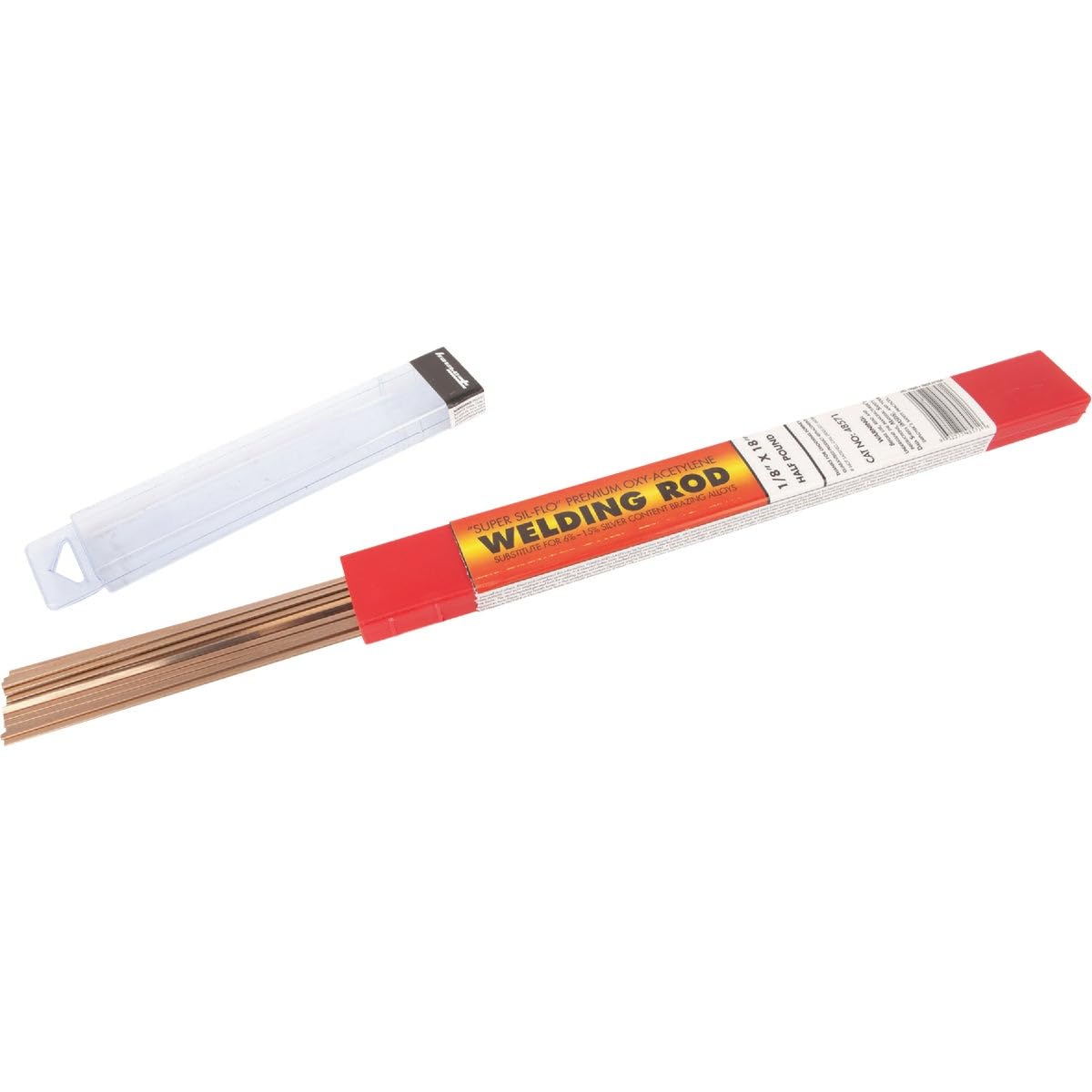
This rod is a self-fluxing sil-phos alloy, meaning it contains phosphorus that acts as a flux when heated on copper — but that same phosphorus makes it unsuitable for ferrous metals like steel or cast iron. The melting point of 1200 degrees Fahrenheit is lower than bronze rods, which allows faster work on copper tubing but creates a brittle joint if inadvertently used on steel.
The 1/8-inch diameter is standard for HVAC and plumbing work, where it excels on control valves, return bends, and condenser fittings. Users report that the rod flows well with acetylene but struggles with propane alone — you need a torch that delivers sustained heat. The tensile strength of 40,000 PSI is adequate for copper-to-copper joints but would be underpowered for steel structural work.
If you’re shopping specifically for a brazing rod for steel, skip this one. Its chemistry is locked into non-ferrous applications. However, if you also work on copper lines and want a single rod that self-fluxes on those jobs, it earns a spot in a mixed-material toolbox.
Why it’s great
- Self-fluxing on copper reduces prep steps
- Low melting point allows fast work
- Good cost alternative to higher silver content rods
Good to know
- Not suitable for steel or any ferrous metal
- Requires acetylene; propane and Map gas may not reach temperature
4. Bluefire JAgP-5 5% Silver Phos Copper Brazing Rod
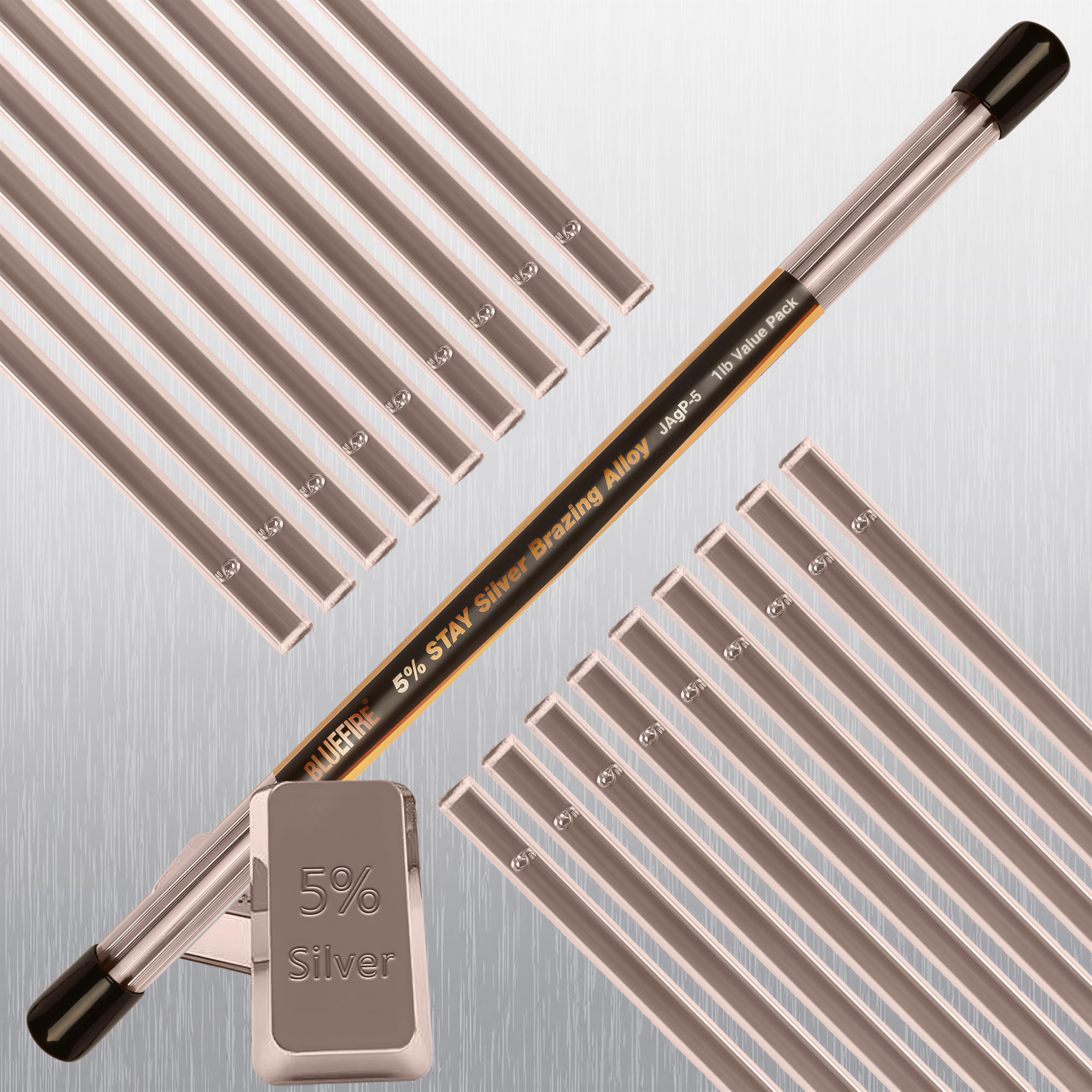
Bluefire’s JAgP-5 rods are a BCuP-3 silver-phos copper alloy containing 5% silver and phosphorus — a chemistry that delivers excellent wettability and deep capillary penetration on copper and brass. However, like all sil-phos alloys, the phosphorus content makes this rod unsuitable for steel because it forms brittle iron phosphides at the joint interface.
The solidus temperature sits at 1189 degrees Fahrenheit, and the liquidus at 1419 degrees, providing about 230 degrees of working range — enough for controlled flow on thin-walled tubing. Users report that this rod flows like butter with proper flux application (the manufacturer recommends their JFB-102S flux) and produces strong, vibration-resistant joints on HVAC lines and refrigeration components.
The value pack at this density gives you roughly 20 rods per pound, which is a strong per-rod cost for a 5% silver content. But the critical takeaway is that this rod is not a candidate for steel brazing. It belongs in the copper-and-brass category only; for steel, look to the bronze rods in this list.
Why it’s great
- Deep flow into tight clearance joints
- 5% silver improves strength over standard phos-copper
- High vibration resistance ideal for compressors
Good to know
- Not for use on steel or iron — phosphorus embrittles ferrous metals
- Requires separate flux for best performance
5. Harris Stay Silv Brazing Flux

Harris Stay Silv is an industry-standard flux for silver brazing and soldering, formulated from zinc chloride, ethylene glycol, and ammonium chloride. It has a dark brown, creamy texture that stays put on vertical surfaces better than thin paste fluxes, and it remains active up to the temperature ranges needed for steel brazing with silver-bearing rods.
The flux turns clear as it reaches brazing temperature, giving you a visual cue that the joint is ready for filler metal. Users report that it washes off easily with water after brazing, leaving minimal residue. The 1-pound jar provides many applications — a small dab on each joint goes a long way, and the flux doesn’t dry out quickly if you keep the lid sealed.
This is not a rod; it’s a flux additive designed for use with separate, uncoated brazing rods. If you’re using a bare bronze or silver rod on steel, this flux provides the oxide barrier needed for sound capillary flow. The only caveat is that it’s not a liquid — some users expect a runny consistency but find it more like thick paste, which actually works better on overhead joints.
Why it’s great
- Industry standard for silver brazing flux
- Stays in place on vertical and overhead joints
- Clear transition at brazing temperature gives visual feedback
Good to know
- Not a rod — you need separate filler metal
- Thick paste may require stirring if stored for months
6. Hobart 770206 Brazing Rod

Hobart’s 770206 rods are self-fluxing aluminum filler rods with a melting point of 700 degrees Fahrenheit — designed specifically for joining aluminum and magnesium alloys. The low temperature is critical for aluminum because the base metal melts at 1200 degrees, but thin sections can collapse at 700 if you’re not careful with heat management.
Users report success repairing timing covers and chain-saw handles with Map gas, but the technique requires thorough heat-soaking of the parent metal and a quick welding window after the rod starts to flow. Prep is everything: aggressive brushing and beveling are needed because aluminum oxide forms instantly on heated surfaces and blocks adhesion if not mechanically removed.
For steel brazing, this rod has no application. It’s included here because some buyers mistakenly think aluminum rods can work on steel due to their low melting point — they can’t. The alloy is chemically incompatible with ferrous metals and produces no bond strength. Reserve these for cast aluminum repairs only.
Why it’s great
- Self-fluxing for aluminum — no separate flux needed
- Low melting point reduces risk of burning thin aluminum
- Strong bond on properly prepped aluminum joints
Good to know
- Not intended for steel — zero bonding on ferrous metals
- Requires aggressive prep and heat-soak technique
7. Hot Max 24000 Brazing Flux Powder

Hot Max 24000 is a dry flux powder designed for flame brazing steel, malleable and cast iron, galvanized metals, brass, and bronze. The active temperature range of 1400 to 2200 degrees Fahrenheit covers the sweet spot for bronze and silver brazing rods on steel, and it meets AWS FB3J and MIL-F-16136B standards for flux quality.
The powder form gives you full control over how much flux you apply — dip the heated rod into the powder, and the flux sticks to the hot metal. Users report that a small jar lasts through many projects because you don’t need to coat the entire joint, just the rod tip. Made in the USA, this is a simple, no-frills flux that works with oxy-acetylene and electric carbon arc setups alike.
One practical drawback is the plastic jar — if you dip a very hot rod into the flux and accidentally touch the side, you can melt the container. Transferring the powder to a metal cup before use solves this. For anyone using uncoated rods on steel and needing a reliable flux without spending much, this is a capable entry-level option.
Why it’s great
- Wide active temperature range for steel brazing
- Powder form gives precise control over flux amount
- Meets AWS and military standards
Good to know
- Plastic jar can melt if touched with hot rod
- Not a flux-coated rod — requires separate rod application
FAQ
Can I use sil-phos brazing rods on steel?
Do I need separate flux if using flux-coated brazing rods?
Final Thoughts: The Verdict
For most users, the brazing rod for steel winner is the SÜA RBCuZn-C Low-Fuming Bronze Rod because it combines a steel-compatible alloy, pre-applied flux coating, and smooth flow with Map gas into one well-packaged rod. If you want maximum tensile strength on cast iron repairs, grab the Forney 48490 Flux Coated Bronze Rod. And for a reliably long-lasting flux that pairs with any bare rod, nothing beats the Harris Stay Silv Brazing Flux.