
Our readers keep the lights on and the weekend projects moving. As an Amazon Associate, I earn from qualifying purchases.
Specs are compiled from manufacturer listings and verified buyer reviews and can change over time — please confirm the key details on the product page before buying.
A great sourdough loaf is alive — it has a bubbly, open crumb, a shattering crust, and a tang that whispers of a long, slow fermentation. The difference between a good loaf and a transcendent one often depends on a single decision: the flour you feed your starter and build your dough with. Picking the right bread flour for sourdough means understanding protein content, milling methods, and whether your stomach tolerates modern wheat — and this guide separates the real contenders from the marketing fluff so you can bake with confidence.
I’m Rikta — the founder and writer behind FitlyFast. This guide is built by comparing the manufacturers’ published specifications and the patterns across verified customer reviews, so you get each pick’s real strengths and trade-offs instead of marketing spin.
Whether you are after a heritage flour that agrees with your digestion, a high-gluten workhorse for chewy bagels, or an Italian import for an authentic Neapolitan crust, this deep dive into the best bread flour for sourdough will match you to the bag you should buy.
Our Picks at a Glance


How To Choose The Best Bread Flour For Sourdough
Not all flour is created equal when you are nurturing a sourdough starter that can live for years. The protein percentage, the type of wheat, and even the farm it came from all influence how your dough rises, how open the crumb becomes, and how your stomach feels after a second slice. Here are the three things to get right before you add a bag to your cart.
Protein Content & Gluten Strength
Sourdough relies on gluten networks to trap the gas your starter produces. A higher protein percentage (think 12% to 14%) gives you a stronger, more elastic dough that can hold its shape during a long bulk fermentation. Low-protein all-purpose flour (usually 9% to 11%) will struggle to support an ambitious sourdough, leading to a denser, flatter loaf. Look for bags that state the protein content clearly — it is the single most reliable shortcut to bakery-level results.
Heritage vs. Modern Wheat & Digestibility
Many bakers report that modern hybridized wheat leaves them bloated, even when they are not celiac. Heritage wheat varieties like Turkey Red and White Sonora, grown from pre-1950s seed stock, often contain a different gluten structure that is easier on sensitive stomachs. If you have noticed discomfort after eating standard commercial bread, switching to a heritage or ancient grain flour could be the fix, and it often brings a deeper, nuttier flavor to your loaf as a bonus.
Purity & Processing
What is not in your flour matters as much as what is. Glyphosate, bleaching agents, and bromates are common in commodity flours but unwanted in a clean, slow-fermented sourdough. Organic certification, Glyphosate Residue Free certification, and labels like “unbleached and unbromated” are meaningful shortcuts. Also, pay attention to the milling method — stone-ground flours retain more of the wheat germ and bran, contributing flavor and nutrition, while roller-milled flours are finer and more consistent for high-hydration doughs.
Quick Comparison
| Model | Best For | Protein / Gluten | Weight | Wheat Type | Amazon |
|---|---|---|---|---|---|
| Sunrise Flour Mill Heritage Organic White Flour★ Best Overall | Best Overall (digestible heritage) | High Protein | 5 lb (80 oz) | Turkey Red Heritage | Amazon |
| King Arthur High Gluten FlourThe Bagel Boss | Bagels & Chewy Pizza | 14% gluten | 3 lb (48 oz) | Modern High-Gluten | Amazon |
| Palouse Brand Glyphosate Residue Free Bread FlourClean Whole Wheat | Clean Whole Wheat Bread | High Protein | 3 lb (48 oz) | Whole Wheat | Amazon |
| Sunrise Flour Mill Heritage Bread Flour Blend | Premium Sourdough Loaves | High Protein | 5 lb (80 oz) | Turkey Red & White Sonora | Amazon |
| Great River Milling Organic Bread Flour | Soft Crumb Micro Bakery | Balanced Gluten | 5 lb (80 oz) | Organic Whole Wheat Blend | Amazon |
| Mulino Caputo Manitoba Oro Tipo 0 | High-Elasticity Italian Bread | High Protein | 11 lb (176 oz) | Select European Wheat | Amazon |
| POLSELLI Organic Type 00 Flour | Authentic Neapolitan Pizza & Bread | Extra Fine Milled | 11 lb (176 oz) | 100% Italian Grain | Amazon |
| Jovial Organic Einkorn Whole Wheat Flour | Ancient Grain & Digestibility | Weaker Gluten (easy to digest) | 3 x 32 oz (96 oz total) | Einkorn (ancient) | Amazon |
| CENTRAL MILLING Organic Artisan Bread Flour | Bulk Baking & Long-Term Storage | High Protein | 25 lb (400 oz) | Heritage Grains | Amazon |
In‑Depth Reviews
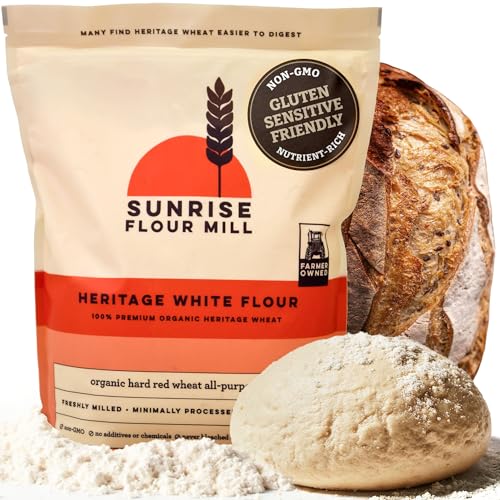
1. Sunrise Flour Mill Heritage Organic White Flour
Our pick — over 4.5★ from 800+ verified ratings; the strongest balance of quality and price.
The heritage wheat that your starter and your stomach will thank you for.
This is the bag you reach for when you want a sourdough loaf that rises tall, tastes deeply of grain, and does not leave you feeling heavy after a slice. Milled from Turkey Red Heritage Wheat grown without glyphosate, this organic unbleached flour is packed with protein that delivers a strong, open crumb. What wins people over is the digestibility — the pre-1950s hybridization means the gluten structure is different from modern wheat, and dozens of owners specifically call out zero bloating or inflammation after eating.
At 80 ounces, the bag is larger than the King Arthur High Gluten Flour’s 48-ounce bag, giving you more flour for your baking sessions. The flavor is noticeably nuttier and more complex than a standard all-purpose, and bakers report that their sourdough starter “loved munching on this flour due to its freshness.” The only real conversation is the price point, which some find premium, but the consensus is clear: it is an investment in your health and your loaf quality.
As owners put it: “This four is great for sourdough. My starter has loved munching on this flour due to its freshness and its freedom from chemicals. Milled perfectly for breads and baked goods.” The quality aspect is the most-discussed by a wide margin, with over 120 positive mentions — a strong signal that this is not just a niche product but a crowd-pleasing staple.
Digestibility first: If you have found that commercial bread makes you bloated, switch to this heritage flour and see if your gut agrees. The Turkey Red wheat is the key difference here.
Reach for it if: You want an organic, glyphosate-free flour that produces exceptional sourdough while being gentle on digestion.
Look elsewhere if: You need a lower-cost per-pound option for daily baking — the premium here is clear.
2. King Arthur High Gluten Flour
The highest-gluten flour around, engineered for the chewiest bakes you can make at home.
If your sourdough ambition runs toward bagels, artisan hearth breads, and pizza crusts with a serious chew, this is your flour. King Arthur’s High Gluten Flour hits a full 14% gluten content, the highest in the lineup here. That muscular gluten network gives you the strength for long, cold fermentations that develop deeper flavor without the dough collapsing. It is also a 100% Employee-Owned company with a reputation for consistent quality stretching back to 1790.
The real-world result is a bread interior that is lofty and toothsome — exactly what you want when you tear into a warm slice. Bakers note that it “improves rise and structure for breads, bagels, pizza crusts” and that it produces “consistent deliciousness.” The bag is smaller at 48 ounces (3 lb) compared to the Sunrise or Great River options, so it is ideal for trial runs or smaller households. The recurring praise lands on bread quality — over 40 owners rate it highly for that specific use case. If you have been using all-purpose or standard bread flour and felt your bagels were too dense, this swap alone could transform your results.
“If you make your own bagels, this flour is a must,” sums up the buyer sentiment. King Arthur products always deliver high quality, and this high-gluten variant is no exception — the 14% protein benchmark is the backbone of the praise.
For the chew-seeker: This is not the flour for a soft sandwich loaf. It is built for structure — bagels, pretzels, focaccia, and crusty artisan boules that demand a hearty crust and a chewy interior.
Best for: Bakers who want maximum gluten strength for bagels and long-fermentation artisan breads.
skip it if: You prefer a softer, more tender crumb or you need a larger bulk bag for weekly baking.
3. Palouse Brand Certified Glyphosate Residue Free Bread Flour
Stone-ground whole wheat from a family farm, certified free of the herbicide most flour contains.
Palouse Brand brings something rare to this list: a flour that is Certified Glyphosate Residue Free by the detox project. Grown on the family’s own Washington State farm, this whole wheat flour is stone-ground and retains every part of the wheat berry — no stripping, no additives, no preservatives. The result is a nutty, slightly sweet loaf with that “old school homemade texture” that modern supermarket flour simply cannot replicate.
Bakers find it particularly shines in lower hydration doughs, making it a strong match for sandwich bread. One owner described it as “true Gold-Star Wheat Flour,” praising the 5:1 carb to fiber ratio and the absence of any bitter aftertaste. The packaging is a resealable bag, though some noted the new design does not stand up on the counter as easily. At 48 ounces (3 lb), it competes directly with the King Arthur bag in size, but the stone-ground whole wheat character is entirely different — expect a denser, more flavorful loaf than you would get from a white bread flour.
“The bread tastes great and has that old school home made texture to it,” as one baker put it. Whether you use a bread machine or shape by hand, this flour delivers consistent, clean whole wheat results.
Glyphosate-free guarantee: This is the standout feature. If you avoid herbicides in your food, this flour gives you third-party certification of purity, not just a marketing claim.
Reach for it if: Whole wheat sourdough is your daily driver and you want the cleanest, most traceable flour possible.
Think twice if: You need a white, high-gluten flour for open-crumb artisan loaves — this is whole wheat with bran and germ intact.
4. Sunrise Flour Mill Heritage Organic Bread Flour Blend
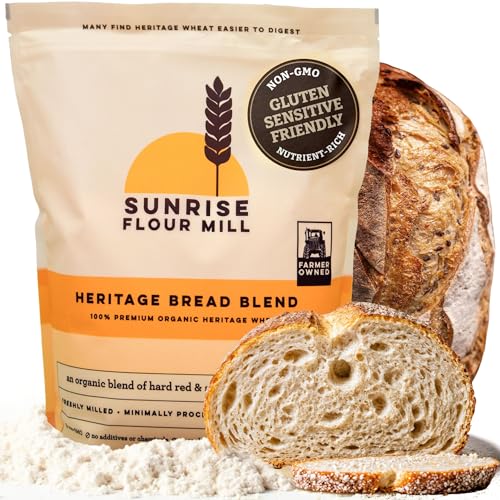
A super-fine heritage blend that bakes soft, airy loaves with a golden crust and zero gut discomfort.
This is the bread-specific sibling of the Sunrise Heritage White Flour at position one, and it is tune for the baker who wants a creamy-gold crumb and a tall, confident rise. The blend uses Turkey Red and White Sonora Heritage Wheat, milled using a 1930s-style unifine mill that produces an exceptionally fluffy, fine texture. The result is a dough that is easy to handle at around 66% hydration and yields bread with a soft, tender interior and a beautiful golden crust.
Owners rave about the flavor — over 90 of them call it out positively — and the quality leads the conversation with 176 mentions. Many report that this flour “does not upset stomach like standard flours” and produces “well-formed sourdough with beautiful rise and rich flavor.” It is organic, USDA certified, and free of chemicals and pesticides. The bag lasts through about six 1.5-pound loaves, which works out to a cost per loaf that many find comparable to store-bought artisan bread — but the flavor is far superior.
One baker noted it “tasted like actual bread, light years above store-bought.” If you are looking for the special loaf that impresses guests or makes your weekly bake feel like a craft project, this blend is the answer.
What stands out
- Unifine milling creates a super-fluffy, fine texture that handles beautifully
- Heritage wheat blend (Turkey Red + White Sonora) is gentle on digestion
- Excellent for both artisan sourdough and bread machine loaves
One trade-off
- Premium price point — you pay more per pound than commodity bread flours
Ideal for: The home baker who wants heritage-quality flour specifically formulated for bread, not all-purpose versatility.
Consider something else if: You are on a strict budget for everyday baking — the value-per-pound is lower than standard options.
5. Great River Milling Organic Bread Flour
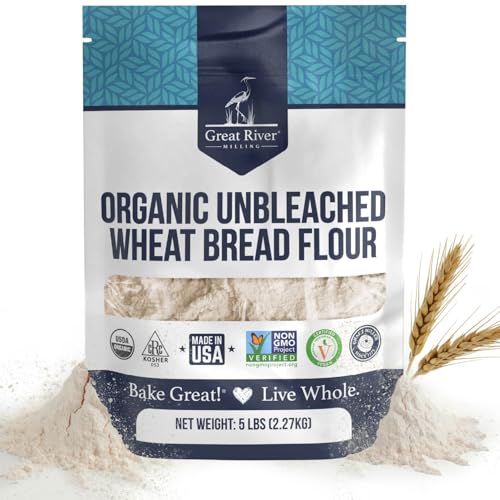
The organic whole-grain flour that already replaced King Arthur in one micro bakery.
Great River Milling’s organic bread flour is a clean, unbleached, unbromated option that retains the wheat germ and most of the bran for a tender crumb and whole-grain nutrition. Balanced gluten content means it works reliably across breads, muffins, and everyday recipes. The flour has a darker color than standard white flour and contains lots of bran, which gives it a sturdy flavor profile that sourdough bakers particularly appreciate.
One micro bakery owner reported that this flour “has replaced the King Arthur Organic Bread flour in my micro bakery. Soft tender crumb and the aroma and flavor is amazing.” The flavor category sees 48 positive mentions, and the overall quality leads the count at 104. The texture is a mixed point — some love the soft crumb it produces, while others find it coarser than a standard white bread flour. Blending it with 25% white flour is a common trick to get whole wheat flavor without sacrificing rise.
Note that this flour requires more liquid than a standard white flour, so adjust your sourdough hydration upward. For the baker who wants organic, non-GMO, Kosher ingredients and values flavor over pristine white crumb, this is a serious contender.
Flavor-forward: If you love the taste of whole wheat but want a lighter loaf than pure whole wheat, this flour hits the balance with its retained germ and moderate bran content.
Best for: Home bakers and small bakeries who want an organic, nutrient-rich bread flour with a soft crumb and amazing aroma.
Not ideal if: You need a pure white, high-extraction flour for very open crumb artisan loaves — this is visibly darker and coarser.
6. Mulino Caputo Manitoba Oro Tipo 0 Flour

European wheat at its finest — the flour that turned good bread into fantastic bread for many bakers.
Caputo Manitoba Oro is a premium, high-protein flour from select European wheat, known for its fine milling and exceptional elasticity. At Tipo 0 refinement (finer than whole wheat, coarser than 00), it gives your sourdough dough a silky, extensible quality that handles high hydration easily. The gluten content is high enough to support long fermentation, and the flavor profile is clean and pure — a result of the slow stone-grinding process that preserves the natural starches and proteins.
Owners consistently call it a “step change” over domestic flours. One described the experience as “the difference from good bread to fantastic bread.” The 11-pound bag is a generous size that lasts through many baking sessions. The quality aspect is the most-praised by a wide margin, with 66 positive mentions. It works for everything from ciabatta to sourdough focaccia to pizza, and it is versatile enough for cakes and cookies too. The only downsides are the price — it is a premium import — and the large bag size, which requires proper storage in an airtight container to stay fresh.
As one baker put it: “I recently got into bread baking, focusing on making Italian Ciabatta. I tried a number of domestic bread flours… However, this particular flour stands head and shoulders above the others.” That is a strong endorsement from someone who compared them side by side.
Why bakers love it
- High protein content and fine milling create exceptionally elastic, airy doughs
- Versatile for bread, pizza, and pastries — not a one-trick flour
- Imported European wheat with rigorous quality testing at every stage
The trade-off
- Premium price — expect to pay more per pound than domestic bread flours
- Large 11-lb bag needs proper storage to maintain freshness
Ideal for: The baker who wants to understand what top-tier European flour can do for their sourdough — the difference is real.
pass on it if: You are looking for an everyday budget flour or prefer the flavor profile of American heritage wheats.
7. POLSELLI Organic Flour, Type 00

USDA organic Italian 00 flour that makes wonderfully fluffy baked goods without the stomach ache.
Polselli has been milling flour in Italy since 1848, and this Tipo “00” flour is the finest expression of that tradition. Double-zero refers to the grind — the flour is milled to an extra-fine powder that feels like silk between your fingers. For sourdough bakers, this means a dough that is incredibly smooth and extensible, perfect for Neapolitan-style pizza crusts and light, airy breads with a crisp crust.
The organic certification is a major draw — it is USDA Organic, free from synthetic pesticides, herbicides, and GMOs, and many bakers specifically seek out European flours to avoid glyphosate residue. Over 120 owners praise the quality, and the digestibility is a recurring theme: “gluten intolerant user had no issues” and “causes no abdominal pain” appear in the feedback. At 11 pounds, it is a bulk buy that makes sense for households that bake multiple times a week. The value-for-money aspect gets mixed notes, but quality and taste are universally praised.
One reviewer noted: “I like this flour. I feel good that it is organic and because it’s from Europe, I have less worry about pesticides and GMO. A bit expensive compared to domestic flour, but I am willing to pay the premium.” That sentiment echoes across the reviews — the purity and performance justify the cost for serious bakers.
Extra-fine texture: The 00 grind is noticeably finer than American bread flours. It absorbs water differently, so start with slightly lower hydration and adjust up as you learn the dough feel.
Reach for it if: You want an authentic Italian flour that is organic, finely milled, and easy on digestion — perfect for pizza and artisan bread.
Consider another if: You need a strictly American-style high-gluten flour for heavy bagels — this is tune for delicate, airy structures.
8. Jovial Organic Einkorn Whole Wheat Flour
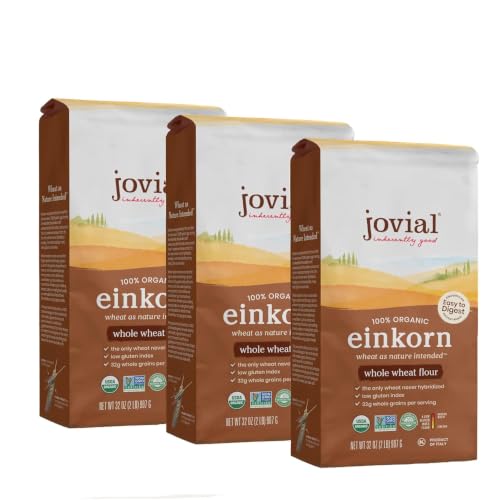
The original wheat — einkorn is the only wheat that has never been hybridized, and it bakes a uniquely flavorful loaf.
Einkorn is ancient wheat, the original grain from which all modern wheat descended. Jovial sources it from dedicated farmers in Italy who use long crop rotation cycles to preserve biodiversity. The gluten in einkorn is weaker and structurally different from modern wheat, which many people find easier to digest — though it is not safe for celiacs. The flour is prized for its nutty flavor, silky texture, and a buttery yellow color that gives baked goods a beautiful golden hue.
This is a 3-pack of 32-ounce bags (96 ounces total), so you get three smaller bags that stay fresher longer than one large bag. Bakers praise the quality and flavor, with 78 and 65 mentions respectively. It is lower in carbs and higher in fiber than standard whole wheat flour. However, einkorn behaves differently in dough — it absorbs less water and forms a weaker gluten network, so sourdough recipes need to be adapted. Many bakers recommend starting with einkorn-specific recipes or blending it with a stronger flour for structure.
“I love the natural healthfulness of Einkorn flour. If you read up on it, and find recipes specific to Einkorn, the taste is richer, fuller than regular wheat,” sums up the sentiment. This is not a drop-in replacement for your standard bread flour, but for the curious baker, it is a rewarding exploration of wheat’s original form.
A different kind of wheat: Einkorn’s weaker gluten means your sourdough will be denser and more cake-like than a traditional loaf. It excels in pancakes, scones, and flatbreads where structure is less critical.
Best for: Bakers curious about ancient grains who want a wheat flour that is non-hybridized, nutritious, and easier to digest.
Not a fit if: You need a direct 1:1 substitute for strong bread flour — this requires recipe adjustments and yields a different crumb.
9. CENTRAL MILLING 100% Organic Artisan Bread Flour
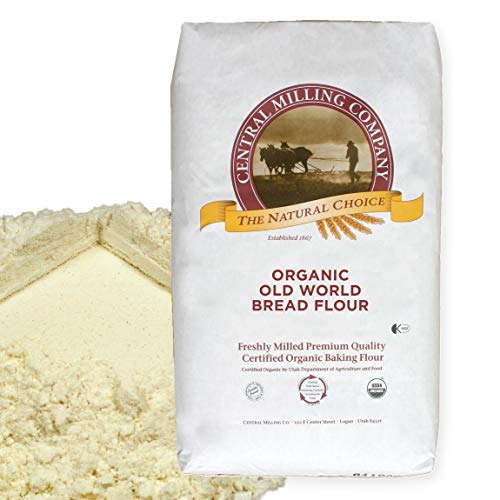
The 25-pound bulk bag that serious sourdough bakers buy direct from a 150-year-old mill.
Central Milling is one of America’s oldest continuously operating flour mills, employee-owned since 1864. This organic artisan bread flour is milled from wheat grown in high mountain valleys on family farms, then sifted to a lighter color that replicates European-style flours while retaining the heritage grain character. The result is a flour that behaves like a strong white bread flour but brings depth and nutrition from the whole grain.
This is the bag for the baker who goes through pounds of flour every week. At 25 pounds, it is a serious investment in storage space, but the value becomes clear as you bake loaf after loaf. The flour is versatile — exceptional for artisan bread and pizza, but equally good for cookies and all-purpose applications. Your sourdough starter will thrive on it, and the resulting loaves have a beautiful rise, a perfect crust, and a rich, complex flavor.
“Best flour for sourdough!! Love it!!” and “this is great bread flour!” are the kind of direct, enthusiastic reviews that fill the product page. The shelf stability is a standout feature: when stored in an airtight container with an oxygen absorber in a cool, dark room, it maintains freshness for 25 years. That makes this not just a bulk buy but also an emergency preparedness staple.
Bulk advantages
- 25-pound bag is the largest size on this list
- Heritage grain profile with sifted lightness for European-style bread
- Exceptional shelf life — up to 25 years with proper storage
Storage reality
- 25 pounds requires significant counter or pantry space
- Must be transferred to airtight containers or stored with oxygen absorbers for long-term freshness
Ideal for: Heavy bakers who go through multiple pounds of flour per week and want the best cost-per-pound from a trusted, employee-owned mill.
Probably too much if: You bake a single loaf every week or two — the flour will start to degrade before you finish the bag.
Understanding the Specs
Protein & Gluten Content
The protein percentage in flour is the single most important number for sourdough bakers. Higher protein (12% to 14%) gives you a stronger gluten network that traps more gas, leading to a taller, more open crumb. Lower protein (9% to 11%) is fine for cakes and pastries but will struggle to hold the structure of a long-fermented sourdough. Some flours state “high gluten” or “bread flour” on the bag without the exact percentage — look for the number on the nutrition panel or the product description. It is your best shortcut to predictable results.
Heritage vs. Modern Wheat
Modern wheat varieties have been hybridized over the past several decades for high yield and ease of milling, but many people find them harder to digest. Heritage wheat — varieties like Turkey Red and White Sonora grown from pre-1950s seed stock — has a different gluten structure that some bakers report causes less bloating and inflammation. Ancient grains like einkorn are even older and have never been hybridized at all. If digestion is a concern, moving from modern to heritage or ancient wheat flour can make a noticeable difference in how you feel after eating your sourdough.
Glyphosate & Organic Certification
Glyphosate, the active ingredient in the herbicide Roundup, is commonly used on wheat crops as a desiccant before harvest. Flours labeled “Glyphosate Residue Free” have been third-party tested to confirm no residue remains in the final product. USDA Organic certification also prohibits synthetic pesticides and herbicides, but does not specifically test for glyphosate residue. If avoiding glyphosate is important to you, look for a specific “Glyphosate Residue Free” certification in addition to organic labeling.
Stone-Ground vs. Roller-Milled
Stone grinding is an older milling method that crushes the entire wheat berry between two stones, retaining the germ and most of the bran. This creates a coarser flour with more flavor and nutrition, but it also means the flour is more perishable and absorbs water differently. Roller milling uses steel rollers to separate the bran and germ before grinding the endosperm into a fine, consistent powder. Most commercial bread flours are roller-milled because they have a longer shelf life and behave more predictably in dough. Neither is better — just different for different baking goals.
FAQ
What protein percentage should I look for in bread flour for sourdough?
Is heritage wheat flour better for sourdough than modern wheat flour?
Can I use all-purpose flour instead of bread flour for sourdough?
How should I store bulk bread flour to keep it fresh?
What does “glyphosate residue free” mean for bread flour?
Will bread flour with higher gluten make my sourdough chewier?
Can I use Type 00 flour for sourdough bread, or is it only for pizza?
Is einkorn flour safe for people with gluten sensitivity?
How long does a 5-pound bag of bread flour last for weekly sourdough baking?
What is the difference between “unbleached” and “bleached” bread flour for sourdough?
Final Thoughts: The Verdict
For most bakers, the best bread flour for sourdough winner is the Sunrise Flour Mill Heritage Organic White Flour because it delivers a rare combination — the protein strength for a beautiful open crumb, the heritage wheat digestibility that lets you eat a second slice without discomfort, and an organic, glyphosate-free pedigree that gives you total confidence. If you want maximum chew for bagels and artisan breads, grab the King Arthur High Gluten Flour with its 14% gluten benchmark. And if you bake in serious volume and want the best cost-per-pound from an employee-owned mill, the CENTRAL MILLING 25-pound Organic Artisan Bread Flour is the bulk buy that will keep your starter happy for months.
How We Picked
We do not accept paid placement. Every pick is matched to a real buyer and a real use-case; we do not hands-on test units.
Sources & Methodology
Specifications: manufacturer listings and product documentation. Review insights: verified customer reviews, as of July 2026. Pricing: not shown on this page (it changes often); check the current price via the retailer link.
As an Amazon Associate, FitlyFast earns from qualifying purchases. This does not affect which products we feature.