
Our readers keep the lights on and the weekend projects moving. As an Amazon Associate, I earn from qualifying purchases.
Gout flares are triggered by the breakdown of purines into uric acid, and the standard advice is to avoid red meat, shellfish, and alcohol. But bread — the quiet foundation of most meals — is rarely scrutinized for its purine load or its ability to spike uric acid through high-fructose content and refined white flour. For anyone managing gout, choosing the wrong loaf can quietly undo a day of clean eating.
I’m Rikta — the co-founder and writer behind FitlyFast. After spending hundreds of hours analyzing ingredient labels, fiber-to-carb ratios, and the glycemic impact of commercial breads, I built this guide around the specific criteria that protect uric acid levels: high whole-grain content, zero added sugars, and minimal refined starch.
Each loaf below was selected for its ability to deliver real bread satisfaction without the hidden purine triggers and metabolic stress that fuel gout attacks. This is the definitive guide to the bread for gout.
How To Choose The Best Bread For Gout
Selecting a gout-friendly bread means looking past marketing claims like “wheat” or “multigrain” and focusing on three measurable traits: whole-grain composition, added sugar content, and net fiber per slice. The wrong loaf can cause a rapid insulin spike that reduces uric acid excretion, while the right one supports stable blood sugar and kidney function.
Prioritize 100% Whole Grains Over Refined Flour
Refined white flour hits the bloodstream like simple sugar, triggering an insulin surge that signals the kidneys to hold onto uric acid rather than excrete it. Whole rye, sprouted grains, and stone-ground whole wheat contain the bran and germ, which slow down glucose absorption and keep insulin levels flat. Look for a first ingredient that names a whole grain — rye, spelt, oat, or whole wheat — and avoid anything that says “enriched” or “unbleached wheat flour.”
Check for Added Sugars and High-Fructose Syrup
Fructose is a direct purine precursor; when the liver processes it, uric acid is produced as a byproduct. Many commercial breads contain added sugar, honey, molasses, or high-fructose corn syrup to improve taste and shelf life. A single slice of sweetened bread can contain 2–4 grams of hidden sugar. For gout management, choose loaves with zero grams of sugar per slice and no sweeteners in the ingredient list.
Maximize Fiber Per Slice
Dietary fiber helps regulate blood sugar and supports healthy digestion, both of which indirectly aid uric acid clearance. A gout-friendly bread should deliver at least 3 grams of fiber per slice. Whole rye and sprouted grain breads often hit 4–9 grams per serving, while standard white bread offers less than 1 gram. High fiber also increases satiety, making it easier to avoid high-purine snack foods between meals.
Quick Comparison
On smaller screens, swipe sideways to see the full table.
| Model | Category | Best For | Key Spec | Amazon |
|---|---|---|---|---|
| Mestemacher Pumpernickel | Whole Rye | Everyday high-fiber sandwiches | 9g fiber per slice | Amazon |
| Food For Life Ezekiel 4:9 | Sprouted Grain | Low-sodium clean eating | 4g fiber per slice | Amazon |
| Hero Bread Classic White | Zero-Carb | Low-carb & diabetic-friendly toast | 0g net carb per slice | Amazon |
| Mestemacher Organic Sunflower Seed | Organic Whole Rye | Toasted hearty breakfasts | USDA Organic, 5g fiber | Amazon |
| Joseph’s Lavash Bread | Flatbread | Wraps and low-carb pizza | 6g net carb per lavash | Amazon |
| Joseph’s Mini Pita | Low-Carb Mini | Dipping and small sandwiches | 5g net carb per pita | Amazon |
| Woodland Gourmet Rye Berries | Bulk Whole Grain | Home milling and baking | 10 lb bulk grain | Amazon |
In‑Depth Reviews
1. Mestemacher Pumpernickel Bread
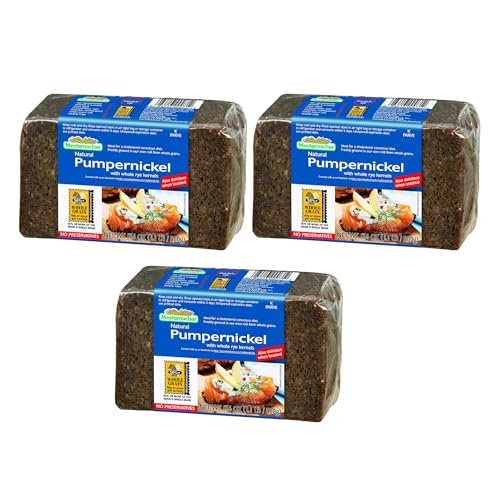
Mestemacher’s Pumpernickel is a traditional German whole rye loaf that checks every box for gout management. Each slice delivers 9 grams of fiber with only 3 grams of sugar, and the ingredient list contains nothing beyond whole rye, rye flour, water, yeast, and salt. No preservatives, no added sweeteners, and no refined flour. The slow-baking process produces a dense, chewy crumb that holds up to hearty toppings without falling apart.
Customer feedback consistently highlights the soft texture and nutty flavor, especially when lightly toasted. One reviewer with gluten sensitivity noted that this bread remains one of the few store-bought options that doesn’t cause a reaction, while another praised the long shelf life for meal prep. The thin slices can break under heavy sandwich fillings, but toasting solves that issue completely.
For a gout sufferer, the combination of ultra-high fiber and zero refined carbs makes this the safest daily loaf on the market. The only real adjustment is accepting that this bread tastes nothing like soft white bread — it’s a dense, European-style loaf that demands a different eating experience.
Why it’s great
- 9g fiber per slice supports steady glucose and uric acid clearance.
- Zero added sugars or high-fructose sweeteners.
- Shelf-stable with no preservatives — ideal for pantry storage.
Good to know
- Thin slices can crack easily under heavy wet fillings.
- Dense rye flavor isn’t for everyone.
2. Food For Life Ezekiel 4:9 Sprouted Grain Bread

Ezekiel 4:9 is the gold standard for sprouted grain breads. It contains no added sugar at all, and the sprouting process breaks down phytic acid, making the minerals more bioavailable. The low-sodium version is especially important for gout, since high sodium intake can impair kidney function and reduce uric acid excretion. The ingredient list is clean: organic sprouted wheat, barley, beans, lentils, millet, and spelt — nothing artificial.
Buyers consistently describe the taste as hearty and satisfying, though one reviewer reported that the loaf molded quickly after opening. This bread has a shorter shelf life than preservative-heavy commercial loaves, so refrigeration or freezing is essential. Another five-star review simply called it “super healthy” and noted that the texture toasts well without turning dry.
The combination of low sodium, zero sugar, and complete whole-food ingredients makes this an excellent choice for gout patients who want a reliable, clean loaf. The main tradeoff is storage discipline — you must freeze or refrigerate it immediately upon arrival to avoid spoilage.
Why it’s great
- Zero added sugars and low sodium for kidney-friendly eating.
- Sprouted grains improve mineral absorption and reduce glycemic load.
- 100% organic and plant-based.
Good to know
- Short refrigerator shelf life; must be frozen for long-term storage.
- Heavy, dense texture may feel too rustic for some.
3. Hero Bread Classic White Bread
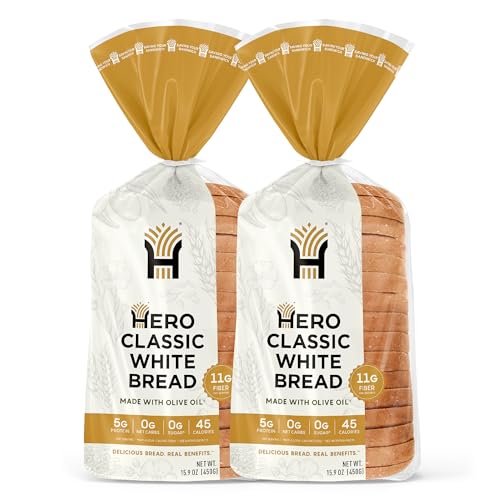
Hero Bread manages to replicate the soft, airy texture of classic white bread while delivering zero net carbs and zero sugar per slice. For gout patients who miss traditional American sandwich bread, this is the closest alternative. The 11 grams of dietary fiber per slice come from resistant starches and prebiotic fiber sources, not whole grains, which keeps the texture light while still providing the glucose-stabilizing benefits of high fiber.
Customer reviews are overwhelmingly positive, with many calling it the only keto bread that actually tastes like “real bread.” One reviewer noted it toasts perfectly for grilled cheese, while another with diabetes said it didn’t spike blood sugar at all. The main downside is the price, which is notably higher than standard bread, and the 10-day freshness window after opening before it needs freezing.
For gout, the absence of sugar, the high fiber content, and the low-carb profile make this a safe option, but it’s not a whole-grain bread. If you’re not strictly watching carbs, the whole rye options above offer more natural nutrition.
Why it’s great
- Zero net carbs and zero sugar — no insulin spike for uric acid retention.
- Light, fluffy texture that mimics standard white bread.
- 11g fiber per slice supports digestion and satiety.
Good to know
- Significantly more expensive than conventional bread.
- Must be consumed within 10 days or frozen.
4. Mestemacher Organic Sunflower Seed Bread
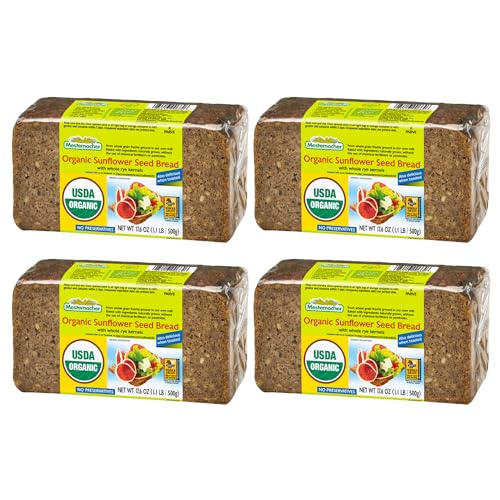
This organic German rye loaf takes everything great about Mestemacher’s Pumpernickel and adds crunchy sunflower seeds for extra texture and healthy fats. It is USDA Organic, contains no preservatives, and lists only organic rye flour, whole kernel rye, sunflower seeds, and sea salt as ingredients. No sugar, no yeast, no added oils. The sunflower seeds contribute magnesium and vitamin E, both of which support anti-inflammatory pathways relevant to gout.
Reviewers rave about the toasting performance: the seeds become fragrant and the crust turns crisp while the interior stays moist. One customer called it “the healthiest bread in the world,” noting you could stand a slice on its edge without it bending. Another mentioned it pairs beautifully with cream cheese, tomatoes, and cheese for a satisfying breakfast. The density means a single slice is genuinely filling.
The only downside is the crumbly texture when eaten untoasted, and the need to freeze after opening to maintain freshness. But for gout patients who want an organic, seed-topped loaf that won’t trigger purine issues, this is an outstanding choice.
Why it’s great
- USDA Organic with no added sugar or preservatives.
- Sunflower seeds add anti-inflammatory magnesium and healthy fats.
- Extremely dense and satisfying — one slice goes a long way.
Good to know
- Texture is crumbly if not toasted.
- Must be frozen after opening to preserve freshness.
5. Joseph’s Bakery Lavash Bread
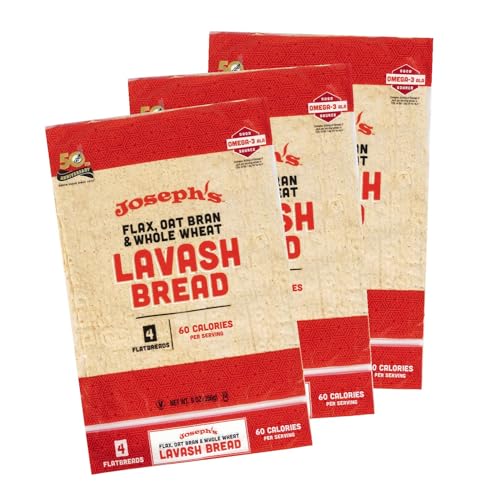
Joseph’s Lavash is a thin flatbread made with flax, oat bran, and whole wheat, offering 6 grams of net carbs per serving with no added sugar. It ships fresh rather than frozen, which means a shorter shelf life, but the flexibility of the bread makes it ideal for wraps, low-carb pizza crusts, and roll-ups. The flax content provides omega-3 ALA, which supports overall inflammation management.
Customers love the versatility: one reviewer uses it to make air-fried taco pockets with lean chicken, while another uses it as a daily sandwich wrap that doesn’t taste like cardboard. Multiple reviews note that it’s more “bread-like” than typical flour-based low-carb wraps, with a better texture that doesn’t turn spongy when heated.
The main drawback is the price — it’s notably more expensive per unit than standard bread. The 2-week freshness window also requires planning. But for gout patients who want a flexible, sugar-free flatbread option, Joseph’s Lavash is a reliable choice.
Why it’s great
- 6g net carbs with no added sugars or sweeteners.
- Versatile enough for wraps, pizza, and roll-ups.
- Flax content provides anti-inflammatory omega-3s.
Good to know
- Price per unit is higher than traditional bread.
- Short 14-day shelf life after delivery.
6. Joseph’s Low Carb Mini Pita Bread
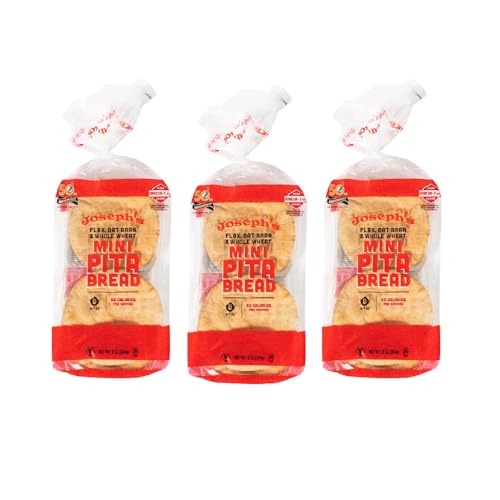
Joseph’s Mini Pitas offer a low-carb, low-fat alternative to traditional pita bread, with 5 grams of net carbs and 60 calories per serving. Each pack contains 8 mini pitas, and the set includes three packs for a total of 24 pitas. The ingredient profile — flax, oat bran, and whole wheat — keeps added sugars at zero and delivers a decent fiber boost without spiking insulin.
Customers appreciate the pre-split design and the taste. One reviewer uses them for gyros and wraps, while another noted they make excellent soft taco shells. A common observation is that the pitas are thin and can tear easily if overstuffed, but they hold up well for lighter fillings and dipping.
The value proposition here is strong: you get 24 individual pitas at a lower per-unit cost than many competing low-carb breads. For gout patients who want a quick, portion-controlled vehicle for lean protein and vegetables, these mini pitas are a practical pantry staple.
Why it’s great
- 5g net carbs with zero added sugar.
- 24-count pack offers strong value for the price.
- Low fat and low calorie — fits gout-friendly meal plans.
Good to know
- Thin pitas tear easily under heavy fillings.
- 16-day shelf life after defrosting.
7. Woodland Gourmet Rye Berries
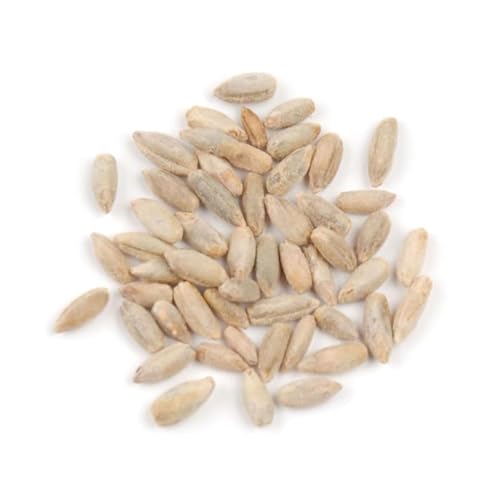
This is not a finished loaf of bread. Woodland Gourmet Rye Berries are whole rye grains with only the inedible hull removed, sold in a 10-pound bulk bag. For gout patients who want complete control over their bread ingredients, grinding these berries into fresh rye flour at home is the ultimate expression of clean eating. Rye has a naturally lower glycemic index than wheat and contains no added sugars, no preservatives, and no industrial additives.
Customers use these berries for home milling, sourdough starters, and even mushroom cultivation. One reviewer reported perfect bread results with a light, pastry-like crumb, while another praised the absence of debris and the lack of salt or sugar. The grains cook similarly to rice or barley, making them usable for hot cereal or grain bowls as well.
The obvious tradeoff is effort: you need a grain mill or a high-powered blender to convert these berries into flour. But for the gout patient who values absolute ingredient transparency and wants to bake their own low-purine, whole-rye bread, this bulk option is unmatched in quality and value.
Why it’s great
- 100% whole rye with no additives, sugar, or salt.
- 10-pound bulk format for serious home bakers.
- Rye has a naturally low glycemic index and is rich in fiber.
Good to know
- Requires a grain mill or high-powered blender to grind into flour.
- Not a ready-to-eat product — baking skills are necessary.
FAQ
Is whole wheat bread safe for gout?
Can sourdough bread help lower uric acid?
Does gluten-free bread work for gout?
Final Thoughts: The Verdict
For most users, the bread for gout winner is the Mestemacher Pumpernickel Bread because it delivers 9 grams of fiber per slice with zero added sugars and no refined flour. If you want a sprouted grain loaf with the cleanest possible ingredient list, grab the Food For Life Ezekiel 4:9. And for those who miss the soft texture of white bread while keeping purine triggers in check, nothing beats the Hero Bread Classic White.