
Our readers keep the lights on and the weekend projects moving. As an Amazon Associate, I earn from qualifying purchases.
Getting that artisan-style crust and airy crumb at home without a commercial deck oven typically comes down to one thing: trapping steam during the first phase of the bake. A bread oven designed specifically for this task manages moisture and heat in a way a standard roasting pan cannot. Whether you are shaping your first boule or perfecting your scoring technique, the dedicated geometry of a bread oven makes the difference between a dense loaf and one with a dramatic oven spring.
I’m Rikta — the co-founder and writer behind FitlyFast. My research into this category focused on heat retention materials, steam-trapping lid designs, and how different capacities and weights affect the daily reality of baking sourdough.
After comparing enameled cast iron, carbon steel, pre-seasoned models, and complete baking kits, the best bread oven for most homes balances excellent heat distribution with a manageable weight and a lid that locks in humidity for that signature crackling crust.
How To Choose The Best Bread Oven
Every dedicated bread oven works by creating a sealed, humid environment during the first 20–25 minutes of baking. The lid traps steam released from the dough, keeping the crust elastic so the loaf can expand fully before the heat sets the structure. Beyond this core principle, the material, shape, and finish determine how pleasant and consistent the daily baking experience is.
Material Matters: Cast Iron, Carbon Steel, or Aluminum
Cast iron, especially enameled cast iron, offers unmatched heat retention. A preheated cast iron bread oven will hold its temperature even when a cold dough is loaded, which promotes immediate oven spring. The trade-off is weight — most cast iron bread ovens weigh 12 to 20 pounds, which makes lifting them in and out of a hot oven a genuine strain. Carbon steel, treated with a nitriding process, sheds roughly half that weight while still providing excellent heat distribution across the base and walls. Aluminum baking shells, like the Brod & Taylor option, drop the weight to just over a pound and eliminate the preheating wait entirely, although they have lower thermal mass.
Lid Design and Steam Trapping
The lid’s shape and fit directly control the steam environment. A domed lid provides more headroom for taller loaves and helps moisture circulate over the entire surface. Some bread ovens are designed with a low-profile base and pronounced dome to ease loading and scoring. The tightness of the seal matters too — a loose lid lets steam escape, which reduces oven spring and produces a thicker crust. Look for a lid that sits flush and feels substantial when closed.
Finish: Enameled, Pre-Seasoned, or Bare Metal
Enameled cast iron requires no seasoning and resists staining, though the coating can chip if handled roughly. Pre-seasoned bare cast iron develops a natural non-stick layer over time and can handle higher temperatures, but it needs regular maintenance to prevent rust. Nitrided carbon steel is a newer alternative — nitrogen is embedded into the metal surface, creating a rust-resistant layer that never wears off and requires no oiling. Enameled surfaces are generally the easiest to wipe clean, while bare or nitrided steel often develops a desirable patina that enhances bread release over time.
Shape and Capacity for Your Loaf Style
Round bread ovens (boules) are the classic choice for sourdough, typically ranging from 4 to 6 quarts. Oval or rectangular ovens accommodate bâtards and longer sandwich-style loaves. Some double-loaf designs let you bake two smaller rounds at once, which is efficient for batch bakers. Consider the width of your oven rack and how much clearance you have — an 18-inch-long bread oven with handles may be tight in a standard 30-inch oven. Also check the depth: a shallow base makes it dramatically easier to score and load the dough without burning your forearms.
Quick Comparison
On smaller screens, swipe sideways to see the full table.
| Model | Category | Best For | Key Spec | Amazon |
|---|---|---|---|---|
| Bulka Bread Oven | Carbon Steel | Lightweight high-performance baking | 8.5 lbs / nitrided finish | Amazon |
| Le Creuset Signature Oval | Enameled Cast Iron | Premium build and heirloom durability | 1.5 qt / oval shape | Amazon |
| Brod & Taylor Baking Shell | Aluminum Shell | No-preheat convenience | 1 lb 2 oz / 550°F max | Amazon |
| Nuovva Double Loaf Pan | Enameled Cast Iron | Baking two loaves at once | 4 qt / two 16.5 cm rounds | Amazon |
| Neretva Bread Machine | Electric Bread Maker | Fully automated loaf production | 2.2 lb / 15 programs | Amazon |
| VORRINGARD Enameled Dutch Oven | Enameled Cast Iron | Entry-level enameled baking | 5 qt / oven safe to 500°F | Amazon |
| Crovora Cast Iron Kit | Pre-Seasoned Cast Iron | Complete starter baking set | 5 L / includes banneton & lame | Amazon |
In‑Depth Reviews
1. Bulka Bread Oven
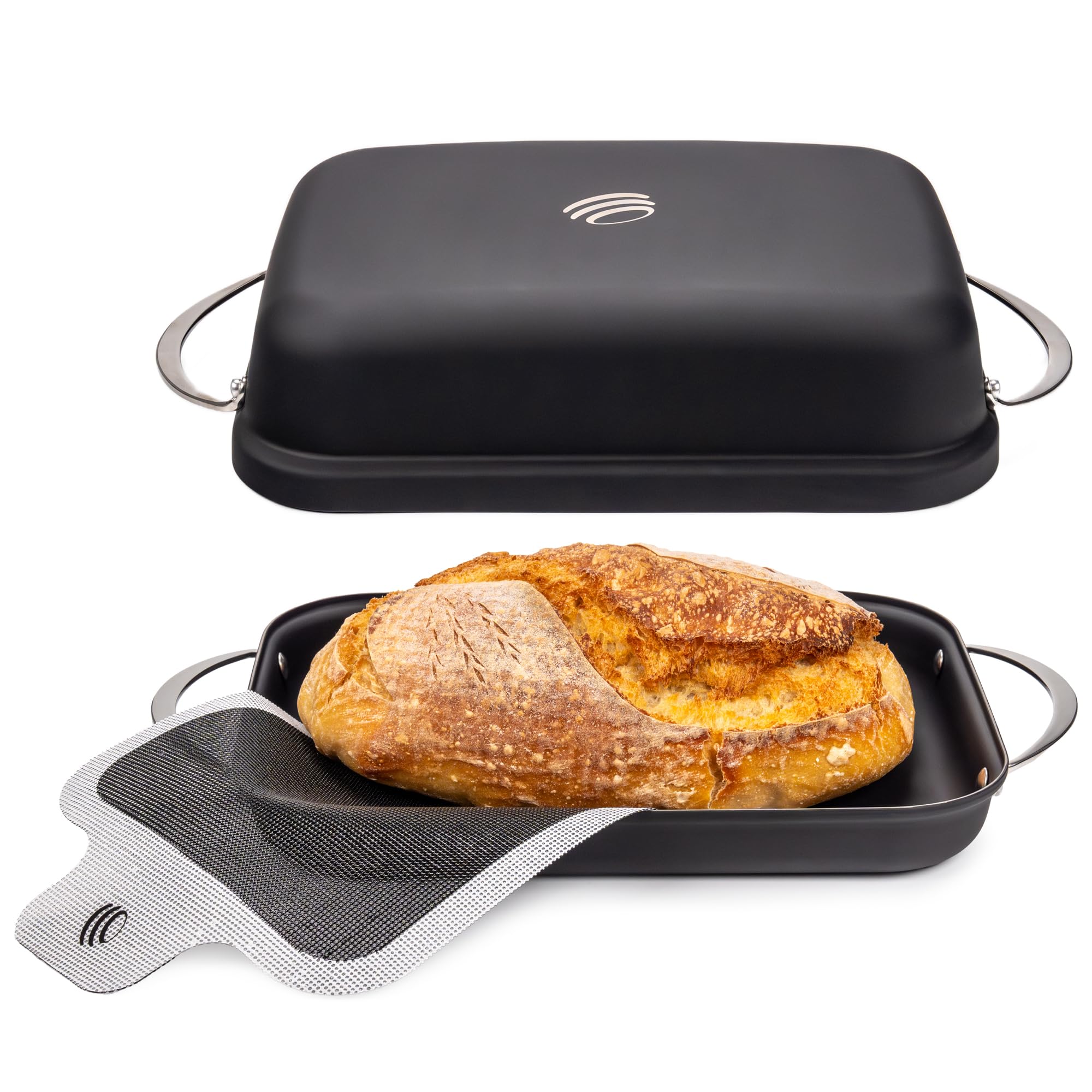
The Bulka Bread Oven is engineered around a fundamental insight: a heavy Dutch oven hurts the baking experience. At 8.5 pounds, this nitrided carbon steel unit weighs roughly half as much as a typical cast iron bread oven, yet it delivers the same steam-trapping environment needed for explosive oven spring. The nitriding process embeds nitrogen into the steel surface, creating a permanent rust-resistant layer that requires no seasoning and never chips like enamel. Users consistently report that it heats up with the oven in about 15 minutes instead of the usual 45-minute preheat needed for cast iron, saving both time and energy.
The rectangular shape with 3.7 inches of headroom accommodates boules, bâtards, and oval loaves with room to spare. The shallow base makes scoring and loading dramatically easier — there is no deep wall to reach over with a hot arm. The included silicone bread sling fits the base exactly, allowing safe dough transfer without disturbing the loaf structure or risking burns. Bakers note that the lid traps steam so effectively that the crust develops deep caramelization and blistering without needing to add extra ice cubes to the pan.
The one real consideration is price — this is a premium tool that costs more than most enameled cast iron alternatives. But for anyone who bakes several times a week, the weight reduction alone justifies the investment. The performance trade-off vs heavy cast iron is minimal: the lower thermal mass means the oven recovers temperature slightly slower after loading the dough, but preheating faster compensates. Reviewers describe the resulting crust as superior to anything they achieved with cast iron cocottes, with no burnt bottoms and a dramatically better oven spring.
Why it’s great
- Weighs 8.5 lbs — half of cast iron — for easier handling
- Preheats in 15 minutes with no lengthy wait
- Nitrided finish is rust-resistant and requires zero seasoning
- Rectangular shape fits multiple loaf styles with good headroom
Good to know
- Premium price point — highest cost in this lineup
- Lower heat retention than heavy cast iron for back-to-back bakes
- Hand wash only; not dishwasher safe
2. Le Creuset Enameled Cast Iron Signature Oval Bread Oven
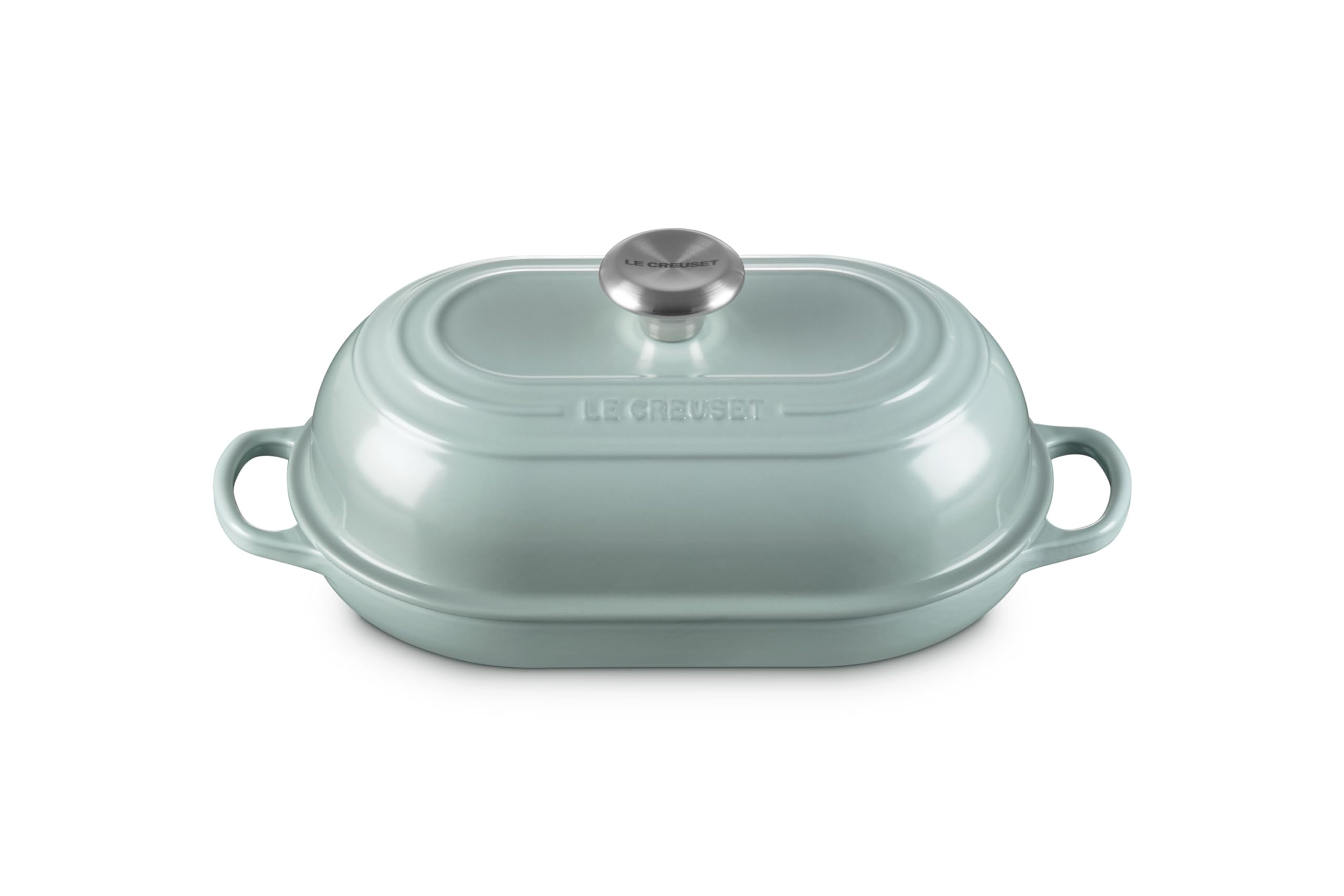
Le Creuset brings its generations of enameled cast iron expertise to the bread oven category with this oval Signature model. The elongated shape is a deliberate design choice — it offers room for bâtards and longer artisan loaves that a standard round Dutch oven cannot accommodate. The domed lid is engineered specifically for bread baking: its tight fit traps and circulates steam to keep the crust extensible during the first phase of the bake, allowing maximum oven spring before the structure sets. The low-profile base with raised ridges creates the characteristic Le Creuset ring pattern on the loaf bottom without needing parchment paper.
The matte black satin interior enamel is designed to develop a natural patina over time that enhances release and browning. Bakers report that the lid is heavy but noticeably lighter than traditional Le Creuset round Dutch ovens because the oval shape reduces overall material. The ergonomic knobs and handles make lifting manageable, though at the expected weight of a cast iron piece. Users consistently note that the color selection — including the Sea Salt finish — is visually striking and matches well with kitchen aesthetics. The enamel resists staining and dulling, and the piece is dishwasher safe, which simplifies cleanup though hand washing preserves the finish longer.
The trade-off for this iconic brand is capacity and price. At 1.5 quarts, this bread oven is smaller than most competitors — it produces smaller loaves, which some bakers find limiting. The oval shape also means it functions essentially as a unitasker for bread; the raised ridges on the base prevent it from being used as a general-purpose Dutch oven for stews or braises. The price is firmly in the premium tier, reflecting the brand, the craftsmanship, and the lifetime warranty. For bakers who value aesthetics and brand heritage and typically bake single bâtards or small boules, this remains a benchmark choice.
Why it’s great
- Superior heat retention and even distribution from enameled cast iron
- Oval shape with domed lid excels for bâtards and longer loaves
- Dishwasher-safe for simple cleaning
- Lifetime durability with iconic brand quality
Good to know
- Small 1.5-quart capacity produces only small loaves
- Very high price relative to capacity
- Raised ridges limit versatility as a general pot
3. Brod & Taylor Ultralight Baking Shell

Brod & Taylor rethinks the bread oven from first principles: instead of a massive thermal mass that takes 45 minutes to preheat, this ultralight aluminum shell weighs just over a pound and requires no preheating at all. You simply preheat your oven with a baking steel or stone, place the risen dough on the hot surface, and cover it with the shell. The aluminum dome traps steam immediately, creating the humid microclimate needed for oven spring and a crisp crust. The complete lack of preheating time transforms the baking workflow — you can have dough in the oven within minutes of turning it on.
The design is minimal: a 13-inch square dome that sits over the dough on any flat baking surface — steel, stone, or even a baking sheet. Food-safe aluminum handles up to 550°F with no chemical coatings like PTFE or PFOA. After 20 minutes of covered baking, you lift the shell off to finish browning the crust. The lightweight means you can lift the lid with one hand mid-bake to check progress without risking burns from a heavy cast iron lid. Cleanup is a quick wipe; there is no seasoning to maintain and no heavy scrubbing required. Reviewers consistently report that the shell produces results indistinguishable from cast iron — crispy crust, open crumb, and excellent oven spring.
The main limitation is that it bakes only one loaf at a time, and the dome shape only works for boules, not longer bâtards. The aluminum construction lacks the thermal mass of cast iron, so if you open the oven door to check the loaf, the temperature drops faster and takes longer to recover. Some users also find the side knob design slightly awkward for lifting the shell off the loaf. But for bakers who bake frequently and want to eliminate the physical strain and preheating wait of cast iron, this shell is a genuinely clever solution that delivers bakery-level results with minimal effort.
Why it’s great
- Just 1 lb 2 oz — the lightest option by far
- No preheating needed; saves 30–45 minutes per bake
- Traps steam effectively for crisp crust and good oven spring
- Easy to clean with a simple wipe
Good to know
- Dome shape only works for round boules, not longer loaves
- Low thermal mass means slower recovery after opening oven
- Side knob can feel awkward when lifting the shell
4. Nuovva Double Loaf Bread Oven
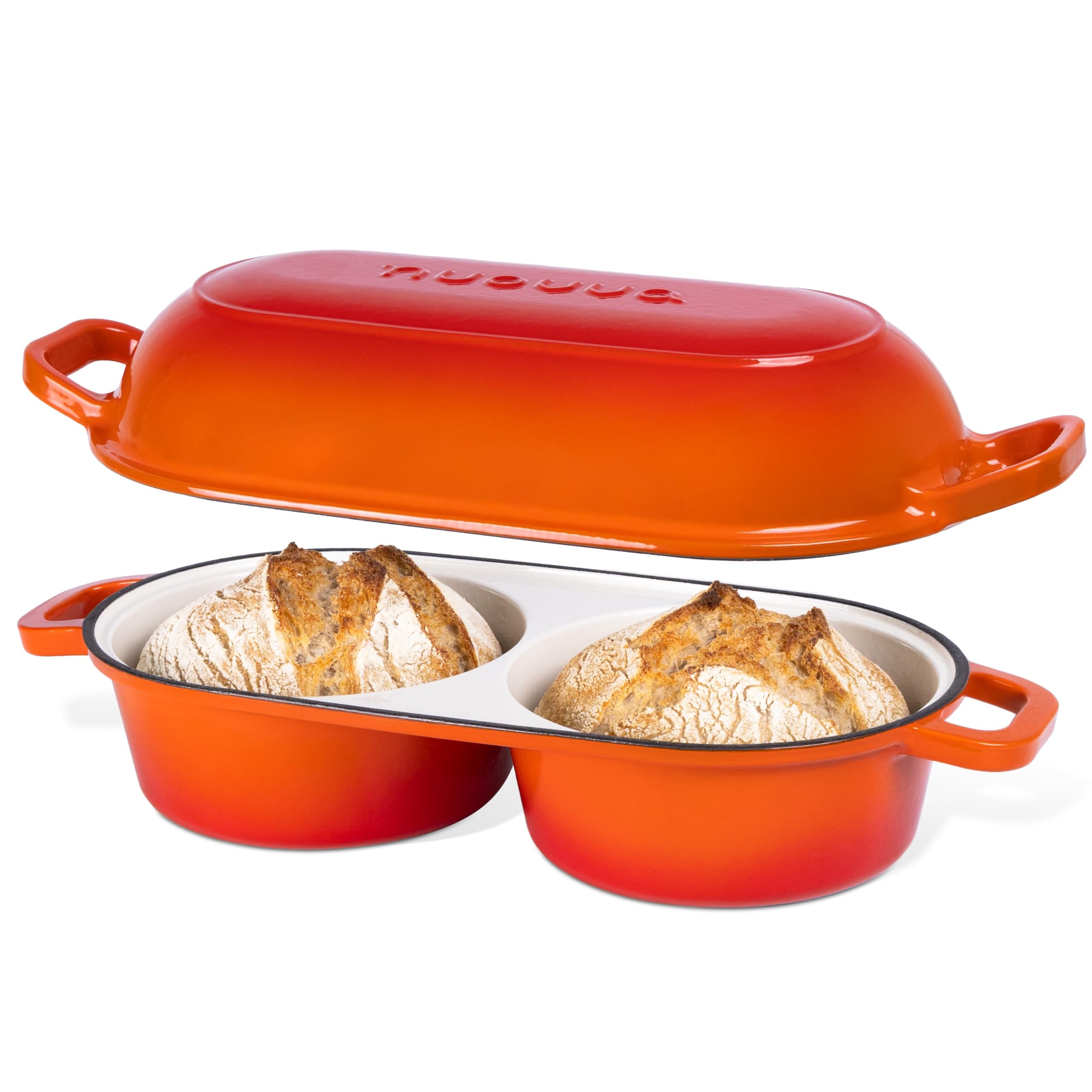
Nuovva tackles the classic baker’s dilemma — wanting to bake two loaves but only having one Dutch oven — with a dedicated double-round design. This enameled cast iron pan features two 16.5-centimeter round cavities under a single lid, allowing you to bake two smaller loaves simultaneously. The dual-round shape ensures each loaf gets its own steam environment while sharing the oven’s heat. The 4-quart total capacity means each cavity produces a loaf roughly half the size of a standard boule, which is ideal for households that prefer smaller, more frequent loaves or want to experiment with different flours side by side.
The reinforced enamel coating is smooth and non-stick, making cleanup straightforward even after high-hydration doughs. The lid is domed to trap steam and is heavy enough to hold temperature well. Reviewers praise the design for preventing dough spread — the tall sides keep each loaf rising upward rather than outward, which is a common problem when baking free-form on a sheet pan. Bakers using this oven report excellent oven spring and a crisp crust comparable to single-loaf Dutch ovens. The orange finish is vibrant and the cast iron construction is sturdy, with quality comparable to more expensive French brands at a lower cost.
The trade-offs are around size and versatility. Each individual cavity is relatively small — bakers who want large artisan boules will find these loaves too petite. The unit is heavy, at around 15 pounds, and its double-wide footprint takes up significant oven space. The dual-cavity design also means you cannot use this pan for a single large roast or stew, making it a more specialized tool. But for bakers who routinely make two loaves at once — whether for gifting, freezing, or serving — the Nuovva saves a full cycle of baking time and delivers consistently good results.
Why it’s great
- Bakes two smaller loaves simultaneously, cutting total bake time
- Enameled interior is non-stick and easy to clean
- Domed lid traps steam well for good oven spring
- Great value for a dedicated dual-loaf design
Good to know
- Each cavity is small — produces half-size loaves only
- Heavy at roughly 15 pounds; footprint is large
- Not versatile for non-bread cooking uses
5. Neretva 2.2LB 15-in-1 Bread Machine
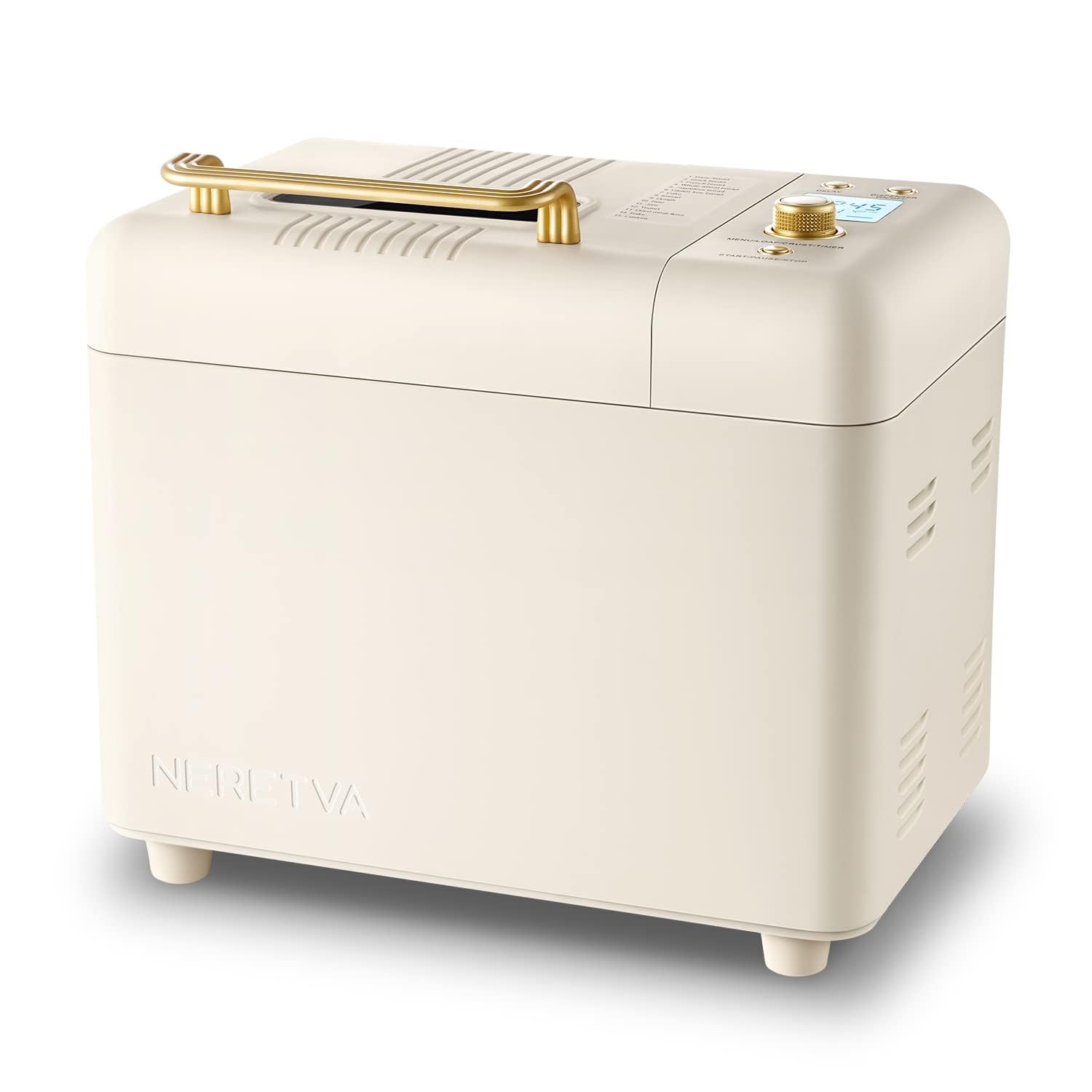
For bakers who want fresh bread without any hands-on shaping, preheating, or monitoring, the Neretva 2.2LB machine offers a complete automated solution. This is a bread machine — not a Dutch oven — but it earns its place in a bread oven discussion because it replaces the entire baking workflow. The 600-watt dual heater system uses elements at both the top and bottom of the loaf pan for 360-degree surrounding heat, promoting even browning and a fluffy interior. Fifteen program menus cover basic white, whole wheat, French, sweet, gluten-free, sourdough, dough only, jam, and yogurt, making this one of the most versatile automated bread makers in its price tier.
The ceramic bread pan is non-stick and free of chemical coatings, which is a meaningful upgrade over standard non-stick pans that can degrade over time. The auto fruit and nut dispenser releases add-ins at the optimal moment during kneading, preventing them from being crushed. The 15-hour delay timer means you can set it up at night and wake to warm bread, or program it to finish baking just before dinner. The viewing window in the lid lets you monitor the process without opening the machine and releasing heat. Users generally report that the machine operates quietly during mixing and kneading, though some note the kneading cycle does produce a moderate noise level.
The main limitation is that this is a bread machine, not a traditional bread oven — it produces a standard loaf shape with a hole in the bottom from the kneading paddle, not an artisan-style boule with a crispy crust. The 2.2-pound capacity is generous for a bread machine, serving 6–7 people, but the texture and crust will never match what a steam-trapping metal or ceramic oven produces. For households where convenience is the priority and the goal is consistent, additive-free sandwich bread without any effort, the Neretva delivers excellent value. For sourdough enthusiasts chasing a blistered crust and open crumb, this machine simplifies the kneading and proofing but you will still need a traditional bread oven for the final bake.
Why it’s great
- Fully automated — add ingredients and press start for a complete loaf
- Dual heaters at top and bottom for even browning
- Auto dispenser for fruits and nuts at the right moment
- 15-hour delay timer for fresh bread on your schedule
Good to know
- Produces standard machine-shaped loaves, not artisan boules
- Kneading arm leaves a hole in the bottom of each loaf
- Not a replacement for a steam-trapping bread oven for crusty bread
6. VORRINGARD Enameled Cast Iron Sourdough Bread Oven

VORRINGARD offers a straightforward enameled cast iron Dutch oven that performs the bread baking job without any premium brand markup. The 5-quart capacity is ideal for standard-sized boules, and the round shape with looped handles makes it easy to lift even when preheated. The enamel coating is thick and chip-resistant according to user reports, providing a smooth surface that releases bread easily and cleans up with just warm soapy water. The heavy cast iron construction retains heat for extended periods — reviewers note it stays hot for up to an hour after being removed from the oven — which helps maintain a consistent temperature throughout the baking cycle.
The key spec that matters for bread bakers is the oven safety up to 500°F, which is sufficient for the high-heat preheating and baking that sourdough requires. The dome lid provides adequate headroom for decent oven spring. Users report that adding ice cubes under the lid creates excellent steam for a crispy crust and airy interior. The flat bottom is wide enough to accommodate a round of parchment paper, simplifying dough transfer. Several reviewers note that this Dutch oven outperforms significantly more expensive brands for sourdough specifically, citing even heating and good steam retention as the decisive factors.
The limitations are common to the category: this is a heavy piece at just under 13 pounds, and the enamel requires care — metal utensils and abrasive scrubbers can damage the coating. The round shape is excellent for boules but less flexible for other loaf shapes. This bread oven is not dishwasher safe. For bakers who want the performance of enameled cast iron at a reasonable price point and are willing to handle the weight, the VORRINGARD is a solid workhorse that delivers consistent results without the prestige price of the big French brands.
Why it’s great
- Thick chip-resistant enamel for easy release and cleaning
- 5-quart capacity fits standard boules well
- Excellent heat retention keeps temperature steady through the bake
- Oven safe to 500°F for proper sourdough preheating
Good to know
- Heavy at nearly 13 pounds — lifting can be taxing
- Enamel can chip if struck with metal utensils
- Not dishwasher safe; hand wash only
7. Crovora Pre-Seasoned Cast Iron Dutch Oven with Baking Kit

Crovora takes a different approach by packaging a pre-seasoned cast iron Dutch oven with a full set of bread baking tools, creating a complete starter system for new bakers. The 5-liter cast iron pot comes with a lid that traps steam effectively, and the pre-seasoned finish means it is ready to use immediately without any oiling or conditioning. The kit includes a banneton proofing basket, silicone bread sling, scoring lame, dough whisk, scrapers, cleaning brush, and a recipe booklet. For a beginner who has nothing but a kitchen scale, this set provides everything needed to go from mixing to slicing.
The cast iron pot itself performs solidly for bread baking. The pre-seasoned surface will improve with use as oils polymerize from repeated high-heat baking. The round shape works well for boules, and the lid fits tightly enough to create a steam chamber. Users report even heat distribution and good oven spring. The included silicone sling fits the pot well, making it safe to transfer the hot dough in and out without burning your hands. The banneton basket is a genuine value add — skipping the step of having to buy a separate proofing basket saves time and money. The scoring lame with replaceable blades is a nice touch for practicing ear development.
The trade-off is that pre-seasoned cast iron requires more maintenance than enameled options. The bare iron can rust if not dried thoroughly after washing, and it needs periodic oiling to maintain the seasoning. The pot is heavy, consistent with cast iron. Some components in the kit — like the dough whisk and brush — are functional but not premium quality. For the baker who wants to start making artisan bread immediately without hunting down individual tools, this kit delivers excellent value by consolidating the essential accessories into one purchase.
Why it’s great
- Complete starter set with banneton, lame, sling, and recipes
- Pre-seasoned and ready to use out of the box
- Solid cast iron heat retention for even baking
- Silicone sling makes safe dough transfer easy
Good to know
- Pre-seasoned iron needs regular maintenance to prevent rust
- Heavy — typical cast iron weight
- Some kit accessories are basic rather than premium quality
FAQ
Do I need to preheat a bread oven for sourdough?
Why does my bread stick to the Dutch oven?
Can I use a regular Dutch oven instead of a bread oven?
Is a lightweight bread oven as effective as cast iron?
How do I clean a bread oven without damaging it?
Final Thoughts: The Verdict
For most users, the bread oven winner is the Bulka Bread Oven because it combines the steam-trapping performance of a traditional Dutch oven with a manageable 8.5-pound weight and fast preheating that fits into a daily baking routine. If you want the classic elegance and heirloom durability of enameled cast iron for baking smaller bâtards, grab the Le Creuset Signature Oval. And for no-preheat convenience and the lightest possible handling, nothing beats the Brod & Taylor Ultralight Baking Shell.