
Our readers keep the lights on and the weekend projects moving. As an Amazon Associate, I earn from qualifying purchases.
Every drop matters when you’re trying to build or maintain a breast milk supply, yet the wrong pump can signal your body to produce less, not more. The difference often comes down to suction strength, rhythm mimicry, and flange fit — specs that separate an effective pumping session from a frustrating one.
I’m Rikta — the co-founder and writer behind FitlyFast. I’ve spent weeks dissecting the mechanical and physiological data behind latching and expression technology, analyzing hundreds of user reports on output volumes and comfort to pinpoint which designs actually move the needle on supply.
Whether you’re exclusively pumping or trying to build a freezer stash between feeds, finding the right breast pump to increase supply means understanding which features — from heated flanges to hospital-grade vacuum — genuinely stimulate more letdowns and drain the breast more completely.
How To Choose The Best Breast Pump To Increase Supply
Not all pumps are built to stimulate prolactin release and fully evacuate the breast. The models that succeed do so through a combination of vacuum power, rhythm programming, and anatomical fit. Here is what to look for when supply is the priority.
Prioritize Suction Strength and Cycle Simulation
A pump must reach at least 250 mmHg of vacuum to effectively pull milk from the deeper ducts. Models offering 270 mmHg or higher, like the Philips Avent and eufy E20, are better suited for increasing supply. Pair that with a 2-phase cycle that alternates between fast, shallow stimulation and slower, deeper expression to mirror how a baby triggers letdown.
Flange Fit is Non-Negotiable
The nipple should move freely inside the tunnel without rubbing the sides. Too tight and you risk compression that blocks milk flow; too loose and you lose suction and cause areola swelling. Many pumps now include multiple inserts (17mm, 19mm, 21mm, 24mm) so you can dial in your exact size. A proper fit directly improves output per session.
Closed System for Hygiene and Motor Life
A closed system uses a physical barrier to prevent milk from traveling up the tubing and into the motor. This protects the pump’s suction consistency over time and eliminates mold risks. Open systems require meticulous cleaning of every tube and are harder to maintain for the months-long duration of pumping.
Quick Comparison
On smaller screens, swipe sideways to see the full table.
| Model | Category | Best For | Key Spec | Amazon |
|---|---|---|---|---|
| Spectra S1 Plus | Wall/Portable | Max daily output | Rechargeable, 2-phase cycle | Amazon |
| Medela Sonata | Wall/Portable | Hospital-grade power | 270+ mmHg suction | Amazon |
| eufy E20 | Wearable | Heated pumping sessions | 300 mmHg, HeatFlow 95°F | Amazon |
| Momcozy M6 | Wearable | Discreet on-the-go | 295 mmHg suction | Amazon |
| Philips Avent | Wall | Gentle extraction | 270 mmHg max, silicone shield | Amazon |
| Lansinoh Discreet Duo | Wearable | Lean budget wearable | 9 levels, under 45 dB | Amazon |
| Medela Pump in Style | Wall/Wearable | Hands-free cups | MaxFlow microvibrations | Amazon |
| Zomee Z2 | Wall/Portable | Alternating breast expression | 3 modes, up to 300 mmHg | Amazon |
| MomMed S21 | Wearable | Budget wearable starter | 3 modes, under 1 lb | Amazon |
In‑Depth Reviews
1. Spectra Baby S1 Plus Premier Rechargeable Breast Pump

The Spectra S1 Plus is the gold standard for mothers focused on increasing supply. Its Natural Nursing Technology uses a two-phase cycle — fast stimulation at 70 cycles per minute followed by deeper, slower expression — that closely mimics an infant’s suckling pattern. Users consistently report more complete emptying in less time compared to other pumps in this class.
The rechargeable battery provides genuine cord-free portability, allowing you to pump in a car, on a sofa, or while moving through the house. The built-in night light is a practical touch for middle-of-the-night sessions when fumbling for a lamp disrupts the sleep routine. The closed system prevents milk from reaching the tubing, preserving motor suction consistency over months of heavy use.
One area requiring attention is flange sizing. The set includes 24mm and 28mm shields, but many women need smaller sizes. Aftermarket inserts or Spectra’s own 20mm flanges are easy to find separately. This pump is not wearable in-bra, but the output and reliability it delivers make it the top choice for those who prioritize daily volume over total hands-free convenience.
Why it’s great
- Exceptional output; empties breasts thoroughly
- Rechargeable battery lasts multiple sessions
- Quiet motor and closed system design
Good to know
- Only includes larger flange sizes (24mm / 28mm)
- Not a wearable in-bra pump
- Bulkier than wearable options
2. Medela Sonata Smart Breast Pump
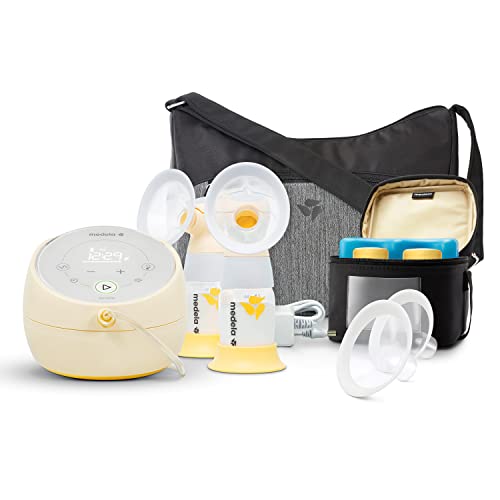
The Medela Sonata delivers hospital-strength suction comparable to the Symphony found in postpartum units, making it a strong contender for supply-challenged mothers. Its responsive technology adjusts vacuum power during each suck to maintain consistent pull even if you shift position — a small engineering detail that prevents the suction drop-off common in less expensive motors.
The Flex breast shields use a soft, 105-degree angled rim that reduces compression on the milk ducts. Users switching from standard hard flanges often report an immediate increase in output during the first session. The rechargeable battery provides roughly 90 minutes of use, enough for two full sessions away from an outlet. The closed system keeps milk out of the tubing, and the whole assembly breaks down into just four parts for cleaning.
The companion app is clunky and offers limited practical value beyond tracking session times — most users ignore it after setup. Some units have exhibited glitches such as a “CALL” error or intermittent power connection, though Medela’s warranty support typically resolves these. If you want the closest thing to a hospital rental without the monthly fee, this is your pump.
Why it’s great
- Suction matches hospital-grade Symphony
- Soft Flex shields reduce duct compression
- Quiet and compact with carry handle
Good to know
- Battery life limited to ~90 minutes
- App offers little meaningful functionality
- Some users report occasional error codes
3. eufy Security Heated Breast Pump E20
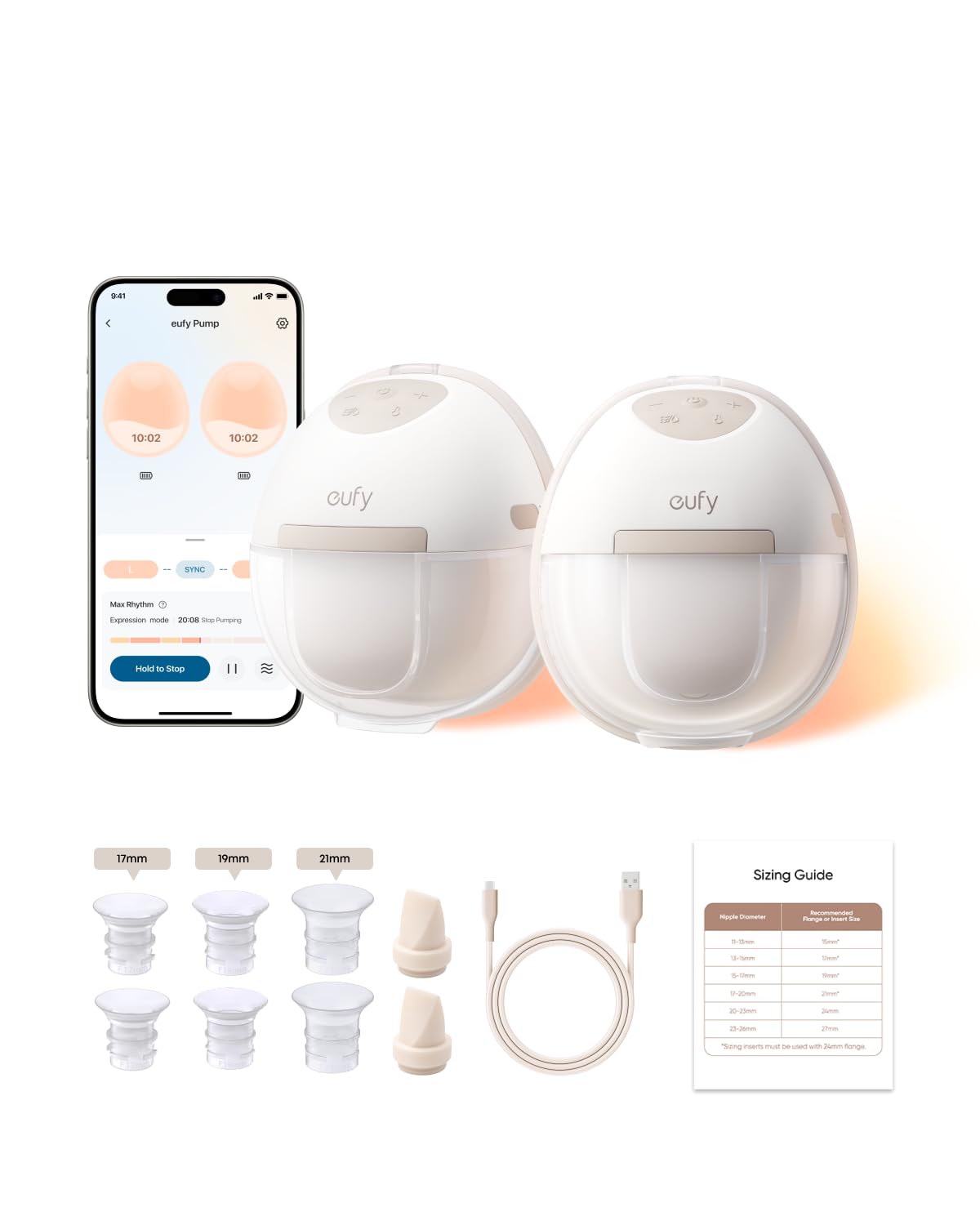
The eufy E20 introduces a category first: heated pumping. Its HeatFlow technology warms the flange to 95°F within 30 seconds, which can encourage vasodilation and more efficient milk flow. In practice, multiple users report a 30% increase in output compared to room-temperature pumping — a number backed by eufy’s internal testing from over 300 participants.
The suction reaches up to 300 mmHg, one of the highest among wearable models, and the ergonomic 105-degree curvature matches the Medela Flex design principle. The app allows you to program custom rhythms, set heat levels, and log session volumes. Included flange inserts cover 17mm, 19mm, and 21mm, giving you more sizing precision than most wearables.
The trade-off is bulk. This pump sits noticeably larger inside the bra than slim competitors like the Lansinoh Discreet Duo, making it difficult to lie down or wear a tight shirt over it. Assembly must be perfect to avoid leaks. If you respond well to heat therapy and want a wearable that prioritizes output, this is the most forward-looking choice for supply increase.
Why it’s great
- Heated flanges boost letdown and output
- 300 mmHg suction in a wearable form
- Multiple flange inserts for custom fit
Good to know
- Bulky and not sleep-friendly
- Requires precise assembly to avoid spills
- App subscription needed for full customization
4. Momcozy M6 Wearable Breast Pump

The Momcozy M6 uses a second-generation motor that produces 295 mmHg of suction — impressive for a wearable and close to what wall-mounted hospital pumps deliver. Its “Ideal Rhythm” was tuned after over a thousand trials to balance comfort and speed, and many users say it drains as effectively as their Spectra S1 while offering full hands-free movement.
The DoubleFit flange combines a soft inner ring with a hard outer shell, which reduces the tugging sensation common with all-silicone cups and keeps the pump securely seated during activity. The stand-up milk bowl design makes pouring into bags or bottles cleaner, eliminating the mess of tipping a wearable cup at an awkward angle. The 3 modes (Stimulation, Expression, Mixed) and 9 levels give enough control to find your sweet spot.
Some users have reported motor reliability issues — one pump turned on by itself and required a full battery drain to reset. The M6 also needs a tight-fitting pumping bra to maintain suction; if your bra is loose, the seal can break mid-session. For the output-per-dollar ratio, this remains one of the strongest wearables for supply-focused mothers.
Why it’s great
- 295 mmHg suction rivals wall pumps
- DoubleFit flange improves comfort
- Stand-up bowl simplifies milk transfer
Good to know
- Occasional motor glitch reports
- Requires snug pumping bra for seal
- Bent-over pouring can cause spills
5. Philips Avent Double Electric Breast Pump

The Philips Avent uses Natural Motion technology, which combines suction with a massage-like nipple stimulation to mimic the full mouth mechanics of a nursing baby. It maxes out at 270 mmHg — right in the sweet spot for effective milk removal — and provides 8 stimulation levels plus 16 expression levels, giving you granular control over the pumping curve.
The soft silicone flange shield is a standout feature. Unlike rigid plastic flanges that can dig into the areola, the Avent’s shield adapts to both the size and shape of your breast, reducing the pinching sensation that sometimes inhibits letdown. The design also allows you to sit in a relaxed, upright position without leaning forward, which is more comfortable and easier on your back during long sessions.
The main limitation is that it is a wall-powered unit only. There is no battery option, so you must be near an outlet at all times. This makes it less practical for pumping at work or in the car. For home use where power is always available, the gentle yet effective extraction makes it a soothing choice for daily supply maintenance.
Why it’s great
- Soft silicone flange is highly comfortable
- Wide range of stimulation and expression levels
- Allows upright, lean-free pumping position
Good to know
- Must be plugged in during use
- Not portable or wearable
- Fewer flange size options included
6. Lansinoh Discreet Duo Wearable Breast Pump
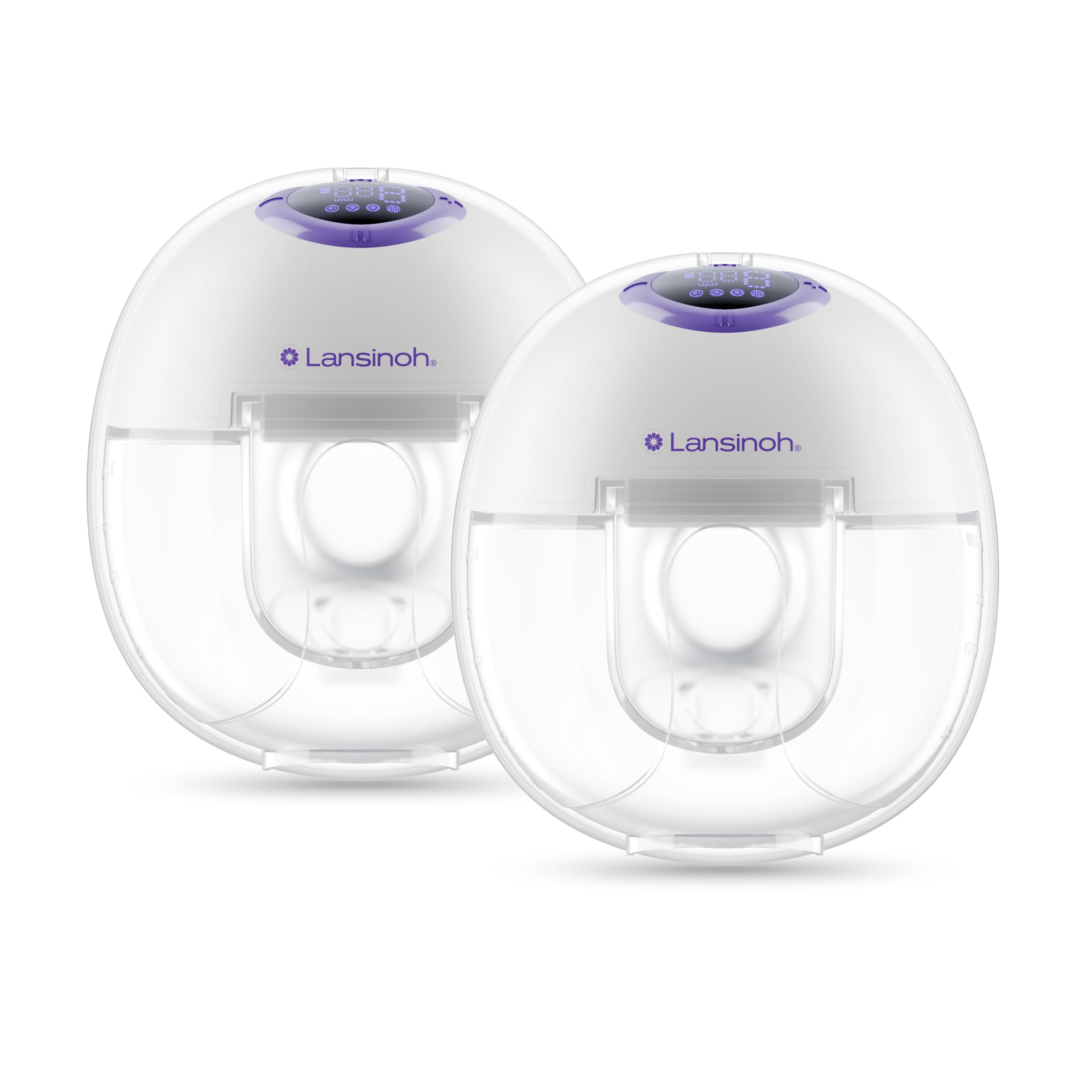
The Lansinoh Discreet Duo punches above its price tier in output efficiency. Numerous users report that it empties them more thoroughly than the Willow or Elvie Origin, even as an under-producer, yielding consistent volumes session after session. The closed system design with a physical anti-backflow barrier keeps milk away from the motor, preserving suction longevity and simplifying hygiene.
It offers 4 pumping modes (including a letdown mode) and 9 hospital-strength suction levels, all adjustable through tactile buttons and a small LED screen. The pump operates under 45 dB — quiet enough for an office cubicle. A full charge delivers roughly 100 minutes of use, and the automatic shutoff at 20 minutes prevents over-pumping.
The pump fits into most standard bras but protrudes more than some competing wearables, which has led some users to call the “discreet” label a stretch. It will be noticeable under a fitted shirt. The included flanges are 21mm and 24mm; smaller sizes must be purchased separately. For the price, it is one of the best-performing wearables for those focused on output.
Why it’s great
- Excellent emptying power for a wearable
- Closed system with effective backflow barrier
- Long battery life and quiet operation
Good to know
- Bulges under clothing; not truly discreet
- Missing smaller flange sizes below 21mm
- No custom carrying case included
7. Medela Pump in Style with Wearable Collection Cups
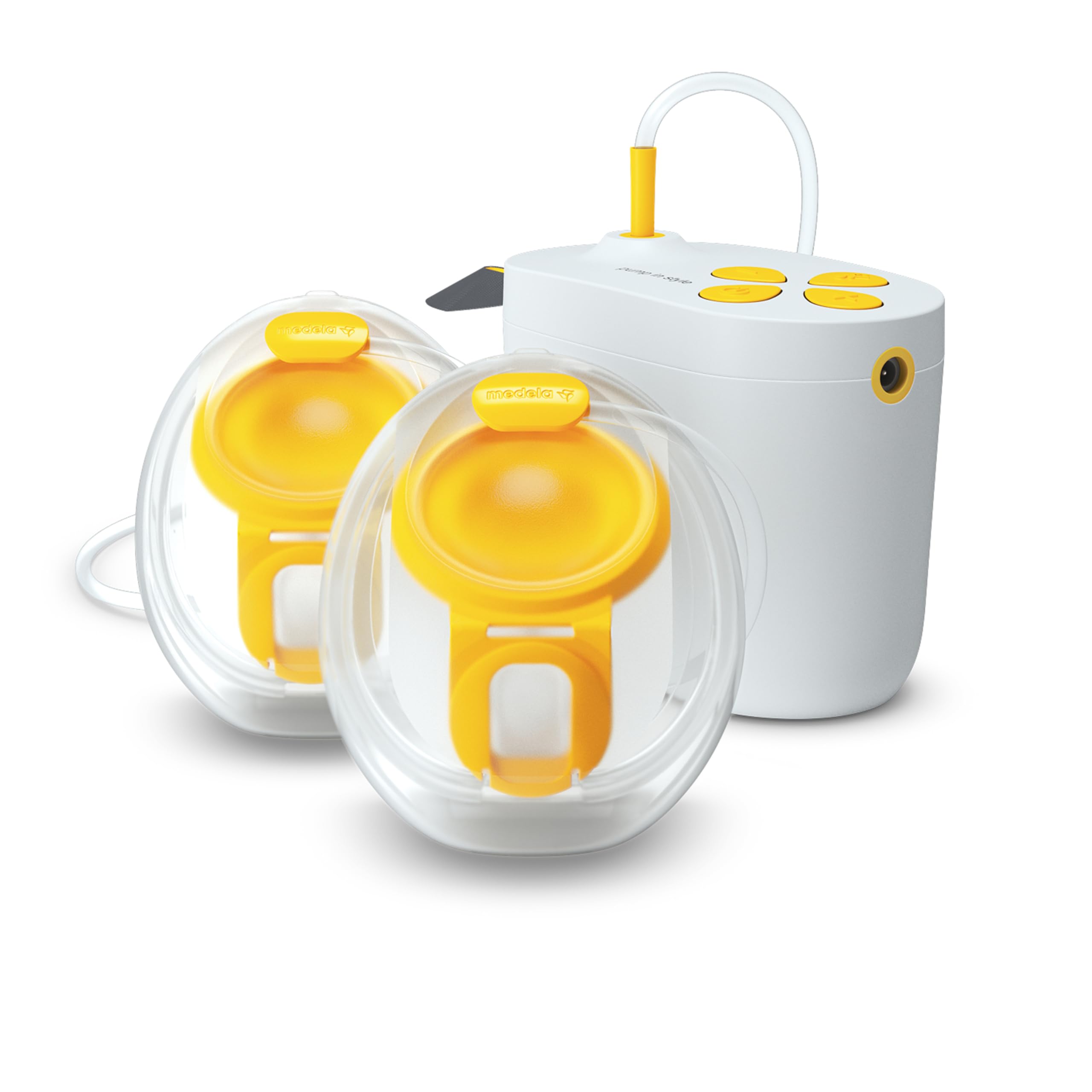
The Pump in Style bridges the gap between a traditional wall unit and a wearable system. It comes with in-bra collection cups that channel milk from the 105-degree anatomically designed shields directly into containers that sit inside your bra, allowing limited mobility while pumping. Medela’s MaxFlow feature introduces microvibrations during expression to help stimulate additional letdowns.
The 2-Phase technology alternates between fast, light sucks and slower, deeper pulls just like the Medela Sonata. The cups stand upright on their own, preventing spills when you set them down, and the pour spout makes transferring to bottles clean. Only three parts touch milk, and they are all dishwasher-safe.
The motor unit that powers the cups has drawn mixed feedback. Some users report the suction feels weaker than traditional Medela models, and there are concerns about long-term durability — a few reviews note the plastic locking mechanism on the cups cracked after a month of use. The battery pack requires AA batteries (not rechargeable), which feels dated. If the concept of wearable cups appeals to you but you do not want a fully self-contained wearable, this is a middle path.
Why it’s great
- Wearable cups with easy pour spout
- 105-degree shield reduces compression
- Dishwasher-safe, minimal parts
Good to know
- Motor suction strength varies by unit
- Battery pack uses disposable AA batteries
- Cup locking mechanism can be fragile
8. Zomee Z2 Double Electric Breast Pump

The Zomee Z2 uses a unique Alternate-Mode technology that rhythmically switches expression between breasts rather than pulling from both simultaneously. This pattern is intended to mimic the natural nursing cadence where a baby pauses on one side while latching the other, potentially increasing total stimulation and overall milk production over the session.
The pump offers three styles (Stimulation, Expression, 2-Phase) with nine suction levels each. Users regularly note that they achieve the same volume in roughly half the time compared to their Spectra S2 — a 20-minute session yielding what previously took 45 minutes. The LCD screen has a built-in nightlight, helpful for those 3 AM sessions. The food-grade silicone components are BPA- and phthalate-free, and the anti-backflow system keeps the tubing dry.
The battery lasts about 2 hours of continuous use, which requires a daily recharge if you pump multiple times. The smallest flange size included is 19mm, and users needing 17mm or smaller will need to buy third-party inserts. Some component parts (like the diaphragm) contact milk and require full washing each session, adding a bit more cleanup than fully closed systems. For speed-focused pumping, the Z2 is a strong mid-range option.
Why it’s great
- Alternate-mode enhances letdown stimulation
- Pumps faster than many competitors
- Includes nightlight for late-night use
Good to know
- Battery lasts only 2 hours
- No flange sizes below 19mm
- Some parts contact milk; more cleaning
9. MomMed S21 Wearable Breast Pump
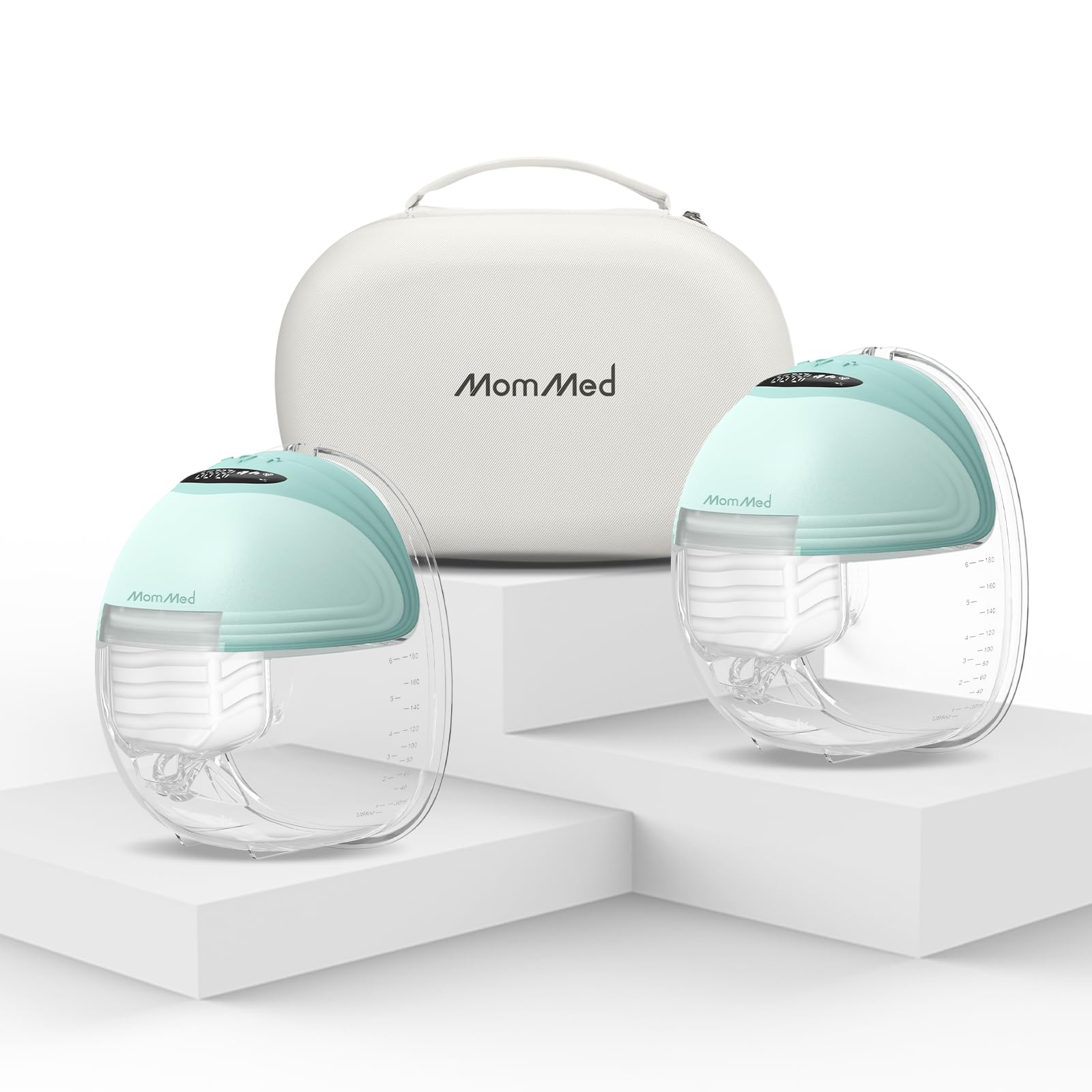
The MomMed S21 is the most budget-friendly entry into wearable pumping and includes a comprehensive kit: six pairs of flange inserts (17mm, 19mm, 21mm), six duckbill valves, cleaning brushes, milk storage bags, and a carrying case. For a first-time wearable buyer, the value in the box is hard to beat.
The pump uses three modes — Stimulation, Expression, and Auto — each with 12 vacuum levels. The backflow prevention membrane physically separates milk from the motor, which is a safety feature often absent at this price point. At under one pound per pump, they feel light in the bra, and the noise output stays below 45 dB, described by one user as sounding like frogs rather than a mechanical hum.
The trade-off is raw suction power. Users compare its output to their home pumps and note it is effective but may not match the volume of a higher-end wall pump, particularly if you require a massage function that the wearables lack. The carrying case is basic and adds bulk. For a secondary pump or for mothers with a healthy supply who mainly need convenience, the S21 is a capable, low-risk starter.
Why it’s great
- Comprehensive accessory kit included
- Lightweight and discreet in-bra wear
- Backflow prevention for hygiene
Good to know
- Suction power may be lower than wall pumps
- Carrying case is not premium
- No massage mode in wearable format
FAQ
Can a breast pump actually increase my milk supply?
What flange size should I use to maximize output?
Is a wearable pump as effective as a wall pump for supply?
Final Thoughts: The Verdict
For most users, the breast pump to increase supply winner is the Spectra S1 Plus because its combination of 2-phase technology, strong yet comfortable suction, and rechargeable portability delivers the most consistent output per session. If you want the freedom of a wearable without sacrificing suction power, grab the eufy E20 with its heated flanges. And for the closest experience to a hospital-grade pump you can own, nothing beats the Medela Sonata.