
Our readers keep the lights on and the weekend projects moving. As an Amazon Associate, I earn from qualifying purchases.
Every pumping session is a trade-off between the raw suction power you need to maintain your milk supply and the freedom to move, work, or simply hold your baby. Most pumps force you to choose one over the other. The right breast pump eliminates that compromise by matching hospital-grade vacuum strength with a design that fits your actual daily routine, whether you are commuting, working from home, or feeding in the middle of the night.
I’m Rikta — the co-founder and writer behind FitlyFast. I have spent countless hours analyzing the mechanical specs, flange compatibility, motor durability, and real-world suction performance across dozens of models to separate reliable daily drivers from pumps that lose seal or motor integrity after a few weeks.
This guide breaks down the measurable differences in suction amplitude, battery endurance, flange fit systems, and mode programming that actually affect your output and comfort. If you are searching for the best breast pump, the right decision comes down to understanding how closed-system hygiene, adjustable rhythm patterns, and flange sizing translate into fewer clogs and more consistent milk expression.
How To Choose The Best Breast Pump
Selecting a breast pump is not about picking the most expensive or the most popular model. It is about matching vacuum strength, flange fit, portability, and cleaning simplicity to the specific demands of your daily life. The wrong pump leads to low output, nipple pain, or motor failure at the worst possible time. Focus on these four factors to make a decision that protects both your supply and your sanity.
Suction Strength and Rhythm Programming
Hospital-grade suction is measured in mmHg — millimeters of mercury — and the effective range for efficient milk expression sits between 220 and 320 mmHg. Entry-level pumps often struggle below 200 mmHg, leading to longer sessions and incomplete emptying. Equally important is the cycle pattern: a pump that mimics a baby’s natural suck-swallow rhythm — starting fast and shallow for letdown, then shifting to slower, deeper draws — triggers more letdowns per session than a constant vacuum. Look for pumps that offer at least three distinct modes and nine or more suction levels so you can dial in both the speed and the pull precisely.
Flange Fit and Material
The flange is the interface between the pump and your body, and incorrect sizing is the number one cause of pain and reduced output. Flanges are measured by the tunnel diameter in millimeters — common sizes range from 17 mm to 28 mm. A flange that is too large pulls in areola tissue, causing swelling and friction; one that is too small constricts the nipple and blocks flow. Many mid-to-premium pumps include multiple flange sizes or inserts, and soft silicone rims can improve the seal for moms with elastic or inverted nipples. Never assume the default 24 mm or 28 mm flange will work — measure before you buy.
Battery Capacity and Portability
Rechargeable lithium-ion batteries are now standard on serious pumps, but the capacity varies wildly. A quality pump should deliver two to three hours of active pumping per charge — enough for four to six full sessions. Wearable pumps with smaller form factors often trade battery life for compactness, while larger cordless units carry 5600 mAh packs that can run for multiple days between charges. If you pump during a commute or at a desk where outlets are scarce, prioritize a model with at least 240 minutes of runtime and a USB-C charging port so you can top off from a laptop or power bank.
Closed-System Hygiene and Part Count
A closed-system pump places a physical barrier — usually a silicone membrane or diaphragm — between the milk collection area and the motor tubing. This prevents moisture from reaching the motor, which extends pump life and eliminates the risk of mold growing inside the tubing. Open systems require careful drying of every tube and are more prone to bacterial growth. Fewer parts also mean faster cleaning: the most user-friendly pumps break down into four to six pieces that can be rinsed and air-dried in under two minutes. Avoid pumps that have complex valve assemblies or hard-to-reach crevices that trap milk residue.
Quick Comparison
On smaller screens, swipe sideways to see the full table.
| Model | Category | Best For | Key Spec | Amazon |
|---|---|---|---|---|
| Spectra S1 Plus | Premium Cordless | Primary home pumping | 5600 mAh battery | Amazon |
| BabyBuddha 2.0 | Hospital-Grade Portable | High-output on the go | 21 suction levels | Amazon |
| NCVI F1 Pro | Hospital-Grade | Dual-motor customization | 320 mmHg suction | Amazon |
| Medela Pump in Style Pro+ | Hospital Performance | Brand reliability | 16 suction levels | Amazon |
| Lansinoh Discreet Duo | Wearable Premium | Hands-free discretion | 100 min battery | Amazon |
| Zomee Z2 | Alternate-Mode | Faster expression | 2.5-hour battery | Amazon |
| MomMed S21 | Wearable Value | Low-cost wearable | 12 vacuum levels | Amazon |
| Momcozy S12 Pro | Wearable Mid-Range | Quiet pumping | 292 mmHg suction | Amazon |
| Mammanuwa S32 | Lightweight Wearable | Elastic/inverted nipples | 240 g weight | Amazon |
In‑Depth Reviews
1. Spectra Baby S1 Plus Premier Rechargeable Breast Pump

The Spectra S1 Plus is the benchmark for primary home pumping. Its closed-system design uses a physical silicone diaphragm to keep milk entirely out of the motor and tubing, which eliminates mold risks and extends the pump’s life significantly.
Natural Nursing Technology delivers a gentle, two-phase cycle that begins with fast, light stimulation to trigger letdown and shifts to deeper, slower expression draws. Users consistently report full emptying even on lower suction settings, which reduces the risk of clogged ducts. The included grey tote is practical rather than decorative, with multiple pockets for bottles, flanges, and a small cooler.
The flange size defaults to 28 mm, which is larger than many mothers need. You will likely need to purchase 24 mm or 20 mm inserts separately for a proper fit. The dual-hose connector can be stubborn to remove from the pump port, though this does not affect daily operation. Compatible with many aftermarket parts for those who want to hack a custom setup.
Why it’s great
- 5600 mAh battery lasts multiple days between charges
- Closed-system hygiene protects motor and milk
- Two-phase suction mimics natural nursing rhythm
Good to know
- Default 28 mm flanges require smaller inserts for most moms
- Dual-hose plug lacks easy-grip tab for removal
2. BabyBuddha Breast Pump 2.0
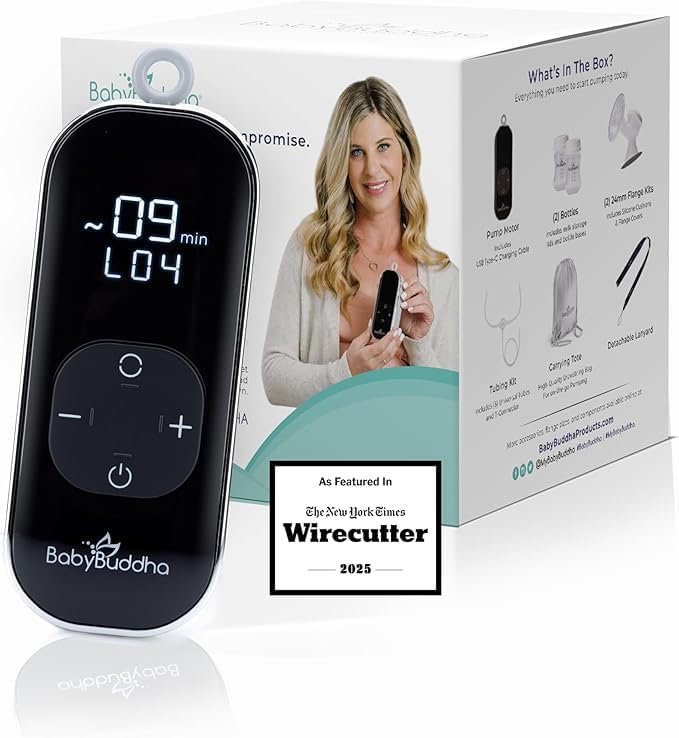
BabyBuddha 2.0 is a compact, hospital-grade motor that fits in your palm yet delivers suction strength high enough to replace a full-sized Spectra or Medela. The 2.0 upgrade added a soft stimulation mode for sensitive nipples and a total of 21 suction combinations across three modes — more fine-tuning options than almost any other portable pump on the market. Users who switched from wearables saw output jump from four ounces to nine ounces per session.
The pump is designed to be worn with a lanyard or clipped to waistband, and the hardware pairs natively with BabyBuddha Cups for a fully wearable setup. It uses a standard USB-C charger, which makes it easy to top off from a phone charger in the car or at a desk. The motor sound is louder than a Spectra — audible enough that you might drape a blanket over it in a quiet meeting — but not disruptive at home.
The flange system includes multiple sizes, but the threading is proprietary. To use standard Medela or Spectra bottles, you need the separate adapters. Some early buyers received the original model instead of the 2.0 when ordering through third-party sellers, so verify the packaging includes the updated directional pad and soft stimulation mode. A top choice for moms who need primary-level suction in a portable form factor.
Why it’s great
- 21 suction combinations for precise customization
- Compact motor replaces full-size home pump
- USB-C charging removes cord dependency
Good to know
- Audible motor noise in quiet spaces
- Proprietary threading requires adapters for standard bottles
3. NCVI Electric Breast Pump F1 Pro
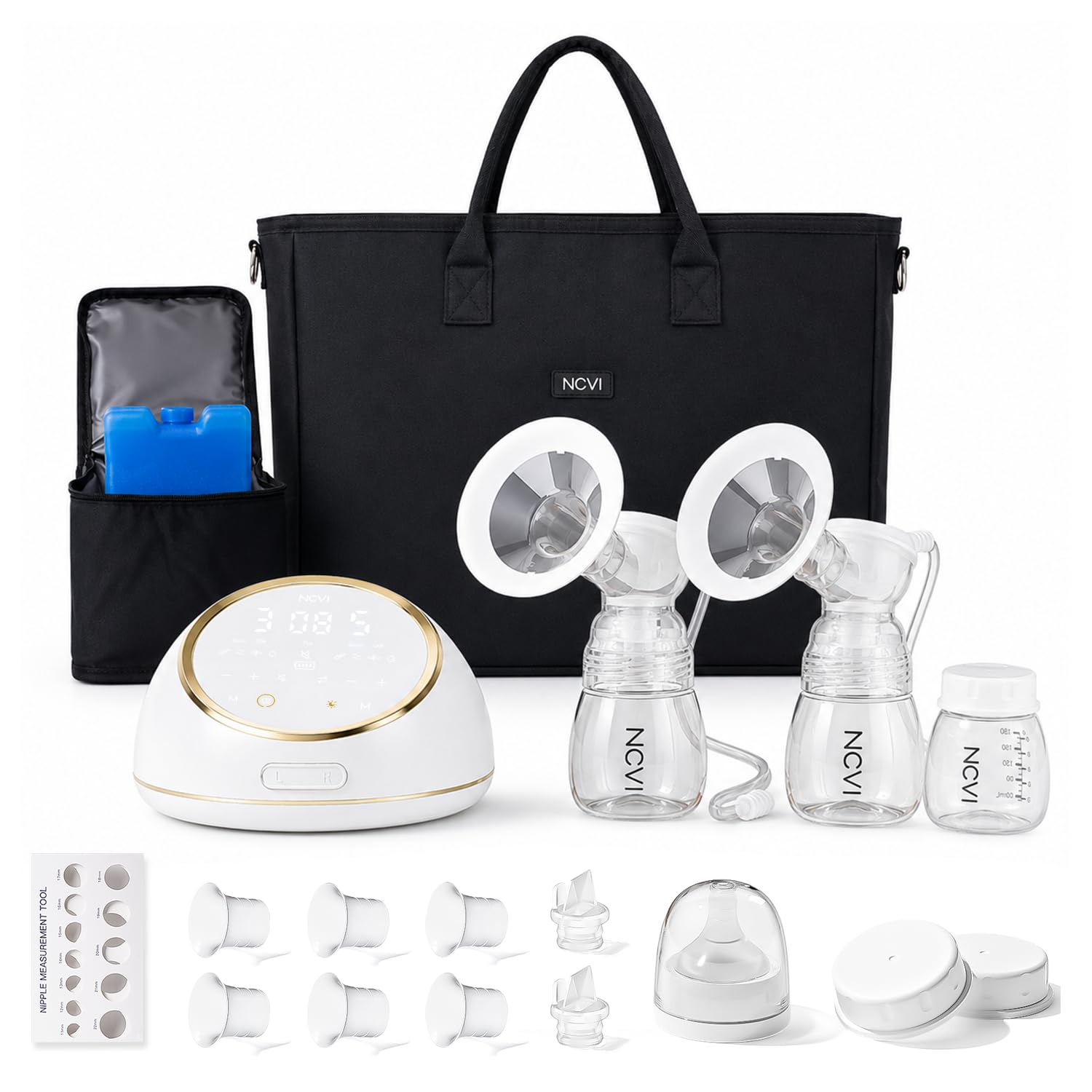
The NCVI F1 Pro delivers 320 mmHg of hospital-grade suction with an added micro-vibration layer that massages the breast during pumping. This combination helps dislodge engorgement and reduce clogged ducts more effectively than straight vacuum alone. The dual-motor system allows independent suction and rhythm settings for each breast — a genuine advantage for mothers who produce unevenly on each side.
The pump includes four modes — Massage, Expression, Simulation, and Multitronic — and nine adjustable levels per mode. The built-in 5600 mAh battery matches the Spectra S1 in capacity, supporting multiple days of regular pumping without a recharge. The kit is remarkably complete for the mid-range price tier: six flange sizes from 17 mm to 24 mm, a cooler bag, a pump carry bag, nipple ruler, and spare duckbill valves.
One notable limitation: many users report that the pump resets its suction level to zero every time it is unplugged from the wall, which means you need to reprogram your preferred setting each session. The night light is not dimmable and may be too bright for some nurseries. Flanges are not cross-compatible with Medela parts, so replacements must come from NCVI. Still, the independent side-by-side customization and micro-vibration are rare at this tier.
Why it’s great
- Independent suction and rhythm per breast for uneven supply
- Full hospital-grade 320 mmHg with micro-vibration
- Six flange sizes included in the box
Good to know
- Resets suction level when unplugged from mains
- Non-dimmable light may be too bright at night
4. Medela Pump in Style Pro+
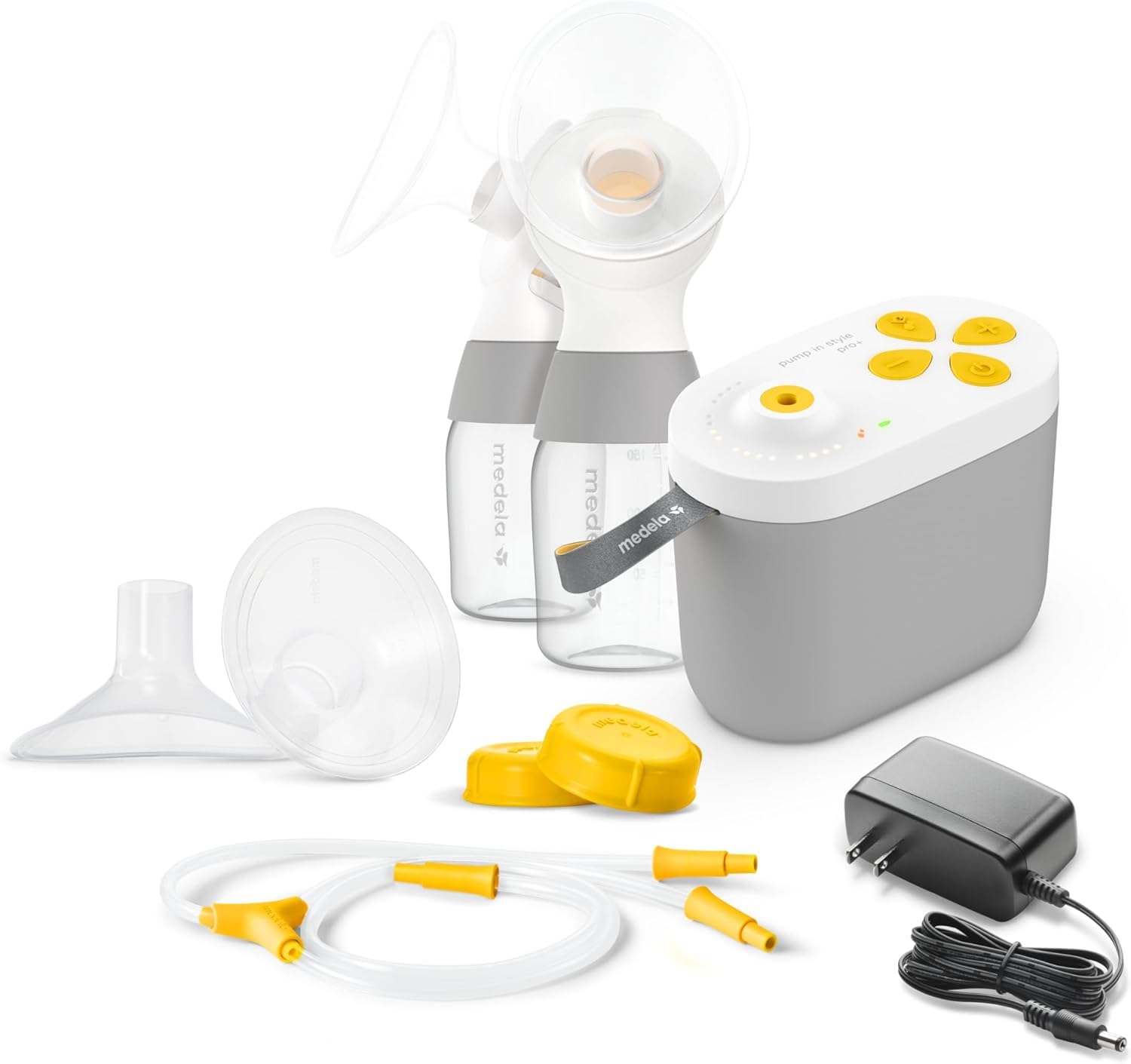
Medela’s Pump in Style Pro+ inherits the pumping pattern from the Symphony, the brand’s hospital-grade flagship, and translates it into a rechargeable home unit. The pumping cycle is clinically proven to extract 11.8 percent more milk than standard patterns, according to Medela’s internal testing. The wide-angle PersonalFit PLUS breast shields are designed to contour to the breast without digging in, reducing the pinching sensation common with older hard-plastic flanges.
The pump has 16 suction levels and a clear digital display that shows the current mode, level, and remaining battery charge. The rechargeable battery is under two pounds total, making this one of the lightest hospital-performance units available. Pumping directly into the included 5-ounce bottles eliminates the transfer step — just cap and refrigerate. Only four parts touch milk, and they are all dishwasher safe.
The motor has been reported to produce a vibrating sensation on the lowest level that some users find uncomfortable, and the tubing connector is not locked in place, which can lead to accidental disconnection during a session. The flange size options (21 mm and 24 mm included) stop short of the smaller sizes that many moms require. Not fully hands-free — you must hold the bottles against your chest unless using a pumping bra.
Why it’s great
- Hospital-proven pumping pattern from Symphony
- 16 suction levels with clear digital readout
- Lightweight design at under two pounds
Good to know
- Low-level vibration can feel uncomfortable
- Requires pumping bra for hands-free use
5. Lansinoh Discreet Duo Wearable Breast Pump
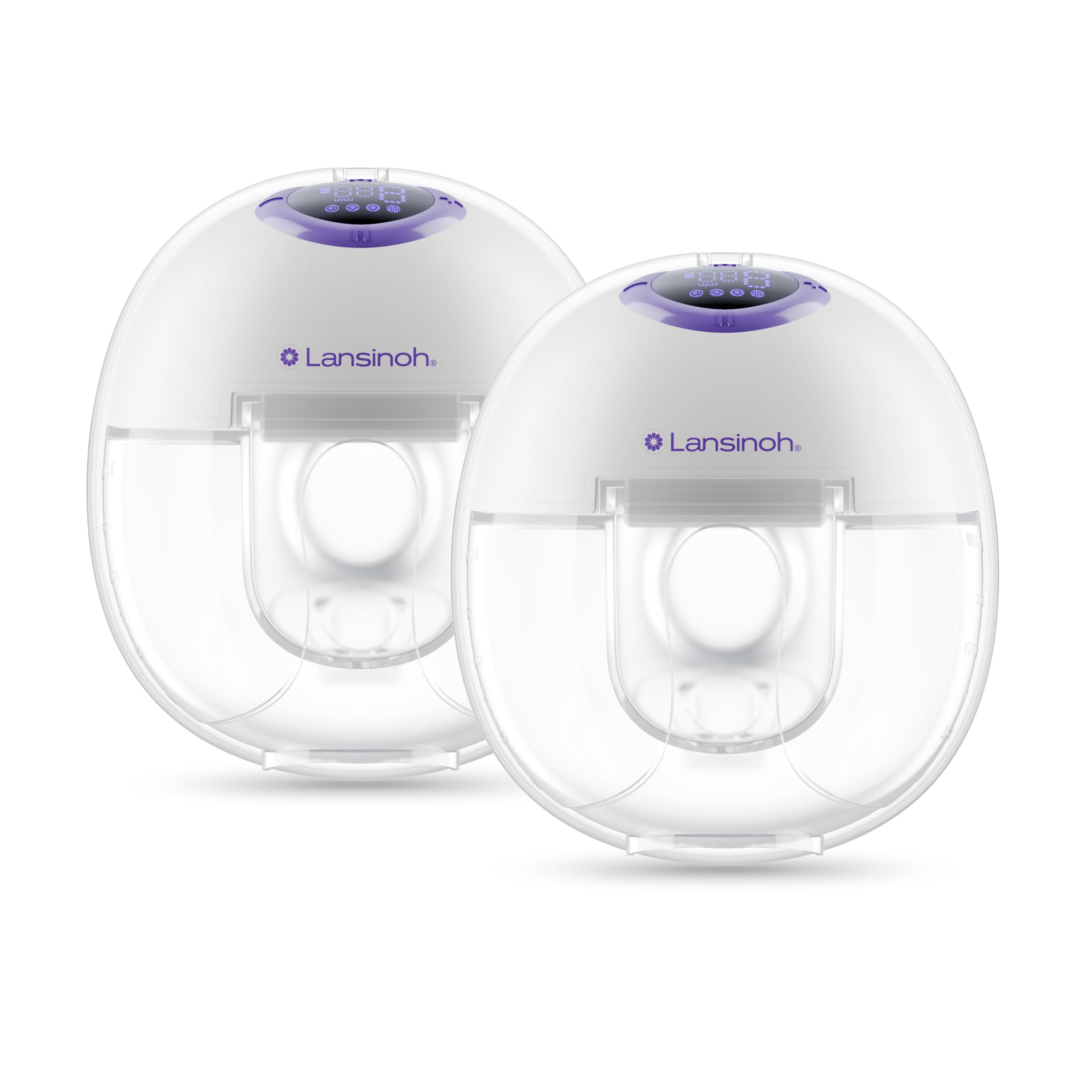
Lansinoh’s Discreet Duo is a wearable pump that empties more completely than many of its direct competitors, including pricier models from Willow and Elvie. The closed-system design keeps milk entirely inside the collection cup, preventing backflow into the motor housing. Four pumping modes — Stimulation, Expression, Massage, and Automatic — each offer nine levels of hospital-strength suction that feel more substantial than the typical wearable vacuum curve.
The battery delivers up to 100 minutes of active pumping, which translates to roughly four to five sessions on a full charge. The pump operates under 45 dB, though the mechanical hum is more audible than a Spectra — loud enough that someone in a quiet room might recognize the sound. Assembly and cleaning are straightforward: the cup and flange separate into only a few parts with no tiny valves to lose.
The pump includes 24 mm and 21 mm flanges, but smaller sizes (17 mm, 19 mm) must be purchased separately from Lansinoh. Some users report that the seal can break if the cup is not pressed firmly into the pumping bra, especially during movement. The charger placement on the pump body means you cannot recharge the unit while actively pumping. Not the cheapest wearable, but one of the few that matches traditional pump output in a cordless form.
Why it’s great
- Outperforms Willow and Elvie in full emptying
- Closed system prevents motor contamination
- Easy four-part assembly with no complex valves
Good to know
- Charger location prevents mid-session charging
- Smaller flange sizes not included
6. Zomee Z2 Double Electric Breast Pump

The Zomee Z2 uses Alternate-Mode Technology that automatically switches expression between breasts in a rhythmic pattern, designed to trigger more letdowns than simultaneous dual pumping. This approach works particularly well for mothers who struggle to initiate milk flow with standard pumps. The three styles — Stimulation, Expression, and 2-Phase — combine with nine suction levels to cover most comfort and output needs.
The pump body is compact enough to be worn tucked into a pumping bra, though it is not a fully contained wearable — the motor unit sits outside the cup and connects via tubing. The internal rechargeable battery lasts roughly two and a half hours of active use, and the USB-C port plus included AC adapter give charging flexibility. The LCD screen has a built-in nightlight, which is a small but appreciated touch for late-night sessions.
The bottles hold 4.7 ounces each, which is smaller than standard 5-ounce or 8-ounce bottles, and the flange sizing only goes down to 19 mm with no inserts for smaller nipples. The diaphragm touches the expressed milk, meaning you must wash it after every session — not all closed systems have this exposure. The Zomee does include adapters for Medela bottles, which makes it easier to pump directly into your existing storage system.
Why it’s great
- Alternate-mode pumping triggers more letdowns
- Includes Medela bottle adapters
- Night light on LCD for dark sessions
Good to know
- Diaphragm contacts milk and needs full cleaning
- No small flange sizes below 19 mm
7. MomMed Wearable Breast Pump S21
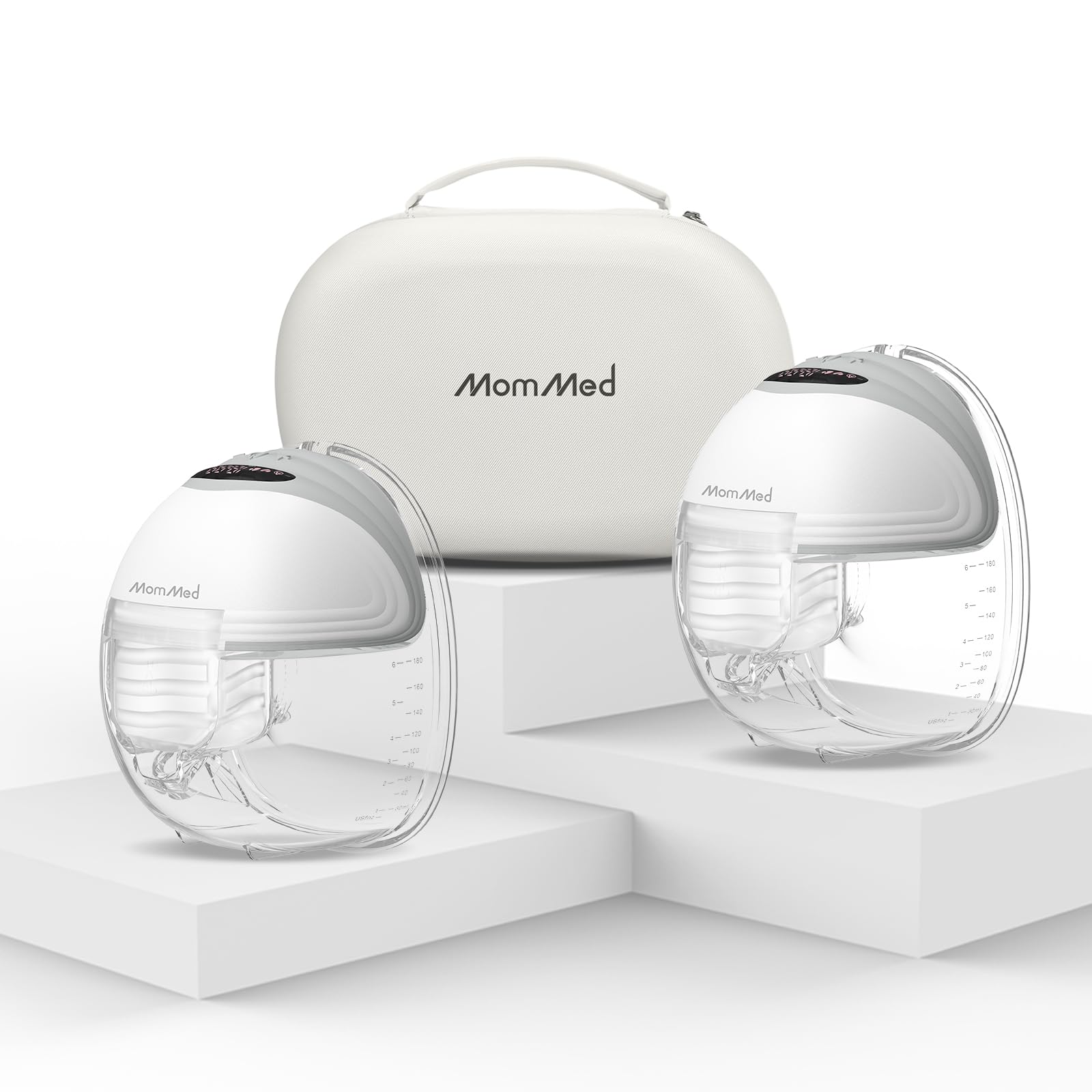
The MomMed S21 is an entry-level wearable that punches above its price segment by including six flange inserts (17 mm, 19 mm, 21 mm in pairs), a nipple ruler, six duckbill valves, four silicone diaphragms, and ten milk storage bags — an unusually generous accessory bundle. The pump body weighs under a pound and fits into most standard nursing bras, and the semi-circular design sits flush enough to be worn under loose clothing without obvious bulk.
The backflow prevention membrane physically separates milk from the vacuum motor, making this a proper closed system that protects against moisture damage and bacterial growth. Three modes — Stimulation, Expression, and Auto — pair with twelve vacuum levels, giving more granularity than most budget wearables. Noise output is rated under 45 dB, which most users describe as a quiet rhythmic hum similar to a desktop fan in an adjacent room.
Milk output tends to be lower than what a traditional home pump delivers, partly because the wearable design does not allow for manual breast compression during pumping. The spout on the collection cup lacks a seal cap, so milk can spill if the cup tips over during removal. The included carrying case is functional but thin, and the pumps do not fit all bra brands equally — you may need a specific pumping bra for a reliable seal.
Why it’s great
- Six flange inserts cover 17 mm to 21 mm range
- Backflow membrane protects motor from moisture
- Compact semi-circular design stays discreet under clothing
Good to know
- No manual compression possible while pumping
- Collection cup spout lacks a seal cap
8. Momcozy S12 Pro Quick Wearable Breast Pump
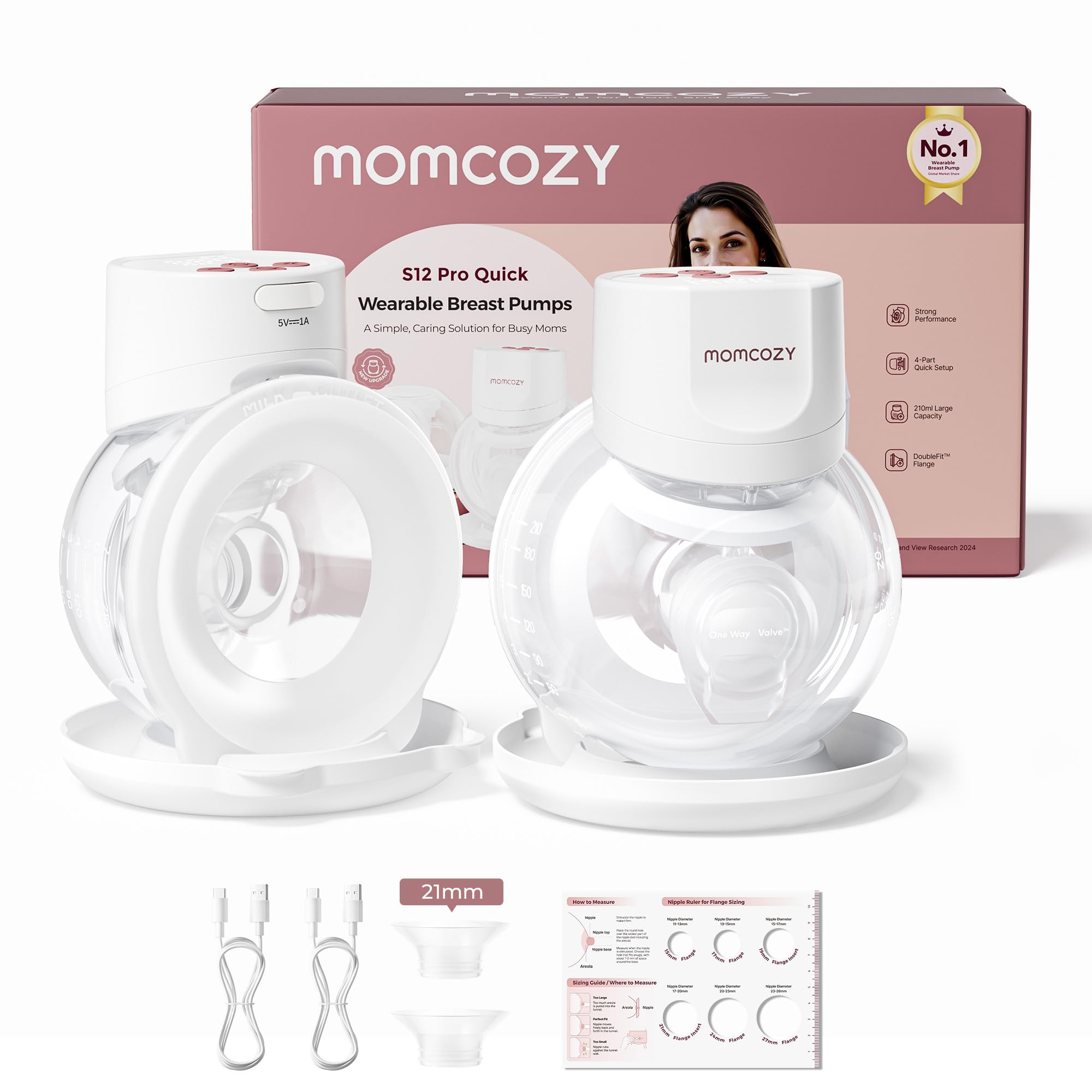
The Momcozy S12 Pro Quick delivers 292 mmHg of suction — strong enough to rival many corded home pumps — in a fully wearable, bra-contained unit. The DoubleFit Hybrid Flange uses a soft silicone interior bonded to a firm polypropylene outer shell, which reduces the chance of the flange collapsing under vacuum while keeping the skin contact surface comfortable. The battery holds 1350 mAh, providing up to 240 minutes of pumping time across roughly eight sessions.
The pump is exceptionally quiet for its output class, operating at no more than 46 dB. That is quiet enough to use during a conference call or while your baby sleeps in the same room. The digital display shows mode, level, and battery status at a glance, and the ergonomic grip tabs make it easy to twist the cup into place even when your hands are slick with breast milk.
The default 24 mm flange is too large for many mothers, and the aftermarket flange inserts sold separately are made of hard silicone that does not flex like the original hybrid material. Battery longevity has been inconsistent: some units fail after a few weeks, with the battery life dropping from 240 minutes to under five minutes. The four-part cleaning routine is simple, but motor reliability concerns make this a risky primary pump for daily use.
Why it’s great
- 292 mmHg suction in a fully wearable format
- Extremely quiet at ≤46 dB for discreet use
- Hybrid flange prevents silicone collapse under vacuum
Good to know
- Battery failure and suction loss reported after weeks of use
- Replacement flange inserts are hard silicone, not hybrid
9. Mammanuwa S32 Wearable Breast Pump

The Mammanuwa S32 is the lightest wearable pump in this guide at only 240 grams — roughly the weight of an average smartphone. Its defining design choice is the Baby Mouth Technology, which angles the flange horizontally to mimic the natural angle of a nursing infant’s mouth rather than the straight vertical approach of most pumps. This horizontal alignment is intended to reduce nipple drag and improve milk flow, especially for mothers with elastic or inverted nipple tissue.
Four modes — Stimulation, Expression, Massage, and Automatic — combine with nine levels of micro-vibration suction. The double-sealed flange and ergonomic breast arc are designed to maintain a leak-proof seal even during movement, though reviews from users with larger busts indicate the seal can fail if the pump is not positioned precisely. The pump is made entirely from BPA-free food-grade silicone, and the minimal part count makes cleaning straightforward.
The flange ring system offers three sizes (19 mm, 21 mm, and 24 mm without the ring), which covers a reasonable range but stops short of the very small sizes some mothers need. Battery life is rated for approximately three full pumping sessions per charge, which is adequate for a backup or occasional-use pump but not enough for a full-day exclusive pumper. Some users report bottom leakage if the silicone seal is not fully adhered before use, so careful assembly is critical.
Why it’s great
- Ultra-light 240 g design for comfortable wear
- Horizontal Baby Mouth flange angle reduces nipple irritation
- BPA-free food-grade silicone construction
Good to know
- Battery only lasts about 3 sessions per charge
- Seal prone to leakage on larger chests
FAQ
What does a 24 mm flange size mean and how do I measure my nipple?
Can I use a wearable pump as my only pump for exclusive pumping?
How many suction levels do I actually need to empty effectively?
Why do some pumps have a physical night light on the control panel?
Does a higher price always mean a better pumping experience?
Final Thoughts: The Verdict
For most users, the best breast pump winner is the Spectra S1 Plus because it delivers hospital-grade closed-system performance with a battery that lasts through multiple days of pumping. If you need wearable freedom without sacrificing suction strength and output, grab the BabyBuddha 2.0. And for a budget-friendly wearable that still offers closed-system protection and strong suction, the MomMed S21 gives you an impressive flange and accessory bundle at a competitive price.