
Our readers keep the lights on and the weekend projects moving. As an Amazon Associate, I earn from qualifying purchases.
Few things stress a nursing mom more than watching her breastfed baby refuse a plastic teat. The right bottle preserves your hard-won breastfeeding rhythm, prevents colic from swallowed air, and avoids the dreaded nipple confusion that can derail weeks of latch training. Get the specs wrong—too fast a flow, too stiff a nipple—and you are fighting a daily feeding battle instead of enjoying those quiet bonding moments.
I’m Rikta — the co-founder and writer behind FitlyFast. I have spent hundreds of hours analyzing nipple orifice sizes, vent system efficacy, and material safety certifications to help parents navigate the overwhelming bottle aisle with genuine technical clarity.
After months of cross-referencing customer feeding logs with manufacturer data, I have identified the top performers that actually solve the specific challenges of combining breast and bottle. This guide breaks down the best breastfed baby bottles based on latch geometry, flow precision, and colic-reduction engineering.
How To Choose The Best Breastfed Baby Bottles
Not every bottle labeled “breast-like” actually respects your baby’s oral anatomy. A bottle for a breastfed infant must prioritize three things: a nipple that demands active sucking (like a breast), a vent that prevents air from mixing with milk, and a material that won’t leach or off-gas after repeated sterilization. Here is what to look for.
Nipple Shape and Flow Precision
A wide, gently sloped base mimics the breast’s areola, encouraging a deep latch rather than a shallow chew. The critical spec is the orifice size expressed as “Slow Flow” or “Level 1.” For breastfed babies up to 3 months, an extra-slow or slow-flow nipple (around 0.8 mm hole diameter) forces the baby to work for milk, preserving their breastfeeding stamina. Too fast a flow and the baby may begin to prefer the bottle, rejecting the breast.
Anti-Colic Venting Architecture
Breast milk naturally separates in the bottle, and agitation from bubbles can degrade fat and nutrient content. The best vents use a dedicated air channel that routes swallowed air away from the milk reservoir. Internal tube systems (like Dr. Brown’s) are highly effective but add cleaning steps. Integrated skirt valves (like Philips Avent) maintain simplicity while still reducing gas. For busy parents, a valve that vents through the nipple base without extra parts is the practical sweet spot.
Material Safety and Thermal Stability
Borosilicate glass is the gold standard for breast milk storage—it resists thermal shock during boiling, never scratches (where bacteria hide), and does not absorb odors or fats from the milk. High-end PPSU plastic is a lightweight alternative that survives drops and repeated microwaving without degrading. Avoid standard polypropylene if you sterilize frequently, as heat cycling accelerates micro-cracking.
Quick Comparison
On smaller screens, swipe sideways to see the full table.
| Model | Category | Best For | Key Spec | Amazon |
|---|---|---|---|---|
| Lansinoh Glass 5 oz | Premium Glass | Seamless breast-to-bottle transition | Slow flow nipple, 4-piece assembly | Amazon |
| Pigeon PPSU Wide Neck | Premium PPSU | Research-based latch guidance | SS nipple (0m+), 3 tongue movements | Amazon |
| Philips Avent Natural 4 oz | Mid-Range Plastic | Baby-paced drinking rhythm | Flow 2 nipple, anti-colic valve | Amazon |
| Dr. Brown’s Options+ Glass 4 oz | Mid-Range Glass | Clinically proven colic reduction | Internal vent system, level 1 nipple | Amazon |
| Gulicola Natural Glass 5 oz | Premium Glass | Ultra-soft breast-mimicking nipple | Slow flow, 4-piece wide neck | Amazon |
| Tommee Tippee Natural Start 9 oz | Mid-Range Plastic | Leak-proof mess-free feeding | Self-sterilizing, anti-colic valve | Amazon |
| Gulicola Small Glass 3 oz | Budget Glass | Preemies and tiny newborns | Extra slow flow (SS), 2-pack | Amazon |
In‑Depth Reviews
1. Lansinoh Glass Baby Bottles 5 oz (4 Count)
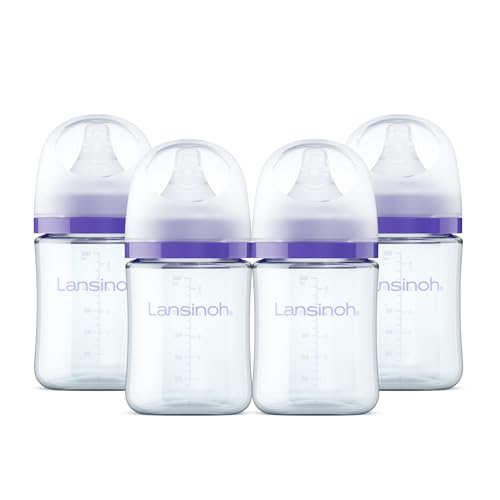
Lansinoh’s glass set nails the trifecta for nursing mothers: a borosilicate body that withstands boiling without cracking, a wide nipple base that encourages a deep latch, and a clinically proven anti-colic vent that routes air away from the milk. The 5-ounce capacity is ideal for breast milk volumes in the first four months, and the slow flow (size S) nipple demands active sucking that preserves breastfeeding stamina. Multiple verified buyers report zero nipple confusion when switching back to breast, a direct result of the teat’s gentle slope and ultra-soft silicone.
Cleaning is refreshingly simple with only four parts—no tiny brushes required—and the glass stays scratch-free after dozens of sterilization cycles. The vent system is integrated into the nipple skirt, so you are not hunting for a separate valve every time you reassemble. Parents frequently mention that their babies finish feedings with noticeably less gas and spit-up compared to previous bottles. The set includes four bottles, making it easy to batch-prepare daytime feeds while keeping one in the diaper bag.
On the durability front, users report surviving light drops onto tile without shattering, though the glass is not shatterproof. The 5-ounce maximum does mean you will need to size up once your baby reaches six months or starts taking larger volumes. The slow flow nipple is perfect for newborns through three months; Lansinoh sells separate medium and fast flow teats for older infants.
Why it’s great
- Borosilicate glass resists thermal shock and odor absorption
- Four-part assembly is the easiest to clean among anti-colic bottles
- Nipple shape clinically shown to avoid nipple confusion
Good to know
- 5-ounce capacity may be too small for older infants needing larger feeds
- Size S nipple is very slow; some babies may need to size up around 4 months
2. Pigeon PPSU Nursing Bottle Wide Neck 5 oz (2 Pack)
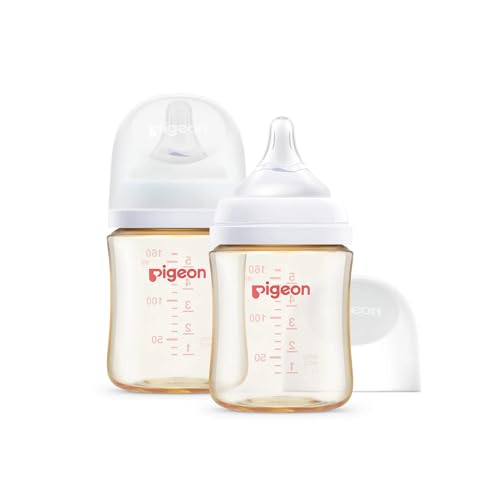
Pigeon’s approach is rooted in Japan’s research on infant sucking behavior, identifying three distinct tongue movements that occur during breastfeeding. Their nipple is engineered with a “latch-on line”—a visual curve that guides where the baby’s lips should seal—promoting effective adsorption rather than a shallow chew. The PPSU material is lightweight, shatter-resistant, and BPA-free, making it a practical alternative for parents who fear glass breakage around older siblings.
The SS (extra-slow) nipple that ships with the 5-ounce bottle has a tiny, precisely cut hole that releases milk only when the baby actively creates suction. This mimics the letdown delay of breastfeeding perfectly. Reviewers consistently report less air swallowing and reduced burping sessions compared to Dr. Brown’s or Hegen bottles. The wide neck gives you enough room to fit a standard breast pump flange adapter, a convenience for moms who pump directly into storage.
The streamlined body is ergonomically shaped for small hands, and the PPSU material stays clear even after repeated dishwashing cycles. Some users note that the flow rate can be too fast for newborns if you accidentally use the included SS teat incorrectly; always confirm you are on the SS size for 0–3 months. Pigeon offers a full range of nipple sizes (SS, S, M, L, 3L) so you can adjust flow as your baby grows.
Why it’s great
- Research-based nipple geometry promotes correct tongue movement
- PPSU is lightweight, shatterproof, and heat-resistant
- Wide neck fits pump adapters and is easy to hand-wash
Good to know
- Only two bottles included; may need to buy extra for a full rotation
- SS nipple is very slow; some babies may need S by 2 months
3. Philips Avent Natural 4 oz (4 Pack)
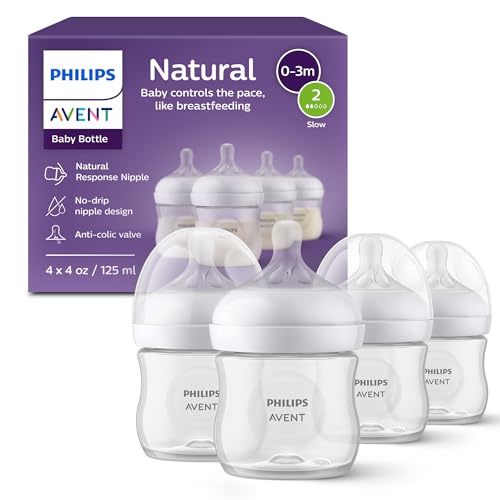
Philips Avent’s Natural Response nipple uses a slit-opening design that releases milk only when the baby actively drinks and pauses when they swallow or breathe. This baby-led flow prevents the gagging and overflow that can happen with continuous-flow nipples, making it a strong choice for paced feeding. The wide, petal-shaped anti-colic valve is built into the nipple skirt, keeping the air channel separate from the milk path so fewer bubbles form in the liquid.
The 4-ounce size is purpose-built for newborn volumes, and the Flow 2 nipple delivers a controlled slow flow appropriate for breastfed babies in the first three months. Parents consistently report that switching between breast and bottle is smooth, with no signs of teat preference or latch regression. The bottle body is lightweight polypropylene, but users note it withstands hundreds of sterilization cycles without clouding.
One practical advantage is the compatibility with Philips Avent breast pumps and storage cups, allowing you to pump directly into the bottle, screw on a nipple, and feed. The narrow neck is slightly easier for small hands to grip than ultra-wide bottles. A few users mention the cap can feel stiff initially, but it seals securely with no drips. The no-drip nipple also means you won’t lose milk when the bottle tips over in the diaper bag.
Why it’s great
- Baby must actively suck to release milk, mimicking breast letdown
- Integrated anti-colic valve with no separate parts to lose
- Durable plastic resists heat and dishwasher damage
Good to know
- Plastic may scratch over time, though it remains leak-proof
- Flow 2 may be too slow for some older newborns needing faster milk transfer
4. Dr. Brown’s Options+ Narrow Glass 4 oz (3 Pack)
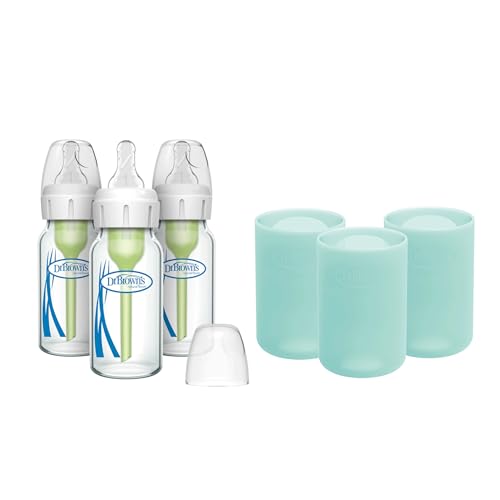
Dr. Brown’s anti-colic system is the benchmark for reducing gas, spit-up, and colic symptoms. The internal vent tube creates a vacuum-free feeding environment where the baby drinks without pulling air bubbles into the milk—a design proven in clinical studies to preserve more of the milk’s nutrient content. The narrow glass body heats evenly in a warmer, and the borosilicate glass withstands rapid temperature changes without cracking.
The Level 1 slow-flow nipple is well-suited for breastfed newborns, delivering milk at a rate that encourages active sucking without overwhelming the baby. The narrow neck fits standard bottle warmers and most pump adapters, though the vent assembly adds two extra parts compared to simpler designs. Many parents report a noticeable reduction in colic symptoms within one week of switching, with less arching and crying during feeds.
The silicone sleeves included in this set provide a non-slip grip and help protect the glass on hard surfaces. A common critique is the five-part cleaning routine, but the bottle brush that comes with the set makes it manageable. The 4-ounce capacity works well for the first three months; you will want the 8-ounce version for larger feeds. The glass stays odor-free even after storing fatty breast milk, a clear advantage over plastic.
Why it’s great
- Internal vent system is clinically proven to reduce colic and preserve nutrients
- Borosilicate glass handles boiling and thermal shock
- Silicone sleeves add grip and drop protection
Good to know
- Five parts per bottle increase cleaning and assembly time
- 4-ounce size is outgrown relatively quickly for bigger babies
5. Gulicola Natural Glass Baby Bottle 5 oz (2 Pack)
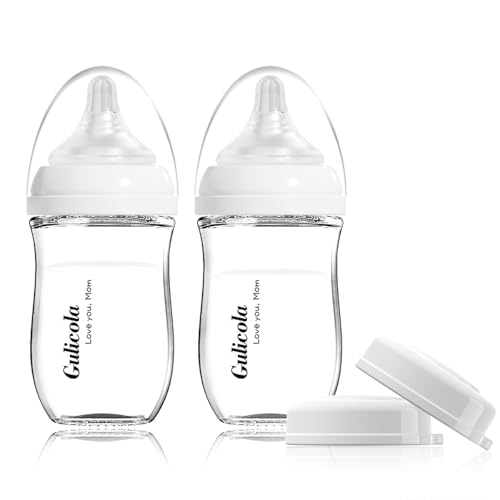
Gulicola’s glass bottle is designed with one core focus: making the nipple feel as close to skin as possible. The ultra-soft silicone has a pliable texture that compresses under sucking pressure much like breast tissue, and the wide base encourages the baby to open wide and latch deep. Many lactation consultants recommend this bottle for its “pointed” nipple tip that guides the baby’s tongue into the correct cupping position.
The 5-ounce capacity is a sweet spot for expressed breast milk volumes, and the slow-flow nipple (size 1) delivers a gentle trickle that prevents oversupply at the bottle. The anti-colic vents are located on the nipple skirt, keeping air bubbles away from the milk column without adding parts. Users report minimal gassiness and less milk waste compared to bottles with multi-part vent systems.
The borosilicate glass is noticeably thick and heavy, giving it a premium feel, and the wide neck makes cleaning with a bottle brush effortless. The two-pack is a lean starter set, so you may need to buy additional bottles if you plan to prep multiple feeds. A few parents mention the nipple can collapse if the baby sucks very aggressively, though this is rare and usually solved by sizing up to the medium flow teat.
Why it’s great
- Ultra-soft nipple closely mimics the texture of breast tissue
- Thick borosilicate glass resists chips and scratches
- Simple four-part assembly with integrated vent
Good to know
- Only two bottles in the pack; stock up for a full rotation
- Nipple may collapse under very strong suck if flow is too slow
6. Tommee Tippee Natural Start Anti-Colic 9 oz (4 Pack)
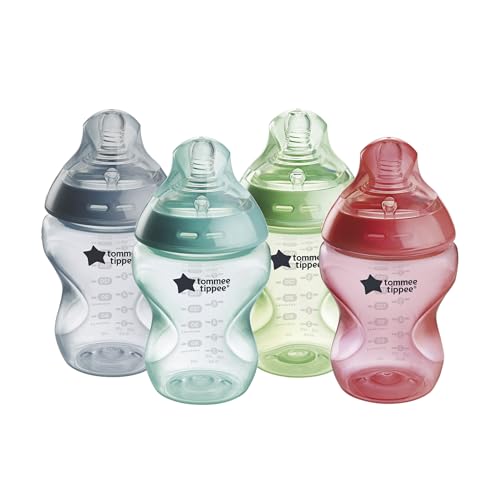
Tommee Tippee’s Natural Start line is engineered for seamless switching: the nipple flexes and stretches like a breast, encouraging the baby to latch with the same mouth-and-tongue motion they use on the breast. The anti-colic valve is positioned at the base of the nipple, keeping air out of the milk flow while maintaining a soft, pliable teat. The 9-ounce capacity is generous for later stages, but the slow-flow nipple is still appropriate for newborns.
The standout feature is the self-sterilizing capability: add a small amount of water, microwave the bottle for three minutes, and it self-steam-sterilizes. This saves significant time compared to boiling or separate sterilizer setups. Parents consistently praise the leak-proof design—when the screw ring, nipple, and cap are properly secured, the bottle stays dry even upside down in a diaper bag.
The bottle body is lightweight polypropylene, and the Fiesta color options are a nice aesthetic touch. Measurement marks printed on the bottle are dishwasher-safe but may fade after many cycles. A vocal set of reviewers who compared this against Medela, Avent, Dr. Brown’s, and Munchkin Latch ranked Tommee Tippee first for latch ease and leak prevention, calling it the best value pack for combo feeding.
Why it’s great
- Nipple flexes and stretches like breast tissue for natural latch
- Self-sterilizes in three minutes in the microwave
- Fully leak-proof when assembled correctly
Good to know
- Measurement marks may fade after repeated dishwasher cycles
- Plastic body may not be as durable as PPSU over long-term use
7. Gulicola Small Glass Baby Bottle 3 oz (2 Pack)

This smaller sibling of the Gulicola Natural line is built specifically for the tiniest feeders—preemies, low-birth-weight babies, and newborns who struggle with standard teat flow rates. The 3-ounce body holds just enough expressed colostrum or milk for the first weeks, and the extra-slow flow (SS) nipple has the smallest orifice available, releasing milk drop by drop to prevent choking and gulping. The borosilicate glass is thick enough to survive light drops without chipping.
The nipple tip is pointed with visible guide marks that help parents align the teat correctly on the baby’s tongue for proper suction. The anti-colic vents are same as the 5-ounce version, effectively diverting air away from the milk. Many lactation consultants recommend this exact bottle for cleft palate babies or those needing paced feeding support due to jaundice or reflux.
The two-pack is a budget-friendly entry into glass bottles, and the wide neck fits standard nipple rings and storage caps. The 3-ounce size is outgrown quickly (usually by two to three months), so plan to move to a 5-ounce bottle soon after. A small number of parents report the glass can feel slippery when wet without a silicone sleeve, so a separate grip sleeve is recommended for safety.
Why it’s great
- Extra-slow SS nipple is ideal for preemies and newborns with weak suck
- Small 3-ounce volume prevents milk waste in early weeks
- Sturdy borosilicate glass resists thermal shock
Good to know
- Limited to small volumes; you will need larger bottles within a few months
- No silicone sleeve included, making the glass slippery when wet
FAQ
What nipple flow rate should I start with for a breastfed newborn?
How do I know if the bottle is causing nipple confusion in my breastfed baby?
Can I use any bottle nipple with a breast pump for direct pumping?
Why does my breastfed baby still have gas with an anti-colic bottle?
Are glass baby bottles worth the extra weight compared to plastic?
Final Thoughts: The Verdict
For most parents, the best breastfed baby bottles winner is the Lansinoh Glass 5 oz 4-Pack because it combines borosilicate safety, a deep-latch nipple that preserves breastfeeding mechanics, and the simplest anti-colic valve system to clean—at a price that makes it easy to own a full rotation. If you need a shatterproof, ultra-lightweight option for daycare bags, grab the Pigeon PPSU Wide Neck and its research-backed latch guide. And for a preemie or newborn who needs the gentlest possible start, nothing beats the Gulicola Small Glass 3 oz with its extra-slow SS nipple and tiny volume.